Advertisement
Advertisement
April 2025
Sponsored by Terumo Aortic
TREO®’s Sac Regression Results Are a Reflection of Its Design
Reflections on TREO as the next evolution for durability in abdominal aortic aneurysm treatment and the role of sac regression as a marker for long-term success.
The TREO® Abdominal Stent Graft System (Terumo Aortic) is a three-piece modular device indicated for the endovascular treatment of infrarenal abdominal aortic and aortoiliac aneurysms.
Every aspect of the TREO Abdominal Stent Graft System is engineered for performance. As an endovascular aneurysm repair (EVAR) solution with both suprarenal and infrarenal active fixation and superior limb lock stent technology, TREO is the next evolution of durability in treating patients with abdominal aortic aneurysms, consistently showing durable high sac regression and low sac expansion rates across multiple studies (Figure 1).
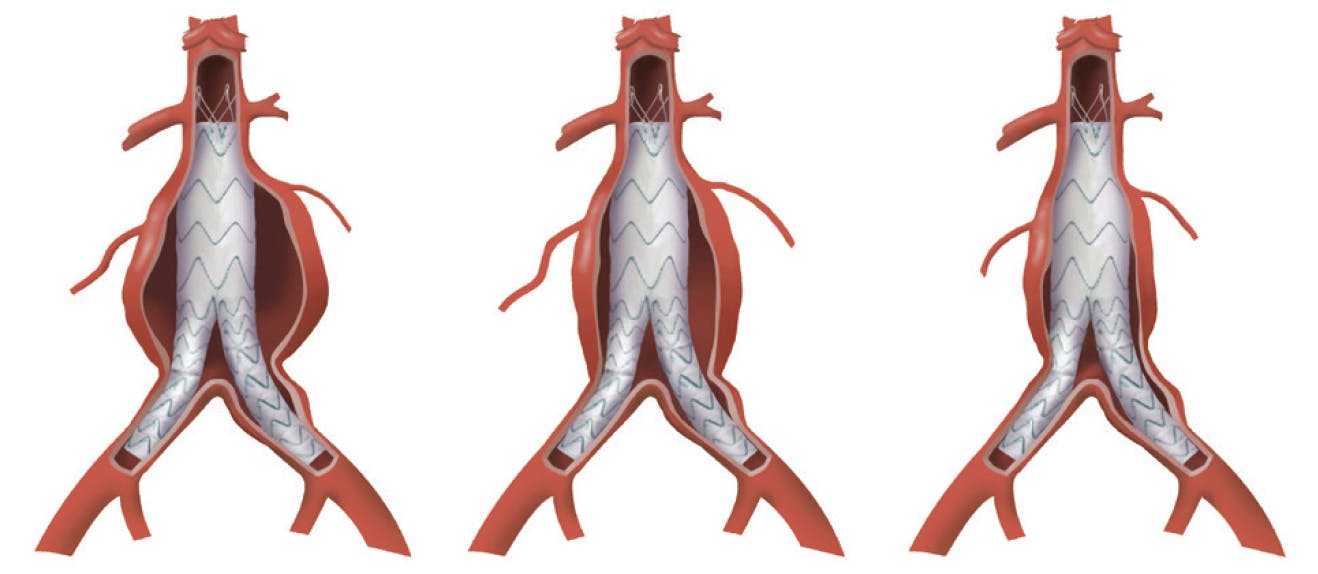
Figure 1. Repair. Remodel. Results.
Terumo Aortic is proud to collaborate with dedicated, patient-centric clinicians in advancing the understanding of sac regression as a marker for long-term outcomes. Dr. Jeromy Brink tackles this in the following interview, discussing clinical perspectives, the role of TREO and its specific design, and predictions for sac regression as a key benchmark for EVAR durability and long-term outcomes.
TREO Design Features
Low-profile delivery system (18/19 F): Designed to expand patient applicability and enable percutaneous access
Suprarenal and infrarenal fixation: Two levels of fixation increase migration resistance
Improved proximal seal zone: A long overlap of bare stent and first proximal stent increases vessel wall contact points for a confident seal and low type Ia endoleak rate
Lock stent technology: Rounded barbs inside the main body gates are designed to securely engage with limb stents, increasing pullout force resistance by 6 times
Long main bodies: Provide lower displacement forces and increased endograft stability during the cardiac cycle; the ability of TREO’s long main body to sit close to the aortoiliac bifurcation, along with the limb lock mechanism, may reduce the risk of both proximal and distal migration
Fabric: Woven polyester with an optimized weave pattern offers a low profile, high strength, and low permeability
Dr. Brink is Associate Professor at Banner University Medical Center in Phoenix, Arizona. He completed his residency and vascular fellowship at the Mayo Clinic in Rochester, Minnesota, and has been in private practice for 23 years. Since 2020, he has implanted > 300 TREO devices and 400 RelayPro devices (Terumo Aortic), demonstrating extensive clinical experience with Terumo Aortic’s devices (Figure 2).
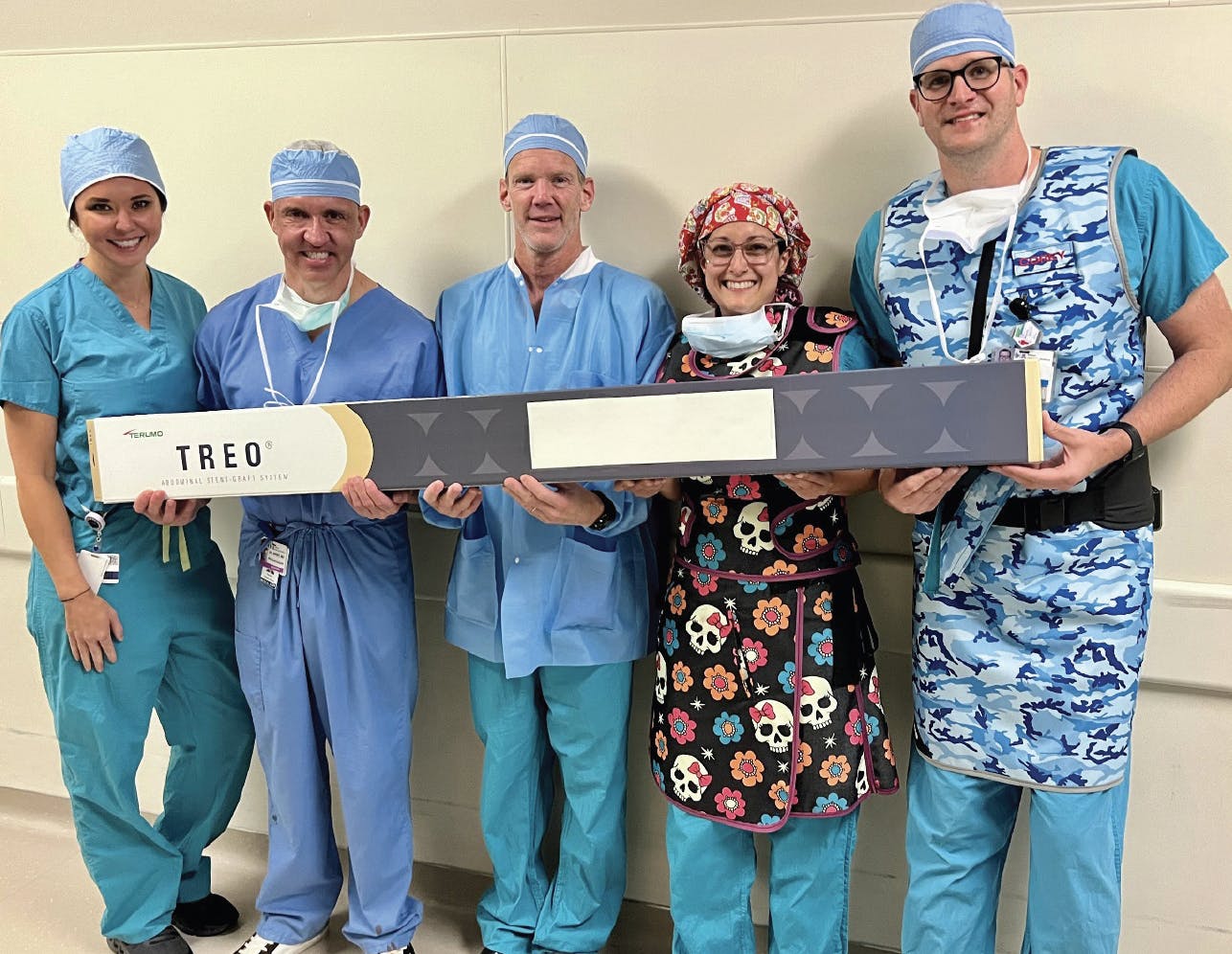
Figure 2. Dr. Brink (2nd from left) and team celebrating a significant TREO implant milestone.
From a clinical perspective and based on current evidence, how and why should sac regression be considered a critical factor for long-term success in EVAR?
Sac regression is a very sensitive marker of success. In my opinion, it’s the only real indication of curative therapy. Sac regression means the aneurysm is completely depressurized and at no risk for rupture. Current evidence supports that sustained sac regression correlates with patient survival and positive long-term outcomes, including reduced risk of endoleaks, graft-related complications, and reintervention.1,2
Do patients with sac regression typically require fewer secondary interventions compared to those with a stable aneurysm? How does this compare to patients with an expanding aneurysm?
Yes, studies have found that patients with sac regression typically require fewer secondary interventions compared to those with a stable or expanding aneurysm.3 In our experience, the majority of patients demonstrate consistent, continued sac regression, which strongly correlates with a reduced need for reintervention. Notably, we have not observed late sac expansion in our patient population. All of our patients with sac regression have remained free from endoleak and have not required additional procedures, with the exception of one patient who developed a type II endoleak but did not exhibit sac expansion.
From your experience, are there specific patient profiles or aneurysm types where TREO’s design shows enhanced sac regression or healing benefits?
Yes, patients with longer necks and smaller flow lumens tend to have enhanced sac remodeling. I’ve also found that TREO is an excellent device for angulated necks and tortuous anatomy. The space between the stents allows incredible conformability without compromising seal, even in the most challenging of necks.
How do you think the specific design features of TREO contribute to sac regression. Based on your experience, how does this compare to other EVAR devices in achieving positive outcomes?
I think that sac regression is multifactorial. Any endoleaks within the sac inhibit complete sac regression. The dual fixation and strong proximal sealing stent play a pivotal role in preventing type Ia endoleaks. The tightly woven polyester has been shown to be superior to polytetrafluoroethylene, and the interlocking design within the gates mitigate the risk of type III endoleaks. The longer main bodies act to fill space in the aortic sac, oftentimes helping seal type II endoleaks. In addition, the longer main bodies may mimic a more normal aortic flow pattern, leading to better sac regression.
I have seen a similar personal experience in Endurant IIS (Medtronic) but not as robust. I attribute that to TREO’s dual fixation, longer main bodies, and interlocking limbs. I have had the most issues with the Gore Excluder device (Gore & Associates) in regard to type II endoleaks and failure of sac regression.
If sac regression continues to be a strong indicator of success with TREO, do you think future society guidelines might incorporate sac regression as a key benchmark for EVAR durability and long-term outcomes?
Not only do I believe this to be true, but I believe that sac regression will ultimately define acceptable diagnostic modalities and follow-up timelines. I am hopeful that the Society for Vascular Surgery will continue to shift its focus to the sac regression data and value the importance of what a graft like TREO brings to the market.
1. Antoniou GA, Alfahad A, Antoniou SA, Torella F. Prognostic significance of aneurysm sac shrinkage after endovascular aneurysm repair. J Endovasc Ther. 2020;27:857-868. doi: 10.1177/1526602820937432
2. Rastogi V, O’Donnell TFX, Marcaccio CL, et al. One-year aneurysm-sac dynamics are associated with reinterventions and rupture following infrarenal endovascular aneurysm repair. J Vasc Surg. 2024 ;79:269-279. doi: 10.1016/j.jvs.2023.10.006
3. Väärämäki S, Uurto I, Suominen V. Possible implications of device-specific variability in post-endovascular aneurysm repair sac regression and endoleaks for surveillance categorization. J Vasc Surg. 2023;78:1204-1211. doi: 10.1016/j.jvs.2023.07.001

Advertisement
Advertisement