Advertisement
Advertisement
December 2025 Supplement
Sponsored by Surmodics
Case Report: Removal of Lower Extremity Venous Thrombus Via Tibial Access With the Pounce™ Venous Thrombectomy System
PATIENT PRESENTATION
A man in his mid-70s with a body mass index of 45 kg/m2, severe chronic obstructive pulmonary disease, diabetes, and a history of total knee arthroplasty to both knees presented to the clinic in urgent referral from his primary care doctor with severe left lower extremity swelling, significantly worse than what he considered baseline. Three weeks previous, the patient underwent an arterial duplex ultrasound (DUS) exam for mild swelling as well as hyperpigmentation in both limbs, which showed disease (insufficiency) limited to the superficial veins. At that time, radiofrequency ablation to both great saphenous veins was planned after a trial of conservative therapy.
DIAGNOSTIC FINDINGS
DUS revealed thrombus extending from the left popliteal to the mid-femoral vein. Based on the patient’s prior and most recent DUS exam, the clot was suspected as acute to subacute. Given significant pain, swelling, and high risk of postthrombotic syndrome, the patient was scheduled for thrombectomy after a risk/benefit discussion. He was appropriately anticoagulated. On the day of the procedure, the patient was placed in the prone position and micropuncture access was attempted under ultrasound guidance in the popliteal vein. Extreme obesity, substantial superficial tissue, and thrombus in the popliteal region rendered access technically challenging. DUS was used to locate a segment of the posterior tibial (PT) vein suitable for access and subsequent placement of a 10 Fr sheath. Venography confirmed thrombotic occlusion of the popliteal and femoral veins as well as a small section of the accessed tibial vein (Figure 1).
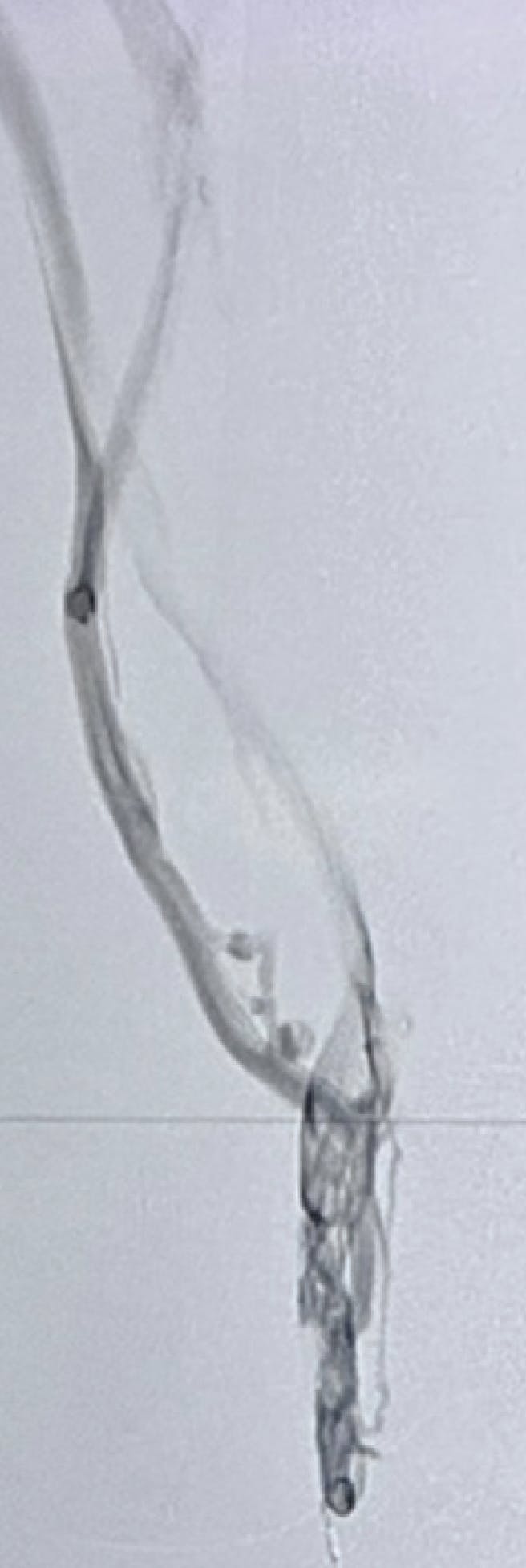
Figure 1. Initial venography showing severe thrombotic disease of the popliteal and femoral veins.
TREATMENT
A 10 Fr sheath was introduced into the PT access site, and percutaneous balloon venoplasty was performed in the PT vein with a 5 mm diameter balloon. The Pounce™ Venous Thrombectomy System (Surmodics, Inc.) was then introduced through the sheath, and the system basket was deployed in the femoral vein. Multiple system passes removed a substantial quantity of both acute and subacute thrombus (Figure 2), with total thrombectomy time approximately 15 minutes. Final venography showed restoration of femoral and popliteal flow (Figure 3). The patient was discharged later that day with continued therapeutic anticoagulation.
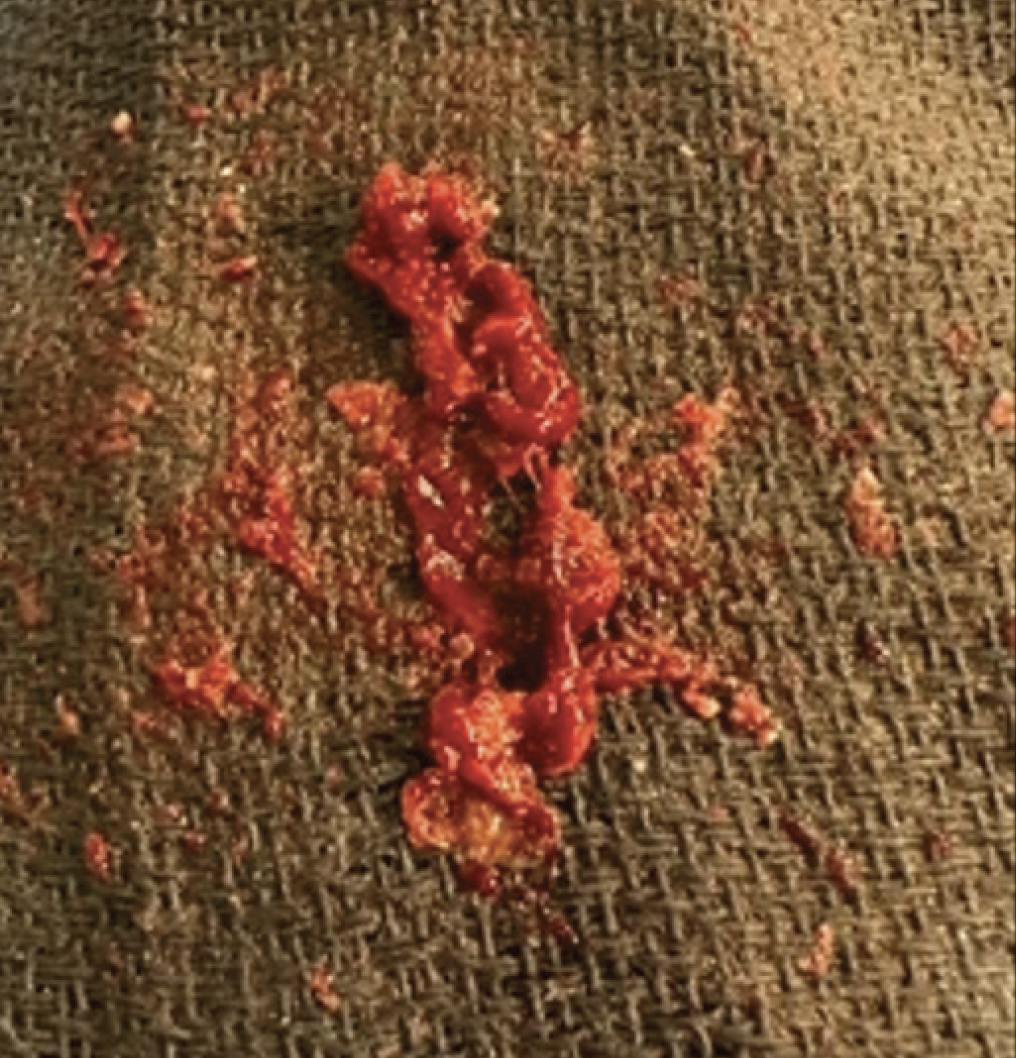
Figure 2. Acute and subacute clot removed by the Pounce™ Venous System (clot in retrieval bag not shown).
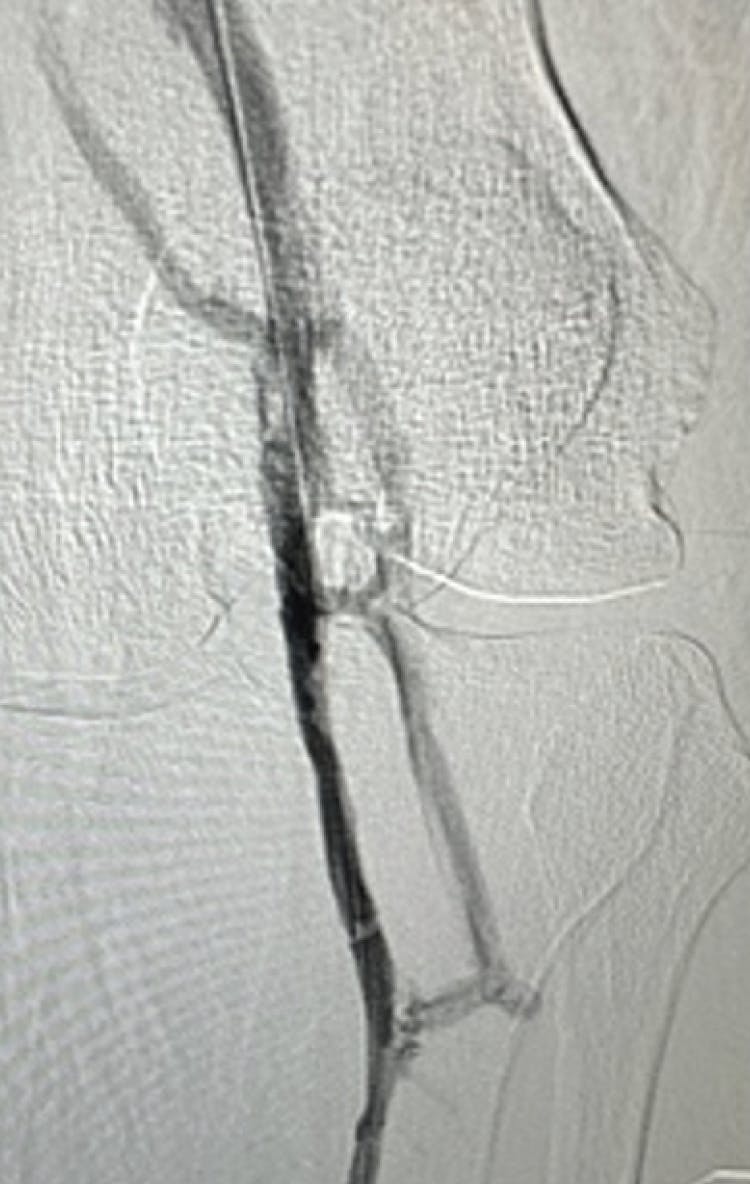
Figure 3. Final venogram showing restoration of femoral and popliteal flow (lower magnification image).
PHYSICIAN OBSERVATIONS
The small 10 Fr profile of the Pounce™ Venous System allowed us to use tibial access in a patient with substantial obesity without compromising procedure efficacy. This access site provided the added benefit of allowing thrombus clearance in the distal popliteal vein, which would normally not be possible from a standard popliteal vein access. Based on my experience with the system, I was also confident that the wall-apposed basket would be able to remove a substantial amount of subacute clot encountered in these vessels, which was indeed the case. I was able to easily clean the Pounce™ Venous System basket between passes without removing the device from the wire, which reduced procedure time and improved case efficiency.
Caution: Federal (US) law restricts the Pounce™ Venous Thrombectomy System to sale by or on the order of a physician. Please refer to the product’s Instructions for Use for indications, contraindications, warnings, and precautions. SURMODICS, POUNCE, and SURMODICS and POUNCE logos are trademarks of Surmodics, Inc. and/or its affiliates. Third-party trademarks are the property of their respective owners.

Advertisement
Advertisement