Advertisement
Advertisement
December 2025 Supplement
Sponsored by Surmodics
Efficiency and Versatility: Revascularization of Lower Extremity Veins With the Pounce™ Venous Thrombectomy System
A conversation with Dr. Abdullah Rifai.
Interventional cardiologist Abdullah Rifai, MD, FACC, FSCAI, RPVI, serves as the Catheter Laboratory Director at Advocate South Suburban Hospital in Hazel Crest, Illinois. He specializes in advanced cardiovascular care, performing catheter-based treatments for complex vascular and coronary artery diseases. Dr. Rifai is actively involved in teaching interventional cardiology fellows at the University of Illinois at Chicago and holds an assistant professorship at Wake Forest University, which has academic affiliation with the Advocate Health system. We spoke with him about his approach to treating lower extremity venous thrombosis and his experience with the Pounce™ Venous Thrombectomy System (Surmodics, Inc.).
How do you manage patients who present with lower extremity thrombosis?
Most of these patients can be managed medically with anticoagulation, while about 30% may require intervention. Our practice mainly targets iliofemoral thrombosis for thrombus removal, but we don’t limit ourselves to this region when we want to clear inflow veins or if the limb is threatened in any way.
Initially, our standard approach was catheter-directed thrombolysis. However, we have gradually shifted toward minimizing the use of thrombolytics to help decrease intensive care unit admissions. We began by using a combined mechanical and lytic approach with the AngioJet™ Peripheral Thrombectomy System (Boston Scientific Corporation). More recently, our practice has evolved to favor devices that can remove clot without lytics, such as either aspiration-only thrombectomy or mechanical thrombectomy using the Pounce™ Venous Thrombectomy System or the ClotTriever® System (Inari Medical), both of which have wall-apposable baskets. We rarely use lytics now.
How do you select between aspiration-only or mechanical devices for a given case?
It largely depends on patient history. If I think the clot is recent and loosely formed, I tend to prefer an aspiration system. When I suspect the clot is more chronic and wall-adherent, I’m more likely to choose a mechanical device. Aspiration-only systems often struggle to remove organized, wall-adherent clot, so you can end up primarily suctioning blood as you’re working to dislodge the clot. A mechanical thrombectomy device with a wall-apposable basket is better suited for the task.
Sometimes, I might begin with aspiration and find I need to switch to mechanical treatment to remove wall-adherent material. In these cases, the 10 Fr introducer compatibility of the Pounce™ Venous System can be very helpful. If I’m using a 12 Fr aspiration system, I can deliver the Pounce™ Venous System through the procedural sheath instead of removing and replacing the sheath. This saves time and procedural steps.
What other advantages do you see in the 10 Fr introducer compatibility of the Pounce™ Venous System?
It allows me to access smaller veins, even below the knee. For example, I may want to access the posterior tibial vein, or even the great saphenous vein or small saphenous vein to clean out popliteal clot and inflow. Upper extremity treatment is not part of my practice, but I know the Pounce™ Venous System can be used in those veins as well.
When are you likely to choose the Pounce™ Venous System as your front-line option for mechanical thrombectomy?
There is no set algorithm; it really depends on patient variation and my gestalt as a physician. I tend to favor the Pounce™ Venous System when its versatile and efficient design (Figure 1; watch full animation here) is especially suitable for a case (see Case Report: Removal of Wall-Adherent Venous Clot With the Pounce™ Venous Thrombectomy System After Attempted Aspiration).
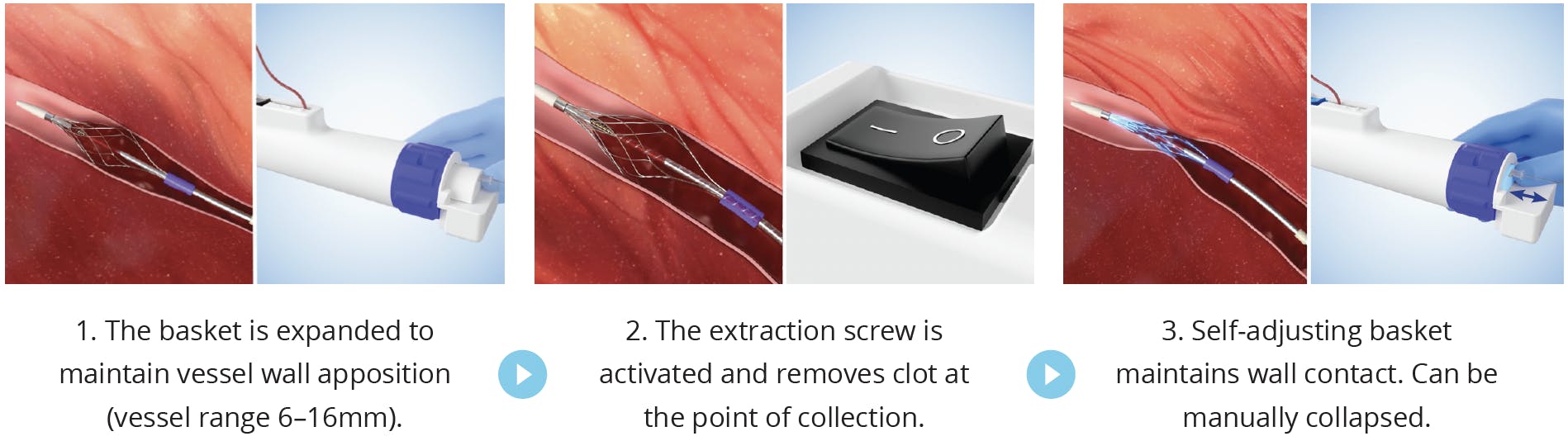
Figure 1. Pounce™ Venous System mechanism of action.
By versatility, I mean more than its small profile. The system allows me to manually control the basket diameter or collapse the basket altogether. This feature is very important. Every new case presents different anatomical challenges, whether from chronically stenosed vessels, multiple small vessels due to variant venous anatomy, or May-Thurner strictures. Being able to control the basket diameter inside narrow vessels without losing grip on the clot is a strong benefit. Compared with fixed-diameter baskets, an adjustable basket diameter can also improve patient comfort when pulled through tight veins.
Why do you say the Pounce™ Venous System is efficiently designed?
This system works in two ways at once. Inside the basket, a rotating Archimedes screw breaks down and continuously removes clot from the patient. At the same time, the basket separates adherent clot from the vessel wall. In this sense, the system combines the advantages I see in aspiration and mechanical thrombectomy in one device. It also allows me to infuse contrast through side ports on the catheter, which saves procedural time. Finally, the short length of the basket allows me to clean the basket between passes while it’s still on the wire. In contrast, cleaning debris from the ClotTriever® System, with its lengthy collection bag, takes more time and attention.
Do you have any practical tips for new Pounce™ Venous System operators?
Pay close attention to the tactile feel of the device as you withdraw the basket through the vein and how it interacts with clot on the vessel wall. This sensory feedback helps you leverage the ability to manually narrow or fully collapse the basket to better advantage. Because the ability to manually control basket diameter is rather novel, it may take some experience to fully appreciate it at first. Overall, the system is very easy to use.
Caution: Federal (US) law restricts the Pounce™ Venous Thrombectomy System to sale by or on the order of a physician. Please refer to the product’s Instructions for Use for indications, contraindications, warnings, and precautions. SURMODICS, POUNCE, and SURMODICS and POUNCE logos are trademarks of Surmodics, Inc. and/or its affiliates. Third-party trademarks are the property of their respective owners.
Case Report: Efficient Removal of Organized Iliofemoral Venous Thrombus With the Pounce™ Venous Thrombectomy System
By Abdullah Rifai, MD, FACC, FSCAI, RPVI
PATIENT PRESENTATION
A woman in her late 60s presented with right leg swelling, heaviness, and pain of 5-week duration. She was a current smoker with a body mass index of 65 kg/m2, thrombocytopenia, chronic obstructive pulmonary disease, and a history of distal deep vein thrombosis and anticoagulation therapy. Pulses were normal with stable vital signs. Physical examination showed right leg edema.
DIAGNOSTIC FINDINGS
With the patient in the prone position, ultrasound-guided micropuncture access to the right popliteal vein was obtained. Venography showed duplication of the right popliteal/femoral system with clot in both (Figure 1A). Confluence of the duplication occurred near the lesser trochanter. Venography showed occlusion in the medial distal common femoral vein (Figure 1B), and proximal external iliac vein (Figure 1C). Intravascular ultrasound (IVUS) showed chronic thrombosis in both vessels, with chronic thrombosis and severe compression at the right mid external iliac vein (Figure 2).
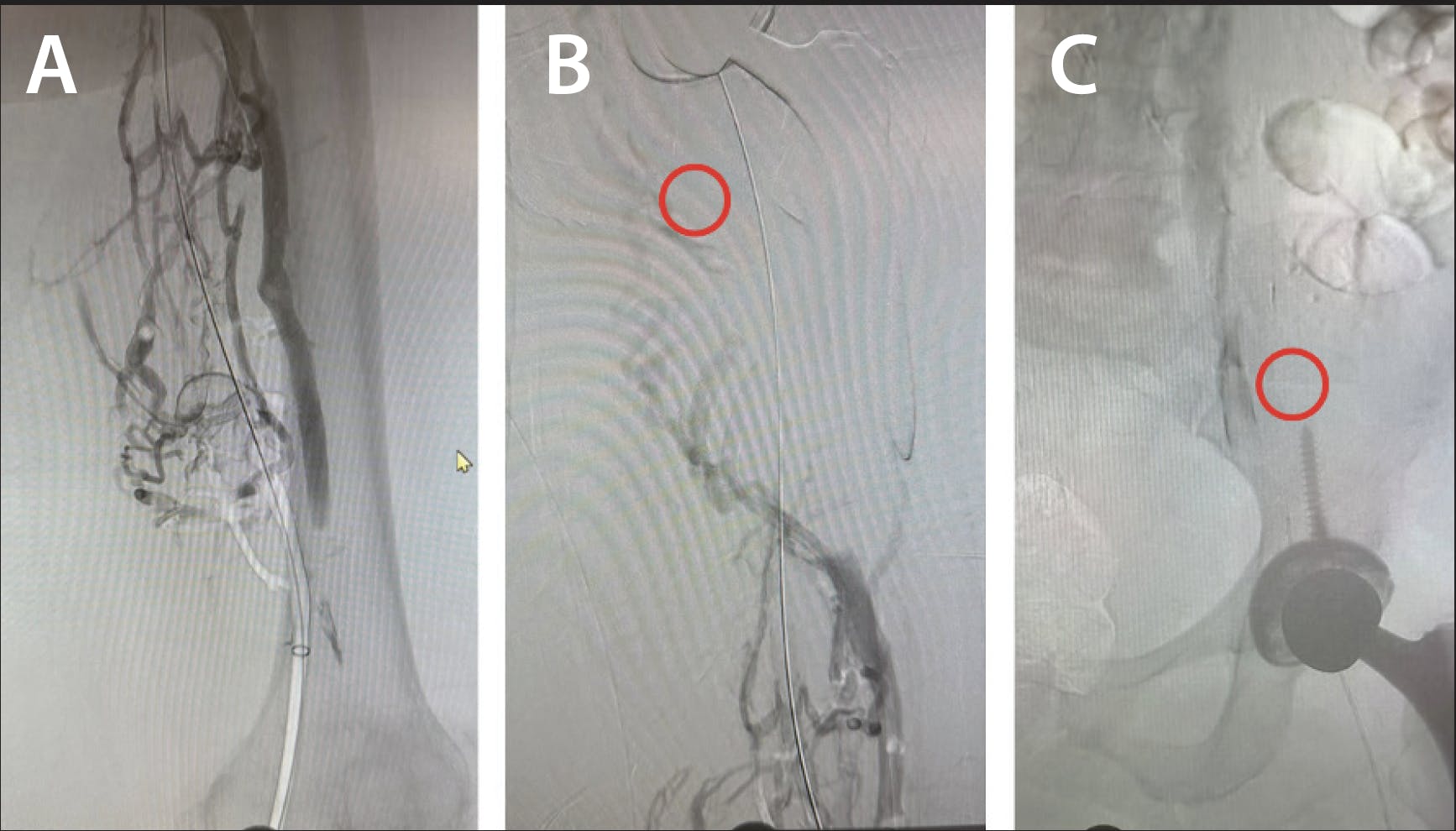
Figure 1. Venography showing duplication of the right popliteal/femoral system with clot in both (A), occlusion in the distal common femoral vein (B), and severe compression and occlusion of the proximal external iliac vein (C). Circles indicate points of IVUS imaging shown in Figure 2.
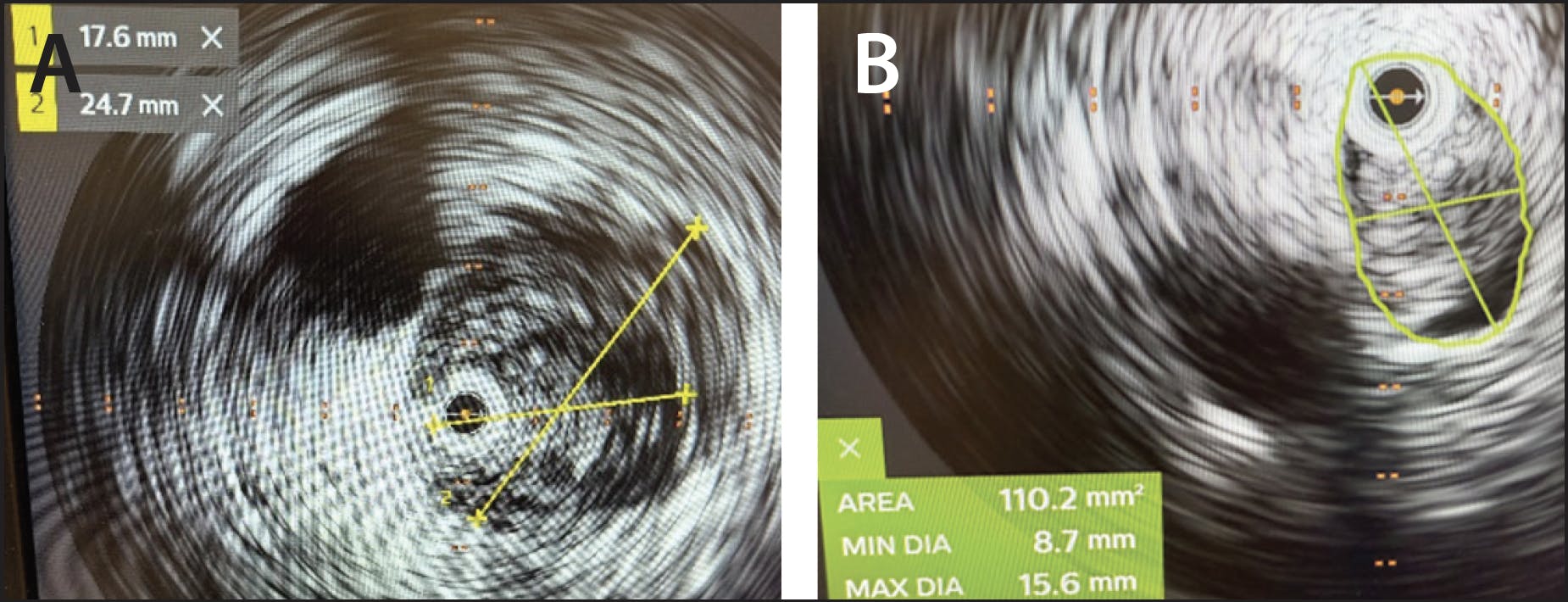
Figure 2. IVUS showing thrombosis of the right common femoral vein (A) and chronic thrombosis in the right mid external iliac vein (B).
TREATMENT
The 12 Fr Pounce™ Sheath (Surmodics, Inc.) was introduced into the right popliteal vein, the funnel was deployed, and two passes were made with the Pounce™ Venous Thrombectomy System (Surmodics, Inc.) through the sheath. Angioplasty performed with a high-pressure 8 mm Conquest™ PTA Dilatation Catheter (BD) showed significant waist in the femoral vein. The Pounce™ Venous System was again deployed, removing chronic clot (Figure 3). Final venography showed restoration of iliofemoral blood flow (Figure 4). Total thrombectomy time was 25 minutes, with 100 mL blood loss.
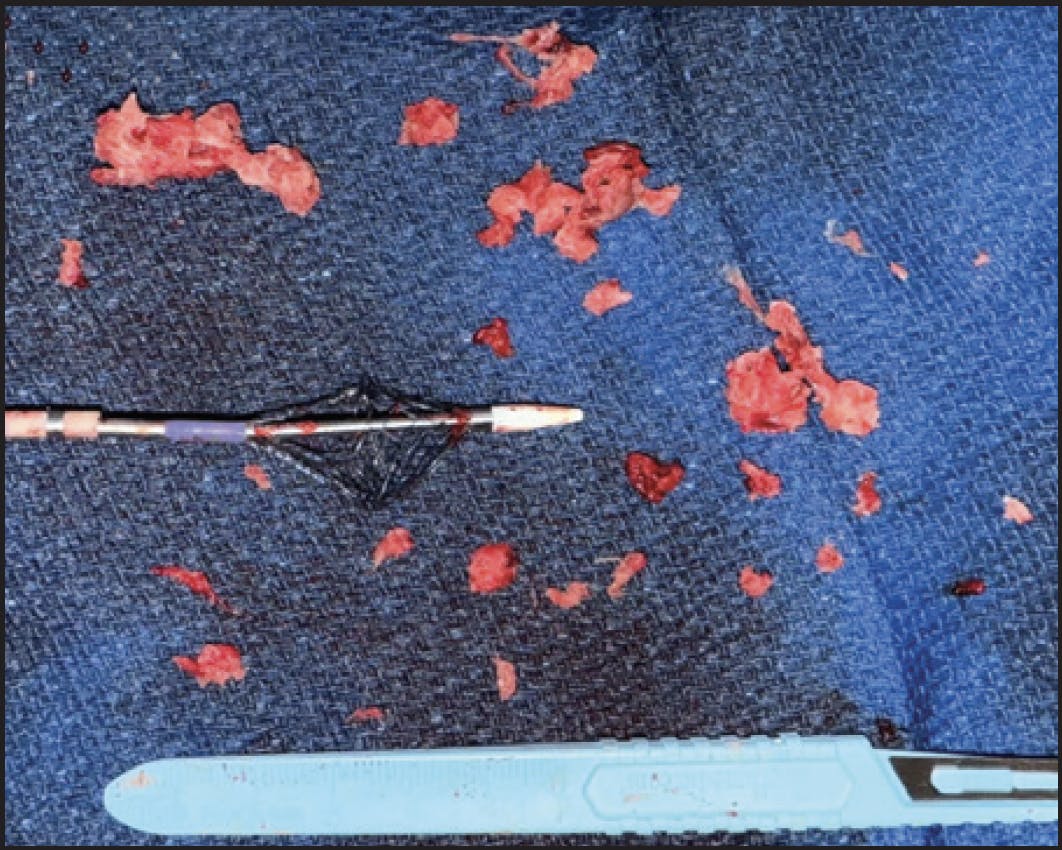
Figure 3. Chronic clot removed with the Pounce™ Venous System.
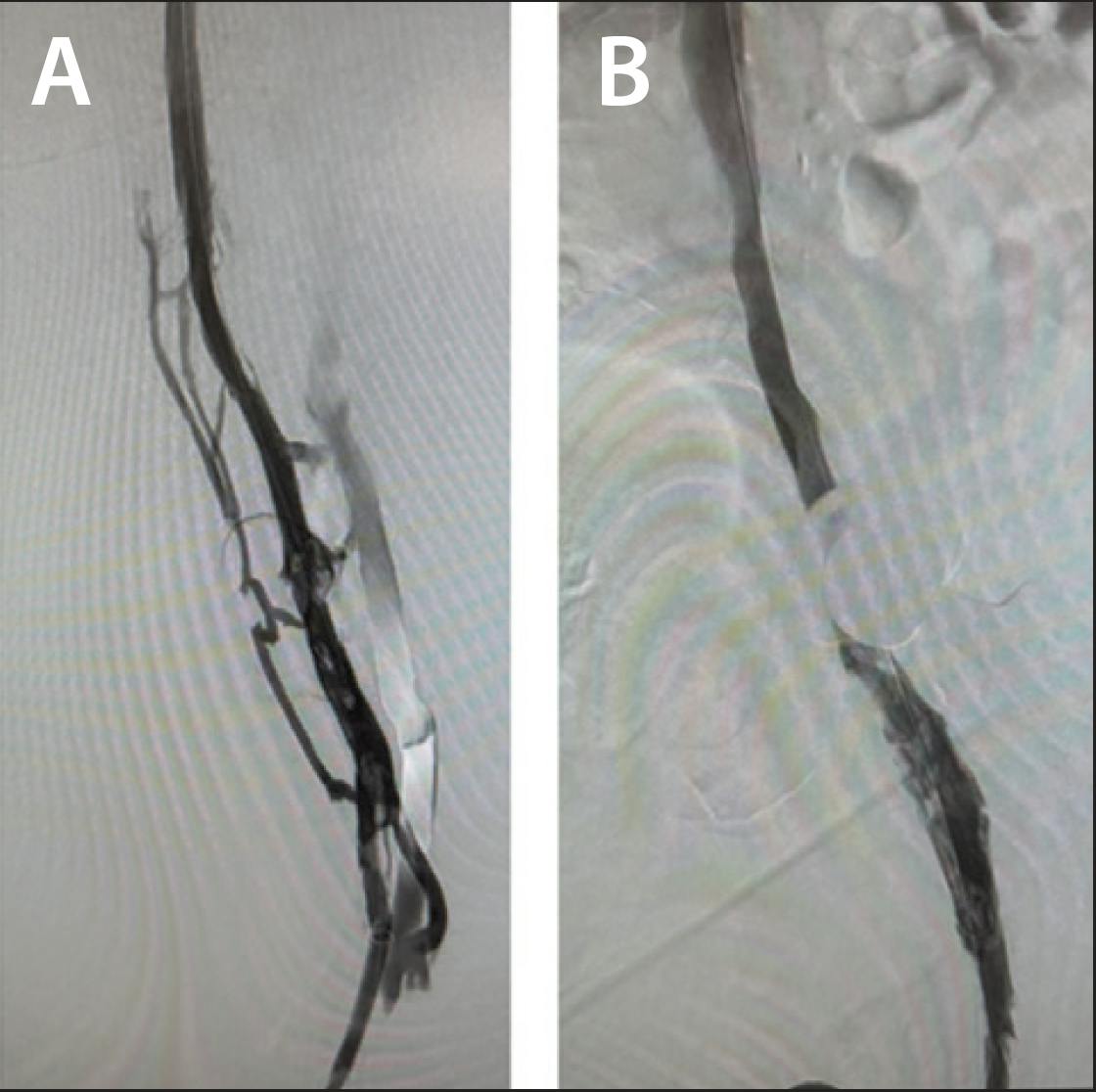
Figure 4. Final venogram showing revascularization of the right femoral vein medial to a duplicate femoral vein (A) and restored flow from femoral vein to inferior vena cava (B), with superimposed radiopaque artifact from prior hip arthroplasty.
PHYSICIAN OBSERVATIONS
The Pounce™ Venous System efficiently removed chronic thrombus in a patient with challenging venous anatomy, restoring inline flow without use of thrombolytics.
Caution: Federal (US) law restricts the Pounce™ Venous Thrombectomy System to sale by or on the order of a physician. Please refer to the product’s Instructions for Use for indications, contraindications, warnings, and precautions. SURMODICS, POUNCE, and SURMODICS and POUNCE logos are trademarks of Surmodics, Inc. and/or its affiliates. Third-party trademarks are the property of their respective owners.
Case Report: Removal of Wall-Adherent Venous Clot With the Pounce™ Venous Thrombectomy System After Attempted Aspiration
By Abdullah Rifai, MD, FACC, FSCAI, RPVI
PATIENT PRESENTATION
A woman in her mid-80s presented with 1-week progressive left lower extremity pain and extensive swelling. She had been transferred from an outside facility for coffee-ground emesis, with esophagogastroduodenoscopy revealing severe esophagitis treated with twice-daily proton pump inhibitor initiation. Her blood pressure was 122/54 mm Hg, with stable vital signs.
DIAGNOSTIC FINDINGS
Venous duplex ultrasound of bilateral lower extremities showed thrombosis of left distal external iliac, common femoral, femoral, and posterior tibial veins, with patent popliteal and peroneal veins. With the patient in the prone position, ultrasound-guided micropuncture access to the left popliteal vein was obtained. Venography showed occlusions in the left femoral and common femoral veins (Figure 1).
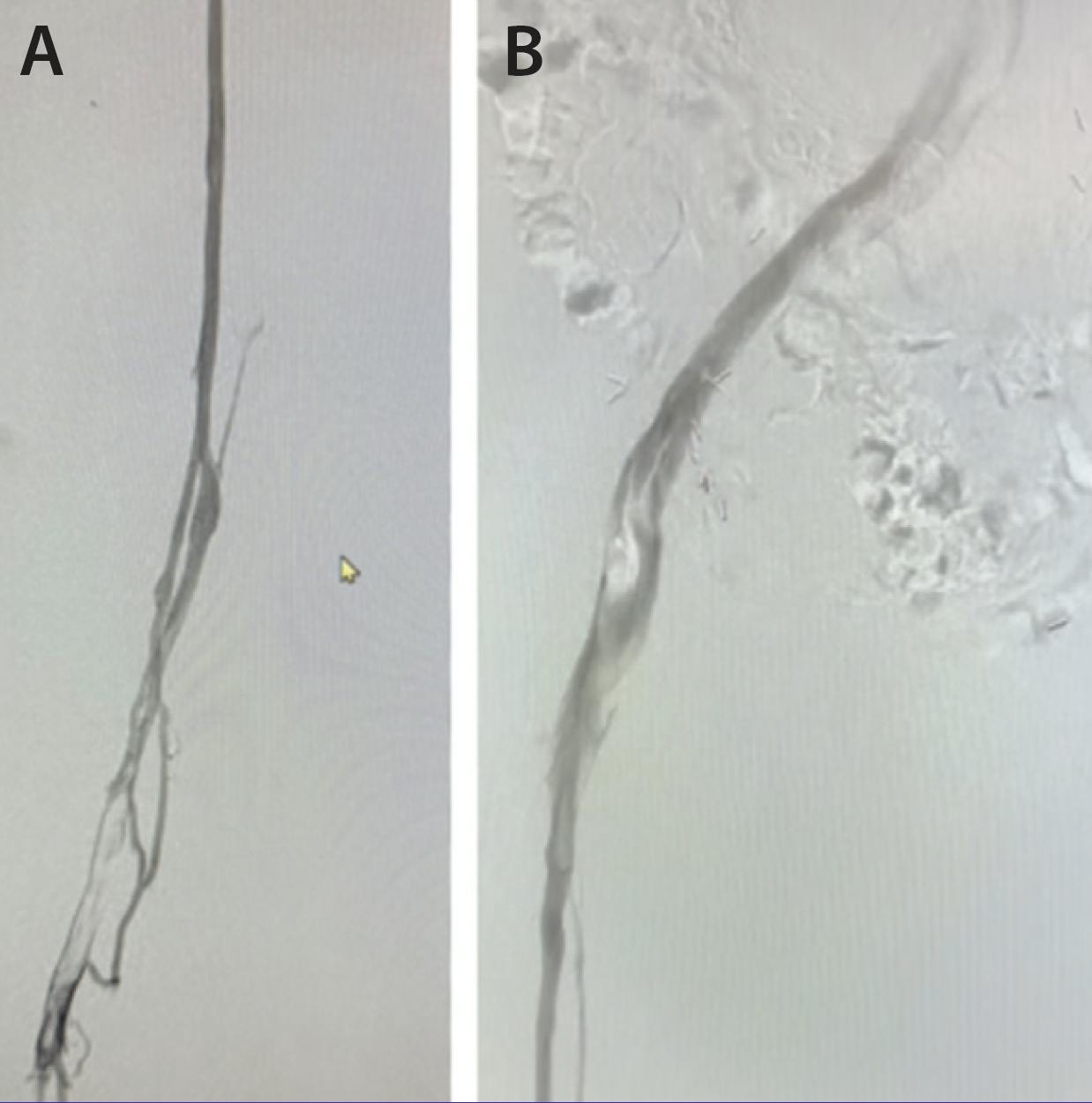
Figure 1. Initial venogram showing occluded left femoral vein (A) and common femoral vein (B).
TREATMENT
A 16 Fr Lightning Flash™ 2.0 Aspiration Thrombectomy System (Penumbra, Inc.) was introduced over a .035 guidewire into the left femoral vein. Aspiration succeeded in removing clot from the femoral vein, but the 16 Fr system could not be advanced through the entire femoral vein (due to narrowness) and into the common femoral to treat wall-adherent fibrotic material. Following balloon angioplasty and IVUS imaging, the Pounce™ Venous Thrombectomy System (Surmodics, Inc.) was introduced through the 16 Fr sheath into the common femoral vein and succeeded in removing chronic thrombus (Figure 2). Final venography showed restoration of flow in the common femoral vein, with proper inflow from the profunda vein (Figure 3).
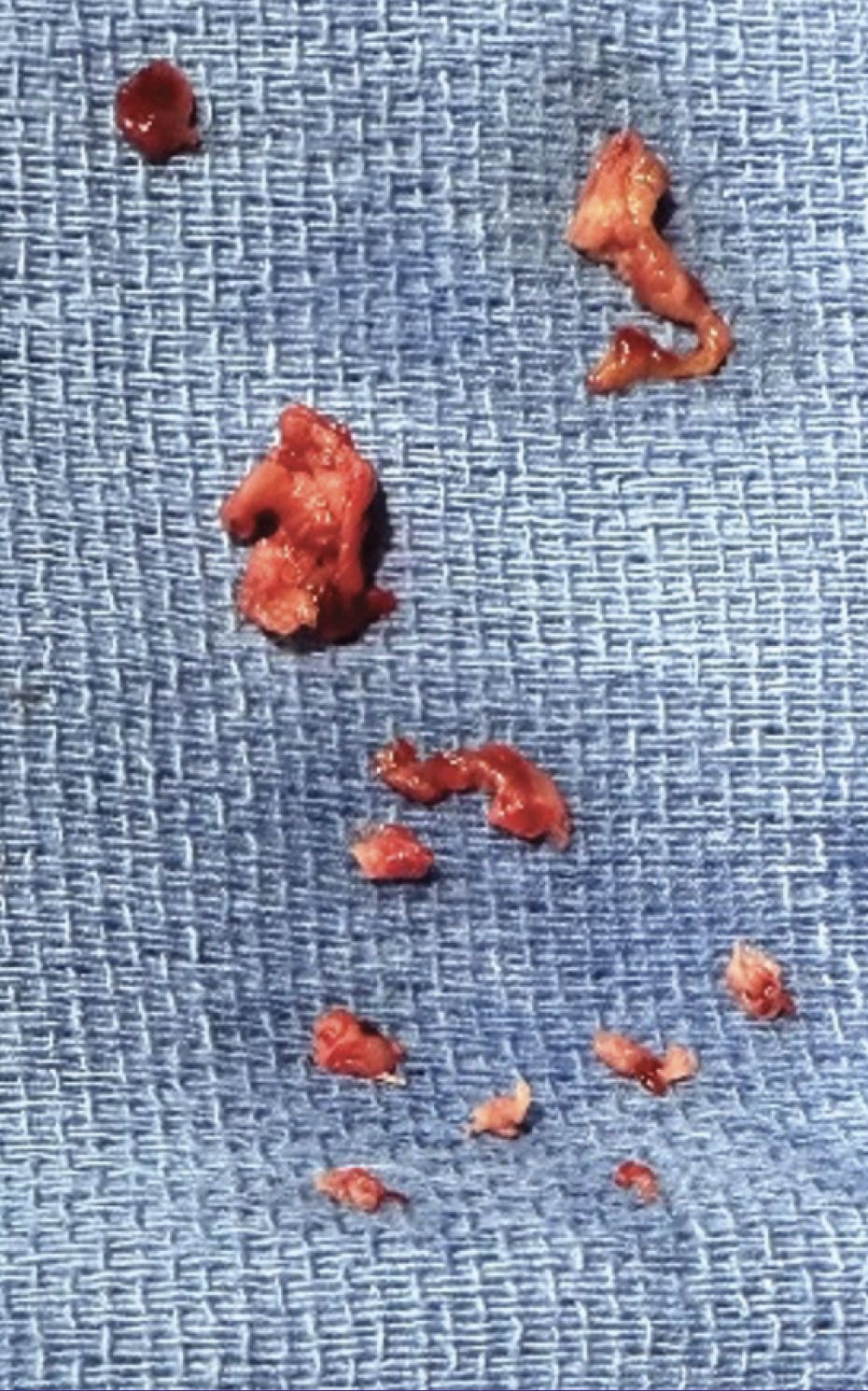
Figure 2. Chronic clot removed from the left common femoral vein with the Pounce™ Venous System.
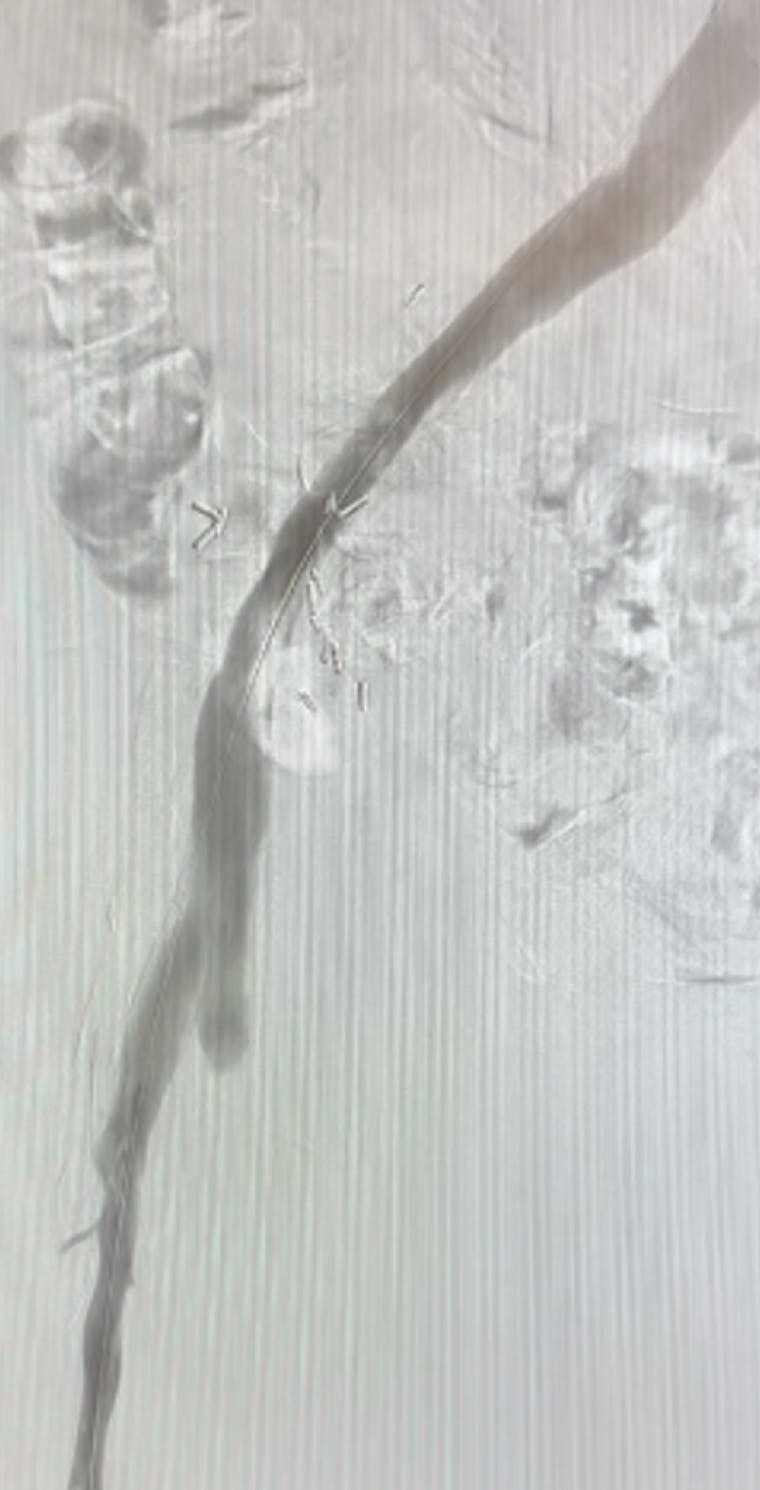
Figure 3. Venography performed after Pounce™ Venous System thrombectomy showing revascularization of left common femoral vein and an open profunda vein.
PHYSICIAN OBSERVATIONS
The clinical presentation of venous clot can be complex, and the age and morphology of clots may vary significantly. The Pounce™ Venous System device is effective as a primary option for resistant clots or as a backup for aspiration thrombectomy that does not require sheath exchange.
Caution: Federal (US) law restricts the Pounce™ Venous Thrombectomy System to sale by or on the order of a physician. Please refer to the product’s Instructions for Use for indications, contraindications, warnings, and precautions. SURMODICS, POUNCE, and SURMODICS and POUNCE logos are trademarks of Surmodics, Inc. and/or its affiliates. Third-party trademarks are the property of their respective owners.

Advertisement
Advertisement