Advertisement
Advertisement
December 2025 Supplement
Sponsored by Surmodics
Case Report: Removing Organized Femoral Clot With the Pounce™ XL Thrombectomy System
PATIENT PRESENTATION
A man in his mid-80s with chronic obstructive pulmonary disease and a former smoker had undergone an open thrombectomy for left lower extremity (LLE) acute limb ischemia (ALI) several months earlier. Since then, he was readmitted for another episode of ALI while taking apixaban and was treated with aspiration thrombectomy, achieving limited clot removal but restoring some outflow in the distal superficial femoral artery (SFA) and popliteal artery with the help of percutaneous transluminal angioplasty. He subsequently developed a left groin abscess from the initial surgery and was readmitted for incision and drainage. A few weeks after this procedure, he presented again with recurrent LLE ALI despite taking apixaban and clopidogrel.
DIAGNOSTIC FINDINGS
Initial angiography conducted via contralateral groin access revealed organized clot in the proximal SFA (Figure 1A), calcification with reduced flow in the distal SFA and popliteal artery (Figure 1B), and minimal tibial runoff (Figure 1C).
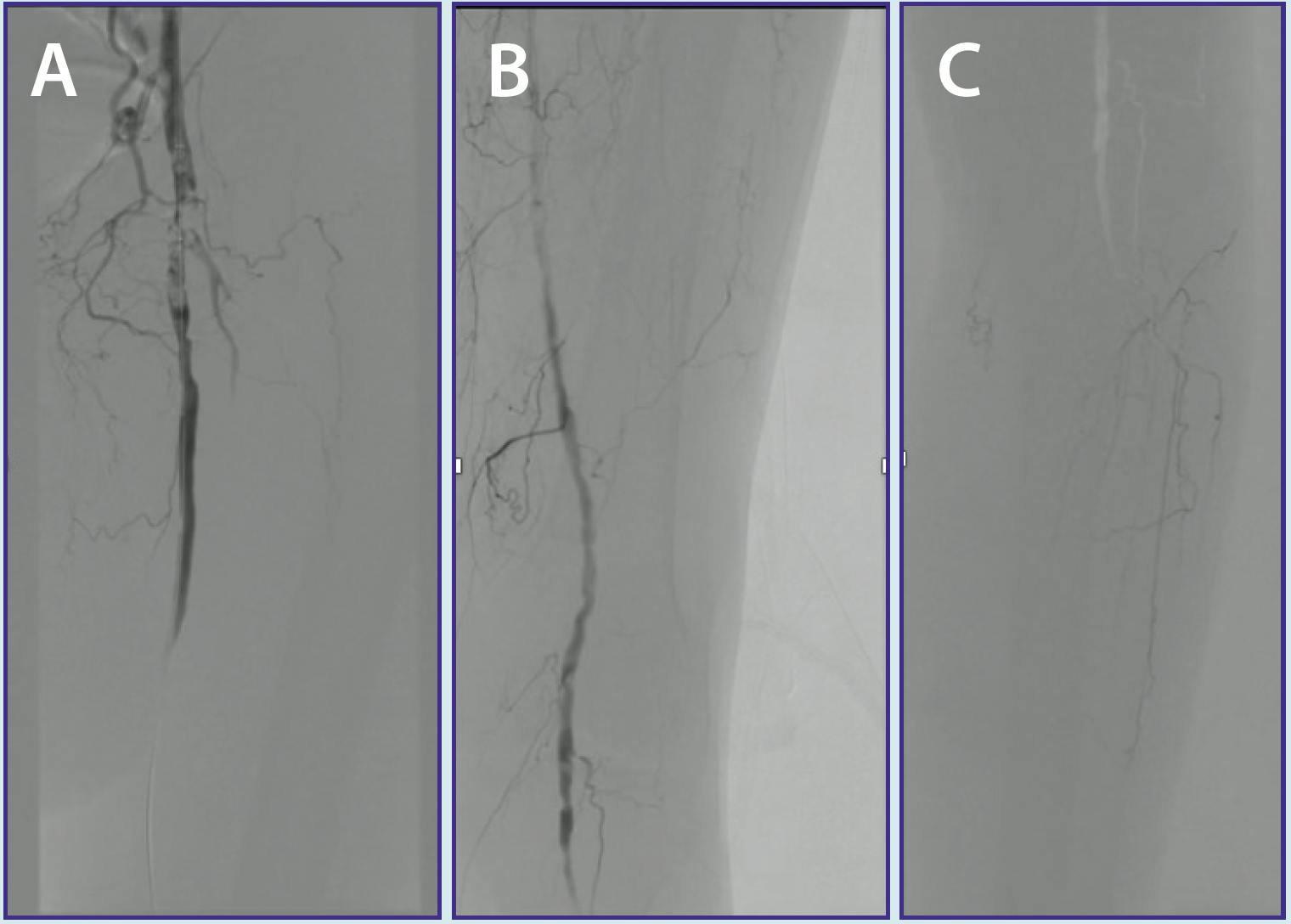
Figure 1. Initial angiography showing organized thrombus in the proximal SFA (A), with compromised flow in the distal SFA and popliteal artery (B) and minimal tibial runoff (C).
TREATMENT
The Pounce™ XL Thrombectomy System (Surmodics, Inc.) was introduced through a 7 Fr sheath, with the baskets deployed in the mid-SFA and the funnel deployed in the external iliac artery. Two passes with the Pounce™ XL System removed significant subacute thrombus (Figure 2A) and restored flow into the SFA and popliteal artery (Figure 2B). Next, angioplasty was performed in the proximal anterior tibial (AT) artery to treat the outflow disease, followed by deployment of a long drug-coated balloon (DCB) in the mid-to-distal SFA and intravascular lithotripsy (IVL) in the common femoral artery. Final angiography showed restored flow in the femoral and popliteal arteries (Figure 3).
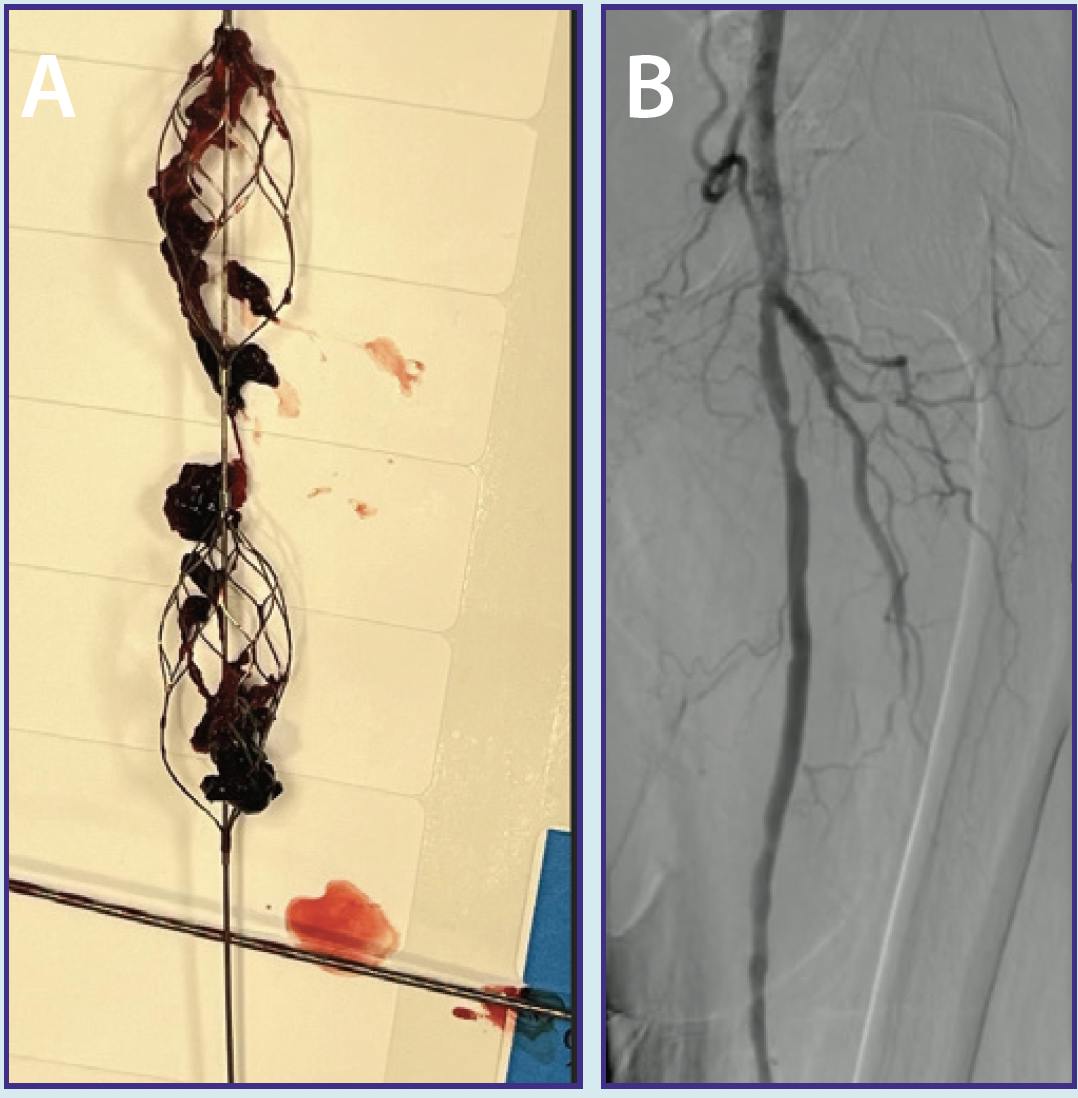
Figure 2. Subacute SFA thrombus removed with the Pounce™ XL System (A). Restoration of flow into the SFA and popliteal arteries with two passes of the Pounce™ XL System (B).
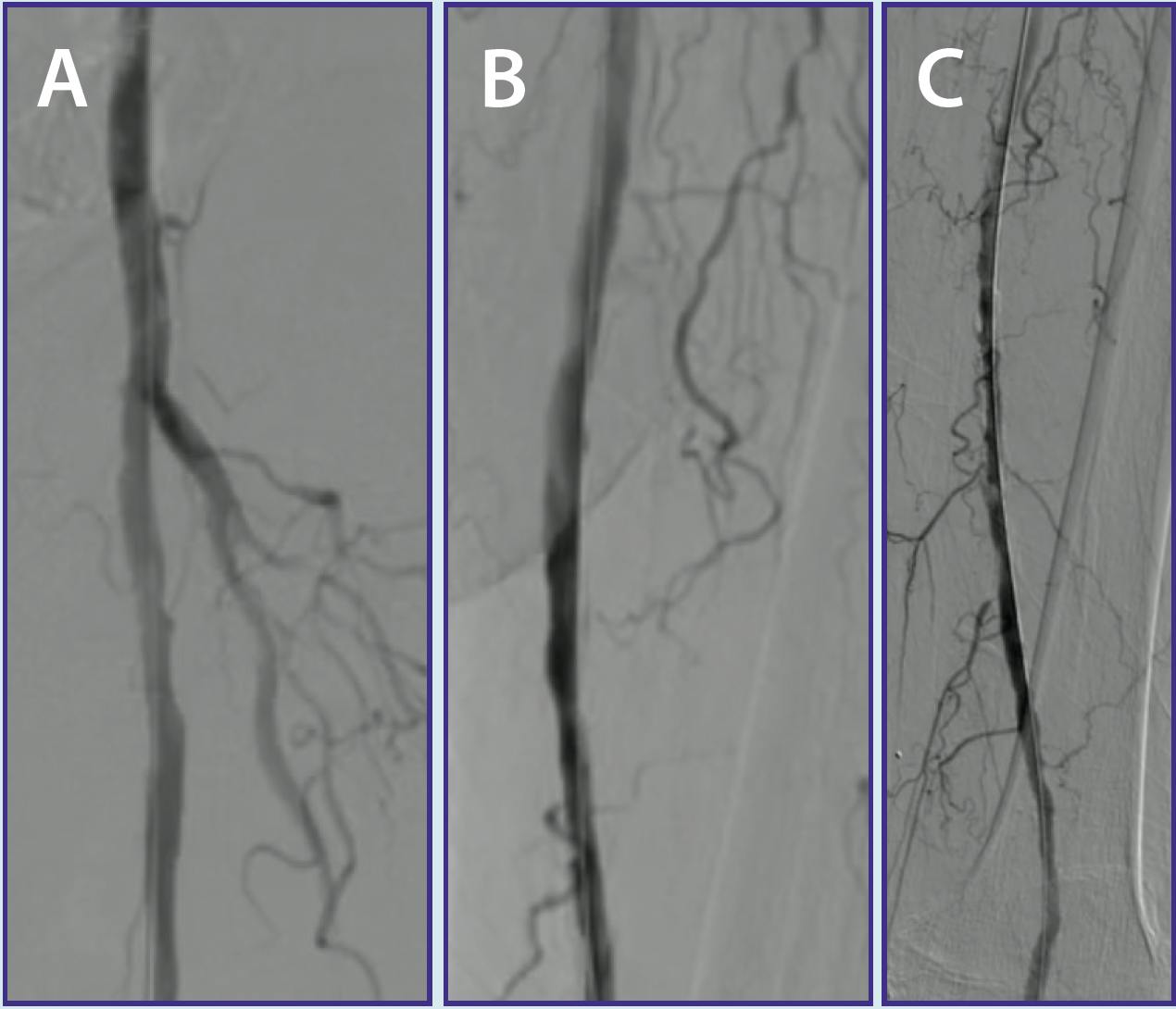
Figure 3. Final angiography showing restoration of flow to promixal SFA (A), mid-SFA (B), and distal SFA/popliteal artery (C) following Pounce™ XL System thrombectomy, angioplasty, DCB treatment, and IVL treatment.
POSTPROCEDURE OUTCOMES
Due to the history of rethrombosis on apixaban, the patient was bridged with enoxaparin, warfarin, and clopidogrel with a target international normalized ratio of 2 to 2.5 without aspirin to minimize bleeding risk. The patient had no recurrent events at 3-month follow-up. The Pounce™ XL Thrombectomy System enabled fast and efficient removal of subacute organized clot in a patient with a complex treatment history.
Caution: Federal (US) law restricts the Pounce™ Thrombectomy System to sale by or on the order of a physician. Please refer to the product’s Instructions for Use for indications, contraindications, warnings, and precautions. SURMODICS, POUNCE, and SURMODICS and POUNCE logos are trademarks of Surmodics, Inc. and/or its affiliates. Third-party trademarks are the property of their respective owners.

Advertisement
Advertisement