Advertisement
Advertisement
February 2025
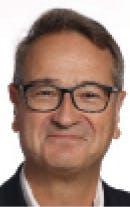
An Interview With Eric Ducasse, MD, PhD
Prof. Ducasse reflects on AI for aortic aneurysms, the state of carotid intervention in France, current and upcoming research projects with CHU Bordeaux, keys to a collaborative vascular meeting, and more.
What influenced you to choose vascular surgery as a career path, and what is your favorite aspect of the field?
I was drawn to the surgical domain thanks to the great fortune of working with the great Prof. Paul Puppinck, a wonderful and gifted mentor who opened my eyes to the world of surgery. I was immediately fascinated. My placement with him was truly a revelation, and surgery subsequently became my passion. My surgical career began in the north of France, followed by a wonderful fellowship in Rome, Italy, and eventually lead to my position as Professor of Vascular Surgery at Centre Hospitalier Universitaire (CHU) Bordeaux, a forward-thinking, cohesive, happy department of which I am immensely proud, associated with Prof. Xavier Bérard and Associate Prof. Caroline Caradu.
The most surprising and enjoyable aspect of the field, to me, has to be the evolution of the specialty. I started with predominantly open surgery, and now my personal activity has become almost exclusively endovascular. The practical aspects of my job and the way in which I am treating vascular diseases with the most cutting-edge, ever-evolving technology is far from what I could have imagined when I started out. We are constantly pushing the boundaries of ability and competency in the world of vascular surgery, collaborating with colleagues all around the world and forming close relationships with industry, and I find this stimulating and enjoyable on a daily basis.
You’ve recently been exploring the adoption of artificial intelligence (AI) for aortic aneurysms. How might AI fit into your current treatment algorithms, and where does AI have the potential to be most beneficial in the aortic realm?
Currently, day-to-day image interrogation for diagnosis, interpretation, and creation with the goal of measuring solutions using standard software remains based on individual expertise and is time consuming, leaving room for error and variation in interpretation. However, AI-automated analysis permits a complete and reproducible analysis, with a reduced margin of error and higher level of security, as well as increased time savings. The most important benefits in my opinion are, and will be, in the automatic and automated follow-up of aortic aneurysms with automated volume, diameter, and potential monitoring of migration of endoprostheses and bridging stents. I feel that this will revolutionize and standardize surveillance and increase the lifespan of endovascular solutions, ultimately improving outcomes for our patients.
Where do you see the biggest potential for AI in vascular care on the whole?
There is great promise emerging in not only the automated assessment of aneurysmal disease but also in automated assessment of calcium score in all arterial territories, which can indicate treatment indications and guide the most appropriate treatment methods (eg, bypass, traditional angioplasty and stenting, use of drug-coated devices, requirement for calcium debulking, and new scaffolding technology). This is really exciting and will help us choose the best solution for optimal outcomes.
You and your colleagues at the University of Bordeaux created a patient decision aid for choosing between open and endovascular surgery for unruptured abdominal aortic aneurysm.1 How is this tool used in practice, and what is the patient and operator reaction so far?
This combined project with general practitioners, vascular surgeons, anesthetists, and patients comprised a work of explanation and information synthesis regarding the benefits and risks of each technique and provided all of this to the patient in an easy-to-understand format. This practice keeps the patient, as they always should be, at the heart of their own decision-making—of course helped by the expertise of the multidisciplinary team. This method has been received extremely well by both patients and clinicians.
Looking at the aortic and endovascular aneurysm repair (EVAR) space in general, what breakthroughs do you hope to see in the next decade?
I think the most exciting prospect ahead is the development of ultra-low-profile devices, enabling us to further push boundaries and reduce operative complications. Furthermore, imagine the potential for even outpatient treatment of aneurysmal disease!
You also specialize in carotid artery disease treatment, an area that has seen increased attention. How would you describe the current landscape of carotid intervention in France? What are the biggest data and/or regulatory needs and unanswered questions?
In France, as in most places in the world, we have strict indications for carotid artery stenting (CAS), (restenosis, hostile neck, and contralateral occlusion), but the number of carotid stenting procedures performed in centers has increased over the past few years, especially with new cerebral protection devices and the use of mesh stents. Currently, data comparing CAS and carotid endarterectomy are more or less equal, but we still have an unanswered question: the real rate of stent restenosis, especially in mid- and long-term outcomes.
How has your own approach to carotid treatment evolved over the years?
As mentioned, treatments are regulated and guided in France, and I remain very close to the gold standard, which is open surgery. However, the numbers of CAS procedures, especially for restenosis or hostile neck, are still increasing year after year, with excellent results.
Can you give us a preview of your research priorities for the next few years?
With the entire team at CHU Bordeaux, we are working on multiple exciting projects, including the use of AI in both the aorta and the entire arterial network; a leading randomized controlled trial and registry (ENDO-FAV) comparing endovascular arteriovenous fistula versus open for vascular access surgery, funded by the French Ministry of Health; a European registry on use of the iCover stent (iVascular) for bridging stents in fenestrated EVAR; and our 2-year data of the LUMIFOLLOW study of the Luminor drug-coated balloon (iVascular). With Associate Prof. Caradu, we also have RegisTREO, which is evaluating the use of the TREOFIT and TREOFEN device platforms (Terumo Aortic) for the European registry. Lastly, with Prof. Berard, we continue to research the optimal management of graft and native aortic infections and are a major referral center for these cases. And many more, trust me!
Along with collaborators Dr. Koen Deloose, Prof. Yann Gouëffic, and Prof. Stéphan Haulon, you lead the annual Paris Vascular Insights (PVI) course. What hurdles did the group encounter launching a meeting in a challenging landscape for live events, and how did you work through them?
Koen, Yann, Stéphan, and myself are great friends, and we are very complementary in terms of our activity, point of view, and influence in the field. The collaboration was therefore very easy and natural. The most marked evolution was the organization of the event group Europa, which manages the organization and the promotion of this event with an extremely impressive efficiency and artistic flare, while leaving the scientific parts to the directors and codirectors. It was a perfect team, and the process was highly enjoyable.
What have been the groups’ overall goals in making PVI unique and attractive for attendees and sponsors?
The PVI congress is based on interactivity, kindness, and honest exchange regarding the gritty real world of vascular surgery. Participation and communication are welcomed, encouraged, and necessary. This is achieved by the highly modern and unique format, corresponding to the evolution of society and notably social media. We didn’t want to restrict or highly control/moderate the sessions, so the speaker can be interrupted, allowing for a continued and open exchange. The speaker is even on the same physical level as the audience for easier exchanges with colleagues.
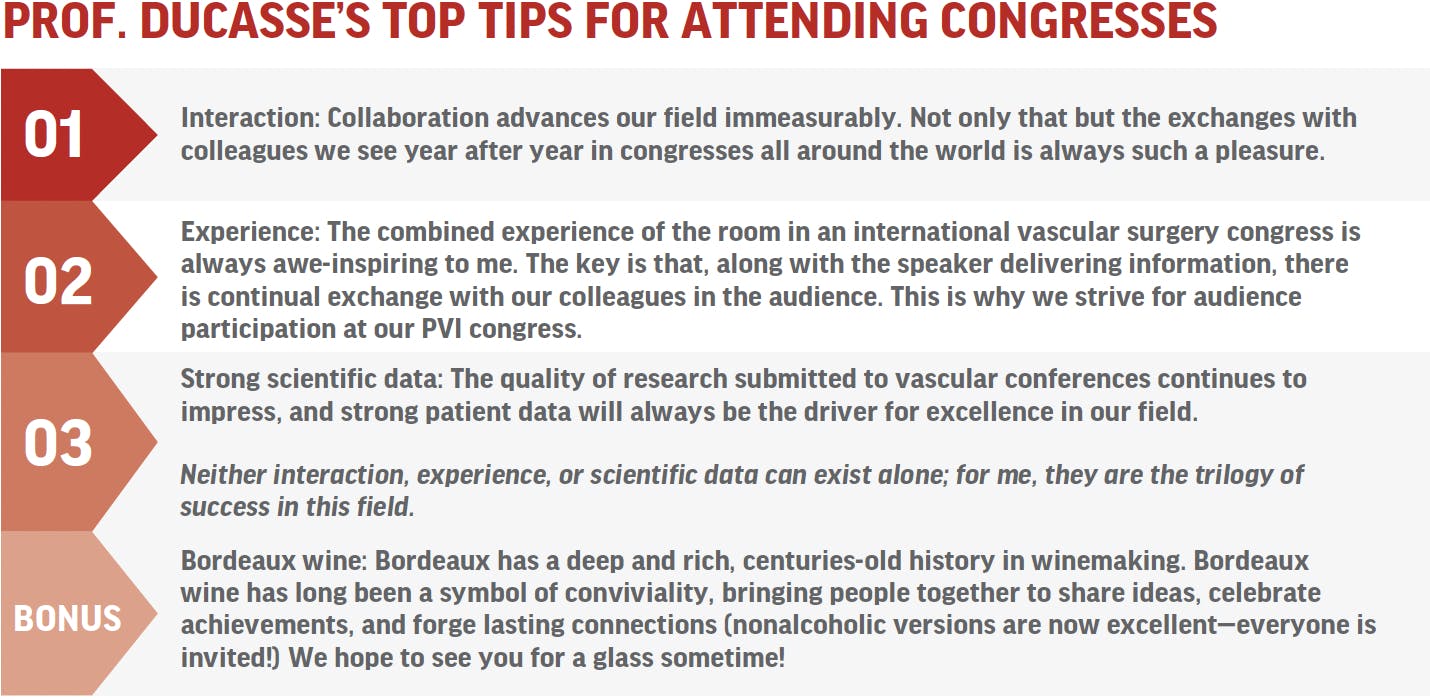
We wanted to create a rhythm akin to what you would get from scrolling through social media or web pages, with the ability to exchange rooms at will, contribute, and receive a huge amount of information within the day depending on your interest. The goal was to make the most of every single minute of the congress and the information transmitted. However, this format does not stop at the conference, and we want to keep the conversation going throughout the year with the same rhythm and intensity, as mirrored in our web platform with interviews and continued clinical cases. Everyone is encouraged to contribute!
As you look ahead to vascular meetings in 2025 as a whole, what topics and issue should be prioritized in meeting curricula?
The topical issues for me remain more interaction with colleagues, more clinical data, more clinical cases, and more social media team sessions. There are so many ideas to experiment with and boundaries to be pushed!
What is the top item on your personal bucket list?
Can I have three?! I love being on the water, and I pass more and more time in aquatic activity in my sailing boat, surfing, and windsurfing. I also did a pre-doctorate in art history, and I dream of taking up those studies again, especially Italian Renaissance and American Expressionism. The third thing must be spending more time with my wife and two beautiful daughters and chasing them all over the world!
1. Dumausé M, Mouillard M, Balézeaux Q, et al. Creation of a shared medical decision support tool for the management of abdominal aortic aneurysms. Ann Vasc Surg. 2024;105:373-381. doi: 10.1016/j.avsg.2024.03.003
Advertisement
Advertisement
Interested in reading more interviews?
To read more interviews with thought leaders in the vascular field, check out our Profiles & Perspectives hub.
Read More