Advertisement
Advertisement
January 2025
Sponsored by Inari Medical
Setting the New Standard for Arterial Thrombectomy
Introducing Artix, a dual aspiration and mechanical thrombectomy solution designed to address a broad spectrum of arterial thrombus cases.
With David J. Mond, MD; Christian Salinas, MD; John Parks, MD; Joshua Cockrell, MD; and John Gray, MD
Peripheral artery disease (PAD) affects > 230 million people worldwide.1 Beyond major adverse cardiovascular events, patients with PAD are also at risk of limb ischemia, which is associated with high morbidity and mortality. Specifically, acute limb ischemia (ALI), a severe manifestation of PAD, is caused by in situ thrombosis or embolism that leads to a sudden decrease in perfusion and threatens limb viability. The amputation rate can be as high as 40%, with a mortality rate from 15% to 20%.2 Hence, the need for urgent intervention in ALI imposes a significant economic burden on the health care system. Based on a cost-effectiveness analysis using real-world data, ALI management per episode costs up to $31,000 per patient.3
Management of ALI includes anticoagulation, open thrombectomy, surgical bypass, catheter-directed thrombolysis (CDT), endovascular thrombectomy, and a combination of open and endovascular techniques. However, these treatment options have inherent limitations.
Traditionally, these patients are treated with open surgical embolectomy or bypass. However, these procedures may carry an increased risk of myocardial infarction, acute kidney injury, major bleeding, and wound infection.4 These surgical approaches also entail prolonged recovery periods and are often unsuitable for patients with severe comorbidities.
Existing endovascular therapies for ALI are limited by safety concerns, procedural inefficiencies, and efficacy. Continuous aspiration thrombectomy devices are associated with significant procedural blood loss,5,6 while rheolytic thrombectomy devices are associated with hemolysis-driven acute kidney injury.7 Moreover, most percutaneous thrombectomy devices rely on a single mechanism—aspiration, rheolytic, or mechanical—to remove thrombus. This constrained approach often leads to incomplete thrombus clearance. Consequently, CDT is frequently employed as an adjunctive therapy, with overnight thrombolytic infusion reported in 20% to 60% of cases.6,8-10 However, CDT possesses additional challenges, requiring extended infusion times that may not be suitable for patients with severe ischemia. Additionally, the high risks of major bleeding complications mandate continuous monitoring in the intensive care unit.11 All of these endovascular therapies also exhibit limited efficacy against chronic thrombus, reducing their utility in nonacute cases, which can frequently be escalated to open surgery.
These shortcomings highlight the critical need for a purpose-built solution capable of effectively removing a broad spectrum of thrombi without relying on adjunctive thrombolytics and while reducing the risk of adverse events.
Drawing on its extensive experience in managing peripheral venous thromboembolism, Inari Medical developed the Artix™ Thrombectomy System to address critical unmet needs in arterial thrombectomy (Figure 1). Born from a significant clinical need and designed alongside deep physician feedback, the Artix system is an innovative, FDA-cleared, all-in-one solution purpose-built to treat acute to chronic thrombi* and emboli in peripheral arteries ranging from 3 to 8 mm in diameter.12 Artix features a dual platform design that leverages aspiration and mechanical thrombectomy for removing thrombi and emboli in a single session. This over-the-wire system includes:
- Thin-walled sheath: A hydrophilic 8-F sheath with a low-profile, 7-F access, available in 65 and 90 cm lengths, facilitates streamlined access and aspiration.
- Covered funnel catheter: This tool restricts proximal flow to minimize the risk of thrombus migration while enhancing thrombus capture by compressing it into the catheter.
- MT thrombectomy device: Equipped with a nitinol element, the device is optimized for retrieving thrombi of varying chronicity.* It is available in two sizes—MT6 for vessels 3 to 6 mm in diameter and MT8 for vessels 4 to 8 mm in diameter.
- AX aspiration catheter: An 8-F, beveled-tip catheter designed for efficient suction thrombectomy.
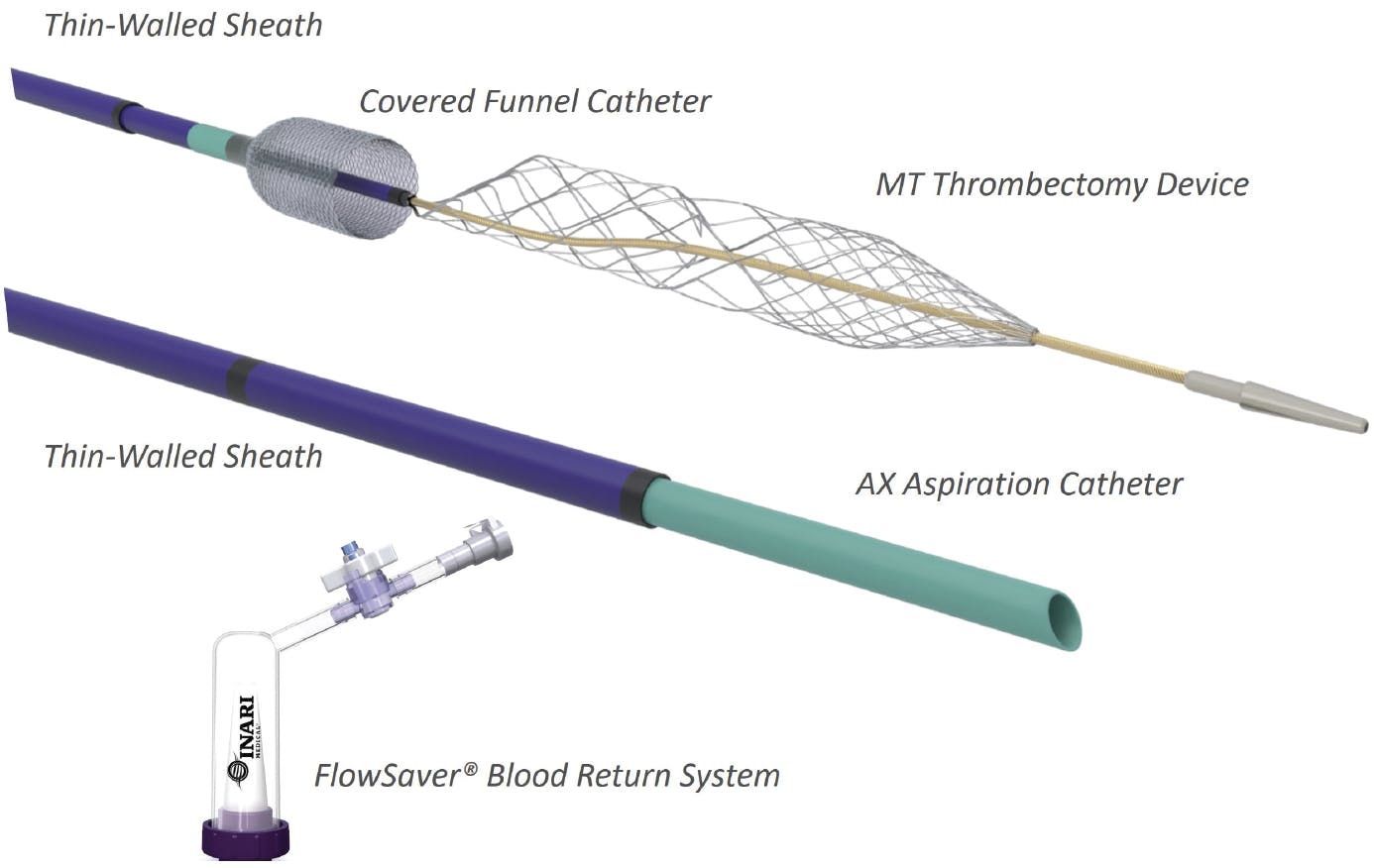
Figure 1. The Artix Thrombectomy System includes an 8-F thin-walled sheath with a 7-F access profile, a covered funnel catheter for proximal flow restriction, the MT catheter with an expandable mechanical element, and the AX aspiration catheter for exceptional treatment flexibility and control during arterial thrombectomy procedures. The system is fully compatible with the FlowSaver Blood Return System, ensuring optimized blood management.
The system also integrates Inari’s proprietary FlowSaver® Blood Return System, which enables intraprocedural blood return to mitigate blood loss, ensuring a safer and more efficient procedure.
This article showcases four compelling cases that highlight the effectiveness of Artix in treating peripheral arterial thromboembolism. We discuss treatment protocols and patient outcomes, and we offer valuable insights into this emerging therapeutic option.
CASE 1: EFFICIENT RESTORATION OF PERFUSION TO FOOT VIA POPLITEAL ARTERY WITH THREE-VESSEL RUNOFF IN AN ELDERLY PATIENT WITH ATRIAL FIBRILLATION

PATIENT PRESENTATION
A woman in her late 80s presented to the emergency department (ED) with new onset of right lower extremity pain, poikilothermia, and pulselessness alongside chest and abdominal pain. Her medical history included atrial fibrillation (treated with rivaroxaban), sick sinus syndrome, hypertension, cerebellar stroke, and hypercholesteremia. She had been treated 8 years prior for a right popliteal artery occlusion via overnight CDT with Ekos infusion catheter (Boston Scientific Corporation) followed by rheolytic thrombectomy with AngioJet (Boston Scientific Corporation). It was suspected that she was noncompliant with her oral anticoagulation.
Angiography revealed an acute obstructive thrombus in the right distal popliteal artery extending to the entire tibioperoneal trunk (TPT) and proximal anterior tibial (AT) artery, with subsequent reconstitution of the AT artery, posterior tibial (PT) artery, and a truncated peroneal artery (Figure 2A). Angiography of the right foot also revealed impaired flow (Figure 2B).
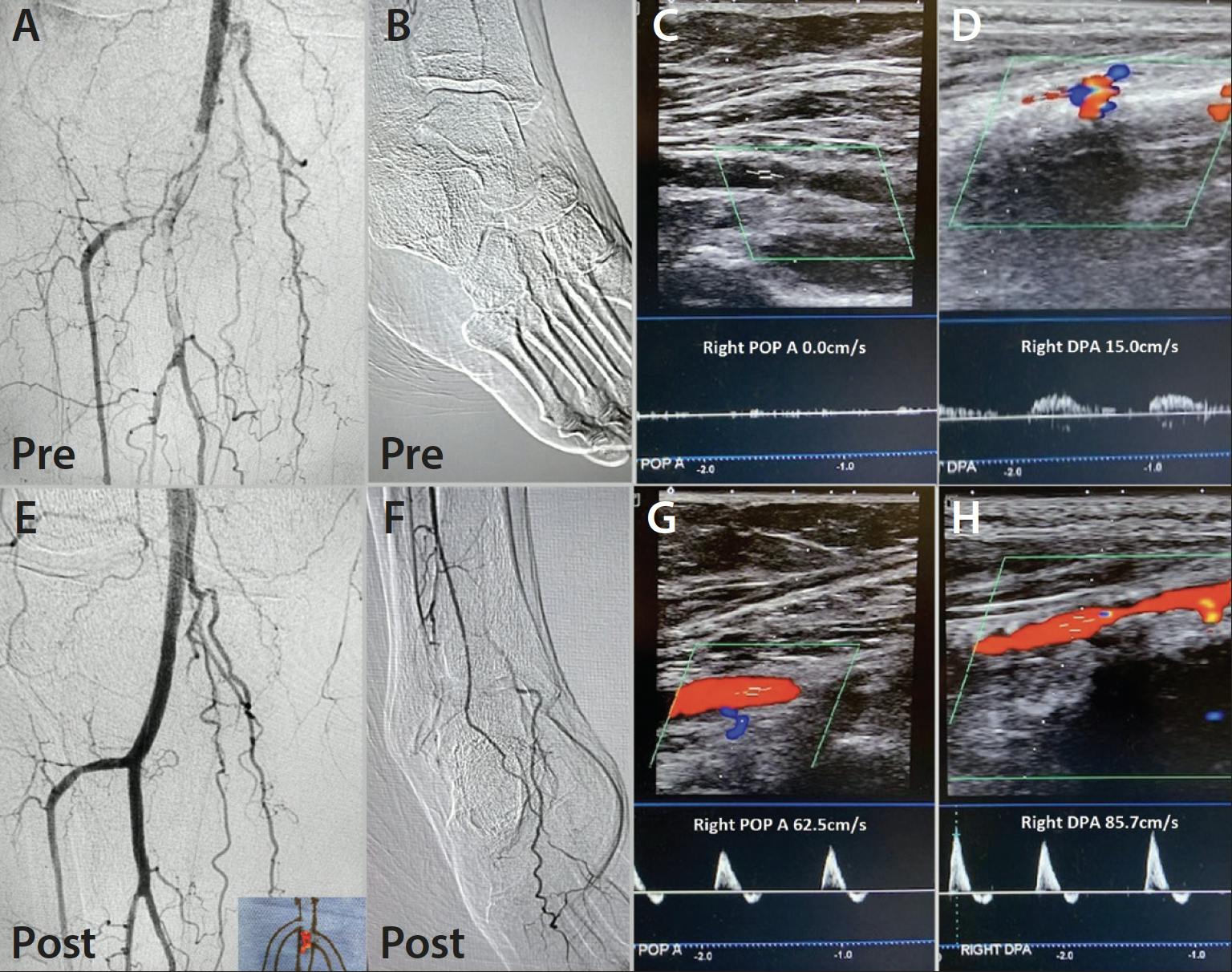
Figure 2. Preprocedural angiogram showing acute obstructive thrombus involving the distal below-knee popliteal artery extending through the entire TPT and proximal AT artery with collateral vessel reconstitution of the AT artery, PT artery, and truncated peroneal artery (A). Preprocedural angiogram of the right foot revealing poor flow in the AT artery supplying the foot via the DPA due to marked underfilling (B). Color and spectral Doppler image of the right popliteal artery prior to thrombectomy with the Artix system, showing no evidence of color filling of the arterial lumen and an absent spectral Doppler signal (C). Color and spectral Doppler image of the right DPA, showing minimal color filling and dampened monophasic Doppler waveforms before revascularization (D). Postprocedural angiogram showing successful flow through the popliteal artery, TPT, and three-vessel runoff, with completely patent AT, PT, and peroneal arteries; the inset highlights a portion of extracted thrombus (E). Angiogram demonstrating distal foot is supplied by the PT and AT arteries with intact pedal loop (F). Color and spectral Doppler images of the right popliteal artery showing evidence of color filling of the lumen and normal biphasic Doppler flow signals (G). Color and spectral Doppler images of the right DPA showing extensive color filling and normal biphasic signals after revascularization (H).
Duplex ultrasonography (DUS) images of the right popliteal artery showed no evidence of any color filling of the arterial lumen and an absent spectral Doppler signal prior to the thrombectomy procedure (Figure 2C). DUS of the right dorsalis pedis artery (DPA) revealed minimal color filling and a blunted monophasic waveform (Figure 2D).
PROCEDURAL OVERVIEW
The patient was placed in the supine position, and local anesthesia was administered. Ultrasound-guided access of the left common femoral artery (CFA) was obtained. Using an up-and-over technique, a 0.035-inch Storq steerable guidewire (Cordis) was advanced to the right popliteal artery. The device’s thin-walled sheath was placed over the guidewire and advanced to the superficial femoral artery (SFA). The guidewire was then exchanged for a 0.014-inch Grand Slam guidewire (Asahi Intecc USA, Inc.). The covered funnel catheter was deployed through the sheath and positioned in the SFA to provide proximal flow restriction.
The MT6 thrombectomy device was then introduced and advanced over the guidewire into the peroneal artery distal of the thrombus. Three passes with the MT6 yielded acute- and chronic-appearing thrombus, while a fourth pass extracted no additional thrombus. Aspiration through the side port of the thin-walled sheath removed any residual thrombus. No evidence of thrombus migration was observed. Angiography revealed restored flow through the popliteal, TPT, AT, PT, and peroneal arteries (Figure 2E). Postprocedural angiography confirmed full restoration of three-vessel runoff to the distal foot via the AT, PT, and peroneal arteries with an intact pedal loop (Figure 2F). Hemostasis was achieved with a Mynx vascular closure device (Cordis) and superficial Dermabond (Ethicon, a Johnson & Johnson company). DUS the next day showed normal biphasic Doppler signals in the popliteal artery and DPA (Figure 2G and 2H).
The Artix device time was 18 minutes. Procedural blood loss was minimal, and the patient tolerated the procedure well, remaining hemodynamically stable.
The next day, the patient exhibited normal intact motor function and sensation in the right lower extremity, a warm foot with palpable DPA and PT pulses, and resolution of pain and numbness. She was able to dorsiflex and plantarflex her ankle. After undergoing physical therapy, she was discharged on apixaban 8 days postprocedure without complaints.
DISCUSSION
This case illustrates the use of the Artix system as a first-line treatment for restoring blood flow to the right foot via the popliteal artery with a three-vessel runoff. For this elderly patient with significant comorbidities, a surgical intervention would have carried higher risks and prolonged recovery. Instead, endovascular thrombectomy enabled rapid revascularization.
By leveraging both mechanical and aspiration thrombectomy modalities, Artix successfully removed thrombi of varying chronicity in a single session with minimal device time. The MT thrombectomy device disrupted and captured thrombus effectively while maintaining wire access and utilizing the covered funnel catheter for proximal flow restriction. Aspiration via the thin-walled sheath ensured complete thrombus clearance.
Unlike aspiration-only devices, which may struggle with chronic occlusion, Artix cleared thrombus without the need for adjunctive thrombolysis or additional interventions. In contrast to thrombolytic therapy, which carries major bleeding risks—up to 14% requiring transfusion13—and may prove ineffective for organized thrombus, Artix achieved optimal outcomes.
Notably, the patient’s prior episode involving a similar occlusion required overnight thrombolysis followed by thrombectomy, underscoring the efficiency of Artix as a standalone solution in this instance.
INITIAL EXPERIENCE WITH ARTIX
From October to December 2024, 40 cases were performed in native vessels by 36 physicians aimed at evaluating the performance, safety, and effectiveness of the Artix system (Figure 3). Treated patients had peripheral arterial thromboembolism resulting from preexisting PAD or thrombosis (45%), cardiogenic embolism (35%), iatrogenic embolism (8%), and other etiologies (12%). The treated segments extended from the common iliac artery (CIA) to the tibial runoff vessels. Median estimated blood loss was 30 mL. Thrombectomy with Artix was successfully completed in a single session in 95% of cases, with postprocedural thrombolytic therapy required in only 5%.
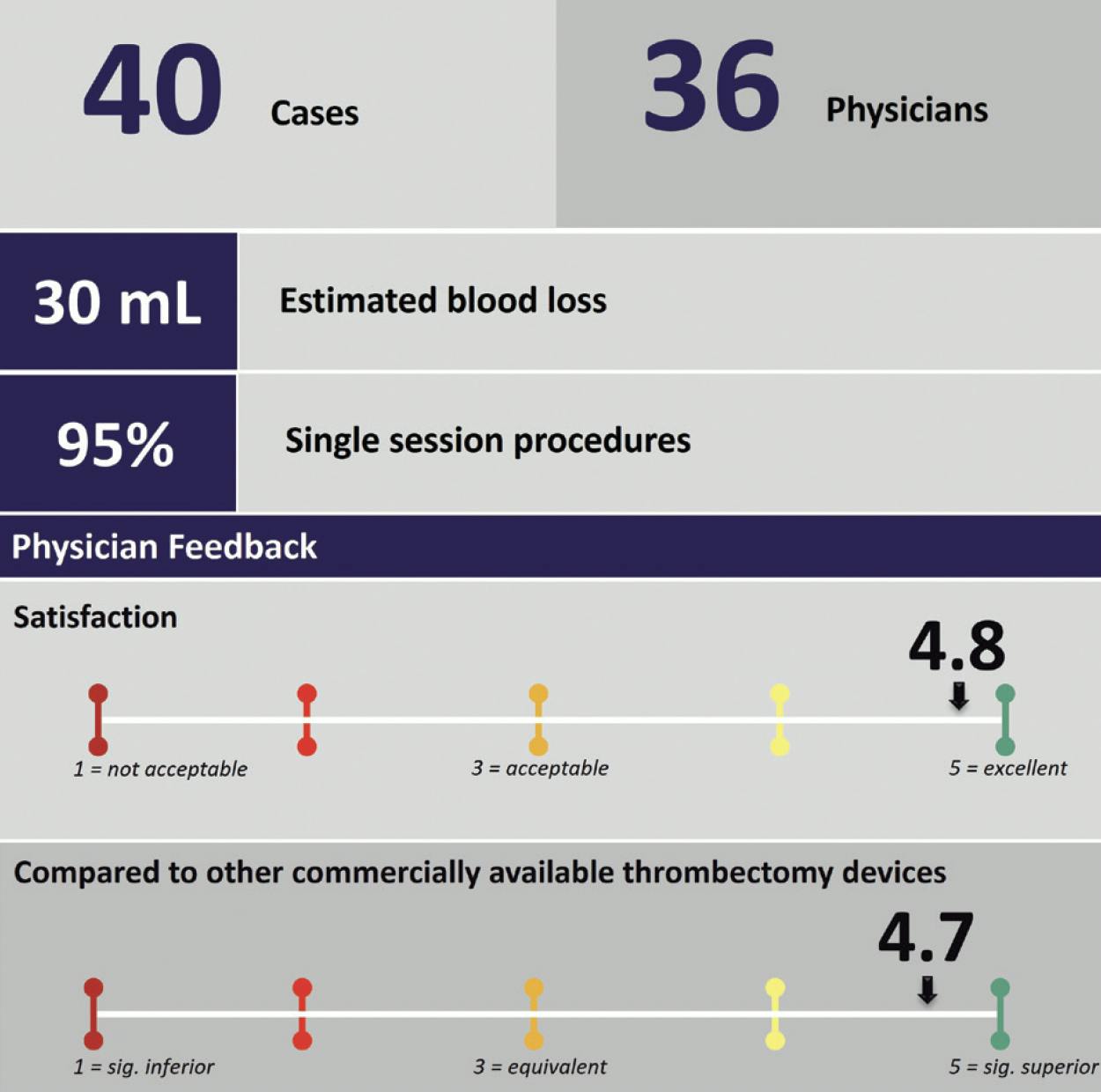
Figure 3. Summary of initial experience with the Artix system.
Overall, physician feedback has been highly favorable. On a scale from 1 to 5 where 1 is “not acceptable” and 5 is “excellent,” physician satisfaction averaged 4.8 ± 0.4. When asked to compare Artix to other commercially available thrombectomy devices, physicians rated Artix 4.7 ± 0.5 on a scale from 1 to 5, where 1 represents “significantly inferior,” 3 is “equivalent,” and 5 denotes “significantly superior.”
HIGHLIGHTED CASES WITH ARTIX
The following cases illustrate the successful use of Artix for arterial thrombectomy, whether as a first-line or bailout treatment. These cases highlight the system’s versatility in effectively clearing thrombus of varying sizes and chronicities,* from the CIA down to the tibial runoff vessels.
CASE 2

A man in his mid-40s with a history of viral myocarditis associated with congestive heart failure presented to the ED with bilateral lower extremity sensory and motor deficit and pulselessness. Angiography showed occlusive thromboembolic disease of the left popliteal artery through runoff vessels and of the right distal SFA through runoff vessels (Figure 4A and 4E). Despite 12 hours of CDT with tissue plasminogen activator, angiography showed persistent and unchanged bilateral occlusions (Figure 4B and 4F). Starting with the left lower extremity, mechanical and aspiration thrombectomy were performed with an MT thrombectomy device and an AX aspiration catheter, respectively, using the up-and-over technique. The approach resulted in patent inflow, outflow, and single-vessel runoff bilaterally (Figure 4C and 4G). Extracted acute and nonacute thrombi are shown in Figure 4D and 4H. The covered funnel catheter was deployed in the SFA on both sides during thrombectomy, ensuring flow restriction. No thrombus migration was observed, and no additional thrombolytics were administered. The Artix device time was 70 minutes. Estimated blood loss was 150 mL. The patient tolerated the procedure well, without complication and was discharged the following day. This case highlights how effectively the dual mechanism of Artix thoroughly removes thrombus, even in a patient with bilateral occlusions after unsuccessful overnight CDT.
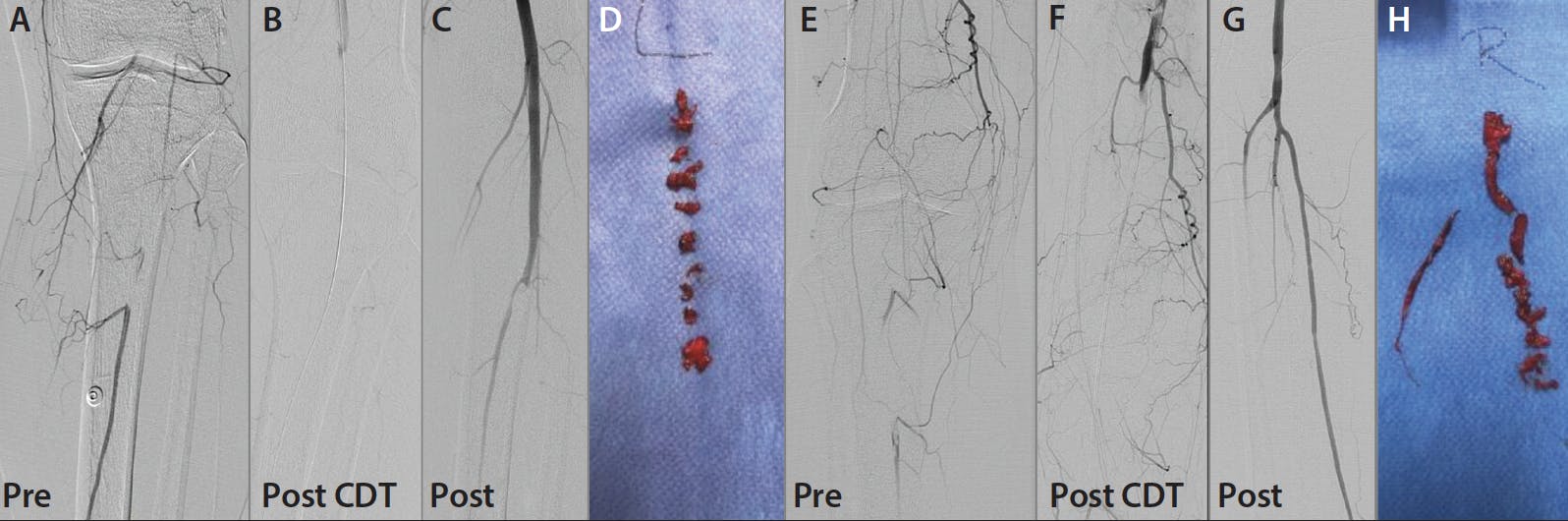
Figure 4. Preprocedural angiograms of the left lower extremity revealing occlusive thrombus in the left popliteal artery through runoff vessels (A) and the right lower extremity showing obstructive thrombus in the right SFA extending to the tibial runoff vessels (E). Angiograms after overnight CDT illustrating persistent, unchanged occlusive thromboembolic disease (B, F). Postprocedural angiograms demonstrating widely patent left popliteal and left PT artery (C) and restored flow through the right SFA, right popliteal artery, and right PT artery (G) after successful mechanical and aspiration thrombectomy with Artix. Photographs of the extracted thrombi (D, H).
CASE 3


A man in his 50s with no significant past medical history presented with right leg pain that began 36 hours prior to presentation. He was found to have new-onset heart failure and critical limb ischemia. CTA demonstrated occlusion of the right CIA and right SFA with minimal distal runoff. Occlusion was felt likely to be due to a cardiac-related thrombotic event. He was a poor candidate for surgical thrombectomy given his cardiac status, so a percutaneous approach was selected. The patient was initially treated with Indigo aspiration system (Penumbra, Inc.) for the CIA, SFA, and PT artery occlusions followed by overnight CDT. However, no improvement was observed (Figure 5A and 5B). In response, the decision was made to employ the Artix system to address the occlusions. Mechanical thrombectomy of the CIA was performed with the MT8 thrombectomy device via a retrograde approach, which cleared the occlusive thrombus in two passes, resulting in a widely patent CIA (Figure 5C). Thrombus clearance in the SFA was achieved in three aspirations with the AX aspiration catheter, leading to a patent SFA (Figure 5D). Lastly, the MT6 thrombectomy device was used in the PT artery above the ankle to clear a small thrombus. Extracted thrombus burden is shown in Figure 5E and 5F.
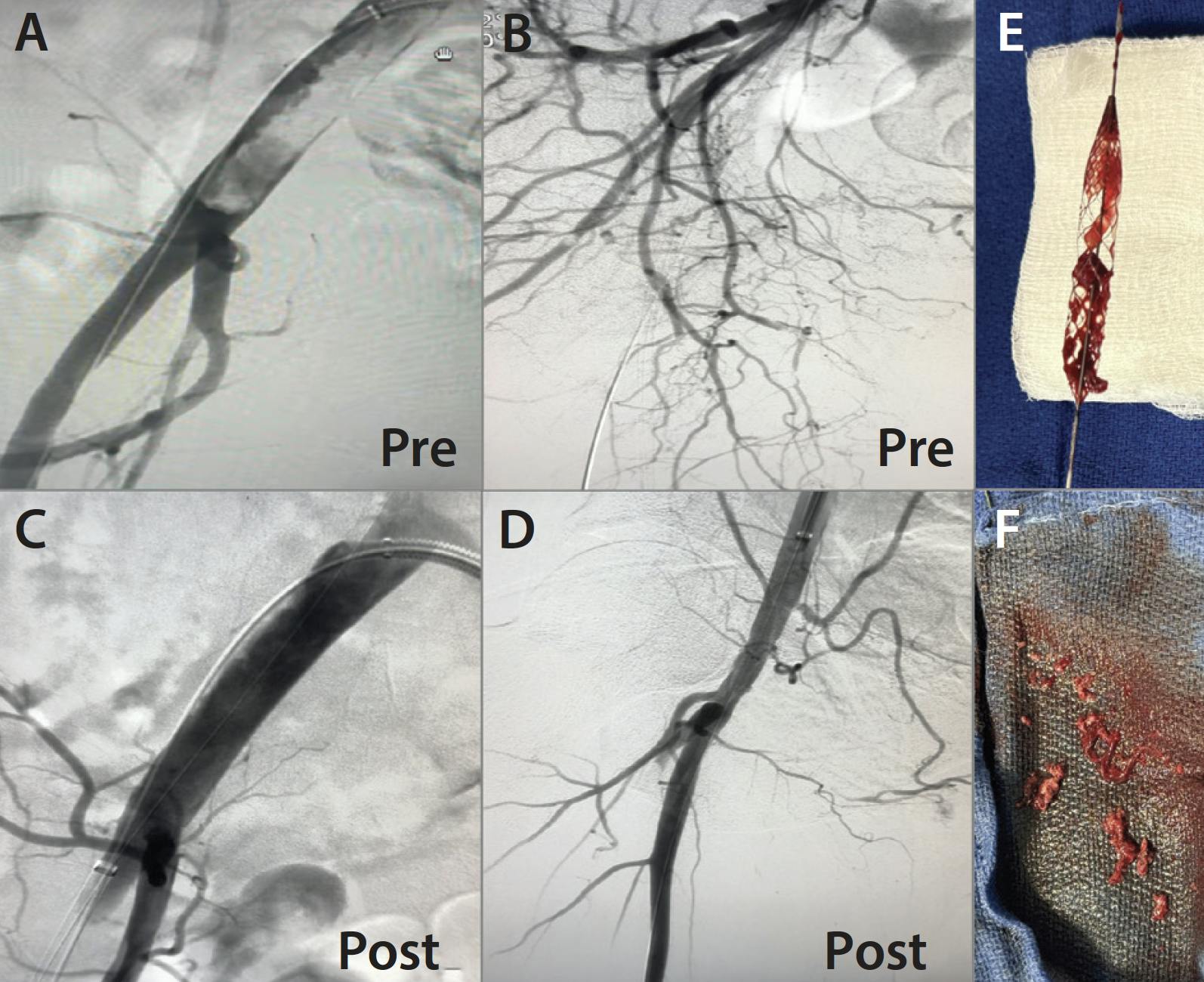
Figure 5. Angiograms post–aspiration thrombectomy with Indigo, followed by overnight CDT, demonstrating persistent unchanged large thrombus burden in the right CIA with occlusion of the profunda and the right SFA along with reconstituted collateral vessels (A, B). Postprocedural angiograms demonstrating a widely patent CIA and SFA after successful mechanical and aspiration thrombectomy with Artix (C, D). Photographs of the extracted thrombus (E, F).
The Artix device time was 40 minutes. Estimated blood loss was 120 mL. After thrombectomy, the patient underwent a fasciotomy for compartment syndrome, which restored warmth, color, and flow to the calf. Although flow was restored to the ankle, flow into the pedal arch was absent, likely due to the patient’s delayed presentation. This eventually resulted in a partial foot amputation 1 week later. The patient was discharged to a rehabilitation facility and had no recurrence of significant limb ischemia.
This case illustrates another example of the successful use of Artix as a bailout treatment option, demonstrating the effectiveness of its dual mechanical and aspiration thrombectomy solutions in achieving robust thrombus clearance. Importantly, no additional thrombolytic therapy was needed, and the patient was able to avoid total limb loss.
CASE 4

A woman in her early 60s with a history of lung cancer was referred to vascular surgery after lung resection performed 1 day prior, presenting with severe pain in both legs and pulselessness in the left. Her medical history included prior bilateral CFA endarterectomy and bilateral iliac stents. Angiography revealed occlusive thrombus in the left CIA extending to the left CFA and in the right distal external iliac artery (EIA) extending to the right CFA (Figure 6A). Bilateral mechanical thrombectomy was performed with the Artix system using the up-and-over technique, starting with the left side. The covered funnel catheter was deployed in the CIA to reduce the risk of thrombus migration. Complete thrombus removal was achieved in four and three passes with an MT8 device on the left and right side, respectively. Completion aortogram demonstrated restored flow to both profunda femoris arteries after thrombus removal (Figure 6B and 6C). Postprocedure, strong femoral pulses and distal Doppler signals confirmed in-line flow to the groins and adequate pedal perfusion in both limbs. No thrombus migration was observed, and adjunctive thrombolytic therapy was not needed. The Artix device time was 30 minutes. Estimated blood loss was 60 mL.
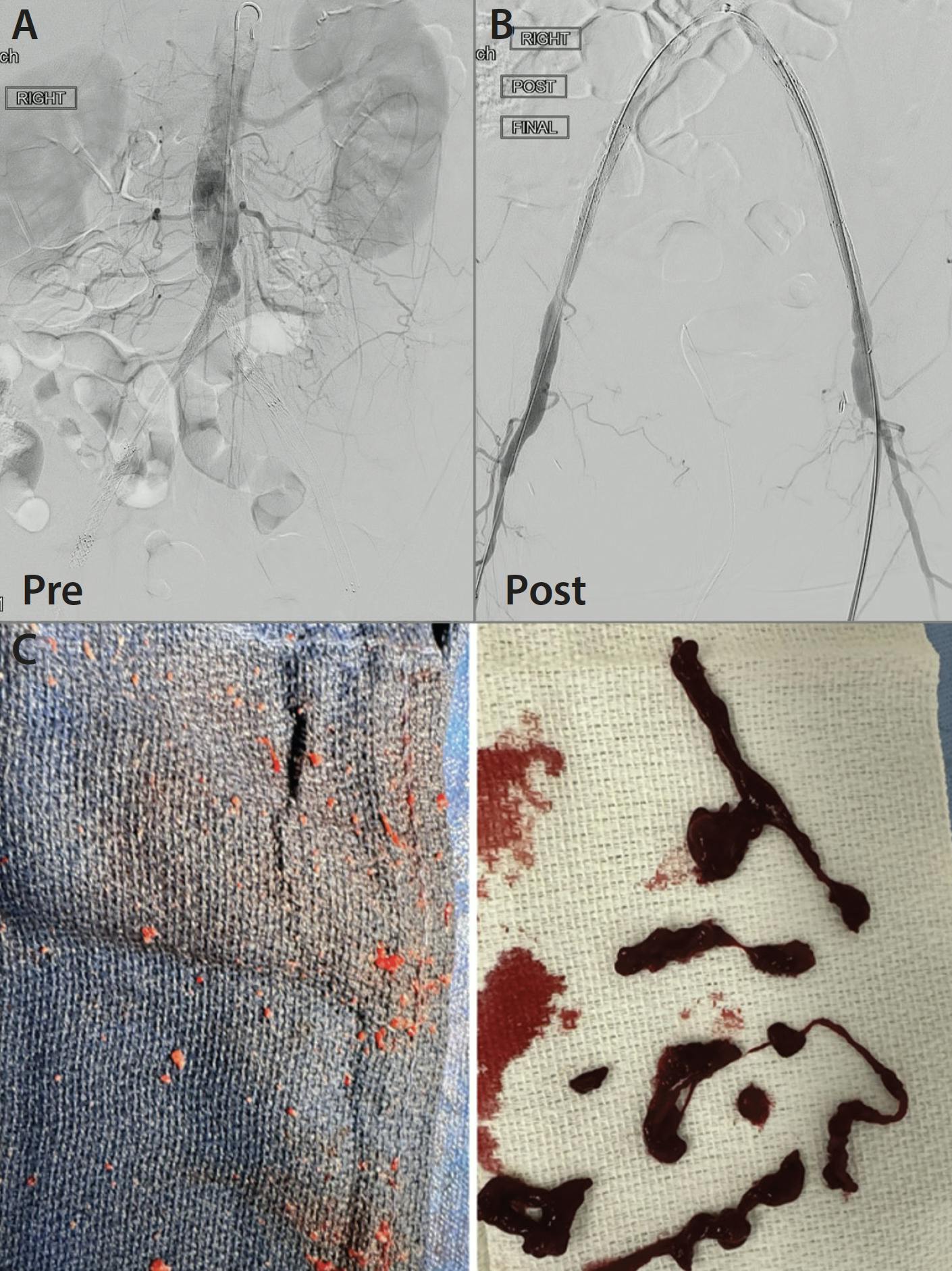
Figure 6. Preprocedural angiogram revealing absence of flow in the left CIA extending to the left CFA and in the right distal EIA extending to the right CFA (A). Postprocedural angiogram demonstrating restored flow in both lower extremities, including the profunda femoris arteries (B). Photographs of the extracted thrombi (C).
The patient remained in the hospital for reasons unrelated to the thrombectomy procedure. At 1-month postprocedure, the patient underwent a below-knee amputation of her left leg due to left hemiparesis resulting from a right-sided stroke and a distal occlusion in the collateral vessels developed due to her long-standing occluded SFA. Despite these comorbidities, the patient’s treated segments remained patent at that time. The thrombectomy procedure was deemed successful, as it effectively cleared bilateral thrombus in a single session, preventing the need for additional open surgical procedure.
CONCLUSION
The initial experience of the Artix Thrombectomy System highlights its promising potential to advance the treatment of peripheral arterial thromboembolism, filling a critical gap in the current treatment landscape. These real-world data provide valuable insights into the clinical performance of the Artix system. Conventional thrombectomy devices that rely solely on a single mechanism of action would not have effectively treated the cases presented in this article. The dual mechanical and aspiration thrombectomy platform that Artix offers was key to achieving successful outcomes. In each case, Artix delivered efficient removal of thrombus of varying chronicities* and sizes, resulting in rapid revascularization of the target vessels in a single session, all without the need for adjunctive thrombolytics. Overall, the all-in-one Artix system marks an exciting step forward for arterial thromboembolism management.
1. Song P, Fang Z, Wang H, et al. Global and regional prevalence, burden, and risk factors for carotid atherosclerosis: a systematic review, meta-analysis, and modelling study. Lancet Glob Health. 2020;8:e721-e729. doi: 10.1016/S2214-109X(20)30117-0
2. Norgren L, Hiatt WR, Dormandy JA, et al; TASC II Working Group. Inter-society consensus for the management of peripheral arterial disease (TASC II). J Vasc Surg. 2007;45(suppl S):S5-S67. doi: 10.1016/j.jvs.2006.12.037
3. Vaidya V, Gangan N, Comerota A, Lurie F. Cost-effectiveness analysis of initial treatment strategies for nonembolic acute limb ischemia using real-world data. Ann Vasc Surg. 2017;39:276-283. doi: 10.1016/j.avsg.2016.05.125
4. Kolte D, Kennedy KF, Shishehbor MH, et al. Endovascular versus surgical revascularization for acute limb ischemia: a propensity-score matched analysis. Circ Cardiovasc Interv. 2020;13:e008150. doi: 10.1161/CIRCINTERVENTIONS.119.008150
5. Maldonado TS, Powell A, Wendorff H, et al; STRIDE study group. Safety and efficacy of mechanical aspiration thrombectomy for patients with acute lower extremity ischemia. J Vasc Surg. 2024;79:584-592.e5. doi: 10.1016/j.jvs.2023.10.062
6. de Donato G, Pasqui E, Ruffino MA, et al; INDIAN UP Trial group. Mechanical thrombectomy in acute limb ischemia: ad interim results of the INDIAN UP Trial. J Cardiovasc Surg (Torino). 2023;64:247-254. doi: 10.23736/S0021-9509.23.12668-1
7. Escobar GA, Burks D, Abate MR, et al. Risk of acute kidney injury after percutaneous pharmacomechanical thrombectomy using angiojet in venous and arterial thrombosis. Ann Vasc Surg. 2017;42:238-245. doi: 10.1016/j.avsg.2016.12.018
8. Maldonado TS, Powell A, Wendorff H, et al; STRIDE study group. One-year limb salvage and quality of life following mechanical aspiration thrombectomy in patients with acute lower extremity ischemia. J Vasc Surg. 2024;80:1159-1168.e5. doi: 10.1016/j.jvs.2024.05.0439
9. Gong M, He X, Zhao B, et al. Endovascular revascularization strategies using catheter-based thrombectomy versus conventional catheter-directed thrombolysis for acute limb ischemia. Thromb J. 2021;19:96. doi: 10.1186/s12959-021-00349-9
10. Heller S, Lubanda JC, Varejka P, et al. Percutaneous mechanical thrombectomy using Rotarex® S device in acute limb ischemia in infrainguinal occlusions. Biomed Res Int. 2017;2017:2362769. doi: 10.1155/2017/2362769
11. George EL, Colvard B, Ho VT, et al. Real-world outcomes of EKOS ultrasound-enhanced catheter-directed thrombolysis for acute limb ischemia. Ann Vasc Surg. 2020;66:479-485. doi: 10.1016/j.avsg.2019.12.026
12. Narula N, Dannenberg AJ, Olin JW, et al. Pathology of peripheral artery disease in patients with critical limb ischemia. J Am Coll Cardiol. 2018 ;72:2152-2163. doi: 10.1016/j.jacc.2018.08.002
13. Grip O, Kuoppala M, Acosta S, et al. Outcome and complications after intra-arterial thrombolysis for lower limb ischaemia with or without continuous heparin infusion. Br J Surg. 2014;101:1105-12. doi: 10.1002/bjs.9579
Indications for Use:
The Artix thin-walled sheath is indicated for (1) The non-surgical removal of emboli and thrombi from blood vessels. (2) Injection, infusion, and/or aspiration of contrast media and other fluids into or from a blood vessel. (3) Use as a conduit for endovascular devices. (4) Use in facilitating the insertion and guidance of an intravascular catheter into a selected blood vessel. The funnel provides temporary vascular occlusion during these and other angiographic procedures. The Artix thin-walled thrombectomy sheath is intended for use in the peripheral vasculature. The Artix MT thrombectomy device is indicated for (1) The non-surgical removal of emboli and thrombi from a blood vessel. (2) Injection, infusion, and/or aspiration of contrast media and other fluids into or from a blood vessel. The Artix MT thrombectomy device is intended for use in the peripheral vasculature. The Artix AX aspiration catheter is indicated for (1) The non-surgical removal of emboli and thrombi from blood vessels. (2) Injection, infusion, and/or aspiration of contrast media and other fluids into or from a blood vessel. The Artix AX aspiration catheter is intended for use in peripheral vasculature. The FlowSaver blood return system is used with Inari Medical catheters and sheaths for autologous blood transfusion.
Review complete Instructions for Use, Indications for Use, Warnings, Precautions, Possible Adverse Effects and Contraindications prior to use of the product.
For all non-Inari products, please refer to complete manufacturer Instructions for Use/Intended Purpose.
Caution: Federal (USA) law restricts this device to sales by on the order of a physician.
Disclaimer:
*According to benchtop testing compared to control. Internal data on file.
All views and opinions expressed here by Dr. Mond, Dr. Salinas, Dr. Parks, Dr. Cockrell, and Dr. Gray are their own and do not represent those of Inari Medical.
PRO-1933-USA-EN-v2
Advertisement
Advertisement