Advertisement
Advertisement
July 2025
WAIS at 55: Wellness and Progress
Ahead of the Western Angiographic & Interventional Society’s 55th anniversary, WAIS leadership discuss the society’s origins and goals for the future, the value of a regional-based meeting, the importance of focusing on physician wellness, and what to expect at the annual meeting in September.
With Sabeen Dhand, MD; John D. Louie, MD; and Susan Jackson, MBA
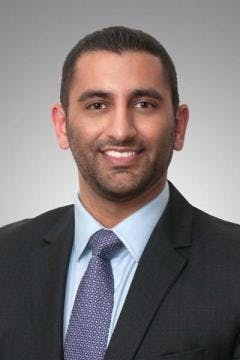
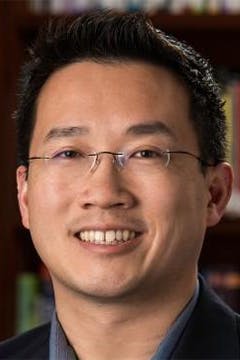
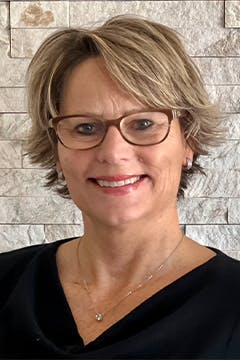
The Western Angiographic & Interventional Society (WAIS) celebrates its 55th anniversary this year. What qualities and values make WAIS unique in the vascular interventional society space? How would you summarize it to potential new members?
In the 1960s, a few West Coast interventional radiologists held the first annual Western Angio Club, establishing a forum for collaborative discussion about new procedures for image-guided therapies. These visionaries included Dr. Charles Dotter and Dr. Josef Rösch. In 1970, those early visionaries formally incorporated to form the organization now known as WAIS. From a historical perspective, it’s important to recognize that WAIS was the first interventional radiology (IR) society in the United States, and it was cofounded by the father of IR.
Many of the qualities that made WAIS “special” back then continue today. For instance, we maintain a single general session hall as opposed to breakout rooms that fractionate attendees into separate rooms or buildings. We believe this promotes better networking and group interaction about important topics and lessons learned.
Also, while we incorporate different learning formats from year to year (workshops, debates, etc.), the M&M (morbidity and mortality) session has been a constant and stems from the original “Angio Club,” which was organized as a forum to share new ideas and learn from each other’s successes, failures, and innovative techniques.
Lastly, if you were to poll our members, I believe they would convey that WAIS is successful at creating a casual, fun environment where a quality program and time to network with peers are both valued.
The WAIS team invites anyone interested in experiencing WAIS to join us September 20-24 at the WAIS 2025 conference at the iconic Broadmoor in Colorado Springs, Colorado. Registration is open at https://www.westernangio.org—Endovascular Today readers can register as nonmembers at a special discounted rate. For more information, contact: susan@westernangio.org.
How many members does the society have? In general, how does membership break down in terms of subspecialty within IR?
The membership region for WAIS is contained to the 15 Western states and British Columbia, Canada. Membership numbers oscillate between 225 to 275 from year to year, which is largely driven by changes in practice area. We do not distinguish membership between subspecialties. While we’ve grown through the years, we’ve remained a small society by design. However, several years ago, we did open our conference registration to nonmember attendees, and last year we had a record 425 attendees. That makes for a very full and lively discussion in the general session hall.
Dr. Dhand, as the current WAIS President, what have been your main goals for this term?
Although I officially began my term as WAIS President in 2025, I’ve been actively involved with the board since 2023. My main goals have been centered around three themes: honoring WAIS’s legacy, expanding clinical depth, and strengthening our Western IR community.
One specific aim has been to elevate and exemplify the role of IR in the private practice setting. There’s a perception that innovation and complex procedures only happen in academic centers, but across our region, private IRs are performing high-acuity, high-value procedures every day. I’ve tried to use multiple platforms to spotlight these practices, promote collaborative dialogue, and show how IR can thrive in diverse environments.
In addition, I’ve focused on promoting procedural innovation, education, and physician wellness, all while preserving what makes WAIS special: our single-session format, authentic camaraderie, and a culture of thoughtful, open discussion—and, most importantly, doing all this while having fun and learning at the same time.
The WAIS membership region covers 15 Western states and British Columbia, Canada. How would you describe the benefit and role of a regionally focused meeting? Do you see regional society meetings as complementary to national?
Absolutely. Regional meetings like WAIS are not just complementary to national meetings—they are vital. While national meetings set the macro-level tone, regional meetings deliver the micro-context that helps us implement real change on the ground. In the Western region alone, we span urban academic centers, rural access deserts, massive health systems, and nimble outpatient practices. WAIS gives us the ability to address local practice challenges with high relevance, whether it’s reimbursement trends in California, practice-building in the Pacific Northwest, or cross-border collaborations with our Canadian colleagues.
It’s also a uniquely supportive environment to trial new formats, like our M&M sessions, yoga and wellness components, or IR innovation panels. National meetings can sometimes be overwhelming or diluted across too many rooms. WAIS thrives because we all stay in one session hall, together. That shared experience builds real community, and the learning sticks.
It’s also a space where private practice IRs can share high-acuity casework and operational strategies that might otherwise go underrecognized. We need both national and regional voices in IR, but it’s meetings like WAIS that provide the close-knit setting where bold discussions and real friendships form. That’s a huge part of how innovation spreads.
A common theme among the meeting in recent years has been the focus on wellness—from group hikes and yoga in the morning to ending sessions in the early afternoon for pickleball or golf tournaments. Why has the group decided to prioritize this as a society, and what has been the reception?
Sadly, physician burnout and suicide are a growing public health concern. Studies from the National Institutes of Health and American Medical Association have reported that the issue increased in prevalence with the rise of electronic health records and the COVID-19 pandemic. As a result, the Accreditation Council for Continuing Medical Education recommends that continuing medical education (CME) organizations provide content and activities that address self-care and healthy lifestyle practices.
Mindful of this call to action, the WAIS 2021 conference committee began to incorporate several activities and lectures to promote clinician wellness. That year, we invited the Chief Marketing Officer of the American Foundation for Suicide Prevention to give the keynote lecture. We also had a full CME session with a variety of lectures to provide strategies for achieving a healthier work-life balance. This was also the first year for our morning yoga activity, led by Dr. Cosette Stahl, a WAIS member, yoga instructor, and functional medicine health coach. Since then, we’ve continued to offer shared experiences centered around colleague networking (golf and tennis), team-building fun (trivia), and healthy exercise (guided group hikes and sunrise yoga). The feedback from our attendees is overwhelmingly positive, and many have stated that they feel reenergized after participating in WAIS.
A highlight of each WAIS meeting is the Coons-Dotter Keynote Lecture. How did this annual lecture come about, and have you identified any themes highlighted in this lecture from year to year?
The first WAIS Charles T. Dotter Lecture was established in 1982 as a tribute to Dr. Dotter, one of the WAIS founders. Dr. Dotter gave this lecture himself in 1982. From 1984 to 2023, the Charles T. Dotter lecture was given by invited experts working in the field of IR. Beginning in 2024, the Society chose to also honor its longest-standing member and legacy director, Dr. Harold Coons, through the renaming of this annual keynote lecture. Dr. Coons is celebrating his 50-year membership milestone this year. The annual keynote lecture is now referred to as the Coons-Dotter Lecture, honoring both Dr. Coons and Dr. Dotter.
The theme of the 2025 WAIS meeting is Elevating IR. What does this mean to you, outside of the location in Colorado Springs?
Dating back to Dr. Dotter, WAIS leadership have consistently expressed the need to elevate the visibility of IR with referring physicians, hospital administrators, other medical disciplines, and even patients and the public. Throughout the years, WAIS programs have included lectures and discussions centered on strategies to address this issue. In 2015, our Chief Executive Officer (CEO) and one of our member physicians cofounded a nonprofit (supported by seed funding from WAIS) to produce a documentary series called Without a Scalpel. The aim of the medical series is to educate and inform the public about the life-saving procedures available to them in this innovative field of medicine. The docuseries has received much support from industry, clinicians, and other organizations. Importantly, many stakeholders have created their own initiatives toward improved visibility and understanding about IR treatment options. Collectively, we all share the theme of “Elevating IR.”
What areas of focus were top of mind for this year in particular?
Each year, the educational program is designed to address practice gaps expressed by our members and previous years’ attendees through postconference surveys. Our incoming Scientific Program Director (SPD) and CEO review the survey responses to identify key practice gaps and issues of interest as the basis of the next year’s program topics. Additionally, the SPD considers emerging topics and learning formats that they feel would be important to introduce into the program.
John Louie, MD, is our 2025 SPD. In expanding on this response, he stated, “IR is a constantly expanding field, and WAIS is an interactive conference that offers a forum to build upon your knowledge. My focus for the 2025 program was to invite expert faculty to discuss the latest techniques and findings in new treatment areas such as pain management, oncology, and beyond. Advanced practice providers play increasingly important roles in minimally invasive, image-guided therapies, so I also added a new session centered on information and strategies to expand IR APP teams.”
Dr. Dhand, as the current President, how do you want to see the society evolve over the next decade?
Over the next decade, I see WAIS continuing to become the go-to society for high-acuity IR education, professional growth, and meaningful connection in the West. We’re already the oldest IR society in the country; now we have an opportunity to become the most forward-thinking.
Over the next decade, I also hope to see:
- Broader inclusion of IR subspecialties, from deep venous and peripheral artery disease to hepatobiliary, neurointerventional radiology, and beyond.
- More visibility for younger IRs and trainees, whether through podium time, social media exposure, or mentorship pathways
- Continued integration of wellness, not just as a side activity but as a core part of our identity
- Perhaps most importantly, a continued effort to elevate the public and institutional understanding of IR, from media and patient education to hospital decision-making and value demonstration
WAIS is a society that knows how to have fun, stay humble, and push boundaries. That’s the DNA I want to preserve and grow.
Advertisement
Advertisement