Advertisement
Advertisement
March 2025
Sponsored by Terumo Interventional Systems
Clinical Experience With AZUR Embolization Coils
Experts share how the AZUR Embolization System is increasing efficiency with case examples.
With Navid Eghbalieh, MD; David K. Chew, MBBS, FACS, FRCSEd; and Melhem R. Ghaleb, MD
AZUR™ 0.035-Inch Peripheral Coil Embolization System: Enabling Procedural Efficacy While Also Decreasing Costs

Transcatheter embolization using intravascular coils has become an accepted minimally invasive first-line procedure for the effective treatment of vascular abnormalities and aneurysms and to stop gastrointestinal (GI) or other sources of internal bleeding.1 The coils produce vessel occlusion by reducing blood flow and inducing thrombus formation. The use of coils enables permanent vessel occlusion with the benefit of ensuring targeted, precise placement of the coils in the desired anatomic location.
Typical embolization coils are made of platinum. Some coils are just bare metal, whereas others either incorporate polymer fibers or a hydrogel coating. The AZUR™ series of embolization coils (Terumo Interventional Systems) combine a platinum coil coated with an expandable hydrogel material. The hydrogel absorbs moisture and expands when it comes into contact with serum or blood. The expanded hydrogel increases the surface area and filling density, increasing the ability of the coil to trap blood cells and promote clotting more effectively than bare-metal coils. Once the clot stabilizes, the vessel remains permanently blocked, preventing further blood flow. Available coil options include the AZUR HydroCoil, which has a helical shape with the hydrogel coating on the outside of the platinum-core coils, and the AZUR CX, which has a three-dimensional shape with a hydrogel coating inside the platinum-core coil. Both are available in 0.018- and 0.035-inch options.
Because of the expansion of the hydrogel on the AZUR coils, they provide more volume per 1 cm of coil length compared to bare-metal coils, with the with the 0.018-inch AZUR HydroCoil producing even more volume than the 0.035-inch AZUR CX coil (Figure 1). The AZUR HydroCoil also provides almost three times the volume per 1 cm of length compared to bare metal and fibered coils (Figure 1). This leads to the potential to use fewer coils to achieve effective embolization and a decrease in coil costs for the procedure. Additional benefits include a potential reduction in procedure time and reduced radiation due to less fluoroscopy time.
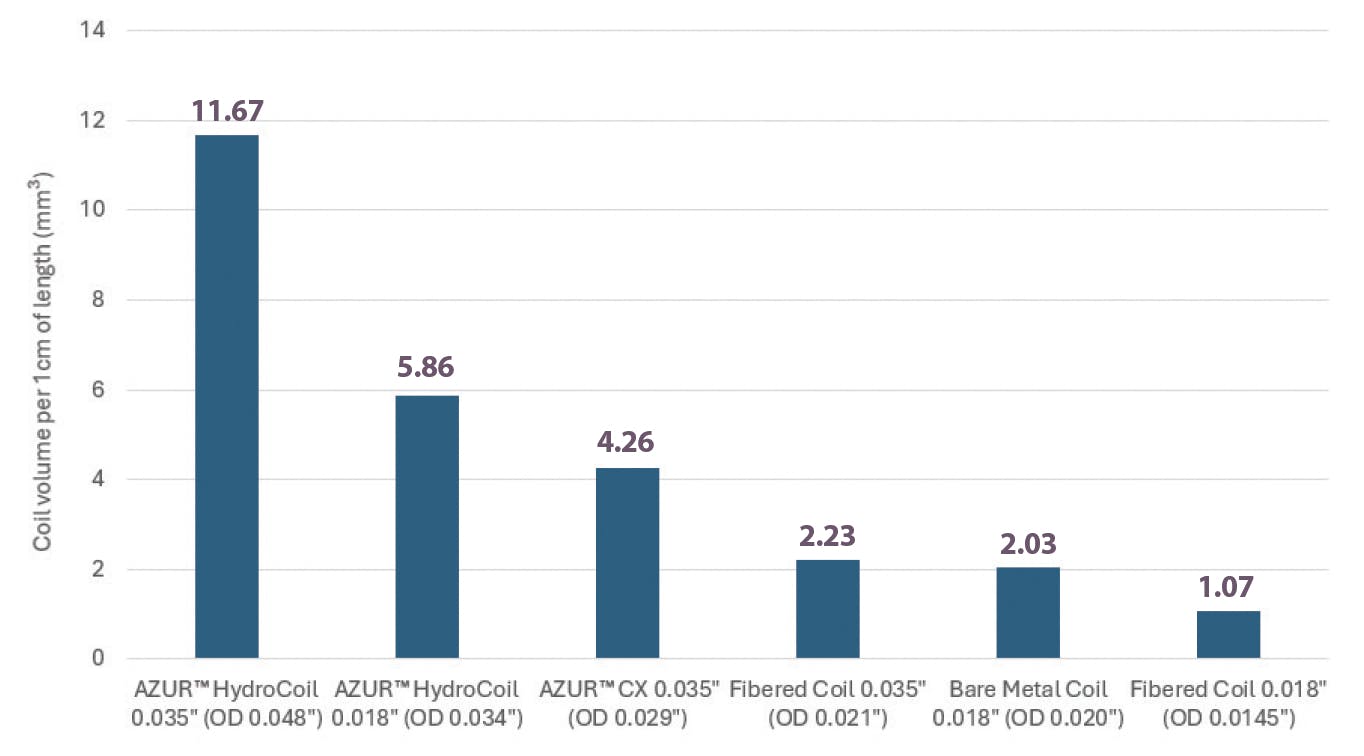
Figure 1. Comparison of coil volume per 1 cm of length. OD, outer diameter. Data from AngioCalc.com.
CASE 1: CARTO USING THE AZUR 0.035-INCH HYDROCOIL
A woman in her early 60s with nonalcoholic steatohepatitis cirrhosis presented emergently with a massive upper GI bleed. The patient required multiple blood transfusions and was treated with several pressors. Esophagogastroduodenoscopy revealed large gastric varices within the cardia/fundus of the stomach. A multiphase CT of the liver additionally demonstrated large gastric varices and identified a gastrorenal shunt measuring 32 mm (Figure 2). Of note, a gastrorenal shunt is present in > 80% of patients with gastric varices.2
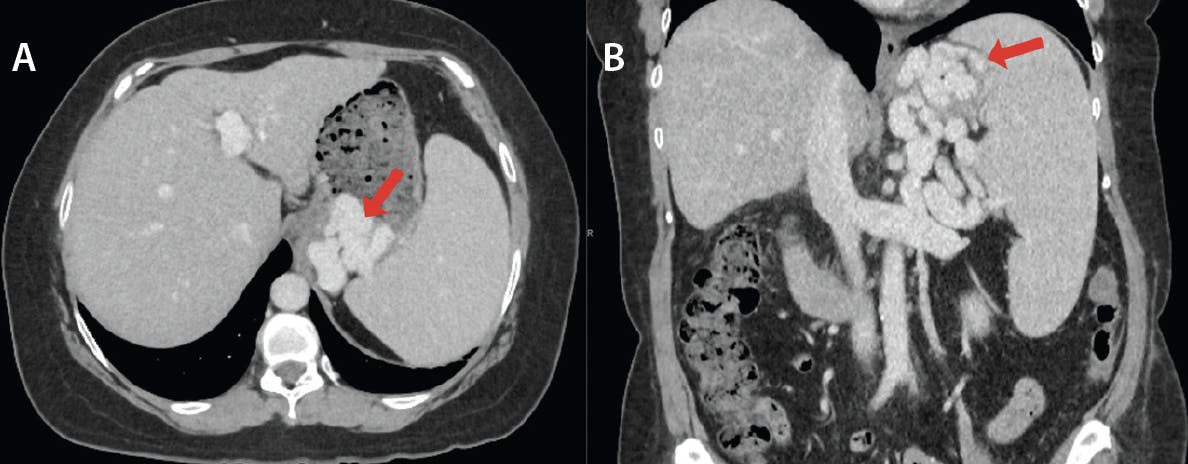
Figure 2. CT showing axial view (A) and coronal view (B) of gastric varices (red arrows) before treatment.
After being unable to stop the bleeding, interventional radiology was consulted. A coil-assisted retrograde transvenous embolization of gastric varices (CARTO) procedure was performed with two 4-F angiographic catheters inserted into the right femoral vein via an 8.5-F sheath. The catheters were advanced into the gastrorenal shunt via a retrograde fashion. The proximal catheter was used to coil-embolize the gastrorenal shunt with AZUR 0.035-inch HydroCoils. The gastric varices were subsequently embolized with Gelfoam (Pfizer, Inc.) via the distal catheter (Figure 3). The patient quickly stabilized while on the table after embolization of the gastric varices. The patient was extubated the next day and discharged home 3 days later after a follow-up CT scan confirmed successful complete occlusion of the gastric varices.
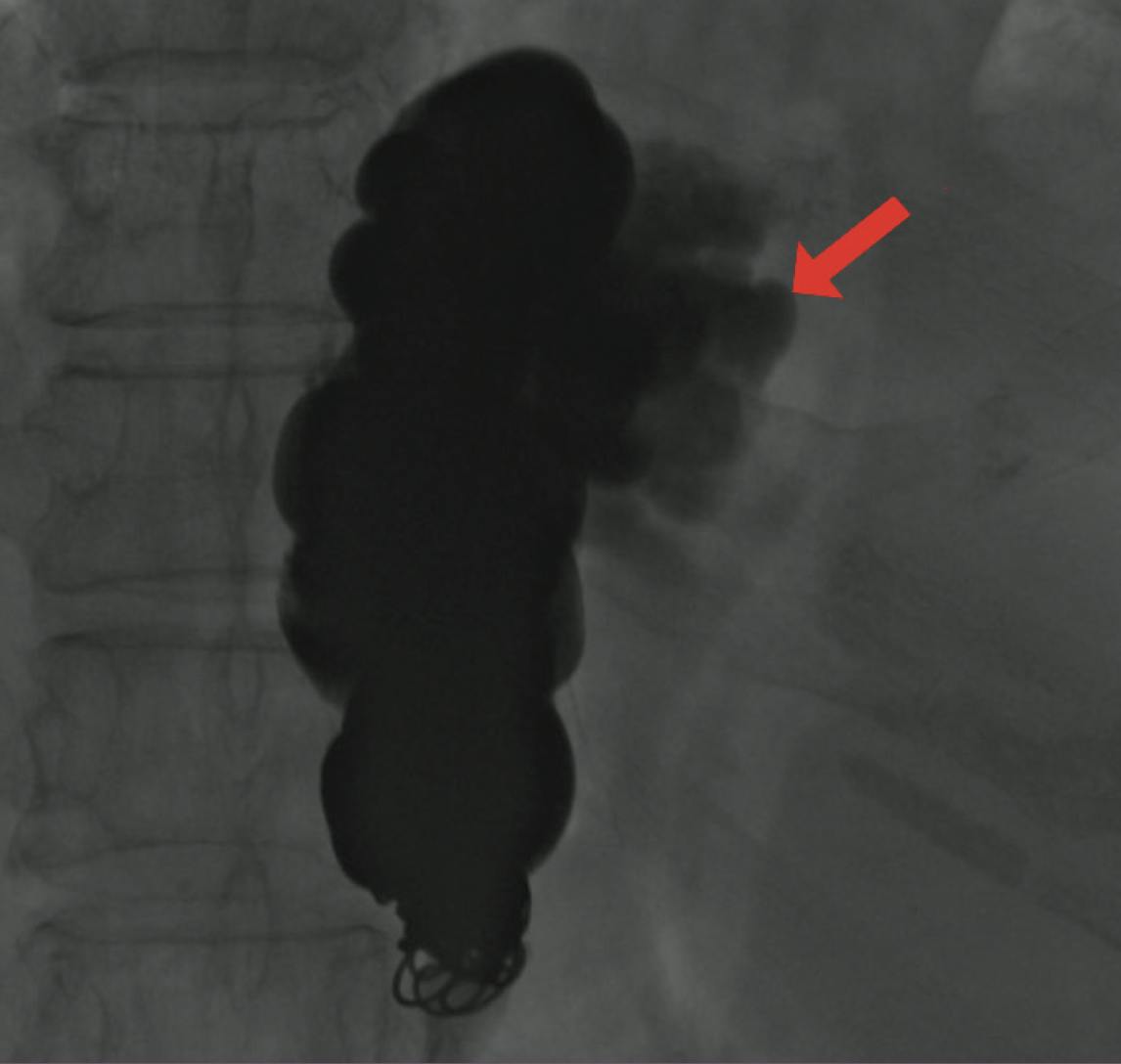
Figure 3. Fluoroscopic view showing the AZUR 0.035-inch HydroCoils following deployment and retrograde embolization of gastric varices.
The gastrorenal shunts can vary in size; however, they often tend to be larger in diameter, limiting embolization techniques. Of note, there is no limitation with how big the gastrorenal shunt is when deploying the AZUR 0.035-inch HydroCoils, making them ideal for large shunts.
CASE 2: EMBOLIZATION OF SPLENIC ARTERY ANEURYSM USING THE AZUR 0.035-INCH HYDROCOIL
Splenic artery aneurysms are the third most common site of intra-abdominal aneurysms after abdominal aorta and iliac arteries.3 Although the true prevalence of splenic artery aneurysm is unknown, estimates vary widely from 0.2% to 10.4% of the population.4,5 Incidentally discovered splenic artery aneurysms are being diagnosed more frequently as a result of the wider use of cross-sectional imaging modalities.4 Splenic artery aneurysms are about four times more common in women, yet the risk of its rupture is about three times more common in men.6 The reported rate of rupture is between 3% and 9.6% with a significant associated mortality rate of 36% when rupture occurs.7
A patient in their mid 50s was found to have a 3-cm splenic artery aneurysm after a workup for abdominal pain (Figure 4A). The aneurysm was successfully embolized on an outpatient basis using a 0.035-inch AZUR framing coil and CX coils deployed via a 4-F angiographic catheter (Figure 4B). The patient tolerated the procedure well without complication. Follow-up CTA demonstrated successful embolization of the splenic artery aneurysm.
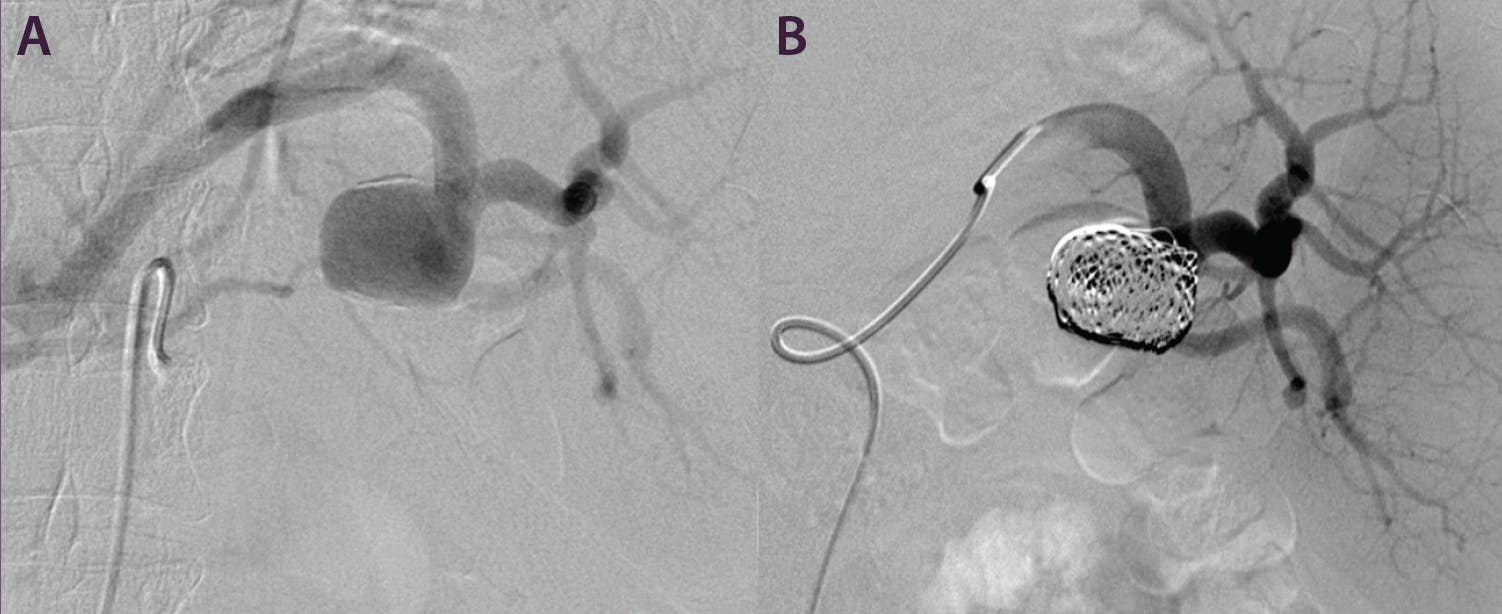
Figure 4. Fluoroscopic view showing splenic artery aneurysm prior to (A), and after (B) coil embolization.
Rapidly increasing size, presence in a premenopausal woman, cirrhosis, and symptomatic aneurysm warrant consideration for intervention, regardless of size, with coil embolization with the AZUR HydroCoils being an endovascular treatment for aneurysms ≥ 2 cm.
DISCUSSION
The use of the AZUR 0.035-inch HydroCoils instead of bare-metal coils for the described two cases resulted in a reduction in both the number of coils and the time required for the procedure. If bare-metal coils would have been used, specifically with the common practice of utilizing 0.018-inch coils, the result would have been the need for two to three times more coils compared to what was used for these cases. An average coil from the time of opening the package, preparation, deployment, detachment, and occasional evaluation with angiography averages anywhere from 2 to 5 minutes to use. Requiring two to three times as many coils, with an average of 2 to 5 minutes per coil deployment results in not only a substantial increase in device cost to the hospital, but also elongated procedure time and radiation exposure to both the patient and proceduralist.
Device costs are increasingly a focus for hospitals due to economic pressures and reimbursement challenges they are currently facing. This includes the cost associated with procedures performed both on an inpatient and outpatient basis. Identifying opportunities to reduce procedural costs and to optimize efficiencies are key objectives for many health systems.
The first case presented was for a patient with a GI hemorrhage resulting from gastric varices who was treated on an inpatient basis. Under the diagnosis-related group (DRG) system, hospitals typically receive a single payment for the admission regardless of the costs incurred during the inpatient stay. A hospital inpatient admission for gastric bleeding (ICD-10-CM K92.2) and the subsequent embolization treatment possibly using the ICD-10-PCS code 04L23DZ (Occlusion Gastric Artery with Intraluminal Device, Percutaneous Approach) would map to DRGs 356, 357 or 358 (Other Digestive System O.R. Procedures with MCC, with CC, without MCC or CC) with a 2025 Medicare National Average Payment Rates being approximately $9,000, $15,000, and $28,000 for each DRG, respectively. The higher cost associated with the need for using more bare-metal coils compared to the AZUR 0.035-inch HydroCoils would result in a negative economic scenario for hospitals because there would not be incremental reimbursement for the additional costs associated with the use of these coils.
The second case was for a patient with a splenic artery aneurysm who underwent an outpatient embolization procedure. Hospitals would typically bill the procedure using CPT 37242 (Vascular Embolization or Occlusion, inclusive of all radiological supervision and interpretation, intraprocedural roadmapping, and imaging guidance necessary to complete the intervention; arterial, other than hemorrhage or tumor) and maps to APC (Ambulatory Payment Classification) 5194 for Level 4 Endovascular Procedures, which has a 2025 Medicare National Average Payment Rate of approximately $18,000. Similar to the above, the incremental costs associated with the use of an additional number of bare-metal coils compared to the AZUR 0.035-inch hydrogel coils results in a negative economic scenario for hospitals trying to control costs.
In conclusion, the use of AZUR 0.035-inch coils provides a reduction in the number of coils and their associated costs compared to bare-metal coils when used for embolization procedures, reduces procedural time and radiation exposure, and provides for improved procedural efficiencies.
1. Dariushnia SR, Redstone EA, Heran MKS, et al. Society of Interventional Radiology quality improvement standards for percutaneous transcatheter embolization. J Vasc Interv Radiol. 2021;32:476.e1-476.e33. doi: 10.1016/j.jvir.2020.10.022
2. Sharma M, Rameshbabu CS. Collateral pathways in portal hypertension. J Clin Exp Hepatol. 2012;2:338-352. doi: 10.1016/j.jceh.2012.08.001
3. Agrawal GA, Johnson PT, Fishman EK. Splenic artery aneurysms and pseudoaneurysms: clinical distinctions and CT appearances. AJR Am J Roentgenol. 2007;188:992-999. doi: 10.2214/AJR.06.0794
4. Stanley JC, Thompson NW, Fry WJ. Splanchnic artery aneurysms. Arch Surg. 1970;101:689-697. doi: 10.1001/archsurg.1970.01340300045009
5. Røkke O, Søndenaa K, Amundsen S, et al. The diagnosis and management of splanchnic artery aneurysms. Scand J Gastroenterol. 1996;31:737-743. doi: 10.3109/00365529609010344.
6. Abbas MA, Stone WM, Fowl RJ, et al. Splenic artery aneurysms: two decades experience at Mayo clinic. Ann Vasc Surg. 2002;16:442-449. doi: 10.1007/s10016-001-0207-4
7. Messina LM, Shanley CJ. Visceral artery aneurysms. Surg Clin North Am. 1997;77:425-442. doi: 10.1016/s0039-6109(05)70559-4
Operator Experience with the AZUR Embolization System in the Prevention of Endoleaks After Endovascular Abdominal Aortic Aneurysm Repair

The durability of endovascular aneurysm repair (EVAR) has been limited by late aneurysm sac rupture and aneurysm-related mortality.1 These are mainly due to endoleaks, of which type II (retrograde flow into the sac from aneurysm sac branches) is the most common.2 Sac regression is the only definitive indicator of complete exclusion of the aneurysm sac from pressurization. Sac regression has been shown to be inhibited by the presence of type II endoleak; and preemptive embolization of the inferior mesenteric and lumbar arteries reduce type II endoleak, sac growth and secondary interventions.3-5
Cannulation and deployment of coils into these small, atherosclerotic vessels in a large thrombus-laden aneurysm sac can be challenging. Terumo’s line of products has enabled us to achieve a technical success rate of ≥ 90%, with a 0% recannulation of previously occluded vessels.
The base catheter is usually a reversed curve 5-F selective catheter (VS 2 or SOS 2). A 0.035-inch floppy Glidewire® hydrophilic-coated guidewire (Terumo Interventional Systems) is used to probe for the ostium of the vessel. This is followed by a long floppy 0.014-inch guidewire (Runthrough NS Izanai; Terumo Interventional Systems) and a microcatheter that is placed into the vessel to be coiled. The 2.4-F Progreat microcatheter (Terumo Interventional Systems) is the most common size used, but the 2-F Progreat is useful when the ostium is stenosed. The 0.018-inch AZUR CX is the preferred coil due to the soft flexibility and extended repositioning time. There is a wide range of diameters and lengths, allowing us to pack about two to three coils per vessel (Figure 1 and Figure 2).
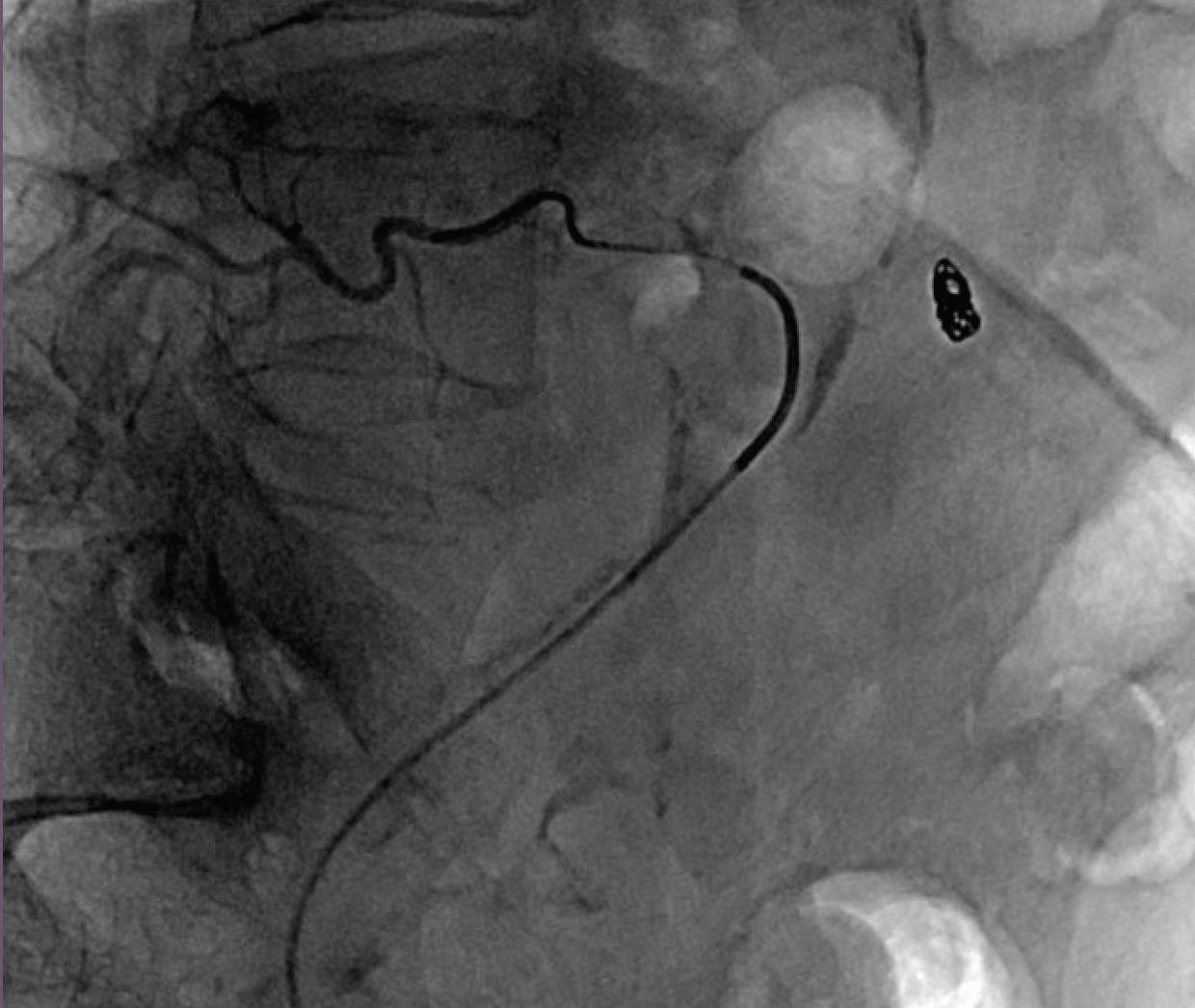
Figure 1. A Van Schie 4 catheter (Cook Medical) is placed at the ostium and a Progreat 2.4-F microcatheter is used to select the right L4 lumbar artery. Note that the inferior mesenteric artery has already been coil embolized.
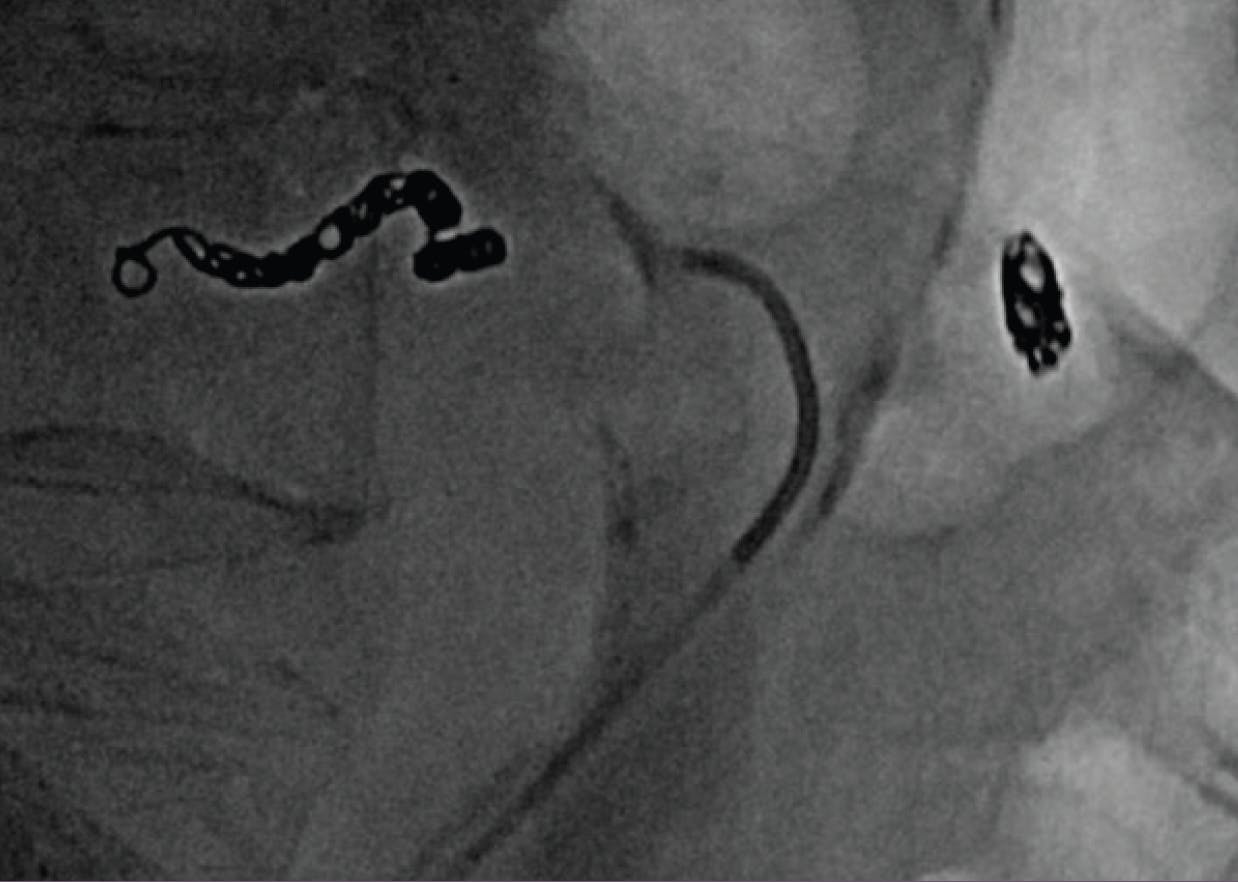
Figure 2. Successful deployment of AZUR CX 18 coils into the proximal inferior mesenteric artery and right L4 lumbar artery.
There has been increasing enthusiasm among vascular specialists to prevent type II endoleaks due to the poor results of secondary interventions performed for endoleak-induced sac growth after EVAR. Preemptive embolization of aneurysm sac branches such as the inferior mesenteric and lower lumbar arteries (L4 and L3) will mitigate sac growth and reduce secondary interventions, thus improving the long term durability of EVAR.
1. Patel R, Sweeting MJ, Powell JT, et al. Endovascular versus open repair of abdominal aortic aneurysm in 15-years’ follow-up of the UK endovascular aneurysm repair trial 1 (EVAR trial 1): a randomized controlled trial. Lancet. 2016;388:2366-2374. doi: 10.1016/S0140-6736(16)31135-7
2. Seike Y, Matsuda H, Shimizu H, et al. Japanese Committee for Stent-graft Management (JACSM). Nationwide analysis of persistent type II endoleak and late outcomes of endovascular abdominal aortic aneurysm repair in Japan: a propensity-matched analysis. Circulation.2022;145:1056-1066. doi: 10.1161/CIRCULATIONAHA.121.056581
3. Chew DK, Schmelter RA, Tran MT, Franko J. Reducing aneurysm sac growth and secondary interventions following endovascular abdominal aortic aneurysm repair by preemptive coil embolization of the inferior mesenteric artery and lumbar arteries. J Vasc Surg. 2024;79:532-539. doi: 10.1016/j.jvs.2023.11.031
4. Kray J, Kirk S, Franko J, Chew DK. Role of type II endoleak in sac regression after endovascular repair of infrarenal abdominal aortic aneurysms. J Vasc Surg. 2015;61:869-874. doi: 10.1016/j.jvs.2014.11.003
5. Chew DK, Dong S, Schroeder AC, et al. The role of the inferior mesenteric artery in predicting secondary intervention for type II endoleak following endovascular aneurysm repair. J Vasc Surg. 2019;70:1463-1468. doi: 10.1016/j.jvs.2019.01.090
Case Report: Eliminating Microchannels and Achieving True Permanent Occlusion With AZUR HydroPack

A woman in her late 60s was admitted to our hospital for recurrent episodes of gastroesophageal variceal bleeding. She had a history of hypercoagulable syndrome and was on rivaroxaban for extensive clots burden along with advanced liver and cavernous transformation of her thrombosed portal vein.
Despite medical management and banding of her esophageal varices, she continued to bleed (hemoglobin level of 6.3 g/dL). A nuclear GI bleeding scan was positive for a left upper-outer quadrant bleeding focus and a subsequent CTA abdomen revealed large gastrorenal varices (Figure 1).
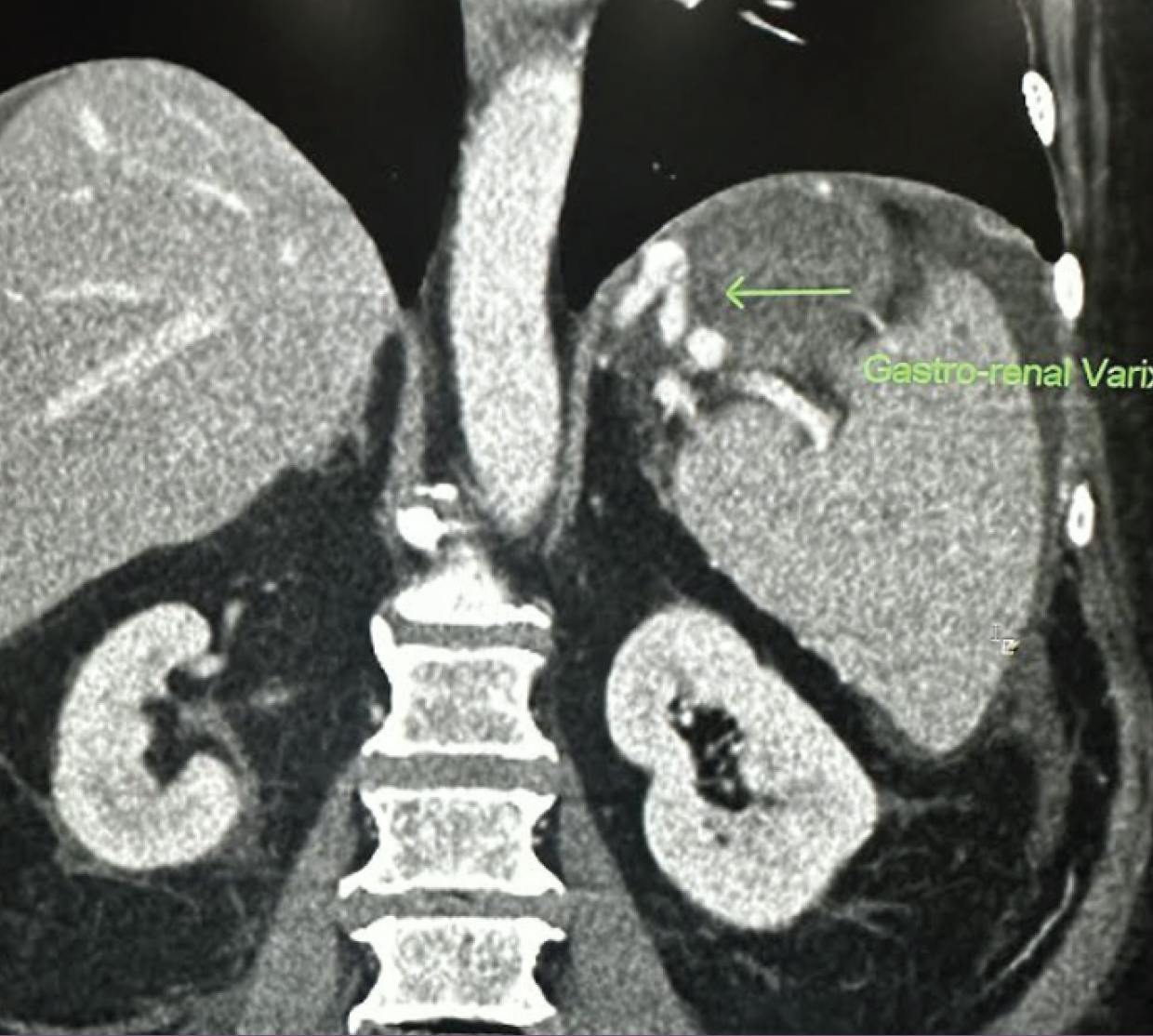
Figure 1. Coronal slice CTA image demonstrating the large left renal gastric varix (green arrow).
The patient underwent a successful CARTO of her left renal-gastric varices via a right internal jugular vein approach using a total of nine AZUR coils (Figure 2). Two HydroCoils were used initially as anchors, followed by six HydroPacks ranging in length from 35 to 60 cm, and finally the varix was capped proximally with an AZUR CX coil. The patient’s GI bleeding stopped, and she was discharged home the following week on rivaroxaban.
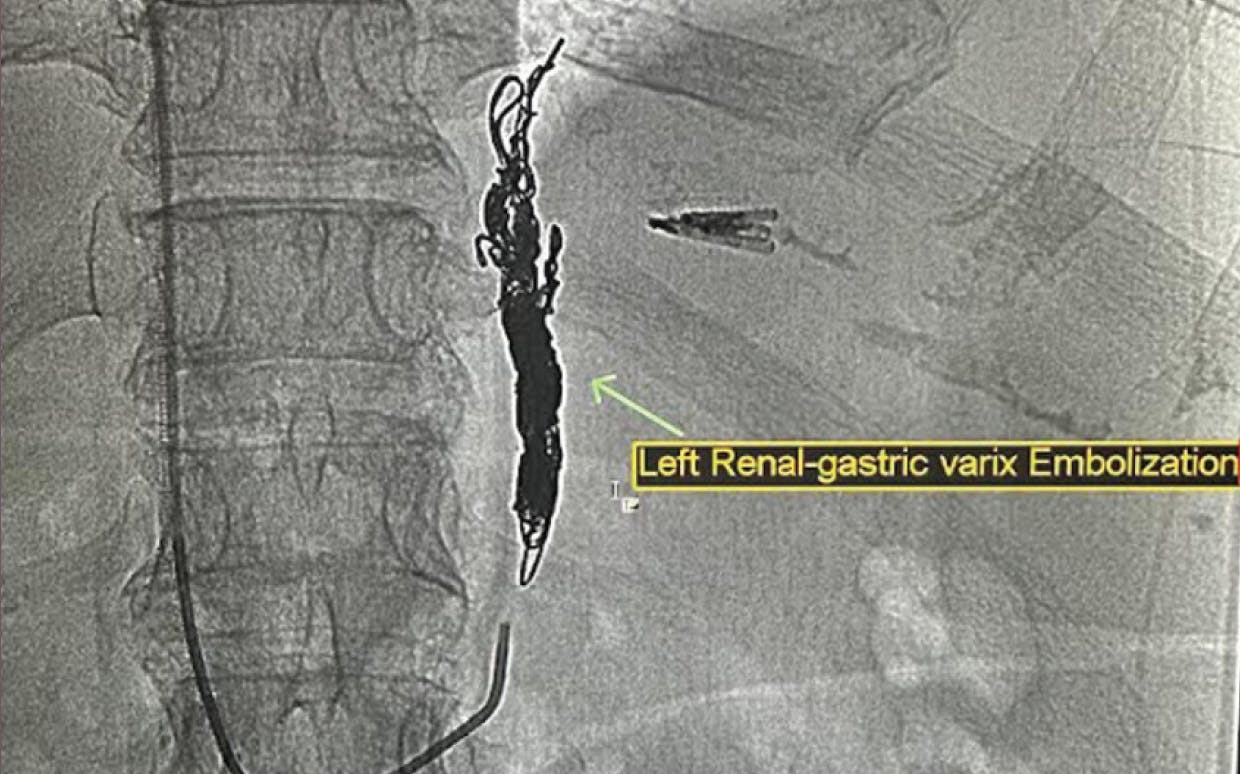
Figure 2. Final image after embolization of the left renal gastric varix with nine Terumo coils.
Discussion
HydroPack technology addresses the two main causes of failed embolization, which are residual empty space and the patient’s thrombin-dependent coagulation requirement. First, the device’s nonhollow core results in a truly dense and compact embolization eliminating the formation of the dreaded microchannels and recanalization. Second, the device’s embedded hydrogel-expanding technology produces a complete space-occupying endoluminal occlusion, which is independent from patient’s intrinsic coagulation parameters (eg, platelets, international normalized ratio) or anticoagulants medication such as in our case.
Additional benefits include the wide range of coil lengths (5-60 cm), the successful marriage of a soft coil design with a sturdy coil-pusher, and the ability to deploy them through variable microcatheters diameters (eg, 2.4 or 2.8 F).
Terumo Medical Corporation Disclaimer
- The opinions expressed by Dr. Navid Eghbalieh, Dr. David Chew, and Dr. Melhem Ghaleb during this presentation are their own and do not necessarily reflect those of Terumo Medical Corporation. Unattributed data, device selection and procedural guidance is a matter of physician preference and opinion derived from their own observations and experiences and should be treated accordingly.
- All visual representations and other imagery contained in this presentation are used with permission from Dr. Navid Eghbalieh, Dr. David Chew, and Dr. Melhem Ghaleb.
- RX ONLY. The advertisement is directed to physicians only, and not to consumers. Refer to product labels and packaging insert for complete warnings, precautions, potential complications, and instructions for use. Products may not have regulatory approval in all countries. Please contact your local sales representative if you have questions about the availability of products in your area.
Advertisement
Advertisement