Advertisement
Advertisement
November 2025
Sponsored by Nipro Corporation
The Aperta Novel Scoring Element for the Treatment of Complex PAD
Enhanced angioplasty with focal force technology now offers a proven path to achieving more effective and durable results.
With Craig Walker, MD; Matthew T. Finn, MD, MSc; Yoshiteru Okina, MD; and Osamu Iida, MD
Since early studies in the 1980s, we have understood that angioplasty leads to atherosclerotic plaque fracture with resultant vessel stretching and luminal expansion.1,2 Poiseuille’s law demonstrates that blood flow is proportional to the radius of the blood vessel to the fourth power; therefore, small increases in the lumen size can result in a significant increase in blood flow. Based on this principle, we must optimize angioplasty in nearly all peripheral arterial procedures, as it is required either as definitive therapy or prior to scaffold placement.
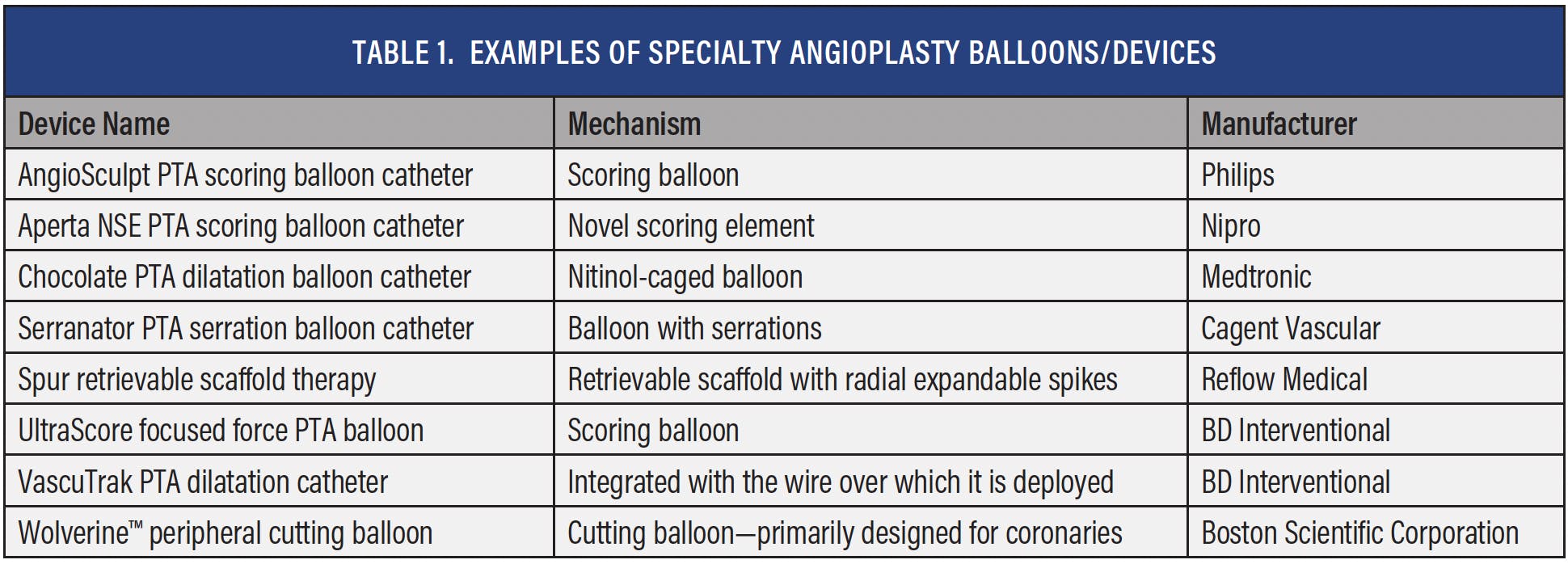
Peripheral artery disease (PAD) has diverse lesion subsets (eg, severely calcified vessels, long lesions, plaque at vessel bifurcations, in-stent restenosis [ISR], small below-the-knee vessels), which may limit the durability of standard angioplasty. The variety of plaque encountered in PAD can result in significant dissection with routine angioplasty using semicompliant balloons. The medical device industry has developed a multitude of products to enhance angioplasty results (Table 1). Focal force angioplasty is considered particularly efficacious through the use of cutting or scoring elements to create controlled longitudinal stress patterns in the vessel wall. These focal stress patterns lower inflation atmospheres, allow for slower vascular stretching, and provide even distribution of pressure preventing dissection or recoil resulting in greater luminal gain.3,4
APERTA NSE SPECIFICATIONS AND FEATURES
The Aperta Novel Scoring Element (NSE) balloon has four scoring elements 90° apart that prevent balloon slippage and dissection (Figure 1). It is a high-pressure, noncompliant balloon with a nominal pressure of 10 atm and a rated burst pressure of 20 atm. Balloon sizes of 4 and 5 mm (length 40 mm) are compatible with 5 F while sizes of 6 to 8 mm (length 40 mm) are compatible with 6 F. Additionally, 4 mm (XL: lengths 100 and 150 mm) is compatible with 5 F, whereas 5 and 6 mm (XL) are compatible with 6 F. The balloon lumen accepts an 0.018-inch wire compatible with a 90- or 145-cm shaft working length.
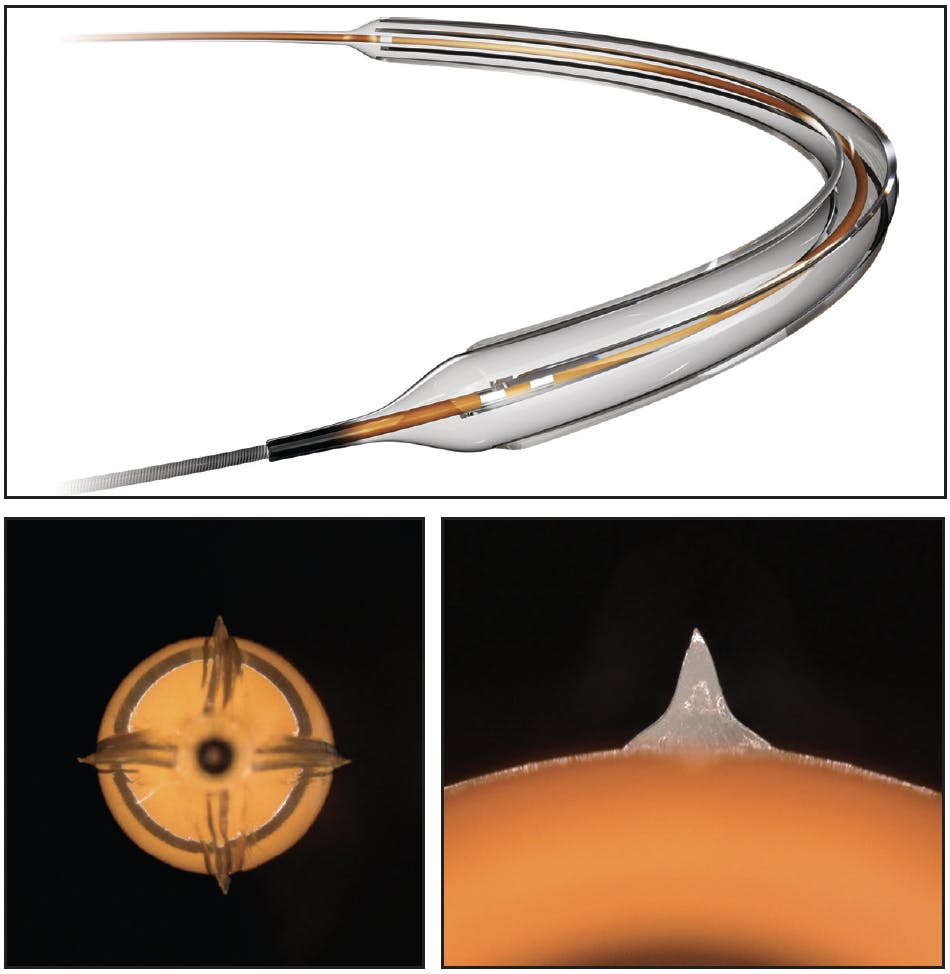
Figure 1. The Aperta NSE balloon and magnified images of the NSEs at nominal inflation pressure. Images courtesy of Nipro.
Unique to the Aperta NSE balloon is the wide variety of balloon lengths available: 40-mm length in the 4- to 8-mm diameter, and 100- or 150-mm lengths in the 4- to 6-mm diameters. The Aperta NSE balloon has a hydrophilic coating to further enhance crossability but does not cause a “watermelon seed” phenomenon due to the NSEs integrated into the balloon, which also give it a lower profile. Finally, the large, central shaft allows for rapid rewraps, enabling repeat use in multiple locations during the procedure.
The Aperta NSE is indicated for treatment of iliofemoral, popliteal, and infrapopliteal PAD. The device is also approved for use in ISR in PAD and for the treatment of native or synthetic arteriovenous dialysis fistula. Aperta NSE is not indicated for use in the coronary or neurovascular system.
Case 1: Aperta NSE–Assisted Revascularization of Occluded SFA Stents
By Craig Walker, MD, and Matthew T. Finn, MD, MSc
PATIENT PRESENTATION
A woman in her early 80s presented to the clinic with a history of heavy smoking, active lung cancer being treated with radiation, atrial fibrillation on novel anticoagulation, and PAD. Her PAD was treated with stents to the left common and external iliac arteries (EIAs) 3 years prior, as well as a left superficial femoral artery (SFA) chronic total occlusion treated with three stents (Figure 2).
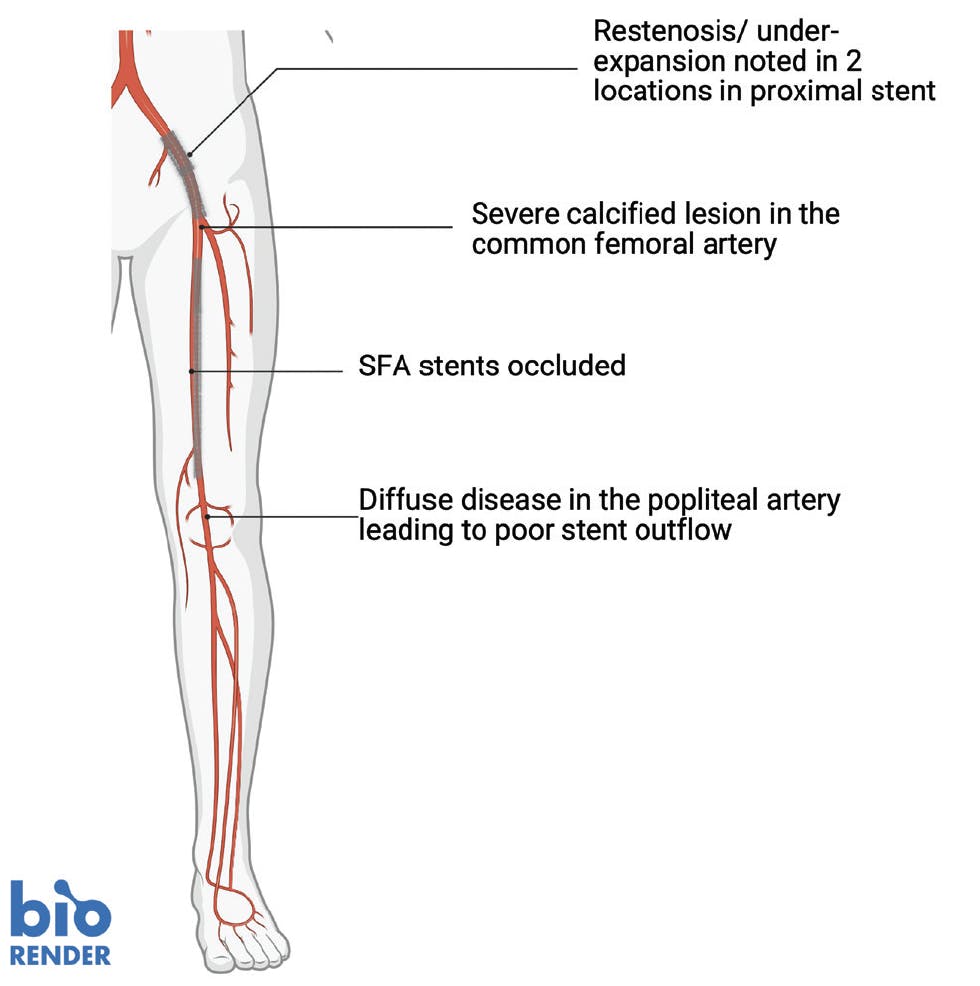
Figure 2. Schematic showing prior stents placed on the index patient. Image created in BioRender.com. Finn, M. (2025)
She presented with severe rest pain to the left lower extremity over the preceding few weeks. The patient also reported that her symptoms progressed to the point that she had to hang her left leg off the bed at night to improve the pain and cold sensation in her left foot. Her medications included clopidogrel 75 mg daily, apixaban 5 mg twice daily, and atorvastatin 40 mg by mouth at bedtime. Initial examination demonstrated nonpalpable pulses, with a left lower extremity ankle-brachial index of 0.44. Duplex ultrasound showed occluded stents throughout the entirety of the left SFA and severely elevated velocities in the left common femoral artery (CFA; Figure 2).
After discussion of risks and benefits, the patient decided to repeat angiography with a plan for Rotarex (BD Interventional) thrombectomy of the occluded stent from a primary pedal approach given warnings regarding the up-and-over use with the Rotarex device.5 We chose the Rotarex given good prior results in similar cases of long-segment ISR. Of note, no preprocedural diagnostic evaluation was performed of the inflow vessels.
INTERVENTION
Using ultrasound guidance, a 5-F outer diameter and 6-F Glidesheath Slender introducer sheath (Terumo Interventional Systems) was placed to the posterior tibial artery. Next, the occluded stent was wired with an 0.018-inch Gladius Mongo PV wire (Asahi Intecc USA). Using a 0.035-inch crossing catheter, retrograde angiography was performed (Figure 3A-3D). Intravascular ultrasound (IVUS) was performed to assess stent integrity and for sizing. In addition to the known occlusion of the SFA stent, ISR and recoil were observed in the left EIA. A high-grade calcific stenosis was also noted in the CFA.
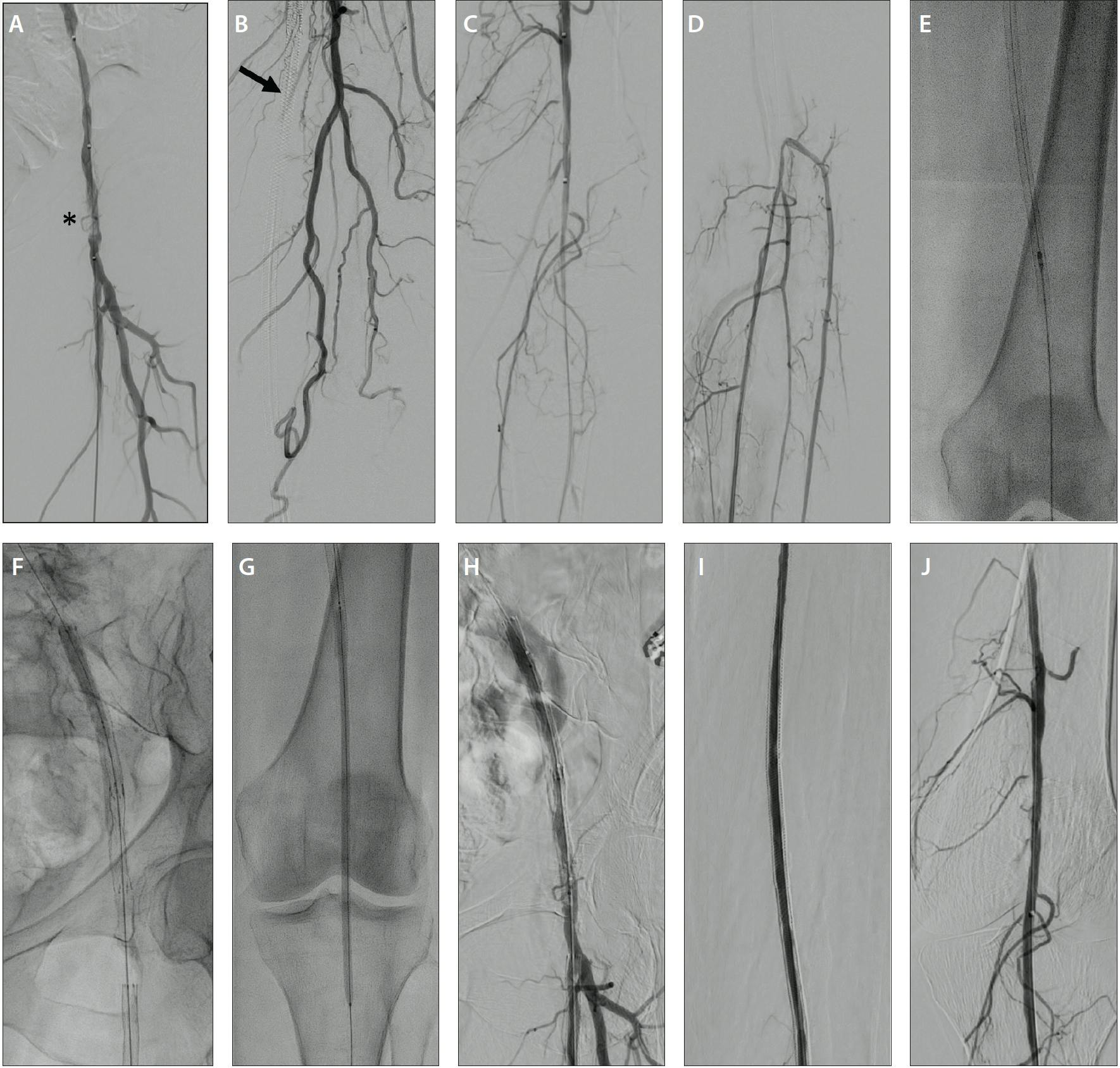
Figure 3. Diagnostic angiogram of the left EIA with proximal ISR and a highly calcified CFA stenosis (denoted by asterisk) (A). The SFA occluded stent denoted with the arrow (B). A severely diseased popliteal artery (C) and with good runoff beyond the popliteal lesion (D). Rotarex atherectomy of the ISR (E). Aperta NSE balloon of the EIA ISR with a 6- X 40-mm to 10 atm proximally (F). Ballooning with a 4- X 150-mm Aperta NSE at 10 atm in the popliteal artery with good expansion (G). Inflow angiogram showing bowel gas partially obscuring the visualization with the retrograde injection (H). Significant improvement was noted in the CFA lesion. Patent SFA stent after predilatation, then DCB (I). The P1-P3 popliteal segments after Aperta NSE prolonged ballooning (J).
Next, two passes with the Rotarex thrombectomy system were performed from a retrograde approach (Figure 3E). Following this, balloon dilatation was performed from the EIA to the popliteal with nominally sized balloons. The balloon would not fully expand the EIA stent nor in the CFA and popliteal lesions. Therefore, two Aperta NSE balloons were inflated in these areas (6- X 40-mm to 10 atm proximally; 4- X 150-mm at 10 atm in the popliteal and distal SFA; Figure 3F and 3G). Next, two 5-mm drug-coated balloons (DCBs) were used in the SFA ISR. Retrograde completion angiography was performed with good results (Figure 3H-3J), and pressure measured in the pedal sheath showed no significant gradient compared to central aortic pressure.
The patient returned to the clinic 1 week later with significant improvement in her symptoms. Biphasic Doppler signals were noted in the left tibial vessels at the ankle. She did report some reperfusion edema, which was managed with elevation and compression stockings. Figures 4A and 4B show an additional case of results with Aperta NSE in the CFA in a different patient with Rutherford class 3 claudication.
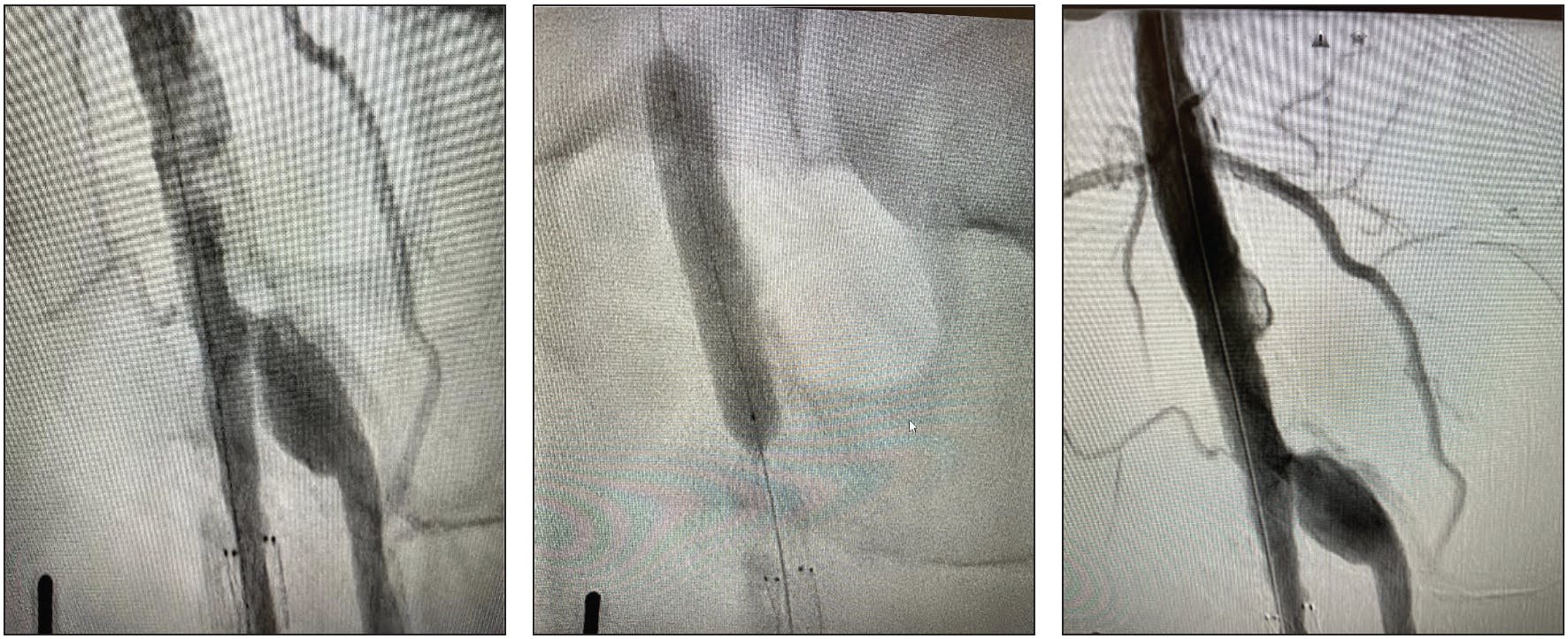
Figure 4. Angiography demonstrating a highly calcified CFA stenosis with a stenosis at the origin of the profunda femoris artery with post stenotic dilatation (A). Ballooning with a 7- X 40-mm Aperta NSE balloon (B). Posttreatment angiogram (C).
SUMMARY
Our experience with Aperta NSE demonstrates the enhanced angioplasty possible with this type of focal force balloon and has resulted in wide utilization of the balloons at our center.
Acknowledgments: The authors thank Chelsea Finn, RN, BSN, for assistance with manuscript preparation and editing.
1. Kinney TB, Lee MJ, Mueller PR, Waltman AC. A theoretical model using mechanical principles to quantify the physical principles of balloon dilatation. Acad Radiol. 1995;2:385-391. doi: 10.1016/s1076-6332(05)80340-x
2. Morin JF, Johnston KW, Wasserman L, Andrews D. Factors that determine the long-term results of percutaneous transluminal dilatation for peripheral occlusive disease. J Vasc Surg. 1986;4:68-72. doi: 10.1067/mva.1986.avs0040068
3. Rockley M, Jetty P, Radonjic A, et al. Prolonged versus brief balloon inflation during arterial angioplasty for de novo atherosclerotic disease: a systematic review and meta-analysis. CVIR Endovasc. 2019;2:29. doi: 10.1186/s42155-019-0072-2
4. Solar RJ, Ischinger TA. Focused force angioplasty: theory and application. Cardiovasc Radiat Med. 2003;4:47-50. doi: 10.1016/s1522-1865(03)00119-7
5. U.S. Food and Drug Administration. Update on Alert: Atherectomy Catheter System Issue from Bard Peripheral Vascular. Accessed November 3, 2025. https://www.fda.gov/medical-devices/medical-device-recalls-and-early-alerts/update-alert-atherectomy-catheter-system-issue-bard-peripheral-vascular


Case 2: A Novel Scoring Balloon for the Treatment of Restenotic Lesions Following Subintimal DCB Angioplasty
By Yoshiteru Okina, MD, and Osamu Iida, MD
PATIENT PRESENTATION
A man in his early 80s with a history of diabetes mellitus, hypertension, and current smoking presented with intermittent claudication in the right lower extremity, classified as Rutherford class 3. He had previously undergone endovascular therapy (EVT) 17 months prior for a chronic total occlusion of the right SFA (Figure 1A). After successfully crossing the lesion using a subintimal wire technique, predilatation was performed with a 5- X 300-mm noncompliant balloon (Jade, OrbusNeich) (Figure 1B), followed by 6- X 200-mm DCB angioplasty (In.Pact Admiral, Medtronic). The completion angiogram revealed no evidence of severe dissection or residual stenosis (Figure 1C). The minimum lumen area (MLA) assessed by IVUS following DCB angioplasty was 14.7 mm2 (Figure 1C).
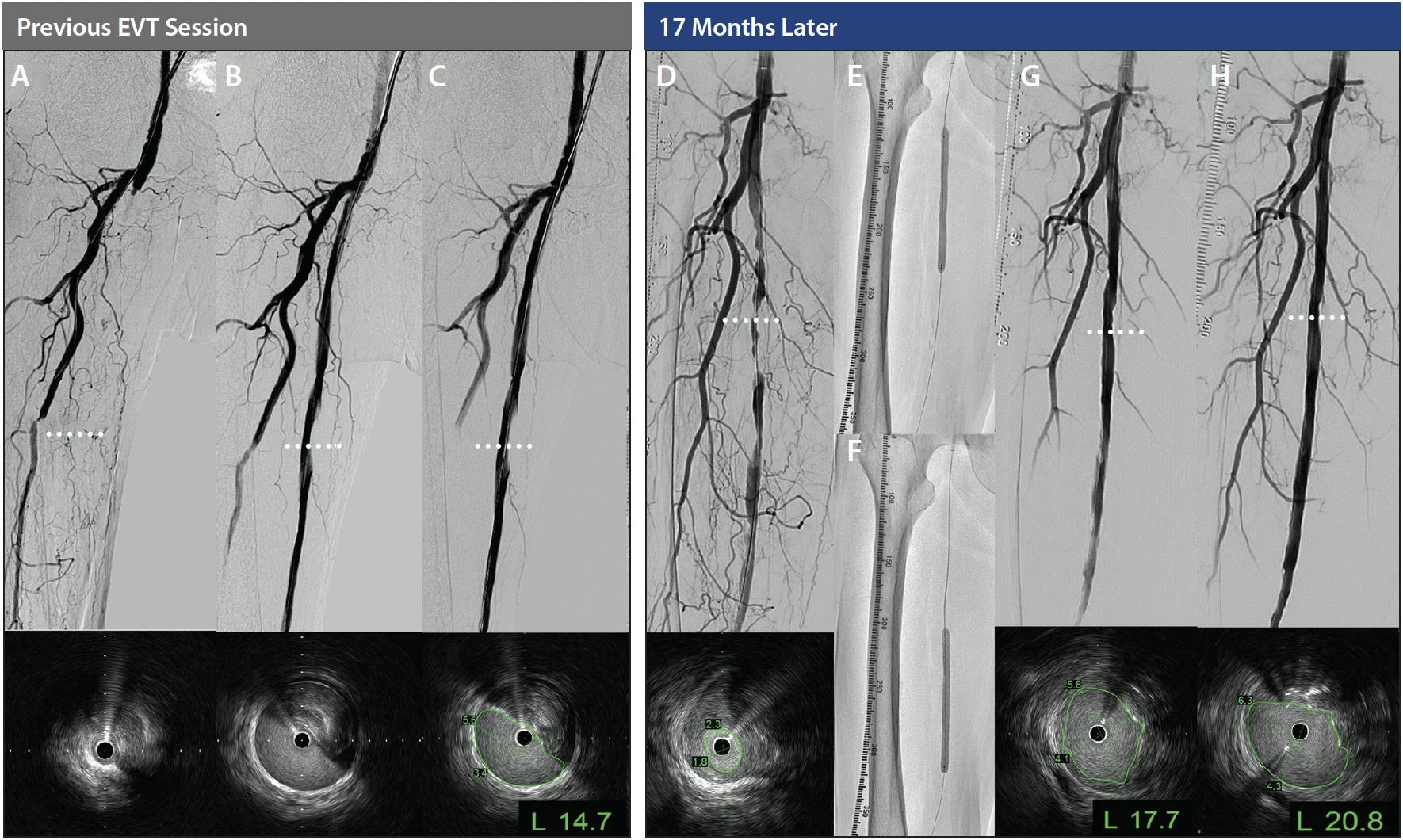
Figure 1. Angiogram and IVUS images at the time of first session (17 months prior) and current EVT; dashed line in the angiogram denotes where IVUS images were obtained within the treated artery. Initial angiogram and IVUS images at the first session of EVT (A). Angiogram and IVUS image following 5-mm noncompliant balloon dilatation (B). Completion angiogram and IVUS image of MLA after 6-mm DCB angioplasty (C). Initial angiogram and IVUS image at the current EVT session (D). Aperta NSE PTA XL balloon angioplasty (E, F). Angiogram and IVUS image following Aperta NSE PTA XL balloon dilatation (G). Completion angiogram and IVUS image of MLA after 6-mm DCB angioplasty (H).
Two months prior to the current presentation, he experienced a recurrence of intermittent claudication in the right lower extremity, and an ultrasound examination revealed restenosis in the right SFA, indicated by a peak systolic velocity ratio of 4.9. Consequently, a repeat EVT was performed to address the restenosis of the right SFA previously treated with a DCB.
DIAGNOSTIC ANGIOGRAPHY
A 6-F guiding sheath (Destination, Terumo Interventional Systems) was introduced via the left CFA and positioned in the right CFA using a crossover technique. Subsequent angiography revealed a restenosis with an approximate lesion length of 20 cm in the right SFA (Figure 1D).
INTERVENTION
After a 0.014-inch wire (Crosslead Tracker, Asahi Intecc, Inc.) and microcatheter (Sergeant, iVascular) were passed through the lesion, the lesion morphology was evaluated by IVUS (AltaView, Terumo Interventional Systems) demonstrating that the current restenosis was found within the subintimal space at the site of the previous MLA site (Figure 1D). A novel 6- X 100-mm Aperta NSE PTA XL scoring balloon (Nipro Corporation) was used for the predilatation of the lesion (Figure 1E and 1F). Angiography revealed no evidence of significant residual stenosis or severe dissection (Figure 1G). IVUS findings showed successful expansion of the previous MLA site (Figure 1C) to 17.7 mm2 (Figure 1G), achieving an adequate lumen area. Following this, a 6- X 200-mm paclitaxel-coated balloon (Luminor, iVascular) was used to dilate the lesion. Completion angiography confirmed improved blood flow in the lesion (Figure 1H), and IVUS findings showed a final MLA of 20.8 mm2, achieving a substantially larger lumen area compared with the first treatment (Figure 1H). Hemostasis was achieved using a vascular closure device (MYNX Control, Cordis). The patient’s clinical course was uneventful, and he was discharged on the second day after the treatment.
SUMMARY
This case demonstrates the relationship between the MLA achieved after the DCB treatment at the first session and the subsequent occurrence of restenosis at the second session. It is therefore presumed that meticulous vessel preparation is crucial for attaining a larger MLA and optimizing DCB performance. Although the vascular conditions may have differed between the initial and recurrent procedures, the utilization of an Aperta NSE PTA XL scoring balloon for vessel preparation contributed to the successful attainment of an adequate MLA. Despite employing the same DCB size in the second treatment, the final MLA after DCB dilatation was 20.8 mm2, surpassing the previous MLA of 14.7 mm2 achieved after the initial treatment (Figure 1C, Figure 1G, and Figure 1H), thereby confirming enhanced lumen expansion within the subintimal space.


Advertisement
Advertisement