Advertisement
Advertisement
October 2025
Sponsored by InspireMD
A Paradigm Shift in Stroke Prevention: The CGuard® Prime Carotid Stent System
The journey of the CGuard stent signals a true sense of purpose to help prevent strokes and gives physicians and patients the confidence to choose carotid stenting—without compromise.
“This is the best unknown story in medical devices.”
That’s how Marvin Slosman, CEO of InspireMD, described it over 5 years ago. And he wasn’t wrong.
For years, InspireMD was better known outside the United States (US) for its flagship device, the CGuard® Embolic Prevention System—a nitinol carotid stent with a unique MicroNet™ mesh covering, which has now been implanted more than 60,000 times globally. The concept—simple, yet elegant—which combines a flexible open-cell stent with a finely woven protective mesh, had long appealed to physicians looking to protect patients from stroke caused by carotid artery disease.
A TURNING POINT IN STROKE PREVENTION
The next chapter began in 2021 with the initiation of the C-GUARDIANS US pivotal trial, investigating the use of CGuard in the treatment of patients with carotid disease at high risk for carotid endarterectomy (CEA). Over the course of 23 months, 316 patients were treated at 24 sites in the US and Europe. When the results were presented, they were shown to exhibit the lowest 30-day and 1-year primary endpoint major adverse event (MAE) rates of any pivotal trial of a carotid therapy to date.1-10 Because carotid approval trials in the US have used consistent definitions of 30-day (composite of death, stroke, and myocardial infarction) and 1-year (the 30-day endpoint or ipsilateral stroke between 31-365 days) endpoints, the numbers in the C-GUARDIANS trial were certainly eye-catching (Figure 1).
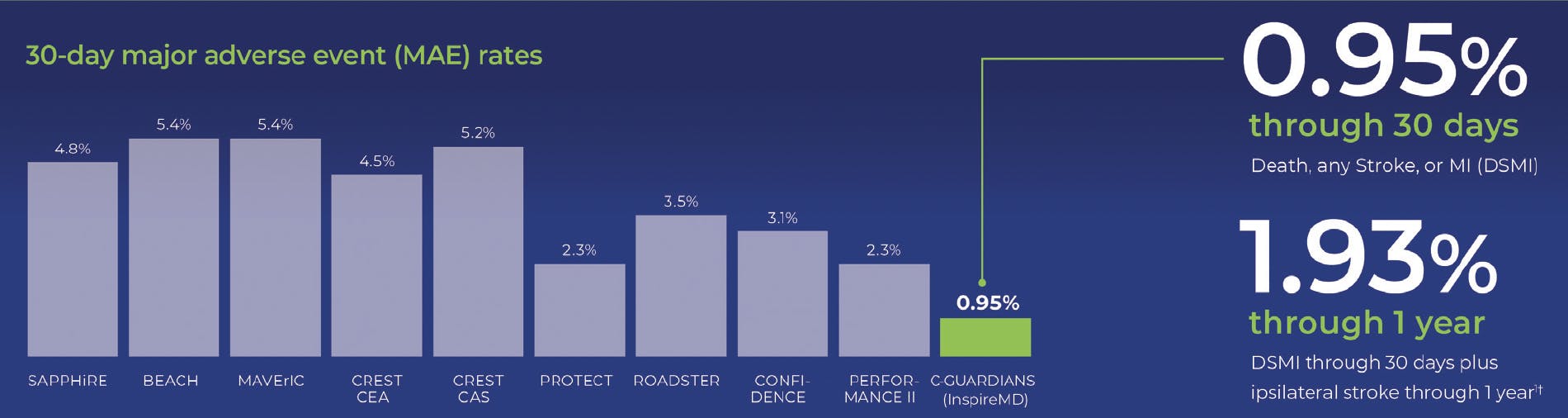
Figure 1. C-GUARDIANS trial 30-day MAE rate versus other pivotal carotid trials to date.1-9
Although the numbers turned heads, they weren’t the whole story. They validate the story. The real story is the product itself: the combination of a flexible, open-cell stent for conformability, paired with a finely woven MicroNet mesh for optimized plaque coverage.
CGuard’s MicroNet mesh is engineered with an average free cell area of only 0.18 mm2 (Figure 2). To put that in perspective, this is approximately 2.2 times smaller than the nearest competitor and nearly 30 times smaller than the average open-cell stents.* This level of precision weaving creates a consistent, protective barrier designed to optimize plaque coverage and reduce the risk of embolic events—without sacrificing the flexibility and conformability physicians desire.1
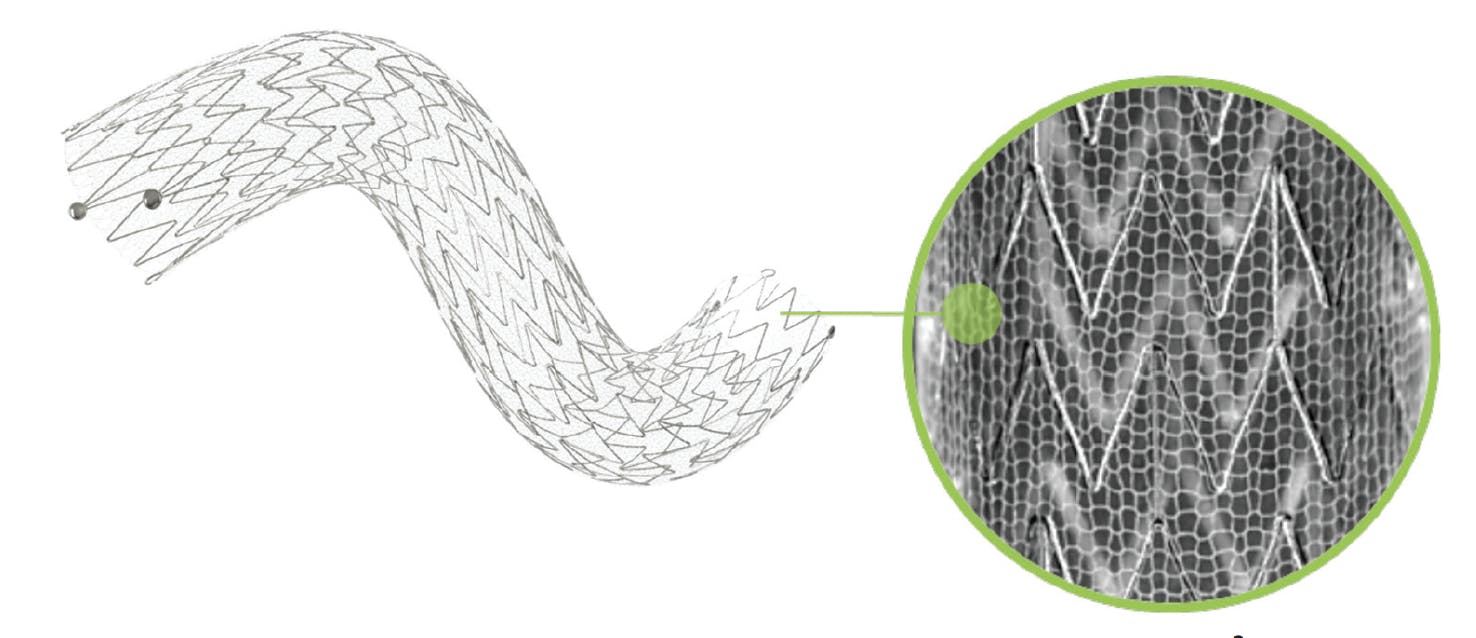
Figure 2. CGuard MicroNet mesh, engineered with a free cell area of only 0.18 mm².
“The job of a carotid stent is to stabilize plaque and prevent it from prolapsing through the open cells of the stent, embolizing, and causing a stroke. Offering the smallest pore size of any carotid stent,† while maintaining the flexibility and conformability of an open-cell stent, gives operators the confidence that they’re offering their patients a combination of acute and long-term protection. And thus far, the data from both our pivotal C-GUARDIANS trial and numerous other real-world data sets has supported this,” notes Shane Gleason, CCO of InspireMD.
KEY FEATURES OF THE CGUARD CAROTID STENT SYSTEM
- MicroNet mesh: A nonmetallic PET covering to promote endothelialization and lower the risk of thrombosis
- Closed-cell protection against plaque protrusion with the smallest mesh pore size (~150-180 μm)†
- Defense demonstrated beyond 5 years10‡
- SmartFit™ technology: A self-expanding nitinol stent system that adapts to varying vessel diameters
- The largest open-cell frame† that allows for flexibility even in challenging or complex anatomies
- Supports accurate vessel wall apposition without the need for tapered configurations
FROM DATA TO ACTION
An important next chapter of this story is the shift that took place to enable the arrival of the next generation of carotid stenting—the CGuard Prime Carotid Stent System—to the US. Prior to the arrival of CGuard Prime, there had been no shortage of carotid stents available. The first carotid stent system was approved over 20 years ago (Acculink™ stent and Accunet™ filter, Guidant Corporation [later acquired by Abbott®] in 2004), and by 2010, Abbott, Boston Scientific Corporation®, Cordis®, and Medtronic® had all followed suit with approvals of their own.
However, during that time, Centers for Medicare & Medicaid Services (CMS) coverage remained limited to a narrow portion of patients who were otherwise on-label for the approved devices. Fourteen years had passed since the last review of carotid stenting coverage in the US. The devices were evolving and data were maturing, but policy hadn’t changed.
So physicians stepped in.
This is where the shift began—on the front lines. It came from physicians who saw a better way forward for their patients, and a new kind of leadership emerged. Clinically grounded, multidisciplinary, and deeply committed physicians decided to act.
This momentum became the foundation of the Multi-Specialty Carotid Alliance (MSCA), a collaborative, clinician-led initiative focused on expanding access, modernizing reimbursement, and building consensus around new options for carotid revascularization. The group included physicians from the physician specialties that are most involved in the care for patients with carotid disease in the pursuit of treating and preventing stroke—interventional cardiology, interventional neuroradiology, interventional radiology, neurology, neurosurgery, vascular medicine, and vascular surgery.
One thing was clear for the MSCA—the products and industry were evolving dramatically. Notably:
- Long-term data had matured from four large, randomized trials comparing carotid stenting with CEA: CREST, ACT I, SAPPHIRE, and EVA-3S.
- Newer techniques had emerged, including transcarotid artery revascularization (TCAR), which allows for stent delivery through a small incision at the base of the neck while providing neuroprotection via flow reversal—bypassing potentially complex aortic arch anatomy.
As a response to these catalysts, physicians didn’t just advocate for better coverage—they organized. They submitted real-world data, published clinical insights, and engaged health policy leaders to ensure stroke prevention could evolve. Their collective voice became a force, paving the way for CMS to reconsider reimbursement guidelines.
On October 11, 2023, CMS updated its National Coverage Determination (NCD 20.7) for percutaneous transluminal angioplasty (PTA) of the carotid artery concurrent with stenting, significantly expanding the population of Medicare beneficiaries eligible for carotid stenting.
THE SHIFT REALIZED
With access expanded, InspireMD recognized the opportunity to bring what the company—and many in the field—deemed a paradigm shift in carotid stenting to the US market. Along the way to enrolling the C-GUARDIANS trial, the company had raised significant capital with financings announced in 2023 and 2025 totalling over $150 million with achievement of certain regulatory and commercial milestones. In addition to enrolling the trial and continuing to commercialize CGuard and establish real-world evidence around the world, it established a new global headquarters in Miami and began to build a US team (Figure 3).

Figure 3. CEO, Marvin Slosman, and board member, Gary Roubin, MD, at InspireMD’s Miami headquarters.
The goal wasn’t simply to enter the market. Rather, it was to deliver a long-awaited and much-needed advancement in stroke prevention to US physicians and their patients.
Finally, in the summer of 2025, FDA gave its answer: Premarket approval was granted for the CGuard Prime Carotid Stent System. The only mesh-covered carotid stent available in the world was now approved in the US.
CGuard Prime doesn’t just mark the arrival of a new device—it reflects years of effort to answer the question: What would the ideal carotid stent look like?
For years, physicians have faced a tradeoff in carotid stenting: conformability or protection. Few options offered both. That’s what makes CGuard Prime different.
The device combines SmartFit™ technology—a highly flexible, open-cell nitinol frame that conforms to complex anatomy—with MicroNet mesh, a tightly woven, monolayer of polyethylene terephthalate (PET) fiber engineered to minimize plaque prolapse and reduce embolic events. The mesh covers the outside of the stent and is designed with the smallest pore size on the market, acting like a shield without compromising the stent’s ability to adapt to challenging carotid anatomy. The MicroNet mesh continues doing its job long after the procedure is done—offering continuous embolic protection when it matters most.
What makes this meaningful isn’t just the engineering—it’s how clearly the design translates into clinical impact.
Dr. Chris Metzger, National Principal Investigator of the US investigational device exemption trial, put it this way:
“I see a definite trend toward carotid stenting, including among vascular surgeons with TCAR and transfemoral approaches. There is a lot of carotid disease, and patients are terrified of having a stroke. The ideal carotid stent must reduce periprocedural strokes, conform to the vessels we treat, and be usable whichever access route we choose.
Most strokes after stenting don’t occur during the procedure but in the short interval afterward. The larger the stent pore size, the more likely plaque can protrude and embolize despite a good angiographic result. Conventional open-cell stents are conformable but provide the least coverage; closed-cell stents cover more but are rigid and still not ideal. The CGuard Prime MicroNet carotid stent may represent that ideal—combining excellent conformability with the best plaque coverage to date.”
And it’s not just theory—the data really do speak for themselves. In the pivotal C-GUARDIANS study, CGuard Prime demonstrated:
- 0.95% MAE rate at 30 days
- 1.93% MAE rate at 1 year1§
These are the lowest 30-day and 1-year primary endpoint MAE rates of any pivotal study of carotid intervention to date.
Marvin Slosman, CEO of InspireMD, reinforces that clarity, “CGuard Prime represents more than a device—it’s about lasting protection. Stroke prevention doesn’t end when the procedure does, and with MicroNet mesh, physicians can offer their patients confidence that protection continues well beyond implantation, when it matters most.”
BEYOND APPROVAL
By early July 2025, InspireMD had begun its US launch. This wasn’t just a product launch—it was the fulfillment of a vision shared by the MSCA and many forward-thinking physicians: a stent that achieves both flexibility and protection, without compromise.
InspireMD made its debut on the national stage by ringing the Nasdaq bell in New York City in August, gaining recognition not only from physicians but across the health care and investment communities (Figure 4).

Figure 4. InspireMD leadership ringing the Nasdaq bell.
There are many ways to measure success in this field: regulatory approvals, clinical results, adoption. But sometimes, the most important measure is purpose—that’s what CGuard Prime represents. In a space previously defined by incremental updates, CGuard Prime signals something more meaningful: a true sense of purpose.
InspireMD exists to help prevent strokes, save lives, and give physicians and patients the confidence to choose carotid stenting—without compromise.
With CGuard Prime, stroke prevention isn’t an afterthought—it’s the blueprint.
*Data on file, InspireMD.
† Among commercially available carotid stents.
‡ Defense is defined as the absence of restenosis.
§ Based on modified intent-to-treat Kaplan-Meier analysis.
1. InspireMD, Inc. C-GUARDIANS pivotal trial: primary endpoint clinical study report. Version F (Protocol PRO-9017).
2. Yadav JS, Wholey MH, Kuntz RE, et al. Protected carotid-artery stenting versus endarterectomy in high-risk patients. N Engl J Med. 2004;351:1493-1501. doi: 10.1056/NEJMoa040127
3. Iyer SS, White CJ, Hopkins LN, et al. Carotid artery revascularization in high-surgical-risk patients using the carotid WALLSTENT and FilterWire EX/EZ: 1-year outcomes in the BEACH pivotal group. J Am Coll Cardiol. 2008;51:427-434. doi: 10.1016/j.jacc.2007.09.045
4. Higashida RT, Popma JJ, Apruzzese P, et al. Evaluation of the medtronic exponent self-expanding carotid stent system with the medtronic guardwire temporary occlusion and aspiration system in the treatment of carotid stenosis: combined from the MAVErIC (Medtronic AVE Self-expanding CaRotid Stent System with distal protection In the treatment of Carotid stenosis) I and MAVErIC II trials. Stroke. 2010;41:e102-109. doi: 10.1161/STROKEAHA.109.564161
5. Brott TG, Hobson RW 2nd, Howard G, et al. Stenting versus endarterectomy for treatment of carotid-artery stenosis. N Engl J Med. 2010;363:11-23. Published corrections appear in N Engl J Med. 2010;363:498 and N Engl J Med. 2010;363:198. doi: 10.1056/NEJMoa0912321
6. Matsumura JS, Gray W, Chaturvedi S, et al. Results of carotid artery stenting with distal embolic protection with improved systems: protected carotid artery stenting in patients at high risk for carotid endarterectomy (PROTECT) trial. J Vasc Surg. 2012;55:968-976. doi: 10.1016/j.jvs.2011.10.120
7. Kwolek CJ, Jaff MR, Leal JI, et al. Results of the ROADSTER multicenter trial of transcarotid stenting with dynamic flow reversal. J Vasc Surg. 2015;62:1227-1234. doi: 10.1016/j.jvs.2015.04.460
8. Langhoff R, Vajda Z, Odrowąż-Pieniążek P, et al. 30-day outcomes of real-world elective carotid stenosis treatment using a dual-layer micromesh stent (ROADSAVER study). Cardiovasc Intervent Radiol. 2025;48:427-437. doi: 10.1007/s00270-025-04003-z
9. Gray WA, Metzger DC, Zidar J, et al. The PERFORMANCE II trial: a prospective multicenter investigation of a novel carotid stent system. JACC Cardiovasc Interv. 2025;18:367-376. doi: 10.1016/j.jcin.2024.10.031
10. Mazurek A, Borratynska A, Tomaszewki T, et al. Long-term outcomes of the micronet-covered stent system routine use for carotid revascularization in stroke prevention: PARADIGM-Extend 5 year evidence. Eur Heart J. 2020;41(Suppl 2):ehaa946.2404. doi: 10.1093/ehjci/ehaa946.2404
Advertisement
Advertisement
