Advertisement
Advertisement
September 2025 Supplement
Sponsored by Cagent Vascular
Case Report: Multivessel Disease in a Diabetic, CLTI Patient
PATIENT PRESENTATION
A woman in her mid 60s with a history of diabetes, hypertension, and chronic myeloid leukemia presented with a nonhealing ulcer of her left foot, rest pain, and erythema in her toes (Figure 1). She had transitioned from intermittent claudication to symptoms consistent with chronic limb-threatening ischemia (CLTI). Ankle-brachial index (ABI) and peak velocity ratio (PVR)suggested multilevel disease in the left lower extremity. ABI measured 0.50 on the left side and 0.80 on the right (Figure 2A). Duplex ultrasound and angiography revealed multilevel peripheral artery disease (PAD), including a chronic total occlusion (CTO) of the left superficial femoral artery (SFA), disease in the distal popliteal artery, and single-vessel runoff via the anterior tibial artery (Figure 2B). The peroneal and posterior tibial arteries, along with the tibioperoneal trunk, were also diseased.

Figure 1. Left foot nonhealing ulcer.
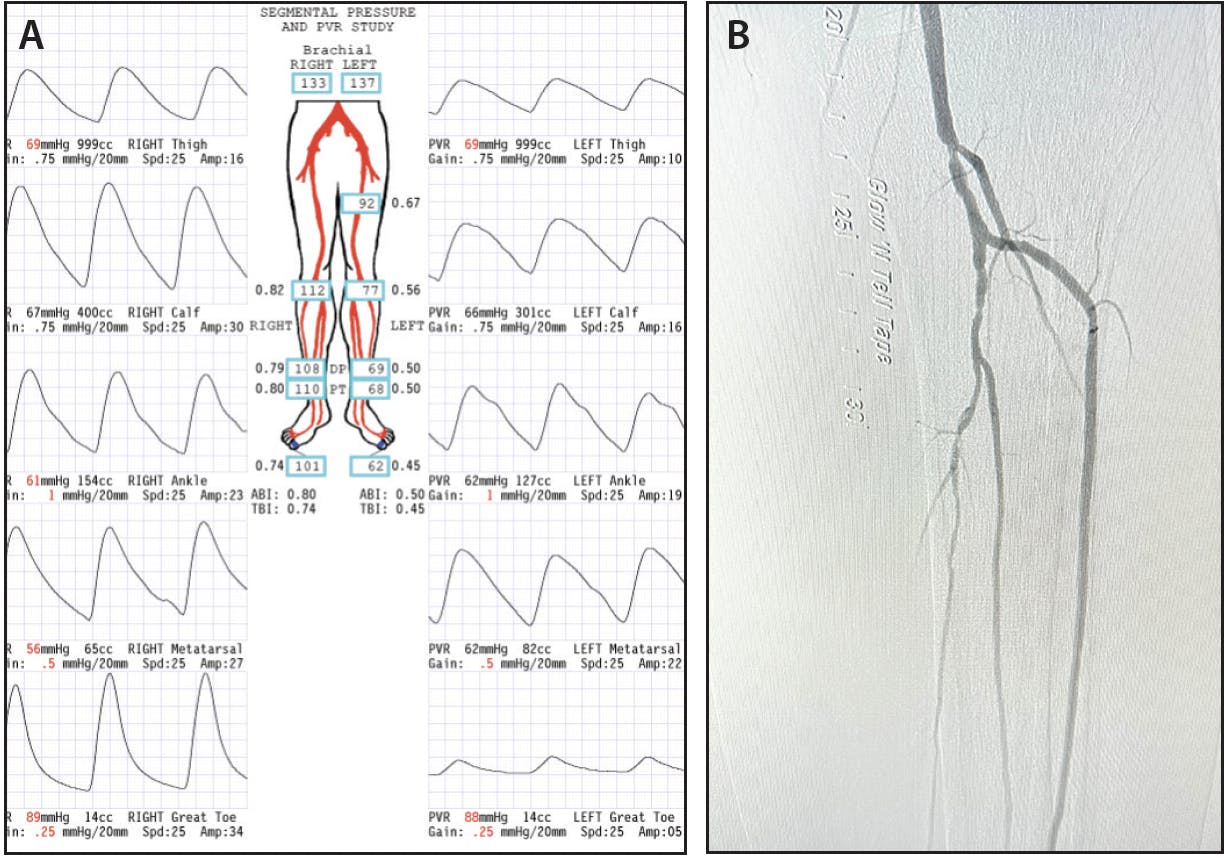
Figure 2. ABI and PVR at presentation (A). Initial angiogram (B).
PROCEDURE
Access was achieved via a bidirectional approach with a 7-F Roadster sheath (Merit Medical Systems, Inc.) through the right femoral artery and a 5-F Prelude sheath (Merit Medical Systems, Inc.) via pedal access under ultrasound guidance. The SFA CTO was crossed using a 0.014-inch Gladius Mongo ES wire (Asahi Intecc Co. Ltd.) supported by a Corsair Pro microcatheter (Asahi Intecc Co. Ltd.). The wire was externalized using a tip-in technique to achieve flossing.
The SFA CTO was then treated with optical coherence tomography–guided directional atherectomy using a 7-F Pantheris XL device (Avinger, Inc.). Angioplasty with a 5.0- X 100-mm Stellarex drug-coated balloon (DCB; Philips) was performed, an area of focal dissection was noted distally and a 5.5- X 80-mm Supera stent (Abbott) was deployed. For the below-the-knee (BTK) segment, including the tibioperoneal trunk and tibial vessels, multiple prolonged inflations were performed using Serranator® PTA Serration Balloon Catheters (3 X 120 mm and 3.5 X 40 mm) (Cagent Vascular), with no need for additional therapy or bailout stenting (Figure 3).
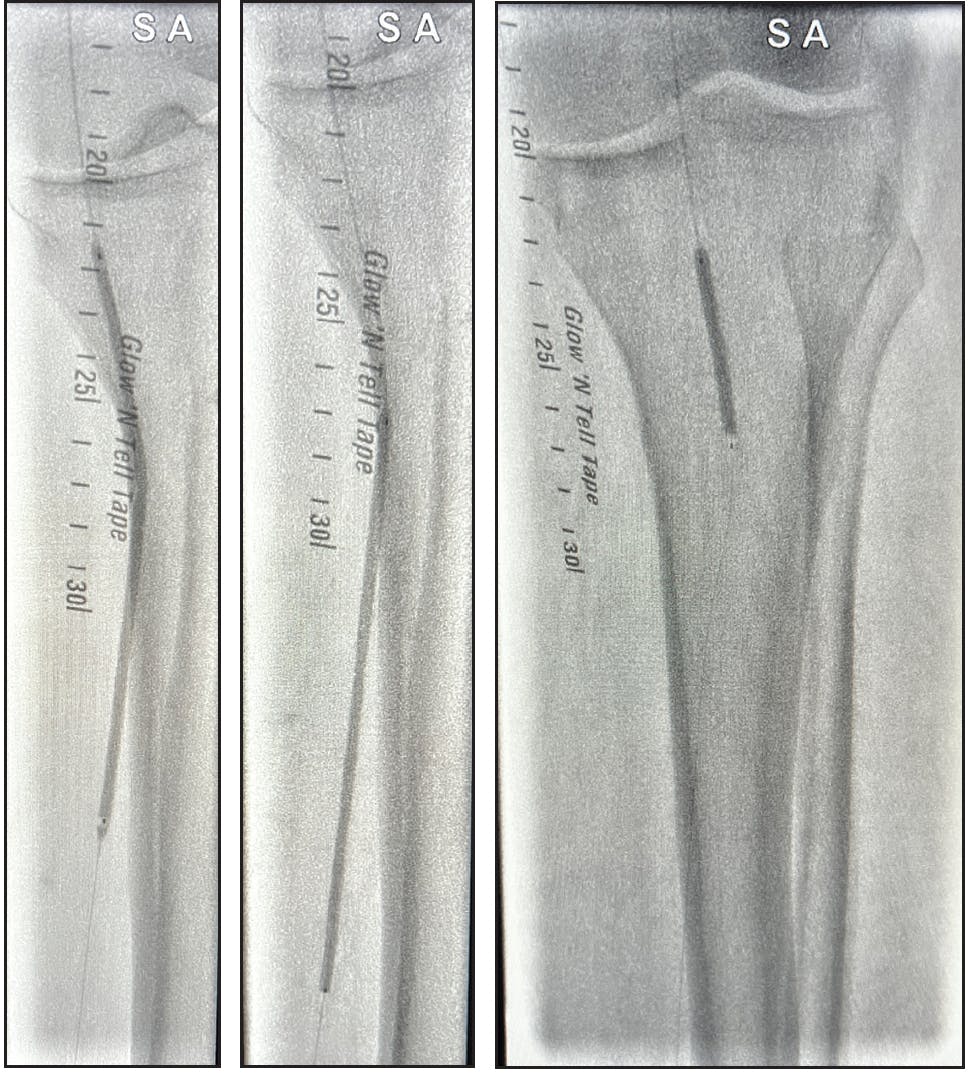
Figure 3. Lesions in the posterior tibial and peroneal arteries treated with serration balloon angioplasty.
RESULTS
The patient was discharged the same day. After 3 months of continued wound care, the patient's ulcer healed completely (Figure 4). Her ABI improved from 0.55 to 0.91. Follow-up arterial ultrasound and angiography confirmed patency of the stented segment and robust three-vessel runoff (Figure 5).

Figure 4. Healed ulcer 3 months after revascularization.
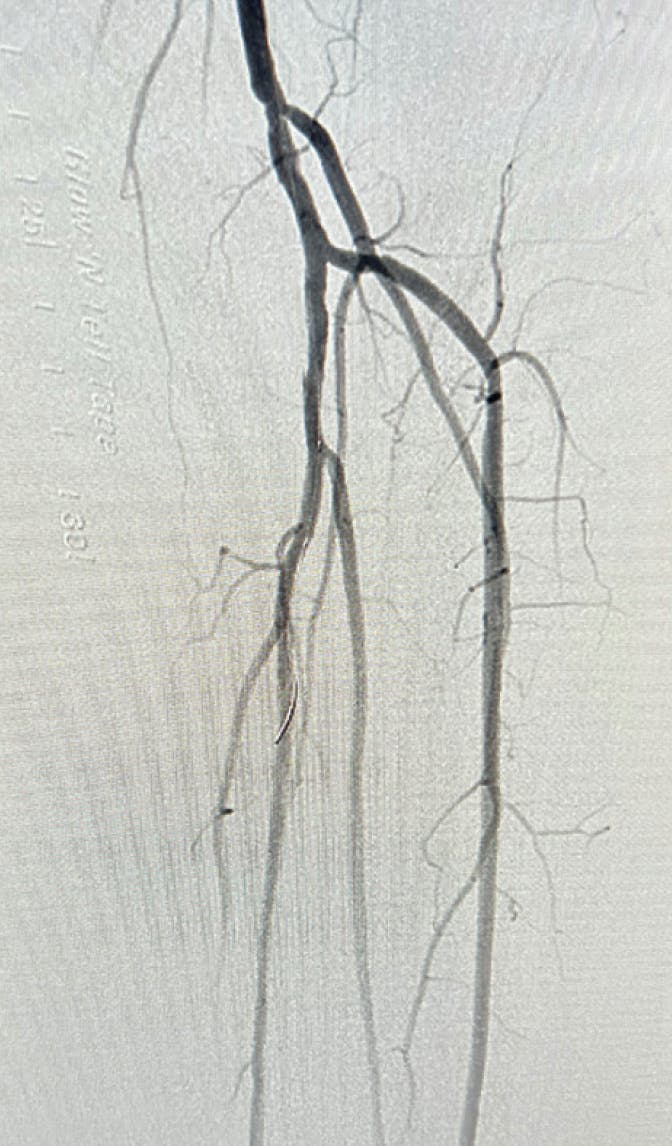
Figure 5. Final angiogram of BTK runoff.
She was transitioned to aspirin and low-dose rivaroxaban (2.5 mg), with no bleeding complications. At 2 years, she remains active, symptom-free, and ulcer-free, with no further interventions required on the treated limb.
A Q&A With Dr. Tabaza on the Benefits of Choosing Serranator
Why was the Serranator chosen for this case?
Serranator was selected to address immediate recoil commonly seen in BTK angioplasty. Prior to adopting Serranator, plain old balloon angioplasty frequently resulted in rapid recoil, necessitating stenting or reintervention. Serranator provided durable vessel prep with excellent luminal gain and low risk of dissection.
What are the key benefits of using Serranator in BTK disease?
Serranator allows for safer, more effective treatment of complex tibial lesions without creating flow-limiting dissections. In my experience, it has significantly reduced the need for bailout stenting, especially in CLTI patients with poor runoff and resistant disease. It has enabled better outcomes and contributed to long-term patency and wound healing.
Are there other settings in which you use Serranator?
Yes. Beyond BTK, Serranator has become a preferred tool in both pedal interventions and above-the-knee vessel preparation. In pedal cases, the new 2-mm platform enables treatment of distal disease within the foot, helping improve outflow in patients safely. In the SFA, Serranator is often used pre-DCB to reduce the risk of dissection and avoid stenting altogether. These applications have broadened its value across a range of CLTI and PAD anatomies.

Advertisement
Advertisement