Advertisement
Advertisement
September 2025 Supplement
Sponsored by Cagent Vascular
Case Report: Long-Segment SFA Stenosis With CTO Treated With Serranator® and DCB in a Patient With Forefoot Dry Gangrene
PATIENT PRESENTATION
A man in his late 50s with a history of smoking and diabetes presented with dry gangrene of the right toes and a history of rest pain. He was referred by his podiatrist after months of progressive ischemic symptoms in his right extremity. In-office duplex ultrasound revealed multilevel peripheral artery disease with long-segment, high-grade stenosis of the superficial femoral artery (SFA) (Figure 1). His ankle-brachial index (ABI) was 0.40, and vein mapping showed no suitable conduit for bypass.
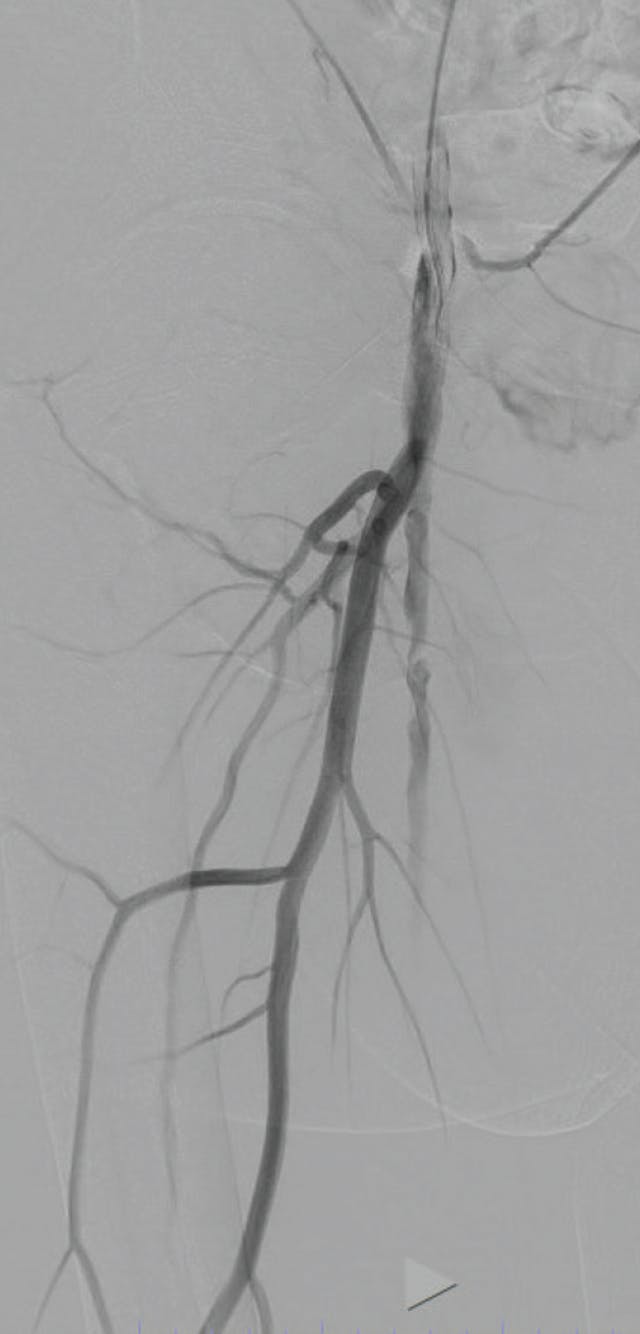
Figure 1. Preprocedure angiogram.
Given the severity of ischemia and absence of bypass options, the patient was brought to the operating room for endovascular intervention.
PROCEDURE
Left common femoral artery access was achieved, and angiography confirmed a severely diseased right SFA with segments of near occlusion, > 90% stenosis, and mid-to-distal short-segment occlusion (Figure 1, Figure 2, and Figure 3). The popliteal artery was patent with codominant anterior tibial and posterior tibial runoff into the foot. A 7-F, 55-cm Destination sheath (Terumo Interventional Systems) was advanced, and the lesions were carefully crossed intraluminally using an 0.018-inch Hi-Torque Command wire (Abbott) and NaviCross catheter (Terumo Interventional Systems).
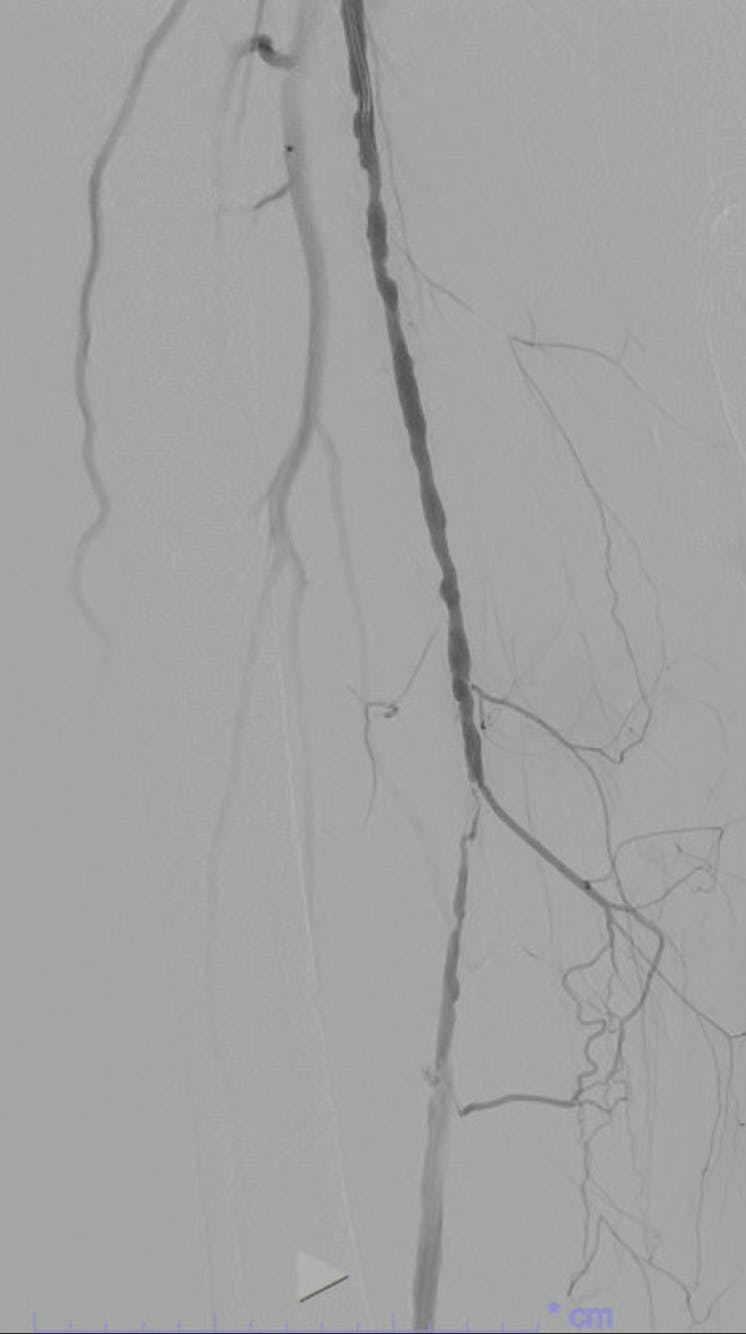
Figure 2. Preprocedure angiogram of the mid to distal SFA.
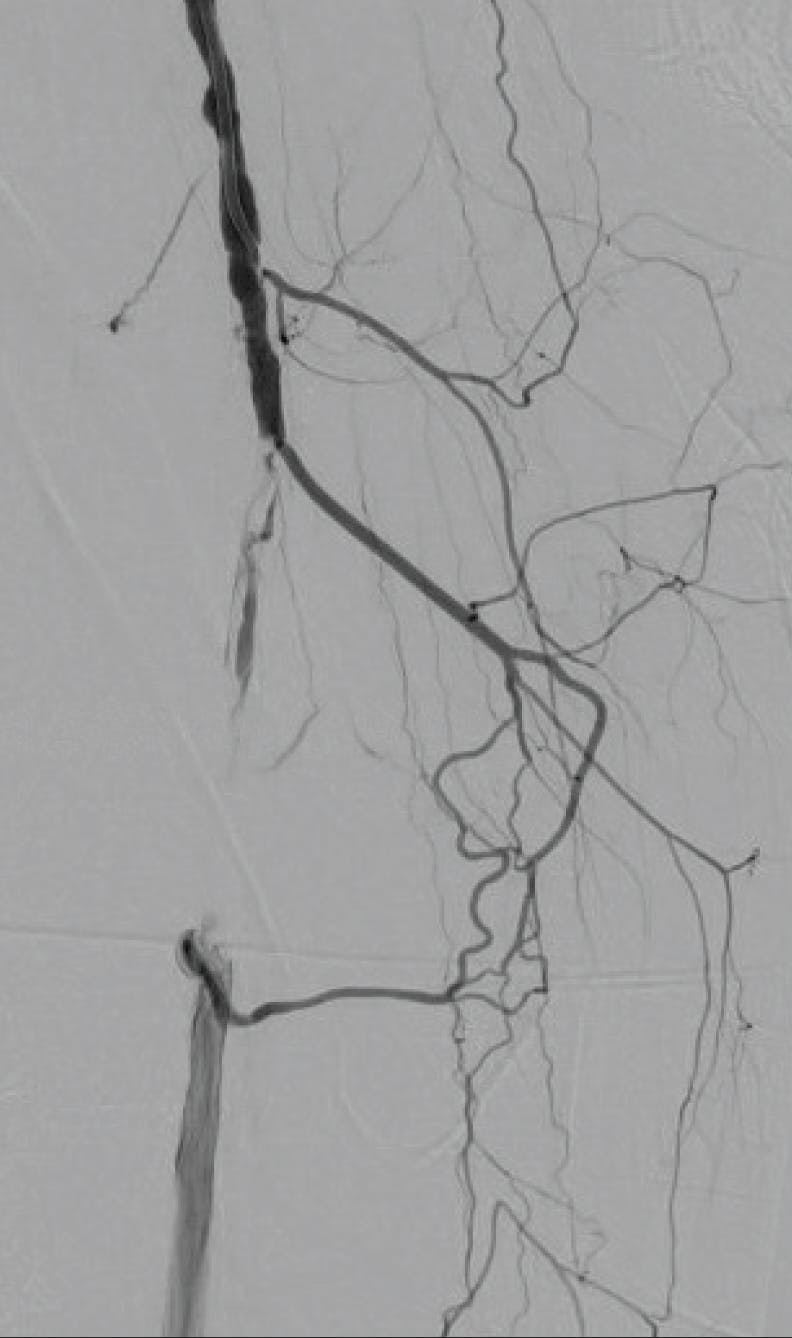
Figure 3. Distal SFA short-segment occlusion.
Serration angioplasty was performed along the entire SFA length—from proximal SFA to just beyond Hunter’s canal—using a 6- X 120-mm Serranator® PTA Serration Balloon Catheter (Cagent Vascular) for multiple inflations. The procedure was completed with a 6- X 250-mm In.Pact Admiral drug-coated balloon (DCB) (Medtronic). There were no flow-limiting dissections, and stenting was not required. Figure 4 and Figure 5 show completion angiograms. Palpable pedal pulses were noted postprocedure.
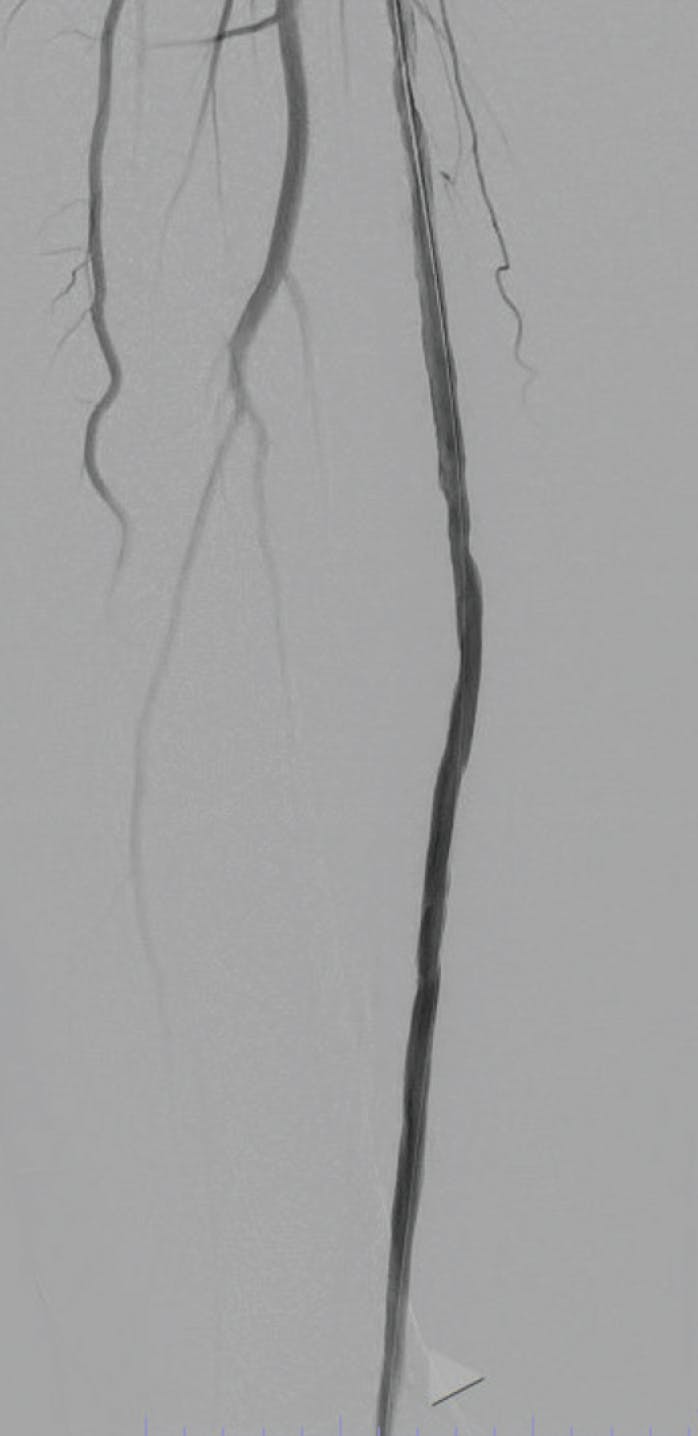
Figure 4. Completion angiogram of the proximal and mid SFA.
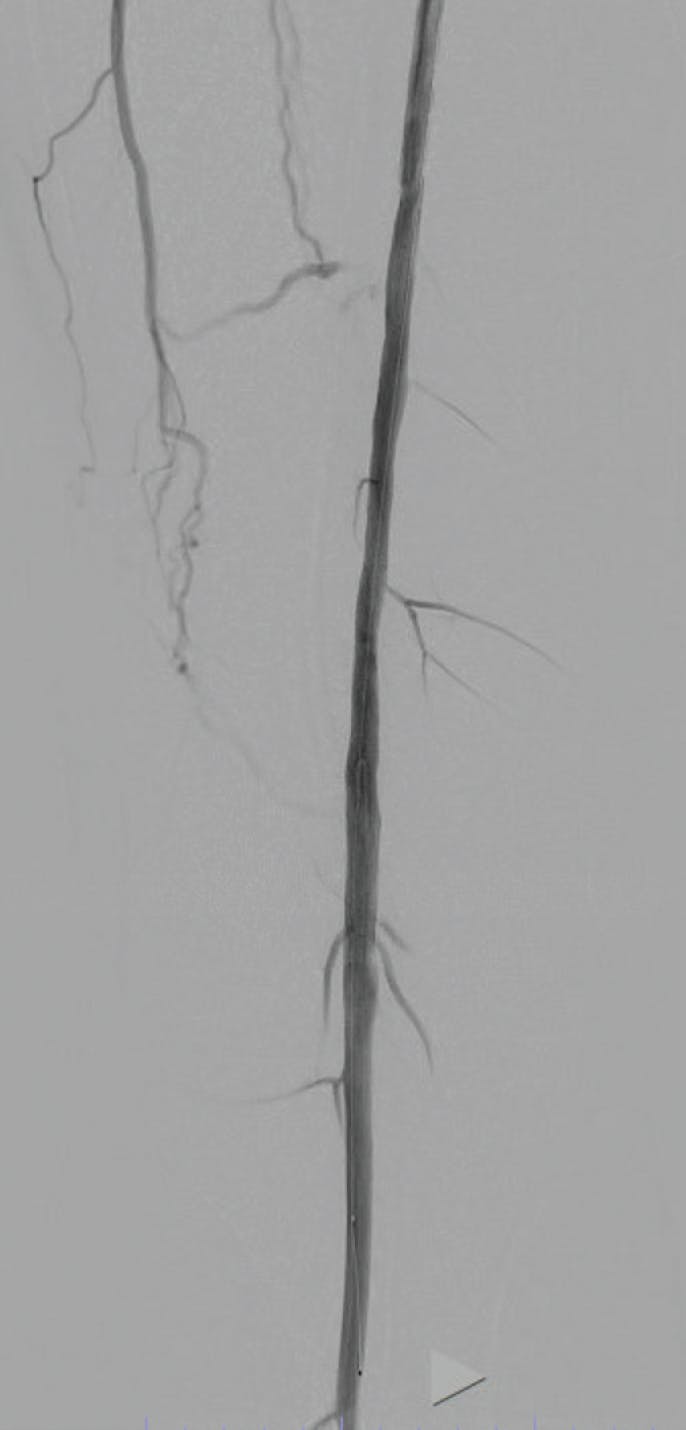
Figure 5. Completion angiogram of the distal SFA.
RESULTS
The patient was discharged and subsequently underwent a transmetatarsal amputation, which healed completely. Follow-up ABI was 1.0, and over 1 year later, the patient remains well-perfused, walking independently, and free of recurrent stenosis or tissue loss.
A Q&A With Dr. Rogers on Selecting Serranator
Why was Serranator selected for this case?
Serranator was chosen to maximize luminal gain while minimizing dissection risk, particularly important in this long-segment stenosis with chronic total occlusion (CTO) where no suitable vein was available for bypass. The device’s serration technology allowed for controlled plaque modification and excellent vessel prep, enabling DCB delivery. I believe the microfracturing from the serrations helps facilitate deeper drug penetration, which may contribute to the durable outcomes we’re seeing in these complex cases.
How has Serranator performed across other vascular beds, including the iliacs?
Beyond femoropopliteal and tibial use, I’ve used Serranator in pedal arteries and select iliac artery cases with good success. In the tibial and pedal arteries, it consistently delivers better luminal gain than plain old balloon angioplasty (POBA), often rescuing segments where plain balloons underperform. In the iliacs, I’ve used it for vessel prep—especially in cases with CTOs where plaque modification is essential. I’m highly anticipating the launch of larger Serranator sizes to broaden iliac treatment options.
Do you have experience using Serranator in percutaneous transmural arterial bypass (PTAB) procedures?
Yes, I’ve used Serranator during PTAB to dilate the proximal and distal arteriovenous (AV) “anastomosis.” POBA often falls short due to significant recoil, making sheath or stent delivery very difficult. The serration technology provides excellent and durable expansion of the AV anastomosis, which helps maintain sheath access and eliminates the waist that can often be seen after stent deployment and postdilation. In my experience, it’s a more effective option than standard balloons for ensuring tract patency in these complex cases.


Advertisement
Advertisement