Advertisement
Advertisement
September 2025 Supplement
Sponsored by Cagent Vascular
Elevating Outcomes in AV Fistula Interventions With the Serranator® PTA Serration Balloon Catheter
Demonstrating the power of serration technology for improved durability, reducing restenosis, and navigating hostile anatomy, with a real-world case example.
Maintaining the patency of arteriovenous (AV) fistulas remains a significant challenge in patients requiring hemodialysis. Despite being the preferred form of vascular access, AV fistulas are prone to complications after intervention, particularly elastic recoil, inadequate luminal gain, and restenosis. These mechanical and biological challenges contribute to poor long-term outcomes and frequent reinterventions.
Elastic recoil is a major factor limiting the success of percutaneous transluminal angioplasty (PTA). After balloon deflation, vessel walls often elastically return to their preprocedural state, leading to significant residual stenosis and early failure. Recent studies have reported primary patency rates after angioplasty as low as 44% at 12 months, reflecting the persistent impact of recoil and neointimal hyperplasia (NIH).1 Inadequate luminal gain compounds this problem. Lesions in AV fistulas are often highly fibrotic or calcified, making them resistant to full expansion, even with high-pressure, noncompliant balloons. Underexpanded lesions not only compromise immediate blood flow but also contribute to rapid restenosis.
Restenosis remains one of the most prevalent causes of AV access failure. Mechanical injury from PTA accelerates NIH. Longer lesion length, the presence of multiple stenoses, and high shear forces have all been associated with higher recurrence rates.1 Despite high technical success rates immediately after intervention, durability remains poor, with freedom from reintervention often falling below 50% within the first year.
To address these challenges, stenting is sometimes used in AV fistula interventions. However, the role of stents is generally reserved for salvage cases. Although stents are beneficial in preventing early collapse or recoil, they do not address the underlying processes of restenosis and NIH. Stenting is not a universal solution, and in many cases, it may only delay the need for further interventions. It may also introduce long-term complications, including infection, thrombosis, difficulty in accessing the fistula for future procedures, and loss of opportunities for further proximal AV accesses.
These realities underscore the growing importance of vessel preparation and more effective primary therapies in AV fistula management. Traditional high-pressure and scoring balloons can help, but there remains a significant unmet need for technologies that both optimize luminal gain and minimize vessel trauma to reduce recoil and restenosis. Moreover, successful vessel preparation is crucial not only to create a larger, more sustainable lumen but also to establish a favorable vessel environment when pharmacologic therapies, such as drug-coated balloons (DCBs), are used. Recent randomized controlled trial data have demonstrated that DCB angioplasty can improve 12-month patency rates compared to plain old balloon angioplasty (POBA), but these benefits depend heavily on adequate vessel preparation.2
In this context, the Serranator® PTA Serration Balloon Catheter (Cagent Vascular) represents a novel approach to addressing the dual challenges of vessel preparation and primary therapy for AV fistula interventions.
The Serranator uses stainless-steel microserration technology, designed to create linear, interrupted scoring along the endoluminal surface. With 1,000 times more point force compared with POBA, serration occurs during slow-and-low balloon inflation and is designed to aid vessel expansion, effectively optimizing luminal gain in all lesion morphologies with minimal recoil.
The Serranator offers a compelling solution for treating AV fistula stenoses—particularly in challenging lesions where traditional POBA may be insufficient. The Serranator has proven to be effective in treating peripheral artery disease and chronic limb-threatening ischemia, and its unique mechanism of action holds promise for addressing similar challenges in AV fistula management, providing a potential solution to improve outcomes and reduce the need for repeat interventions. Several case studies follow which illustrate the utility of Serranator angioplasty use for AV access–related complications.
Case Report: Serranator Use for Recoil After Noncompliant Balloon PTA and In-Stent Restenosis for AV Fistula Treatment
PATIENT PRESENTATION
A woman in her late 60s with a left brachiocephalic AV fistula created 5 years prior presented with prolonged bleeding and poor dialysis clearance. A duplex ultrasound demonstrated stenosis in the proximal segment and in-stent restenosis in the cephalic arch stent (Figure 1).
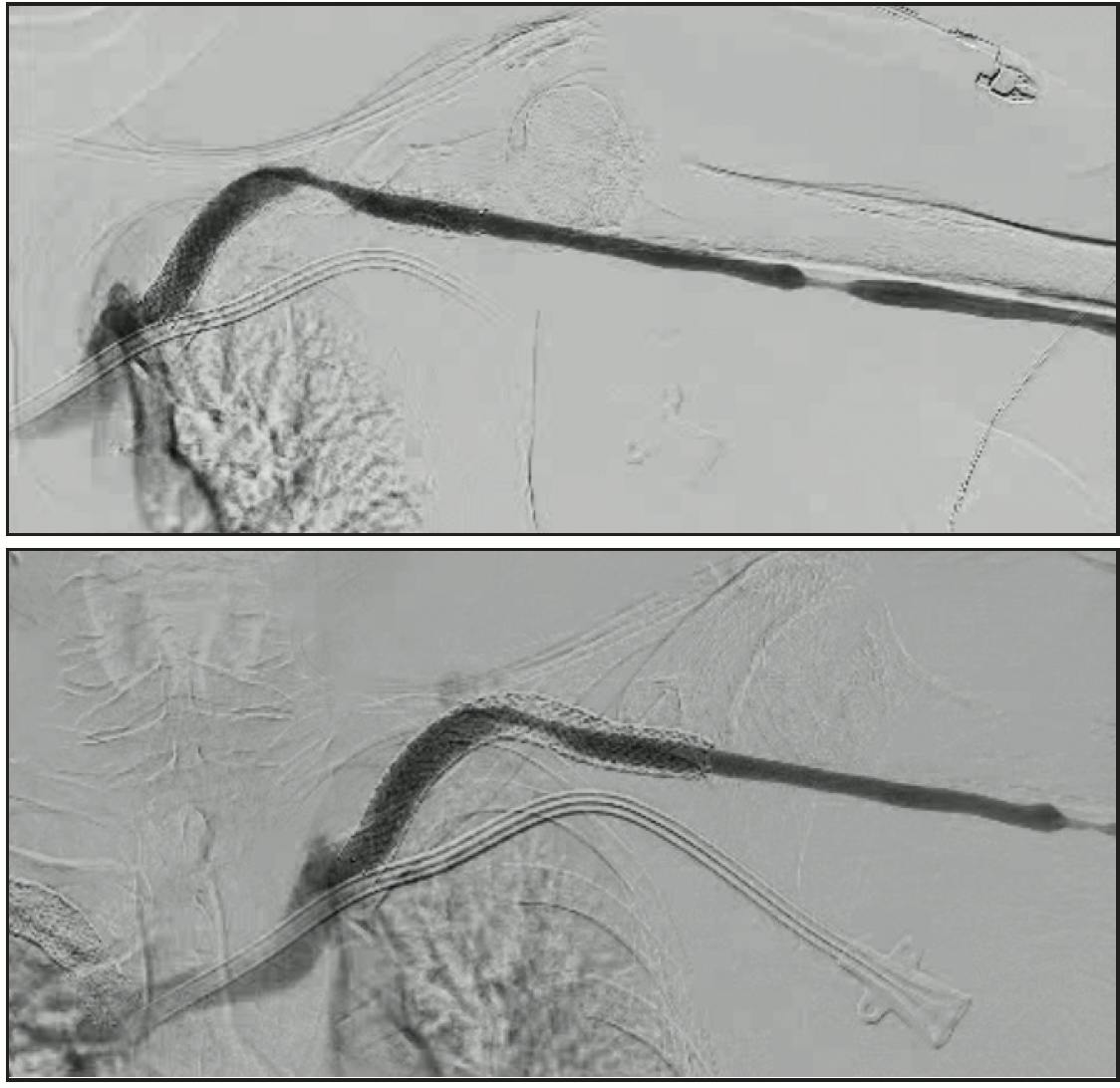
Figure 1. High-grade stenoses present in the mid fistula and cephalic arch stent.
PROCEDURE
Antegrade access was achieved in the distal fistula and a 6-F sheath was inserted. Fistulagraphy was performed and demonstrated > 90% stenosis in the mid fistula as well as > 85% in-stent restenosis in the cephalic arch stent (Figure 1). PTA of both lesions was performed with a noncompliant 6- X 40-mm balloon, but significant recoil was encountered with > 50% residual stenosis (Figure 2 and Figure 3). PTA was then performed with 6- X 40-mm Serranator Balloon followed by a 7- X 60-mm DCB angioplasty (Figure 4). Completion angiography demonstrated < 30% residual stenosis with a strong thrill present (Figure 5).
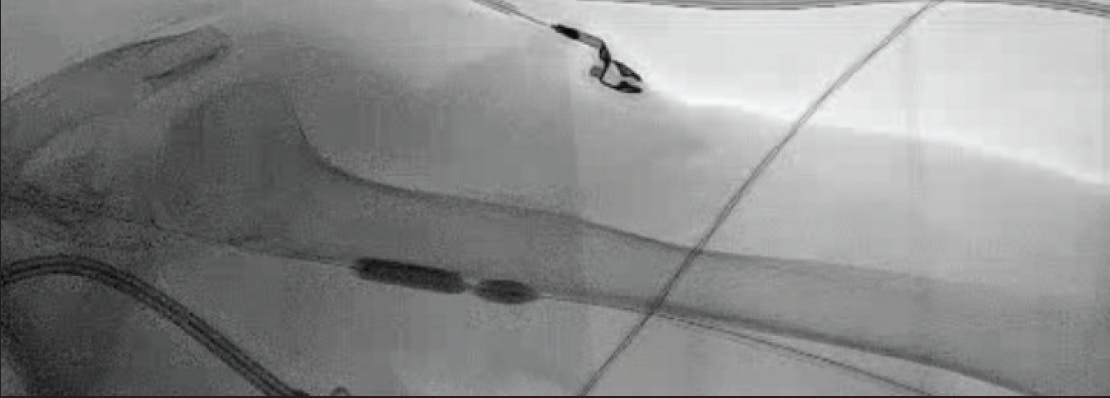
Figure 2. Waist seen with noncompliant PTA.
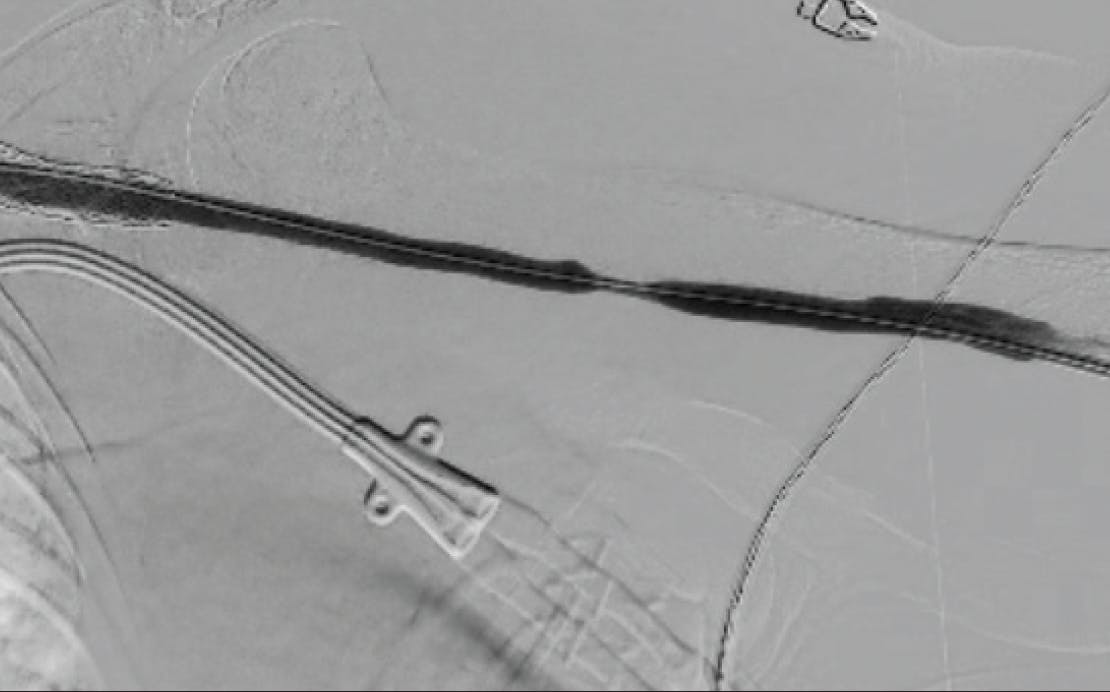
Figure 3. Recoil after noncompliant PTA.
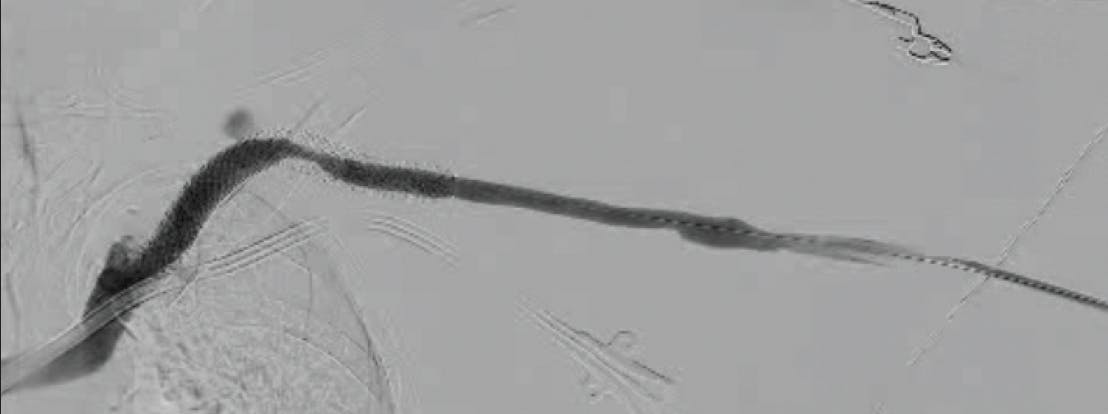
Figure 4. Post–noncompliant PTA in the cephalic arch and Serranator in the mid fistula.
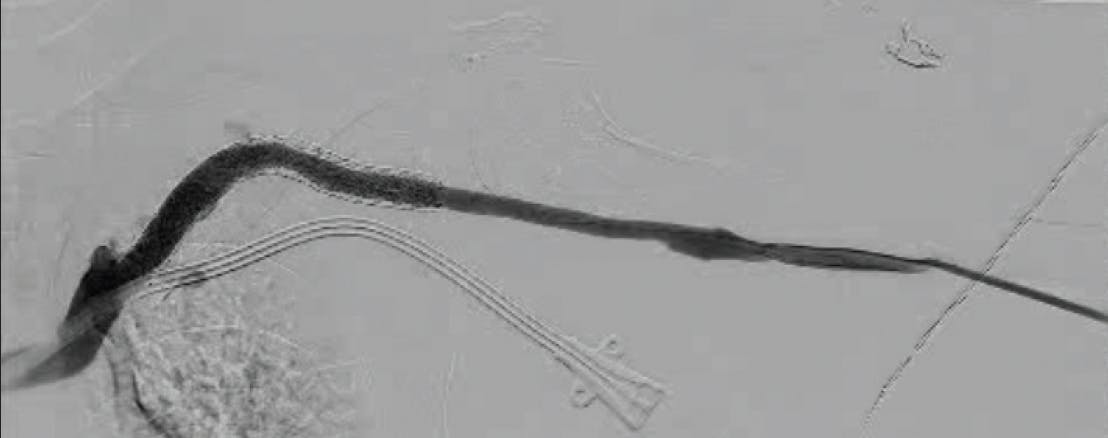
Figure 5. Post-Serranator and DCB PTA.
RESULTS
The patient’s symptoms resolved and the patient had > 1,000 mL/min volume flow on follow-up duplex ultrasound. She has not required repeat fistulagraphy at last follow-up 12 months postprocedure.
A Q&A With Dr. Chopra on Choosing Serranator
Why did you choose to use the Serranator in this case?
The lesion demonstrated significant recoil after noncompliant balloon angioplasty. The Serranator offered a way to modify the vessel more effectively with less trauma, allowing for better lumen gain and setting the stage for optimal DCB delivery.
What made this a particularly challenging AV fistula case?
This patient had in-stent restenosis and highly fibrotic segments—lesion types that often resist full balloon expansion. She had also undergone prior interventions, increasing the risk of limited durability. Recoil and restenosis were persistent issues.
How does the Serranator fit into your approach to AV access interventions?
The Serranator is a valuable tool for vessel prep in tough lesions where standard balloons fall short. It helped us reduce recoil and avoid stenting in this case. With larger sizes on the way, we’ll be able to expand its use across a wider range of AV access and peripheral anatomies.
1. Zheng Q, Xie B, Xie X, et al. Predictors associated with early and late restenosis of arteriovenous fistulas and grafts after percutaneous transluminal angiography. Ann Transl Med. 2021;9:132. doi: 10.21037/atm-20-7690
2. Zhao Y, Wang P, Wang Y, et al. Drug-coated balloon angioplasty for dysfunctional arteriovenous hemodialysis fistulae: a randomized controlled trial. Clin J Am Soc Nephrol. 2024;19:336-344. doi: 10.2215/CJN.0000000000000359

Advertisement
Advertisement