Advertisement
Advertisement
April 2026 Supplement
Sponsored by Terumo Interventional Systems
What’s Next for R2P?
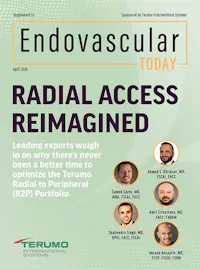
Reflections on unmet clinical needs and persistent challenges in radial-to-peripheral intervention, and how device innovation, including Terumo’s R2P Portfolio, is evolving to close these gaps.
With Amit Srivastava, MD, FACC, FABVM, and Shailendra Singh, MD, RPVI, FACC, FSCAI


What unmet clinical needs or procedural challenges should the next generation of radial tools address, and how can radial-to-peripheral (R2P) offerings like Terumo’s R2P Portfolio evolve to meet them?
Dr. Srivastava: Challenges remain regarding transradial procedures. Imaging is the biggest need currently, with a lack of catheters longer than 150 cm and an inability to consistently perform imaging past the proximal superficial femoral artery in most patients. As intervention is becoming more imaging-guided, development of intravascular ultrasound or optical coherence tomography catheters with working lengths > 200 cm will further improve transradial procedures. Intravascular lithotripsy with catheters with working lengths > 200 cm are also needed as indications and reimbursement continue to evolve for this technology.
Dr. Singh: As R2P continues to evolve, what’s become increasingly clear is that access, delivery, and therapy can’t be treated as separate pieces; they must work together seamlessly. From a procedural standpoint, the primary limitations of R2P continue to relate to reach, support, and stability when treating complex iliac, femoropopliteal, and infrapopliteal disease, particularly in taller patients or those with significant tortuosity or calcification. Low-profile but supportive sheath platforms, better coatings to reduce friction over long distances, and catheters that maintain torque and control without losing trackability are all critical to expanding what we can reliably treat from the wrist.
Equally important is expansion of the radial-compatible peripheral therapy ecosystem itself. A wider sizing matrix of balloons and stents capable of treating larger-caliber vessels from a radial platform remains an unmet need and would further reduce the need to default to femoral access purely for device compatibility. In addition, longer-shaft intravascular imaging catheters would meaningfully enhance procedural planning, lesion assessment, and optimization when performing complex interventions from the wrist. Continued development of these purpose-built tools—spanning access, therapy, and imaging—will be essential to allowing operators to treat increasingly complex peripheral disease via R2P without compromise. Terumo has played a leading role in advancing dedicated R2P platforms, and ongoing innovation in this space will be key to improving procedural efficiency, operator control, and consistency of patient outcomes.
Advertisement
Advertisement