Advertisement
Advertisement
February 2026 Supplement
Sponsored by Cook Medical
CASE SPOTLIGHT: Recanalization of an SFA CTO: A Step-by-Step Discussion
Dr. Koen Deloose describes his algorithmic approach to treating a patient with chronic limb-threatening ischemia and a nonhealing ulcer, with discussion from Drs. Katherine McMackin and Constantino Peña on how they would approach the case and key highlights.
CASE PRESENTATION
A male patient in his late 70s presented to the diabetic foot clinic with a nonhealing, extremely painful ulcer on the left heel for a couple of months. Despite very intensive and professional wound care, there was no signal of healing. On appearance, it was a very atonic wound, not immediately infected but with a fibrinous center and no tendency to heal. He had a significant cardiovascular history, including coronary artery bypass grafting, coronary interventions, and a carotid endarterectomy on the left side for a minor stroke, from which the patient fully recovered. The patient was still a smoker and had arterial hypertension, type 2 diabetes, and hypercholesterolemia, all being treated with medication.
DR. DELOOSE’S APPROACH TO TREATMENT
Initial Imaging and Treatment Planning
This is clearly class 4 disease by WIfI (Wound, Ischemia, foot Infection) classification; the patient is at high risk for major amputation within 1 year. We performed a duplex ultrasound in our vascular lab, and there was a normal triphasic signal measured in the left common femoral artery (CFA) and weak monophasic signals at the popliteal level or the distal tibial arteries. This was a clear signal to perform CTA, which showed no problem at the level of the iliacs and CFA. However, we then saw a chronic total occlusion at the left side, almost at the level of P1, as well as some below-the-knee (BTK) disease.
My strategy was to bring the patient to the hybrid room and perform one-stage endovascular therapy via right CFA access, perform a crossover procedure, and try to recanalize the left superficial femoral artery (SFA) occlusion, prepping the lesion and determining whether it would respond to angioplasty. If so, then, I’ll perform definitive treatment and subsequently do a BTK check to determine if treatment is needed there.
Access, Diagnostic Angiography, and Vessel Preparation
I started with 6-F access in the right CFA, and to make the crossover, I used a RIM catheter (Cook Medical) and a 0.035-inch, stiff, curved Glidewire (Terumo Interventional Systems). Then, I used the 6-F, 45-cm Flexor Ansel sheath (Cook Medical) in the crossover position.
Diagnostic angiography was performed, which showed a nice stump on the SFA, a long SFA occlusion on the left side, and poor collateralization out of the deep femoral artery. This explained the presence of an ulcer and the Rutherford 5 status of the patient. Looking more distal, there was a nice P2, P3 segment and a single-vessel outflow of the anterior tibial artery running all the way to the dorsalis pedis. But, remember, the ulcer of the patient was at the heel. So, there was also very poor collateralization out of the peroneal artery with a posterior branch to the posterior foot circulation, but not a real good feeling of the lateral plantar arch or the calcaneal branches.
I started with a 5-F Berenstein catheter and the 0.035-inch stiff Glidewire to get into the SFA stump. I normally perform my recanalizations on the 0.018-inch platform, but this 0.035-inch Glidewire entered so easily that I decided to continue with the 0.035-inch platform. I made a loop, and using the subintimal Bolia technique, I was able to get through and through the wire and the loop of the wire but not the catheter. At this point, I needed to change to a supportive low-profile catheter: the 4-F CXI support catheter (Cook Medical) (Figure 1A). With this catheter, combined with the Bolia technique and the Glidewire, I was able to go all the way down quite easily.
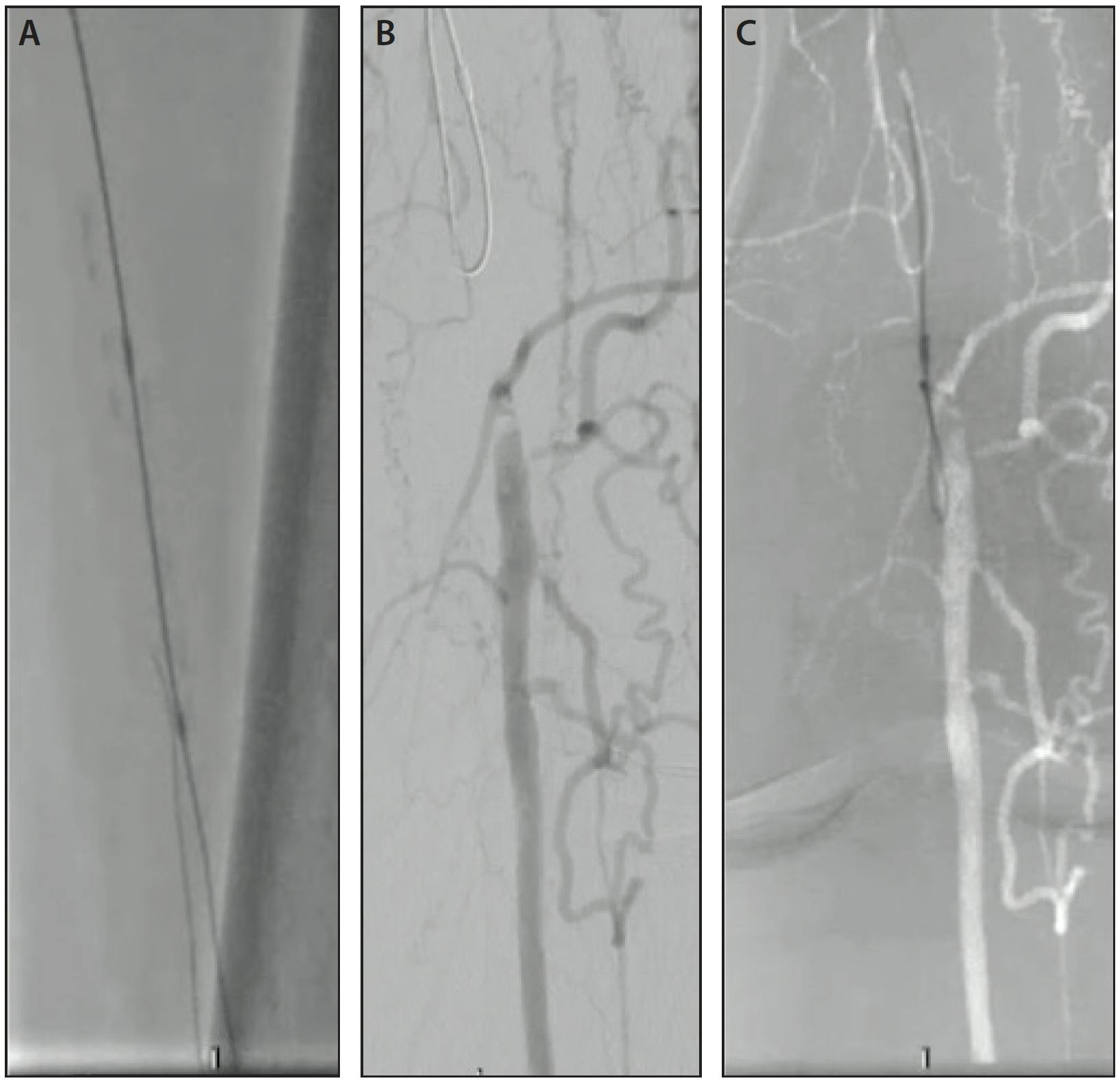
Figure 1. Approach to the left SFA occlusion. After using the subintimal Bolia technique, exchange for a low-profile, 4-F CXI support catheter (A). Reentry into the distal SFA (B, C).
I identified the reentry zone at the distal SFA/proximal popliteal artery, and with an atraumatic loop, I entered the distal area (Figure 1B and 1C). Vessel diameter of the proximal stump and the distal SFA/proximal popliteal artery was measured on the CT scan, and I prepped the lesion with a 6- X 200-mm Advance 35LP balloon (Cook Medical) (Figure 2A). I prepped the lesion step-by-step, atmosphere per atmosphere, inflating the balloon, and I’m not looking at the manometer, just at the lesion popping open. I stop when the lesion is completely open.
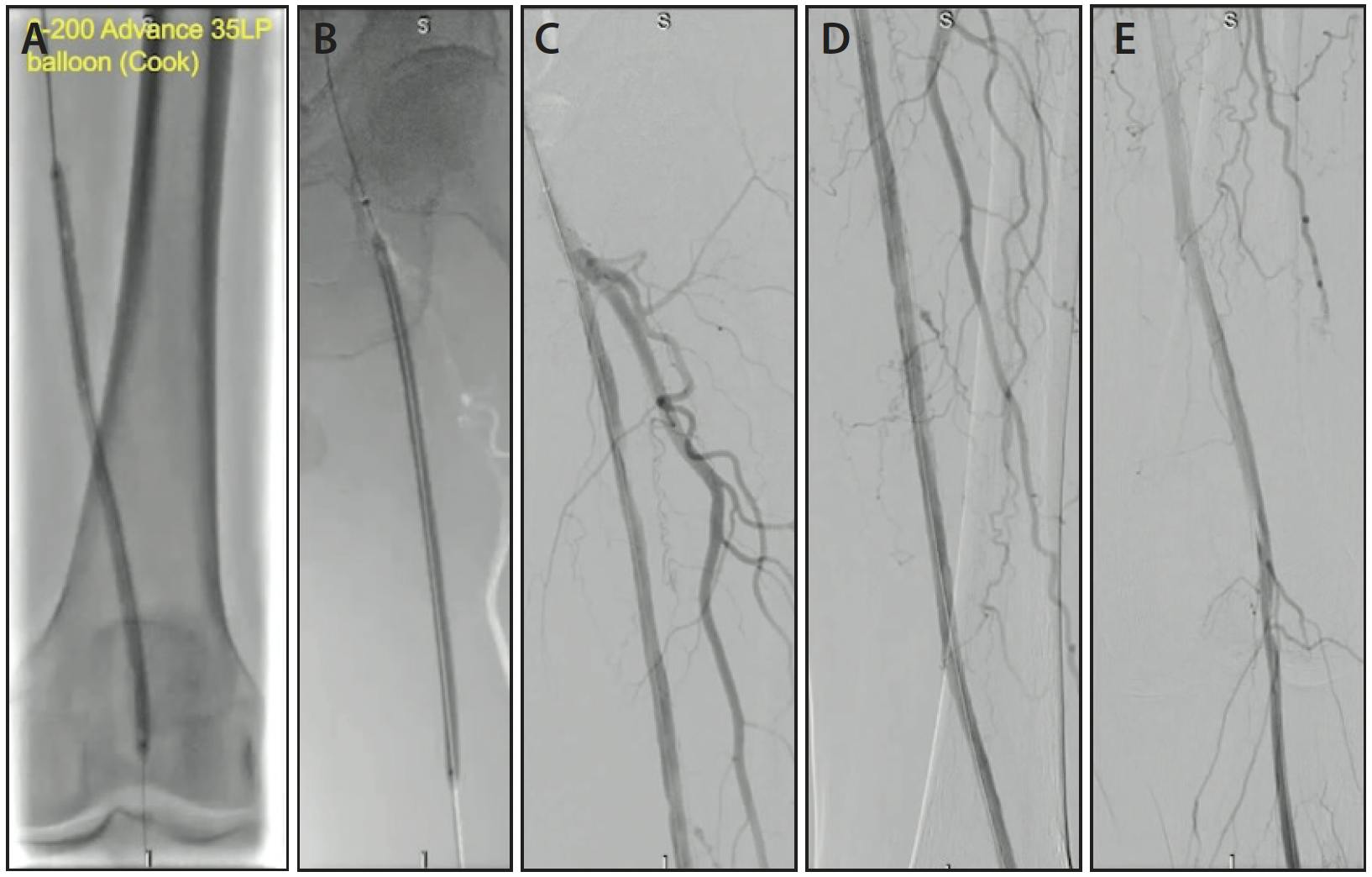
Figure 2. Lesion prep with a 6- X 200-mm Advance 35LP balloon (A). Final proximal dilatation (B). Possible dissection at the proximal lesion (C), midsection image (D), and dissection confirmed at the P1/P2 transition zone (E).
In the proximal and distal segment, I reached almost 12 to 14 atm to open the lesion, and the mid SFA opened with only 5 atm (Figure 2B). In the final proximal dilatation at the P1/P2 transition zone, there was some dissection, and this was confirmed looking distally and with another projection, with 45° difference in angulation (Figure 2C-E).
Lesion Treatment
Next, I decided to implant a 6- X 80-mm Zilver PTX drug-eluting stent (Cook Medical) in the P1/P2 segment lesion. Remember, I dilated and prepped the vessel with a 6-mm balloon, so I sized 1:1. The CT showed that the P2 segment was 5 mm, so it was slightly oversized distally. Figure 3A very clearly shows the proximal dissection. I implanted a 7- X 100-mm Zilver PTX based on the 6.1-mm measurement in the proximal stump (Figure 3B). Because the mid-segment responded well to angioplasty prepping, I decided not to scaffold it but rather to treat it with two In.Pact Admiral drug-coated balloons (Medtronic; 6 X 150 mm and 6 X 60 mm) (Figure 3C and 3D). I postdilated the Zilver PTX proximally and distally to have a perfect wall apposition.
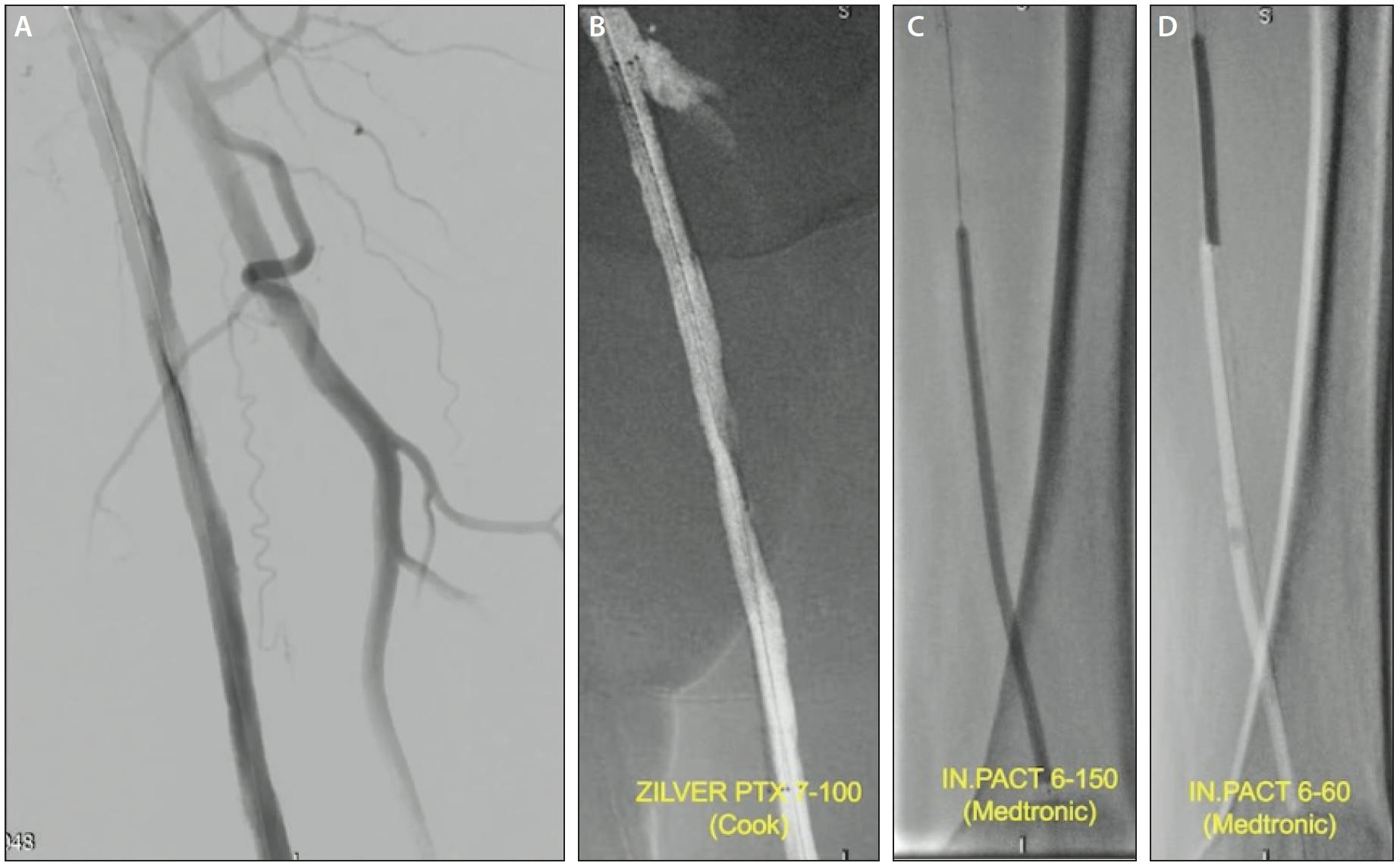
Figure 3. Angiogram showing dissection (A). Placement of a 7- X 100-mm Zilver PTX (B). Treatment with In.Pact Admiral drug-coated balloons (C, D).
Because the recanalization above the knee (ATK) was rather easy, I decided also to jump to the posterior tibial (PT) artery (Figure 4A). Once I passed the proximal two-thirds, there was a hibernating PT vessel and a lateral plantar arch with some branches toward the calcaneal area; using a 0.014-inch CXI support catheter and 0.014-inch Glidewire Advantage, it was rather easy to reach it (Figure 4B).
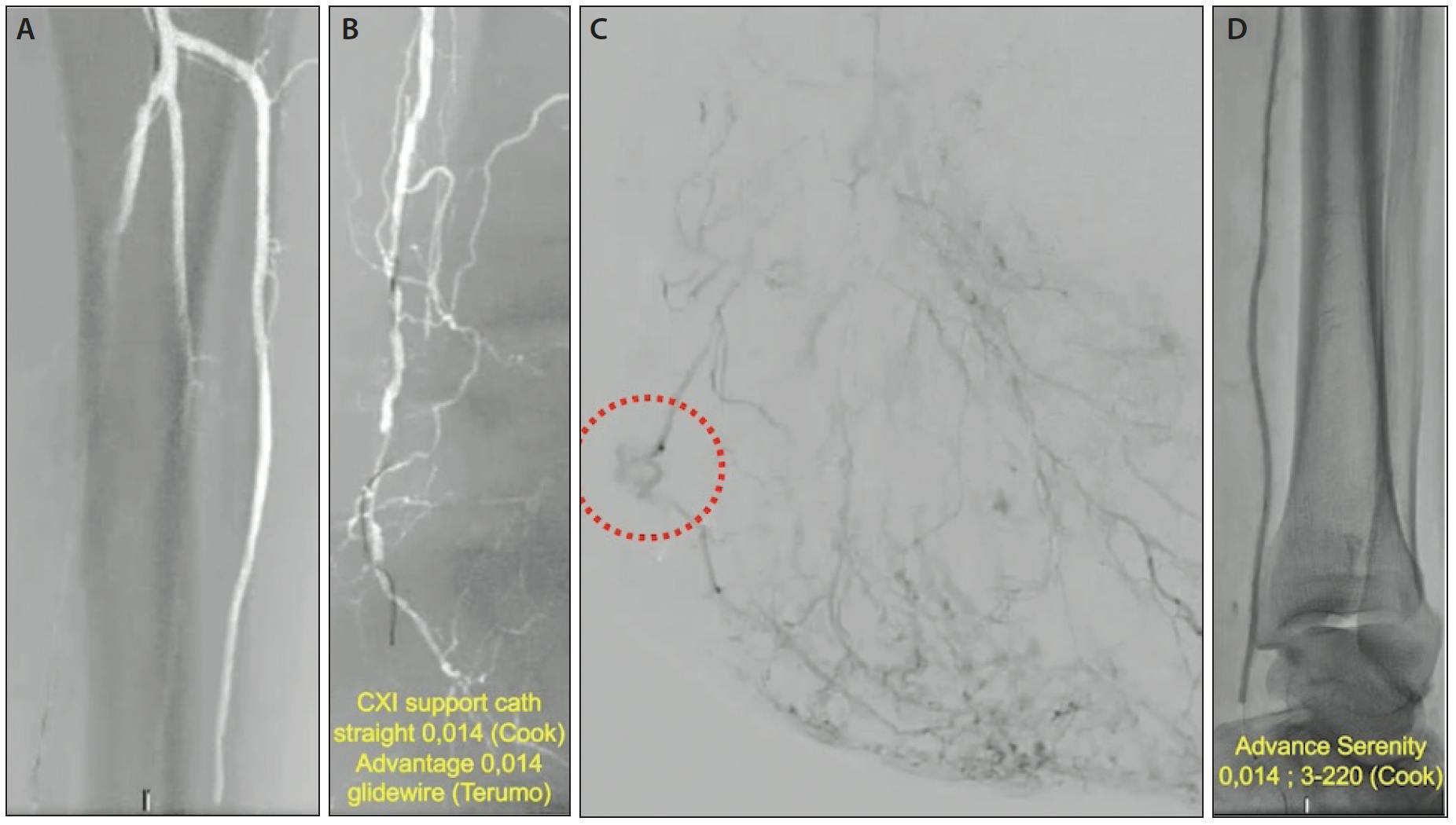
Figure 4. Approach to the PT artery (A). Use of a 0.014-inch CXI support catheter and 0.014-inch Glidewire Advantage to reach the hibernating PT vessel and lateral plantar arch (B). Blush at the level of the ulceration after contrast injection (red circle) (C). Dilatation with a 0.014-inch, 3- X 220-mm Advance Serenity balloon with prolonged inflations proximally and distally for 3 minutes (D).
I injected contrast through my distal catheter and saw a nice blush at the level of the ulceration (Figure 4C). For me, this was a sign to dilate. I was not trying to recanalize the full lateral plantar arch because I was a little afraid of creating more damage than gain, and I was especially interested in bringing blood to this calcaneal branch. So, I dilated with a 0.014-inch, 3- X 220-mm Advance Serenity balloon (Cook Medical) and performed two prolonged inflations proximally and distally for 3 minutes (Figure 4D).
The final result was brisk flow through the PT artery all the way down (Figure 5). I didn’t recanalize the lateral plantar arch, but there was a nice blush at the level of the ulcer. Afterward, I performed debridement of the ulcer, and there were already signs of some revascularization.
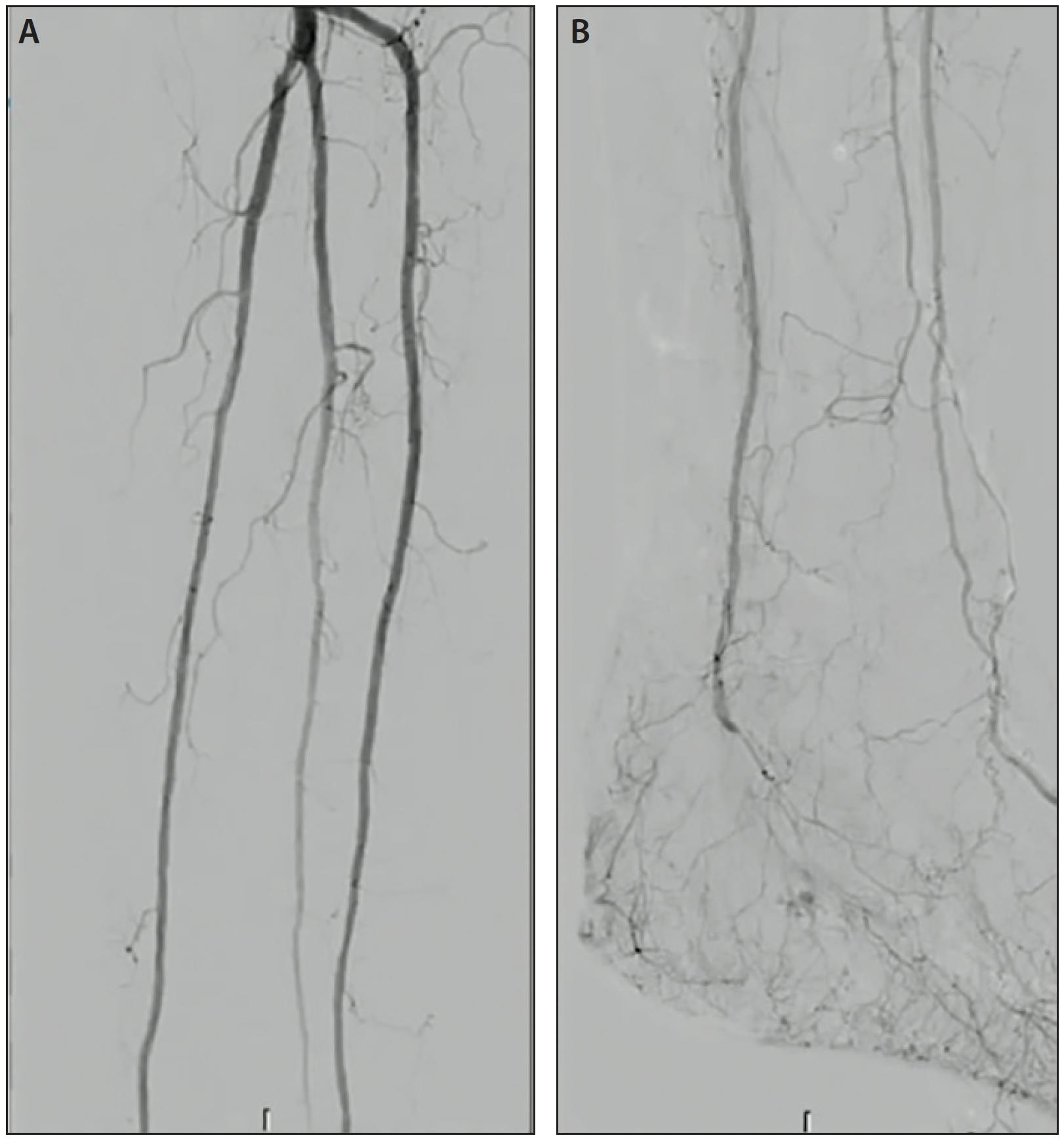
Figure 5. Final angiograms showing brisk flow from the PT artery (A) down to the foot (B).
For a vascular surgeon, this is the best signal that we did an acceptable recanalization, and I think with offloading and good wound care, we can help the patient and let the wound heal.
DISCUSSION
Dr. Deloose: What do you think about my approach in this particular chronic limb-threatenting ischemia (CLTI) case?
Dr. McMackin: I congratulate you on a fantastic completion—beautiful recanalization and really good decision-making throughout the entire recanalization. I want to ask you about your preparation for that case. Did you prep in the foot ahead of time? Were you thinking that you need multiple access points to get through that PT if you couldn’t get through it antegrade? How did you set yourself up for success to start this case?
Dr. Deloose: In CLTI patients, we always prep the full leg, and we do this for different reasons—for instance, if we need a second or additional access distally or if there are wounds, ulcerations, or minor amputations, we do this in the same session, and then everything is prepared.
Luckily, I didn’t need an additional access in this case, and the procedure went quite well BTK. However, in my routine practice, I prefer to use ipsilateral antegrade access to have more pushability, steerability, and other possibilities to treat BTK and BTA. In this case, I started with a crossover for the SFA lesion, and I continued in a crossover for BTK disease.
Dr. Peña: I think this was a fantastic case, and it highlights all the decisions that are made during the procedure. You showed your approach to not only crossing the lesion but then also approaching the lesion and deciding what your treatment options are. You really had a good decision to place the scaffolds and why you wanted to do that. The fact that you used a drug technology to reduce restenosis is very important.
And then, again, the decision to go BTK or not. Those decisions all happen on the table—sometimes you’re going to do it and sometimes you’re not, depending on that clinical situation. To me, that was really the star of the procedure, because you showed how these algorithms are applied and the different tools to use.
Dr. Deloose: I agree with you, Dr. Peña. Besides this, I think we also need to look at the health economic realities. I’m working in Belgium, and for reimbursements, we are quite limited compared to the United States. So, we don’t have access to reimbursement for atherectomy devices, intravascular ultrasound (IVUS), and intravascular lithotripsy (IVL). I’m a strong enthusiast of drug-eluting technologies in general and paclitaxel-eluting technologies specifically. Luckily, this technology is reimbursed in Belgium. Of course, I think when you have more devices available, they would be valuable here. For instance, an IVUS-guided procedure would have been useful, and instead of just prepping with the balloon angioplasty, it’s possible you could use an atherectomy device.
Dr. Deloose: Can you comment on your strategy in typical cases like this?
Dr. McMackin: We have very different practices and are different specialties, so I think it highlights all of the different ways you can treat these diseases. I am a huge fan of IVL. I think it does wonders for the different vessels. I’m academic based, and I’m not in the outpatient setting. I don’t use as much atherectomy, but I do think that there are ways to really open up that lumen.
You mentioned IVUS, which is a fantastic tool because the angiogram really doesn’t give you the full picture. The vessel is a three-dimensional structure, and you’re looking at a two-dimensional image. I applaud your decision-making, especially in the SFA, to not stent the entire thing but to selectively stent segments. I do think IVUS, especially in that segment, would have helped guide me to those decisions, hopefully leading to those same decisions that you ultimately chose.
Dr. Peña: I would second that. We’re also not an institution that uses a lot of atherectomy, and we use it selectively. IVL has been involved in a lot of our decisions, but in many cases, prepping with just a balloon is helpful in a significant number of patients. Really, every patient is different. You went through the algorithm where you had a good inflation, you had an idea of what it looked like afterward, and then you decided on your treatment options.
I do think there is a role for IVUS for sizing the vessel if there’s any question. If the flow isn’t right, you determine whether you are going to scaffold or not. I think that’s a good time to use IVUS. Generally, I’m selective in my use of IVUS. In this particular case, I think I would’ve done exactly what you did.
Dr. Deloose: I think the most important thing in the discussion around peripheral artery disease is to share case experiences. In this CLTI case where we treated ATK and BTK and followed a well-defined treatment algorithm, we had a good outcome, which was the most important thing for the patient.
Watch It Now! See the case and hear the full conversation here.


Advertisement
Advertisement