Advertisement
Advertisement
February 2026
Venous-Origin Chronic Pelvic Pain: Increasing Awareness and Access to Care
With moderator Jessica Stewart, MD; panelists Neil Khilnani, MD, FSIR, FAVLS; and Gloria Salazar, MD, FSIR



Dr. Stewart: Awareness, diagnosis, and access to care for pelvic venous disease (PeVD) remain highly variable across regions and specialties. What do you see as the key barriers contributing to this gap, and what systemic or structural changes could most improve early recognition and equitable access to appropriate evaluation and treatment?
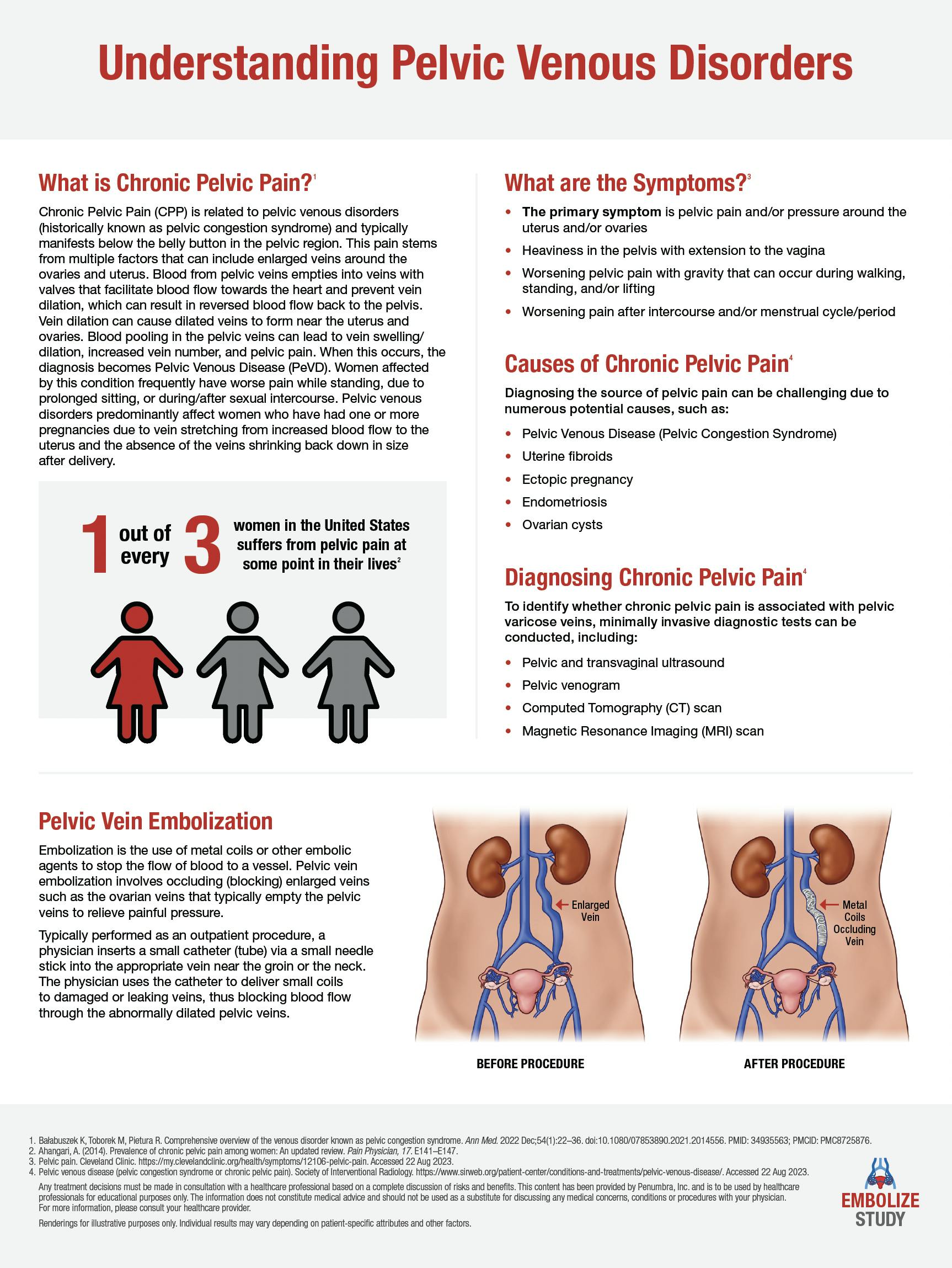
Dr. Khilnani: There is increasing emphasis on using more clinically precise nomenclature when discussing pelvic conditions related to venous disorders. PeVD is best understood as an umbrella term encompassing several venous clinical syndromes arising from pelvic venous pathology, including venous-origin chronic pelvic pain (VO-CPP), vulvar and lower extremity varicose veins, pelvic-related lower extremity swelling or venous claudication, and, in some patients, left flank pain and hematuria.1 In this context, the discussion in this article focuses specifically on VO-CPP, which remains the most diagnostically and therapeutically contested manifestation.
The most significant barrier to awareness, diagnosis, and access to care for VO-CPP is the lack of high-quality, comparative-effectiveness clinical trial data demonstrating that interventions such as embolization and iliac vein stent insertion lead to meaningful improvements in pain and quality of life. In the absence of such evidence, VO-CPP remains inconsistently recognized and variably reimbursed, limiting access to appropriate evaluation and treatment.
The most impactful systemic change would be the generation of rigorous, multicenter evidence using standardized diagnostic criteria and validated patient-reported outcome measures, followed by active dissemination of these data to gynecology and CPP communities where most patients are first evaluated. This approach could promote routine consideration of venous etiologies, improve referral pathways, and ultimately support more equitable access to care.
Dr. Salazar: Barriers include low awareness among nonvenous specialists, symptom overlap with gynecologic/urologic disorders, and lack of standardized referral pathways. Solutions involve shared care protocols, venous prompts in CPP workflows, and expanded continued medical education training on PeVD.
Dr. Stewart: Given that symptoms of VO-CPP often overlap with other pelvic disorders, what strategies have you found most effective for educating and partnering with nonvenous specialists—such as gynecology, urology, primary care, and physical therapy? How should multidisciplinary collaboration be structured to ensure coordinated, appropriate care and optimize patient outcomes?
Dr. Salazar: Effective strategies include targeted education on diagnostic criteria and imaging, as well as multidisciplinary clinics—either co-located or virtual—with vascular, gynecology, pain specialists, and physical therapists for joint decision-making.
Dr. Khilnani: A major challenge is the limited appreciation that CPP frequently evolves into a chronic overlapping pain condition, in which an initial primary pain generator is accompanied by secondary musculoskeletal, visceral, neuropathic, and affective contributors. This overlap can obscure the original etiology and explains why treatment of a correctly identified venous pain generator may yield less improvement than expected if coexisting pain generators and affective disorders are not addressed.
Effective partnership begins with framing VO-CPP as one component of a broader pain condition rather than a competing diagnosis. Multidisciplinary care should therefore be structured around parallel, rather than sequential, management of pain contributors. Venous specialists should collaborate closely with gynecology, pelvic floor physical therapy, pain medicine, and behavioral health and proactively refer patients with persistent symptoms, central sensitization, or affective comorbidities after a successful venous treatment. Such coordinated, multidisciplinary care offers the best opportunity to optimize outcomes and helps set realistic expectations for patients with complex CPP.
Dr. Stewart: What clinical patterns or red flags should prompt gynecologists or primary care physicians to consider a venous origin for pelvic pain and trigger timely referral for vascular evaluation?
Dr. Khilnani: Clinical features that should prompt consideration of VO-CPP include symptoms that are gravity-dependent, worsening with prolonged standing or sitting, progressing over the course of the day, and improving with recumbency. Pain is often present throughout the menstrual cycle and may worsen during menses, but it typically lacks the pain-free intervals between cycles that are more characteristic of endometriosis. Prolonged postcoital pelvic aching is also relatively common.
The most important clinical overlap is with pelvic floor tension myalgia, as symptom descriptions can be nearly identical. Careful pelvic examination is therefore critical; focal trigger points on pelvic floor palpation favor myofascial pain, whereas tenderness over dilated pelvic venous plexuses in the adnexal or uterine regions and the lack of pelvic floor trigger points suggest a venous pain generator. When clinical suspicion is supported by imaging demonstrating pelvic venous pathology, timely referral for vascular evaluation is appropriate.
Dr. Salazar: Clinical indicators suggestive of a venous etiology for pelvic pain include persistent, noncyclical pelvic discomfort lasting longer than 6 months and pain exacerbated by prolonged standing or sexual activity, particularly postcoital pain that may persist for hours to days. Additional findings may encompass vulvar or thigh varicosities and menorrhagia. Importantly, these symptoms should prompt consideration of vascular evaluation when conventional gynecologic and urologic assessments yield negative results.
Dr. Stewart: Are there any blind spots you see among venous providers themselves when it comes to diagnosing or managing VO-CPP? How can specialists better educate themselves and their teams?
Dr. Salazar: Blind spots include underuse of patient-reported outcomes, limited attention to anatomic variants, and overreliance on embolization without adjunctive therapies. Education should focus on imaging protocols, anatomy, and comprehensive care approaches.
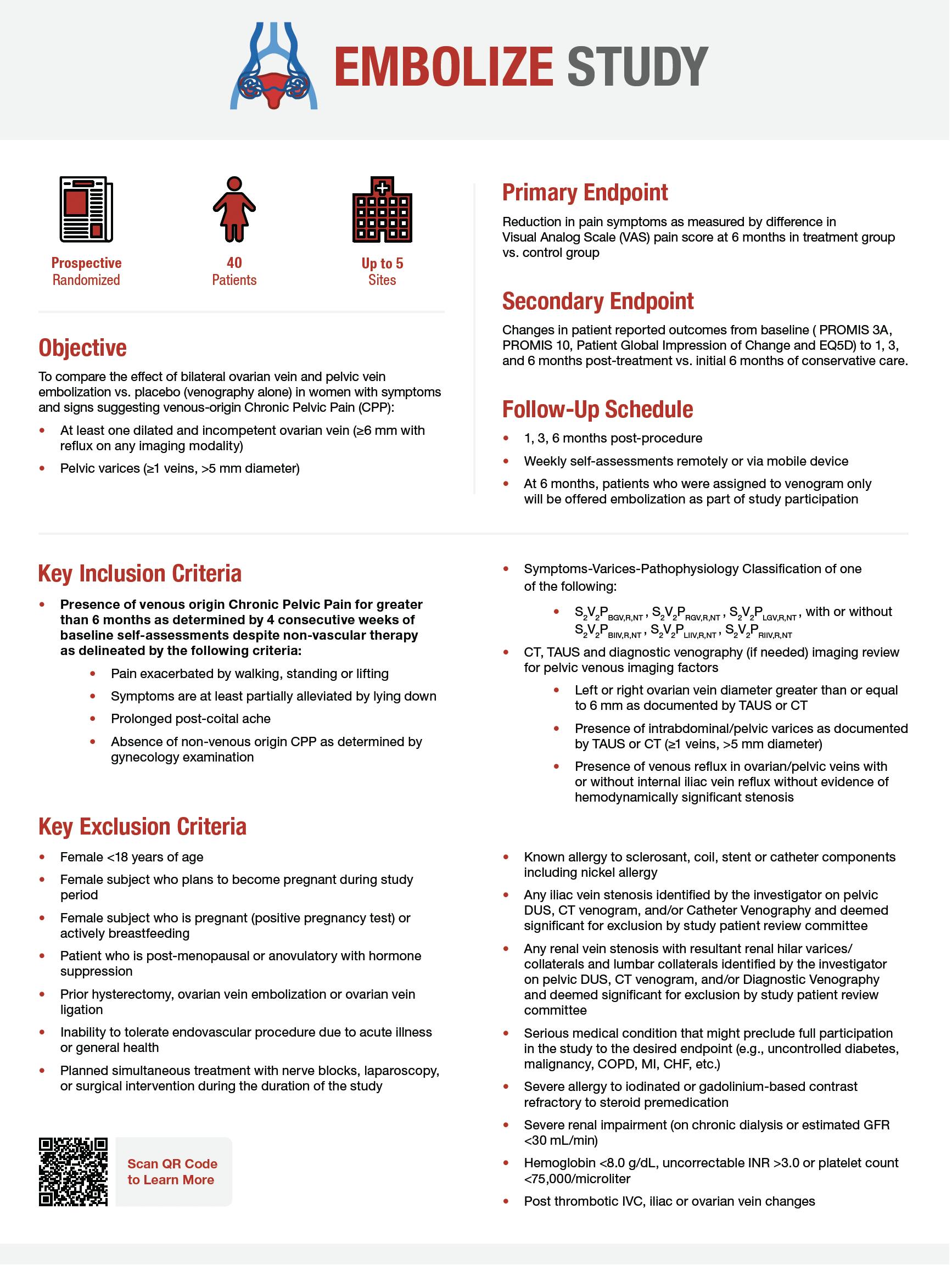
Dr. Khilnani: One important blind spot among venous specialists is the tendency to overestimate the strength of the existing evidence base. Although observational data and clinical experience suggest benefit, we must acknowledge that high-quality, randomized, sham-controlled trials evaluating embolization and iliac vein stenting for VO-CPP are needed to unequivocally demonstrate their efficacy. Meaningful progress will require active engagement in ongoing trials such as EMBOLIZE (NCT06168058; see Sidebar)2 and the development of similarly rigorous studies for iliac vein stent insertion in well-phenotyped, homogeneous patient populations.
A second blind spot is insufficient recognition of chronic overlapping pain conditions and their impact on treatment response. In some patients, addressing a venous pain generator leads to substantial improvement in the primary and secondary pain generators; in others, coexisting pain mechanisms and affective comorbidities limit perceived benefit despite technically successful intervention. Venous specialists can better serve patients by educating themselves about pain overlap, setting realistic expectations for patients and those who refer them, and integrating multidisciplinary referral pathways alongside procedural care.
Dr. Stewart: How might telehealth or novel care models like multidisciplinary ”venous pelvic pain” clinics improve access to treatment for VO-CPP, especially for rural, underserved, or historically marginalized populations?
Dr. Salazar: Telehealth can improve access by enabling remote triage and imaging review. Virtual multidisciplinary clinics streamline referrals and care coordination for underserved populations.
Dr. Khilnani: Although telehealth may have a limited role, most likely for follow-up, the greatest opportunity to improve access to care for VO-CPP lies in educating CPP providers and practicing gynecologists to recognize venous etiologies as legitimate and clinically important pain generators. Venous specialists do not necessarily need to be embedded within pelvic pain clinics; rather, they should serve as readily accessible consultants once appropriate clinical suspicion is established. A fundamental barrier is the lack of recognition that VO-CPP can impose a disease burden comparable to or, in some domains, greater than endometriosis.
In an accepted abstract for the Society of Intervention Radiology’s (SIR) 2026 annual scientific meeting, women with VO-CPP referred by gynecologic pelvic pain specialists demonstrated significantly worse 36-Item Short Form Health Survey scores across all domains compared with normative populations. Moreover, compared with endometriosis cohorts reported in the literature, these patients had significantly worse scores in physical role limitations, pain, vitality, and the physical component summary, with similarly poor scores across the remaining domains. Disseminating these data within the gynecologic CPP community may be one of the most effective ways to improve early recognition, referral, and equitable access to appropriate evaluation and treatment.
Dr. Stewart: What do you see as the key gaps or limitations in current interventional approaches to VO-CPP, and how can data registries, patient-reported outcomes, and quality improvement efforts be leveraged to refine best practices and guide treatment decisions?
Dr. Khilnani: A major limitation of current interventional approaches is the emphasis on pain reduction alone, despite the broad, multidimensional impact of VO-CPP on patients’ lives. Our ongoing SIR Foundation–funded patient-reported outcome measure study (NCT06083597) demonstrates that affected women experience multiple concurrent symptoms and substantial impairments across physical, emotional, sexual, occupational, and financial domains—burdens not captured by pain scores alone.
This disease-specific patient-reported outcome measure is being developed using concept elicitation, cognitive interviewing, and psychometric validation, ensuring that both symptoms and downstream impacts are measured directly from the patient perspective. Incorporating this and other QOL tools into registries and quality-improvement efforts will allow data analysis that can refine patient selection, improve counseling, and better align interventional decision-making with outcomes that matter most to patients.
Dr. Salazar: Current gaps include reliance on observational studies and lack of randomized trials. Registries and validated patient-reported outcomes are essential for benchmarking and refining best practices.
Dr. Stewart: Drs. Salazar and Khilnani, what can you tell us about the progress in the ongoing EMBOLIZE trial,2 as well as what it aims to determine? How can interventional radiologists outside of the trial help with EMBOLIZE? How can they refer patients to their colleagues enrolling in the trial?
Dr. Salazar: EMBOLIZE compares embolization efficacy with conservative or sham treatments. Interventional radiologists and vascular surgeons can assist by referring eligible patients and collaborating with trial sites according to protocol.2 Our strict inclusion criteria require identifying premenopausal VO-CPP patients without significant venous obstruction for enrollment. If you have a patient that meet criteria, please contact our principal investigators (PIs).
Dr. Khilnani: EMBOLIZE is a fully funded, randomized, sham-controlled trial led by Dr. Salazar and Ronald Winokur, MD, designed to determine whether pelvic venous embolization provides clinically meaningful improvement in pain and QOL for carefully selected women with VO-CPP due to ovarian vein reflux (without renal or iliac vein obstruction).2 Our group at Weill Cornell Medicine–NewYork-Presbyterian Hospital is currently enrolling patients.
Interventional radiologists and vascular surgeons outside the trial can help most by identifying and referring eligible patients so we can rapidly generate the high-quality evidence needed for broad gynecologic acceptance and durable insurance coverage. Referrals can be made directly to the enrolling site/PIs, or via the SIR EMBOLIZE referral pathway (see Sidebar).
The study covers 100% of procedure-related care; patients with insurance denials in clinical practice are welcome as study patients, but referrals of women with coverage who are interested in helping advance the evidence to benefit other women affected by this issue are also encouraged. Patients randomized to the control arm are offered study-funded embolization after 6-month unblinding, so every eligible patient who wants embolization will have the opportunity to receive it without copays or deductibles.
1. Khilnani NM, Xia JJ, Winokur RS, Meissner MH. Diagnosis and management of pelvic venous disorders in women. Cardiovasc Intervent Radiol. 2024;47:1650-1668. doi: 10.1007/s00270-024-03782-1
2. Winokur RS, Salazar G, Gibson K, et al. Randomized controlled, single-blinded, parallel-group trial of ovarian vein and pelvic vein embolization in women with chronic pelvic pain and pelvic varices (EMBOLIZE Trial). J Vasc Interv Radiol. 2025;37:107880. doi: 10.1016/j.jvir.2025.10.012
Disclosures
Dr. Stewart: Consultant to and research support from Terumo Interventional Systems; consultant to Medtronic, Cook Medical, Varian, TriSalus Life Sciences; advisory board for Crannmed.
Dr. Khilnani: Speaker for Medtronic and Boston Scientific Corporation; consultant to Boston Scientific Corporation.
Dr. Salazar: Advisory board and speaker for Medtronic and Boston Scientific Corporation; speaker for Cook Medical, BD, Philips, and Penumbra, Inc.; consultant to and speaker for Optimed; consultant to Mentice and TriSalus.
Advertisement
Advertisement