Advertisement
Advertisement
July 2026
Sponsored by BD Interventional
Reclaiming Iliofemoral Flow in Complex CTOs: Inside a High-Volume Venous Program With the Venovo™ Venous Stent System

PROGRAM OVERVIEW
Can you describe how the complex venous program at UT Health San Antonio has evolved over the past few years?
Dr. Chesley: When we started a few years back, it’s not that there wasn’t a program before us, but complex recanalization was only done once in a blue moon. As a trainee, I probably did two or three total recanalization procedures, so this was a totally different world. Our program grew out of our interest in deep vein thrombosis (DVT). As large-bore thrombectomy became more common, we started seeing not just acute clot patients but also patients post-DVT who were presenting with chronic total occlusions (CTOs) and long-term symptoms.
At first, these treatments were rare. But once we started taking these patients on and had success, referrals started to grow, first internally, then externally. Now we receive referrals from vascular surgery, cardiology, and outside institutions because we’ve been able to deliver good clinical outcomes for patients who were otherwise considered nonoperative or told there were no treatment options.
What clinical needs or gaps motivated you to build an iliofemoral CTO program?
Dr. Chesley: Dr. Joseph and I started seeing a lot of post-DVT patients who had undergone prior intervention or anticoagulation but were still symptomatic and occluded. These were patients who were essentially out of options. Once we showed that we could successfully treat these patients, that gap became very obvious. Referrers realized there was something that could be done.
UNDERSTANDING COMPLEX ILIOFEMORAL CTOs
What makes iliofemoral CTOs particularly challenging from a treatment standpoint?
Dr. Joseph: The biggest challenge is that you never know exactly what’s going to work until you’re in the case. You might know how long the occlusion is or whether there’s a native channel, but the most important details reveal themselves only once you start. How much chronic clot is there? Is there a native channel that you couldn’t appreciate on CT? What does the collateral pattern look like, and what kind of inflow are you going to have once you cross?
Collateral patterns are highly unpredictable. Achieving a successful outcome depends on ensuring adequate inflow, which is entirely guided by what we see during the case. Tailoring treatment to the patient often means starting without knowing exactly which techniques will be required but with a general plan for access and approach. From there, the ability to adapt in real time is critical, as these cases frequently require flexibility and sufficient time; they are rarely quick procedures.
How do you approach diagnostic workups and patient selection for these complex cases?
Dr. Joseph: I like to start with Doppler ultrasound to understand acute versus chronic disease and whether there’s a native channel that I can access. For iliac venous disease, the most important study is a properly timed CT venogram, not a standard CT. A CT venogram is a timed study designed to opacify the veins as clearly as possible, which is absolutely critical for complex reconstructions. It allows you to plan, especially when it is unclear whether access will be from the neck, groin, or popliteal vein. Reviewing the CT venogram in advance helps determine where you will have the best mechanical advantage and where you can identify a vascular cap to work against.
What is your treatment algorithm for venous CTOs, and how do you tailor your approach?
Dr. Chesley: Most of these cases are approached from popliteal access. The procedure typically begins with short sheaths and a standard wire-based strategy, with the hope that the occlusion can be crossed efficiently. When that is achievable, the case can proceed smoothly. If crossing is more challenging, the escalation strategy is highly structured. The approach progresses stepwise from more basic techniques to increasingly advanced methods, adding support and precision as needed. When an occlusion proves particularly resistant, more aggressive crossing strategies may be required, but these are always applied in a deliberate and controlled manner.
Treatment is tailored to each patient by entering the case with a general plan, such as which side to approach from and an overall strategy, while recognizing that the exact steps are often determined once the procedure is underway. Many of the defining characteristics of the lesion only become clear during intervention, which makes flexibility essential. These procedures are rarely fast. Success depends on being able to adapt in real time and having adequate time to do the work properly. Vessel preparation is a critical component of this process. Addressing chronic disease before stenting plays a major role in achieving durable results, as long-term patency depends heavily on preparing the vein appropriately prior to reconstruction.
WHY VENOVO™ VENOUS STENT SYSTEM?
What led you to adopt Venovo™ Venous Stent System (BD Interventional) as your primary stent for complex iliofemoral disease?
Dr. Joseph: I love the delivery mechanism. It is easy to deploy precisely, the deployment is predictable, and I have not seen any migration. I think the biggest benefit, at least for the CTOs, is that there’s so much scar tissue involved in these veins that they have a propensity to kind of scar back down. What I like about the Venovo™ Venous Stent System is its high radial resistive force, which helps contribute to the vein staying open.
Which Venovo™ Venous Stent System design features matter most for CTO interventions?
Dr. Chesley: The flared ends are a huge benefit because they support vessel wall apposition and give me confidence that the stent will stay put. Deployment is predictable, and I am not worried that it will deploy in a method that I don’t expect. I like that it has a lot of radial force. We even use it in malignant occlusions where we need extra force. It really does have enough force to treat lesions.
I think the most characteristic cases are those involving chronically occluded May-Thurner disease. The anatomic compression is still present because the artery does not disappear because the vein has been chronically occluded, so it remains when the vein is reopened. Oftentimes the disease is right at the junction with the contralateral iliac vein. You don’t want to cover the iliocaval junction too much, but you still get enough radial force with the Venovo™ Venous Stent System to overcome the anatomic compression, even if it’s just barely covering the left common iliac vein.
How does Venovo™ Venous Stent System perform in anatomies with heavy fibrosis, long-segment occlusions, or severe postthrombotic damage?
Dr. Joseph: I think it goes back to the radial force with the heavy fibrosis, and I think it’s held up well in a lot of those cases. In terms of long-segment occlusions, the Venovo™ Venous Stent System has long-length size options, so you can cover what you need to cover without having to overlap much, which has made it nice if you’re trying to cover an entire iliac from bifurcation to femoral.
What is your approach to Venovo™ Venous Stent System sizing for CTOs?
Dr. Joseph: For me, if the issue is unilateral, then I’ll usually try to size it similar to the other contralateral vein size on CT. We always use intravascular ultrasound (IVUS), and when you’re dealing with the CTO, sometimes it can be a little difficult to size it on IVUS. If you have the contralateral side, it can help you. Most of the time I’m going with a 16-mm-diameter stent with the common iliac or tapering down to a 12 mm with the external iliac.
CLINICAL EXPERIENCE AND OUTCOMES
Please walk us through a representative complex CTO case where the Venovo™ Venous Stent System made a meaningful difference.
Dr. Chesley: I had a patient with May-Thurner syndrome who had been experiencing recurrent thrombotic events. It is unclear whether her prior arthroplasty contributed, but there was clear vessel disease at the iliac segment. She had long-standing chronic leg swelling, as her clots had been managed exclusively with anticoagulation, and she had never been evaluated for endovascular intervention. In addition to the swelling, she developed skin color changes, although she fortunately did not have ulcers despite the prolonged course of disease. She ultimately presented to our service after being evaluated in the emergency department for an unrelated issue, during which time an acute thrombus was incidentally identified. Imaging showed the femoral vein at the initial access site, with complete iliac occlusion and additional acute clot just distal to the arthroplasty (Figure 1). Below the femoral head, there was a small acute thrombus within the native femoral vein.
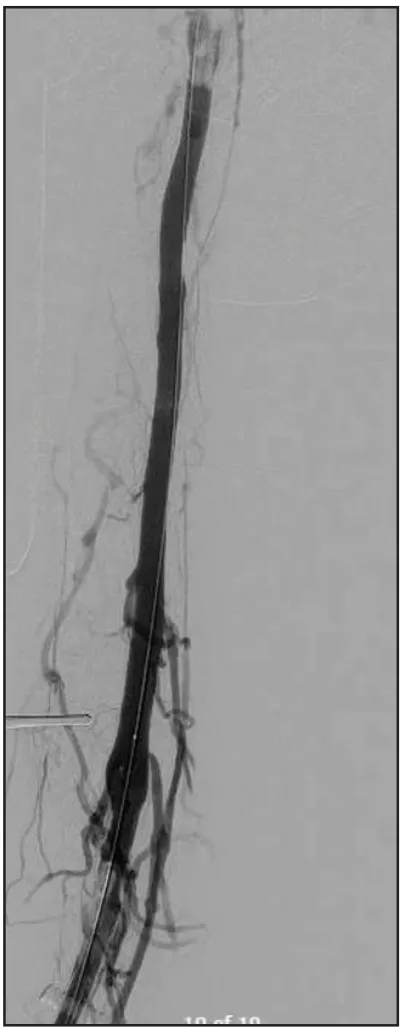
Figure 1. Imaging showing complete iliac occlusion and acute clot distal to arthroplasty.
The patient had developed extensive collateralization, including cross-pelvic collaterals, but she was now experiencing acute-on-chronic thrombosis. Given her limited remaining venous reserve, even this small acute clot significantly worsened her symptoms. As a result, we proceeded with stent placement (Figure 2).
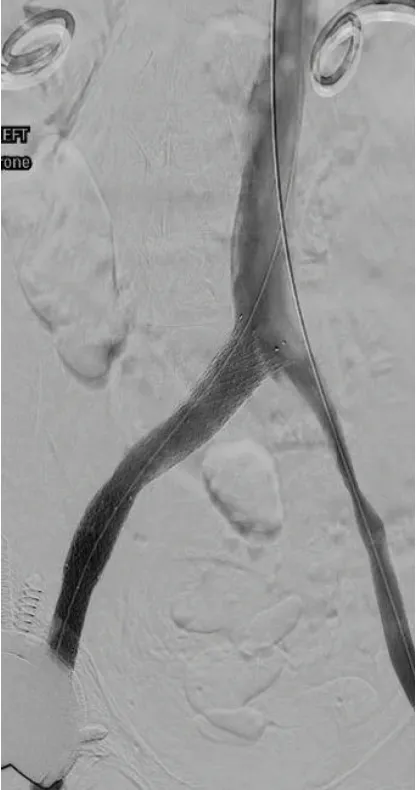
Figure 2. Placement of Venovo™ Venous Stent System.
How did this patient respond clinically following treatment with the Venovo™ Venous Stent System, and how do you typically approach postprocedure follow-up?
Dr. Chesley: The patient did very well. Her swelling resolved, and while she still had some postthrombotic syndrome (PTS), it significantly improved compared to before treatment. Her skin color also improved significantly. We expect to see her at 3-month follow-up soon. Overall, she has had a great post-treatment outcome. IVUS performed prior to stenting showed stenosis from the right common iliac artery compression (Figure 3A), and repeat IVUS after stenting demonstrated restored vessel patency with arterial displacement (Figure 3B).
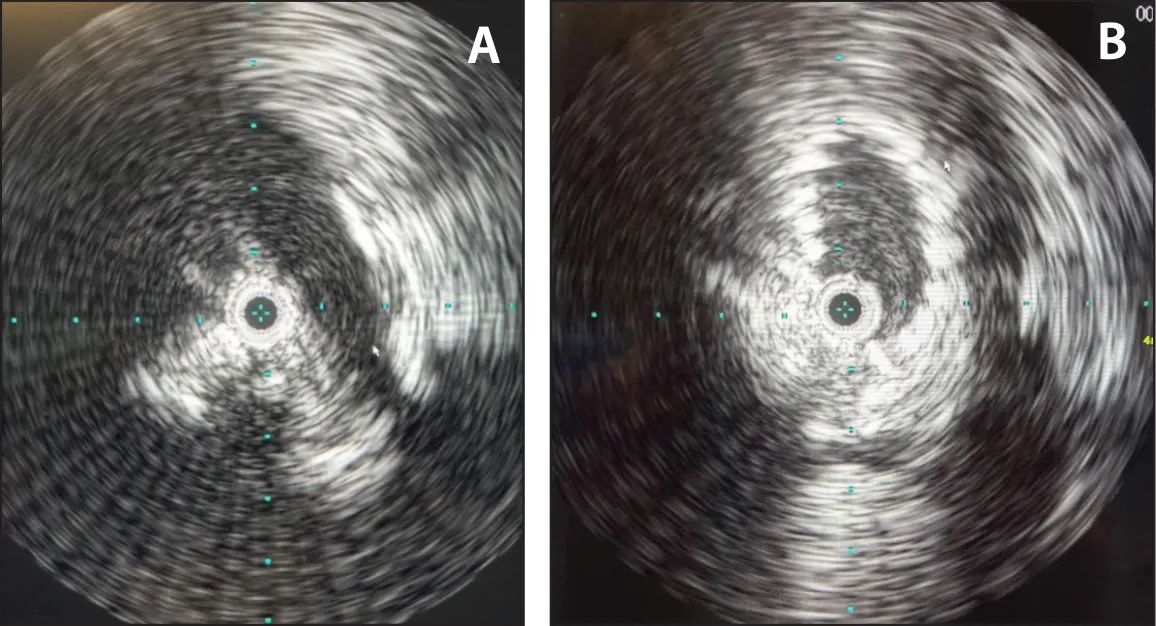
Figure 3. Prestent stenosis from the right common iliac artery (A). Restored vessel patency poststenting (B).
What follow-up schedule do you use to guide ongoing patient care?
Dr. Chesley: In terms of follow-up, we typically see patients at 6 to 8 weeks and then again at 3 months. Our practice does not have rigid guidelines for follow-up timing immediately postprocedure. Depending on how severe the disease was or how concerned I am about a particular patient, I may choose to see them sooner. After that, follow-up is usually more standardized at 3 and 6 months and then annually.
COMPARING TECHNOLOGIES
How does Venovo™ Venous Stent System differ from the other venous stents you’ve used over the years?
Dr. Joseph: I used to dislike the older pin-pull technique for unsheathing the stent. I really appreciate the wheel mechanism, as it makes a significant difference. I also like the way the stent deploys, with the distal end resembling a “martini glass” shape first, which still allows you to reposition slightly during deployment. That feature is especially helpful for ensuring you’re flush with your intended landing zone before final placement.
BUILDING A COMPLEX VENOUS PROGRAM
What advice would you give other physicians trying to expand into complex venous work?
Dr. Joseph: These patients often do not have many other options, particularly those with PTS and chronic venous wounds. Because of that, this work can be extremely rewarding, but it is also uncommon for providers to seek out or manage these cases.
One of the most important pieces of advice is to build strong relationships with other providers who may be the first point of contact for these patients but do not have the time, resources, or comfort level to intervene themselves. In our experience, success came from collaboration and working closely with vascular surgeons and other specialists who began to see positive outcomes with our treatment of CTOs.
As those relationships developed, referrals naturally followed. Once providers know there is a reliable pathway for patients with complex venous disease; it creates a snowball effect. Patients who may have previously gone unidentified or untreated start being referred, and a structured referral network begins to form. That referral system has been essential in building a thriving complex venous practice.
Beyond that, the work itself is very rewarding. These are challenging cases, but being able to meaningfully improve a patient’s well-being, especially when they previously had no other options, has been a huge motivator.
What role does industry partnership play in supporting complex venous care?
Dr. Chesley: Having a good sales representative can be absolutely clutch in a lot of these complex cases. There is nobody better than an experienced rep who really knows their devices, because they have seen infinitely more cases than we have when it comes to deployment and knowing what to expect, especially when you’re learning. They are absolutely invaluable.
I really think it was a combination effort, as having the BD team be as supportive as they were was key to developing a thriving program. Having a good support staff and strong reps is absolutely necessary.
Dr. Joseph: Having a great rep, someone who not only knows their own products but also understands the other products that are out there, is incredibly important. When I was first learning IVUS, my BD rep and I would look at it and say, “What is that? We don’t know what that is.” Our BD rep always advocated for IVUS, even though it wasn’t one of his products, because he felt strongly that it was the right thing to use for our cases. Much of our learning occurred through reviewing cases together and drawing on the experience of BD representatives.
Although this is only one component of the overall process, it is often the primary way BD reps build deep expertise. By supporting a high volume of cases, they develop extensive practical knowledge and strong connections across centers. They can connect physicians who are newer to these procedures with colleagues who have performed hundreds of similar cases. These discussions facilitate the exchange of practical insights, including where to start, access strategies, case planning, and additional equipment to consider. For clinicians new to this space, this support is especially valuable, as they may not yet be familiar with the full range of tools available to help navigate complex cases.
Venovo™ Venous Stent System
The Venovo™ Venous Stent System is indicated for the treatment of symptomatic iliofemoral venous outflow obstruction.
The Venovo™ Venous Stent is not designed for repositioning or recapturing.
The Venovo™ Venous Stent System is contraindicated for use in patients with a known hypersensitivity to nitinol (nickel-titanium) and tantalum and patients who cannot receive intraprocedural anti-coagulation therapy.
Potential Adverse Events include, but are not limited to: Allergic/anaphylactic reaction · Aneurysm/pseudoaneurysm · Arteriovenous fistula · Death · Embolization · Extravasation · Hematoma/hemorrhage · Hypotension/ hypertension · Infection/sepsis · Intimal injury/dissection · Ischemia/infarction of tissue/organ · Malposition (failure to deliver the stent to the intended site) · Pain · Pulmonary embolism · Reintervention including open surgical repair · Stent Fracture · Stent Migration · Vasospasm · Venous occlusion/thrombosis/restenosis.
Please consult product labels and instructions for the use of indications, contraindications, hazards, warnings and precautions.
This article is sponsored by Becton, Dickinson and Company (BD). Drs. Chesley and Joseph are paid consultants of BD.
The opinions and clinical experiences presented herein are for informational purposes only. Case study results discussed herein may not be predictive for all patients. Individual results may vary depending on a variety of patient-specific attributes.
BD, the BD Logo and Venovo are trademarks of Becton, Dickinson and Company or its affiliates. © 2026 BD. All Rights Reserved. BD-175851
Advertisement
Advertisement