Advertisement
Advertisement
July 2021
Sponsored by Inari Medical
Inari Medical Takes on Venous Thromboembolism in Europe
How single-session, thrombolytic-free mechanical thrombectomy is fundamentally changing the treatment of pulmonary embolism and deep vein thrombosis.
With Felix Mahfoud, MD, FESC; Andrew Wigham, BSc (Hons), MBBS (Lond), MRCS, FRCR; Emma Wilton, MB BChir, MA (Cantab), MD, FRCS; and Michael Piorkowski, MD
Venous thromboembolism (VTE) treatment is undergoing a paradigm shift driven by the introduction of safer, more efficient mechanical thrombectomy devices. The improved safety profiles allow physicians to treat a wider range of patients, including those with contraindications to thrombolytics.
There is growing evidence that extracting thrombus matters; patients with residual thrombus left behind by more conservative or inefficient treatment modalities end up with long-term complications.1,2 Although complete thrombus removal is beneficial, it is rare after treatment with anticoagulants or thrombolytic drugs. Anticoagulation has the potential to stop new thrombus formation but does not break down or eliminate existing thrombotic material. Thrombolytics have been used to dissolve thrombus; however, they are effective only within a very narrow time frame. Thrombus remodels quickly from a gel-like, fibrin-dominant substance that responds to thrombolytics to a firmer, collagen-dominant substance that does not. This transformation happens within days and weeks of initial formation, meaning that by the time a patient presents with VTE symptoms, the ability for these drugs to dissolve the thrombus can be severely reduced.
Thrombolytics also present a high risk of bleeding that is not eliminated by conservative patient selection3,4 or lower dosage.5 These bleeding risks often necessitate prolonged stays in a high-dependency or intensive care unit (ICU).6
As evidence mounts against the use of thrombolytics, alternatives have become available. New devices are making it possible to go beyond conservative treatment to remove most thrombus from a wider range of VTE patients in a single session, while avoiding the risks posed by thrombolytics. These include the FlowTriever and ClotTriever Systems (Inari Medical), the first mechanical thrombectomy devices purpose-built for the venous system.
FLOWTRIEVER SYSTEM
FlowTriever System is an over-the-wire system designed to remove thrombus through aspiration and mechanical methods (Figure 1). It is intended for use in the peripheral vasculature and the treatment of pulmonary embolism (PE) and received CE Mark in December 2020. Two main components make up the system: the Triever aspiration catheter and the FlowTriever catheter. The Triever aspiration catheter is a large-lumen, highly trackable catheter introduced over a guidewire and able to navigate tortuous anatomy to reach the thrombus. A 60-mL large-bore syringe and stopcock minimize blood loss during aspiration. The Triever aspiration catheter is available in 16-, 20-, and 24-F sizes to accommodate large volumes of thrombus.
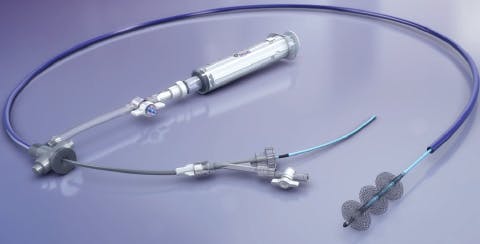
Figure 1. FlowTriever System.
If thrombus remains or wall-adherent thrombus is encountered, the FlowTriever catheter can be introduced through the Triever aspiration catheter to engage, disrupt, and deliver clot to the Triever for removal.
Clinical data support the safety and effectiveness of the FlowTriever System. The FLARE study evaluated safety and effectiveness in 106 patients with acute intermediate-risk PE. Results demonstrated a rapid and substantial 25% reduction in the right ventricular to left ventricular (RV/LV) ratio, with no device-related adverse events. Only two study participants received thrombolytics.7
The FLASH study is an ongoing, multicentre registry designed to evaluate the safety and effectiveness of the FlowTriever System in a real-world patient population. Interim results of intermediate-risk and high-risk PE patients showed significant on-table improvements in patient haemodynamics and vitals, with an average decrease of 7 mm Hg in mean pulmonary artery pressure, 11.8% improvement in cardiac index, and a 20% decrease in heart rate. At 48 hours, there were no deaths, no device-related injuries, and a low 1.3% major adverse events rate. At 30 days, there was only one patient death (unrelated to the PE) and patients experienced significant improvements in dyspnoea, RV size, and RV function.8
CLOTTRIEVER SYSTEM
The ClotTriever System is designed to extract large thrombus burden from the peripheral vasculature and is used for the treatment of deep vein thrombosis (DVT) in a single session, without the need for thrombolytics or monitoring in an ICU. It received CE Mark approval in October 2020. The ClotTriever System has two main components: the ClotTriever catheter with an atraumatic nitinol coring element and mesh collection bag for distal protection and the ClotTriever sheath with an integrated funnel for facilitation of thrombus removal (Figure 2). Once venous access is achieved through ultrasound guidance, the ClotTriever catheter is introduced through the sheath and advanced over a guidewire and beyond the thrombus. The nitinol coring element and mesh collection bag expand into the vessel, and as the ClotTriever is retracted, the coring element dislodges thrombus from the vessel wall, capturing it in the collection bag for extraction.
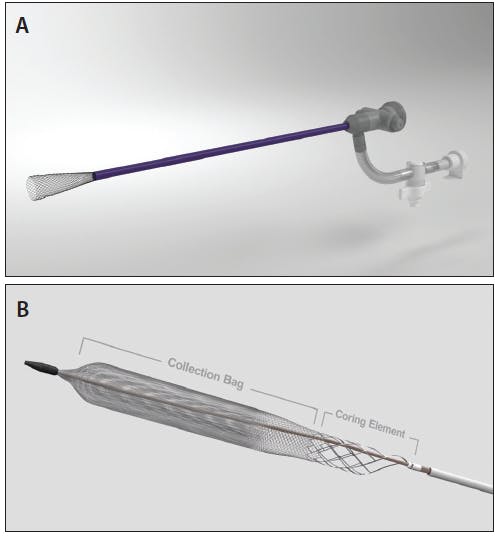
Figure 2. ClotTriever sheath (A) and catheter (B).
The CLOUT registry is an ongoing, multicentre, real-world study designed to evaluate the ClotTriever System for the treatment of acute and chronic lower extremity DVT. An interim analysis of 250 patients at 6-month follow-up demonstrated 100% thrombus removal in the majority of patients and near-complete thrombus removal in 85.2% of patients based on independent, core lab–adjudicated Marder scores. Nearly all (99.6%) procedures were done in a single session, no thrombolytics were used in any patients, and median blood loss was negligible at 50 mL. Significant improvements were seen in several quality-of-life measures out to 6 months, including 92.2% of patients free from moderate or severe postthrombotic syndrome (PTS).
This article highlights three cases showing the advantages of single-session, thrombolytic-free mechanical thrombectomy for the treatment of PE and DVT.
1. Comerota AJ, Grewal N, Martinez JT, et al. Postthrombotic morbidity correlates with residual thrombus following catheter-directed thrombolysis for iliofemoral deep vein thrombosis. J Vasc Surg. 2012;55:768-773. doi: 10.1016/j.jvs.2011.10.032
2. Dronkers CEA, Mol GC, Maraziti G, et al. Predicting post-thrombotic syndrome with ultrasonographic follow-up after deep vein thrombosis: a systematic review and meta-analysis. Thromb Haemost. 2018;118:1428-1438. doi: 10.1055/s-0038-1666859
3. Goldhaber SZ, Visani L, De Rosa M. Acute pulmonary embolism: clinical outcomes in the International Cooperative Pulmonary Embolism Registry (ICOPER). Lancet. 1999;353:1386-1389. doi: 10.1016/s0140-6736(98)07534-5
4. Chatterjee S, Chakraborty A, Weinberg I, et al. Thrombolysis for pulmonary embolism and risk of all-cause mortality, major bleeding, and intracranial hemorrhage: a meta-analysis. JAMA. 2014;311:2414-2421. doi: 10.1001/jama.2014.5990
5. Geller BJ, Adusumalli S, Pugliese SC, et al. Outcomes of catheter-directed versus systemic thrombolysis for the treatment of pulmonary embolism: a real-world analysis of national administrative claims. Vasc Med. 2020;25:334-340. doi:10.1177/1358863X20903371
6. Piazza G, Hohlfelder B, Jaff MR, et al. A prospective, single-arm, multicenter trial of ultrasound-facilitated, catheter-directed, low-dose fibrinolysis for acute massive and submassive pulmonary embolism: the SEATTLE II study. JACC Cardiovasc Interv. 2015;8:1382-1392. doi: 10.1016/j.jcin.2015.04.020
7. Tu T, Toma C, Tapson VF, et al. A prospective, single-arm, multicenter trial of catheter-directed mechanical thrombectomy for intermediate-risk acute pulmonary embolism: the FLARE study. JACC Cardiovasc Interv. 2019;12:859-869. doi: 10.1016/j.jcin.2018.12.022
8. Toma C. TCT CONNECT-11 acute hemodynamic improvement with percutaneous mechanical thrombectomy in a real-world pulmonary embolism population: interim results of the FLASH registry. J Am Coll Cardiol. 2020;76 (17 suppl S):B5. doi: 10.1016/j.jacc.2020.09.025
Pulmonary Perfusion Restored After Aspiration of Central PE With the FlowTriever Thrombectomy System

PATIENT PRESENTATION
A man in his late 70s was brought by ambulance to the emergency department after acute-onset dyspnoea with chest pain and leg swelling. The patient had cerebral amyloid angiopathy and stage 3 chronic kidney disease and arrived on oxygen and therapeutic anticoagulation. He had a history of intracerebral haemorrhage (ICH) and basilar artery thrombosis but no previous history of PE.
The patient had an elevated D-dimer and an initial PO2 of 62 mm Hg. Troponin was elevated at 125 pg/mL, and CTA revealed central PE on both sides (Figure 1A), including a large thrombus in the right pulmonary artery and a smaller thrombus in the left. Right heart overload with an RV/LV ratio of 1.7 was seen on CT and confirmed on echocardiography. Duplex sonography documented DVT of the left leg. After considering all treatment options and given the patient’s history of ICH, a decision was made by the interventional cardiologist and intensivist to forgo thrombolytic treatment and initiate percutaneous thrombectomy using the FlowTriever System.
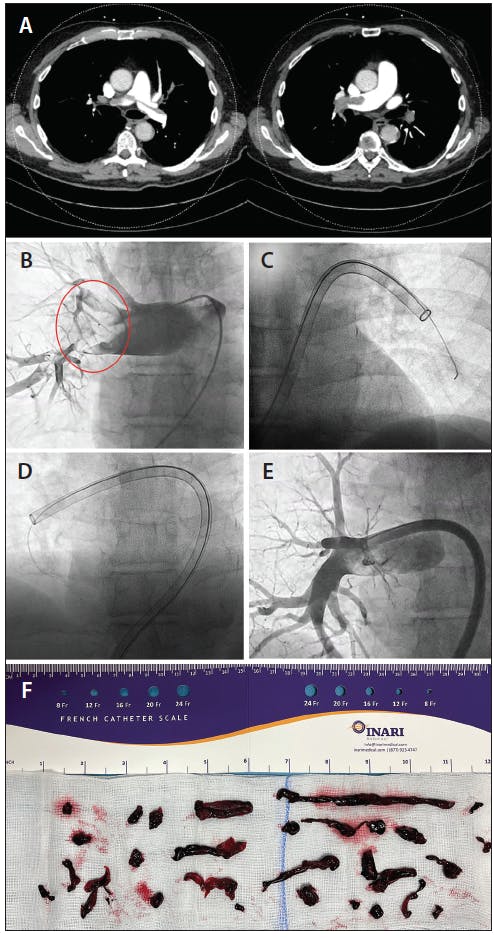
Figure 1. CT scan showed large central PE in the right and left pulmonary arteries (A). Phlebography confirmed the presence of large thrombus in the right pulmonary arteries (B). The large-bore FlowTriever aspiration catheter was traversed through the right heart and placed adjacent to the thrombus on the left (C) and right (D) sides, with perfusion restored after aspiration thrombectomy (E). Extracted thrombus (F).
PROCEDURAL OVERVIEW
Access was gained through the right femoral vein. A 7-F sheath was placed, followed by phlebography to exclude relevant thrombosis of the venous system and right heart catheterization. Pulmonary angiography confirmed the presence of a large thrombus on the right (Figure 1B) and moderate thrombus on the left. Before the large-bore sheath was introduced, two Perclose ProGlide closure systems (Abbott) were placed for haemostasis at the end of the procedure. A 24-F DrySeal sheath (Gore & Associates) was placed, followed by traversing of the right heart and selective canulation of the left lower lobe via multipurpose pigtail catheter. The catheter was exchanged with an Amplatz Super Stiff guidewire (Boston Scientific Corporation) and the 24-F FlowTriever catheter inserted (Figure 1C). Two aspirations were completed on the left, removing the smaller thrombus. An attempt to rewire and gain access on the right side was challenging because of a kinking of the right outflow tract. Finally, a 20-F FlowTriever was introduced (Figure 1D), and six aspirations were completed successfully, yielding significant fresh thrombus. Repeat phlebography showed pulmonary perfusion restored (Figure 1E).
Greater than 90% of thrombus was extracted from the patient (Figure 1F) and he experienced immediate, on-table relief of dyspnoea. All catheters were removed, and the access site closed. The patient’s pulmonary artery pressure decreased on the table from 43/15 to 24/13 mm Hg, and his heart rate decreased by 18 bpm. The RV/LV ratio normalized postprocedurally.
The procedure lasted 110 minutes, at which time the patient was transferred to the normal ward. No ICU stay was required postprocedure, and the patient was discharged from the hospital 8 days later in good condition, with no tiredness, palpitations, or dyspnoea during normal activity (New York Heart Association class I).
Following the PE and given his history of basilar artery thrombosis, the patient went home with orders to continue edoxaban. He was instructed to return in 3 months for a follow-up duplex sonography of the DVT.
DISCUSSION
This patient with central bilateral PE was successfully treated in a single session with the FlowTriever System. The device was delivered through the right heart and into the left and right pulmonary arteries with aspiration on both sides removing > 90% of the thrombus. No thrombolytics were used, which was especially important in this patient given his medical history of a previous ICH.1 Also, avoiding thrombolytics allowed the patient to be sent to the normal ward after treatment rather than requiring extended monitoring in the ICU. The patient experienced immediate, on-table relief of his symptoms and significant improvements in pulmonary artery pressures and heart rate, allowing for rapid recovery and discharge from the hospital without any further symptoms.
1. Chatterjee S, Chakraborty A, Weinberg I, et al. Thrombolysis for pulmonary embolism and risk of all-cause mortality, major bleeding, and intracranial hemorrhage: a meta-analysis. JAMA 2014;311:2414-2421. doi: 10.1001/jama.2014.5990
Treating Thrombolytic-Resistant DVT Mechanically With the ClotTriever System


PATIENT PRESENTATION
A woman in her mid 60s was referred 3 weeks after an initial presentation of significant leg pain and swelling of the entire leg and thigh. On initial review, the patient was having difficulty mobilizing. She had no significant past medical history and no previous episodes of DVT or PE; however, she had a 6-month history of progressive dyspnoea.
CT venography showed a left iliofemoral DVT with a tight May-Thurner compression point, and CT pulmonary angiography showed small segmental bilateral PE with evidence of right heart strain. Given the CT pulmonary angiogram findings and the history of shortness of breath, an echocardiogram was obtained that showed a degree of LV hypertrophy and impaired diastolic function. The estimated pulmonary artery systolic pressure was 35 to 40 mm Hg, suggesting chronic pulmonary hypertension, and blood tests showed an elevated D-dimer.
Conservative management was trialled with anticoagulation and leg elevation; however, there was no significant improvement in her symptoms after 2 weeks and she was still struggling to walk. Her providers considered catheter-directed thrombolysis and determined that success was unlikely given the long duration of her symptoms. The patient’s underlying pulmonary dysfunction meant the risk of further embolization with thrombolytic treatment was high. It was decided to treat her DVT with the ClotTriever System, a mechanical thrombectomy device newly available in the United Kingdom and able to remove subacute thrombus with low risk of embolization.
PROCEDURAL OVERVIEW
The patient was sedated and given a local anaesthetic, and a micro access set was used to gain access to the left popliteal vein under ultrasound guidance. Fluoroscopy demonstrated thrombus in the left common iliac vein (CIV), external iliac vein (EIV), and common femoral vein (CFV) (Figure 1A). The left femoral vein was clear of thrombus.
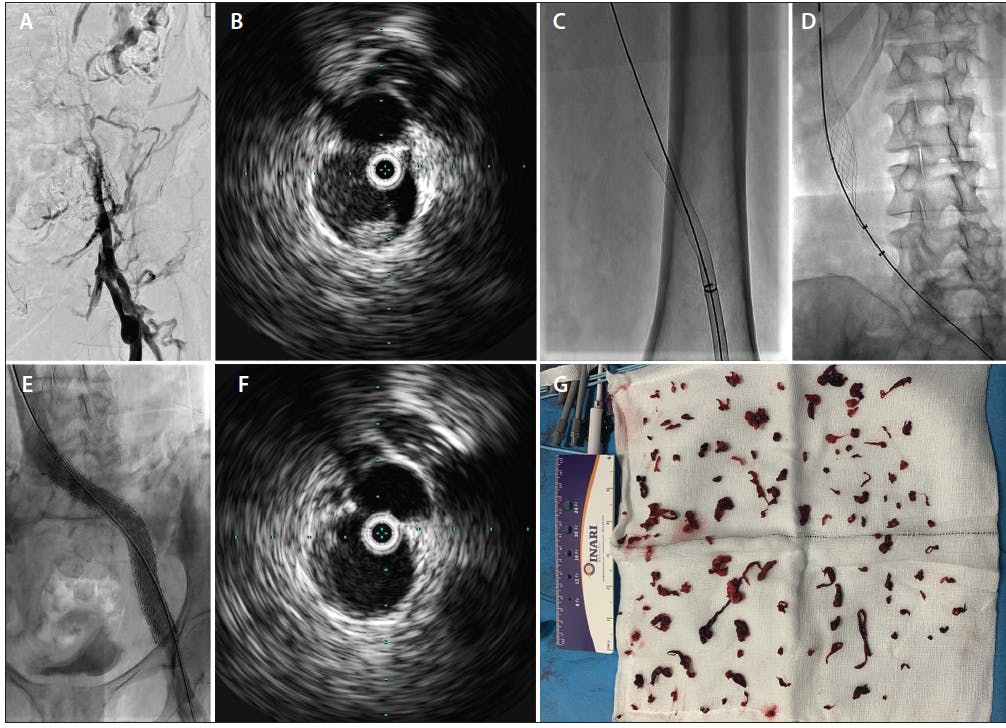
Figure 1. A venogram showed thrombus in the left CIV, EIV, and CFV (A). IVUS showed acute and subacute occlusive thrombus in the left EIV (B). A ClotTriever sheath was introduced (C). A ClotTriever catheter with mesh collection bag and coring element was deployed (D). A completion venogram after stenting showed patent left CIV (E). Repeat IVUS performed after ClotTriever thrombectomy at the same level as panel B demonstrated greater than 90% thrombus clearance from left EIV (F). Extracted thrombotic material (G).
A 10-F sheath was placed and a Glidewire (Terumo Interventional Systems) and C2 catheter (Cordis, a Cardinal Health company) inserted. The guidewire was then exchanged for an Amplatz wire. Intravascular ultrasound (IVUS) showed an occluded left iliac vein with a mixture of acute and subacute thrombus (Figure 1B). The Amplatz wire was advanced to the left subclavian vein and a 16-F ClotTriever sheath inserted (Figure 1C). The ClotTriever catheter was advanced over the wire, beyond the thrombus. The nitinol coring element was deployed (Figure 1D), and the catheter was then retracted toward the sheath and withdrawn from the body. Extracted thrombus was cleared from the collection bag, and four additional passes were made with the device, removing acute and subacute thrombus. Following the fifth pass, repeat IVUS showed good thrombus clearance (Figure 1F). Venoplasty to 14 mm was performed on the May-Thurner compression point, and a 14- X 120-mm Venovo stent (BD) was inserted into the left CIV. A completion venogram showed patent vessels (Figure 1E). All sheaths were removed and a purse-string suture was used for access site haemostasis. The procedure was completed in 80 minutes with 90% of the thrombus removed (Figure 1G). The procedure was tolerated under local anaesthetic without difficulty, with the patient noting on-table that it was much less painful than she had expected. The patient went directly to the vascular ward after the procedure with no need for ICU or high-dependency unit monitoring.
The patient was discharged after 2 days in the hospital. She was prescribed a split treatment dose of low-molecular-weight heparin and encouraged to move as much as possible and elevate her leg when at rest.
A venous duplex scan 2 weeks postprocedure showed a widely patent iliac venous stent, so the patient was converted to warfarin. She will be followed up with a clinical review and further duplex surveillance scan at 6 weeks, 6 months, and 1 year postprocedure. If the stent remains patent, she will be converted to a direct oral anticoagulant with annual follow-up reviews.
DISCUSSION
We successfully treated a patient with acute and subacute DVT via mechanical thrombectomy to extract thrombus from the left CIV, EIV, and CFV in a single session. No thrombolytics were used and the patient did not require a stay in the ICU. We had initial concerns about navigating the tight May-Thurner compression point, but the ClotTriever catheter was easy to pull through. Symptoms improved almost immediately for this patient and continued to do so over the next few weeks. Her leg is much less swollen, and she is now able to walk and play with her grandchildren without pain. She was pleased with the relatively small size of the incision and the fact that it was not too painful.
The decision to treat with the ClotTriever System was twofold. First, pharmacomechanical thrombectomy or catheter-directed thrombolysis were unlikely to work on this patient’s older thrombus. Thrombus begins as fibrin-dominant material and becomes more collagen-dominant—and therefore less responsive to thrombolytic drugs—within days or weeks of formation.1 Given the length of time from the onset of symptoms (5 weeks), this patient’s thrombus was likely more collagen than fibrin at the time of the procedure. Second, thrombolytic and pharmacomechanical treatments increase the risk of bleeding and in this case increased the risk of embolization in this patient with underlying pulmonary dysfunction. By contrast, the ClotTriever System had the potential to extract more subacute and chronic thrombus, regardless of collagen content, with a low risk of embolization and no need for thrombolytics.
Our experience with ClotTriever was excellent. It is an intuitive device that is easy to use, providing a good result with almost complete clearance of the thrombus. It will be beneficial to have this device in our armamentarium to treat DVT patients, especially those with delayed presentation or contraindications to thrombolytics for which limited treatment options exist.
1. Silver MJ, Kawakami R, Jolly MA, et al. Histopathologic analysis of extracted thrombi from deep venous thrombosis and pulmonary embolism: Mechanisms and timing. Catheter Cardiovasc Interv. Published online February 1, 2021. doi: 10.1002/ccd.29500
ClotTriever Thrombectomy Relieves Patient of Chronic, Bilateral Iliofemoral DVT Following Explantation of an Occluded IVC Filter

PATIENT PRESENTATION
Two weeks after his first COVID-19 vaccination dose, a man in his mid-50s presented to his general practitioner with pain and swelling in both legs for the past 4 days. The patient reported having a DVT in the left calf approximately 7 years prior, for which he had been treated with a vitamin K antagonist. A year later, a filter had been implanted in the inferior vena cava (IVC) to allow him to stop oral anticoagulation. To his recollection, he had not been tested for thrombophilia at the time. Under duplex ultrasound, bilateral iliofemoral DVT was found; however, the IVC could not be assessed in the outpatient setting.
The patient was admitted to the hospital for further diagnostic testing and intervention.
PROCEDURAL OVERVIEW
On arrival, CT was performed to exclude PE and evaluate the extent of the DVT. CT imaging revealed an IVC filter located below the renal veins. Thrombus was seen below the filter and in the bilateral iliac and femoral veins. The patency of the popliteal veins was confirmed by ultrasound. Diagnostic testing for thrombophilia identified a heterozygotic factor V Leiden mutation, a heterozygotic prothrombin mutation, and a deficiency for antithrombin, which may have been caused by the acute DVT.
Given that the filter was likely intended for temporary implantation, there was concern that a conservative strategy of compression stockings and oral anticoagulation alone would result in severe PTS for the patient. The vascular team decided to pursue two interventional procedures to remove as much acute and chronic clot as possible: explantation of the filter via femoral access and mechanical thrombectomy with the ClotTriever System.
An attempt was made to snare and extract the filter; however, it was discovered that the filter was stuck to the IVC wall and could not be mobilized. To avoid embolization of thrombus by balloon dilatation, the lower struts of the filter were hooked up with a reverse-shaped catheter (Figure 1A). The filter was mobilized and extracted successfully through the femoral access.
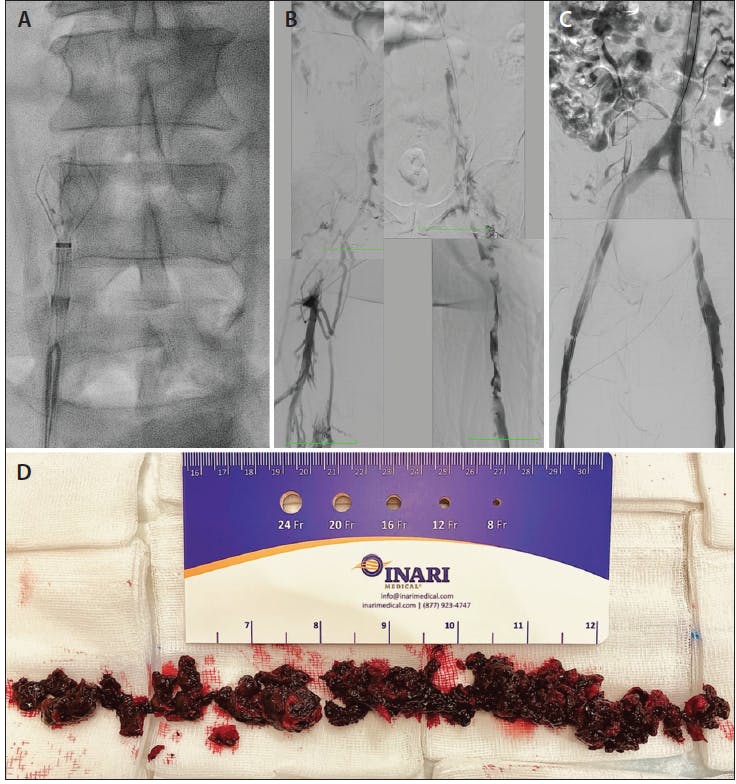
Figure 1. The lower struts of the aged IVC filter were snared with a reverse-shaped catheter for explantation (A). Preprocedure angiography showed venous occlusion below the filter and in the bilateral iliac and femoral veins (B). Repeat angiography performed postthrombectomy and stenting demonstrated patency of the bilateral iliac and femoral veins and the IVC (C). Acute and chronic thrombotic material extracted from the patient (D).
After recovery from the IVC filter removal procedure, the patient underwent mechanical thrombectomy 4 days later. He was placed in the prone position and sedated with propofol and sufentanil. Bilateral access to the popliteal veins was achieved through ultrasound guidance and angiography showed a venous occlusion extending from the distal femoral vein into the IVC (Figure 1B). Easy passage through the occluded right femoral and iliac veins was achieved with a Radifocus Guide Wire M Standard (Terumo Europe) followed by a 125-cm standard JR catheter. The catheter was placed in the right subclavian vein and exchanged for a 300-cm Supra Core wire (Abbott). Complex recanalization of the left-sided femoral veins was accomplished by introducing a V-18 ControlWire (Boston Scientific Corporation), followed by placement of a 125-cm standard JR catheter in the right subclavian vein that was then exchanged for a 300-cm Supra Core wire.
The patient’s DVT history suggested that the left-sided femoral vein would be occluded with older, chronic thrombus. To facilitate pullback, 8- and 10-mm balloon catheters were deployed at the left-sided femoral and iliac segments. On the right side, the ClotTriever catheter was advanced beyond the thrombus, and the nitinol coring element was deployed. The catheter was retracted toward the sheath and withdrawn from the patient, yielding acute, sticky thrombus. The collection bag was flushed and returned for a total of 12 ClotTriever passes on the right side, removing increasingly more organized, chronic thrombus with each pass.
On the left side, 12 additional ClotTriever passes were performed, and again, with each pass increasingly more chronic clot was mobilized, extracted, and flushed from the collection bag (Figure 1D). Repeat angiography of the left-sided iliac veins showed stenotic areas that required stenting. A 10-mm balloon catheter was used for dilatation of the distal segment, a 12-mm balloon catheter was used in the middle segment, and a 14-mm balloon catheter was used in the proximal iliac segment. Under angiographic guidance, a 140- X 120-mm and a 12- X 120-mm Vici stent (Boston Scientific Corporation) were placed, extending to the proximal femoral segment. Postprocedure angiography demonstrated patent vessels (Figure 1C).
A percutaneous z-shaped suture was used for the closure of the access site. Despite the complexity, the total procedure time was 2 hours and 50 minutes.
The patient experienced immediate decongestion of both legs with relief from pain and swelling. The total length of hospital stay was 1 week, including diagnostic testing and both interventional procedures. He was discharged 3 days after thrombectomy with compression stockings and orders for permanent oral anticoagulation with a direct oral anticoagulant combined with clopidogrel for 3 months. A follow-up visit was scheduled for 3 months postprocedure.
DISCUSSION
This patient with extensive bilateral iliofemoral DVT was successfully treated with the ClotTriever System without the need for thrombolytics, protecting him from a lifetime of complications from postthrombotic disease. Following what was essentially a bloodless thrombectomy procedure, the patient had immediate symptom improvement.
Conservative treatment such as anticoagulation and compression alone would have left him vulnerable to recurrent thrombosis, pain, swelling, and reduced quality of life. Because the patient had just undergone a procedure to remove a 6-year-old IVC filter, he would have been at increased risk of bleeding, and therefore thrombolytic therapy was not an option.
Given the patient’s history of DVT, it was presumed that a range of thrombotic material would be involved and that the left-sided femoral vein would be occluded with older, chronic thrombus. Although the initial ClotTriever passes extracted fresh thrombus, later passes extracted older, more chronic thrombus that would not have been amenable to thrombolytics or small-bore aspiration. The thrombus burden removed consisted of acute and chronic thrombotic material and was extracted successfully with the ClotTriever System.
Advertisement
Advertisement