Advertisement
Advertisement
August 2022
Complex Carotid Disease in a Symptomatic Patient
Moderators: Michael C. Siah, MD; and Khalil Chamseddin, MD;
Panelists: Young Erben, MD; Manish Mehta, MD, MPH; Mehdi J. Teymouri, MD; and Kyle Reynolds, MD
CASE PRESENTATION
A male patient in his late 60s with a past medical history of atrial fibrillation on apixaban, chronic obstructive pulmonary disease (COPD), hypertension, and hyperlipidemia presented with right eye visual changes. The patient had a known history of chronic left carotid artery occlusion with left eye blindness. He was evaluated by an ophthalmologist for the right eye visual changes and was believed to have ischemic retinitis caused by arterial insufficiency. The patient was initially evaluated with a carotid artery duplex ultrasound, which revealed a chronically occluded left common carotid artery (CCA) and internal carotid artery (ICA), with retrograde flow in the external carotid artery (ECA). There was no appreciable flow in the left vertebral artery. On the right, the CCA had tardus parvus waveforms with a peak systolic velocity (PSV) of 98 cm/sec in the carotid bulb. In the right ICA, PSV was 133 cm/sec and end-diastolic velocity was 80 cm/sec. There was antegrade flow in the right vertebral artery.
Next, CTA of the head and neck was performed. The CT image showed significant calcific occlusive disease within the right CCA from its origin to the carotid bulb, with a 60% to 79% stenosis in the right ICA, as well as an occlusion of the left CCA (Figure 1 and Figure 2).
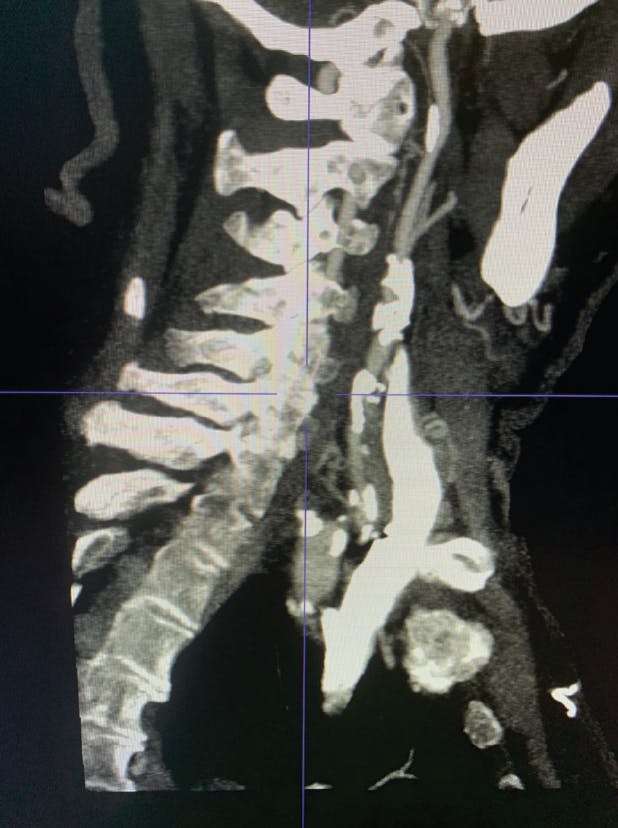
Figure 1. CT image of severe atherosclerotic lesions of the right CCA and ICA.
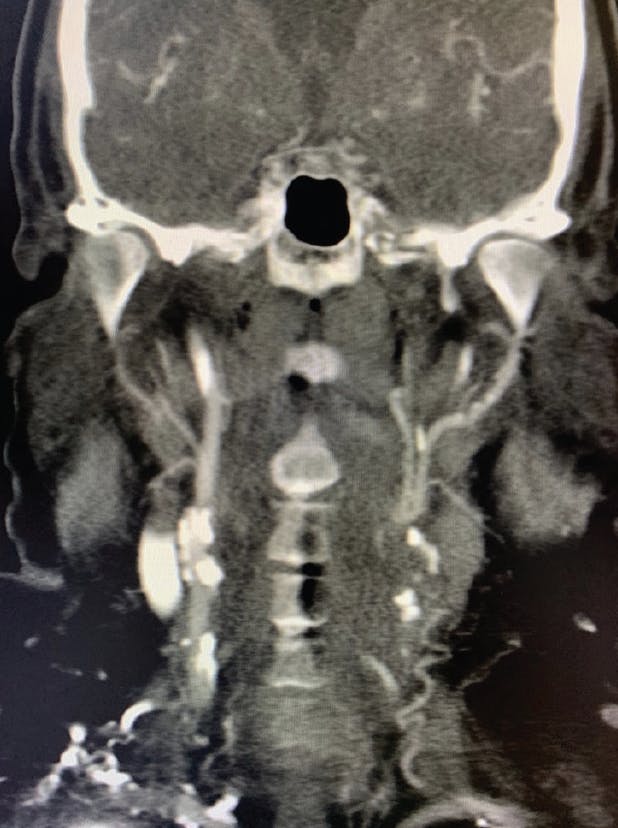
Figure 2. CT image of the atherosclerotic lesions of bilateral carotid arteries.
What anatomic and patient characteristics affect your management of asymptomatic and symptomatic carotid disease?
Dr. Erben: In my practice, from the anatomic perspective, I use duplex ultrasound as a screening tool in patients who have had a questionable neurologic event or a carotid bruit on physical examination. If the patient is found to have high-grade stenosis, I follow up with CTA of the head and neck, which gives me precise anatomic features of the type of stenosis, including tandem lesions proximally and/or distally. It also provides me with detailed information in terms of the exact features of the lesion (eg, soft plaque, calcified plaque, plaque ulceration).
Then, the patient’s characteristics are key to helping me decide which procedure would be best suited for the patient. Initially, I would consider all patients candidates for carotid endarterectomy (CEA). However, if there are unique patient characteristics that make them at higher surgical risk, then I would consider either transfemoral carotid artery stenting (CAS) or transcarotid artery stenting. There is a role for each procedure; therefore, I try to find a consensus with the patient by offering the choices and making an educated decision with the patients for what is best for them, considering all clinical and anatomic factors.
Drs. Mehta and Teymouri: For asymptomatic patients with significant carotid occlusive disease, there are several key anatomic and patient factors that influence our decision to lean toward choosing the best medical management, CEA, CAS, or a hybrid surgery and stent approach. For asymptomatic patients with severe comorbidities such as class IV congestive heart failure, ejection fraction < 30%, unstable angina, recent myocardial infarction (MI), oxygen-dependent COPD, and a life expectancy of < 2 years, the best medical management should likely be considered as the treatment of choice. For patients with one or more of the previously mentioned medical comorbidities who are optimally managed and have a longer expected life span, we think both CEA and CAS should be considered. CEA can be performed without general anesthesia using a cervical block, and CAS can be performed with a variety of neuroprotection methods, including transcarotid artery revascularization (TCAR) with flow reversal for neuroprotection. For asymptomatic patients with recent MI, it’s probably best to defer carotid procedure for 3 to 4 months.
For asymptomatic patients with significant carotid stenosis, the anatomic factors that might favor CAS include hostile neck from prior CEA or radiation, high carotid bifurcation at or above cervical vertebrae level 2, and carotid stenosis that extends high up to prepetrous carotid level. Anatomic factors that might favor CEA include severe circumferential lesion calcification, when carotid lesion extends into a severely tortuous vessel, or when there is significant proximal CCA or arch occlusive disease. TCAR can overcome a hostile arch but requires an adequate disease-free CCA for access. For patients with concomitant critical ICA stenosis and critical proximal CCA stenosis, a hybrid CEA and retrograde CAS approach should be considered.
For patients who are symptomatic and at good medical risk, CEA should be considered the primary treatment of choice, unless coexisting anatomic factors favor CAS. For patients who are symptomatic and at high medical risk, one truly needs to consider all factors at play to choose the procedure best suited for the patient.
Dr. Reynolds: When evaluating a patient for carotid disease, I consider the patient’s symptomatology, degree of stenosis, and medical and surgical history to determine the optimal strategy. In addition to a bilateral carotid duplex, I perform CTA of the head and neck to assess the patient’s anatomy. This study is a key step in my algorithm for choosing a treatment modality: either CEA, CAS, or continued best medical therapy. The anatomic assessment includes the level of the bifurcation, inflow lesions, ICA and CCA diameters, vessel tortuosity, long-segment disease, and plaque characteristics. For example, if I’m considering a stent in a patient, a short CCA (< 5 cm from access to lesion) or a small CCA (< 6 mm) are both contraindications to TCAR per instructions for use.1 There are techniques to “extend the runway,” but I reserve those for when open surgery is truly high risk. Similarly, there are strategies for managing problematic calcified lesions in the carotid artery that are being explored off label. I currently avoid any stent-based interventions for heavily calcified lesions, particularly with areas of dense circumferential calcium ≥ 3 mm thick. This has been shown to have an increased incidence of stroke, restenosis, and stent fracture.2
Previous neck irradiation is important to consider because of skin changes that can result in poor wound healing, as well as scar tissue complicating a dissection with an increased potential for nerve injury. In these situations, I typically prefer TCAR, where a lower neck incision can be made that is usually outside of the radiation field. Additionally, its exposure requires significantly less dissection, thus theoretically lowering the risk of cranial nerve injury. With neck immobility and kyphosis, I also prefer TCAR because the proximal CCA exposure is less difficult with the lower neck incision. Obesity can present many factors that may complicate a CEA, but a deep and short CCA can make TCAR more challenging.
My practice is a nearly even split between open CEA versus TCAR. I prefer to perform CEA on younger patients and TCAR for older patients or those who fall under the high-surgical-risk category. One caveat for TCAR or other carotid stent procedures is having to weigh the risks and benefits of dual antiplatelet therapy (DAPT) for each patient. If there are major concerns with DAPT compliance or bleeding risk, that should be considered before proceeding with stent-based interventions.
How do you typically manage concomitant great vessel and carotid bifurcation disease? How does the presence of severe calcification affect your decision-making? How is your decision-making influenced by a contralateral carotid occlusion?
Drs. Mehta and Teymouri: When managing concomitant great vessel and carotid bifurcation occlusive disease, the approach for symptomatic patients will likely include treating both lesions. Our preferred approach for CEA followed by retrograde balloon-expandable innominate artery or CCA stent compared with stent followed by CEA depends on lesion location and characteristics. In patients with CCA lesions that have extensive plaque burden and are of significant length, we prefer CEA first, followed by retrograde carotid stent to prevent stagnant blood flow in recently stented and clamped CCA.
Severe calcifications at the carotid bifurcation are best managed by performing CEA, and severe focal calcifications at great vessel origin are likely best treated with a balloon-expandable stent. However, in patients with severe long-segment CCA calcification and stenosis, the most durable option is likely an inflow surgical revascularization, such as subclavian-to-carotid bypass, contralateral carotid–to-carotid bypass, or innominate-to-carotid bypass, depending on lesion location. In patients with contralateral carotid occlusion, it is important to evaluate the presence of extracranial and intracranial occlusive disease and flow distribution. A careful analysis of the contralateral common-internal-external carotid pathways, vertebral-basilar pathways, posterior communicating arteries, and the circle of Willis are important in managing the patient.
Contralateral carotid artery occlusion does not warrant CAS, but other coexisting critical stenoses in the arterial beds may compromise intracranial blood flow during carotid cross-clamping for CEA and require neuromonitoring. Although there are numerous ways to accomplish this when treating concomitant great vessel and carotid bifurcation disease in patients with contralateral occlusion, we prefer conscious sedation and cervical block for CEA because it allows the patient to be comfortable and awake for neuroassessment during CEA. During carotid cross-clamping, the mean arterial blood pressure is maintained at around 100 mm Hg, particularly in patients with coexisting significant vertebral-basilar occlusive disease. In these patients, carotid shunt placement is reserved for patients who cannot follow commands or become unresponsive during the procedure. When presented with a patient with extensive occlusive disease who has had a stroke, we routinely shunt during CEA.
For asymptomatic patients with concomitant inflow and carotid bifurcation occlusive disease, we generally reserve treatment for great vessel occlusive disease > 80% to 90% that can be readily managed with retrograde stent placement.
Dr. Reynolds: I manage tandem lesions with a hybrid approach. I perform open CEA followed by ipsilateral stenting of the proximal lesion in a retrograde fashion. There are no clear guidelines, but a small case series and single-center studies suggest that such an approach may improve morbidity and mortality compared with an open approach to both lesions.1,3 For cerebral protection during the ipsilateral stenting, distal clamping of either the distal CCA or the ICA, based on the location of the lesions, should be performed.3 If clamping the ICA, any debris after stenting and proximal lesion manipulation should be flushed into the ECA, and the ICA should be back bled to minimize the risk of embolization.
The Society for Vascular Surgery registries have shown a higher risk of stroke (3.1% vs 1.1%) for patients with isolated endarterectomies with contralateral occlusions versus patients without contralateral disease.4 Extrapolating from these data, patients with a contralateral carotid occlusion or even significant contralateral carotid disease should undergo shunting for cerebral perfusion if it can be done safely.
Dr. Erben: Again, this all takes place with careful informed consent with the patient. If the patient is a good surgical candidate and relatively young, I tend to consider an open approach. This will also include the help of my cardiothoracic surgeon who will assist me with exposure of the ascending aorta and provide me with access to a good-inflow nondiseased area of the aorta that I can clamp and bring my bypass from the aorta to the neck. Another excellent option is performing a CEA and, from the neck down, performing a retrograde CCA stenting. If the inflow vessel is severely calcified, I then consider a balloon-expandable covered stent as an option to ensure that in case of calcium protrusion, I am able to protect the vessel integrity from possible extravasation of blood by having the covered stent.
What type of repair would you offer this patient? If this patient had been asymptomatic, would you offer any intervention?
Dr. Reynolds: For this patient with symptomatic carotid artery disease, I would offer a hybrid approach for his tandem lesions. First, I would perform CEA with a bovine pericardial patch, followed by retrograde stenting of the proximal CCA lesion. I would raise the blood pressure and plan to selectively shunt instead of primarily shunt, due to distal ICA calcification. For cerebral protection during the retrograde stenting, I would clamp the distal CCA, which also allows perfusion from the ECA to the ICA while clamped, as opposed to clamping the ICA. After stenting and postdilation of the proximal lesion, debris would be flushed out from back bleeding before allowing antegrade flow to minimize the risk of embolization.
Although guidelines recommend treatment for appropriate-risk patients with asymptomatic isolated ICA disease, data are limited on the natural history of patients with multilevel carotid disease. The risk-to-benefit ratio for prophylactic treatment of these lesions is then unknown. If this patient were asymptomatic, I would take a more conservative approach with medical management because the risk of stroke would be expected to be higher in patients with tandem lesions than in those with isolated carotid disease. Intraoperatively, placing a shunt for cerebral perfusion in the setting of a contralateral occlusion can be considered an additional risk in this patient who has a more distal ICA calcification.
Drs. Mehta and Teymouri: Our planning stages in this symptomatic patient would likely include extra and intracranial carotid-vertebral arteriogram and CTA perfusion imaging to evaluate patient risks and plan critically needed steps during the procedure. It’s unlikely we have a simple solution with < 1% stroke risk. The images indicate significant carotid bifurcation calcifications, moderate to severe stenosis, and, likely, moderate calcifications and stenosis in the proximal CCA. If transfemoral CAS with neuroprotection is planned, sheath advancement across the arch and into the CCA will be associated with increased risks. If TCAR is planned, transcervical CCA access will be associated with increased risks. If CEA is planned, for this lesion that extends several centimeters into the CCA, the addition of extending the arteriotomy into the CCA and common CEA will be needed. A proximal CCA stent at its origin is probably not needed in this case. However, it is likely that a carotid shunt will be needed during the procedure and should be planned for. The procedure steps would include increasing the patient’s mean systemic blood pressure to > 100 mm Hg, adequate carotid exposure, carotid cross-clamping, and CEA (internal, external, and common carotid) with or without a carotid shunt as needed. Our preferred approach to CEA is the eversion technique.
If this patient were to be asymptomatic, we would likely optimize best medical management and not plan intervention for 60% to 79% carotid bifurcation stenosis or for unmeasurable and likely moderate-to-severe–inflow common carotid stenosis.
Dr. Erben: I would offer open repair in this relatively young individual without many comorbidities. Beforehand, I would have him visit my pulmonologist colleague to clearly assess the degree of COPD. I would want to know if this patient can undergo open surgical repair under general anesthesia, and if the evaluation was satisfactory, I would propose this modality of repair. As a second option, there is the possibility of performing CEA with retrograde CCA stenting. If the patient were asymptomatic, as stated in the stem of this question, I would still consider intervention with the patient’s careful informed consent prior to the operation. He is at a high risk for a potential neurologic event due to the tandem high-grade stenotic lesions and the contralateral carotid artery occlusion. Again, this should be managed with careful discussion with the patient.
APPROACH OF THE MODERATORS
This case presented a challenging scenario featuring a symptomatic right ICA lesion in a patient with proximal disease. Tandem carotid artery lesions that involve the ICA and CCA are uncommon, and at present, there are no guidelines for their treatment. Given the patient’s progressive vision loss due to ischemic retinitis, it was recommended he undergo revascularization of the right CCA and ICA. The management for symptomatic isolated internal carotid lesions has been well studied and provides an operator with the following options for effective treatment: CEA, transfemoral CAS, and TCAR. Despite this, the presence of proximal disease poses an additional challenge to consider and does not make this case a conventional carotid revascularization procedure. Total endovascular solutions—stenting of the ICA and CCA, hybrid (CEA with retrograde endovascular intervention), and CEA with supra-aortic trunk bypass—have been shown to be feasible in patients with tandem carotid lesions.
Typically, physiologic status and anatomic criteria guide my general management strategy for patients with cerebrovascular disease. Endovascular strategies allow for expedient delivery of therapy, meaning treatment of inflow and carotid lesions can occur at the same time without the need for incisions or prolonged hospital/intensive care unit stays for patients. However, there are associated risks with CAS, particularly for ipsilateral or contralateral hemisphere stroke and mortality, which exceed the risks associated with open operations.5,6 Furthermore, when dealing with severe, circumferential calcified lesions of the carotid artery, I have concerns with stent expansion. Despite this, there are reports demonstrating the safety and feasibility of intravascular lithotripsy (IVL) in conjunction with stenting for the management of highly calcified carotid lesions.7 This technique uses an off-label application of IVL, and ultimately, these concerns were communicated with the patient; after the discussion, we decided to proceed with open repair.
Given the presence of a contralateral occlusion, intraoperative shunting would have been ideal. However, the extent of his CCA disease prohibited shunting, and intraoperative neuromonitoring with somatosensory evoked potentials and electroencephalography was used. The right subclavian artery was exposed first through a longitudinal incision along the anterior border of the sternocleidomastoid. After this, the CCA, ICA, and ECA were individually controlled. Using an 8-mm Dacron graft, a bypass was then performed from the right subclavian artery to the right carotid artery bifurcation after CEA (Figure 3). The patient recovered from the operation and was discharged on postoperative day 2. His visual changes stabilized with recovery in retinal function. Repeat duplex ultrasound at 1 year showed widely patent anastomosis and bypass with excellent flow into the right ICA.
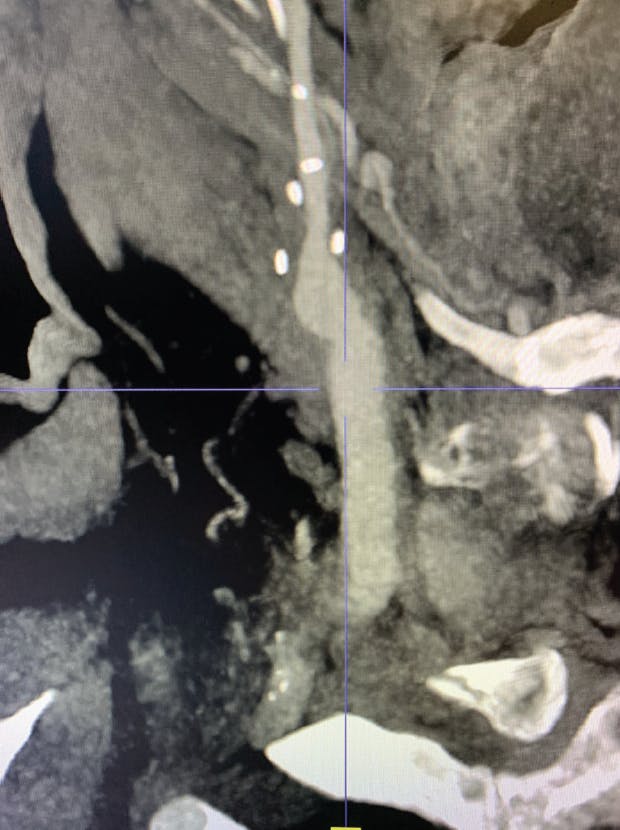
Figure 3. Postoperative CT image of the right subclavian–to–right carotid bifurcation bypass.
The patient’s multiple anatomic challenges required multiple considerations for definitive management. Although stenting of the patient’s CCA and ICA lesions could have been feasible, we felt the durability and the potential risks associated with an endovascular solution to be prohibitive. Despite this, simultaneous repair of tandem carotid lesions has been shown to portend a worse outcome to CEA and CAS alone.8 CEA with proximal CAS via a retrograde approach is a well-described strategy for the management of these types of pathologies; however, we felt that our approach provided the revascularization with the lowest risk of intraprocedural stroke and mortality.
1. AbuRahma AF, Avgerinos ED, Chang RW, et al. The Society for Vascular Surgery implementation document for management of extracranial cerebrovascular disease. J Vasc Surg. 2022;75:26S-98S. doi: 10.1016/j.jvs.2021.04.074
2. Kokkosis AA, Macdonald S, Jim J, et al. Assessing the suitability of the carotid bifurcation for stenting: anatomic and morphologic considerations. J Vasc Surg. 2021;74:2087-2095. doi: 10.1016/j.jvs.2021.05.048
3. Beach JM, Sharma S, Bena J, et al. Concomitant ipsilateral carotid endarterectomy and stenting is an effective treatment for tandem carotid artery lesions. J Vasc Surg. 2020;71:1579-1586. doi: 10.1016/j.jvs.2019.07.054
4. Ricotta JJ, Upchurch GR, Landis GS, et al. The influence of contralateral occlusion on results of carotid interventions from the Society for Vascular Surgery vascular registry. J Vasc Surg 2014;60:958-965. doi: 10.1016/j.jvs.2014.04.036
5. Müller MD, Lyrer PA, Brown MM, Bonati LH. Carotid artery stenting versus endarterectomy for treatment of carotid artery stenosis. Stroke. 2021;52:e3-e5. doi: 10.1161/STROKEAHA.120.030521
6. DeCarlo C, Tanious A, Boitano LT, et al. Simultaneous treatment of common carotid lesions increases the risk of stroke and death after carotid artery stenting. J Vasc Surg. 2021;74:592-598.e1. doi: 10.1016/j.jvs.2020.12.089
7. Henry CL, Hansen SK, Gable CE, et al. Intravascular lithotripsy during transcarotid arterial revascularization for highly calcified lesions in high-risk patients. J Vasc Surg Cases Innov Tech. 2020;7:68-73. doi: 10.1016/j.jvscit.2020.10.018
8. DeCarlo C, Tanious A, Boitano LT, et al. Hybrid and total endovascular approaches to tandem carotid artery lesions have similar short- and long-term outcomes. Ann Vasc Surg. 2021;76:20-27. doi: 10.1016/j.avsg.2021.02.027
Advertisement
Advertisement