Advertisement
Advertisement
August 2022
Sponsored by Cagent Vascular
Complex, Multilevel Disease Treated With Serranator Prior to Drug Elution
With Micheal Ayad, MD; Gerardo Gonzalez-Guardiola, MD; Armin Farazdaghi, MD; and Michael Bacharach, MD
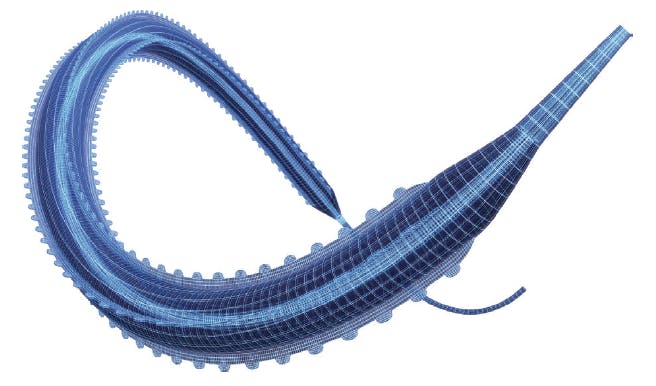
The Serranator® PTA Serration Balloon Catheter (Cagent Vascular) leverages the principles of serration technology to improve outcomes in patients with peripheral artery disease (PAD) by overcoming the typical drawbacks of balloon angioplasty. The Serranator consistently creates significant lumen gain across all lesion types regardless of lesion morphology or anatomic location. The Serranator is effective as stand-alone therapy or in combination with drug elution or atherectomy.
Case 1: Severe Stenosis and CTO in the SFA, Popliteal, and Tibial Arteries
By Micheal Ayad, MD
PATIENT BACKGROUND
A woman in her mid 80s presented with multiple comorbidities including severe PAD, and Rutherford class 5 chronic limb-threatening ischemia. She had a left leg nonhealing wound in the medial mid-calf for 6 weeks and ischemic rest pain. Ultrasound evaluation of the left lower extremity (LLE) demonstrated an ankle-brachial index (ABI) of 0.3, severe stenosis in the superficial femoral artery (SFA) and popliteal as well as tibial vessels, and tardus parvus waveform from the popliteal artery to the tibial vessels.
PROCEDURE
The baseline angiogram and intravascular ultrasound (IVUS) showed several areas of segmental, severe (80%-90%) stenoses and chronic total occlusion (CTO) in the distal SFA and popliteal artery and occluded posterior tibial (PT) and anterior tibial (AT) arteries. Right retrograde femoral access was achieved with up-and-over access into the left common femoral artery (CFA), followed by an LLE angiogram (Figure 1). A 6-F, 45-cm sheath was advanced into the left proximal SFA from the right CFA access. After navigating through the diseased segments in the SFA/popliteal and PT artery with a 0.018-inch CXI catheter (Cook Medical) and a 0.018-inch Glidewire (Terumo Interventional Systems), a 0.014-inch Command wire (Abbott) was navigated to the distal PT artery. A 0.014-inch Eagle Eye IVUS catheter (Philips) was advanced to evaluate the SFA, popliteal, and PT arteries, which demonstrated multiple 90% to 100% stenoses and CTO segments through the distal SFA/popliteal artery, tibioperoneal trunk (TPT), and proximal PT artery (Figure 2). IVUS sizing showed a 2.5-mm diameter of the PT artery, a 3.5-mm diameter for the TPT, and a 4.6-mm diameter for the distal SFA/popliteal artery.
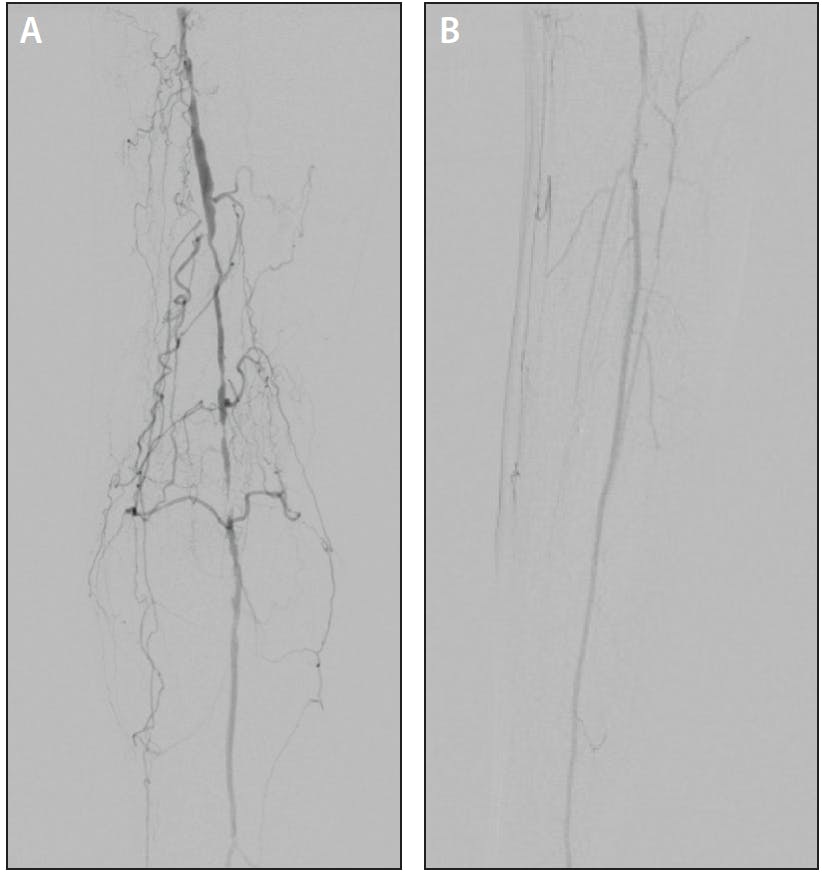
Figure 1. Preintervention angiograms of the SFA and popliteal artery (A) and tibial vessels (B).
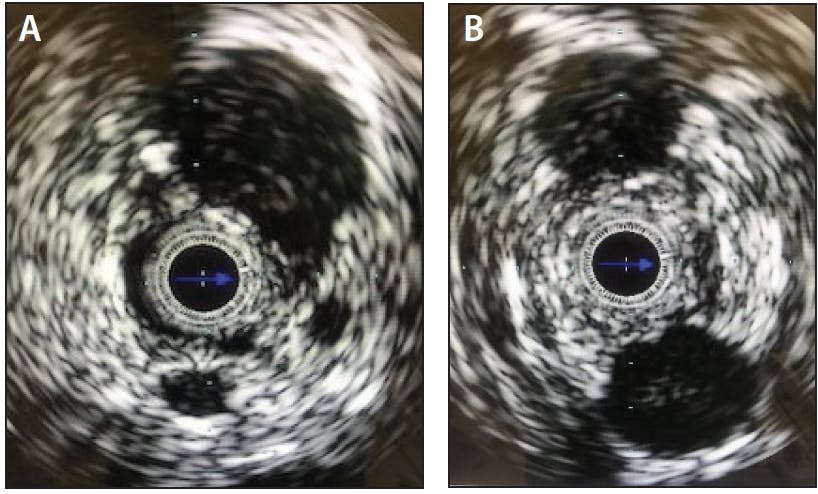
Figure 2. Preintervention IVUS images of the distal SFA (A) and PT artery (B).
All vessels were predilated with a 2-mm X 22-cm balloon to create a small channel. This was followed by a 2.5- X 120-mm Serranator balloon for percutaneous transluminal angioplasty (PTA) of the proximal PT artery, TPT, and SFA/popliteal artery for 40 seconds at 4 mm Hg and 80 seconds at 6 mm Hg. The TPT, popliteal artery, and distal SFA were then treated with a 3.5- X 120-mm Serranator balloon for the same pressures and time frame as previous. Finally, a 4- X 150-mm drug-coated balloon (DCB) was advanced for PTA of the distal SFA and popliteal artery. Completion angiography and IVUS showed patent brisk flow through all the treated vessels (Figure 3 and Figure 4).
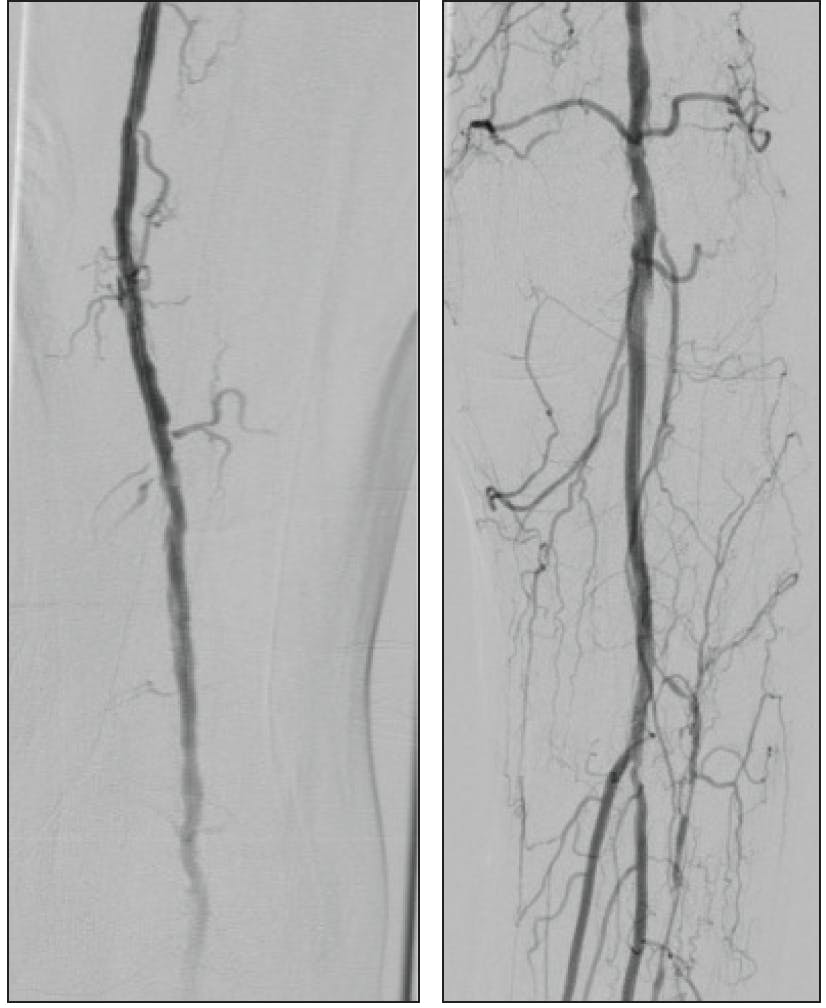
Figure 3. Postintervention angiograms.
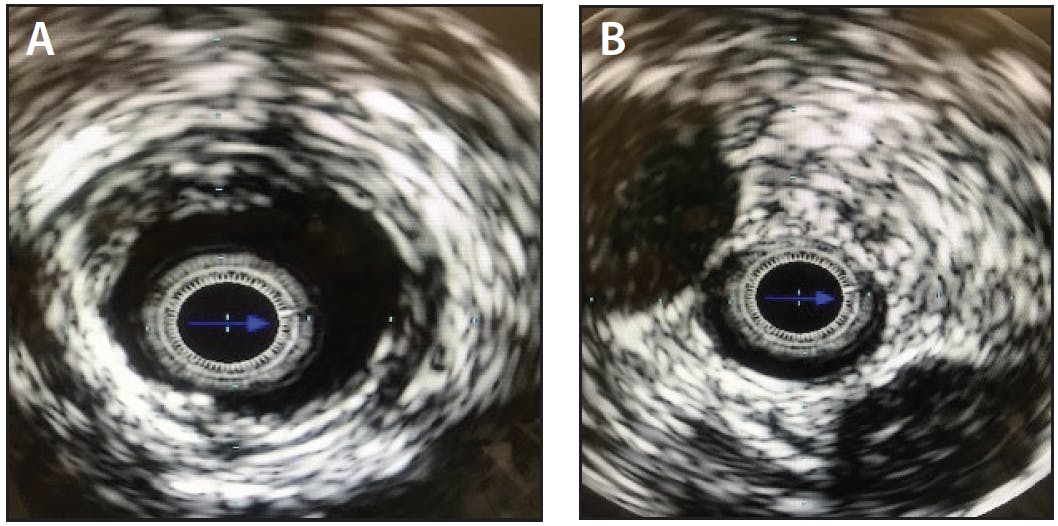
Figure 4. Postintervention IVUS images of the distal SFA (A) and PT artery (B).
CASE 1 DISCUSSION
With so many tools to treat above-the-knee (ATK) and below-the-knee (BTK) lesions, when do you use the Serranator?
Dr. Ayad: The luminal gain achieved by the Serranator platform is impressively superior to similar platforms. Based on the cases that I have done using the Serranator balloon either for stand-alone therapy or as a preparation balloon for DCB angioplasty, the incidence of residual luminal stenosis requiring stent placement is much lower than others.
In this case, you followed Serranator use with a DCB. Do you see any benefits for that strategy compared to plain old balloon angioplasty (POBA) followed by DCB?
Dr. Ayad: I do. This is not based on an actual study, but POBA utilization stretches the intima and potentially causes uncontrolled tears and/or dissection that can lead to the need for stenting even if a DCB is used. We also do not know which part of the DCB will penetrate the intima. If the intima remains intact, surrounded by disease, there is no significant penetration of the drug. The Serranator balloon technology provides controlled microserrations that span the entire treated segment, so when it is followed with a DCB, we are confident that the drug penetration through the intima is happening through the entire treated segment, and this would potentially lead to improved patency.
What makes the Serranator different from other specialty balloons?
Dr. Ayad: The microserration allows for controlled intimal penetration rather than just slicing through with a wire-based, cutting balloon or POBA. The Serranator likely contributes to the improved luminal gain achieved without an increase in rates of flow-limiting dissections.
You used two different sizes of the Serranator. Is that typical?
Dr. Ayad: Yes, I was treating two levels of disease: tibial as well as SFA/popliteal lesions. This required two different balloon sizes for appropriate and optimal treatment using a 1:1 balloon-to-artery ratio. This sizing ensures appropriate lumen size at the end of the therapy and provides the greatest likelihood for achieving a successful and durable result.
Case 2: Popliteal Artery CTO in Chronic Limb-Threatening Ischemia
By Gerardo Gonzalez-Guardiola, MD
PATIENT BACKGROUND
A woman in her mid 70s with past medical history of chronic obstructive pulmonary disease, coronary artery disease, hypertension, and PAD was referred for severe rest pain involving the right lower extremity. An arterial duplex ultrasound demonstrated no flow through the popliteal artery and ABI was diminished to 0.31 (Figure 1). The referring physician performed diagnostic angiography, which confirmed the popliteal CTO with overall small-caliber vessels. Given her chronic limb-threatening ischemia, revascularization was deemed necessary.
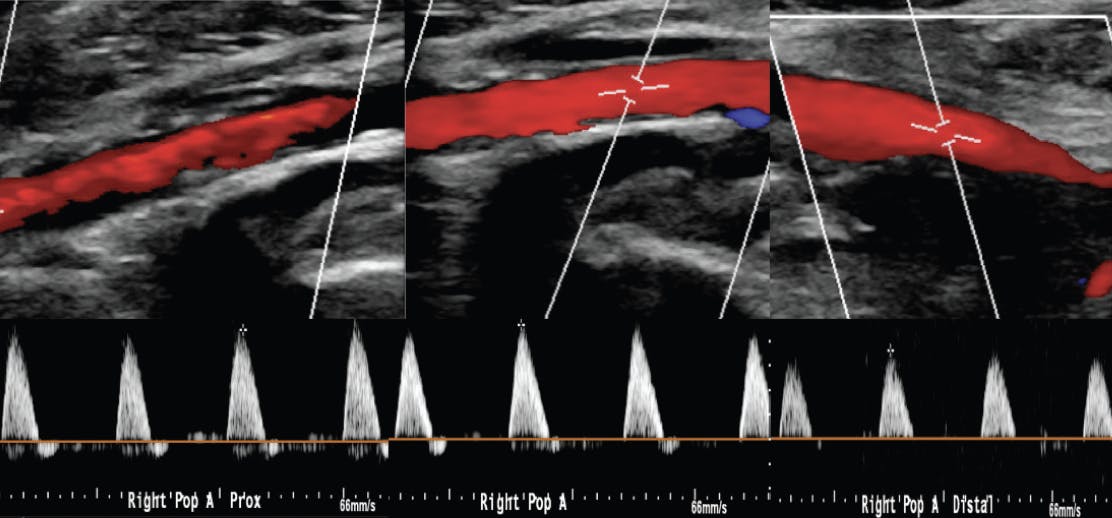
Figure 1. Arterial duplex ultrasound image demonstrating a popliteal artery CTO.
PROCEDURE
The left CFA was accessed under ultrasound visualization. The contralateral leg was selected by going up and over the aortic bifurcation. A lower extremity angiogram was obtained, which showed a popliteal artery CTO with reconstitution of the distal PT artery.
Over a 0.035-inch Glidewire Advantage (Terumo Interventional Systems), the sheath was exchanged for a 6-F, 65-cm Destination guiding sheath (Terumo Interventional Systems). With the support sheath in the SFA, the popliteal CTO was engaged and successfully crossed. The lesion was crossed with a 0.018-inch Glidewire Advantage and NaviCross (Terumo Interventional Systems), and the wire was further advanced into the PT artery. The wire was then exchanged for a Viper wire (Cardiovascular Systems, Inc.). The popliteal artery was sized using IVUS. This was followed by orbital atherectomy of the popliteal artery with the Diamondback 360 (Cardiovascular Systems, Inc.) using a 1.25-mm Micro Crown. A 4- X 40-mm Serranator balloon was inflated across the CTO to 4 atm for 2-minute inflation (Figure 2). Subsequently, a 4-mm DCB was inflated for 3 minutes. Repeat IVUS demonstrated full luminal gain without any areas of dissection. A completion angiogram showed an excellent angiographic result with brisk flow through the previously occluded popliteal artery without residual stenosis.
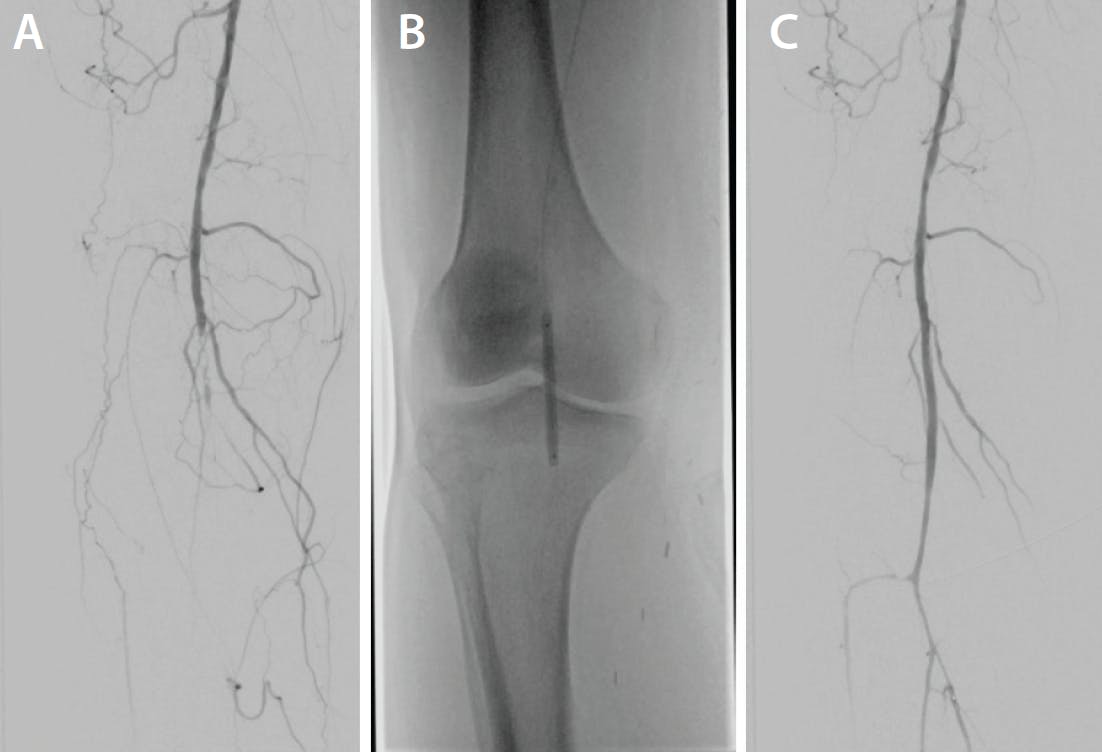
Figure 2. Preintervention CTO (A). 4- X 40-mm Serranator inflated to 4 atm for 2 minutes (B). Postintervention showed brisk flow and no dissection (C).
CASE SUMMARY
Serration angioplasty with the Serranator balloon on a small-caliber, highly calcified popliteal artery CTO yielded substantial luminal gain. Intraoperatively, excellent blood flow was achieved without dissection or the need for bailout stenting on this challenging case based on character, location, and small caliber of the CTO. There has been longitudinal patient follow-up with resolved symptoms. Six-month ABI has increased to 0.84, and arterial duplex ultrasound showed a widely patent popliteal artery without any areas of restenosis.
CASE 2 DISCUSSION
What makes the Serranator different than other specialty balloons?
Dr. Gonzalez-Guardiola: Serrated balloon technology has become my “go to” for BTK lesions. I have been using scoring balloons routinely in my practice. There is no other balloon that delivers as constant, reproducible results as the Serranator. I find that properly sized serrated balloons allow for maximal luminal gain at lower pressure. It has significantly lowered the rate of dissection in all challenging anatomy in my practice.
In this case, the Serranator followed atherectomy. How do they work together?
Dr. Gonzalez-Guardiola: My treatment algorithm for CTOs or calcified lesions includes vessel preparation with atherectomy. It creates a significant flow channel, thus allowing the delivery of the serrated technology to the lesion with ease.
In this case, you followed the Serranator with drug elution. Do you think using the Serranator has advantages when used before DCB as compared with POBA?
Dr. Gonzalez-Guardiola: I do theorize that there is improvement in drug uptake when using DCB followed by serrated balloons when compared with POBA. I am looking forward to the larger-diameter Serranator balloons to further test this theory in the ATK space. So far, I have had long-term excellent results when used in the BTK lesions.
Case 3: Treatment of Dense Calcification and High-Grade Stenosis of the Distal SFA, TPT, and Proximal AT Artery
By Armin Farazdaghi, MD, and Michael Bacharach, MD
PATIENT BACKGROUND
A man in his mid 80s with a long-standing history of hypertension, hyperlipidemia, noninsulin-dependent diabetes mellitus, and severe multilevel PAD presented with nonhealing ulcers of his left foot. Notably, he had presented 6 months previously with gangrenous changes to his left great toe, at which time he underwent balloon angioplasty of the left PT, peroneal, and AT arteries. He subsequently underwent left great toe amputation, and this had healed well. He was continued on a statin and clopidogrel.
At the time of the current presentation, the examination revealed ischemic changes to the distal tips of his second, third, and fourth toes without any surrounding erythema or stigmata of infection. There was marked pallor of the left foot when compared to the right foot, which was normal in appearance. The left femoral pulse was palpable, but the left popliteal pulse was diminished and pedal pulses were nonpalpable, with faint monophasic Doppler signals. The right limb had palpable femoral and popliteal pulses and strong monophasic signals in the dorsalis pedis and PT artery.
PROCEDURE
Retrograde right common femoral access was achieved, and a 6-F sheath was placed. Angiography demonstrated non–flow-limiting calcific disease within the aortoiliac segment, as well as a widely patent left common femoral, profunda, and proximal SFA. However, there was dense calcification and focal high-grade stenosis of the distal SFA just proximal to the adductor canal and extending into the P1 segment of the popliteal artery (Figure 1A). The remaining popliteal segments were patent; however, there was again a focal calcific high-grade lesion of the TPT and proximal AT artery (Figure 1B). The 6-F sheath was exchanged for a long, 7-F sheath with balloon dilation of the distal SFA and proximal popliteal lesions utilizing a 5- X 250-mm DCB. Subsequent angiography demonstrated the distal SFA and proximal popliteal to be widely patent. We then used a 3.5- X 120-mm Serranator balloon in the TPT as well as the proximal AT artery (Figure 2). There was marked angiographic improvement. We then exchanged for a shorter 3- X 40-mm Serranator balloon and were able to treat the ostial and proximal portion of the AT artery. There was a segment of near-total occlusion in the more distal AT common artery, and further passage of the balloon was difficult. An exchange was performed, and the segment was predilated with a 2-mm standard balloon. Subsequently, the 3- X 40-mm Serranator was readvanced with ease to the level of the malleolus. Completion angiography demonstrated significant luminal gain with restoration of inline flow without dissection or extravasation (Figure 3). The patient tolerated the procedure well, and the postoperative course was uncomplicated.
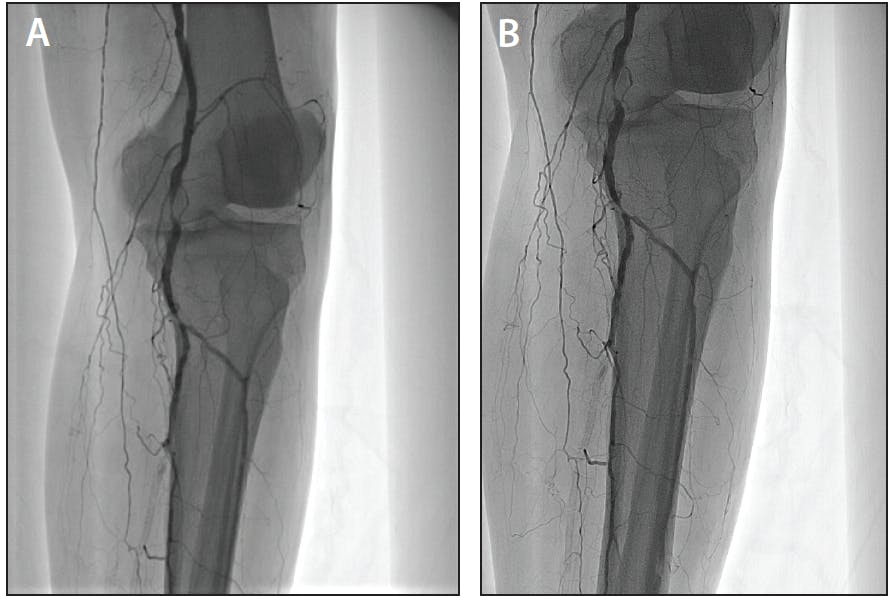
Figure 1. Preintervention angiograms of the distal SFA/popliteal, TPT (A), and proximal AT (B) with dense calcification.
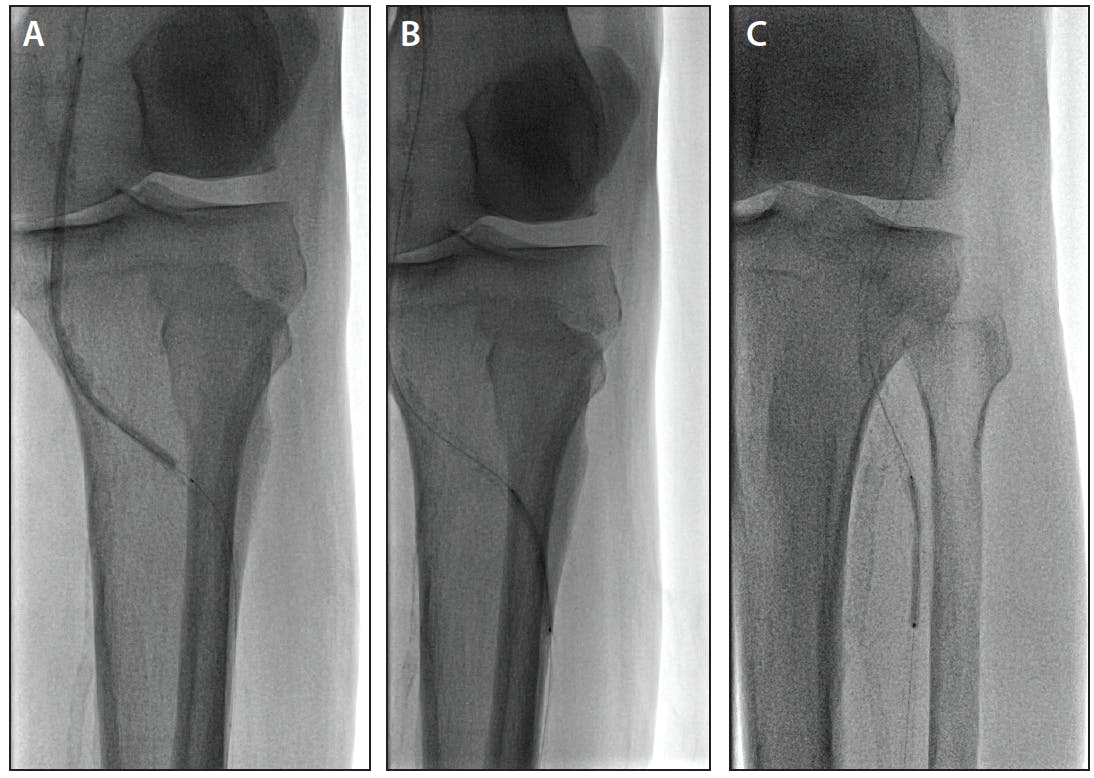
Figure 2. A 3.5- X 120-mm Serranator inflation (A) followed by a 3- X 40-mm Serranator (B, C).
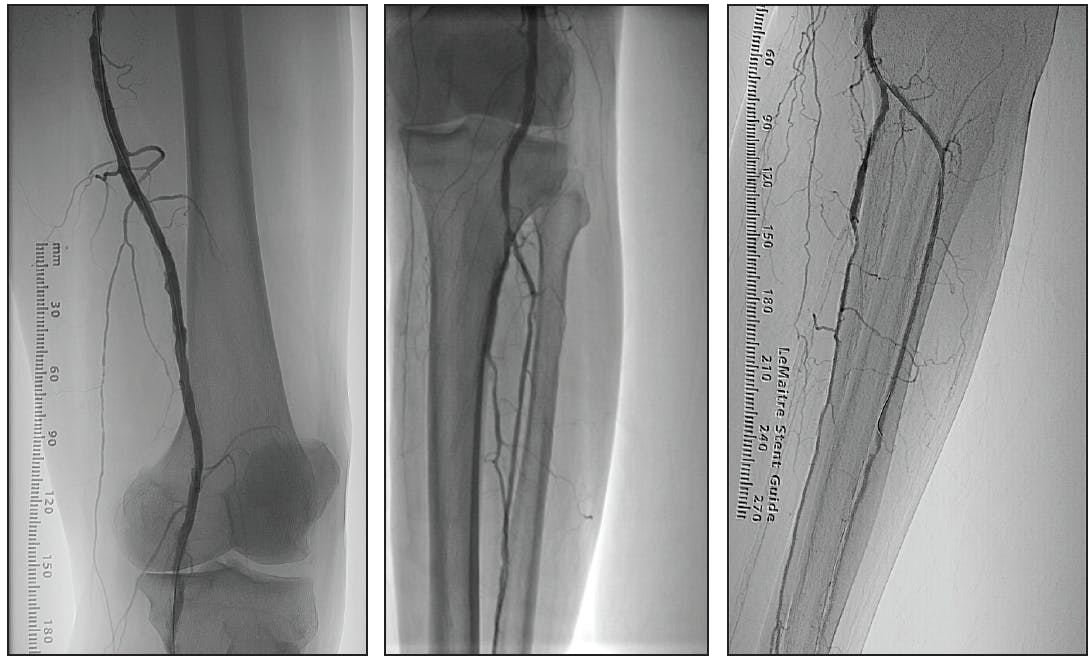
Figure 3. Postintervention angiograms show restoration of inline flow and no dissection.
CONCLUSION
This case was the first use of the Serranator balloon in the Midwest United States. The patient had excellent overall results, and the balloon was able to track well past high-grade lesions, requiring predilation only in the distal segment of the AT artery when a near-total occlusive lesion was encountered. Restoration of inline flow was successful for this patient with chronic limb-threatening ischemia of his LLE and tissue loss. Notably, there was a high-grade focal calcific ostial tibial lesion that was successfully dilated utilizing the Serranator balloon without dissection or rupture.
Case 3 Discussion
What made the Serranator an ideal choice for this case?
Drs. Farazdaghi and Bacharach: The Serranator was an ideal choice for the BTK lesion, which had bulky calcific plaque near the bifurcation of the TPT in a patient with poor distal flow and concern that traditional PTA could lead to dissection or dislodgement.
What type of experience do you have with the Serranator?
Drs. Farazdaghi and Bacharach: This was our first time using the Serranator balloon. It had an intuitive design and was straightforward as a first-time user of the device. In this case, we utilized a Serranator BTK and had excellent results generating luminal gain without dissection or disruption of the tibial vessels in a patient with limb-threatening ischemia.
What is different about the Serranator compared to other technologies and how do you plan to incorporate it into your practice?
Drs. Farazdaghi and Bacharach: The unique aspect of the Serranator balloon is that it allows for safe expansion of the lumen in resistant lesions, as well as its ability to treat long-segment disease. The Serranator provides an excellent tool to treat difficult lesions, particularly when concerned with the potential for dissection. This case was a great example of the Serranator’s capabilities as we were able to safely treat more distally in the tibials.
Advertisement
Advertisement