Advertisement
Advertisement
August 2022
Sponsored by Medtronic
The Current Landscape of EndoSuture Aneurysm Repair (ESAR)
A physician-led discussion on the use of ESAR in the treatment of AAA.
With Naiem Nassiri, MD, FSVS, RPVI; Julia Fayanne Chen, MD, MPH; William D. Jordan Jr, MD; Ross Milner, MD, FACS; Apostolos K. Tassiopoulos, MD, FACS; and Brant W. Ullery, MD, FACS






Dr. Naiem Nassiri recently led a discussion with a panel of experts to determine the current perspectives on the use of EndoSuture aneurysm repair (ESAR) with the Heli-FX EndoAnchor system (Medtronic) to treat abdominal aortic aneurysms (AAAs). This treatment was developed to mimic the sutures used in open aortic repair in an effort to increase the durability of endovascular aortic repair (EVAR). The following dialogue presents the perspectives of several thought leaders regarding the value of ESAR as a robust and effective treatment option.
In your current clinical practice, what are your indications for ESAR?
Dr. Milner: My indications for ESAR are patient dependent in my clinical practice. I use ESAR to provide durability from a sac regression standpoint and to also prevent aortic neck dilation. I think about my use of ESAR in four major categories: younger patients, patients with wide neck anatomy, those with short-neck anatomy, and intraoperative type Ia endoleaks. These categories can obviously overlap with one another.
Younger patients are at risk for long-term durability issues with EVAR. ESAR mimics open surgical repair in terms of proximal aortic neck fixation and seal. Data also demonstrate improved sac regression with ESAR.1 I think this is an important concept considering the data regarding the survival benefit with sac regression as compared to stable and expanding aneurysm sacs.2
Patients with wide neck anatomy are at risk for long-term failure from type Ia endoleaks.3,4 The definition of a wide infrarenal neck is not well defined in the literature. However, this anatomy is clearly associated with a long-term risk of failure.5 I typically add ESAR to any patient who requires an aortic device that is > 32 mm in proximal diameter.
The treatment algorithm for short-neck anatomy in my practice includes ESAR, fenestrated EVAR (FEVAR), chimney EVAR (ChEVAR; off-label in the United States), and open surgical repair. I evaluate the angle of the renal arteries, size of the renal arteries, characteristics of the aortic neck, and iliac access when deciding on the approach to choose for a patient with short-neck anatomy. The FDA-approved indication for short-neck ESAR is the combination of an Endurant device (Medtronic) with EndoAnchors for a 4- to 10-mm neck anatomy. I think a 4-mm neck is challenging for anchor placement. However, I have successfully used ESAR for a minimum of 6 mm with durable results in appropriately selected patients.
Finally, intraoperative type Ia endoleaks are a straightforward indication. Even when planning is appropriate, we experience unexpected type Ia leaks. ESAR is a valuable method to resolve this issue. I have been pleased with the value of ESAR in this clinical situation.
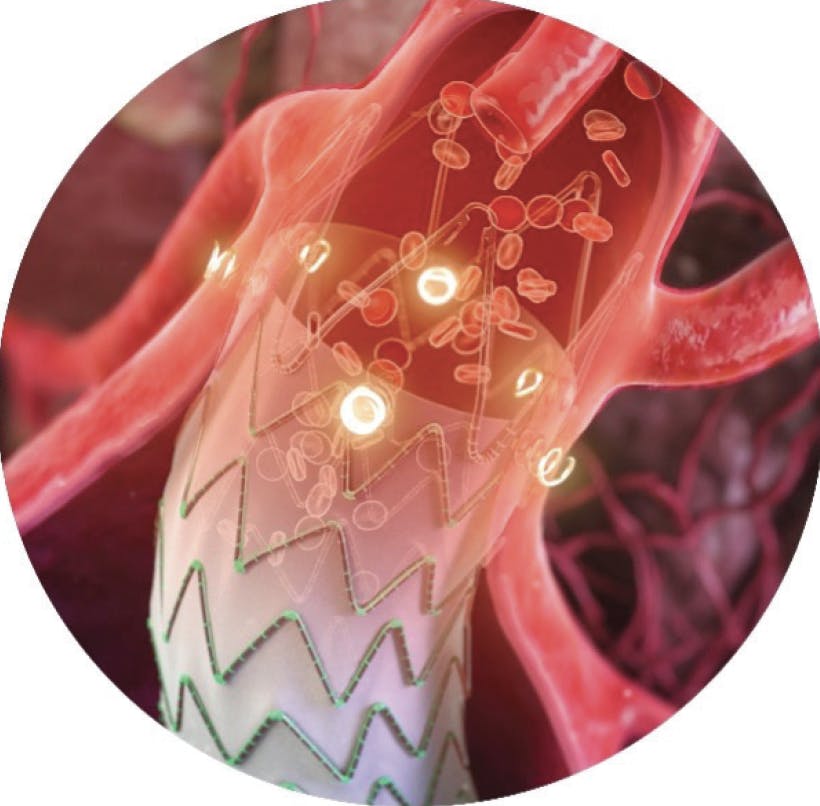
Reinforced proximal seal with Heli-FX EndoAnchors provides improved durability.
Dr. Tassiopoulos: Approximately 25% of EVAR patients develop neck dilatation that can compromise the integrity of the proximal seal zone.4,6 Patients with hostile neck anatomy are at higher risk for both intraoperative and remote type Ia endoleaks. Results from the ANCHOR registry suggest that use of EndoAnchors in these patients is associated with lower rates of proximal seal zone complications and higher rates of sac regression or stability when compared to conventional EVAR.1
In my practice, ESAR is a strong consideration for patients with longer life expectancy who have hostile neck characteristics, particularly short (< 10 mm), wide (> 28 mm), or conical neck anatomy. EndoAnchors are also my preferred tool for treating intraoperative type Ia endoleaks. I frequently use EndoAnchors in patients with remote type Ia endoleaks as well, and I consider them to be extremely useful. Their use can be customized based on the patient’s anatomy. If over time the infrarenal neck has dilated beyond the diameter of the previously implanted endograft, successful treatment of the type Ia endoleak by only using EndoAnchors is unlikely. However, EndoAnchors may be used to stabilize the original endograft and prevent distal migration when a proximal extension is needed.7
What do the data show?
Dr. Jordan: Although we gathered some early data from the Aptus endograft trial in 2008,8,9 most of our clinical data about EndoAnchor efficacy are reported from real-world clinical use. The ANCHOR registry that was initiated in 2012 has gathered over 1,000 patients who have been treated by many different clinicians. That registry has demonstrated excellent ESAR outcomes for patients who are treated in the primary setting. EndoAnchors can also be used for reinterventions to rescue “old” endograft failures when used to secure the old graft to the aortic wall or, more commonly, to secure a proximal extension with another endograft. Interestingly, the EndoAnchors can be used in all segments of the aorta, including the paravisceral and thoracic aorta if that is chosen for the best proximal fixation site. A recent report shows the value of EndoAnchors even on short-neck aneurysms (4-10 mm), and they can be carefully considered for those difficult anatomic situations.10,11
Case Example
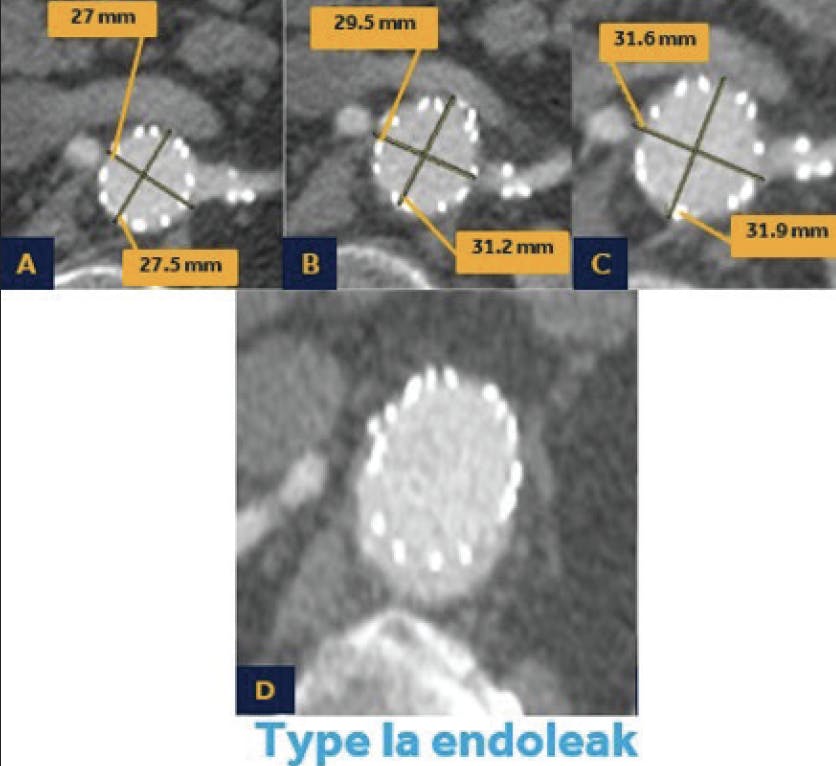
Progressive dilatation of the aortic neck at the level of the left (lowest) renal artery captured in follow-up CTAs obtained at 2 months (A), 13 months (B), and 27 months (C) from the time of endograft implantation, with development of type Ia endoleak (D).1
1. Ribner AS, Tassiopoulos AK. Postoperative aortic neck dilation: myth or fact? Int J Angiol. 2018;27:110-113. doi: 10.1055/s-0038-1649516
Dr. Chen: Most published studies are derived from the ANCHOR registry, a nonrandomized, multicenter, prospective study that began enrollment in 2012 with over 1,000 patients to date from the United States and Europe. The study has multiple arms and includes patients who received EndoAnchors at the time of endograft implantation and for revision (in the setting of graft migration or type Ia endoleak in a previously implanted endograft).
Several findings have resulted from analysis of this database, beginning with short-term data confirming safety and efficacy in both the primary and revision arms. Later studies have gone on to suggest that prophylactic use of ESAR in hostile necks results in freedom from type Ia endoleak and freedom from secondary intervention > 95% at about 1 year.10 Most recently, there are 5-year data available that confirm the midterm durability of ESAR.12 Within all these studies, it is also noted that sac regression of > 5 mm is seen frequently in a large proportion of patients who underwent ESAR. In 2018, Muhs et al demonstrated in a propensity-matched analysis that at 2 years, sac regression was observed in 81% of patients who received EndoAnchors at the time of EVAR compared to 49% in those who did not.1
A second multicenter registry does exist—the PERU registry, which looked at 275 patients who demonstrated high rates of freedom from type Ia endoleak at 4 years, with better results in the prophylactic group (96% vs 86%, primary vs revision).13 Single-center and anecdotal studies that report similar promising short- and midterm findings also exist.
In your practice, what patients are not ESAR candidates?
Dr. Tassiopoulos: Patients with neck length < 5 mm should generally not be offered ESAR because the proximal seal zone is limited and would not allow enough room for appropriate EndoAnchor deployment. In addition, patients with extensive calcifications or mural thrombus > 2 mm in thickness in the proximal seal zone are not good candidates for ESAR as transmural fixation of the endograft cannot be secured. Finally, use of EndoAnchors in revision cases involving polymer-based grafts, like Alto (Endologix), or the AFX endograft system (Endologix) is contraindicated.
Dr. Ullery: Clinical and technical success with ESAR relies on the fundamental principle that, quite simply, you need a reasonable proximal infrarenal neck to achieve both seal and fixation. Endurant’s short-neck indication dramatically decreases the minimum quantitative neck length to a mere 4 mm. It does not change the necessity of a good qualitative neck as it relates to calcium, thrombus burden, or severe angulation. In many cases, particularly for nonelective cases or those with challenging iliofemoral access, a secondary seal zone may be present 8 to 20 mm below the renal arteries that may afford an additional opportunity to gain seal (eg, less thrombus burden and relative coarctation in the infrarenal aorta proximal to the fusiform aneurysm).
Generally speaking, elective cases with circumferential infrarenal neck thrombus or calcification will prompt me to consider a fenestrated approach so long as the patients have suitable iliofemoral and renovisceral anatomy. One of my favorite applications of ESAR is in patients with juxtarenal AAAs who have compromised access and/or juxta/pararenal thrombus where use of EndoAnchors allows me to avoid the renal thromboembolic potential by obviating the need to perform balloon molding at the proximal seal zone.
Should everyone be getting ESAR?
Dr. Milner: I think all patients with a wide aortic neck should be treated with ESAR. Younger patients should be considered as well in most scenarios. In my practice, this is an adjunct in almost every case to prevent future issues that require costly secondary interventions when considering wider neck and younger patients.
I believe in the value of EndoAnchors for the durability/preservation of the aortic neck and endograft interface. I think the sac regression data reinforce the value of the technology. However, there is a balance between ESAR use in every EVAR case and the cost/benefit ratio of the technology. For example, older patients with straightforward anatomy likely do not need the additional costs associated with ESAR. Therefore, my answer is that, likely, not everyone needs EndoAnchors for infrarenal EVAR.
I would not say that every patient with a short infrarenal neck should be treated with ESAR. However, this procedure is very valuable for patients with challenging iliac access and smaller renal arteries. You can also potentially reduce the radiation exposure for you and your patient with ESAR as compared to the more complex aortic techniques. I think radiation exposure is an issue that we do not consider frequently enough when deciding on our planned therapy.
Dr. Jordan: This question highlights the theme of durability. ESAR clearly improves the fixation strength of an anastomosis when the anchors penetrate through a graft into the aortic wall. The cadaver studies showed us how the anchor-secured proximal anastomosis improves the fixation strength of any endograft and prevents displacement or migration.14 The anchor mimics the strength of a hand-sewn anastomosis and should be considered for all patients who are getting an endograft.
How would you recommend physicians incorporate ESAR into their practice?
Dr. Ullery: Our understanding of high-risk proximal aortic neck anatomy has matured over the years since the first introduction of this technology. Short (< 10 mm), conical, wide (> 28 mm), and angled aneurysm necks invite opportunity for increased durability and aneurysm sac regression through ESAR. Additionally, younger patients, those with unreliable follow-up (eg, remote geography, social challenges), and nonelective procedures (eg, ruptures) represent further clinical scenarios that have expanded the application of ESAR in my practice.
I would recommend new users apply ESAR to relatively straightforward anatomy early in their experience, perhaps a 10- to 15-mm neck length or one with conical neck morphology. Within three to five cases, interventionalists are universally pleased with the short learning curve and minimal added time required for this adjunctive technique. Moreover, I would recommend all interventionalists regularly scrutinize their postoperative surveillance imaging (eg, CTA or duplex) for all EVAR patients as it pertains to proximal neck dilatation. The progression of proximal neck dilatation to < 10% of the nominal diameter of the implanted device, with or without presence of identifiable endoleak, serves as a critical opportunity for reintervention to minimize risk of delayed rupture through application of EndoAnchors.
What future investigations are needed?
Dr. Tassiopoulos: The ANCHOR registry provides a good insight of the performance of ESAR in adverse neck anatomies up to 5 years from index procedure. Longer-term follow-up is needed to verify that the integrity of the proximal seal zone is maintained beyond that time point. Future research should also focus on comparing ESAR outcomes to other treatment approaches for patients with adverse neck anatomies (FEVAR, ChEVAR, physician-modified endovascular grafts), focusing on mid- and long-term results. This research would include freedom from type Ia endoleaks, AAA rupture, reintervention, proximal seal zone failure, endograft-related reintervention, AAA-related mortality, cost-effectiveness, and any other endograft-related complications.
Dr. Jordan: When we consider these clinical scenarios of short-neck aneurysms and ruptured aneurysms, we realize that our 1- and 5-year outlook for survival may be too shortsighted. Fully regulated clinical trial research for the 10- and 20-year time frame may seem prohibitive. Regardless, as a medical community we should embrace that perspective and plan for extended durability for our patients. It is important that we learn more about the mechanism of aortic wall failure to help our patients continue to live longer, more healthy lives.
There is a potential to discover an advantage of oversizing less (5%-10%) while using EndoAnchors rather than using the current algorithm of 10% to 20% oversizing. The aortic aneurysm is a dilating degenerative disease, and it seems counterintuitive to place too much radial force into the aorta that may accelerate this dilating process. This same sizing algorithm may then be applied to ruptured aneurysm. These rupture patients have already shown their category of aortic wall failure with rupture. Therefore, they may require even more active fixation and less oversizing. Future research may help define the pathophysiologic mechanism of aortic failure, which can direct us to preventative measures that could mitigate that failure.
A TRAINEE’S PERSPECTIVE
How do you plan to incorporate ESAR into your future practice?
Dr. Chen: I do plan on incorporating ESAR into my aortic practice. I think prophylactic placement of EndoAnchors should be a consideration if the anatomy is suitable—specifically, in cases of a hostile infrarenal neck. However, ESAR should not be used to push the limitations of what we already know about EVAR. For example, on one hand, I think ESAR has a role in all younger patients receiving EVAR because extended durability is critical in this population. However, open operation should first be strongly considered, particularly if there is any hesitation about the proximal landing zone.
In your opinion and experience to date, what patients are not good candidates for ESAR?
Dr. Chen: Patients with significant calcium burden or thrombus in the proximal neck are off label and would be less likely to see a good result from ESAR. Although ESAR can be a useful adjunct, it is still imperative that the graft is landed proximally in a healthy segment of aorta. The indication for Endurant with Heli-FX is for a neck as short as 4 mm. If one is left with such a severely limited sealing zone, other modalities such as open repair or extending the proximal sealing zone should be considered first.
What should future investigations into the ESAR landscape look like?
Dr. Chen: Although multiple promising studies have emerged from the ANCHOR registry, long-term data are needed. EVAR patients are living much longer, and we still know very little about how to predict who will experience proximal degeneration. I would like to see future investigations further address durability and patient selection. Furthermore, given the promising role of ESAR in promoting higher rates of sac regression, is there an expanded role for prophylactic placement of EndoAnchors beyond hostile necks?
How would you recommend trainees gain exposure to ESAR?
Dr. Chen: I do think this is a technology that shows promise, and my advice to all trainees is to gain early exposure to ESAR if possible. A large part of vascular surgery is having a variety of tools in your armamentarium; ESAR should certainly be one of them. When you are in the operating room, spend time at the back table as the device is being prepared. Learn how to load and deploy an EndoAnchor using the applier; learn how to angle the tip of the delivery catheter to position the EndoAnchors. Think about what angles on the image intensifier will allow you to appropriately visualize each clock position in which you would like to deploy your EndoAnchors. You also have opportunities to get your hands on demos of the device in exhibit halls, conferences, or local vendor-sponsored educational and simulation events.
MODERATOR’S COMMENTS AND RECOMMENDATIONS
Dr. Nassiri: ESAR, in essence, describes the concept of enhanced active fixation and seal—a mechanism that is gaining more focus and attention within the EVAR landscape. This is, in large part, due to a growing body of evidence showing that sac regression post-EVAR is associated with reduced aneurysm-related and all-cause mortality, reintervention rates, and late complications when compared to scenarios with sac expansion and sac stability.2,15,16 It is safe to say that we have entered an era wherein the standards by which we evaluate EVAR outcomes have been elevated drastically. Sac stability, even in absence of endoleaks, is no longer considered a successful outcome due to documented and well-published concerns about long-term durability, late complications, reintervention rates, and lower long-term survival rates.
Furthermore, large database studies from the Vascular Quality Initiative and Vascular Study Group of New England as well as ample anecdotal evidence have demonstrated that 12-month AAA sac dynamics are predictive of 5- and 10-year mortality rates.2,15 In other words, we are learning that the long-term fate of the AAA is determined by the behavior of the AAA sac within the first year after EVAR implant. This reflects a paradigm shift highlighting the importance of short- to midterm (12-24 month) outcomes following EVAR as critically important predictors of long-term EVAR performance.
This shifts the focus more on the technical elements of EVAR that go on to determine the 12-month sac dynamics. The goal of modern-day EVAR, in essence, is to promote positive aortic remodeling via major sac regression—defined as > 10 mm of maximum diameter reduction within 12 months after implant.17 With this elevated standard for EVAR outcomes, we have begun to ask ourselves which endografts and adjunctive techniques afford us the best opportunity for major sac regression immediately following implantation. The ENGAGE registry as well as the Endurant United States investigational device exemption 5-year outcomes have already confirmed approximately 65% sac regression rates with use of the Endurant stent graft system in neck anatomies that fall within the instructions for use of this device. The Endurant II also has the shortest on-label minimal neck requirement for EVAR at 10 mm.18,19
Case Example
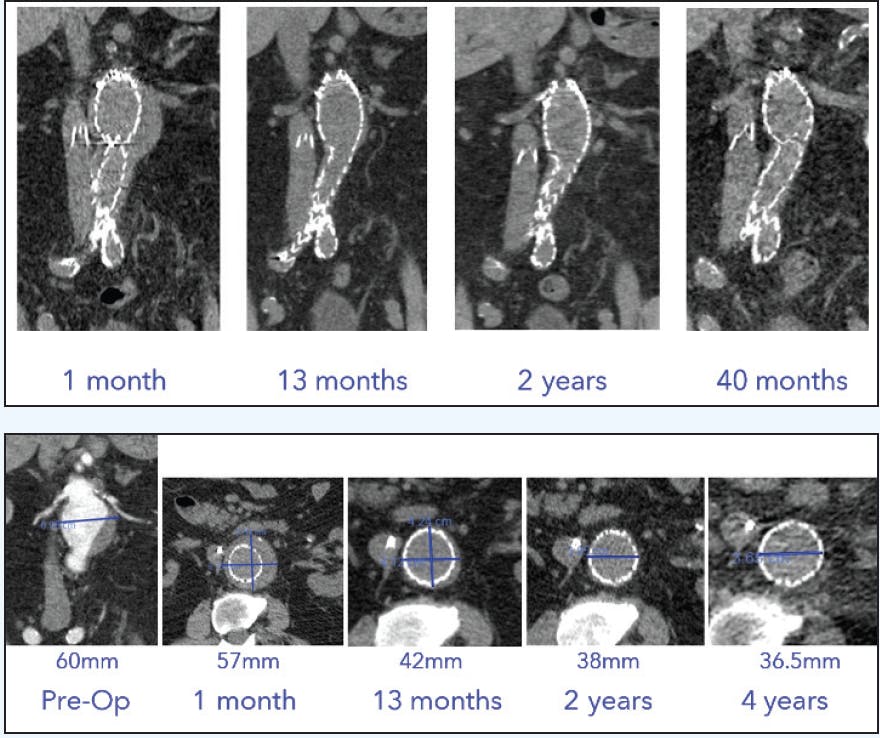
A man in his mid-70s with multiple comorbidities presented with a 6-cm juxtarenal AAA that had increased in size by 12 mm within a year. Patient anatomy included a short (7–8-mm seal zone) and wide (29 mm) proximal neck diameter without angulation. The patient was not a candidate for open repair due to comorbidities and was offered FEVAR but declined due to risk of renal complications. Given the short and wide neck, ESAR was the best option. A 36-mm Endurant graft was selected and eight EndoAnchors were placed at 45° intervals circumferentially.
Images courtesy of Dr. Apostolos K. Tassiopoulos.
We know from the ANCHOR registry analyses that significantly higher rates of sac regression through 2 years can be achieved with the prophylactic use of EndoAnchors (81.1% ± 9.5% vs 48.7% ± 5.9%; [P = .01]). Furthermore, the ANCHOR registry has demonstrated 62% sac regression at 5 years in the primary arm group. Additionally, 89% of the patient population included in the primary arm had hostile neck anatomy. It should also be considered that this primary arm comprised patients who underwent ESAR with a variety of different endografts.12 There is one major question that is worth investigating based on the data generated by the ANCHOR registry: What would be the sac regression rates in patients without hostile necks who undergo ESAR routinely as a prophylactic measure to protect against neck degeneration? In other words, should everyone with suitable anatomy be undergoing ESAR?
I would encourage all physicians to take a closer look at their 12-month EVAR outcomes and sac regression rates. Whereas in the recent past, most modular bifurcated devices were deemed more or less comparable, the elevated bar of sac regression turns the focus back onto surgical technique, choice of endograft, and its idiosyncratic features that may better promote positive aortic remodeling and major sac regression. Factors such as suprarenal or infrarenal fixation, choice of fabric (woven polyester vs expanded polytetrafluoroethylene), precision of deployment (particularly in hostile necks), and adjunctive maneuvers such as ESAR all potentially play contributory roles in determining 12-month AAA sac dynamics.
ESAR is best employed when incorporated at the time of index EVAR to enhance active fixation and seal but also address immediate intraoperative type Ia endoleaks within the instructions for use, guard against ongoing neck degeneration, and protect against episodic and positional compromises in proximal seal. ESAR does not perform as well when used as a stand-alone bailout method once late compromises in the proximal seal have been noted following the index EVAR. In other words, physicians should think of ESAR as a mechanism to enhance proximal seal and protect against neck degeneration for the purposes of promoting sac regression rather than merely an alternative therapeutic method to address delayed type Ia endoleaks.
This leads me to my second major recommendation, which is for physicians to routinely measure neck diameters throughout the EVAR surveillance period. Neck dilatation, even in absence of readily detected type Ia endoleak, and particularly when associated with stable or expanding sacs, can be a major cause for concern in patients with good life expectancy. Under these circumstances, prophylactic ESAR can be a suitable infrarenal therapy either in isolation or in conjunction with proximal cuff reinforcement depending on each patient’s unique anatomy and device configuration. ESAR also has the added advantage of not compromising future attempts at extending proximal seal via custom-made or physician-assembled platforms.
Lastly, although the focus in the literature up to this point has been on evaluating selective use of ESAR in hostile neck anatomies, the discussion surrounding sac regression and 12-month AAA sac dynamics are beginning to shift the focus away from selective use in hostile necks and toward routine incorporation in all suitable anatomies. Beginners to ESAR can begin to employ this technique in a prophylactic manner in nonhostile necks at the time of index EVAR to enhance infrarenal fixation and seal. This can be performed on label with the Endurant stent graft system and several other modular bifurcated platforms. Once comfortable with the delivery and technique, more challenging anatomies such as those with hostile necks can be undertaken within the recommended instructions for use.
In summary, positive aortic remodeling via major sac regression reflects the goal of modern-day EVAR. This process happens within the first 12 months after index EVAR and predicts long-term survival, complication, and reintervention rates. Technical elements of EVAR such as flawless technique, endograft choice, and adjunctive maneuvers for enhanced active fixation and sealing via ESAR are gaining more attention as potential contributory mechanisms to major sac regression. ESAR has been demonstrated to achieve 62% sac regression at 5 years when used prophylactically in hostile necks.12 Preliminary and limited analyses of ANCHOR registry data appear to support prophylactic use to promote greater sac regression through 2 years postimplant compared to standard EVAR alone.1 More robust data on this front are needed to make more stern recommendations about routine prophylactic use.
1. Muhs BE, Jordan W, Ouriel K, et al. Matched cohort comparison of endovascular abdominal aortic aneurysm repair with and without EndoAnchors. J Vasc Surg. 2018;67:1699-1707. doi: 10.1016/j.jvs.2017.10.059
2. O’Donnell TFX, Deery SE, Boitano LT, et al. Aneurysm sac failure to regress after endovascular aneurysm repair is associated with lower long-term survival. J Vasc Surg. 2019;69:414-422. doi: 10.1016/j.jvs.2018.04.050
3. Laczynski DJ, Caputo FJ. Systematic review and meta-analysis of endovascular abdominal aortic repair in large diameter infrarenal necks. J Vasc Surg. 2021;74:309-315.e2. doi: 10.1016/j.jvs.2021.02.043
4. Kouvelos GN, Oikonomou K, Antoniou GA, et al. A systematic review of proximal neck dilatation after endovascular repair for abdominal aortic aneurysm. J Endovasc Ther. 2017;24:59-67. doi: 10.1177/1526602816673325
5. Kouvelos GN, Antoniou G, Spanos K, et al. Endovascular aneurysm repair in patients with a wide proximal aortic neck: a systematic review and meta-analysis of comparative studies. J Cardiovasc Surg (Torino). 2019;60:167-174. doi:10.23736/S0021-9509.19.10869-5
6. Oliveira NFG, Oliveira-Pinto J, van Rijn MJ, et al. Risk factors, dynamics, and clinical consequences of aortic neck dilatation after standard endovascular aneurysm repair. Eur J Vasc Endovasc Surg. 2021;62:26-35. doi: 10.1016/j.ejvs.2021.03.020
7. de Vries JPM, Ouriel K, Mehta M, et al. Analysis of EndoAnchors for endovascular aneurysm repair by indications for use. J Vasc Surg. 2014;60:1460-1467.
8. Deaton DH, Mehta M, Kasirajan K, et al. The phase I multicenter trial (STAPLE-1) of the Aptus endovascular repair system: results at 6 months and 1 year. J Vasc Surg. 2009;49:851-857; discussion 857-858. doi: 10.1016/j.jvs.2008.10.064
9. Mehta, M, Fairman, RM, Deaton, DH, Jordan, WD. STAPLE-2: the pivotal study of the Aptus endovascular AAA repair system - 24 months results. Presented at: 140 Annual Symposium (Society for Clinical Vascular Surgery). March 14-17, 2012; Las Vegas, Nevada.
10. Arko FR 3rd, Stanley GA, Pearce BJ, et al. Endosuture aneurysm repair in patients treated with Endurant II/IIs in conjunction with Heli-FX EndoAnchor implants for short-neck abdominal aortic aneurysm. J Vasc Surg. 2019;70:732-740. doi: 10.1016/j.jvs.2018.11.033
11. ANCHOR 3-yr Short Neck. 2019 data cut. Medtronic data on file.
12. ANCHOR Registry Primary AAA Arm. October 2020 data cut. Data on file at Medtronic.
13. Reyes Valdivia A, Chaudhuri A, Milner R, et al. Endovascular aortic repair with EndoAnchors demonstrate good mid-term outcomes in physician-initiated multicenter analysis-The PERU registry. Vascular. 2022;30:27-37. doi: 10.1177/1708538121992596
14. Melas N, Perdikides T, Saratzis A, et al. Helical EndoStaples enhance endograft fixation in an experimental model using human cadaveric aortas. J Vasc Surg. 2012;55:1726-1733. doi: 10.1016/j.jvs.2011.11.048
15. Deery SE, Ergul EA, Schermerhorn ML, et al. Aneurysm sac expansion is independently associated with late mortality in patients treated with endovascular aneurysm repair. J Vasc Surg. 2018;67:157-164. doi: 10.1016/j.jvs.2017.06.075
16. Lalys F, Daoudal A, Gindre J, et al. Influencing factors of sac shrinkage after endovascular aneurysm repair. J Vasc Surg. 2017;65:1830-1838. doi: 10.1016/j.jvs.2016.12.131
17. Bastos Gonçalves F, Baderkhan H, Verhagen HJ, et al. Early sac shrinkage predicts a low risk of late complications after endovascular aortic aneurysm repair. Br J Surg. 2014;101:802-810. doi: 10.1002/bjs.9516
18. Singh MJ, Fairman R, Anain P, et al. Final results of the Endurant Stent Graft System in the United States regulatory trial. J Vasc Surg. 2016;64:55-62. doi: 10.1016/j.jvs.2015.12.048
19. Teijink J, Power A, van Sterkenburg S, et al. 8-year data from the ENGAGE registry extension: insights about the long-term performance of a contemporary EVAR device. Presented virtually at: ESVS 35th Annual Meeting. September 20, 2021.
Disclosures
Dr. Nassiri: Consultant to Medtronic Aortic, Inc., WL, Gore Inc., Penumbra Inc., and Silk Road Medical; speaker’s bureau for Medtronic Aortic, Inc., Terumo Aortic, Inc., Endologix, LLC, and Penumbra, Inc.; proctor for Medtronic Aortic, Inc., Terumo Aortic, Inc., and Endologix, LLC; regional advisory board for Medtronic Aortic, Inc.; key opinion leader for Terumo Aortic, Inc.; Medical Advisory Board for Endologix, LLC; special government employee, United States FDA, Center for Devices and Radiological Health.
Dr. Milner: Consultant to Endospan, Medtronic, Silk Road, and WL Gore.
Dr. Tassiopoulos: Speakers bureau for Medtronic; proctor and speaker for Terumo Aortic.
Dr. Jordan: Clinical investigator and consultant (paid to Emory) to Gore & Associates, Medtronic, Cook Medical, Endologix, and Terumo.
Dr. Ullery: Consultant to Medtronic and Cook Medical.
Dr. Chen: None.
Endurant™ II / IIs AAA Stent Graft System
Indications for Use: The Endurant™ II/Endurant™ IIs bifurcated stent grafts are indicated for the endovascular treatment of infrarenal abdominal aortic or aortoiliac aneurysms. They may be utilized in conjunction with the Heli-FX EndoAnchor System when augmented radial fixation and/or sealing is required; in particular, in the treatment of abdominal aortic aneurysms with short (≥ 4 mm and < 10 mm) infrarenal necks. The Endurant II Stent Graft System aorto-uni-iliac (AUI) stent graft is indicated for the endovascular treatment of infrarenal abdominal aortic or aortoiliac aneurysms in patients whose anatomy does not allow the use of a bifurcated stent graft. The Endurant II/IIs Stent Graft System is indicated for use in patients with the following characteristics:
- Adequate iliac or femoral access that is compatible with vascular access techniques, devices, or accessories
- Proximal neck length of
- ≥ 10 mm; or
- ≥ 4 mm and < 10 mm when used in conjunction with the Heli-FX EndoAnchor System (bifurcated stent graft only)
Note: Neck length is defined as the length over which the aortic diameter remains within 10% of the infrarenal diameter.
- Infrarenal neck angulation of ≤ 60°
- Aortic neck diameters with a range of 19 to 32 mm
- Distal fixation length(s) of ≥ 15 mm
- Iliac diameters with a range of 8 to 25 mm
- Morphology suitable for aneurysm repair
Contraindications:
The Endurant II/Endurant IIs Stent Graft System is contraindicated in:
- Patients who have a condition that threatens to infect the graft.
- Patients with known sensitivities or allergies to the device materials.
When used with the Heli-FX EndoAnchor system, the Endurant II/IIs stent graft system is also contraindicated in:
- Patients with known sensitivities to the EndoAnchor implant materials.
For contraindications regarding ancillary devices used with the Endurant II/Endurant IIs stent graft system, refer to the Instructions for Use provided with the device.
Warnings and Precautions:
- The long-term safety and effectiveness of the Endurant II/Endurant IIs Stent Graft System has not been established. All patients should be advised that endovascular treatment requires lifelong, regular follow-up to assess the health and the performance of the implanted endovascular stent graft. Patients with specific clinical findings (e.g., endoleaks, enlarging aneurysms, changes in the structure or position of the endovascular graft, or less than the recommended number of EndoAnchors when used in short (≥ 4 mm and < 10 mm) proximal necks) should receive enhanced follow-up. Specific follow-up guidelines are described in the Instructions for Use.
- Patients experiencing reduced blood flow through the graft limb, aneurysm expansion, and persistent endoleaks may be required to undergo secondary interventions or surgical procedures.
- The Endurant II/Endurant IIs Stent Graft System is not recommended in patients unable to undergo or who will not be compliant with the necessary preoperative and postoperative imaging and implantation studies as described in the Instructions for Use.
- Renal complications may occur: 1) From an excess use of contrast agents. 2) As a result of emboli or a misplaced stent graft. The radiopaque marker along the edge of the stent graft should be aligned immediately below the lower-most renal arterial origin.
- Studies indicate that the danger of micro-embolization increases with increased duration of the procedure.
- The safety and effectiveness of the Endurant II/Endurant IIs Stent Graft System has not been evaluated in some patient populations. Please refer to the product Instructions for Use for details.
MRI Safety and Compatibility: Non-clinical testing has demonstrated that the Endurant II/Endurant IIs Stent Graft is MR Conditional. It can be scanned safely in both 1.5T & 3.0T MR systems under certain conditions as described in the product Instructions for Use. For additional information regarding MRI please refer to the product Instructions for Use.
Adverse Events:
Potential adverse events include (arranged in alphabetical order): amputation; anesthetic complications and subsequent attendant problems (e.g., aspiration), aneurysm enlargement; aneurysm rupture and death; aortic damage, including perforation, dissection, bleeding, rupture and death; arterial or venous thrombosis and/or pseudoaneurysm; arteriovenous fistula; bleeding, hematoma or coagulopathy; bowel complications (e.g., ileus, transient ischemia, infarction, necrosis); cardiac complications and subsequent attendant problems (e.g., arrhythmia, myocardial infarction, congestive heart failure, hypotension, hypertension); claudication (e.g., buttock, lower limb); death; edema; EndoAnchor (for infrarenal EVAR procedures using the Heli-FX EndoAnchor system): partial deployment, inaccurate deployment, fracture, dislodgement, embolization, stent graft damage, modelling balloon damage); embolization (micro and macro) with transient or permanent ischemia or infarction; endoleak; fever and localized inflammation; genitourinary complications and subsequent attendant problems (e.g., ischemia, erosion, femoral-femoral artery thrombosis, fistula, incontinence, hematuria, infection); hepatic failure; impotence; infection of the aneurysm, device access site, including abscess formation, transient fever and pain; lymphatic complications and subsequent attendant problems (e.g., lymph fistula); neurologic local or systemic complications and subsequent attendant problems (e.g., confusion, stroke, transient ischemic attack, paraplegia, paraparesis, paralysis); occlusion of device or native vessel; pulmonary complications and subsequent attendant problems; renal complications and subsequent attendant problems (e.g., artery occlusion, contrast toxicity, insufficiency, failure); stent graft: improper component placement; incomplete component deployment; component migration; suture break; occlusion; infection; stent fracture; graft twisting and/or kinking; insertion and removal difficulties; graft material wear; dilatation; erosion; puncture and perigraft flow; surgical conversion to open repair; vascular access site complications, including infection, pain, hematoma, pseudoaneurysm, arteriovenous fistula, dissection; vascular spasm or vascular trauma (e.g., iliofemoral vessel dissection, bleeding, rupture, death); vessel damage; wound complications and subsequent attendant problems (e.g., dehiscence, infection, hematoma, seroma, cellulitis)
Please reference product Instructions for Use for more information regarding indications, warnings, precautions, contraindications and adverse events.
CAUTION: Federal (USA) law restricts this device to sale by or on the order of a physician.
Heli-FX™ & Heli-FX™ Thoracic EndoAnchor™ Systems
Indications for Use: The Heli-FX™ EndoAnchor™ system is intended to provide fixation and sealing between endovascular aortic grafts and the native artery. The Heli-FX™ EndoAnchor™ system is indicated for use in patients whose endovascular grafts have exhibited migration or endoleak, or are at risk of such complications, in whom augmented radial fixation and/or sealing is required to regain or maintain adequate aneurysm exclusion. The EndoAnchor™ implant may be implanted at the time of the initial endograft placement, or during a secondary (i.e. repair) procedure.
Contraindications: Treatment with the Heli-FX™ EndoAnchor™ system is contraindicated for use in the following circumstances:
- In patients with known allergies to the EndoAnchor™ implant material (MP35N-LT)
- In conjunction with the Endologix Powerlink™* endograft
Warnings:
- The long-term performance of the EndoAnchor™ implant has not been established. All patients should be advised endovascular aneurysm treatment requires long-term, regular follow-up visits to assess the patient’s health status and endograft performance. The EndoAnchor™ implant does not reduce this requirement.
- The EndoAnchor™ implant and the Heli-FX™ EndoAnchor™ system have been evaluated via in vitro testing and determined to be compatible with the Cook Zenith™*, Cook Zenith™* TX2™*, Gore Excluder™*, Gore TAG™*, Medtronic AneuRx™, Medtronic Endurant™, Medtronic Talent™ AAA, Medtronic Talent™ TAA, Medtronic Valiant Xcelerant™, Medtronic Valiant™ Captivia™, and Medtronic Valiant Navion™ endografts. Use with endografts other than those listed above has not been evaluated.
- The performance of the EndoAnchor™ implant has not been evaluated for securing multiple endograft components together. Not securing EndoAnchor™ implants into aortic tissue could result in graft fabric damage, component separation, and resultant Type III endoleaks.
- The performance of the EndoAnchor™ implant has not been evaluated in vessels other than the aorta. Use of the EndoAnchor™ implant to secure endografts to other vessels may result in adverse patient consequences such as vascular perforation, bleeding, or damage to adjacent structures.
- The performance of the EndoAnchor™ implant has not been evaluated for securing multiple anatomical structures together. Such use could result in adverse patient consequences such as vascular perforation, bleeding, or embolic events.
MRI Safety and Compatibility:
- The EndoAnchor™ implants have been determined to be MR Conditional at 3T or less when the scanner is in Normal Operating Mode with whole-body-averaged SAR of 2 W/kg, or in First Level Controlled Mode with a maximum whole-body-averaged SAR of 4 W/kg.
- Please refer to documentation provided by the endograft system manufacturer for MR safety status of the endograft system with which the EndoAnchor™ implants are being used.
Potential Adverse Events: Possible adverse events that are associated with the Heli-FX™ EndoAnchor™ system, include, but are not limited to:
- Aneurysm rupture
- Death
- EndoAnchor™ implant embolization
- Endoleaks (Type III)
- Enteric fistula
- Failure to correct/prevent Type I endoleak
- Failure to prevent endograft migration
- Infection
- Renal complications (renal artery occlusion/dissection or contrast-induced acute kidney injury)
- Stroke
- Surgical conversion to open repair
- Vascular access complications, including infection, pain, hematoma, pseudoaneurysm, arteriovenous fistula
- Vessel damage, including dissection, perforation, and spasm
Please reference product Instructions for Use for more information regarding indications, warnings, precautions, contraindications and adverse events. Additional potential adverse events may be associated with endovascular aneurysm repair in general. Refer to the Instructions for Use provided with the endograft for additional potential adverse events.
CAUTION: Federal (USA) law restricts these devices to sale by or on the order of a licensed healthcare practitioner. See package inserts for full product information.
CAUTION: EndoAnchor™ implant locations should be based upon a detailed examination of the preoperative CT imaging in cases involving irregular or eccentric plaque in the intended sealing zones. EndoAnchor™ implants should be implanted only into areas of aortic tissue free of calcified plaque or thrombus, or where such pathology is diffuse and less than 2mm in thickness. Attempting to place EndoAnchor™ implants into more severe plaque or thrombus may be associated with implantation difficulty and suboptimal endograft fixation and/or sealing.
UC202303804 EN ©2022 Medtronic. All rights reserved. Medtronic, Medtronic logo and Engineering the extraordinary are trademarks of Medtronic. All other brands are trademarks of a Medtronic company. For distribution in the USA only. 08/2022
Advertisement
Advertisement