Advertisement
Advertisement
August 2022
Extensive IVC and Iliac Vein DVT in the Presence of a Permanent IVC Filter
Moderator: Karem Harth, MD, MHS, RPVI;
Panelists: Avianne Bunnell, MD, RPVI; Omar Chohan, DO; and Sara M. Edeiken, MD, RPVI
CASE PRESENTATION
A female patient in her 50s with untreated HIV and recent noncompliance presented after a fall from standing due to sudden dizziness, abdominal pain, leg pain, and swelling. The patient reported only recent mild right leg swelling more than the left with no prior history of leg thrombosis. There was no evidence of trauma. She had L4-S1 spinal canal stenosis with disc extrusion and facet hypertrophy on her spine MRI, which was part of her workup in the emergency department.
The medical history was notable for a retropharyngeal infection treated 1 month ago with oral antibiotics and remote trauma history requiring laparotomy and placement of a permanent inferior vena cava (IVC) filter.
The physical exam was notable for a heart rate around 90 bpm, blood pressure ranging from 80s to 100/70 mm Hg, oxygen saturation of 97% on room air, a healed midline laparotomy, and leg edema in the right leg greater than the left from the dorsum of the foot to the inguinal crease. She had pain and streaking along the course of the right great saphenous vein consistent with superficial phlebitis. Pulses and neurologic examination were intact. Results of laboratory testing were remarkable for mild acute kidney injury (AKI) with a glomerular filtration rate (GFR) of 55 mL/min/1.73 m2 and an elevated HIV-1 RNA polymerase chain reaction.
Given the patient’s history, what imaging modality would you additionally obtain, and what is your initial medical management of this patient?
Dr. Bunnell: This is a patient with an acute syncopal episode, leg swelling, abdominal pain, and shortness of breath with hypotension. She has evidence of phlebitis and symptoms concerning for concomitant deep vein thrombosis (DVT) and possibly pulmonary embolism (PE). She has a complicated medical history including a known permanent IVC filter and recent infection. Additionally, HIV is known to be associated with an increased risk of lower extremity DVTs, especially when titers are not well controlled with vigilant treatment compliance.1 Additional lab work, including brain natriuretic peptide, a full chemistry panel, and complete blood count to assess platelet count is indicated. Additional imaging should include bilateral lower extremity venous ultrasound, CTA of the chest, an echocardiogram, and noncontrast CT of the abdomen and pelvis. These will assess for DVT, PE, cardiac strain, and possible intra-abdominal etiologies of her symptoms. Given the patient’s fall, a noncontrast CT of the head to assess for intracranial bleeding is also warranted. This is important to determining her candidacy for anticoagulation. Based on her symptoms, there is enough suspicion of a thrombotic event to start anticoagulation with heparin infusion while the workup is underway. Her AKI places her at increased risk of further kidney injury with contrast exposure. However, with the severity of her symptoms and urgent need for diagnosis, the benefits likely outweigh the risks. Alternative imaging in nonemergent scenarios may include a ventilation/perfusion (V/Q) scan with D-dimer levels. Optimal medical management will also include leg compression therapy, starting at the toe pads and extending to the high thighs, as well as leg elevation above the level of the heart. She will also benefit from a consultation with the spine service to assess the spinal cord pathology noted on MRI.
Dr. Chohan: The case patient will need a CT of the abdomen and pelvis with contrast, as well as a bilateral lower extremity venous Doppler ultrasound. I think it is important to understand the extent of DVT as well the characteristics of the IVC filter. Is there thrombus above the filter, trapped within, or just below? How is the filter positioned? Are there any penetrating limbs? Imaging will also provide an idea if the thrombus is causing significant inflammation since she has some degree of superficial phlebitis. A therapeutic dose of enoxaparin is an ideal choice given both the anticoagulant and anti-inflammatory properties of low-molecular-weight heparin.
Dr. Edeiken: HIV infection is a prothrombotic condition that can be exacerbated by an opportunistic infection. The clinical examination and history are concerning for superficial thrombophlebitis as well as DVT. With a known IVC filter, abdominal pain, and thigh edema, iliocaval thrombus should also be considered. Venous duplex ultrasound would be an appropriate initial investigative tool, but in this patient, a CT venogram of the abdomen and pelvis would provide additional information on the iliac veins and IVC. Given the history of a fall from standing, dizziness, and relative hypotension, a CTA PE protocol would be reasonable. A V/Q scan could be considered given the mild AKI, but the CTA PE protocol would be the preferred modality. In this high-risk patient, a negative D-dimer would not defer the need for imaging and thus should not be ordered.
If the studies are positive for DVT and/or PE, I would initiate therapeutic anticoagulation with a dose of therapeutic enoxaparin at 1 mg/kg and then transition to a weight-based unfractionated heparin intravenous infusion in 12 hours, following serial partial thromboplastin time or anti-Xa levels for dose adjustments. Enoxaparin dosing is easily calculated, and the medication is typically available in the emergency department or ward Pyxis MedStation (BD) without requiring dispensing from the inpatient pharmacy. This avoids delays associated with unfractionated heparin infusion initiation, which can sometimes amount to several hours due to the need to wait for laboratory results, pharmacy service orders, and pharmacy dispense.
Assuming stable vital signs and no further hypotension, the patient should be admitted to a floor bed for monitoring and hydration. Adjunctive treatment should also be initiated, including leg elevation and compression with gauze roll and elastic bandages with a half-strength stretch extending from forefoot to thigh. Persistent hypotension or a change in oxygen saturation levels should result in a low threshold for intensive care unit (ICU) admission. In the current era, polymerase chain reaction testing for COVID-19 should also be considered.
CASE CONTINUED
Orthopedic spine surgery concluded that acute surgical intervention for her spinal stenosis was not required. There was no evidence of PE on imaging, and the result of a COVID-19 test was negative. She was admitted for heparin management, hydration, and evaluation for possible venous intervention. CT of abdomen and pelvis and ultrasound of the lower extremities were obtained (Figure 1 and Figure 2), which were notable for presence of an IVC filter (VenaTech, B. Braun) with thrombosis from just above the filter, down both legs. Duplex ultrasound confirmed the presence of extensive DVT in the femoral and popliteal segments (not shown). The patient’s creatinine worsened over 24 hours with a GFR of 23 mL/min/1.73 m2. Her legs remained edematous and painful despite anticoagulation, elevation, and compression.
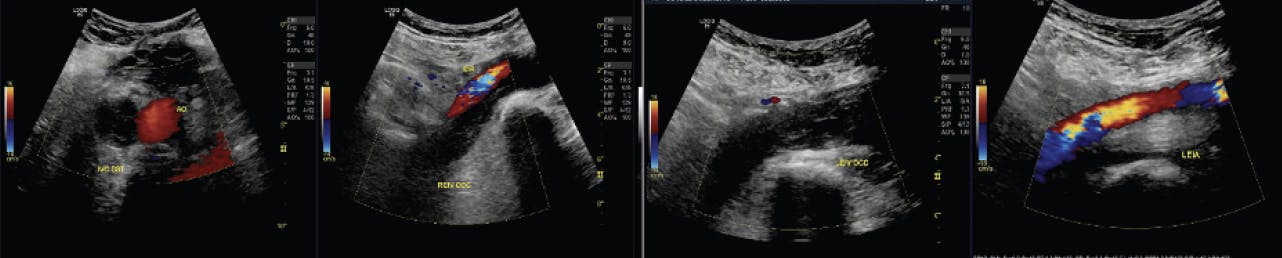
Figure 1. Duplex ultrasound of the IVC and bilateral external iliac veins with no flow and acute thrombus.
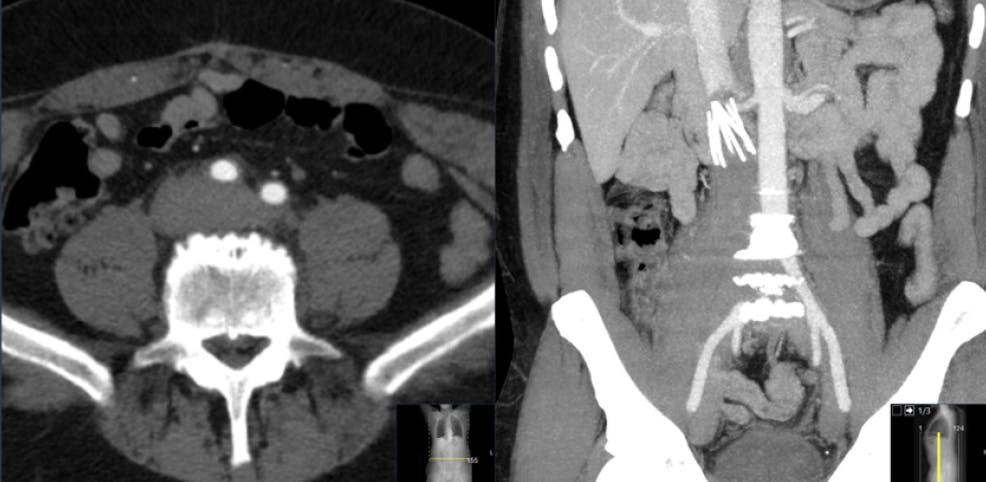
Figure 2. CT with contrast of the abdomen and pelvis with evidence of thrombosis of IVC and bilateral iliac vein systems and the presence of a VenaTech IVC filter. Thrombus appeared to extend just above IVC filter. The suprarenal IVC appeared patent.
What clinical considerations would you have as a venous proceduralist as you approach this case? Are there any timing considerations? Would you offer venous intervention, and if so, how would you approach this case (open or endovascular, single stage, or lytics)? If using an endovascular approach, what access and positioning would you choose?
Dr. Edeiken: In the setting of iliocaval thrombus and an occluded IVC filter, without intervention, this patient is at risk for developing postthrombotic syndrome (PTS). However, in the absence of phlegmasia, intervention should be deferred a few days to allow renal function to improve. I would approach this endovascularly with percutaneous mechanical thrombectomy. Catheter-directed thrombolysis (CDT) is an option but unlikely to completely resolve the thrombus given the significant burden. Additionally, this would require ICU admission, and I would also be concerned about the possibility of embolization due to the thrombus extending above the filter. In most situations in the current era, open thrombectomy should be reserved for phlegmasia and failure of endovascular management.
Because the thrombus extends above the filter, distal embolization to the pulmonary arteries is a risk with any intervention and requires consideration of protection from above. This can be accomplished with internal jugular vein (IJV) access and temporary suprarenal IVC filter placement, balloon occlusion, or FlowTriever (Inari Medical) nitinol mesh disks. Access for intervention should be approached from the bilateral popliteal veins with the patient in prone position; IJV access can also be used for through-and-through wire access with a stiff wire such as Amplatz once popliteal access is achieved.
Dr. Chohan: One of the pressing clinical factors to consider is the patient’s declining renal function. Flow must be restored soon, and lytics will be too time consuming. Percutaneous mechanical thrombectomy or pharmacomechanical thrombectomy would be good options, and I would favor mechanical thrombectomy. Endovascular options are safe, and I don’t think converting to an open approach would be necessary. The patient needs to get to the lab quickly. I would perform a staged procedure, first to remove thrombus (single day or two) and then to focus on the IVC filter removal. I would place the patient in the prone position to access bilateral popliteal veins. Anesthesia support is ideal for this case.
Dr. Bunnell: The patient has bilateral iliofemoral DVT with caval thrombosis to the level of the IVC filter. She has worsening symptoms but no phlegmasia. It is important to consider her relatively young age and long-term prognosis with such extensive thrombotic disease as well as the progression of symptoms despite anticoagulation. Recent literature, including the ATTRACT trial,2 suggest that there is a high overall incidence of PTS after acute DVT (48%), but no significant difference in incidence of PTS was noted when comparing anticoagulation alone to pharmacomechanical CDT (PCDT). However, there is a notable decrease in severity of PTS symptoms with PCDT in addition to anticoagulation, and there is a substantial difference in major bleeding events (1.7% with PCDT vs 0.3% with anticoagulation alone). It is important to provide patients with these data to allow them to make an informed decision about their care. In this case, the patient would be considered for venography with mechanical thrombectomy. There has not been substantial time since symptom onset, and therefore intervention may be delayed for a few days (no longer than 10-14 days after symptom onset) to allow renal function to improve before surgery. Positioning for the procedure would be prone with access through the popliteal veins bilaterally as well as access through the IJV, placed before prone positioning. Using intravascular ultrasound (IVUS) limits excessive contrast administration, which is important as her renal function has deteriorated. Options for intervention include use of PCDT with dual catheters extending down the legs bilaterally, mechanical thrombectomy, or a combination of these approaches. The goal is to alleviate the clot burden through the filter and down in the femoral veins, ideally recovering flow through the profunda veins as well. Intraoperative use of an IVC filter placed above the level of the renal veins and removed at the case completion has also been described. In the absence of PE, signs of heart strain, or severe heart failure, there is no clear indication for a long-term suprarenal IVC filter to be placed. These additional risk factors would otherwise suggest that the incidence of a PE may leave the patient at significantly high mortality risk, making long-term filter placement beneficial. Once the clot burden has been removed, IVUS of the iliac veins to assess for venous compression is important. If this is discovered, iliac venous stenting would be indicated. Additional overnight CDT with tissue plasminogen activator is often valuable after mechanical thrombectomy to alleviate the residual clot burden along the venous valves and in the lower legs. This patient’s complex medical history also places her at increased risk for rethrombosis in the future, and for this she will need counseling.
If phlegmasia were present, immediate intervention would be suggested, either through open surgical thrombectomy versus endovascular thrombectomy via supine positioning with IJV and posterior tibial vein access. This approach would allow for more thorough removal of the distal popliteal venous thrombus. Also, four-compartment fasciotomy should be performed as a standard since the prevalence of compartment syndrome after phlegmasia is substantial.
CASE CONTINUED
The patient’s renal function was monitored closely and recovered over the next few days to a GFR of > 70 mL/min/1.73 m2, and the heparin drip remained therapeutic with elevation, compression, and sequential compression device (SCD) ongoing. Multiple counseling sessions occurred regarding the extent of the problem and need for medical compliance for all her medical problems to optimize success. Endovenous intervention proceeded in the hybrid suite with anesthesia and three access points: a 5-F sheath was placed in the right IJV while supine, and then the patient was placed prone and access was achieved to the bilateral popliteal veins under ultrasound guidance (Figure 3). Venography confirmed thrombosis from just above the IVC filter down to the lesser trochanter on the left leg and down to the above-knee popliteal vein on the right (Figure 3). The patient was fully heparinized to an activated clotting time twice baseline and maintained there for the remainder of the case. Amplatz wires were ultimately placed for intervention from the popliteal vein access points.
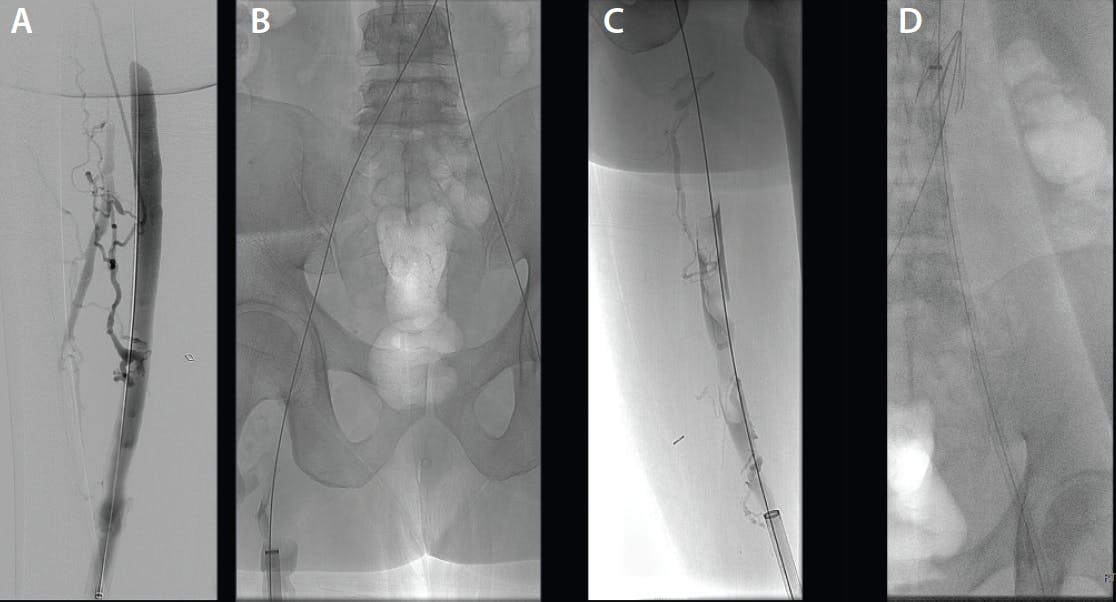
Figure 3. Initial bilateral venogram in prone position showing static column of open femoral popliteal vein segment with occluded common femoral vein and profunda on the left (A), bilateral access with placement of stiff wires for intervention (B), notable thrombus burden at right femoral popliteal vein segment (C), and wires crossing the IVC filter (D).
What is your approach to extensive DVT in the setting of a permanent IVC filter? What is your technique, and what are your criteria for device selection? How do you decide on the need for and timing of IVC filter removal?
Dr. Bunnell: Again, options for intervention include the use of PCDT with dual catheters extending along bilateral femoral veins, mechanical thrombectomy, or a combination of these approaches. In a patient with an indwelling IVC filter, the use of mechanical thrombectomy is complicated. Aspiration catheter systems such as the Indigo system with CAT12 Lightning catheter (Penumbra, Inc.) can be helpful but may fail to remove as much of the clot burden along the vein wall and interstices of the filter. In these cases, I have found success with additional overnight CDT. The ClotTriever (Inari Medical) mechanical thrombectomy system is contraindicated in the setting of existing IVC filters. However, alternative options include attempted removal of the filter or use of the FlowTriever system. The AngioJet pharmacomechanical thrombectomy system (Boston Scientific Corporation) is an option but is associated with increased red blood cell lysis, which places the renal function at further risk. Therefore, selection of the appropriate modality is patient specific. In my practice, this case would likely be addressed using the FlowTriever system.
As previously mentioned, placement of an IVC filter above the level of the renal veins with subsequent removal at case completion has been reported, but there is no indication for placement of an additional permanent IVC filter. After managing the clot burden, IVUS of the iliac veins can be performed to evaluate venous compression, and if present, iliac venous stenting should be performed. Additional overnight lytic therapy can help alleviate the residual clot burden along the venous valves and in the legs.
The existing IVC filter is a permanent filter with no retrieval hook and has been in place for years, likely forming adherent scar tissue to the caval wall. Removal of this device would be complicated and may include attempted snaring (unlikely to be successful), angioplasty, and/or stenting alongside the filter. These approaches have a high risk of intraoperative caval injury and short-term rethrombosis. Open surgical resection would be highly morbid and associated with increased mortality. In this case, I would advise the patient to leave the filter in place in the absence of further filter-related complications.
Dr. Edeiken: After suprarenal protection as previously discussed, initial ascending venography via bilateral popliteal vein access should be performed to confirm the extent of the thrombus and ensure no changes have occurred since prior imaging, Percutaneous mechanical thrombectomy can then be performed in a proximal to distal (popliteal to caval) manner. In this setting, I would use either FlowTriever or Lightning CAT12. The former has the benefit of reducing blood loss with the use of the FlowSaver adjunctive device (Inari Medical). The ClotTriever is not an option in this case due to the presence of the IVC filter. Acuity of the thrombus can play some role in device selection; I have found that the Lightning CAT12 can be helpful in the setting of occlusion with more chronic features.
The decision for filter removal depends on a range of factors, including presence and degree of stenosis on venography, type of filter, length of dwell time, and other associated filter complications such as fracture or strut perforation into adjacent structures. The likelihood of patient compliance in the future is also a consideration in some cases. The VenaTech filter is somewhat unique; unlike most filters that use anchoring struts, it uses radial force and subsequent caval wall incorporation to secure its position. Like many filters, they can be associated with fibrin deposition and caval stenosis/occlusion. Although there are reports of endovascular removal, open explant is likely more common. Given the prior history of trauma and laparotomy, the potential for a hostile abdomen in this patient should be carefully considered, in conjunction with the other factors listed above, before deciding on filter removal.
Dr. Chohan: Lytics alone will take too much time. The AngioJet is not an option with given the AKI. Because the filter is already in place, the ClotTriever isn’t an ideal choice. I’m left with the Lightning CAT12 or FlowTriever systems. I would choose bilateral popliteal access and take a few passes with CAT12 (I’d rather keep access profiles low) from each side, then clean up the clot around the filter. If the filter is not a significant source, you can probably wait a while to take it out until the patient recovers. Although, if the filter has unretrievable organized clot or has caused stenosis/occlusion, you might be pressed to remove the filter sooner in a staged fashion, probably during the same admission. If the patient can wait to have the filter removed, I would place them on oral anticoagulation and follow-up in 1 to 2 months to see how anticoagulation was tolerated. IVC filter removal would then be performed if anticoagulation was tolerated.
CASE CONTINUED
Bilateral popliteal vein access was upsized ultimately to 20-F sheaths for FlowTriever20 suction thrombectomy. The procedure was guided by venography and IVUS (latter not shown) to achieve thrombus clearance from the top of the filter down to bilateral popliteal veins (Figure 4). During the case, any blood loss was returned to the patient using the FlowSaver filter system. Completion IVUS imaging showed an open IVC filter with approximately 40% stenosis around the IVC filter, but no other compression point was identified as a culprit lesion along the iliocaval segments. No protamine was given, sheaths were removed, and pressure was held with good hemostasis. Compression, SCD, and anticoagulation were continued with immediate notable decrease in lower extremity tissue edema, and the patient reported resolution of pain by postprocedure day 1. On short-term follow-up, the patient remained without leg edema or pain and with good medical compliance of both her HIV medications and anticoagulants.
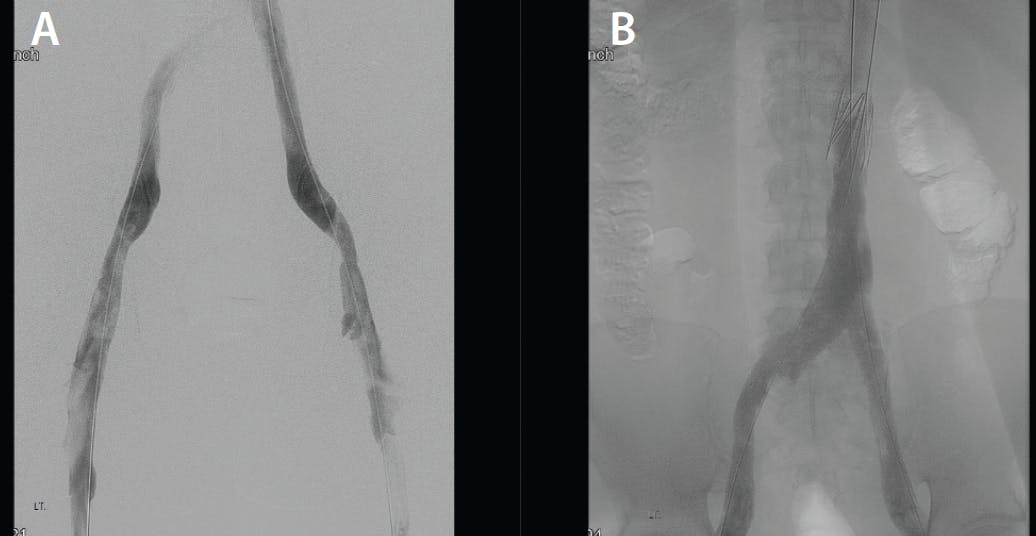
Figure 4. Completion venogram with reconstitution of the IVC, bilateral femoral veins (A), and iliac veins/IVC (B) with brisk emptying.
What is your approach to anticoagulation in these patients? What is your surveillance strategy?
Dr. Chohan: Most of my patients presenting with IVC filter–related venous thrombosis are already on some form of anticoagulation because of their DVT history. In most cases, these filters were placed because of prior trauma or previous surgery necessitating DVT prophylaxis or brief episodes in which anticoagulation was not tolerated, and these filters were forgotten about. I believe these patients will at least need 3 months of anticoagulation and a hematologic workup to determine genetic risk factors for developing DVT. If no other risk factor is determined and DVT can be assumed to be related to the IVC filter, removal of the filter and cessation of anticoagulation can be considered. However, if stenting is required, then these patients will be on extended anticoagulation therapy for at least 1 year with consideration to switch to low-dose anticoagulation or aspirin. In general, I see my patients at 1 week; at 1, 3, 6, and 12 months; and then annually thereafter.
Dr. Bunnell: Once the patient has demonstrated stable symptom improvement with no access site complications and a thorough thromboembolic workup has been completed, she should be converted to an oral anticoagulant that is affordable and one with which they are more likely to remain compliant. Warfarin requires dosing adjustments and frequent blood draws for international normalized ratio (INR) testing. However, it is generally affordable, and if INR levels are therapeutic, efficacy can be expected. Direct oral anticoagulants (DOACs) such as apixaban and rivaroxaban do not require blood titers and have notably better compliance rates. The patient should therefore be started on aspirin 81 mg daily and a DOAC prior to discharge, along with instructions for leg elevation, compression, exercise, and education regarding PTS. She should also be counseled against the use of tobacco products, as this is associated with increased risk of additional thrombotic events. Close follow-up is warranted at 2 weeks to assess the access sites and symptom improvement, followed by repeat venous duplex ultrasound within 6 months (or sooner if symptoms return/evolve). This would be followed by surveillance every 6 months to 1 year. The patient has an unprovoked iliofemoral DVT with residual caval stenosis at the site of a chronically indwelling IVC filter, and long-term anticoagulation would be recommended, possibly for life. If venous stenting is required, long-term anticoagulation would be recommended as well, regardless of whether the DVT was provoked or unprovoked. Referral to a hematologist may be helpful for further risk stratification and management of anticoagulation. This is, of course, in the absence of the development of contraindications for systemic anticoagulation.
Dr. Edeiken: In this patient, I would recommend a minimum of 6 months of anticoagulation therapy with an oral anticoagulant once all procedures have been completed. However, given the prothrombotic milieu associated with HIV infection, elevated viral load and/or low CD4 count, thrombotic events associated with highly active antiretroviral therapy (HAART) (especially protease inhibitors), and history of noncompliance, there is an argument to be made for lifelong therapy in a patient who presented with such extensive clot burden and persistent stenosis associated with the IVC filter.
Due to significant drug interactions with HAART, I would avoid warfarin in this patient. DOACs are a better option, although they may require a dose reduction due to potentiation with some antiretroviral medications. Enoxaparin could also be considered if oral options were exhausted or based on patient preference.
I would repeat imaging for this patient with CT venography in 3 to 6 months. Recurrent thrombosis, increasing stenosis, or other filter complications should lead to further consideration of filter removal.
APPROACH OF THE MODERATOR
Following any complex deep venous work, I treat with a minimum of 1 month of enoxaparin 1 mg/kg twice daily subcutaneously. This requires consideration of cost, patient ability to administer shots, and renal function. I have a long discussion with the patient regarding this plan prior to intervention so that there is clear communication and no surprises occur on either end postprocedure. In this case, once the patient understood the gravity of her situation, she conveyed commitment to future compliance to ensure the best possible outcome. I then see the patient at 1 month with a bilateral leg duplex ultrasound and IVC/iliac vein duplex ultrasound to evaluate waveform pattern and patency. At this junction, I would transition to twice-daily DOAC with apixaban given a more predictable absorption and lower bleeding risk profile. I have learned from my vascular medicine colleagues that while once-daily rivaroxaban is an easier medication in terms of compliance, the patient must take it with meals or absorption can be significantly decreased if taken on an empty stomach. When no stents are placed (as in this case), I additionally would see the patient back at 3 and 12 months for a clinical visit and continue anticoagulation. If the procedure involves stenting for reconstruction, I see them with a duplex ultrasound of the stents at 3, 6, and 12 months and annually thereafter. I prefer a minimum of 1 year of anticoagulation, and the decision for lifelong therapy would depend on factors including hypercoagulable workup results and any concern for stent or IVC filter stenosis. The decision and timing for the permanent IVC filter in this case was to do it in a staged fashion. I want to ensure good medication compliance (both HIV and anticoagulation), as this may require stenting at the time of filter retrieval.
For the presented case, the panelists discussed excellent points that are important to consider in these complex and extensive cases. These relate to (1) assessment of the urgency or stability of the patient and consideration to all organ systems when deciding on appropriate timing of intervention, (2) consideration to the precipitating factors leading up to the thrombotic event, (3) device selection and considerations, (4) long-term compliance with anticoagulation and drug-drug interactions that need to be tailored to each patient, (5) decision to perform a staged approach in the setting of an IVC filter, and (6) long-term management and surveillance strategies. Thanks to our panel for their insightful input and expertise into this case!
1. Saber AA, Aboolian A, LaRaja RD, et al. HIV/AIDS and the risk of deep vein thrombosis: a study of 45 patients with lower extremity involvement. Am Surg. 2001;67:645-647.
2. Vedantham S, Goldhaber SZ, Julian JA, et al. Pharmacomechanical catheter-directed thrombolysis for deep vein thrombosis. N Engl J Med. 2017;377:2240-2252. doi: 10.1056/NEJMoa1615066
Advertisement
Advertisement