Advertisement
Advertisement
February 2022
Sponsored by Medtronic
CAS Technical Considerations Using the Mo.Ma Ultra™ Proximal Cerebral Protection Device
A case example describing use for neuroprotection in a patient at high risk for carotid surgery.
Carotid artery disease is a progressive atherosclerotic condition in which the carotid artery is narrowed and, if plaque ruptures, an ischemic ocular or cerebral event occurs. Older age, active tobacco use, diabetes, and hypertension are common risk factors for carotid artery stenosis.1 Carotid artery disease affects up to 3% of individuals aged > 60 years and up to 7% of individuals aged 75 to 79 years.1 The presence of carotid stenosis increases the risk of stroke, as approximately one-third of all strokes are related to carotid stenosis.2 The global burden of stroke has been increasing and accounts for 10% of all deaths worldwide.3
At our institute, indications for revascularization include stenosis > 50% for symptomatic patients and select patients with a tight stenosis > 80%, perceived high long-term risk of stroke (determined mainly by imaging criteria), and life expectancy > 2 years, in alignment with present guidelines.4,5 Current revascularization strategies for carotid stenosis include carotid endarterectomy (CEA) and carotid artery angioplasty and stenting (CAS). CAS is a minimally invasive procedure that has emerged as an alternative for patients who are considered at high risk for surgical procedures due to medical comorbidities or high-risk anatomic features. Many trials have been conducted to explore the safety of CEA and CAS. A recent meta-analysis of 20 randomized controlled trials (RCTs)—including CREST, EVA-3S, and SPACE I—provided the historical context of relevant carotid studies published through 2016.6 In this study, a significantly higher perioperative death/stroke rate was found after CAS, especially in symptomatic patients. However, these RCTs were conducted before the use of newer-generation stents and the broader use of proximal protection. Furthermore, it was suggested that not only the type of stent but also physician experience, patient selection, and optimal embolic protection played a role in the safety of CAS procedures. As such, optimizing embolic protection may be important for improving periprocedural outcomes as well as to improve long-term outcomes such as cognitive function for patients after CAS.7
A variety of embolic protection strategies have been developed to improve the safety of CAS, including distal filter devices and proximal embolic protection devices. The Mo.Ma Ultra™ proximal cerebral protection device (Medtronic) is a commercially available balloon system that allows temporary occlusion of the common carotid artery (CCA) and the external carotid artery (ECA) by using a dual inflation system to establish proximal cerebral protection (Figure 1).

Figure 1. Mo.Ma Ultra proximal cerebral protection device components (A). Preparation of the device prior to access (B, C).
Two large prospective studies have shown the safety and efficacy of the Mo.Ma Ultra device in high-risk patients who need to undergo CAS.8,9 First, in a prospective registry analysis of 1,300 consecutive patients that included 28% symptomatic patients, Stabile et al reported a 30-day stroke and death rate of 1.4% after CAS with Mo.Ma Ultra device proximal protection.8 Second, the ARMOUR trial that enrolled 262 patients, 15% of whom were symptomatic, showed a combined 30-day myocardial infarction, stroke, and death rate of 2.7% and an impressive 30-day major stroke rate of 0.9%, demonstrating the safety and effectiveness of Mo.Ma Ultra device proximal protection.9 The following case report highlights the use of Mo.Ma Ultra device during CAS for a challenging symptomatic case.
CASE EXAMPLE
Patient Presentation
A man in his mid-60s who had a history of coronary artery disease (CAD) with a depressed ejection fraction (EF) of 30%, poorly controlled hypertension, active tobacco use (1-2 packs per day), anxiety, chronic obstructive pulmonary disease (COPD), and prior cervical and lumbar spine surgeries presented to the emergency department with a sudden loss of vision to the left eye. On questioning, he noted a separate nonpainful episode of left eye blindness 1 month before this presentation that lasted a few minutes. He described “sheets coming down,” with temporary blindness 3 days before presentation. Then, 2 days before, he had another episode that lasted only a few minutes. He experienced a “row of circular spots” with missing images, and the vision returned without any residual deficits.
He was admitted for a stroke workup and an ophthalmology evaluation. During the workup, MRI demonstrated a > 95% left internal carotid artery (ICA) stenosis. This was confirmed with duplex ultrasound sonography, demonstrating a left ICA peak systolic velocity (PSV) of 585 cm/second, with an end-diastolic velocity of 277 cm/second and an internal-to–common carotid ratio of 8.1:1. The right ICA had a < 50% stenosis, with a PSV of 155 cm/second. Notably, the patient had been chronically on aspirin (81 mg daily) but took himself off before a back surgery 2 months before admission and never resumed. On admission, he was on neither antiplatelet nor statin therapy. Ophthalmology ruled out a retinal etiology for the vision loss and corroborated the working diagnosis of ischemia due to the critical left ICA stenosis.
Two-dimensional echocardiography demonstrated an EF of 30%, moderately decreased left ventricular systolic function, and akinesis within the midanteroseptal, apical septal, and apex. A cardiology evaluation estimated his risk for an adverse cardiac outcome (eg, myocardial infarction, pulmonary edema, ventricular fibrillation, cardiac arrest, complete heart block) with carotid surgery to be high, at 11% (Revised Cardiac Risk Index [Lee criteria10]). Given this patient’s CAD, depressed EF of 30%, COPD, and prior cervical surgery, the decision was made to proceed with CAS of his left ICA using the Mo.Ma Ultra device for proximal neuroprotection under local anesthesia. He was loaded with 300 mg of clopidogrel, restarted aspirin at a dose of 81 mg daily, and received high-dose statin therapy. After 48 hours, a P2Y12 reaction unit (PRU) test was done to confirm adequate antiplatelet effect by clopidogrel.
CAS and Proximal Embolic Protection: Step By Step
Prior to achieving access, the Mo.Ma Ultra device was flushed, and the external and common carotid balloons were prepared with < 2 mL half-strength contrast. Additionally, the 0.014-inch wire that was used to cross the lesion and stent was flushed, and the predilatation balloon was prepared on an insufflator. These were stacked on the end of the table in the order that they were planned to be delivered, with wet towels separating the components: the crossing 0.014-inch wire on top, followed by the predilatation balloon, and then the stent.
After ultrasound-guided access of the common femoral artery (CFA), the transition between the 21-gauge needle and 0.018-inch wire provided a landmark access in the medial third of the femoral head (Figure 2A). A sheathogram through a 6-F sheath further confirmed CFA access before placement of 9-F sheath (Figure 2B). This access was closed at the end of the case with one Perclose™* suture (Abbott) without reversing the heparin. Additionally, the patient was on dual antiplatelet regimens. When CFA access was confirmed, the patient was given an intravenous heparin bolus to reach an activated clotting time of 250 to 300 seconds. Continuous arterial blood pressure (BP) was measured through the 9-F access during the case (P1).
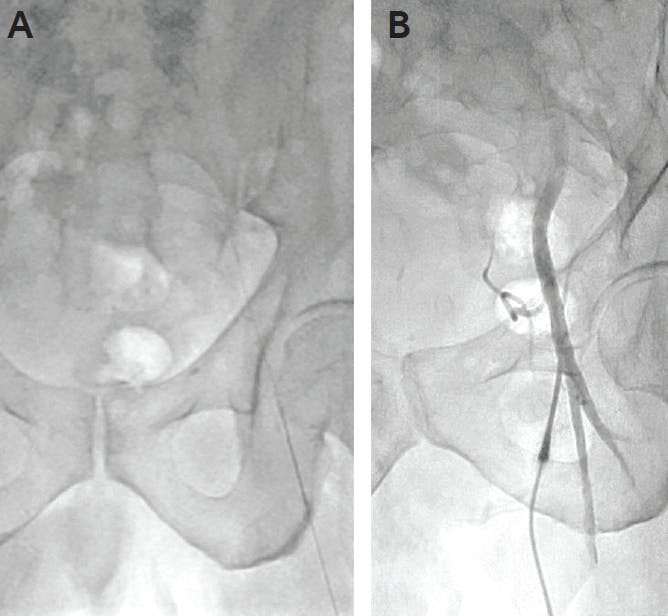
Figure 2. Ultrasound-guided access of the CFA (A). Confirmation of CFA access with a sheathogram (B).
After reaching appropriate activated clotting times, a 5-F Berenstein™* catheter (Merit Medical) was used to cannulate the left CCA without a wire, taking care to avoid dragging the tip of the catheter on the aortic arch, minimizing the risk of arch plaque embolization (Figure 3). Digital angiography was used preferentially over digital subtraction angiography for accessing the arch vessels to reduce the amount of radiation. Injection of 1 to 2 mL of contrast material and digital angiography confirmed cannulation of the left CCA (Figure 4A). The manifold was “de-aired” before the injection to reduce the risk of any air bubbles. A 35° ipsilateral oblique projection opened the carotid bifurcation to visualize the lesion and cannulation of the ECA (Figure 4B). The ECA was then cannulated with a nonstiff, hydrophilic 0.035-inch wire. Then, a 5-F Berenstein catheter was used to exchange for a Supra Core™* wire (Abbott), which supported the delivery of the Mo.Ma Ultra proximal cerebral protection device into the CCA.
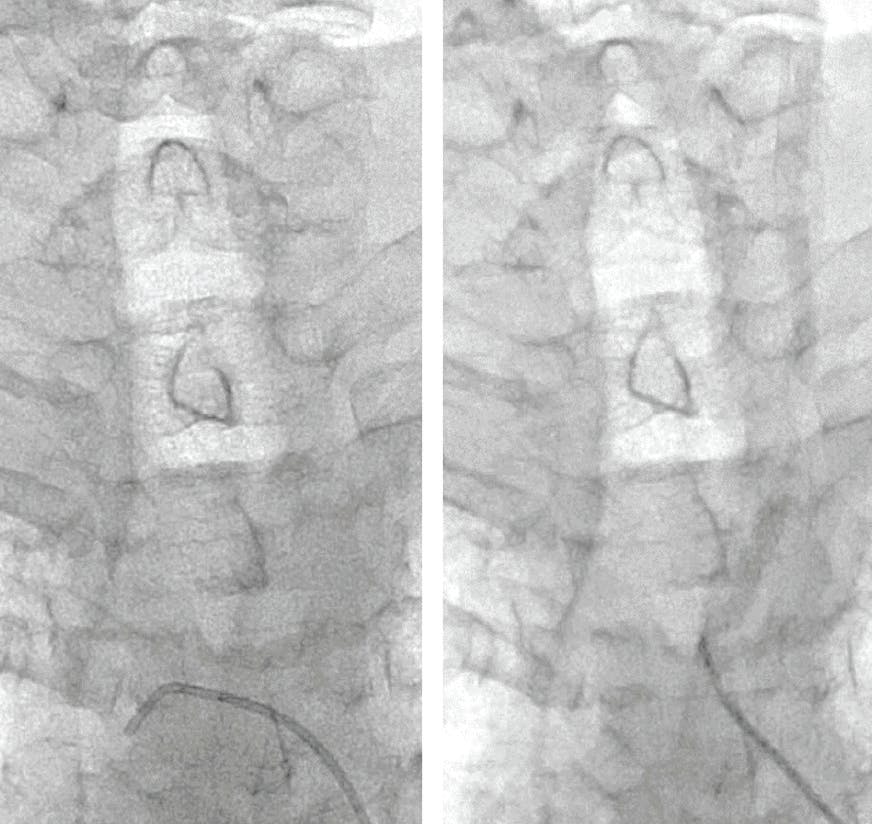
Figure 3. Cannulation of the left CCA with a 5-F Berenstein catheter.
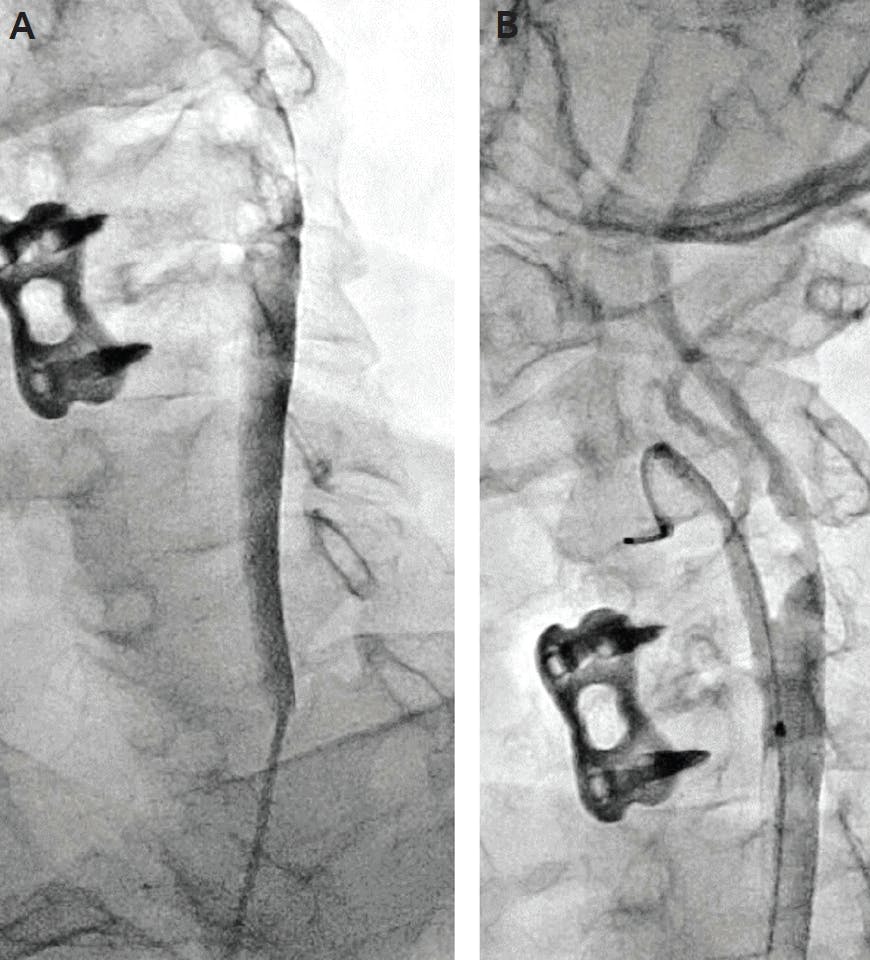
Figure 4. Digital angiography confirms cannulation of the left CCA (A). The ECA was cannulated with a nonstiff, hydrophilic 0.035-inch wire, and then a 5-F Berenstein catheter was used to exchange for a Supra Core wire to support the Mo.Ma Ultra device delivery into the CCA (B). Note the C4/C5 hardware from the previous spine surgery.
Anteroposterior (AP) digital subtraction angiography (DSA) confirmed patency of the left ICA distal to a 95% proximal left ICA stenosis and filling of the left middle cerebral artery (Figure 5A). The left anterior cerebral artery (ACA) was not opacified, even in delayed views (Figure 5B and 5C).
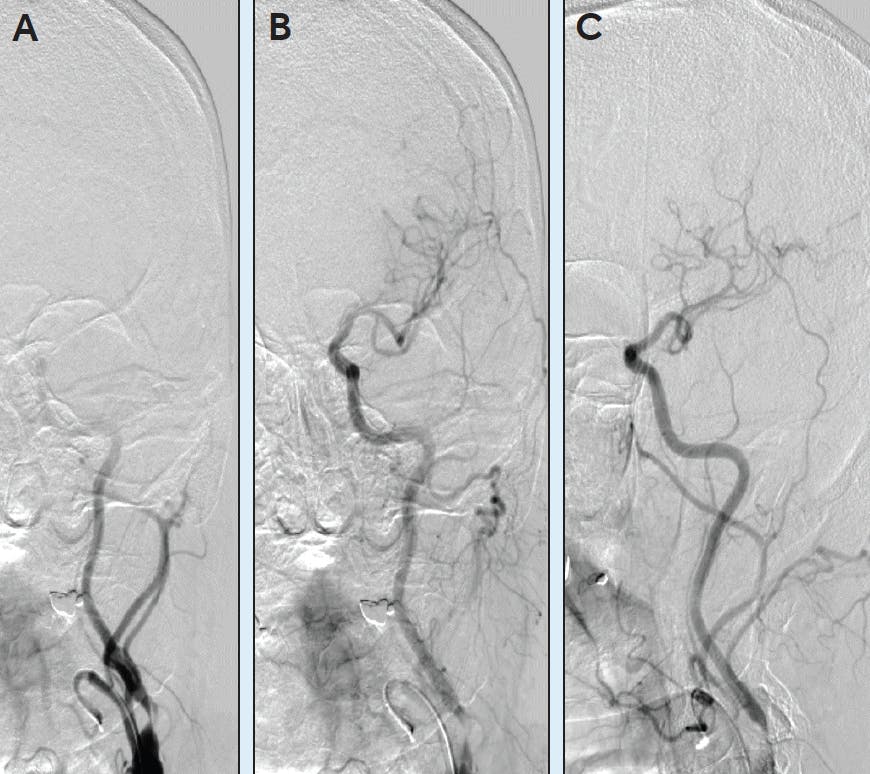
Figure 5. DSA showed stenosis of the left proximal ICA, patency of the distal ICA, and filling of the left middle cerebral artery (A). Note that the superior thyroid artery emanated from this patient’s distal left CCA. The left ACA was not opacified, even in delayed views (lateral intracranial projection) (B, C).
The Supra Core wire was navigated successfully to the lingual branch of the left ECA. Subsequent DSA highlighted the tight left ICA lesion (Figure 6A) and provided an appropriate gauge for positioning the Mo.Ma Ultra device ECA balloon and the predilatation of the lesion. Using the Supra Core wire, the Mo.Ma Ultra device was brought with the ECA balloon in the origin of the ECA, and the CCA balloon was also kept in the magnified field of view (Figure 6B). A second BP line (P2) was then set up through the manifold and the Mo.Ma Ultra device’s sidearm for continuous BP to monitor for any hypotension or periprocedural hypertension. Tight BP controlled peri- and postprocedure will avoid the risk of cerebral hyperperfusion syndrome, especially when treating a symptomatic lesion in a patient with a tight stenosis.
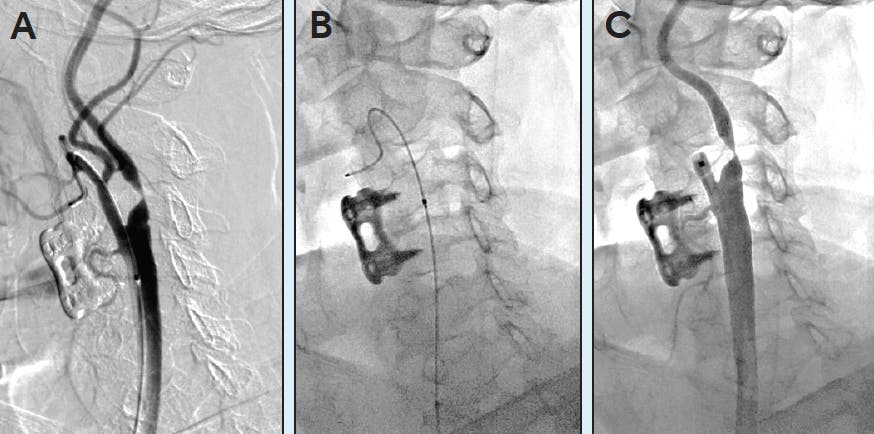
Figure 6. DSA highlighted the tight left ICA lesion (A). The Mo.Ma Ultra device was brought to position with the ECA balloon in the origin of the ECA, and the CCA balloon was kept within the magnified field of view (B). Angiography after the Mo.Ma Ultra device ECA balloon inflation demonstrated occlusion of the ECA (C).
The ECA balloon was inflated until the balloon edges were “squared” (< 1 mL inflation). DSA injection confirmed occlusion of the ECA (Figure 6C). Next, the CCA balloon was inflated, and the 0.014-inch wire (in this patient, a Choice™* PT ES wire, Boston Scientific Corporation) was used to cross the lesion. Care was taken to visualize that the wire exited the Mo.Ma Ultra device’s working port into the ICA, not the Mo.Ma Ultra device 0.035-inch wire catheter delivery. When the lesion was crossed, it was treated with a 4- X 30-mm predilatation balloon and a self-expanding stent (8- X 29-mm Wallstent™*, Boston Scientific Corporation). This took approximately < 2 minutes to complete. To avoid the risk of stroke from atheroemboli and a vagal episode, a decision was made against poststent balloon dilatation. Next, 20 mL of blood was aspirated from the working port, and the first three syringes were discarded. The fourth syringe was filtered, and this was continued until no more debris was visible on the filter (usually, the fourth or fifth filter are clear of any debris). Blood can be given back through the femoral sheath, particularly if the patient is anemic.
The ECA balloon was deflated, followed by the CCA balloon, and completion angiography was performed, demonstrating a widely patent left CCA/ICA stent (Figure 7A). The tip of the 0.014-inch wire was kept in view during the entire case to avoid any wire trauma to the intracranial vessels. A completion AP intracranial DSA injection demonstrated filling of the left ACA (previously not visualized due to the slow filling resulting from the tight left ICA stenosis, see Figure 5A) and the left middle cerebral artery. The patient tolerated this procedure well and was discharged home on dual antiplatelet medications. Additionally, he was neurologically intact, with a modified Rankin Scale score of 0 on the day after the procedure. He has been seen in clinic at 1-year follow-up doing well with a widely patent stent.
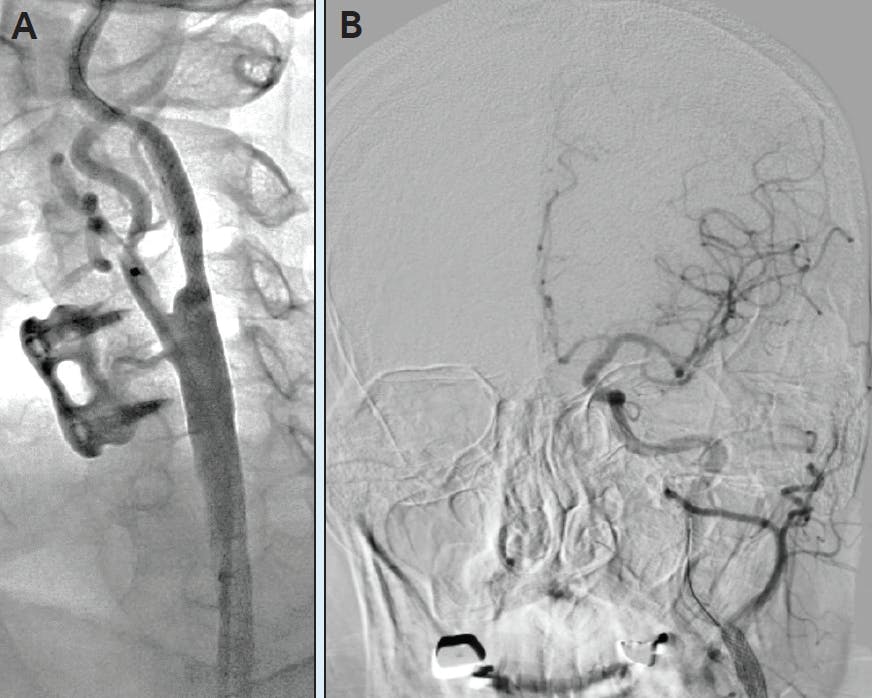
Figure 7. Completion angiography demonstrating a widely patent stented left CCA/ICA (A). Completion AP intracranial DSA demonstrated filling of the left ACA, which was not visible previously due to the slow filling resulting from the tight left ICA stenosis (see Figure 5A for comparison) (B).
DISCUSSION
The current clinical evidence suggests that proximal embolic protection with Mo.Ma Ultra device is associated with a lower incidence of postprocedural cerebral events or cerebral microembolization compared to distal filter protection.11-13 Proximal occlusion has some unique technical features that may contribute to this clinical benefit. Notably, neuroprotection is established before initial lesion crossing. Unlike distal filter devices, a straight landing zone is not required, thus minimizing the anatomic exclusion criteria for tortuous ICA. Furthermore, with proximal protection, embolic debris of all sizes is captured efficiently as the filter pore size is not a limitation.
One limitation of proximal occlusion devices is occlusion intolerance. One study demonstrated up to 29.9% occlusion intolerance; however, in most cases, symptoms started after stent postdilation, and CAS could be completed under proximal protection.14 Only 1% of cases showed immediate intolerance to balloon occlusion. In those cases, the proximal balloon was deflated, the Mo.Ma Ultra device was used as a guiding catheter to advance a filter, and stenting was completed under distal protection.14 Another concern of proximal occlusion device is the possibility of dissection, which could happen in rare instances just like any other angioplasty procedure.
There are no prospective RCTs comparing the outcomes after transfemoral CAS with proximal embolic protection using the Mo.Ma Ultra device versus newer technologies such as transcarotid artery revascularization (TCAR). Data from the Vascular Quality Initiative (VQI) TCAR Surveillance Project15 and ROADSTER studies16,17 showed promising results for TCAR. However, the majority were performed under general anesthesia (79% in the VQI report and 72% in the ROADSTER 2 study), whereas transfemoral CAS with Mo.Ma Ultra device protection can be done completely under local anesthesia. This is a clear advantage for patients who cannot tolerate general anesthesia. Other limitations of TCAR include a short working distance from access to the lesion, precluding patients with < 5 cm clavicle to carotid bifurcation, and exclusion of patients with severe disease of the ipsilateral CCA.
CONCLUSIONS
Advances have been made in the management and treatment of carotid artery disease with the options of medical management, CEA, and transfemoral and transcarotid CAS. With appropriate steps and considerations, proximal embolic protection with the Mo.Ma Ultra device during CAS cases can achieve desired outcomes in high-risk patients with carotid artery disease, including those who are symptomatic, > 75 years of age, and for whom surgery or general anesthesia is inappropriate.
1. Song P, Fang Z, Wang H, et al. Global and regional prevalence, burden, and risk factors for carotid atherosclerosis: a systematic review, meta-analysis, and modelling study. Lancet Glob Health. 2020;8:e721-e729. doi: 10.1016/S2214-109X(20)30117-0
2. Qaja E, Tadi P, Theetha Kariyanna P. Carotid artery stenosis. In: StatPearls. StatPearls Publishing; 2021.
3. GBD 2016 Lifetime Risk of Stroke Collaborators, Feigin VL, Nguyen G, et al. Global, regional, and country-specific lifetime risks of stroke, 1990 and 2016. N Engl J Med. 2018;379:2429-2437. doi: 10.1056/NEJMoa1804492
4. Messas E, Goudot G, Halliday A, et al. Management of carotid stenosis for primary and secondary prevention of stroke: state-of-the-art 2020: a critical review. Eur Heart J Suppl. 2020;22(suppl M):M35-M42. doi: 10.1093/eurheartj/suaa162
5. AbuRahma AF, Avgerinos ED, Chang RW, et al. The Society for Vascular Surgery implementation document for management of extracranial cerebrovascular disease. J Vasc Surg. 2022;75:26S-98S. doi: 10.1016/j.jvs.2021.04.074
6. Batchelder AJ, Saratzis A, Naylor AR. Editor’s choice - overview of primary and secondary analyses from 20 randomised controlled trials comparing carotid artery stenting with carotid endarterectomy. Eur J Vasc Endovasc Surg. 2019;58:479-493. doi: 10.1016/j.ejvs.2019.06.003
7. Zhou W, Baughman BD, Soman S, et al. Volume of subclinical embolic infarct correlates to long-term cognitive changes after carotid revascularization. J Vasc Surg. 2017;65:686-694. doi: 10.1016/j.jvs.2016.09.057
8. Stabile E, Salemme L, Sorropago G, et al. Proximal endovascular occlusion for carotid artery stenting: results from a prospective registry of 1,300 patients. J Am Coll Cardiol. 2010;55:1661-1667. doi: 10.1016/j.jacc.2009.11.079
9. Ansel GM, Hopkins LN, Jaff MR, et al. Safety and effectiveness of the INVATEC MO.MA proximal cerebral protection device during carotid artery stenting: results from the ARMOUR pivotal trial. Catheter Cardiovasc Interv. 2010;76:1-8. doi: 10.1002/ccd.22439
10. Lee TH, Marcantonio ER, Mangione CM, et al. Derivation and prospective validation of a simple index for prediction of cardiac risk of major noncardiac surgery. Circulation. 1999;100:1043-1049. doi: 10.1161/01.cir.100.10.1043
11. Stabile E, Sannino A, Schiattarella GG, et al. Cerebral embolic lesions detected with diffusion-weighted magnetic resonance imaging following carotid artery stenting: a meta-analysis of 8 studies comparing filter cerebral protection and proximal balloon occlusion. JACC Cardiovasc Interv. 2014;7:1177-1183. doi: 10.1016/j.jcin.2014.05.019
12. Montorsi P, Caputi L, Galli S, et al. Carotid Wallstent versus Roadsaver stent and distal versus proximal protection on cerebral microembolization during carotid artery stenting. JACC Cardiovasc Interv. 2020;13:403-414. doi: 10.1016/j.jcin.2019.09.007
13. Sannino A, Giugliano G, Toscano E, et al. Double layered stents for carotid angioplasty: a meta-analysis of available clinical data. Catheter Cardiovasc Interv. 2018;91:751-757. doi: 10.1002/ccd.27421
14. Giugliano G, Stabile E, Biamino G, et al. Predictors of carotid occlusion intolerance during proximal protected carotid artery stenting. JACC Cardiovasc Interv. 2014;7:1237-1244. doi: 10.1016/j.jcin.2014.05.021
15. Malas MB, Dakour-Aridi H, Wang GJ, et al. Transcarotid artery revascularization versus transfemoral carotid artery stenting in the Society for Vascular Surgery Vascular Quality Initiative. J Vasc Surg. 2019;69:92-103.e2. doi: 10.1016/j.jvs.2018.05.011
16. Kwolek CJ, Jaff MR, Leal JI, et al. Results of the ROADSTER multicenter trial of transcarotid stenting with dynamic flow reversal. J Vasc Surg. 2015;62:1227-1234. doi: 10.1016/j.jvs.2015.04.460
17. Kashyap VS, Schneider PA, Foteh M, et al. Early outcomes in the ROADSTER 2 study of transcarotid artery revascularization in patients with significant carotid artery disease. Stroke. 2020;51:2620-2629. doi: 10.1161/STROKEAHA.120.030550

Mo.Ma Ultra™ proximal cerebral protection device Reference Statement
Important Information: Prior to use, refer to the Instructions for Use supplied with these devices for indications, contraindications, suggested procedure, warnings and precautions.
Indications for Use: The Mo.Ma Ultra proximal cerebral protection device is indicated as an embolic protection system to contain and remove embolic material (thrombus/debris) while performing angioplasty and stenting procedures involving lesions of the internal carotid artery and/or the carotid bifurcation.
The reference diameter of the external carotid artery should be between 3-6 mm and the reference diameter of the common carotid artery should be between 5-13 mm.
CAUTION: Federal (USA) law restricts these devices to sale by or on the order of a physician.
Test data is on file at Medtronic Inc. Bench test results may not be indicative of clinical performance.
(the above is for US)
(below is for OUS)
Instruction For Use (IFU)
MO.MA ULTRA cerebral protection device is intended to be used during Angioplasty and Stenting of lesions located in the ICA and/or lesions involving the carotid bifurcation. This device allows protection of the brain from cerebral embolism during the entire duration of the intervention, thus preventing severe and disabling complications.
The system allows achieving cerebral protection before target lesion crossing plus allowing debris removal by blood aspiration at any stage during the procedure.
For - MO.MA ULTRA - Mono Balloon
Indicated to be used in patients eligible for carotid angioplasty and/or stenting with occlusion of the ECA and stenosis involving the ICA and / or the Carotid Bifurcation and reference diameter of CCA from 5 to 13 mm
For - MO.MA ULTRA - double Balloon
Indicated to be used in patients eligible for carotid angioplasty and/or stenting with stenosis involving the ICA and/or the Carotid Bifurcation and reference diameter of ECA from 3 to 6 mm and reference diameter of CCA from 5 to 13 mm.
500965a ©2022 Medtronic. Medtronic, Medtronic logo are trademarks of Medtronic. TM* third party brands are trademarks of their respective owner. All other brands are trademarks of Medtronic. For global distribution. 02/2022
Advertisement
Advertisement