Advertisement
Advertisement
May 2022
Sponsored by Artivion, formerly CryoLife/Jotec
E-vita OPEN NEO: A Patient-Tailored Approach to the Frozen Elephant Trunk Technique
Two physicians share their perspectives on using the E-vita OPEN NEO hybrid stent graft system for total arch replacement with frozen elephant trunk.
By Randolph Wong, MBChB, MRCS, FRCSEd(CTh), FCSHK, FHKAM(Surgery), and Suk-Won Song, MD, PhD
Building on > 10 years of experience, E-vita OPEN NEO (Artivion) is the next-generation hybrid stent graft system for aortic arch and descending aorta repair with the frozen elephant trunk (FET) technique. Combining a conventional vascular prosthesis with an endovascular stent graft, E-vita OPEN NEO allows simultaneous treatment of the ascending aorta, aortic arch, and descending aorta within one procedure, representing an alternative to conventional open surgery. E-vita OPEN NEO has three stent graft configurations and dedicated designs of the vascular and stent graft sections. The three diameters of the vascular section allow for reproducible anastomosis, while the full range of options for the stent graft section provides adequate oversizing for aneurysms and dissections. This new generation of grafts was developed to address the treatment requirements for the different aortic arch and descending aorta pathologies and anatomic morphologies.
The E-vita OPEN NEO concept focuses on a more patient-tailored approach in arch zones 0 to 3, including a modern stent graft downstream. In addition, a 10-mm side branch for perfusion is included in all configurations. To improve alignment, the orientation of the “Z” stents along the main stent graft body has been changed to “tip to valley.” Proximally, the stent graft becomes tapered according to the size of the arch graft. The stent graft length is designed according to the level of arch repair, with longer stent grafts for treatment in zone 0 (trifurcated graft) and shorter stent grafts in zones 1 to 3. A collar at the transition between the arch graft and stent graft is used for surgical fixation of the graft. Finally, the hybrid graft is mounted within a new highly flexible delivery system that follows a straightforward design—pure and reduced to the essential. Simple color coding also underlines its ergonomic design and intuitive operability.
The E-vita OPEN NEO is indicated for the surgical treatment of patients with dissections or aneurysms who have the following characteristics:
- Acute or chronic aortic dissection, DeBakey type I
- Acute or chronic aortic dissection, DeBakey type III, with retrograde progression in the aortic arch; with or without involvement of the ascending aorta
- Thoracic aortic aneurysm involving the descending thoracic aorta and the aortic arch; with or without involvement of the ascending aorta
With the advent of the E-vita OPEN NEO, the FET technique can facilitate convenient anastomosing in all arch zones and allows for the opportunity to use the island technique with a straight graft variation, as well as for individual head vessel anastomosing with either a trifurcated graft for zone 0 or a branched graft for zone 2 or 3 implantation. With its proven long-term stability and clinical outcomes, E-vita OPEN NEO has significantly improved the armamentarium for managing complex multisegmental thoracic aortic pathologies.
Experience Using E-vita OPEN NEO for Total Arch Replacement FET at Prince of Wales Hospital

E-vita OPEN NEO was introduced to the Prince of Wales Hospital (PWH) in Hong Kong via an innovative virtual proctoring platform from Professor Heinz Jakob of Essen, Germany, during the COVID-19 pandemic. This was the first experience of launching a new device under virtual proctoring in our region. Before the procedure, the proctor went through the preoperative images, clinical history, and procedural indications with the team at PWH. We had detailed discussions on the choice of the E-vita OPEN NEO configuration, size of the prosthesis, flow of the operation, informatics, and technical support of the virtual proctoring. With support from all team members across different continents, we performed the first use of E-vita OPEN NEO in Hong Kong with great success. We believe this model of virtual proctoring could become the new normal in the face of the global pandemic.1
ROUTINE SETUP FOR TOTAL ARCH REPLACEMENT FET PROCEDURE
Our team described our routine operative setup and procedure in a CTSNet video during the E-vita OPEN NEO launch.2 Our procedures are performed in a hybrid operating room under general anesthesia and median sternotomy. Spinal drainage is not routinely performed preoperatively unless we expect a distal FET landing below the T8 level. In that case, preoperative spinal drainage 24 hours prior to the operation is considered to reduce the risk of spinal cord injury. The ascending aorta is usually the arterial cannulation site of choice for ascending and arch aneurysm because this cannulation site will be resected later together with the aneurysm. In the case of aortic dissection, the femoral artery or axillary artery arterial inflow is chosen. The right atrial appendage is cannulated with two-stage venous cannula, and the left ventricle is drained via the right superior pulmonary vein.
Moderate hypothermic circulatory arrest is commenced when the rectal temperature reaches 25° C. The ascending aorta is then transected, and direct coronary cardioplegia with blood cardioplegia is delivered to achieve diastolic myocardial arrest. It is preferred to perfuse all three arch branches during visceral circulatory arrest; therefore, antegrade cerebral perfusion (ACP) is achieved via selective cannulation to the brachiocephalic artery (BCA), left common carotid artery (LCCA), and left subclavian artery (LSA). In our experience, patients with all three arch branches perfused can wake up at 1 to 2 hours postprocedure without neurologic deficit, and we believe that continuous perfusion of the LSA can also reduce risk of spinal cord ischemia. In the case of a deep-seated LSA, we perform extra-anatomic bypass to the left axillary artery and then perfuse the LSA via the bypass graft. We believe that management of the LSA warrants specific attention not only intraoperatively but also preoperatively via assessment of CT images to identify the LSA location, depth, and size.3
In the case of aortic aneurysm, the E-vita OPEN NEO device is deployed into the true lumen of the descending aorta without the use of guidewire. We only use guidewire in aortic dissection when we want to ascertain correct positioning of the FET in the true lumen. After deployment of the device, anastomosis between the sewing cuff and distal aortic arch is achieved with running 3-0 monofilament polyvinylidene fluoride (PDVF) sutures and reinforced with interrupted pledgeted 3-0 PDVF sutures. To match the collar with the aortic diameter and avoid excessive collar folding, we may trim the collar.
Next, lower body perfusion is resumed via the perfusion side branch of the E-vita OPEN NEO, and systemic rewarming of the patient’s core temperature begins. The proximal part of the graft is then anastomosed to the ascending aorta with continuous 3-0 or 4-0 monofilament PDVF sutures and reinforced with circumferential interrupted 3-0 or 4-0 pledgeted sutures. BioGlue (Artivion) is applied to the anastomoses to reinforce the anastomosis and suture holes. By performing the proximal anastomosis soon after the distal anastomosis, the cardiac ischemic time can be reduced, resulting in less myocardial insult. Then, we perform anastomoses to the supra-aortic branches in the LSA, LCCA, and BCA. At 36.5° C, patients are weaned from cardiopulmonary bypass, and the procedure is completed in a routine fashion.
OUTCOMES
In our initial experience of 17 patients, the 30-day mortality was 0%. Mean intensive care unit stay was 2 days, with a 12-day length of stay at the hospital. Mean operative time was 405.8 minutes, mean circulatory arrest time was 54.5 minutes, and mean aortic crossclamp (ACC) time was 145.8 minutes. The average requirement for packed red cell transfusion was 4 ± 3 units. No patients required resternotomy for hemostasis. One patient had transient lower limb weakness that resolved after spinal drainage for 72 hours. One patient with a multisegment shaggy aorta had persistent bilateral lower limb weakness on discharge. No patients required permanent renal replacement therapy after discharge, and there were no instances of stroke or new left recurrent laryngeal nerve palsy (Wong R, unpublished data, May 2022).
OUR EXPERIENCE WITH THE NEW E-VITA
Although there were concerns regarding the uncoated fabrics of E-vita OPEN NEO and excessive oozing has been reported, with a pragmatic approach and cautious checking and replenishment of the clotting factors, such phenomenon can usually be tackled.4 A circumferential reinforcement of all anastomoses with pledgeted sutures provides solid hemostasis, as shown by the zero instances of reoperation for bleeding in our series. In our opinion, the engineered Z-shape design of the stent graft—with the last two distal Zs on the stent embedded internally—can also reduce the risk of distal stent graft–induced new entry (SINE) tears as it exerts less focal stress to the aortic wall. An excellent work has been reported by Kreibich et al regarding this point.5
1. Ho JYK, Bashir M, Teh G, et al. Launching the E-vita Open Neo amid COVID-challenges and strategies. J Card Surg. 2021;36:793-795. doi: 10.1111/jocs.15197
2. Wong RH, Ho JY, Bashir M, Jakob H. First-in-man implantation of Evita Open Neo in Hong Kong. CTSNet. Published online December 14, 2020. doi: 10.25373/ctsnet.13373762
3. Ho JYK, Bashir M, Jakob H, Wong RHL. Management of left subclavian artery in total arch replacement and frozen elephant trunk procedure. JTCVS Tech. 2021;7:36-40. doi: 10.1016/j.xjtc.2021.03.020
4. Jakob H, Ho JYK, Wong RHL, et al. Paving the way for E-vita open NEO hybrid prosthesis implantation for complex aortic arch disease in Asia-Pacific. J Card Surg. 2021;36:3963-3967. doi: 10.1111/jocs.15882
5. Kreibich M, Bünte D, Berger T, et al. Distal stent graft-induced new entries after the frozen elephant trunk procedure. Ann Thorac Surg. 2020;110:1271-1279. doi: 10.1016/j.athoracsur.2020.02.017
Experience Using E-vita OPEN NEO for Total Arch Replacement FET At Gangnam Severance Hospital

SURGICAL TECHNIQUE AND CLINICAL OUTCOMES
At Gangnam Severance Hospital, 74 patients underwent total arch replacement with FET (TARFET) with E-vita OPEN NEO from April 2021, when the novel hybrid prosthesis was first available in South Korea, to March 2022. In this period, 70% of our cases were acute aortic dissection, overall 30-day mortality was 0%, overall in-hospital mortality was 3%, stroke was 1%, paraplegia was 0%, and redo sternotomy due to bleeding was 2% (Song SW, unpublished data, May 2022).
The following are the four basic strategies for TARFET in our center: (1) unilateral ACP with the right axillary artery, (2) moderate hypothermic circulatory arrest, (3) no left ventricle vent cannulation, and (4) reinforcement suture on the proximal and distal anastomosis site.
We usually start TARFET with anastomosis of an 8-mm artificial graft to the right axillary artery for arterial cannulation. Using this graft, we perform a unilateral ACP. However, when a patient’s left-sided regional oxygen saturation decreases to 15% of baseline, we insert another catheter into the left carotid artery (Figure 1).
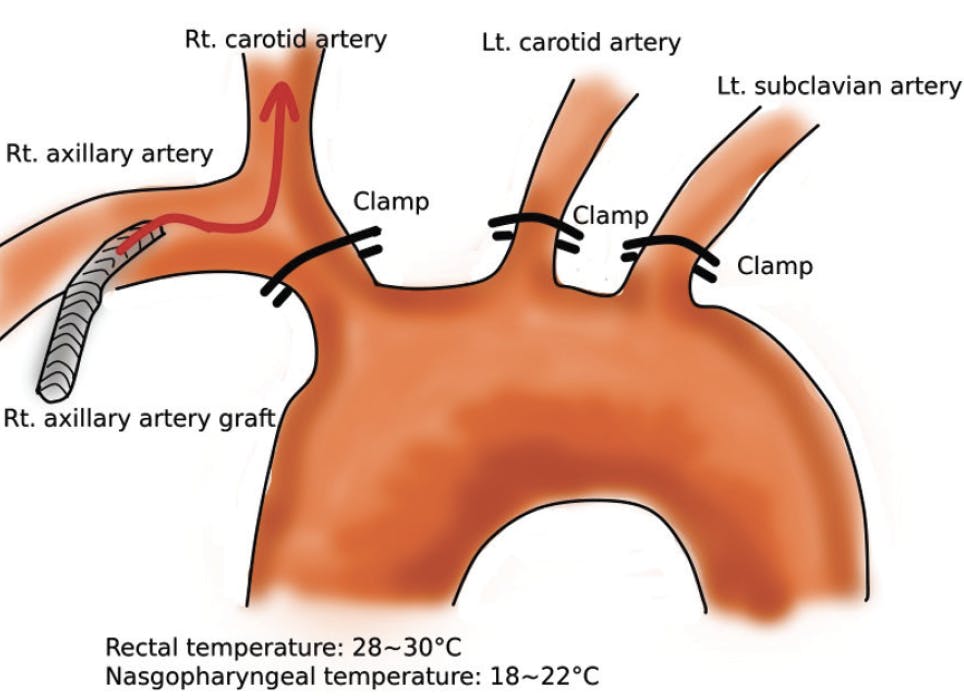
Figure 1. Unilateral ACP and moderate hypothermic circulatory arrest.
After cooling down the patient’s body temperature for 15 minutes through cardiopulmonary bypass, the rectal temperature typically reaches 28 to 30° C, and the oropharyngeal temperature reaches 18 to 22° C. Then, we begin moderate hypothermic circulatory arrest (Figure 1).
Because we prefer the most simple surgical field, we use unilateral ACP and do not place a left ventricle vent cannulation except when root surgery is anticipated. We always use the 3-0 pledgeted reinforcement sutures after anastomosis to reduce bleeding at the distal and proximal anastomosis site (Figure 2). Our order of anastomosis is distal anastomosis, LSA, left carotid artery, proximal anastomosis, and right BCA.
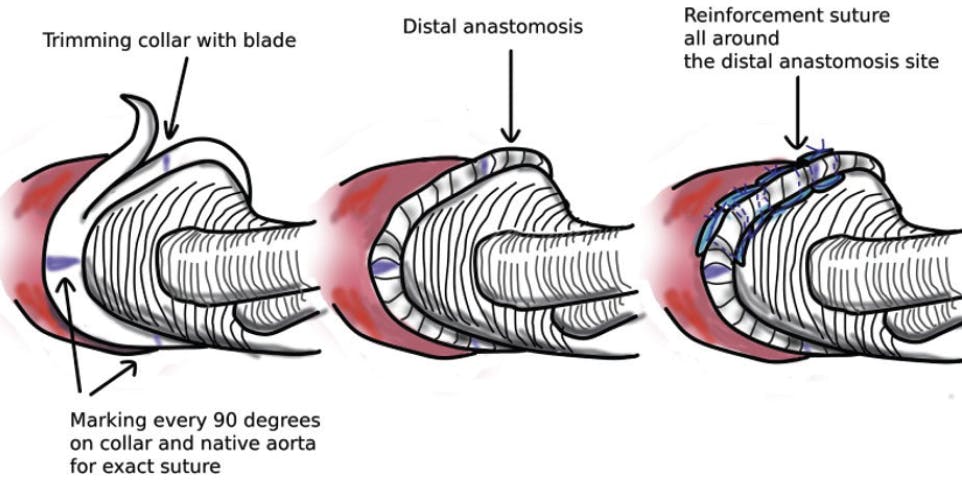
Figure 2. Trimming of collar, distal anastomosis, and reinforcement suture.
Stent graft diameter is decided according to aortic pathologies. In the case of acute aortic dissection, stent graft oversizing is generally 0% of the true lumen diameter at the intended distal landing zone. Rylski et al demonstrated a mean descending thoracic aorta diameter increase from 31.2 to 34.9 mm, about 10%, after an acute aortic dissection event.1 Therefore, it is possible that the stent graft diameter can be 10% less than the overall diameter at the intended distal landing zone (Figure 3).
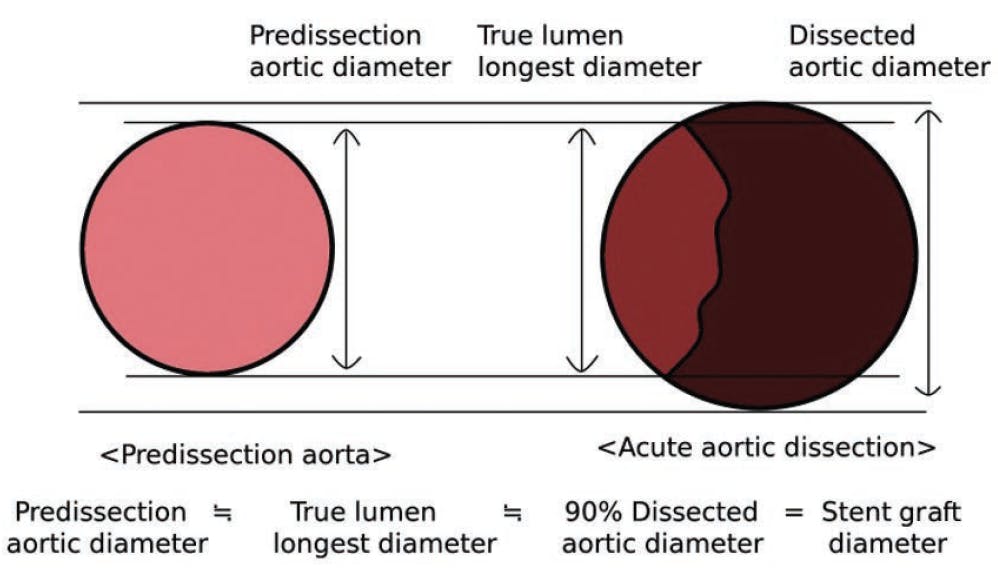
Figure 3. Stent graft diameter measurement of an acute aortic dissection.
Generally, the larger the stent graft diameter, the lower the type Ib endoleak rate. According to our 10-year thoracic endovascular aortic repair (TEVAR) experience, oversizing > 12% is a risk factor for SINE tear in chronic dissection (Song SW, unpublished data, May 2022). To reduce type Ib endoleak and distal SINE in the case of chronic aortic dissection, our strategy is to oversize the stent graft to 10% of the true lumen diameter at the intended distal landing zone (Figure 4). In the case of chronic aortic aneurysm, we oversize 10% to 20% at the intended distal landing zone (Figure 5).
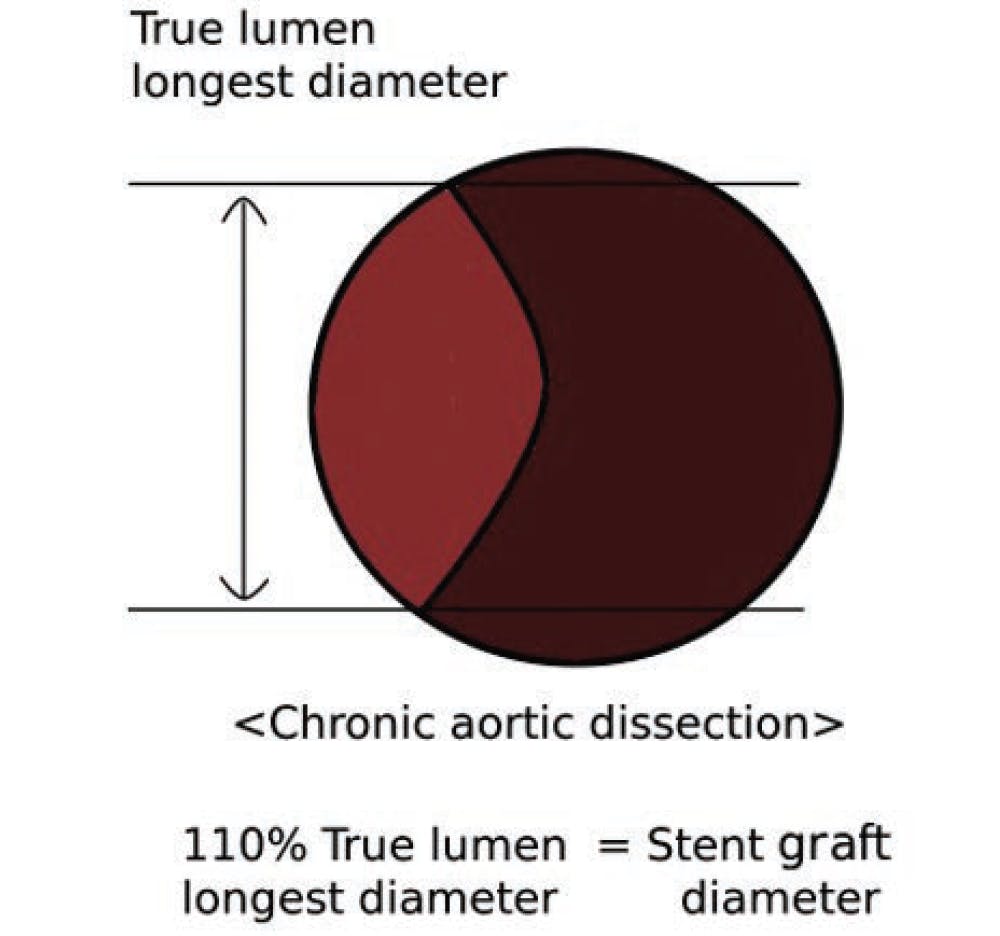
Figure 4. Stent graft diameter measurement of a chronic aortic dissection.
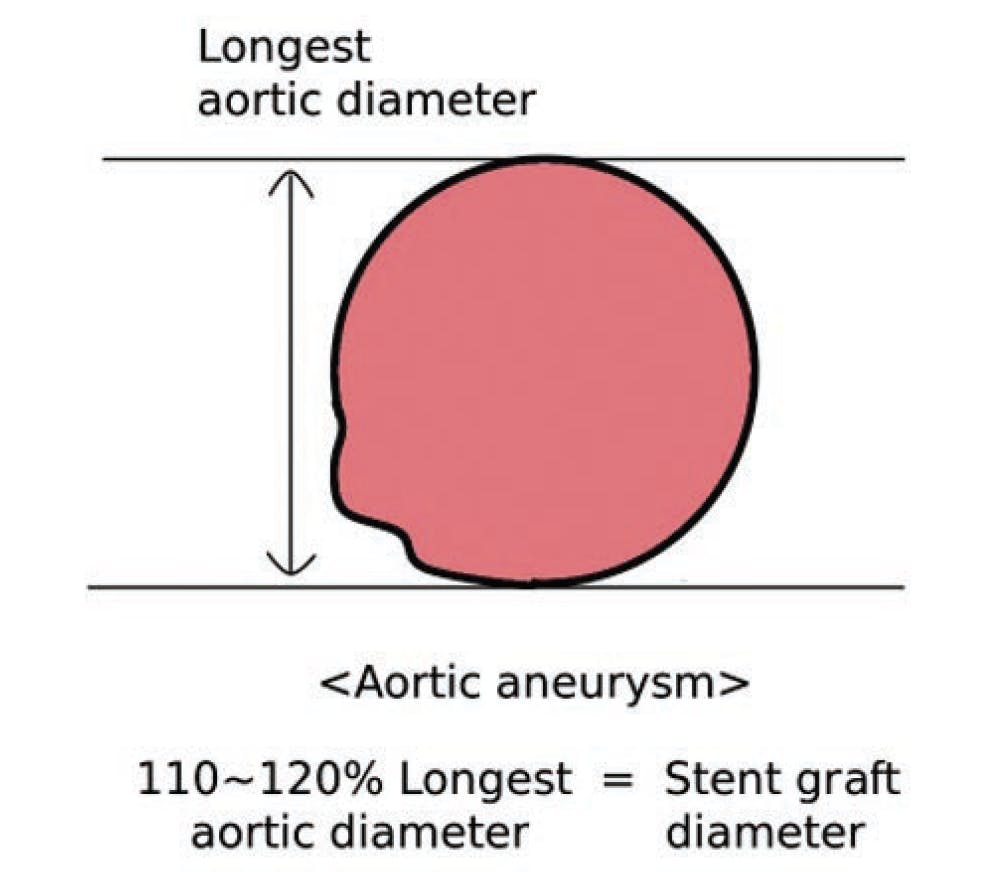
Figure 5. Stent graft diameter measurement of an aortic aneurysm.
The longer the stent graft length, the lower the risk of type Ib endoleak and distal SINE. However, long stent graft coverage is associated with risk of paraplegia. Therefore, we decided on a stent graft length that can sufficiently cover the entry site, re-entry site, or aneurysmal sac and a distal landing zone located above T8 to T10.
After cardiopulmonary bypass, we start routine protamine reversal with transfusion of a mean 12 units of platelet concentrate and 5 units of fresh frozen plasma for coagulation and bleeding control. Sometimes, when the graft oozing is severe, the focus of oozing is sewn.
At our hospital (N = 74), the mean cardiopulmonary bypass time, mean aortic crossclamping time, and mean moderate hypothermic circulatory arrest time were 164, 131, and 58 minutes, respectively.
1. Rylski B, Blanke P, Beyersdorf F, et al. How does the ascending aorta geometry change when it dissects? J Am Coll Cardiol. 2014;63:1311-1319.
Q&A: Procedural and Device Insights
PROCEDURE
How important is to perform cerebral protection from the three vessels (right axillary, LCCA, left axillary)?
Dr. Wong: We prefer to perfuse all three arch branches during visceral circulatory arrest; therefore, ACP is achieved via selective cannulation to the BCA, LCCA, and LSA. In our experience, patients with all three arch branches perfused can wake up 1 to 2 hours after the operation without neurologic deficit, and continuous perfusion of the LSA can reduce risk of spinal cord ischemia.
Prof. Song: The cerebral perfusion method is divided into unilateral, bilateral, and trilateral perfusion based on the number of directly perfused head vessels. We think that bilateral and trilateral perfusion have more physiologic features, but these cerebral perfusions require more in the procedure, such as inserting another catheter into the head vessel. In our experience, unilateral antegrade perfusion shows good enough results. Despite no published data, the results from our center of a systemic review of cerebral perfusion on total arch replacement demonstrated that the cerebral perfusion method is not associated with mortality or permanent neurologic deficit. Therefore, we think that using the familiar cerebral perfusion method at each center is more efficient for aortic surgery.
Do you plan for spinal cord protection preoperatively, in case of long coverage?
Dr. Wong: Spinal drainage is not routinely performed preoperatively unless we expect a distal FET landing below the T8 level, in which case, we will consider preoperative spinal drainage 24 hours prior to the operation to reduce the risk of spinal cord injury.
Prof. Song: In our TEVAR experience, we consider distal stent coverage above T10 safe. In case of impending rupture or rupture of the distal thoracic aorta with a planned distal landing zone below T10, we use cerebrospinal fluid (CSF) drainage because the procedure must be a one-stage procedure. Outside of those two instances, if the intended distal landing zone is below T10, we plan a two-stage procedure and do not insert CSF drainage in TARFET.
Which temperature do you use for the cooling of the brain and which for the distal body?
Prof. Song: Our temperature for moderate hypothermic circulatory arrest is usually 28 to 30° C at the rectum for the body, and the oropharyngeal temperature is usually 18 to 22° C for the brain.
Dr. Wong: We normally cool down the core temperature to 25° C, and the ACP temperature is 22 to 25° C.
Do you use the collar differently depending on the pathology you are treating or the patient anatomy? How do you handle the collar material to avoid folds and poor hemostasis?
Prof. Song: We use the collar the same way in all pathologies and anatomies; however, have evolved our distal anastomosis methods. Nowadays, we mark every 90° on the collar and native aorta before suturing to suture the exact position. Before suturing, we trim the collar about 5 mm larger than the native aorta to avoid collar folding. After anastomosis between the collar and native aorta, we make reinforcement sutures all around the anastomosis site with 3-0 pledgeted Prolene (Ethicon, a Johnson & Johnson company), which is very helpful for hemostasis (see Figure 2 in previous section).
Dr. Wong: We use the collar similarly regardless of pathology. However, to match the collar with the aortic diameter, we may trim the collar to avoid excessive collar folding. We perform the anastomosis between the sewing cuff and distal aortic arch with running 3-0 monofilament PDVF sutures, reinforced with interrupted pledgeted 3-0 PDVF sutures.
What suture is recommended for suturing graft to graft?
Dr. Wong: 3-0 monofilament PDVF sutures.
Prof. Song: When suturing > 20 mm grafts, we prefer a 3-0 Prolene suture. The smaller the graft anastomosis, the thinner the suture. Sometimes, we use 4-0 or 5-0 Prolene suture according to the graft size.
How do you size for acute dissection and chronic aneurysm?
Prof. Song: We outline this in our SURGICAL TECHNIQUE AND CLINICAL OUTCOMES section.
Dr. Wong: In acute dissection and chronic aneurysm, we will size according to the aortic wall-to-wall diameter at the distal landing zone. We do not oversize in acute aortic dissection; however, we do oversize by 10% in chronic dissection.
What are your routine operative steps for type A dissection with the E-vita OPEN NEO device?
Prof. Song: In type A acute aortic dissection, we start TARFET with right axillary arterial cannulation. After then, we perform a sternotomy with a Y-incision, which involves extensions of the incision to both supraclavicular regions. After right atrium venous cannulation, cardiopulmonary bypass is started, and the body is cooled down for 15 minutes. As the body cools, the head vessels and innominate vein are fully dissected. When the left ventricle is enlarged, we induce fibrillatory arrest using a fibrillator. Sometimes, hypothermic fibrillatory arrest happens. ACC, aortotomy, and infusion of cardioplegic solution are performed sequentially. After 15 minutes of cooling, the rectal temperature is 28 to 30° C, and moderate hypothermic circulatory arrest is started. The distal anastomosis site is trimmed, and Teflon felt neomedia formation (TFNMF) is performed. All over the site of TFNMF, reinforcement suture is made with 4-0 pledgeted Prolene. We check the orientation of the novel hybrid prosthesis, hold two black lines on the prosthesis, and deploy the prosthesis. We mark every 90° on the collar and distal anastomosis site before suturing. Distal anastomosis is performed with 3-0 Prolene. After distal anastomosis, we make reinforcement sutures all around the anastomosis site with 3-0 pledgeted Prolene. Rewarming begins with deairing. As arterial inflow is made through the perfusion branch of the graft, low body perfusion is also started. After confirming distal anastomosis without bleeding, the LSA and left carotid artery anastomosis with branches of the graft are established in order. Sequentially, TFNMF, reinforcement, anastomosis, and reinforcement occur at the proximal site and at the distal site. After proximal anastomosis, we insert the aortic root cannula, and a warm cardioplegic solution is infused. The patient’s heartbeat is returned spontaneously, and ACC is released. Right brachiocephalic arterial anastomosis is established, and all cannulation is removed.
Dr. Wong: After setting up the scene as outlined in our ROUTINE SETUP FOR TOTAL ARCH REPLACEMENT FET PROCEDURE section, for a type A dissection, E-vita OPEN NEO will be advanced via guidewire guidance to the level where the sewing collar of the E-vita reaches the distal aortic transection site. Orientation of the head and necks branches and the relative position of E-vita branches should be aligned. The device is deployed, and the procedure is completed following the steps described in the aforementioned section.
DEVICE
What do you think of the new delivery system as compared to the previous version of the device and/or the competition?
Prof. Song: In South Korea, E-vita OPEN NEO is the first off-the-shelf device for TARFET. Therefore, we don’t have experience with other devices. Before E-vita OPEN NEO, at our center, we performed TARFET in a way that added antegrade TEVAR to total arch replacement with a classic elephant trunk. In our experience, the elephant trunk portion would be enlarged, and type Ia endoleak would occur. With E-vita OPEN NEO, we expect better long-term durability with TARFET than before.
Dr. Wong: We found that the new delivery system is compact and easy to use compared with former systems. It is also less bulky and lengthy, making deployment process much easier.
Are there any specific situations where you see a particular advantage with the trifurcated version?
Dr. Wong: In our cohort, we were exclusively using the branched design because we believe it gives us the best flexibility to tackle all types of arch anatomic shapes and locations. In some centers in which an arch-first approach is adopted, I believe the trifurcated device can reduce the circulatory arrest time, and the zone 1 or 0 anastomoses will be easier to perform and have less risk of damaging the recurrent laryngeal nerve.
Prof. Song: The trifurcated type has an advantage in zone 0 or 1 anastomoses over the branched type in regard to angulation and space of the head vessel branch. In our center, we were familiar with a four-branched type before E-vita OPEN NEO, so we use the trifurcated type about 14% of the time.
Do you expect that the trifurcated can become the most used of the three configurations?
Dr. Wong: Yes and no—I have no definite answer. It depends on the training and education of the individual institution. I believe aortic teams should find the best way to carry out their operations that have the possibility to achieve the best outcome for their patients. As long as they can achieve this goal, the configuration does not matter.
Prof. Song: In the same context as the previous question, we think that the trifurcated version has potential to become the most used in the case of zone 0 or zone 1 anastomosis.
Do you use a different approach when performing the anastomosis due to the uncoated fabric?
Dr. Wong: There is no difference in the way I perform anastomosis, but we might use BioGlue to prime the fabric to reduce subsequent “sweating” or oozing from the uncoated graft.
Prof. Song: We use the same procedure in coated and uncoated fabric grafts.
Do you think that E-vita Open NEO covers all the unmet needs in FET, or is there anything else that we still need?
Prof. Song: We are generally satisfied with this novel hybrid prosthesis, although we would like more variety in the specifications of the devices.
Dr. Wong: The E-vita Open NEO covers a lot of the unmet needs of FET, for instance: (1) a longer distance between the LSA branch and collar compared with other FET devices, (2) a Z-shape stent graft design that can reduce the risk of distal SINE, and (3) a compact and easy-to-use system compared with previous options. If the graft came with a coated material to reduce oozing, that would be ideal.
Advertisement
Advertisement