Advertisement
Advertisement
May 2022
Sponsored by Medtronic
Expert Discussion: DCB Cost-Effectiveness in CLTI Patients
With Michel M.P.J. Reijnen, MD, PhD, and John R. Laird, MD, FACC, FACP, FSCAI


Peripheral artery disease (PAD) was estimated to affect > 237 million people aged > 25 years worldwide in 2015.1 Although studies vary, all agree that having PAD comes at a cost, with one analysis from Sweden showing an annual health care cost of €12,549 in the first year after diagnosis, which includes cardiovascular- (30%) and lower limb–related (26%) costs.2
Chronic limb-threatening ischemia (CLTI) is the most severe form of PAD and is characterized by nonhealing lower limb wounds, necrosis, or ischemic rest pain. Paclitaxel drug-coated balloons (DCBs) are a valuable tool in the treatment of patients with atherosclerotic lesions in the femoropopliteal arteries, and multiple randomized controlled trials (RCTs) have demonstrated the durable safety and effectiveness of paclitaxel DCBs in this role.3-5 In 2016, an analysis was performed on data from one of these trials, the IN.PACT SFA II trial, to investigate the cost-effectiveness of DCBs in the treatment of patients in the United States health care system with Rutherford clinical category (RCC) 2 to 4 PAD over 2-year follow-up.6 The study showed that DCBs were reasonably cost-effective. A new analysis was published in March 2022 in CardioVascular Interventional Radiology evaluating the cost-effectiveness of DCBs for the treatment of patients with CLTI over 2-year follow-up in the Netherlands and Germany.7 This study evaluated data from the IN.PACT Global study, a prospective, multicenter, single-arm trial that included a range of complex lesion types often excluded from pivotal trials.8-10
In this article, Prof. Michel Reijnen, the senior author of the March 2022 publication, and Dr. John Laird, an author and National Principal Investigator for the United States IN.PACT SFA II trial, share their thoughts on the implications of these cost-analyses data for the use of DCBs in patients with femoropopliteal PAD, with a special focus on CLTI.
Are there any special considerations for the treatment of CLTI patients with femoropopliteal artery disease?
Prof. Reijnen: CLTI is the most advanced stage of PAD, which means it’s often difficult to treat and has a significant impact on a patient’s quality of life (QOL). Considering how progressed their PAD is, patients with CLTI are at high risk for some of the worst outcomes, including amputation and even death.11,12 So, the most important treatment aims are to prevent these outcomes and improve the patient’s overall QOL. For the most part, we use endovascular approaches to treat these patients, partly because many are at high risk for surgery. This means angioplasty and stents, and DCBs have become an especially important tool. However, one of the challenges with CLTI patients is that they often have extensive and complex lesions. For instance, the lesions may be heavily calcified, in which case the paclitaxel from the DCB may be blocked from reaching its site of action in the vascular wall. Vessel preparation prior to DCB treatment can help with this, as shown in studies like DEFINITIVE AR13 and REALITY,14 but it’s an extra step that must be taken to improve the chances of an optimal outcome.
The issue is that because DCBs are specialized balloons with a paclitaxel coating, their use comes at a higher cost. Several studies have now shown that clinical outcomes are better after DCB treatment versus standard of care with percutaneous transluminal angioplasty (PTA), even up to 5 years,3-5 and that outcomes in patients with CLTI are good, with low amputation rates.15 A previous cost-effectiveness analysis based on the IN.PACT SFA II data showed that the higher cost of DCBs during the index procedure was offset by lower costs over 2-year follow-up because patients in the DCB group had fewer events postprocedure, such as amputation or repeat interventions, which translated to less need for care and lower associated costs.6 Ultimately, the study showed that DCBs were reasonably cost-effective for the treatment of patients with RCC 2 to 4 PAD in the context of the United States health care system. This leads to questions like: Is the same true for patients with CLTI? Are DCBs cost-effective for patients with complex lesions? Are DCBs also cost-effective in other geographies, like Europe?
To answer some of these questions, we performed a cost-effectiveness analysis on data from the CLTI cohort of the IN.PACT Global study,7 the largest prospective registry of real-world patients treated with paclitaxel DCBs for femoropopliteal PAD.8-10
Dr. Laird: Patients with CLTI are like an onion; you peel back the layers and find more layers. The lesions can be long, severely calcified, or totally occluded. Most patients with CLTI have multilevel disease, which means we can be dealing with lesions above and below the knee,16 and we’re still learning about which advanced technologies give the best outcomes for below-knee disease. There’s a lot to manage to ensure these patients have the best possible outcome. Above all, you need to restore good in-line flow (in both above-knee and below-knee arteries) with sustained patency to support wound healing and alleviate the symptoms of ischemic rest pain. That’s our main goal for these patients.
DCBs have an important role to play in the treatment of patients with femoropopliteal CLTI. DCBs are designed to inhibit restenosis and eliminate or delay the need for reintervention after the index procedure. By reducing the need for reintervention, DCBs can reduce cost and stress on the health care system, and they can help reduce stress and discomfort for the patient. Also, in many cases, good results can be achieved with a DCB without the need for a stent. That’s another area of potential cost savings. As we know, stents come with their own set of challenges, particularly if in-stent restenosis (ISR) or occlusion occurs and further interventions are required. Ultimately, if we can use DCBs to achieve good procedural results and sustained patency in patients with CLTI, we can achieve more complete and durable wound healing, save limbs, and improve our patients’ QOL and do so in a very cost-effective manner.
Does the current evidence support the cost-effectiveness of DCBs for femoropopliteal interventions?
Prof. Reijnen: Yes, it does. To start, we know that DCBs can be used safely and effectively for the treatment of femoropopliteal lesions in patients with CLTI because we showed that in our post hoc subgroup analysis of the IN.PACT Global study. This was a single-arm, multicenter, international study enrolling 1,535 patients, 156 of whom had CLTI (RCC 4 and 5).15 In the CLTI cohort analysis, freedom from major target limb amputation was 98.6%, and freedom from clinically driven target limb revascularization was 93% through 1 year.15 This is good, but again, the study didn’t include the most severely affected RCC 6 patients, which is important to consider in the future.
In the recently published IN.PACT Global cost-effectiveness analysis, we used the same CLTI cohort and compared it to published historical PTA with primary or bailout stenting controls to determine the cost-effectiveness of DCB treatment of femoropopliteal lesions in CLTI over a 2-year horizon. We did this twice: once each for the Dutch and German health care systems.7 In each setting, we found that, unsurprisingly, the initial cost of DCB was higher than status quo PTA during the index procedure (€615 higher in the Netherlands, €332 higher in Germany) (Figure 1).7 However, DCB treatment was associated with a lower risk of amputation and repeat intervention, which led to lower follow-up costs. In the end, total overall costs ended up being lower for DCBs (€1,030 lower in the Netherlands, €513 lower in Germany) (Figure 1).7 Combined with a higher QOL after DCB compared with control (measured as quality-adjusted life-years [QALY]; +0.017 higher in the Netherlands, +0.017 in Germany) (Figure 1), the analysis showed that DCB treatment of CLTI patients is associated with improved patient outcomes and expected cost savings to payers in the Dutch and German health care systems.7 This conclusion remained the same through the sensitivity analysis.7
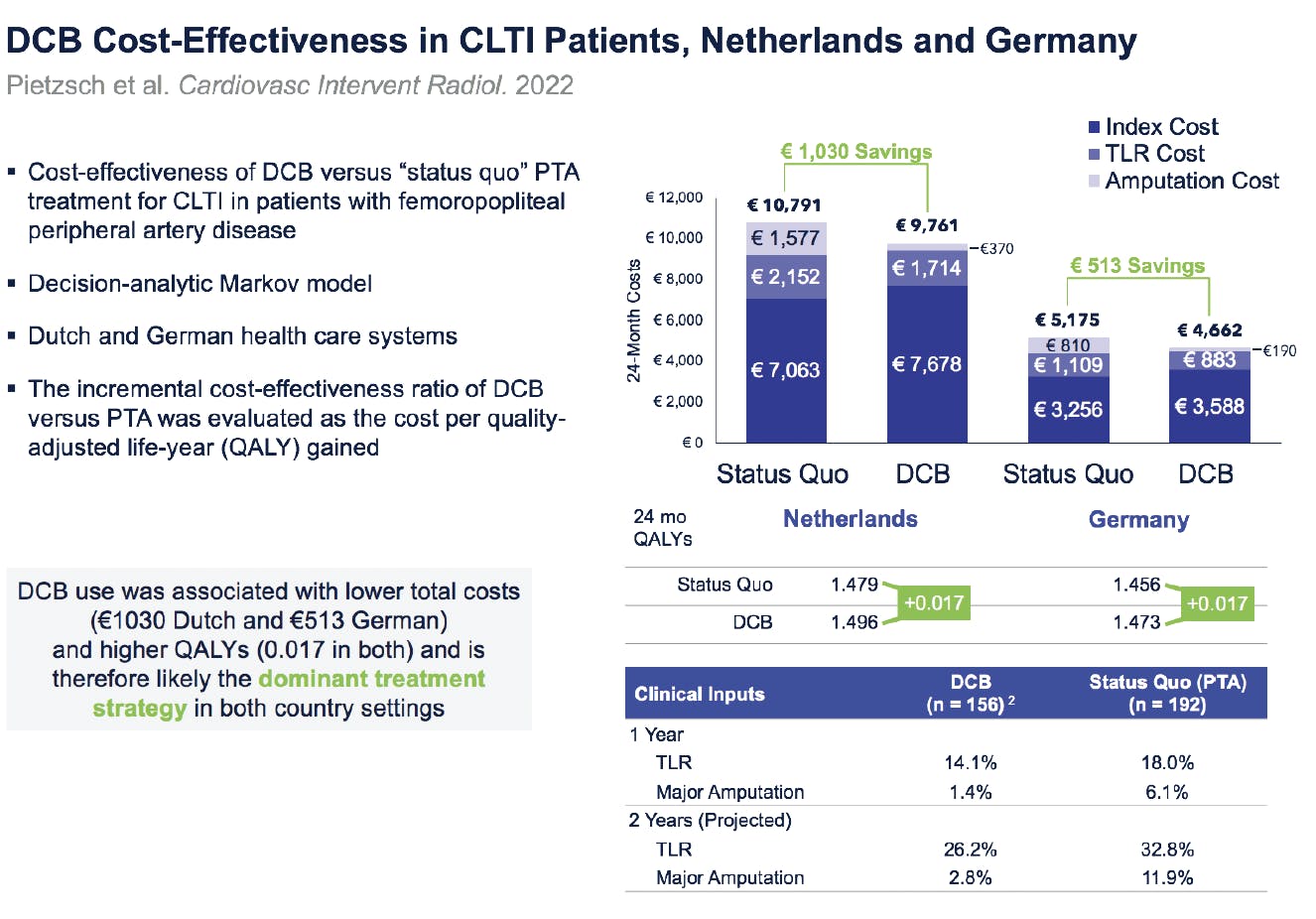
Figure 1. DCB cost-effectiveness in CLTI patients (RCC 4-5) in the Netherlands and Germany. TLR, target lesion revascularization.
Dr. Laird: Based on the IN.PACT SFA II data and Prof. Reijnen’s excellent study, I do think that current evidence supports the cost-effectiveness of DCBs. What the data suggest is that treatment with DCB provides good acute results, often without a permanent implant, and reduces the risk of restenosis (and ISR) and need for reintervention. This means durable patency and quicker wound healing. If this is achieved, then there’s less cost during follow-up compared with a treatment strategy that is less durable, resulting in a return of the patient to the operating/cath lab table for additional procedures to maintain blood flow so the wound can heal. Sustained patency should lead to overall cost reduction, mostly driven by lower revascularization costs in the follow-up period. That’s what we saw in the United States cost-effectiveness study in which we analyzed data from the IN.PACT SFA II trial.6
The IN.PACT SFA study was a prospective, multicenter RCT that demonstrated the safety and effectiveness of the DCB for the treatment of patients with RCC 2 to 4 femoropopliteal PAD through 5 years.3 There were two component trials: IN.PACT SFA I and II. We used data from the IN.PACT SFA II trial to perform our cost-effectiveness analysis6 and showed that initial costs were higher with DCB versus the PTA control ($1,129) (Figure 2).6 DCBs are more expensive, which makes sense because they are an advanced endovascular technology combining drug and device. However, the DCB group required less intervention over the following 2 years and therefore incurred less cost during that period (–$1,212) (Figure 2). Patient QOL data demonstrated a trend toward improved outcomes in the DCB group versus PTA during this study, but the difference didn’t reach significance. Using Markov model projections with appropriate assumptions, we determined there is a reasonable probability that DCBs are an economically attractive treatment option for patients with femoropopliteal PAD.
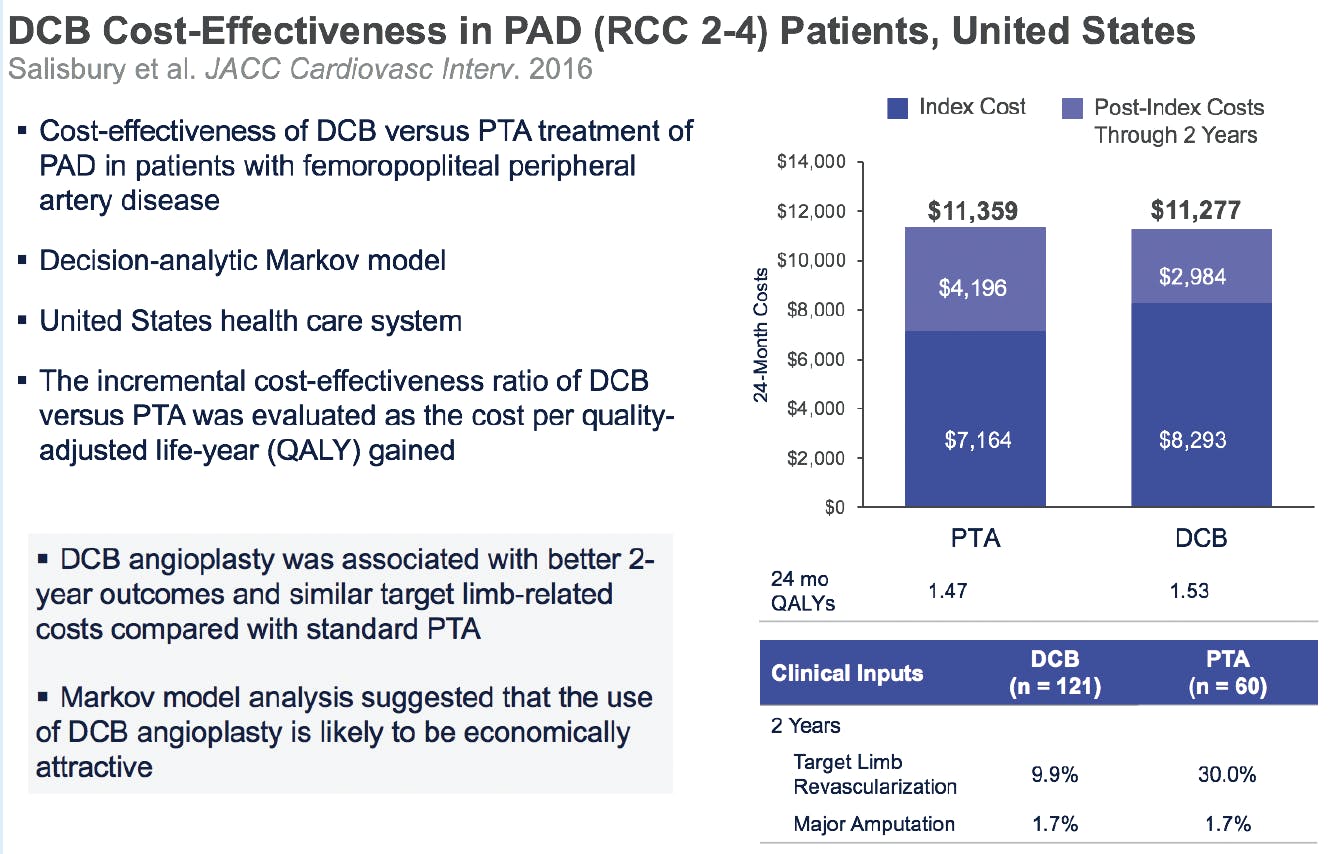
Figure 2. DCB cost-effectiveness in PAD patients (RCC 2-4) in the United States.
Patients with advanced disease and a high risk of amputation are typically the most costly to treat. How might these results affect the treatment algorithm for patients with advanced disease?
Prof. Reijnen: It’s true; risk of amputation is high for patients with CLTI, mostly those with RCC 6. In a prospective population-based study from the United Kingdom called OXVASC, the rate of amputation was 6.6% through 1 year and 43.4% through 5 years in CLTI patients.12 This is concerning. In the IN.PACT Global CLTI cohort analysis, the rate of major target limb amputation was 1.4% after 1 year follow-up.15 This seems much better, but only patients with RCC 4 and 5 were included in that analysis. The incidence is likely higher in patients with RCC 6. When we performed the IN.PACT Global cost-effectiveness analysis, we conducted a literature search to determine the “status quo” rate of amputation after standard-of-care treatment with PTA or bare-metal stent and calculated a rate of 6.1% after 1 year.7 If studies continue to show that DCB treatment improves outcomes compared with the status quo in a CLTI population while decreasing the associated costs and burden of adverse events like amputation that we typically worry about with these patients, it could be time to revisit the treatment algorithm for patients with advanced disease.
Dr. Laird: The costs of amputation to the health care system are staggering. Reducing the need for major amputation will have an important impact on cost of care. In addition, with the expensive advanced wound care products that are currently being used, high-quality wound care places significant financial stress on the system. If DCBs can improve to prolong patency and prevent recurrence of wounds in the future, this will lead to significant reduction in health care costs.
What are your thoughts on early intervention in claudicants to prevent or delay the progression to CLTI? Would this be an effective strategy to improve outcomes further and ultimately provide additional cost savings?
Dr. Laird: There is no evidence yet to support that early endovascular intervention can prevent or delay PAD progression to CLTI. This doesn’t mean it’s impossible to impact progression to CTLI, and we can be hopeful that treatments that delay restenosis, such as DCBs, might have this type of positive benefit. Risk factor modification, lifestyle changes, and appropriate medical care are likely to have the greatest impact on PAD progression. Optimal medical care in this patient population is critical: smoking cessation, control of diabetes, statin (or PCSK9 [proprotein convertase subtilisin/kexin type 9] inhibitor) usage, antiplatelet therapy, and new antithrombotic regimens may help delay progression of disease and need for higher-level interventions.
Prof. Reijnen: According to guidelines, patients with intermittent claudication can be treated well with supervised walking exercise.17 Endovascular treatment is indicated only for those with lifestyle-limiting claudication who are not responding to walking exercise. In my opinion, we should not use endovascular approaches to prevent disease progression to CLTI at this stage, as there is no evidence to support this. Instead, we should use cardiovascular risk management strategies such as prescription of platelet inhibitors and statins, plus lifestyle modifications.
What are the key takeaways for physicians in the Dutch and German health care systems?
Prof. Reijnen: Paclitaxel DCBs are indeed a cost-effective option for the treatment of femoropopliteal lesions in patients with CLTI—a challenging group that is typically difficult to treat. When adding this to the other advantages of DCBs, including a lower need for repeat interventions, it makes them a preferred treatment modality compared to PTA with stenting.
Dr. Laird: DCBs are a cost-effective tool for CLTI patients with femoropopliteal lesions. DCBs cost more than the status quo (standard therapies) during the index procedure, but this is made up during follow-up care. There are fewer repeat interventions with DCB versus standard care, which means less resource use and, overall, less cost during the follow-up period. Of course, this leads to better QOL after treatment with DCB versus status quo, which is an important factor in the equation.
What can physicians outside of the Netherlands and Germany learn from this analysis?
Dr. Laird: If DCBs are a cost-effective option in these two countries, it is likely to be the same in other geographies. However, there are no guarantees due to the variabilities across health care systems, so it can be difficult to generalize. Still, a similar analysis performed with data from the IN.PACT SFA II trial of patients in the United States health care system with RCC 2 to 4 femoropopliteal disease showed that paclitaxel DCBs were reasonably cost-effective compared with PTA over a 2-year period.6 This isn’t in an exclusive CLTI group but under the broad umbrella of support for the cost-effectiveness of DCBs for PAD. Interestingly, an Italian National Health Service–perspective budget impact model with a 5-year horizon found similar results. Despite the initial higher investment, DCBs represented a cost-saving alternative to other technologies.18 Similar cost-effectiveness results were shown in the United Kingdom model for drug-eluting treatments, with DCB offering high clinical and economic value.19
Prof. Reijnen: As more data from cost-effectiveness analyses become available, we can feel confident that DCBs are a cost-effective tool for the treatment of femoropopliteal PAD across the spectrum of PAD severity, including vulnerable CLTI patient population. The findings of the new study in the Netherlands and Germany health care systems are in line with previous system review and budget impact model studies for endovascular therapies for the treatment of femoropopliteal PAD.20,21 Still, each health care system is unique, and you can’t make a global definitive claim without studying health care costs in each setting. But, it’s a promising trend, and I think it would be great to see more data from non-Western health care settings.
Disclosures
Prof. Reijnen: Consultant to Bentley Innomed, Medtronic, Terumo Aortic, and W. L. Gore & Associates.
Dr. Laird: Part-time employee of Medtronic.
1. Song P, Rudan D, Zhu Y, et al. Global, regional, and national prevalence and risk factors for peripheral artery disease in 2015: an updated systematic review and analysis. Lancet Glob Health. 2019;7:e1020-e1030. doi: 10.1016/S2214-109X(19)30255-4
2. Hasvold P, Nordanstig J, Kragsterman B, et al. Long-term cardiovascular outcome, use of resources, and healthcare costs in patients with peripheral artery disease: results from a nationwide Swedish study. Eur Heart J Qual Care Clin Outcomes. 2018;4:10-17. doi: 10.1093/ehjqcco/qcx028
3. Laird JA, Schneider PA, Jaff MR, et al. Long-term clinical effectiveness of a drug-coated balloon for the treatment of femoropopliteal lesions. Circ Cardiovasc Interv. 2019;12:e007702. doi: 10.1161/CIRCINTERVENTIONS.118.007702
4. Tepe G, Schnorr B, Albrecht T, et al. Angioplasty of femoral-popliteal arteries with drug-coated balloons: 5-year follow-up of the THUNDER trial. JACC Cardiovasc Interv. 2015;8:102-108. doi: 10.1016/j.jcin.2014.07.023.
5. Xu Y, Liu J, Zhang J, et al. Long-term safety and efficacy of angioplasty of femoropopliteal artery disease with drug-coated balloons from the AcoArt I trial. J Vasc Surg. 2021;74:756-762.e3. doi: 10.1016/j.jvs.2021.01.041
6. Salisbury AC, Li H, Vilain KR, et al. Cost-effectiveness of endovascular femoropopliteal intervention using drug-coated balloons versus standard percutaneous transluminal angioplasty: results from the IN.PACT SFA II trial. JACC Cardiovasc Interv. 2016;9:2343-2352. doi: 10.1016/j.jcin.2016.08.036
7. Pietzsch JB, Geisler BP, Iken AR, et al. Cost-effectiveness of urea excipient-based drug-coated balloons for chronic limb-threatening ischemia from femoropopliteal disease in the Netherlands and Germany. Cardiovasc Intervent Radiol. 2022;45:298-305. doi: 10.1007/s00270-021-03050-6
8. Zeller T, Brodmann M, Micari A, et al. Drug-coated balloon treatment of femoropopliteal lesions for patients with intermittent claudication and ischemic rest pain. Circ Cardiovasc Interv. 2019;12:e007730. doi: 10.1161/CIRCINTERVENTIONS.118.007730
9. Micari A, Brodmann M, Keirse K, et al. Drug-coated balloon treatment of femoropopliteal lesions for patients with intermittent claudication and ischemic rest pain: 2-year results from the IN.PACT Global study. JACC Cardiovasc Interv. 2018;11:945-953. doi: 10.1016/j.jcin.2018.02.019
10. Torsello G, Stavroulakis K, Brodmann M, et al. Three-year sustained clinical efficacy of drug-coated balloon angioplasty in a real-world femoropopliteal cohort. J Endovasc Ther. 2020;27:693-705. doi: 10.1177/1526602820931477
11. Rollins KE, Jackson D, and Coughlin PA. Meta-analysis of contemporary short- and long-term mortality rates in patients diagnosed with critical leg ischaemia. Br J Surg. 2013;100:1002-1008. doi: 10.1002/bjs.9127
12. Howard DP, Banerjee A, Fairhead JF, et al. Population-based study of incidence, risk factors, outcome, and prognosis of ischemic peripheral arterial events: implications for prevention. Circulation. 2015;132:1805-1815. doi: 10.1161/CIRCULATIONAHA.115.016424
13. Zeller T, Langhoff R, Rocha-Singh KJ, et al. Directional atherectomy followed by a paclitaxel-coated balloon to inhibit restenosis and maintain vessel patency: twelve-month results of the DEFINITIVE AR study. Circ Cardiovasc Interv. 2017;10:e004848. doi: 10.1161/CIRCINTERVENTIONS.116.004848
14. Rocha-Singh KJ, Sachar R, DeRubertis BG, et al. Directional atherectomy before paclitaxel coated balloon angioplasty in complex femoropopliteal disease: the VIVA REALITY study. Catheter Cardiovasc Interv. 2021;98:549-558. doi: 10.1002/ccd.29777
15. Reijnen M, van Wijck I, Zeller T, et al. Outcomes after drug-coated balloon treatment of femoropopliteal lesions in patients with critical limb ischemia: a post hoc analysis from the IN.PACT Global study. J Endovasc Ther. 2019;26:305-315. doi: 10.1177/1526602819839044
16. Klein AJ, Jaff MR, Gray BH, et al. SCAI appropriate use criteria for peripheral arterial interventions: an update. Catheter Cardiovasc Interv. 2017;90:E90-E110. doi: 10.1002/ccd.27141
17. Aboyans V, Ricco JB, Bartelink MEL, et al. 2017 ESC Guidelines on the diagnosis and treatment of peripheral arterial diseases, in collaboration with the European Society for Vascular Surgery (ESVS): document covering atherosclerotic disease of extracranial carotid and vertebral, mesenteric, renal, upper and lower extremity arteriesEndorsed by: the European Stroke Organization (ESO)The Task Force for the Diagnosis and Treatment of Peripheral Arterial Diseases of the European Society of Cardiology (ESC) and of the European Society for Vascular Surgery (ESVS). Eur Heart J. 2018;39:763-816. doi: 10.1093/eurheartj/ehx095
18. Micari A, Vadalà G, Corbo M, et al. An analysis of the economic impact of drug-coated balloon use for the treatment of peripheral artery disease. Int Cardiovasc Forum J. 2015;3:20-25. doi: 10.17987/icfj.v3i0.115
19. Katsanos K, Geisler BP, Garner AM, et al. Economic analysis of endovascular drug-eluting treatments for femoropopliteal artery disease in the UK. BMJ Open. 2016;6:e011245. doi: 10.1136/bmjopen-2016-011245
20. Sridharan ND, Boitet A, Smith K, et al. Cost-effectiveness analysis of drug-coated therapies in the superficial femoral artery. J Vasc Surg. 2018;67:343-352. doi: 10.1016/j.jvs.2017.06.112
21. Pietzsch JB, Geisler BP, Garner AM, et al. Economic analysis of endovascular interventions for femoropopliteal arterial disease: a systematic review and budget impact model for the United States and Germany. Catheter Cardiovasc Interv. 2014;84:546-554. doi: 10.1002/ccd.25536
501030 ©2022 Medtronic. Medtronic, Medtronic logo are trademarks of Medtronic
All other brands are trademarks of Medtronic. For global distribution. 05/2022
Advertisement
Advertisement