Advertisement
Advertisement
November 2022
The STABILISE Technique for Treatment of Acute/Subacute Type B Dissections
The remodeled single-channeled aorta may prevent aneurysmal degeneration.
The optimal treatment of type B aortic dissection (TBAD) is a challenging and still unsolved issue. During the last 2 decades, the options for TBAD evolved significantly: endovascular treatment has emerged as a safe and effective solution, becoming the first-line treatment for acute/subacute complicated cases. The aim of standard thoracic endovascular aortic repair (TEVAR) is to deploy a stent graft to cover the proximal entry tear and redirect the flow in the true lumen (TL), promoting thrombosis of the false lumen (FL). In some cases, TEVAR allows for thoracic aorta remodeling and complete FL thrombosis, but in most cases, some degree of FL perfusion is maintained through additional distal tears. In the chronic setting, FL perfusion has been considered the main cause of late aneurysmal degeneration,1 especially in the case of a large proximal entry tear and smaller distal re-entries that lead to FL diastolic hypertension. Partial thrombosis of the FL is another predictor of aneurysmal degeneration. Even after TEVAR, one-third to half of patients who survive acute TBAD will require treatment for distal aorta, endure complications, or die.
To enhance TL perfusion, bare stents may be distally deployed in the TL to the covered stent graft to increase TL size, thus treating dynamic malperfusion and stabilizing the intimal lamella.2 This technique, also known as PETTICOAT (provisional extension to induce complete attachment) offers good short- and midterm results. However, even if PETTICOAT has proven to be an effective treatment for malperfusion, it has failed to show its efficacy against late aneurysmal degeneration distally to the stent graft, as some perfusion of the FL is usually maintained.3
In this scenario, a further modification of this technique was proposed in 2012 by Hofferberth et al. This technique, known as STABILISE (stent-assisted balloon-induced intimal disruption and relamination in aortic dissection repair), involves ballooning the TL inside the stent graft and the distally deployed bare stents to intentionally rupture the lamella and allow full expansion of the stent in a single-channeled aorta.4 STABILISE produced excellent results in the authors’ experience, especially regarding malperfusion relief and reduction of reintervention rate (Figure 1). Nevertheless, the technique did not gain immediate consensus in the vascular community, mainly because of the potential risk of aortic damage during ballooning, especially when performed in the paravisceral aorta.5
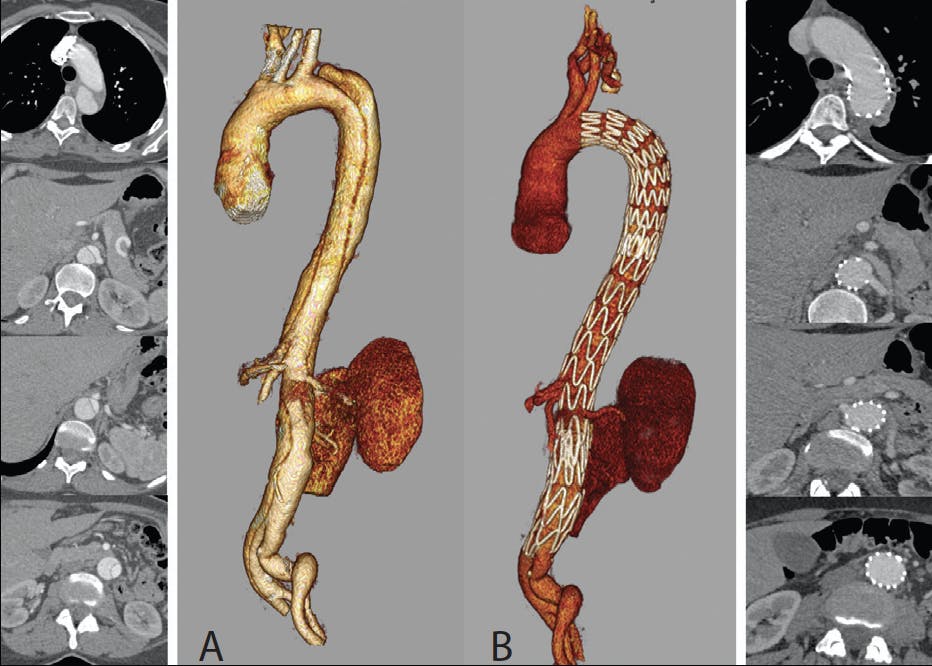
Figure 1. Preoperative CT scan of a subacute TBAD involving the thoracoabdominal aorta and iliac arteries (A) and postoperative result after the STABILISE procedure, showing the single unichanneled aorta and patency of visceral vessels (B).
THE STABILISE TECHNIQUE
The STABILISE technique can be considered an evolution of the previously reported PETTICOAT technique.5 We have introduced some modifications and restrictions in our protocol to improve the results, with reduced risks. The STABILISE technique is performed only in patients presenting with acute or subacute complicated TBAD (up to 90 days after the index event). Hyperacute cases are postponed for 1 or 2 weeks unless clinical complications require immediate treatment.
We always aim for a suitable proximal nondissected landing zone in the aortic arch or descending thoracic aorta for this kind of treatment (supra-aortic trunk debranching may be employed to obtain an adequate proximal landing zone, as was necessary in more than half of our cases). The proximal landing zone is never ballooned (Figure 2A). To obtain aortic relamination, the total aortic diameter (TL plus FL) of the abdominal aorta (from the supraceliac to infrarenal level) should not exceed 40 mm, as the bare-metal stents on the market have a 46-mm maximum diameter. The proximal covered stent graft is deployed covering the proximal dissection entry tear, using 10% graft oversizing compared to the nondissected proximal aorta (outer-to-outer diameter). A second (distal) covered stent graft may be deployed in the descending thoracic aorta, overlapping by ≥ 5 cm with the proximal component if necessary and, possibly, in a staged fashion to reduce the risk of spinal cord ischemia (SCI). Distal to the covered stent grafts, one or two aortic bare stents (ie, aortic-dedicated devices) are deployed to cover the entire dissected abdominal aortic segment, with a proximal overlap of at least one stent.
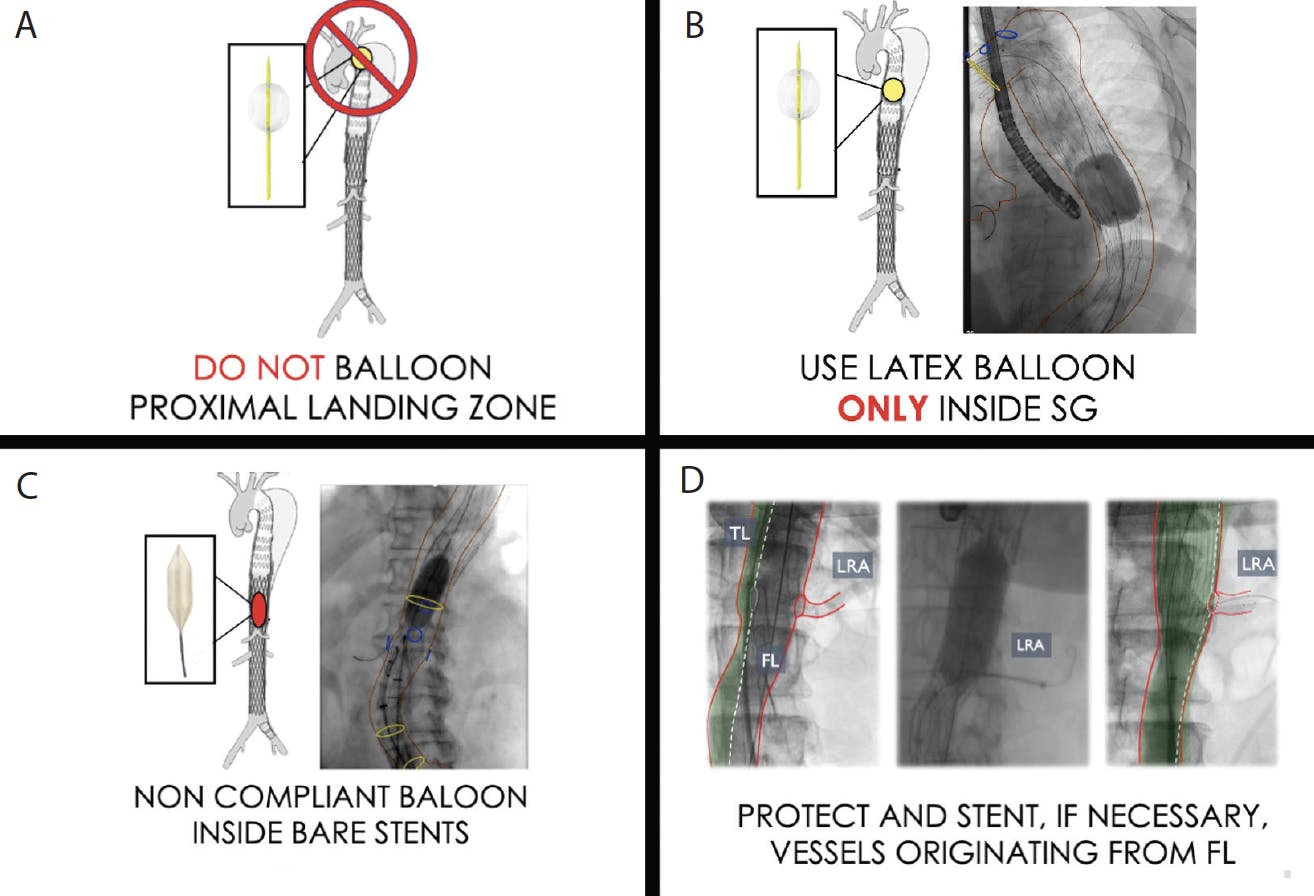
Figure 2. The most important technical requirements for the STABILISE procedure.
The STABILISE procedure implies TL ballooning inside the stent graft and the distally deployed bare stents to rupture the lamella and allow full expansion of the stent, obtaining a uniluminal, single-channeled aorta. For these purposes, a large latex compliant balloon is used only inside the fabric-covered stent graft (Figure 2B). In this area, dilatation of the balloon is constrained within the stent graft nominal diameter, with its fabric protecting the aorta from overdistension.
The abdominal aortic bare stents are then dilated using only a noncompliant or semicompliant balloon such as a valvuloplasty or venoplasty balloon (Figure 2C) and not exceeding the total aortic diameter (TL plus FL) at this level to rupture the intimal lamella and obtain relamination at the abdominal level as well. Balloon dilatations are constantly followed both on fluoroscopy and with transesophageal echocardiography or intravascular ultrasound when possible. In the case of incomplete expansion of the bare stents to the outer aortic wall, ballooning is repeated two more times. After three inflations, no additional maneuvers are performed. Notably, a larger or compliant balloon is never used.
After bare stent positioning and before ballooning, the aorta is checked angiographically. All aortic branches arising from the FL only are catheterized with a 6-F introducer sheath coming from the TL and passing the holes always present in the lamella at the level of the aortic branch; this is done to improve the alignment of the hole in the lamella with the origin of the target artery and stent, if necessary (Figure 2D).
Completion angiographies are then performed at both the proximal and splanchnic levels to confirm FL obliteration and determine patency of all aortic branches. Additional stents/covered stents may be needed to address tears in the distal aorta or iliac arteries. After all the sheaths are removed and the accesses are closed, the patient is immediately awakened to evaluate neurologic integrity.
THE NEED FOR A STABILISE REGISTRY
Recently, several series of patients treated with the STABILISE technique have been published in the literature.6 Some have commented that the technique “seems to be a serious attempt to ‘cure’ dissection patients and prevent late aneurysmal degeneration.”7 The cohorts of patients enrolled in those studies are very heterogeneous, including hyperacute and chronic patients, type A and B dissections, and patients affected by connective tissue disorders. To avoid the issues related to such a heterogeneous case mix and prove the efficacy of the technique, we believe that more solid data are needed from large series with homogeneous patient mixes treated with standardized techniques.
For these purposes, a protocol study for the first physician-initiated, international, multicenter, nonrandomized, observational registry of patients with acute/subacute TBAD treated using the STABILISE technique was approved in September 2018 by the San Raffaele Scientific Institute Ethical Committee. With the STABILISE study (NCT03707743), we aim to gather—for the first time—data from high-volume international aortic centers performing the STABILISE technique to gain a solid scientific basis to evaluate its results. The primary endpoint of this study is 30-day clinical success, defined as successful procedure execution, visceral/iliac vessel patency, and no major adverse events (ie, all-cause mortality, bowel ischemia, myocardial infarction, paraplegia, respiratory failure, stroke, and renal insufficiency). The secondary endpoints are:
- Mortality at 6 and 12 months
- Persistent FL perfusion
- Aortic enlargement requiring open conversion
- Aortic-related reinterventions
- Visceral vessel patency
- Iliac artery patency
- Visceral vessel reintervention for in-stent restenosis/occlusion
- SCI
The study is a prospective and retrospective observational registry including all patients with acute/subacute (up to 90 days from onset) TBAD treated by means of the STABILISE technique. It is designed to enroll at least 100 patients. Follow-up will continue up to 5 years. All patients will be followed according to normal clinical practice, and a thoracoabdominal CT scan will be provided within 1 and 6 months and 1 and 5 years postprocedure. The registry is still enrolling patients and information to participate can be obtained at stabiliseregistry@gmail.com.
CONCLUSION
The PETTICOAT concept has been proven as a valuable adjunct in cases of persistent malperfusion after initial TEVAR for TBAD; however, it failed to be effective in promoting remodeling of the distal thoracoabdominal aorta. The proposed STABILISE concept creates a single aortic channel, therefore effectively treating dynamic malperfusion, avoiding reinterventions, and enhancing aortic remodeling and healing. Further studies are needed to ascertain the safety of this technique in a larger group of patients and evaluate the behavior of the postdissected aorta with time.
1. Kahlberg A, Mascia D, Bertoglio L, et al. New technical approach for type B dissection: from the PETTICOAT to the STABILISE concept. J Cardiovasc Surg (Torino). 2019;60:281-288. doi: 10.23736/S0021-9509.19.10904-4
2. Nienaber CA, Kische S, Zeller T, et al. Provisional extension to induce complete attachment after stent-graft placement in type B aortic dissection: the PETTICOAT concept. J Endovasc Ther. 2006;13:738-746. doi: 10.1583/06-1923.1
3. Mascia D, Rinaldi E, Salvati S, et al. Thoracic endovascular aortic repair with additional distal bare stents in type B aortic dissection does not prevent long-term aneurysmal degeneration. J Endovasc Ther. 2021;28:425-433. doi: 10.1177/15266028211007459
4. Hofferberth SC, Nixon IK, Boston RC, et al. Stent-assisted balloon-induced intimal disruption and relamination in aortic dissection repair: the STABILISE concept. J Thorac Cardiovasc Surg. 2014;147:1240-1245. doi: 10.1016/j.jtcvs.2013.03.036
5. Mascia D, Rinaldi E, Kahlberg A, et al. The STABILISE technique to address malperfusion on acute-subacute type B aortic dissections. J Cardiovasc Surg (Torino). 2022;63:131-136. doi: 10.23736/S0021-9509.22.12249-4
6. Melissano G, Bertoglio L, Rinaldi E, et al. Satisfactory short-term outcomes of the STABILISE technique for type B aortic dissection. J Vasc Surg. 2018;68:966-975. doi: 10.1016/j.jvs.2018.01.029
7. Katsargyris A, Marques de Marino P, Botos B, and Verhoeven E. Considerations for short-and long-term goals in TBAD treatment. Endovasc Today. 2019;18(supp):4-7.
Advertisement
Advertisement