Advertisement
Advertisement
October 2022
Intratumoral Therapies: How to Prepare Your Team for the Coming Wave
Mechanisms of action, logistical challenges, injection safety and technique, and associated adverse events.
Intratumoral therapies are a class of therapeutics designed to be directly injected into tumors under direct visualization or imaging guidance. The concept of delivering therapeutics in this manner is centuries old, with some of the first attempts at treating cancer dating back to the 1800s. However, the practicality of injecting every lesion in a patient with metastatic disease has limited the clinical utility of this approach. With the recent renaissance in cancer immunotherapy and the recognition that local interventions can have systemic anticancer ramifications, intratumoral therapies have once again entered the therapeutic landscape as a potentially powerful way to boost anticancer immunity.
The goal of these therapies is to directly damage tumor and incite an antitumoral immune response to attack tumors elsewhere in the body. Today, only one such therapy is approved: talimogene laherparepvec (T-VEC), a modified herpes virus approved for the treatment of metastatic melanoma, which is administered into cutaneous or lymph node lesions. In many centers, T-VEC is administered by oncologists or surgeons in the office because it is only used for the treatment of superficial lesions. However, multiple intratumoral therapies are under clinical development for which administration requires the procedural expertise of interventional radiologists (IRs). As these therapies approach clinical approval, it is important that IRs are aware of their mechanisms of action as well as potential logistical challenges, techniques, and associated adverse events.
MECHANISMS OF ACTION
Intratumoral therapies under investigation are largely grouped as oncolytic viruses or innate immune system stimulators, although other therapies under investigation do also use conventional chemotherapies. The mechanisms of action of these therapies vary, but they work either by causing local damage to tumor, stimulating the patient’s immune response to induce damage, or some combination thereof. By delivering high concentrations of the treatment directly to the tumor, the hypothesis is that efficacy is maximized while off-target side effects are minimized.
LOGISTICAL CONSTRAINTS
Intratumoral injections can pose significant logistical challenges for a busy interventional practice. Many of these therapies require weekly or biweekly injections, and injections can continue as long as patients respond to the therapy but have residual tumor. As intratumoral procedures increasingly involve visceral tumor injection potentially requiring procedural sedation and CT guidance, existing resources will be increasingly required. Often, these treatments have only a short window of stability after preparation by the pharmacy before they need to be injected, so any delay in procedural start times could potentially necessitate a new drug preparation.
PROVIDER CONSISTENCY/COMMUNICATION
Due to the need for frequent injections, it can be difficult to provide patients with a consistent IR to perform the intratumoral injections. We have found that a team of IRs is necessary so that a trained provider is always available. Although this ensures the patient will have a physician to administer the injection, there are challenges that arise with this model that need to be considered and addressed. A clear problem is one of communication between providers regarding where to inject. With large tumors, a “clock-face” approach may be appropriate, which consists of injecting portions of the tumor across multiple sessions and documenting the location (Figure 1), but all IRs involved in treating these patients need to be aware of the injection plan.
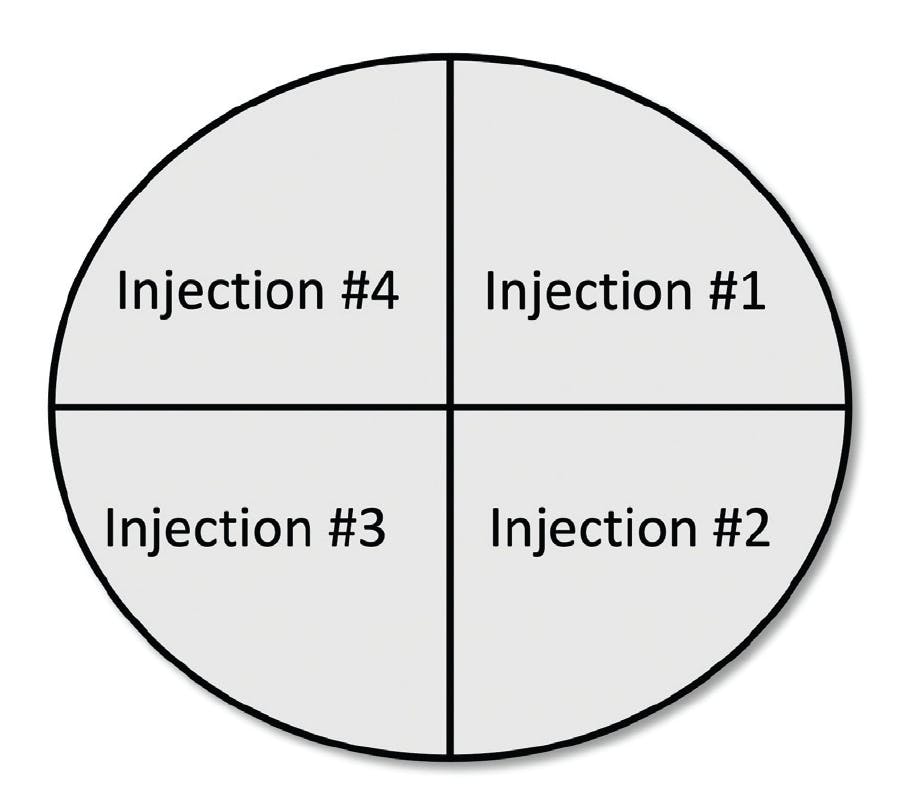
Figure 1. Example of the “clock-face” injection technique. The entire lesion is covered over several injections.
An additional consideration is how patients and oncologists will perceive the model of multiple treating IRs because it distances any one interventionalist from the patient, and oversight of the patient and management of any potential adverse events becomes more difficult. Despite the opportunity for IRs to become much more involved in the treatment of new cancer patients, there is a distinct risk that we are perceived as functionaries. To mitigate this, we have established primary points of contact within our departments for ongoing trials, who serve as the primary communication conduit with the oncologist and the treating IRs.
INJECTION PROCEDURE SAFETY AND TECHNIQUE
Injection procedures for viruses (Figure 2) should include normal contact precautions, and pregnant staff should not care for the patient. Additionally, the procedure room is to be cleaned with bleach following the procedure. Lesions injected with oncolytic virus will typically need to be covered with an occlusive dressing for several days postinjection.
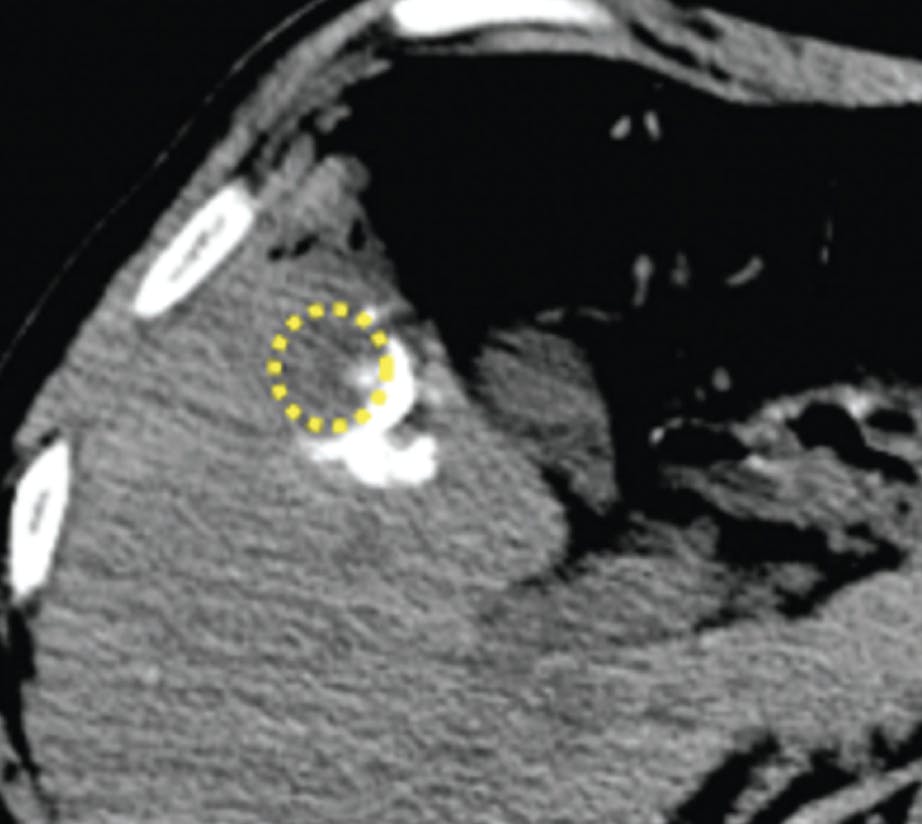
Figure 2. Clinical example of intratumoral therapy dispersing outside of injected tumor. This therapy was iodinated, allowing visualization of therapy within normal hepatic parenchyma. Reprinted from Sheth RA, Murthy R, Hong DS, et al. Assessment of image-guided intratumoral delivery of immunotherapeutics in patients with cancer. JAMA Netw Open. 2020;3:e207911. doi: 10.1001/jamanetworkopen.2020.7911
Different treatments may have specific recommendations for injection technique, but generally, the radial or “fanning” technique is recommended or the “clock-face” technique if being administered over multiple sessions. Trials with which we are involved have not made requirements as to the needle type to use. However, variations in injection technique can have profound effects on accurate drug delivery and consequently on treatment efficacy. Numerous variables impact intratumoral drug delivery, including needle design, injection rate, the tumor’s physical properties, and the drug itself. Some of these variables (eg, needle design, injection rate) are under the direct control of the IR, so it is important to be aware of the tools at our disposal to optimize drug delivery. For small (< 1 cm) lesions, conventional end-hole needles are likely sufficient. For larger lesions and particularly those that are deeply located and are thus a challenge to perform a “fanning” technique within, multiside-hole or multipronged needles can be considered. Preclinical work has shown that the use of a multiside-hole needle significantly improves the distribution of the drug throughout the tumor compared with a single end-hole needle. When injecting under imaging guidance, we assume that treatment is delivered where we injected in, but this may not be the case. Although in most cases we cannot have imaging confirmation of treatment delivery, in trials where radiodense treatment is delivered, physicians at MD Anderson have shown that therapy disperses throughout a much larger volume than the tumor despite appropriate needle targeting (Figure 3).
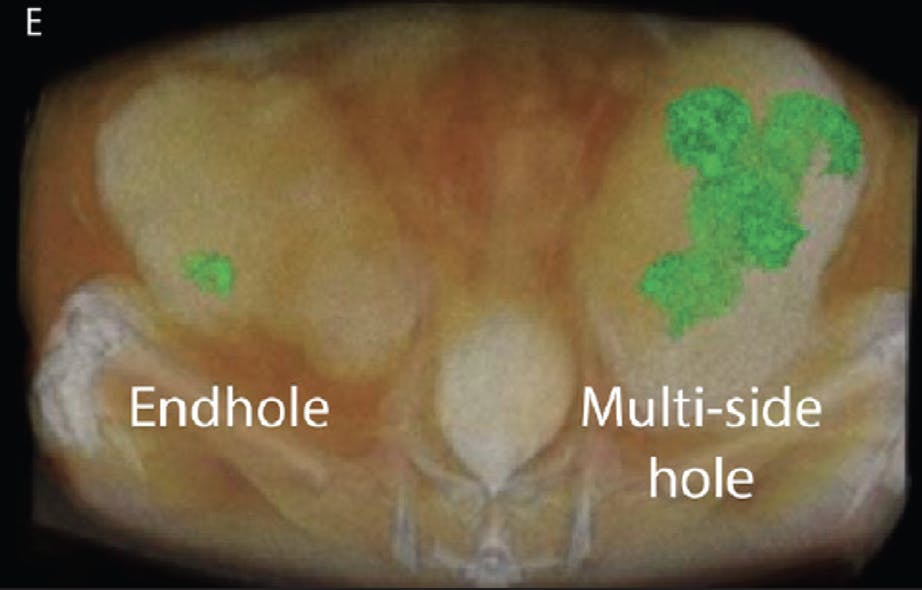
Figure 3. Demonstration of improved distribution throughout tumor with multiside-hole needle. In this animal experiment, the use of a multiside-hole needle improved tumor distribution relative to standard single end-hole needle. Reprinted from Muñoz NM, Williams M, Dixon K, et al. Influence of injection technique, drug formulation and tumor microenvironment on intratumoral immunotherapy delivery and efficacy. J Immunother Cancer. 2021;9:e001800. doi: 10.1136/jitc-2020-001800
ADVERSE EVENT MANAGEMENT
Drug-related reactions can and do occur. In our experience, they typically occur during injection or within 1 hour after injection, although they can occur several hours later. Reactions vary widely but can include hypotension, hypoxia, or subjective shortness of breath, tachycardia, and fever. Management is tailored to signs and symptoms, although avoidance of steroids is recommended due to blunting of the immune response. In the event of a drug reaction, treatment includes halting the procedure, administering diphenhydramine with or without famotidine, managing hypoxia with oxygen and hypotension with fluids, and treating fever or rigors with acetaminophen and meperidine. Recent data suggest that acetaminophen may reduce response to checkpoint inhibitors, and its future use may be curtailed in this population.
CONCLUSION
Intratumoral therapies are an emerging frontier within interventional oncology that have the potential to expand the scope of patient we treat. The injection technique has the potential to significantly influence therapeutic outcomes, and more attention should be paid to this important variable. As IR practices incorporate it into their interventional oncology practice, they will need to be mindful of the logistical challenges posed by the requirement for multiple injections.
Advertisement
Advertisement