Advertisement
Advertisement
October 2022
New Horizons in Ablation: Breast and Thyroid
Breast cryoablation and thyroid nodule radiofrequency ablation are promising, innovative minimally invasive alternatives to surgery.
By Yolanda Bryce, MD, RPVI, and Tim Huber, MD
Ablation is a widely used minimally invasive alternative to surgery and is gaining traction for liver and lung tumor therapy, with great results. Innovation has moved the technique further to areas such as treatment for breast cancer and thyroid nodules. These promising applications represent areas for innovative patient care and research.
BREAST CRYOABLATION
One in eight women will have breast cancer in the United States. In recent years, due to population-based screening, there has been increased incidence in local-stage disease, declining incidence of regional disease, and stabilized incidence of metastatic disease.1,2 Over time, surgical patterns have reflected the incidence of smaller cancers, such as a trend toward breast conservation over mastectomy, with similar recurrence rates and better cosmesis.3 In stage IA breast cancer, a tumor < 2 cm with no lymph node involvement opens the door for further minimally invasive intervention, and multiple industries supporting cryoablation have been keen to explore this space. The phase 2 ACOSOG Z1072 trial demonstrated that tumors < 1 cm were ablated successfully 100% of the time.4
The multicenter, single-arm ICE3 trial studied women aged ≥ 60 years with unifocal, ultrasound-visible invasive ductal carcinoma ≤ 1.5 cm classified as low to intermediate grade, hormone receptor–positive, and human epidermal growth factor receptor 2–negative.5 Interim results showed a 2.06% rate of in-breast tumor recurrence during the mean follow-up period of 34.8 months, and cosmetic satisfaction was reported in > 95% of patients and 98% of physicians. Cryoablation of breast cancer may provide recurrence rates comparable with those of surgery, as well as less morbidity and mortality (especially in institutions that still use general anesthesia for lumpectomies) and better cosmetic results when used in an appropriate population. Studies are ongoing to further define the population that will most benefit.
At Memorial Sloan Kettering Cancer Center, many patients are not eligible for standard-of-care breast cancer surgery due to severe comorbidities, such as cardiac disease, respiratory dysfunction, advanced age and frailty, inability to stop anticoagulation, inability to tolerate hormone therapy or chemotherapy, and concomitant cancer that is responding well to chemotherapy and for which stopping chemotherapy for surgery would be unfavorable. In these patients, tumors also tend to be larger than those in the aforementioned trials. Littrup et al has demonstrated a multiprobe approach that results in good outcome in larger tumors.6 In my (YB) experience, multiple probes can be effective in treating larger tumors and have low recurrence rates. Hydrodissection is used to protect the skin from thermal damage.
Setup for these procedures should include a large bowl for hydrodissection and testing the probe, tubing with syringes of variable sizes (smaller sizes if there’s difficulty infusing the saline, which occurs when the tumor is very close to the skin), and heat packs in sterile sleeves (Figure 1). A good rule of thumb is that every centimeter of tumor will have a probe. This is based on results from the single-probe ACOSOG Z1072 trial (and others) demonstrating 100% single-probe ablation of tumors < 1 cm. The system at our institution is capable of simultaneous multiple probe use.
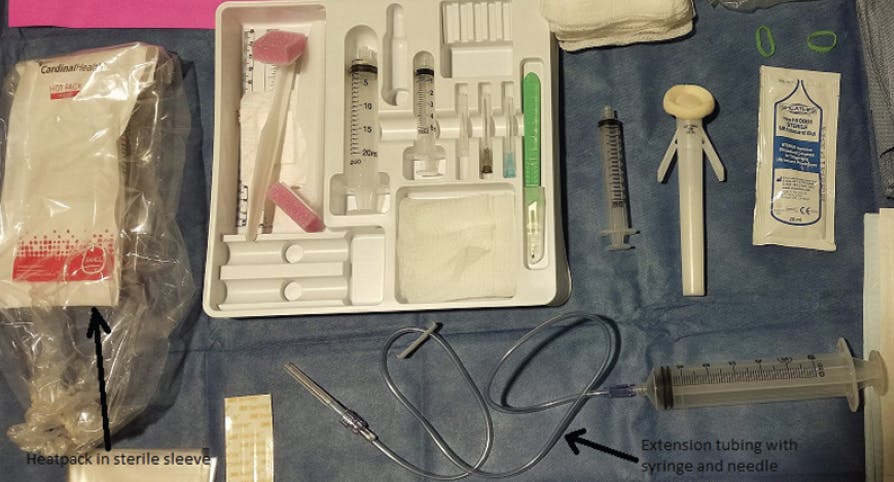
Figure 1. A typical cryoablation setup (minus the large bowl), with a syringe, the extension tubing and syringe for hydrodissection, and a heat pack in a sterile sleeve.
The patient is positioned supine and obliqued as needed so the tumor is as close to parallel to the floor as possible. Using a long-distance access approach, ensure the ice ball is buried completely. Then, position the hydrodissection needle (21 or 22 gauge) above the ice ball to protect the skin (Figure 2). Typical protocol is two freeze cycles of 10 minutes interspersed with an 8-minute passive thaw. However, the timing may be limited by how close the tumor is to the skin and the effectiveness of the hydrodissection. Figure 3 shows an example of this approach.
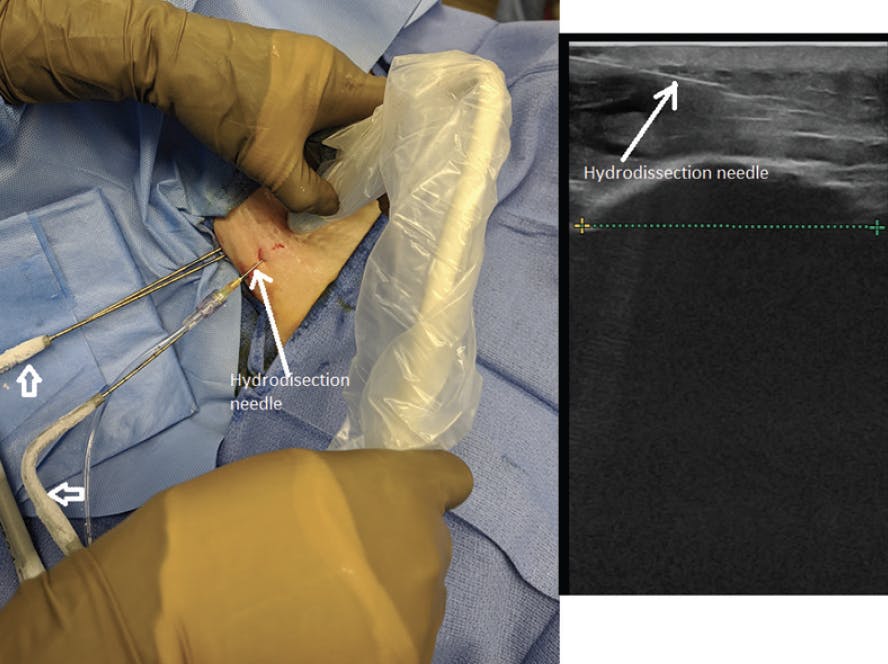
Figure 2. The photograph (A) and ultrasound image (B) demonstrate the hydrodissection needle in place (white arrows) and the cryoablation probes (white open arrows).
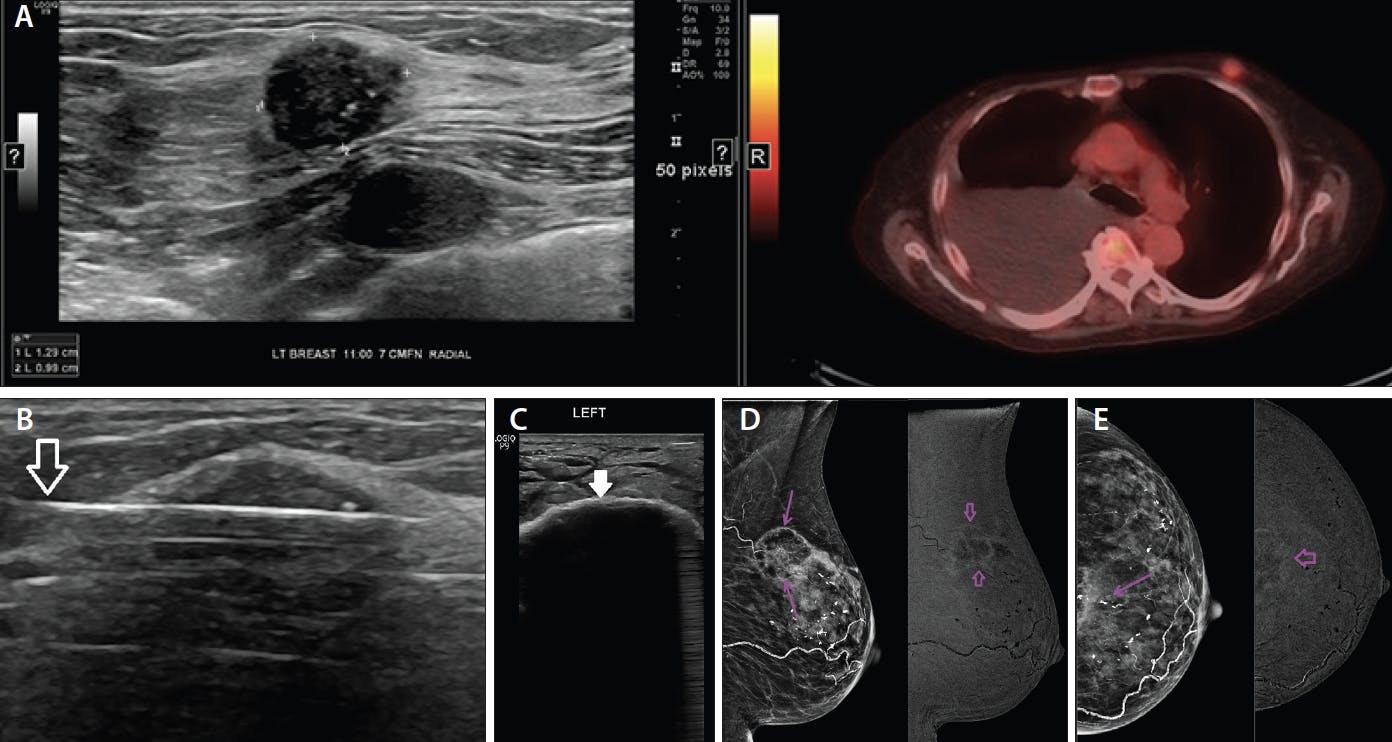
Figure 3. Ultrasound of the biopsy-proven breast cancer and the positron emission tomography (PET)/CT performed for concomitant cancer in this patient with comorbidities demonstrates a PET-avid breast mass (A). Ultrasound image of the cryoablation probe within the tumor (B). Ultrasound image demonstrates a shadowing ice ball (solid white arrow) (C). Contrast-enhanced mammogram in the mediolateral oblique view demonstrates a routine view with the ablation zone (purple arrows) and without enhancement within the ablation zone (open purple arrows) (D). Contrast-enhanced mammogram in the craniocaudal view demonstrates a routine view with ablation zone (purple arrows) and without enhancement within the ablation zone (open purple arrows).
A 1-month postablation follow-up should be performed in clinic to assess how the site is healing and answer any questions. Follow-up at 3 months includes imaging—typically, a mammogram, ultrasound, and contrast-enhanced MRI. For patients not eligible for MRI due to pacemaker, claustrophobia, or preference, contrast-enhanced mammography can be used. For those ineligible for either contrast study, mammogram and ultrasound only are recommended. Patients should be referred to medical oncology and radiation oncology for discussion of adjuvant therapy.
Cryoimmunology effects have been described and serve as a fertile ground for current and future work because breast cancer does not innately generate an immunologic response due to lack of circulating antigens.7 Cryoablation induces cell lysis, which releases the intact intracellular elements that can serve as tumor-associated antigens to the immune system, mimicking a vaccination.8 Our group demonstrated that combining cryoablation and immunotherapy in early stage perioperative breast cancer showed significant increases in peripheral Ki67+ and ICOShi CD4 and CD8 effector T cells, which are markers of immune response.7
Additional studies are needed for the unanswered cryoablation questions, including (1) axilla management, as current standard of care indicates a sentinel lymph node biopsy; (2) appropriate follow-up imaging, because although imaging has improved, the phase 2 ACOSOG trial demonstrated that the negative predictive value of MRI was only 81.2%; and (3) the definition of the appropriate population for this intervention.4,9,10
THYROID NODULE RFA
Thyroid nodule radiofrequency ablation (RFA) was pioneered in South Korea and Italy as a way of treating benign thyroid nodules while preserving thyroid function. RFA is a thermal ablation technique that uses tissue heating to cause localized tissue destruction.11 In the case of thyroid nodule RFA, specialized electrodes and techniques allow for a high degree of precision. By moving the electrode under ultrasound in a dynamic ablation, small subunits of the nodule can be ablated while the surrounding high-risk neurovascular structures are protected (Figure 4). This allows for a minimally invasive, percutaneous, outpatient alternative to hemithyroidectomy.
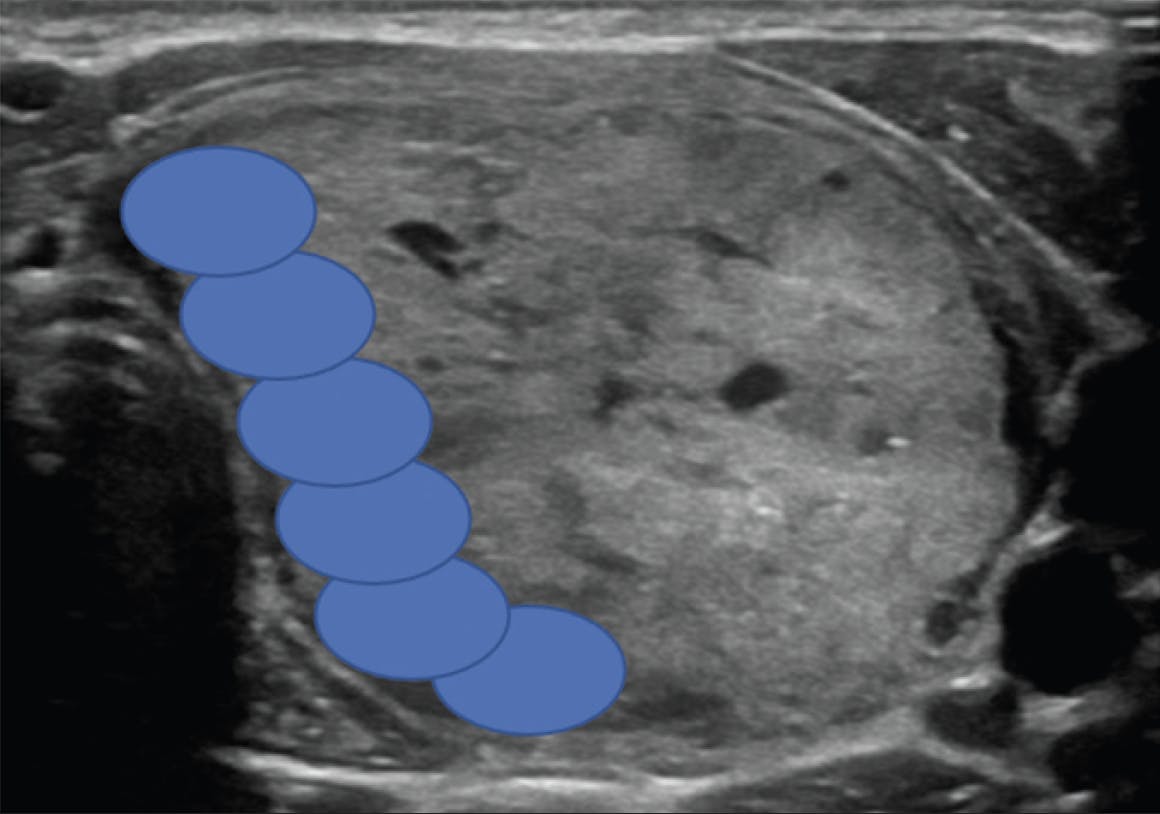
Figure 4. B-mode ultrasound image demonstrates a left-sided thyroid nodule. Overlapping circles demonstrate the ablated subunits after an initial first pass during ablation.
The procedure can be performed in an office-based lab, clinic, or interventional radiology suite. With the patient supine, the interventionalist scans the neck to determine an appropriate needle entry site. A transisthmic approach is recommended to stabilize the electrode and decrease the risk of injury to the recurrent laryngeal nerve (Figure 5). When an entry site is chosen, the skin and perithyroidal soft tissues are anesthetized with 1% lidocaine. The electrode is inserted into the nodule, and ablation proceeds from deep to superficial (Figure 6). Small subunits are ablated in an overlapping fashion while the electrode is slowly retracted. This is called the “moving shot” technique. Ablation continues until there is complete coverage of the nodule. After the procedure, patients should be observed for approximately 1 hour to confirm there are no complications. After ablation, patients are followed in clinic at 1, 3, 6, 9, and 12 months with in-clinic ultrasound to evaluate nodule regression. Thyroid function tests should be checked at 1 and 12 months to confirm normal thyroid function after ablation.
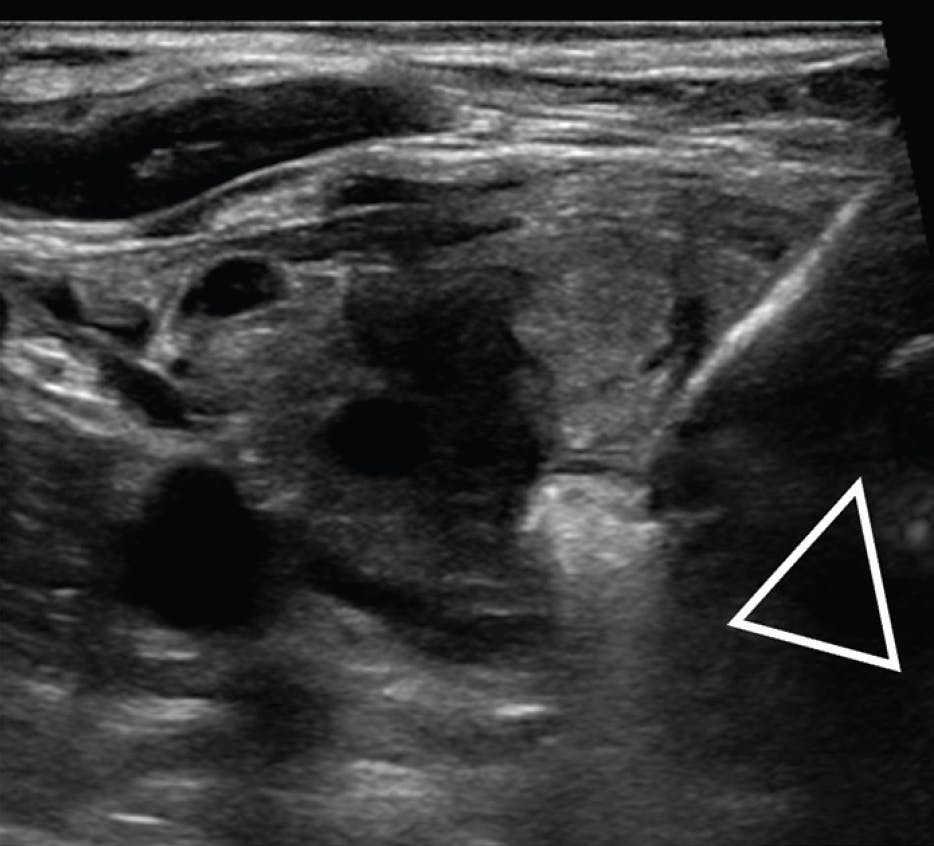
Figure 5. An intraprocedural ultrasound image demonstrates the transisthmic approach. The white triangle outlines the “danger triangle” bordered by the posteromedial margin of the thyroid gland and the trachea. The recurrent laryngeal nerve courses in this location and is more difficult to injure when using the transisthmic approach.
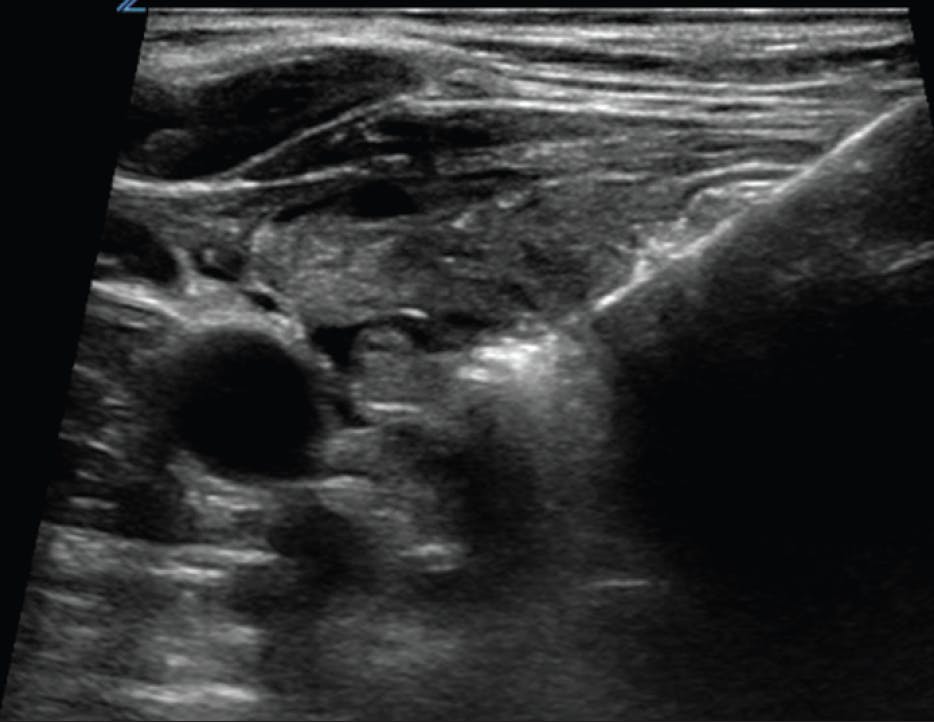
Figure 6. Intraprocedural ultrasound as ablation progresses. The electrode has now been repositioned into a more anterior location for subsequent passes. This avoids microbubbles from prior passes obscuring the view.
Preprocedure evaluation is critical for determining patient candidacy. Candidates for ablation include those with symptomatic, nonfunctional nodules > 1.5 to 2 cm or with functional nodules causing hyperthyroid symptoms. For nonfunctional nodules, two prior benign fine needle aspirations (FNAs) are recommended.12,13 For functional nodules, a single benign FNA is recommended given the low risk of malignancy. Additionally, a growing number of studies have shown that RFA can effectively treat papillary thyroid microcarcinoma (PTMC) and recurrent thyroid cancer. Clinical trials are currently enrolling in the United States.
The international experience with thyroid RFA has shown the procedure to be safe and effective. Jung et al reported the results of a prospective multicenter study of 345 patients who underwent thyroid nodule RFA in Korea.14 The therapeutic success rate was 97.8%, with statistically significant improvements in both symptom and cosmetic scores. At 12 months, the group reported an 80% volume reduction. Bernardi et al reported the 5-year follow-up results of patients treated with RFA in Italy, finding a 72% volume reduction at 1 year and a 77% reduction at 5 years.15 Additionally, 88% of patients required only a single treatment. In the United States, Hussain et al reported their early experience with thyroid RFA for 58 nodules in 53 patients.16 Mean volume reduction at a median 109-day follow-up was 71%. Again, statistically significant improvements were seen in both symptom and cosmetic scores.
Early studies of PTMC have shown that RFA can be an effective treatment. Cho et al reported 98.8% and 100% complete response rates at 24 and 60 months post-RFA.17 Active surveillance of these tumors can be anxiety provoking, and it can be difficult for some patients to follow-up regularly for surveillance ultrasounds. RFA offers an alternative for these patients.
The RFA procedure offers an attractive value proposition for interventionalists. Many practices have access to patients with thyroid nodules because they perform thyroid biopsies. The procedure can be performed in an outpatient setting and without the need for many supplies beyond the specialized electrodes and generator. The biggest hurdle to wider adoption is reimbursement. Currently, practices are split between private payment and insurance-based models. There is no reimbursable CPT code currently, and the appeals process must be navigated if practices chose to submit claims through insurance. Efforts are currently underway to apply for a dedicated CPT code for thyroid ablation, which will lead to even wider adoption and improved availability for patients.
SUMMARY
Breast cryoablation and thyroid nodule RFA are promising frontiers in percutaneous ablation. Radiology practices routinely interface with patients with breast cancer or thyroid nodules. Because radiology already performs diagnostic imaging and biopsy for these patients, percutaneous treatment is a natural extension. We hope that these minimally invasive options will continue to be adopted and become more widely available for patients.
1. American Cancer Society. Breast cancer facts & figures 2019–2020. Accessed September 1, 2022. https://www.cancer.org/content/dam/cancer-org/research/cancer-facts-and-statistics/breast-cancer-facts-and-figures/breast-cancer-facts-and-figures-2019-2020.pdf
2. Pedersen RN, Esen BÖ, Mellemkjær L, et al. The incidence of breast cancer recurrence 10-32 years after primary diagnosis. J Natl Cancer Inst. 2022;114:391-399. doi: 10.1093/jnci/djab202
3. Keelan S, Flanagan M, Hill ADK. Evolving trends in surgical management of breast cancer: an analysis of 30 years of practice changing papers. Front Oncol. 2021;11:622621. doi: 10.3389/fonc.2021.622621
4. Simmons RM, Ballman KV, Cox C, et al; ACOSOG investigators. A phase II trial exploring the success of cryoablation therapy in the treatment of invasive breast carcinoma: results from ACOSOG (alliance) Z1072. Ann Surg Oncol. 2016;23:2438-2445. doi: 10.1245/s10434-016-5275-3
5. Fine RE, Gilmore RC, Dietz JR, et al. Cryoablation without excision for low-risk early-stage breast cancer: 3-year interim analysis of ipsilateral breast tumor recurrence in the ICE3 trial. Ann Surg Oncol. 2021;28:5525-5534. doi: 10.1245/s10434-021-10501-4
6. Littrup PJ, Jallad B, Chandiwala-Mody P, et al. Cryotherapy for breast cancer: a feasibility study without excision. J Vasc Interv Radiol. 2009;20:1329-1341. doi: 10.1016/j.jvir.2009.06.029
7. McArthur HL, Comen EA, Bryce Y, et al. A single-arm, phase 2 study of perioperative ipilimumab, nivolumab, and cryoablation in women with hormone receptor-negative, HER2-negative, early-stage/resectable breast cancer. J Clin Oncol. 2022;16(suppl):TPS617-TPS617. doi: 10.1200/JCO.2022.40.16_suppl.TPS617
8. Aarts BM, Klompenhouwer EG, Rice SL, et al. Cryoablation and immunotherapy: an overview of evidence on its synergy. Insights Imaging. 2019;10:53. doi: 10.1186/s13244-019-0727-5
9. Kim T, Giuliano AE, Lyman GH. Lymphatic mapping and sentinel lymph node biopsy in early‐stage breast carcinoma: a meta-analysis. Cancer. 2006;106:4-16. doi: 10.1002/cncr.21568
10. Pusceddu C, Paliogiannis P, Nigri G, Fancellu A. Cryoablation in the management of breast cancer: evidence to date. Breast Cancer (Dove Med Press). 2019;11:283-292. doi: 10.2147/BCTT.S197406
11. Huber TC, Park AW. Radiofrequency ablation of benign thyroid nodules. Semin Interv Radiol. 2021;38:377-381. doi: 10.1055/s-0041-1731377
12. Kim JH, Baek JH, Lim HK, et al. 2017 thyroid radiofrequency ablation guideline: Korean Society of Thyroid Radiology. Korean J Radiol. 2018;19:632-655. doi: 10.3348/kjr.2018.19.4.632
13. Papini E, Monpeyssen H, Frasoldati A, Hegedüs L. 2020 European Thyroid Association clinical practice guideline for the use of image-guided ablation in benign thyroid nodules. Eur Thyroid J. 2020;9:172-185. doi: 10.1159/000508484
14. Jung SL, Baek JH, Lee JH, et al. Efficacy and safety of radiofrequency ablation for benign thyroid nodules: a prospective multicenter study. Korean J Radiol. 2018;19:167-174. doi: 10.3348/kjr.2018.19.1.167
15. Bernardi S, Giudici F, Cesareo R, et al. Five-year results of radiofrequency and laser ablation of benign thyroid nodules: a multicenter study from the Italian minimally invasive treatments of the thyroid group. Thyroid. 2020;30:1759-1770. doi: 10.1089/thy.2020.0202
16. Hussain I, Zulfiqar F, Li X, et al. Safety and efficacy of radiofrequency ablation of thyroid nodules—expanding treatment options in the United States. J Endocr Soc. 2021;5:bvab110. doi: 10.1210/jendso/bvab110
17. Cho SJ, Baek SM, Lim HK, et al. Long-term follow-up results of ultrasound-guided radiofrequency ablation for low-risk papillary thyroid microcarcinoma: more than 5-year follow-up for 84 tumors. Thyroid. 2020;30:1745-1751. doi: 10.1089/thy.2020.0106
Advertisement
Advertisement