Advertisement
Advertisement
October 2022
Portal Vein Embolization Plus Hepatic Vein Embolization for Hepatic Hypertrophy
Describing the use of hepatic venous deprivation to encourage further growth of the future liver remnant.
By Akash Nijhawan, BS; Oleksandra Kutsenko, MD; and Ripal Gandhi, MD, FSIR, FSVM
Resection of hepatic malignancies has been shown to improve survival; however, surgical resectability is limited by tumor location of metastases and future liver remnant (FLR) size and function. Induction of liver regeneration ensures adequate FLR and allows for liver resection and reduction in posthepatectomy liver failure (PHLF). Current guidelines suggest that the minimum safe FLR volume posthepatectomy is 20% in patients with a normal liver, 30% in patients who received extensive chemotherapy before surgery, and 40% in patients with cirrhosis.1
Portal vein embolization (PVE) was first reported by Makuuchi et al more than 30 years ago and has been widely accepted as a safe and efficacious treatment for stimulating hypertrophy of the FLR.2 A systematic review by Charalel et al surveyed 21 articles with a total of 636 patients with hepatocellular carcinoma who underwent PVE. The study estimated that the mean FLR hypertrophy was 30.9%. Of the 636-patient cohort, 91% of patients successfully qualified for hepatectomy, and only 5% had significant complications.3 Further studies also demonstrated successful FLR hypertrophy in the range of 13% to 40%.4-7
The review also looked at the associated liver partition and portal vein ligation for staged hepatectomy (ALPPS) procedure as a method of inducing hypertrophy of the FLR in the context of extensive bilobar disease. In the first stage, ALPPS involves ligation of a right portal vein branch, leaving only the right hepatic artery to vascularize the liver. Then, after 1 to 2 weeks, the diseased liver is removed.8 Charalel et al found that within the four studies and 65 patients included in the cohort, the mean FLR hypertrophy was 54.9%, of which 98% of patients underwent hepatectomy. Although ALPPS showed excellent growth, there was substantial morbidity with a 38% major complication rate. The authors concluded that PVE properly balanced effectiveness and safety in patients needing expedited FLR growth.3
Although PVE is effective and safe, it is reported that 9% to 40% of PVE patients cannot undergo hepatectomy due to insufficient FLR growth.3,9 Further, disease progression during the time between PVE and surgical resection can allow encroachment of the tumor into healthy liver tissue.
A new percutaneous technique has recently been described that may increase hypertrophy relative to PVE alone without the morbidity associated with the ALPSS procedure. The combination of hepatic and portal vein embolization (HPVE), also known as hepatic venous deprivation, either sequential or simultaneous, has emerged as a viable treatment paradigm to induce greater and accelerated contralateral hepatic hypertrophy compared to PVE alone.
HPVE TECHNIQUE
The patient’s cross-sectional imaging is reviewed in detail prior to performing HPVE—specifically, disease extent, liver volumes, and vascular anatomy are evaluated. It is critical to understand the hepatic vein anatomy, and any accessory hepatic veins (ie, accessory right hepatic vein, duplicated hepatic vein) must be identified. Failure to embolize any variant hepatic veins will result in inadequate hepatic hypertrophy.
On the treatment day, the portal vein is embolized initially. The PVE technique has been described elsewhere and is not the focus of this article.10 In brief, we typically use an N-butyl cyanoacrylate (NBCA) glue such as Trufill (Cerenovus) to embolize the portal vein. For an extended right hepatectomy, either the right portal vein or a combination of the right portal vein and the segment 4 portal veins are embolized. In many cases, our hepatobiliary surgeons will not resect segment 4 in its entirety, and thus we do not routinely embolize the segment 4 portal vein.
For hepatic vein embolization (HVE), we access the right internal jugular vein (IJV) under ultrasound guidance. After the relevant hepatic vein is selected, a 10-F, 40-cm, angled reinforced sheath (Rösch-Uchida transjugular liver access set, Cook Medical) is introduced. Amplatzer plugs (Abbott) are typically used to embolize the hepatic vein. Although the Amplatzer plugs instructions for use recommend 30% to 50% oversizing, we oversize the Amplatzer plugs by ≥ 50% when performing HVE to decrease the risk of plug migration. Several plugs are placed sequentially starting from the distal hepatic vein; however, it is critical to ensure that the proximal 2 cm of the hepatic vein from the inferior vena cava is not occluded to allow for the surgeon to clamp and ligate this portion of the vein during surgery.
The decision to embolize only the right hepatic vein or both the right and middle hepatic veins for extended right hepatectomy is dependent on the initial FLR. We do not have a specific threshold for embolizing both veins, but we do tend to embolize both in patients with particularly small FLRs.
Due to the significant growth of the contralateral liver from venous deprivation after embolization of both the portal and hepatic veins, patients often develop hypophosphatemia after this procedure. We routinely prescribe phosphorus and vitamin B1 and B6 postprocedure.
CASE STUDY
To demonstrate our routine practice, the following case study describes the use of both HVE and PVE (ie, hepatic venous deprivation).
The patient is a woman in her mid 60s with hypertension, dyslipidemia, and hypothyroidism. She was initially diagnosed with adenocarcinoma of the sigmoid colon and underwent robotic-assisted laparoscopic resection of the primary tumor. She then completed 11 cycles of first-line chemotherapy.
Follow-up MRI of the abdomen with and without contrast showed liver-dominant metastatic disease with lesions in segments 6, 8, and 9 (Figure 1). Volumetric measurements showed an FLR of 30.3% (Figure 2).
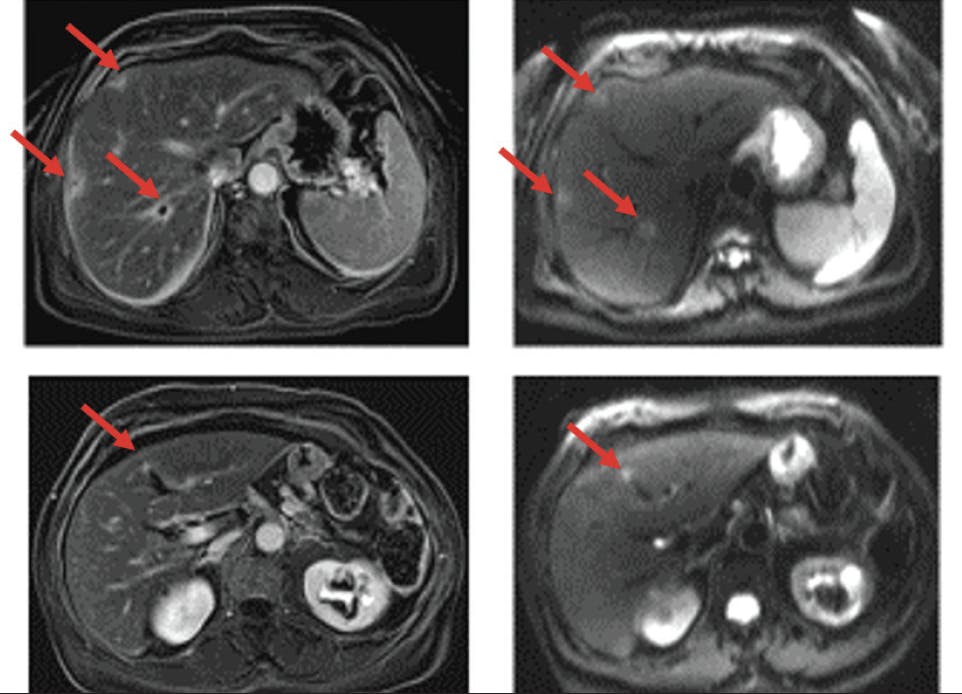
Figure 1. Contrast-enhanced MRI of the abdomen showed multiple hepatic lesions in segments 6, 8, 9a, and 9b that demonstrate enhancement and diffusion-weighted imaging restriction consistent with residual metastatic disease.
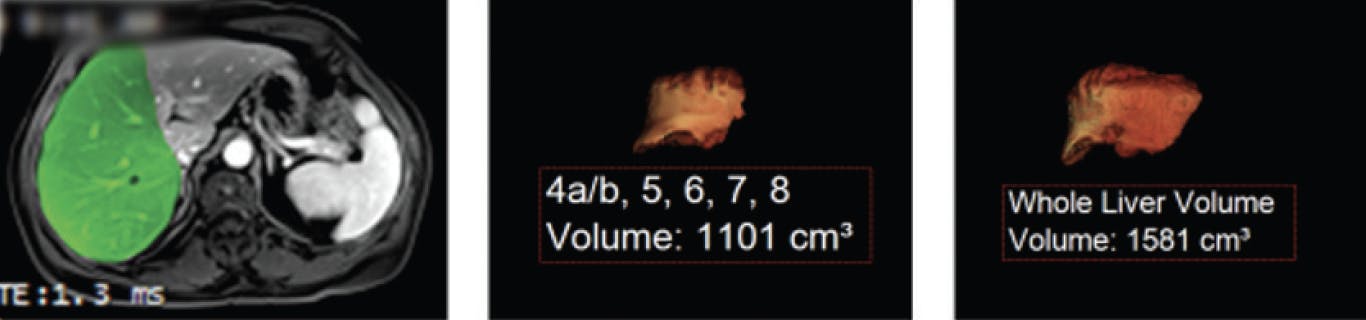
Figure 2. Volumetric measurements demonstrate an FLR volume of 480 mL/30.3%.
The patient was discussed at a multispecialty hepatobiliary tumor board, and the decision was made to perform extended right hepatectomy. Our hepatobiliary surgeons prefer to have an FLR ≥ 35% prior to resection in the setting of prior chemotherapy. Because the FLR volume was borderline in this patient after extensive treatment with chemotherapy, it was decided to perform HPVE to allow for left hepatic lobe hypertrophy. PVE alone may have been adequate to induce sufficient hypertrophy; however, HPVE was chosen given the patient’s significant hepatic disease (Figure 3 and Figure 4). If adequate hypertrophy did not occur or if there was disease progression, this would preclude curative resection. In the meantime, it was planned that the patient would be treated with yttrium-90 radioembolization to prevent further disease progression (especially in segment 4) before achieving adequate FLR for surgery.
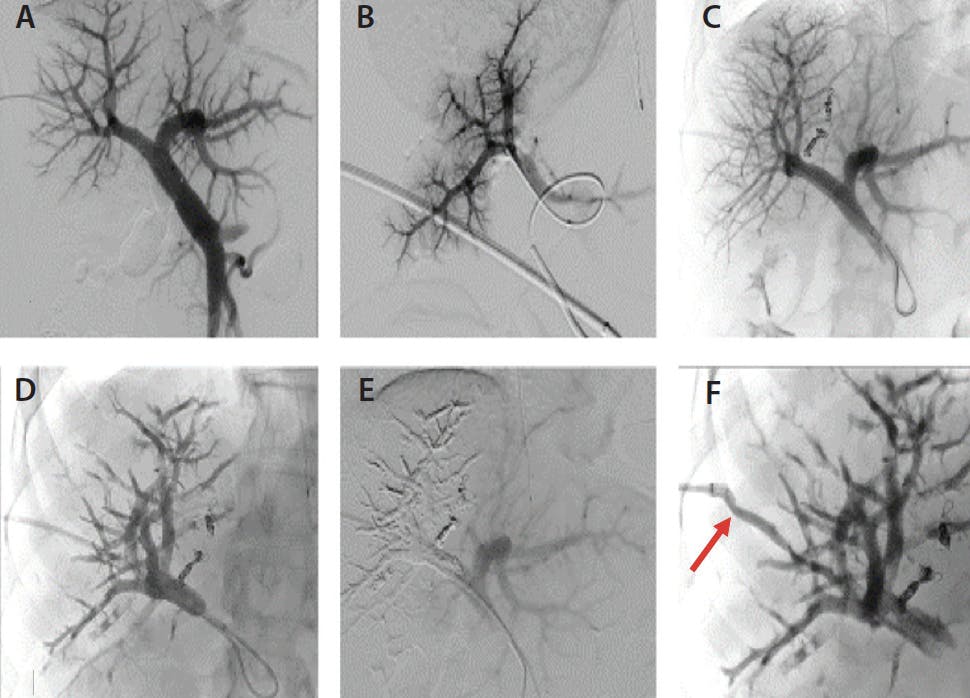
Figure 3. Portal venogram (A). A segment 4 venogram demonstrated close proximity of the vessel origin to the left portal vein (B). Embosphere (Merit Medical Systems, Inc.) and coil embolization (MicroNester, Cook Medical) of the segment 4 portal vein (C). NBCA glue embolization of the right portal vein (D). A postembolization venogram demonstrated complete cessation of flow in the right and segment 4 portal veins, with preserved flow in the left portal vein (E). Catheter tract embolization, performed with glue (F).
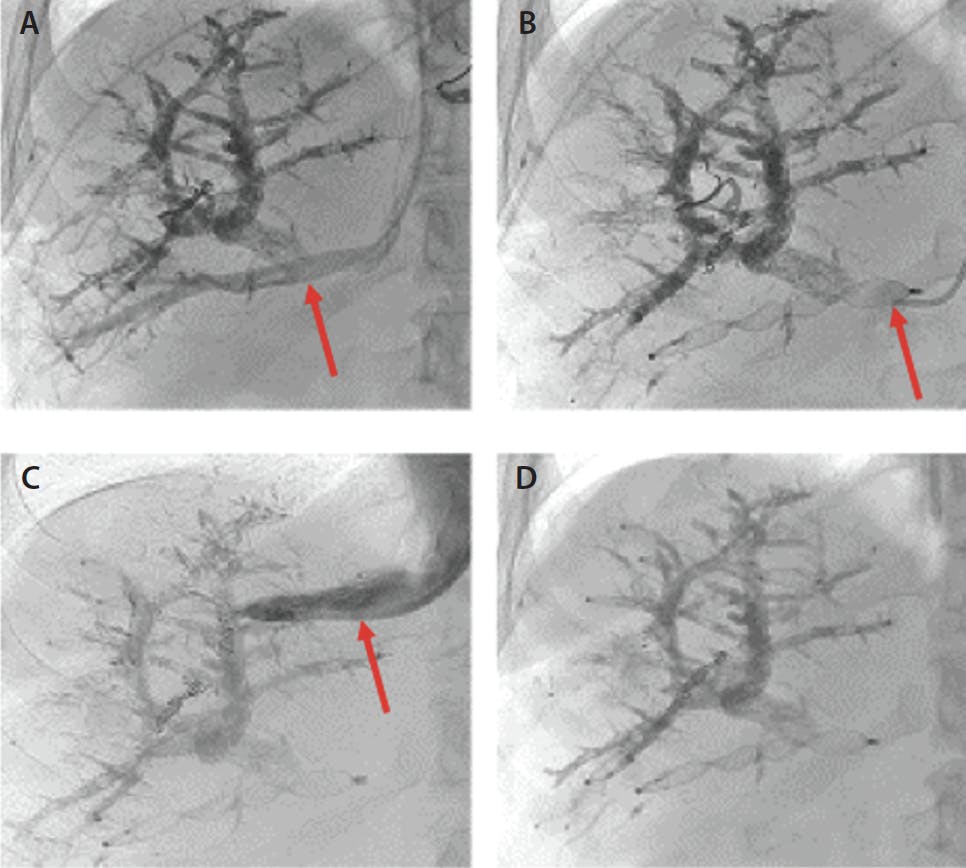
Figure 4. Hepatic venogram from IJV access with sequential subselection of an accessory right hepatic vein and venogram (arrow) (A). Postembolization of the accessory right hepatic vein with Amplatzer plugs (arrow) (B). Selective venogram of the right hepatic vein (arrow) (C). The final image after embolization of the right and accessory right hepatic veins (the right hepatic vein Amplatzer plugs are difficult to see because of glue within the portal vein) (D).
Follow-up MRI at 1 month postprocedure demonstrated enlargement of segments 2 and 3 of the left hepatic lobe (Figure 5). The patient’s final FLR was 43%, which was adequate for undergoing surgery.

Figure 5. A follow-up MRI demonstrated left hepatic lobe hypertrophy with volumetric measurements of the left hepatic lobe segments 2/3 of 805 mL/43%. Postcontrast and diffusion-weighted imaging showed no progression of disease and no metastatic disease in the left hepatic lobe.
This patient underwent successful extensive hepatectomy of segments 4a, 4b, 5, 6, 7, and 8 and part of segment 1, as well as cholecystectomy. She was discharged postsurgery with no complications. Her most recent 2-year follow-up showed no recurrent or residual disease.
LITERATURE REVIEW
A systematic review by Esposito et al assessed six studies with a total of 68 patients who underwent HPV and showed a degree of hypertrophy ranging from 33% to 63.3%. The technical success rate was 100%, with no procedure-related morbidity and mortality. Surgical resection was achieved in 85.3% of patients who underwent HPVE. The authors recommended that simultaneous HPVE be performed in patients at high risk of failing PVE alone and noted that this technique should be used with caution in patients with cirrhosis because HPVE can induce portal hypertension.11
Another systematic review by Heil and Schadde looked at 132 patients in eight studies who underwent HPVE. Technical success was 100%, with 87% of patients having surgical resections, and no severe adverse events. There was no difference in the morbidity and mortality of HPVE when compared with PVE alone.12 One article in the review found that HPVE had a lower incidence of PHLF compared to PVE (0% vs 23%; P = .012).13 Due to incongruences in reporting, no full-cohort comparison could be made regarding the increase in FLR volume. Two of the studies had standardized volumetric data and found no difference between HPVE and PVE in standardized FLR (sFLR) postintervention. However, HPVE resulted in a greater increase in percent hypertrophy when compared with PVE (35% vs 24%; P = .03).14,15 The review concluded that HPVE appeared to be associated with faster, more significant hypertrophy than PVE alone, with an adequate safety profile.12
A retrospective multicenter study by Heil et al outlined 199 patients in seven centers who underwent either PVE (n = 160) or HPVE (n = 39). When compared with PVE, patients undergoing HPVE had a higher feasibility for resection (90% vs 68.1%; P = .007), higher percent hypertrophy (59% vs 48%; P = .020), and a higher kinetic growth rate (sFLR/week; 3.5 vs 2.5; P < .001). There was no statistical difference between the two groups in terms of FLR and sFLR after hypertrophy and no differences between overall and major complications or 90-day mortality.16
In a study by Araki et al comparing PVE (n = 31) with sequential HPVE (n = 12), 75% of patients treated with HPVE underwent resections, there were no severe complications, and the median growth rate of the HPVE group was higher than the PVE group. The study concluded that this procedure was safe and that the addition of HVE to PVE was superior to PVE alone in terms of both volumetric and functional effects.17
HYPER-LIV01 is a randomized trial of 64 patients looking at simultaneous HPVE compared to PVE alone. The primary endpoint is the percent change in FLR 3 weeks after both treatment modalities. Some relevant secondary endpoints include morbidity, mortality, liver failure, and survival.18 HYPER-LIV01 is expected to conclude in 2022.
DRAGON 1 and DRAGON 2 are two ongoing prospective, multicenter, international trials expected to finish in October 2022 and June 2029, respectively. DRAGON 1 aims to evaluate the safety of HPVE and serve as the backbone for evaluating the feasibility of DRAGON 2, a randomized controlled trial.19 DRAGON 2 is estimated to have 348 patients and will examine liver volume at 3 weeks post-HPVE and 5-year overall survival rates of PVE alone and HPVE.20
Results of these trials could solidify current data that point to HPVE as a feasible and safe treatment for preventing insufficient hypertrophy of the FLR.
CONCLUSION
HPVE with simultaneous embolization for the portal vein and one or more hepatic veins is safe and effective for inducing contralateral hepatic hypertrophy. Some studies have shown that HPVE results in faster and greater hypertrophy than PVE alone, although further studies are needed to directly compare the two techniques and analyze the impact of hepatic venous deprivation on tumor growth. In our experience, HVPE is a promising and useful minimally invasive technique to induce maximal contralateral hepatic hypertrophy in patients deemed unresectable due to extensive disease and ultimately provide them a chance for surgical cure.
1. Ribero D, Chun YS, Vauthey JN. Standardized liver volumetry for portal vein embolization. Semin Intervent Radiol. 2008;25:104-109. doi: 10.1055/s-2008-1076681
2. Aoki T, Kubota K. Preoperative portal vein embolization for hepatocellular carcinoma: consensus and controversy. World J Hepatol. 2016;8:439-45 doi: 10.4254/wjh.v8.i9.439
3. Charalel RA, Sung J, Askin G, et al. Systematic reviews and meta-analyses of portal vein embolization, associated liver partition and portal vein ligation, and radiation lobectomy outcomes in hepatocellular carcinoma patients. Curr Oncol Rep. 2021;23:135. doi: 10.1007/s11912-021-01075-1
4. Pandanaboyana S, Bell R, Hidalgo E, et al. A systematic review and meta-analysis of portal vein ligation versus portal vein embolization for elective liver resection. Surgery. 2015;157:690-698. doi: 10.1016/j.surg.2014.12.009
5. Vyas S, Markar S, Partelli S, et al. Portal vein embolization and ligation for extended hepatectomy. Indian J Surg Oncol. 2014;5:30-42. doi: 10.1007/s13193-013-0279-y
6. Abulkhir A, Limongelli P, Healey AJ, et al. Preoperative portal vein embolization for major liver resection: a meta-analysis. Ann Surg. 2008;247:49-57. doi: 10.1097/SLA.0b013e31815f6e5b
7. Pamecha V, Glantzounis G, Davies N, et al. Long-term survival and disease recurrence following portal vein embolisation prior to major hepatectomy for colorectal metastases. Ann Surg Oncol. 2009;16:1202-1207. doi: 10.1245/s10434-008-0269-4
8. Hotineanu A, Burgoci S, Borta E. ALPPS procedure. The new frontier in advanced liver surgery. Single centre experience and literature review. Chirurgia (Bucur). 2021;116:409-423. doi: 10.21614/chirurgia.116.4.409
9. Alvarez FA, Castaing D, Figueroa R, et al. Natural history of portal vein embolization before liver resection: a 23-year analysis of intention-to-treat results. Surgery. 2018;163:1257-1263. doi: 10.1016/j.surg.2017.12.027
10. Luz JHM, Luz PM, Bilhim T, et al. Portal vein embolization with n-butyl-cyanoacrylate through an ipsilateral approach before major hepatectomy: single center analysis of 50 consecutive patients. Cancer Imaging. 2017;17:25. doi: 10.1186/s40644-017-0127-3
11. Esposito F, Lim C, Lahat E, et al. Combined hepatic and portal vein embolization as preparation for major hepatectomy: a systematic review. HPB (Oxford). 2019;21:1099-1106. doi: 10.1016/j.hpb.2019.02.023
12. Heil J, Schadde E. Simultaneous portal and hepatic vein embolization before major liver resection. Langenbecks Arch Surg. 2021;406:1295-1305. doi: 10.1007/s00423-020-01960-6
13. Laurent C, Fernandez B, Marichez A, et al. Radiological simultaneous portohepatic vein embolization (RASPE) before major hepatectomy: a better way to optimize liver hypertrophy compared to portal vein embolization. Ann Surg. 2020;272:199-205. doi: 10.1097/SLA.0000000000003905
14. Guiu B, Quenet F, Escal L, et al. Extended liver venous deprivation before major hepatectomy induces marked and very rapid increase in future liver remnant function. Eur Radiol. 2017;27:3343-3352. doi: 10.1007/s00330-017-4744-9
15. Kobayashi K, Yamaguchi T, Denys A, et al. Liver venous deprivation compared to portal vein embolization to induce hypertrophy of the future liver remnant before major hepatectomy: a single center experience. Surgery. 2020;167:917-923. doi: 10.1016/j.surg.2019.12.006
16. Heil J, Korenblik R, Heid F, et al. Preoperative portal vein or portal and hepatic vein embolization: DRAGON collaborative group analysis. Br J Surg. 2021;108:834-842. doi: 10.1093/bjs/znaa149
17. Araki K, Shibuya K, Harimoto N, et al. A prospective study of sequential hepatic vein embolization after portal vein embolization in patients scheduled for right-sided major hepatectomy: results of feasibility and surgical strategy using functional liver assessment. J Hepatobiliary Pancreat Sci. Published online June 23, 2022. doi: 10.1002/jhbp.1207
18. Deshayes E, Piron L, Bouvier A, et al. Study protocol of the HYPER-LIV01 trial: a multicenter phase II, prospective and randomized study comparing simultaneous portal and hepatic vein embolization to portal vein embolization for hypertrophy of the future liver remnant before major hepatectomy for colo-rectal liver metastases. BMC Cancer. 2020;20:574. doi: 10.1186/s12885-020-07065-z
19. DRAGON 1- Training, accreditation, implementation and safety evaluation of combined PVE/HVE. Clinicaltrials.gov website. Accessed August 23, 2022. https://clinicaltrials.gov/show/NCT04272931
20. The DRAGON 2 trial. Clinicaltrials.gov website. Accessed August 23, 2022. https://clinicaltrials.gov/show/NCT05428735
Advertisement
Advertisement