Advertisement
Advertisement
October 2022
Roundtable Discussion: Has Interventional Oncology Established Itself as the Fourth Pillar of Oncology?
Top interventional oncology voices discuss the additional needs for the specialty, the most important developments to date, how interventional oncology interacts with interventional radiology and diagnostic radiology, and their hopes for interventional oncology in the future.
Moderator: Suvranu Ganguli, MD, FSIR;
Panelists: Karen Brown, MD, FSIR; Riad Salem, MD, MBA; and Michael C. Soulen, MD
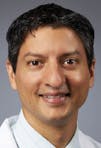
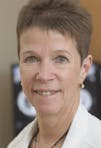
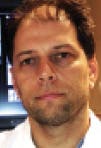

Has interventional oncology (IO) established itself as the fourth pillar of oncology? If so, when and how did it happen, and if not, what needs to be done?
Dr. Brown: Unfortunately, this is not a “yes” or “no” question. In my view, the answer should be “yes.” Although I think IO is the fourth pillar at virtually every cancer center and advanced academic center, I wonder if it remains less so at other centers and possibly many private facilities in the United States. At Memorial Sloan Kettering Cancer Center (MSKCC), IO firmly established itself as the fourth pillar more than a decade ago. To become that fourth pillar, it was essential to have an established freestanding interventional radiology (IR) outpatient clinic, a recognized and respected presence on the hepatopancreaticobiliary disease management team (DMT) and other DMTs, and be a constant presence at those weekly conferences. It required active participation of IRs with special interest and expertise in malignancies affecting the liver and biliary tree and other organ systems who spoke up to present treatment alternatives and were able to back up treatment recommendations with a knowledge of the literature—including how the outcome of alternative treatments (chemotherapy, surgery, radiotherapy) compared to IO. This is not for the faint of heart, and I would not routinely recommend it for IRs early in their career when one should listen to learn. It takes time to be accepted as an authority in any field, and it is so important for IRs to present themselves well in such venues; this requires knowing not only “the IR part” but also the disease process, natural history of the disease, historical treatment options, new treatment options, and recent relevant studies, including those outside of IR journals.
Many academic centers lack freestanding IR clinics; there is little contact between IR and referring clinicians, time is not set aside to allow for participation in DMTs or tumor boards that might occur at “inconvenient” times during the day, or there are not enough staff to spare for those conferences. If we remain isolated within our lead walls, we will never truly be part of the oncologic team. We will be underutilized, called on only in situations where we are the “last resort,” and left to provide palliative care and perform “service work.” Instead, we can improve the care of cancer patients with minimally invasive techniques that allow for treatment of tumors with image guidance, mitigate discomfort from painful metastases, stabilize bones at risk of pathologic fracture, open veins (systemic and portal) with cancer-caused narrowing and related symptomatology—to mention only a few areas where we might have an impact. To work our magic, we need to get the word out and see patients who might benefit from our skill set in clinic. We cannot rely on our clinical colleagues to make us the fourth pillar; we must get out there and do it ourselves. Fortunately, as young oncologists and oncologic surgeons leave the hallowed halls where IO is established, many of them look to have such IR partners where they go to practice. We need to ally ourselves with them to change the “turn of the century” culture that still exists at many hospitals where we work. We also need to convince leaders in those hospitals (radiology department chairs, physicians-in-chief, chief medical officers) that this is a good thing for patients, the hospital, and the bottom line. The downstream revenues generated from our work should not be ignored. It takes work, but it can be done.
Dr. Salem: The establishment of IO as a specialty and as a fourth pillar is an ongoing process, but we’ve made tremendous strides. When you say you are an interventional oncologist, most people recognize that you are an interventional radiologist focusing on oncologic therapies. This happened about 6 years ago with the establishment of societies that focus on IO, such as the Society of Interventional Oncology (SIO), and their presence at large meetings, as well as the initiation and implementation of large-scale randomized clinical trials that combine interventional therapies with standard-of-care, surgical, ablative, or chemotherapeutic therapies. With these efforts, it really means that you’re here and you have tremendous knowledge, experience, and therapeutic procedures to contribute to patient management and advance the science forward.
Dr. Soulen: Not yet. The cancer world is driven by data. The medical oncologists and radiation oncologists have it, and surgical oncology and IO have some catching up to do. Medical and radiation oncology have federally funded cooperative groups and backing from billion-dollar companies that are required to do high-level clinical trials to sell their products. Training in cancer biology and research is baked into the postgraduate curricula of medical and radiation oncology.
IR lacks a trained research workforce, infrastructure, and industry support for our devices and procedures. This will require a long, multipronged effort at the residency and professional level, including:
- Growing the research workforce by training current IR faculty (eg, Radiological Society of North America grant writing and clinical trials methodology workshops)
- Building research education into the IR residency, as is already standard in medicine, surgery, and radiation oncology
- Leveraging existing trials infrastructures, such as the National Clinical Trials Network cooperative groups
- Developing an IR clinical trials network
- Collaborating with industry to develop and fund clinical trials of mutual interest
- Building collaborations with medical/radiation/surgical oncology to do multidisciplinary trials integrating IO with systemic and other targeted therapies
How and when did IO become a subspecialty in IR? What do you think have been the most important developments in the subspecialty?
Dr. Salem: The recognition and the creation of the SIO was an important milestone. The incorporation of IO types, meetings, discussion, plenary sessions, and symposia at surgical and oncologic meetings is a major advancement that has led to the subspecialty being recognized as an important field and a component that moves the field forward and provides patients with new treatment opportunities. Another thing that is very important when it comes to the recognition of IR in the IO space is the addition of IO therapies into guidelines. You are not practicing standard-of-care medicine if you do not have IO therapies as part of your therapeutic armamentarium. Clearly, once IO therapies were incorporated into treatment guidelines, it was shown that they can contribute to the management of the next generation of patients.
Dr. Brown: The first meeting I remember devoted to IO was the London Cancer IR Innovations meeting in 2006, followed by the First World Conference on Interventional Oncology (WCIO) organized by Professor Luigi Solbiati and held in Lake Como in 2006. This meeting was followed by the WCIO and Best of American Society of Clinical Oncology, jointly sponsored with Society of Interventional Radiology (SIR) and held in Los Angeles in 2008. The Symposium on Clinical Interventional Oncology (CIO) split off from International Symposium on Endovascular Therapy–CIO and became an established annual meeting around 2008 as well. The SIO grew out of the WCIO and became established as an independent society in 2017 when it became clear that there was too much going on in the IO space to be only a “sideshow” at the SIR annual meeting. I think the most important developments have occurred in the refinement of transarterial treatment for liver malignancies with better patient selection, improved tools, and the addition of radioembolization. The expansion of ablative techniques with the addition of microwave ablation and irreversible electroporation are important as well. A better understanding of where and when to deploy these techniques is essential, and important work in this area has been ongoing and continues at an impressive pace. The translational work undertaken by interventional radiologists is also impressive, with focus on the tumor microenvironment, tumor genomics, and immuno-oncology and its application.
Dr. Soulen: IR is a technology-based specialty, but its applications are specific to organs and diseases. Specialists in vascular disorders, lymphatic disorders, women’s health, musculoskeletal, or cancer all speak different languages, with different pools of collaborating physicians. Interventional radiologists focusing on cancer learn the language of oncology, staging systems, treatment guidelines, drug combinations, mutations, biomarkers, response assessment, treatment endpoints, cancer biology, and immunology. They sit as equal partners at tumor boards and provide comprehensive clinical and perioperative care for cancer patients as part of multidisciplinary teams. This unique body of knowledge and expertise defines the IR specialist in oncology; a similar but distinct expertise defines IR specialists in vascular, lymphatic, or other diseases.
How do you see the subspecialty of IO interact with the rest of the field of IR? With diagnostic radiology?
Dr. Soulen: Like any therapeutic specialist, interventional radiologists are consumers of diagnostic radiology services. Interventional oncologists bring a special expertise to cancer imaging. Diagnostic radiologists may not be aware of what locoregional therapies have been performed or their unique imaging attributes. Personal review of images, oftentimes in consultation with diagnostic imaging experts, is essential for IO practice. Written reports alone are inadequate.
How IO practice fits into overall IR practice is site dependent. At one extreme, IO is all you do at dedicated cancer centers, with subspecialization within IO by multidisciplinary team. In large academic and community groups, individual interventional radiologists may have a personal practice centered on IO (or some other IR specialty), while everyone in the group provides general IR services. Even in this setting there can be subspecialization. For example, we have > 10 tumor boards at Penn. An individual IR faculty member is assigned to each relevant tumor board, and that cancer dominates their practice. In small practices, interventional radiologists are, of necessity, generalists, just as the medical oncologists at small hospitals see all cancer patients and there may be a single tumor board for all cancers.
Dr. Brown: I believe all interventional oncologists need to be interventional radiologists first and foremost; I do not believe that all interventional oncologists need to be able to place aortic stent grafts. There is a need to be well versed in all of IR, while subspecialization in one or more focused areas of IO is probably the best way to become an expert and be able to participate on a meaningful level in discussions with our clinical colleagues. Any cancer patient could need a line placed, a nephrostomy, or an embolization for a gastrointestinal bleed—we should all be able to do those things. However, just because I can ablate a liver lesion doesn’t mean I should also be ablating renal masses. This could simply be a bias I picked up working at MSKCC; I personally do not believe I could be as “expert” about the kidney as I am about the liver unless I had another entire career to devote to renal tumors. When it comes to diagnostic radiology, I worry that many radiology chairs do not understand the type of support IR requires and how different success looks for our practice compared with diagnostic radiology. This leads to many IR sections being underresourced and interventional radiologists forced into a main diet of service work. This is very short sighted on the part of department chairs and hospital administrators and will lead to the erosion of IR in academic centers if not recognized and ameliorated.
Dr. Salem: The interaction between diagnostic radiology and IO continues to be one that is important because imaging follow-up of patients after oncologic therapies is essential to proper overall follow-up of patients, and we need input from our diagnostic radiology colleagues to help us interpret those scans, educate us about those scans, and study and perform research on those scans to evaluate how we can improve. The only way to follow up patients after you’ve performed an oncologic therapy is with imaging and blood tests, so that becomes the litmus test. After a patient undergoes oncologic therapies, they only want to know one thing: Is the tumor gone, or is the tumor smaller? So, use of imaging with the help of input from diagnostic radiology colleagues is critical from that aspect.
As far as interacting with the rest of IR, we are colleagues. We are all interventional radiologists at heart with a special area of interest in IO, and the same can be said for IRs who are focused on vascular, venous, or neurologic disease. We all have the main protoplasm of IR and have a lot of procedures that span all of us, but then we all have the subspecialty that allows us to practice a more focused level of IR for specific subsets of patients.
How can, or how should, IR societies and training programs help develop the subspecialty?
Dr. Brown: One of the things I think could be done is to hold all IR training programs to the requirement that trainees have experience in the outpatient clinic. When site visits are conducted, there should be an identifiable freestanding IR clinic. If not, then programs should be concerned about losing their ability to train future interventional radiologists. This is a strategy that can be helpful in putting pressure on radiology chairs and used to obtain support for clinic space at institutions that are severely underresourced. Training programs must emphasize the care of the patient as much as the performance of the procedure. This is how we gain our colleagues’ respect and get at least a high chair at the table, if not a seat. IR (and IO) societies should continue to support research with high-level clinical studies that demonstrate the value of our work and, in particular, the value of IO.
Dr. Salem: As I mentioned, SIO, SIR, Cardiovascular and Interventional Radiological Society of Europe, and the Japanese societies have all clearly recognized the importance of IO. They now have IO as part of their teaching curriculum, and they are all actively involved in developing and creating meetings, sessions, and symposia focused on IO that are meant for the experienced interventional oncologist, as well as the training medical student, resident, and fellow. The continuous training and educational forums that are available are what allow a subspecialty to grow and improve to generate the next levels of data and entrepreneurs and inventors that are going to create the new therapies that are going to take us into the future.
In the Dotter lecture I gave this year at the SIR annual meeting, one of the topics I stressed is mentorship. The idea that the mentor-mentee relationship continues to be propagated and developed, from more senior to more junior faculty, residents, or students is something that’s very important, because it is with that relationship that you will spark that innovative research interest and make sure that some of the academic components are maintained as new students and residents rise through the ranks and help develop the subspecialty. Mentorship is critical to fostering that kind of environment and culture for us to move ahead.
Dr. Soulen: Subspecialization within IR is both necessary and inevitable. The creation of the IR residency leads logically to the development of IR fellowships in IO and other areas. I often muse on the history of surgical oncology. They invented their own specialty, defined and accredited training programs, and certified trainees—all over the objections of their parent professional organizations and outside official accreditation structures. Now they are part of the mainstream.
The IR residency is still maturing, but now is the time to start planning for fellowships even though they will be years in the making.
Where do you see the field of IO in 10 years?
Dr. Salem: An article I coauthored with Dr. Tim Greten from the National Institutes of Health recently came out called “Interventional Radiology Meets Immuno-oncology for Hepatocellular Carcinoma.”1 This review article talks about the next level of interaction between interventional radiologists and the oncology and hepatology communities as it relates to immunotherapeutics. The future is the combination of the available IO therapies with other very potent and powerful treatments that are chemotherapeutic, radiotherapeutic, immuno-oncologic—all of these combinations.
The other thing that I see in the next 10 years is the expansion of the therapies that have traditionally focused on the liver and a few organs to multiple organ sites. As an example, we have thoroughly developed the field of radioembolization, yttrium-90 (Y-90), to the liver. We are now starting a clinical trial of Y-90 to the brain. There are either studies completed or initiated of Y-90 to the spleen, kidneys, prostate, and lungs. The idea is that we have a lot of tools that work very well, and now we have to expand the organ sites with which we apply them. That will involve heavy clinical research, investment by industry, and outside-the-box thinking, where we’re able to implant these therapies in places we have not thought of before. Because of evolution in microcatheters and wires, we’re now able to get to smaller places and place higher doses, so the key in the next 10 years will be collaboration. It’s going to be extrahepatic and novel indications to new areas of the body that have not been previously attempted, as well as combination treatments between the interventional oncologic therapies and everything else that can be offered.
Another exciting thing I see is expansion of IO therapies into multiple stages of the guidelines. Right now, the guidelines are very rigid in terms of what treatment can be used in which stage of disease. However, some treatments are extremely versatile, so I think in the next 10 years, we’ll see these treatments expanded to multiple stages of the guidelines to show how nimble and effective the IO therapies are.
Dr. Brown: In 10 years, I hope we will have delineated which patients are most likely to benefit from transarterial treatment for hepatocellular carcinoma (HCC). It would be nice to have more liquid embolics that could be drug loaded (perhaps immunotherapy) for deep penetration to treat HCC. We need better prognostic indicators. I hope that ablation for metastatic colorectal cancer to the liver, primary lung cancer, and renal cancer will have been accepted as standard of care for many patients and that we will have learned how to amplify the effects of ablation either with immune modulators, other drugs, or better technology. I’d love to see histotripsy brought to market and also see practices expand their musculoskeletal IO work.
Dr. Soulen: My aspiration is that we will be the fourth pillar of cancer care. We will have training programs generating a substantial cohort of clinicians and clinician-scientists to provide access to minimally invasive cancer care and continue advancing the field of IO. We will have created a solid evidence base to firmly place IO within National Comprehensive Cancer Network and other guidelines. We will have a self-sustaining clinical trials network fueled by participation of hundreds of interventional radiologists from across the country and the world. Partnerships with industry and government will provide the many millions of dollars needed for IO research on a scale comparable to other oncologic specialties.
Or . . . some genius will invent the cure for cancer and put us out of business. There are always declots!
1. Salem R, Greten TF. Interventional radiology meets immuno-oncology for hepatocellular carcinoma. J Hepatol. Published online August 18, 2022. doi: 10.1016/j.jhep.2022.08.003
Disclosures
Dr. Ganguli: Consultant to Sirtex, Boston Scientific Corporation, Medtronic, Instylla, ABK Medical, Avania/Boston Biomedical Associates.
Dr. Brown: Consultant to AstraZeneca and Instylla.
Dr. Salem: Consultant to Bard, Boston Scientific Corporation, Cook, Eisai, Genentech, Autem, Roche, Merck, and AstraZeneca.
Dr. Soulen: Research grants from Guerbet, Sirtex, and Pfizer; consultant to Guerbet, AstraZeneca, and Genentech.
Advertisement
Advertisement