Advertisement
Advertisement
October 2022
Sponsored by Endologix
The Role of Adaptive Sealing Technology in Clinical Practice
Patients with abdominal aortic aneurysms (AAAs) may be ineligible for on-label endovascular aortic repair (EVAR) because approximately 50% have aortic anatomy that falls outside most EVAR device instructions for use (IFU) for treatment.1-3 Additionally, although one in five EVAR patients are women, only 34% are eligible for on-label EVAR due to anatomic features.4-6
Anatomic features that can limit on-label EVAR include short necks, small access vessel diameter, and excessive neck angulation.3,7 Short proximal neck length is the most common excluding factor for EVAR,8 with nearly one-third of AAA patients presenting with neck < 10 mm.9 Antoniou et al reported that patients with these hostile neck anatomies have a ninefold increased risk for aneurysm-related mortality and a fourfold increased risk for type Ia endoleaks.10
The ALTO® Abdominal Stent Graft System (Endologix) was designed to expand indications for treatment of patients with short neck aneurysms. Without adjunctive devices, ALTO can treat aortic neck lengths as short as 7 mm. Furthermore, ALTO can treat patients on-label with ≤ 60° juxtarenal aortic neck angulation, significant thrombus ≤ 8 mm in thickness, and small access and tortuous vessels.
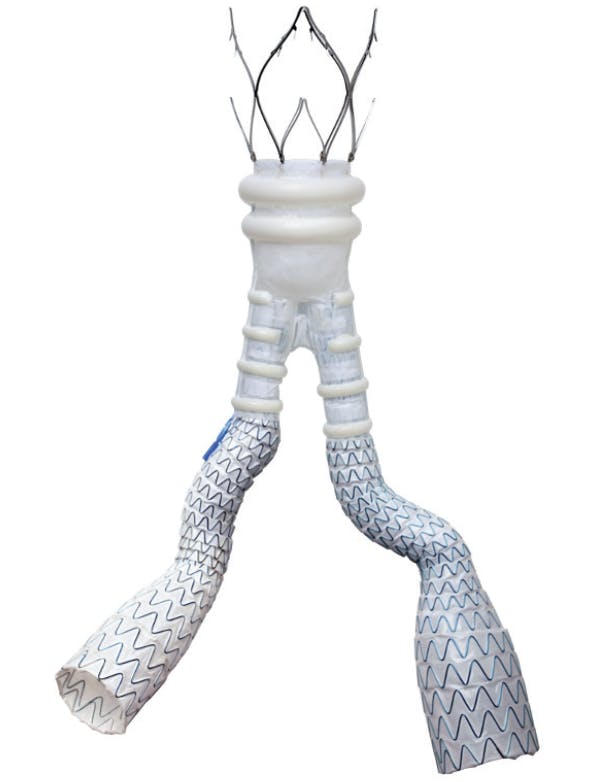
Figure 1. The ALTO Abdominal Stent Graft.
ALTO is the lowest-profile device on the market with a 13-F inner diameter system to track through narrowed iliacs. With the separation of fixation and seal, ALTO fixates in healthy tissue and seals closest to the renal arteries. ALTO features the innovative adaptive sealing technology to provide a custom seal for each patient’s anatomy. The system also includes an integrated compliant balloon that optimizes the molding of the sealing ring. With the widest-ranging IFU on the market, the ALTO system helps physicians stay on-label for more patients.
In this article, Drs. Mark F. Conrad and John S. Lane discuss the use of the ALTO system in their practice and how they approach the specific anatomic challenges in aortic repair. In addition, two case studies highlight the use of the ALTO system with adaptive sealing technology within short neck and angulated neck anatomies.


Many AAA patients have special anatomic needs to consider in planning for EVAR. What is your approach to device selection? How do you take the manufacturer’s labeling into account, especially as it may relate to longer-term durability?
Dr. Conrad: I think the most important thing to consider when planning an EVAR is the ability to use the device within its IFU guidelines. From an anatomic standpoint, this is the best way to ensure that the procedure will successfully exclude the aneurysm and not require reintervention in the future. This is especially true in younger patients, as they would be better served with an open repair than a compromised endovascular procedure. When the anatomy is straightforward, I think that surgeons should use a device with which they are comfortable.
Dr. Lane: We are currently on the fifth generation of EVAR devices. The more recently designed devices improve upon the earlier generations regarding ideal device characteristics. Ideal devices should be low profile, deliverable, conformable, precise, and designed to fit all elements of the patient’s anatomy. Considering specific anatomic characteristics prior to device selection is of critical importance. These include characteristics of the access vessels (eg, diameter, tortuosity, calcification), aortic neck (eg, length, diameter, calcification, thrombus burden, tortuosity), iliac landing zones (eg, diameter, length, aneurysm degeneration, calcification), and certain sac characteristics (eg, thrombus, luminal size, branch vessels). Since the publication of the landmark article by Schanzer et al, vascular surgeons have focused on the importance of staying within the IFU for device selection.1 In their review of the CT scans from the M2S database in over 10,000 patients, 31% to 58% of EVARs within the United States are performed outside of the manufacturer’s IFU, and 41% of EVARs experience sac growth over 5 years.1
Ideally, devices would be able to treat the broadest range of patient anatomies while staying within the manufacturer’s IFU. In addition, these broad-based IFU indications should be supported by robust midterm data showing safety and efficacy of the device and prevention of device-related complications.
Adaptive sealing technology with the ALTO Abdominal Stent Graft System expands upon the anatomic indications regarding aortic sealing length. The ALTO system has improved upon the Ovation® iX platform (Endologix) in its indication to treat a 7-mm infrarenal neck. In addition, data from the ALTO and Ovation stent graft investigational device exemption (IDE) trials show the durability of adaptive sealing technology. A pooled retrospective analysis of six trials and studies with the Ovation stent graft shows freedom from type Ia endoleak was 95.8%, freedom from device-related reintervention was 92.4%, and freedom from aneurysm-related mortality was 99.3%.11 These impressive results may be due to the inherent differences between the mechanism of adaptive sealing technology within the aortic neck.
I believe that the use of adaptive sealing technology has expanded the IFU indications regarding the aortic neck length required for EVAR, as well as improved long-term device durability.
A short neck is the most common anatomic exclusion factor in EVAR, representing about 33% of patients. What short-neck anatomies are amenable to EVAR, and why? What types of short-neck anatomies continue to require open surgical repair?
Dr. Lane: Short aortic neck anatomy is one of the characteristics of a hostile neck, which can pose a challenge to the performance of infrarenal EVAR. Other hostile neck criteria include diameter > 28 mm, neck angulation > 60°, thrombus or calcification > 50%, or reverse tapered/conical neck anatomy. These unfavorable anatomic characteristics should be considered prior to performing EVAR as they are associated with long-term device-related complications. When multiple of these hostile neck characteristics coexist, consideration should be given to open repair.
The current short-neck length indications for FDA-approved devices include the Endurant system (Medtronic) at 10 mm, Endurant plus Heli-FX EndoAnchors (Medtronic) at 4 mm, and the ALTO system at 7 mm. The commercially manufactured ZFen device (Cook Medical) also has a short infrarenal neck indication at 4 mm, with the adjunctive use of renal stents or uncovered fenestrations/scallops. Endovascular solutions for the true pararenal, paravisceral, or thoracoabdominal aneurysms are under investigation and are not currently available for use within the United States. These aneurysm types should also be considered for open repair. Open aortic repair of the juxtarenal aneurysms remains a proven and durable solution, with mortality rates under 5% at most centers, with good long-term durability.
As previously discussed, strict adherence to the device IFU is critically important to ensuring good results with short-neck anatomy. The use of the ALTO system with adaptive sealing technology may confer additional benefits, in addition to its short-neck indication. The lack of outward radial force after polymerization may promote long-term neck stabilization and prevent further neck degeneration. In a meta-analysis of over 9,000 patients with traditional EVAR, 24.6% experienced late neck dilatation, with 26% of these patients having long-term device-related events.12
Finally, neck angulation in addition to short-neck anatomy may further compromise results of EVAR. Most stent grafts measure angulation between the long axis of the aortic neck and the axis of the aneurysm. Due to its design, the ALTO system measures angulation above the proximal sealing ring, in the axis of the suprarenal aorta, which is often more favorable.
In summary, endovascular repair of short and hostile neck anatomy should adhere to the device-specific IFU. In anatomy outside of the IFU for EVAR, open or fenestrated repair should be considered.
Dr. Conrad: Most EVAR devices use the outward radial force of an oversized stent graft to obtain a seal in the proximal neck of the aneurysm. This requires a minimal length (usually 1-1.5 cm) of normal aortic tissue for the graft to contact to create the seal. For these grafts, one could argue that no necks shorter than the IFU of a graft are amenable to EVAR with that device.
The ALTO Abdominal Stent Graft System featuring adaptive sealing technology conforms to irregular anatomies to create a patient-specific seal. What is the impact of treating a broad range of patient anatomies in your practice?
Dr. Conrad: The ALTO system relies on the suprarenal stent for fixation and the adaptive sealing ring for proximal seal. This means that it requires a much smaller area of normal aorta to obtain the proximal seal. As a result, the graft can be used on-label in short necks with the expectation of achieving long-term aneurysm exclusion. This mechanism of seal also makes it possible to treat patients with conical and calcified necks because the ring conforms to aorta at the level of the seal and the fixation prevents distal migration. This has allowed me to treat patients with shorter necks who would otherwise require open or fenestrated/branched repair.
Dr. Lane: As previously discussed, ALTO makes use of an adaptive sealing ring to create a seal at 7 mm below the lowest renal artery. Suprarenal stents provide secure active fixation in the suprarenal aortic segment. This separation of fixation and seal creates a unique solution for a variety of hostile aortic neck anatomies. The advantages of the ALTO stent graft design have been discussed in short or angulated aortic necks. An additional advantage to adaptive sealing technology is its ability to conform to irregular aortic neck surface anatomy due to calcification or thrombus.
Calcification poses challenges to traditional stent grafts, as they rely on circumferential contact with the aortic wall to create an effective seal. Calcified plaque can project into the aortic seal zone, causing “gutters,” which can lead to type Ia endoleak. Many times, these can be resolved with aggressive ballooning or the use of a Palmaz stent. The adaptive sealing technology of the ALTO device can conform around irregular calcium in the aortic neck to create a custom seal unique to each patient’s anatomy.
Similarly, thrombus can pose challenges to stent grafts, especially those that rely on infrarenal fixation. Thrombus can create an unstable sealing zone for stent grafts that rely on outward radial force in contact with the aortic wall. The adaptive sealing ring of the ALTO device can penetrate soft thrombus or can conform to chronic thrombus to create seal, while relying on fixation from the suprarenal uncovered stents.
Finally, a reverse taper neck with conicity < 10% is well suited for adaptive sealing technology, as it does not rely on a specific sealing length in the aortic neck. Stent grafts require up to 15 mm of parallel aortic wall to provide adequate sealing and fixation. In the conical neck, stent grafts must be aggressively oversized to maintain contact with the aorta over the entire neck length. However, ALTO utilizes a 5.5- to 9-mm–wide adaptive sealing ring depending on the aortic body size, placed 7 mm below the lowest renal artery to effectuate seal, without requiring a specified sealing length.
Adaptive sealing technology allows me to treat a wide range of challenging anatomy in my patients, which could not otherwise be accomplished with traditional stent graft repair.
We know that only 34% of women with AAA are eligible for EVAR treatment due to anatomic restrictions.4,5 How has your experience with ALTO benefited female EVAR patient anatomies?
Dr. Conrad: The main issue in treating women with aneurysmal disease endovascularly is the size of their access vessels. Specifically, the external iliac arteries tend to be small, and this can make delivery of the device very difficult. The ALTO system has a small outer diameter, and the sheath has a nice transition that I have used in small or narrowed vessels without it causing dissection or tearing the artery.
Dr. Lane: The performance of EVAR in female patients has long been called into question, regarding both anatomic suitability for FDA-approved devices as well as the inclusion of women in randomized device trials.
Sweet et al examined the influence of gender on the eligibility for EVAR and found that women are less likely to meet device-specific IFU criteria.5 Women are less likely to have adequate aortic neck > 15 mm, neck angulation < 60°, and iliac artery diameters > 6 mm. In a systematic review by Ulug et al, women were less likely to be eligible for EVAR, more likely to be declined for intervention, and had a higher 30-day mortality.4
Given this gender disparity, a device that accommodates specific anatomic features found more commonly in female patients may improve upon the poor outcomes previously seen for women. Anatomic features more commonly seen in female patients include small iliac access vessels, shorter aortic neck length, and higher degree of neck angulation. The ALTO and Ovation iX stent graft design features have been optimized for these specific anatomic characteristics.
The LUCY study addressed this issue using a prospective, multicenter registry utilizing the Ovation iX stent graft and adaptive sealing technology. Enrollment was stratified by sex, with a 2:1 male-to-female enrollment ratio. Women were found to have a smaller vessel access diameter, marginally smaller aortic neck diameter, and smaller overall aneurysm size. The 30-day and 1-year outcomes were similar for men and women. There were no differences seen in device deployment success, percutaneous access, procedure time, or blood loss. Overall major adverse events, endoleak, and secondary intervention rates were low and equal in men and women. Freedom from rupture and AAA-related mortality at 3 years was 100% in women and 99% in men.13
The results of the LUCY study show that the use of a low-profile stent graft design can provide equivalent, high-quality procedural and perioperative outcomes in both men and women. In my practice, women are preferentially treated with the ALTO stent graft when within the IFU, and I have witnessed similarly excellent results.
There have been various investments in trying to make low-profile grafts with EVAR. In your opinion, how important is it for a device to have a low profile?
Dr. Lane: The development of low-profile devices has been instrumental in improving the suitability for EVAR and the reduction of access-related complications. Challenges of the aortoiliac segment have limited device deliverability due to certain anatomic characteristics, including narrow access, tortuosity, and calcification. Significant access-related complications have been reported in 5% to 17% of series and are cited as the most common cause of conversion to open repair.14 Moreover, challenging aortoiliac access can lead to late device failure, including iliac limb kinking, stenosis, or occlusion. Data from the CHAP collaborative have showed significant gender differences regarding iliac vessel suitability for EVAR, with up to 55% of female patients having iliac vessel diameter unsuitable for EVAR.5
Since the first-generation devices, improvements in the stent and delivery system design have led to the reduction of device profile and improved deliverability. Improvements in the types of metal used for the stent (ie, stainless steel, nitinol, cobalt chromium) and the type and thickness of fabric (ie, polytetrafluoroethylene [PTFE], polyester) have also served to reduce device profile. In addition, the development of the modular stent graft design with flexible, braided, hydrophilic sheaths have improved device profile and deliverability. However, not all attempts to reduce device profile have been successful. Attempts to miniaturize the Endurant EVO stent graft system (Medtronic) by reducing the thickness of the metallic struts resulted in unacceptable stent fracture rates and halting of the IDE trial.
The ALTO stent graft has a 13-F inner diameter/15-F outer diameter and includes an integrated balloon. By reducing French size, you reduce the crossing profile and reduce the stiffness of the device delivery system. This allows the device to be delivered by conforming to the iliac anatomy rather than straightening or kinking the iliac vessels. This can prevent unintended iliac injury both during and after the procedure.
Development of low-profile devices, such as the ALTO stent graft, has improved the ability and suitability of percutaneous EVAR in more patients and improves gender inequalities in device application.
Dr. Conrad: The issue with reducing the profile of device delivery systems is trading the durability of the fabric of the stent graft for the smaller size. I think that the overall ability of the delivery system to traverse difficult iliac anatomies is the most important factor, and I prefer devices with a small profile and well-designed delivery sheath.
The early mortality benefits of EVAR, when compared with open surgical repair, have been lost in some longer-term studies. What are the short-term performance considerations for endografts that may help increase longer-term durability? How might these reduce mortality in EVAR? What do you hope to see in future endografts?
Dr. Conrad: There is a concern that the increase in long-term mortality after EVAR when compared with open repair is related to an ongoing state of inflammation and thrombosis in the excluded aortic sacs that do not shrink. Ultimately, the goal should be to completely exclude the sac from the circulation either through complete sac regression or filling with a substance like polymer. Companies should strive to develop a minimally invasive solution that most closely mimics the end result of open repair.
Dr. Lane: Although EVAR has revolutionized the treatment of AAA over the past 20 years, the issues of long-term durability and the lack of reliable device surveillance have come into question. The results of the 15-year follow-up of the EVAR1 trial in Europe have highlighted this controversy. This trial used first-generation EVAR technology and enrolled patients between 1999 and 2004. Short-term results found vastly improved survival in patients randomized to EVAR versus open repair (hazard ratio [HR], 0.61). However, beyond 8 years of follow-up, EVAR had significantly higher mortality (HR, 1.25) and vastly higher aneurysm-related mortality (HR, 5.82). The differences in long-term mortality were attributed to device failure in the EVAR group, leading to sac rupture and death.15 Clearly, the first-generation devices were not proven to be durable or protective beyond 8 years after implantation. Most of these long-term complications were attributed to late neck degeneration and device-related failure.
Progressive neck enlargement has been observed in traditional stent graft designs that rely on stent oversizing and outward radial force to maintain proximal neck sealing. Monahan et al observed neck expansion with the use of the first-generation Zenith endograft (Cook Medical). Over 59 months, neck expansion was seen in all 46 patients studied, with a mean neck dilatation of 5.3 mm at 48 months.16 A more recent meta-analysis considered 9,721 EVAR patients reported between 1998 and 2015. Among patients with neck dilatation, 26% also reported an adverse neck-related outcome, including type I endoleak, migration, or need for reintervention.12 This supports that late neck-related events have compromised the long-term effectiveness of EVAR.
Adaptive sealing technology is unique in that after polymerization there is no chronic outward radial force exerted on the aortic neck at the seal zone. Evidence of advantageous neck stabilization was seen in the Ovation Global IDE trial data. Among 94 patients followed over 5 years, only minimal neck growth of ≤ 0.2 mm was recorded. In another study, no late aneurysm neck enlargement was seen in 161 patients with CT follow-up of 32 months, after EVAR using the Ovation system.11
I believe that adaptive sealing technology has shown advantages regarding late neck complications, which have been impugned in long-term device failure. In the future, I would like to see adaptive sealing technology also be used to treat the aortic sac, preventing type II endoleak and reducing long-term sac growth.
CASE 1: A SHORT-NECK, ANGULATED AAA WITH SEVERELY CALCIFIED, SMALL ACCESS VESSELS
By Mark F. Conrad, MD, MMSc
PATIENT PRESENTATION
A man in his early 70s with lumbar disk disease, severe aortoiliac disease, and a 5.1-cm AAA (Figure 1) presented with severely limited mobility, only able to walk about 20 yards without pain. He was referred for repair of his aneurysm so that he would be cleared for spine surgery. His anatomic challenges included severely calcified small access, aortoiliac disease, and a short, 8-mm aortic neck length and angulated aorta.
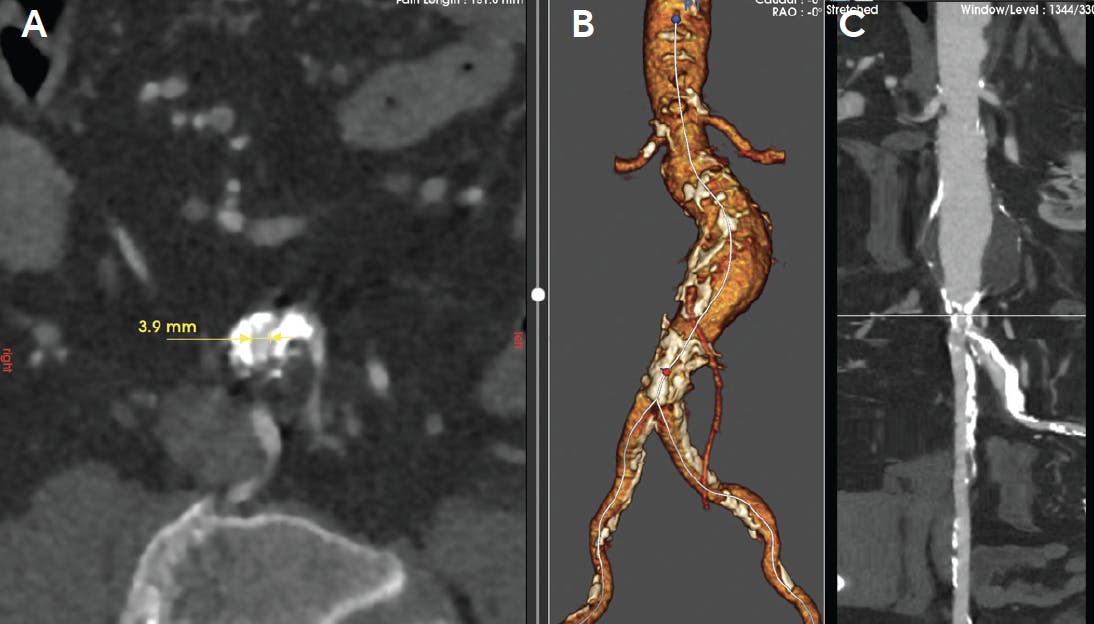
Figure 1. Preoperative imaging showing an axial view of the aortic bifurcation with near-occlusive common iliac lesions (A), three-dimensional (3D) reconstruction of the aneurysm showing angulation and calcium burden (B), and centerline view of the aorta and iliac artery (C).
COURSE OF TREATMENT
Percutaneous EVAR was performed with a 20-mm main body ALTO device. Prior to placement of the aortic body device, the distal aorta was pretreated with kissing balloons. Then serial dilators were used to ensure the 13-F delivery system sheath would fit. The aortic body was advanced over a stiff wire with ease. The staged deployment allowed for precise placement of the aortic body.
The device was landed with the radiopaque marker mid right renal, ensuring the primary sealing ring landed in the short aortic neck. The graft was oriented so that the limbs were in the anterior/posterior position due to the narrow flow lumen; once the image intensifier was obliqued, the gate was clearly visualized due to the staggered configuration. The contralateral gate was selected and confirmed with a 12- X 40-mm balloon. The contralateral limb length was determined using a marker pigtail catheter, and a 10-mm diameter limb delivery system was advanced to the level of the contralateral gate and not deployed. The 14-minute polymer cure time elapsed and the primary sealing ring was ballooned for 2 minutes; then, the aortic body delivery system was demated and removed.
A 12-F sheath was placed, and the ipsilateral limb was selected and advanced over the wire. Both limbs were then deployed so that they landed proximal to their respective hypogastric arteries. Simultaneous limb deployment was done to ensure both limbs were successfully deployed. Two 12- X 40-mm balloons were used to balloon the gate and limb overlap. Angiography was performed to ensure proximal and distal seal was achieved. Once confirmed, the aortic bifurcation was postdilated with kissing balloons. Final angiogram was obtained and showed good flow in the renal arteries, the graft, and the iliacs with no identifiable endoleaks.
RESULTS
The patient was treated through percutaneous access and did well throughout the procedure (Figure 2). He was discharged on postoperative day 1. His claudication improved and he postponed his back surgery. At his 30-day follow-up, the graft was seen in good position with no endoleak and the stents through the iliac bifurcation were widely patent with no compromise (Figure 3).
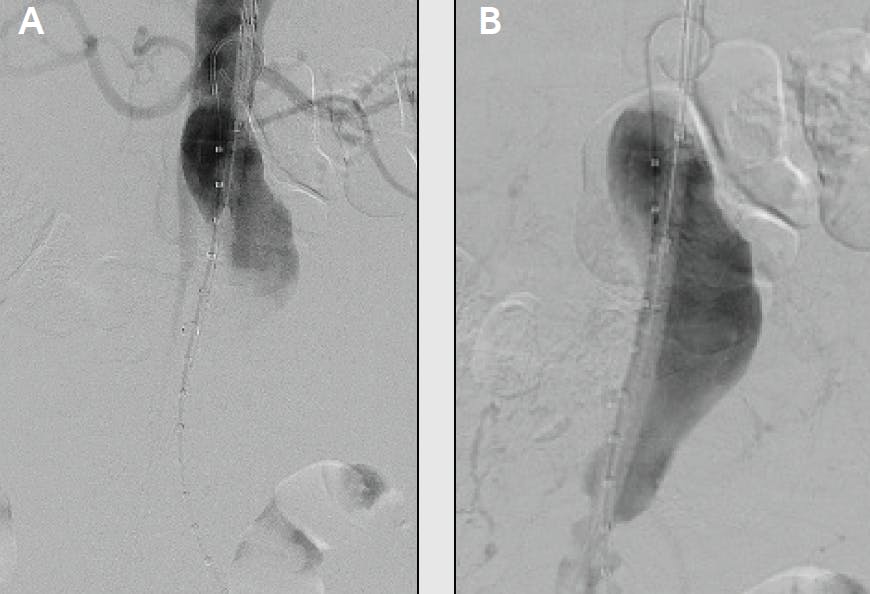
Figure 2. Initial aortogram with the main body in place. The graft is low and will be advanced prior to unsheathing (A). In addition, the aorta at the bifurcation is nearly occluded by the delivery sheath (B).
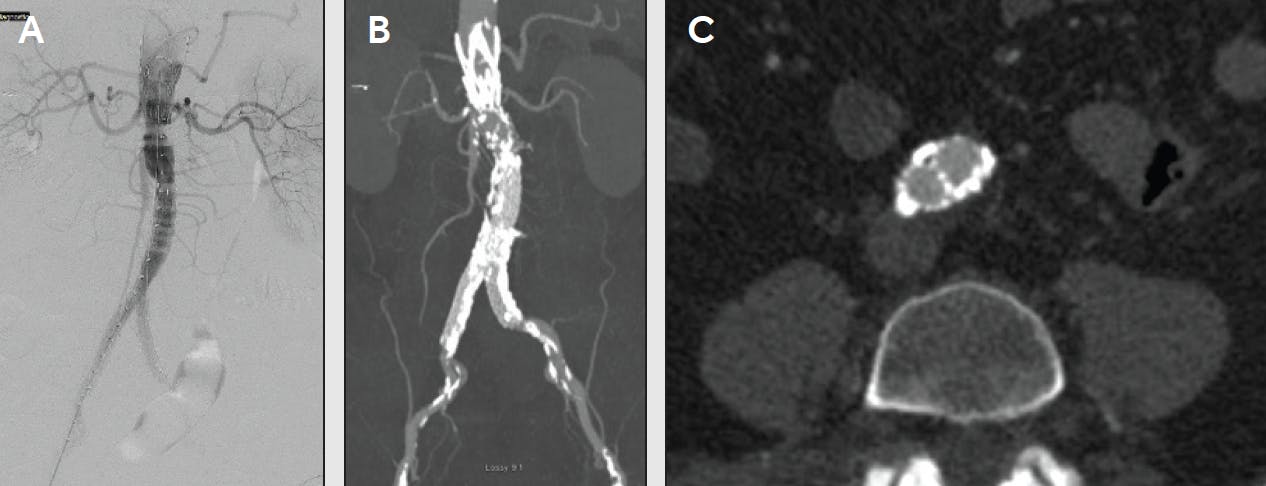
Figure 3. Final aortogram showing the sealing ring distal to the renal arteries with no endoleak and good flow through both iliac limbs (A). 3D reconstruction at 30-day follow-up showing no flow limitation in the graft and exclusion of the aneurysm (B). Image of the aortic bifurcation showing the limbs fully expanded (C).
DISCUSSION
The low profile of the delivery system was key in this case, as many grafts would not have been able to traverse the nearly occluded iliac bifurcation. One technique we used in this case was to have both delivery sheaths through the iliacs prior to deployment of the graft so we did not push the calcium to one side and jail the contralateral artery.
CASE 2: AN ENLARGING AAA WITH A HOSTILE AORTIC NECK
By John S. Lane, MD, FACS
PATIENT PRESENTATION
A man in his late 70s presented with a progressively enlarging AAA over 2 years that measured 5.1 cm upon presentation. He denied abdominal or back pain. His risk factors for AAA included hypertension, but he had no history of smoking or relevant family history. He had previously undergone exploratory laparotomy and bowel resection for perforated diverticulitis.
Because of the aneurysm’s sac growth of 1 cm over 2 years, he was considered a candidate for surgery. Open aneurysm repair was deemed to be suboptimal due to his previous laparotomy.
Preoperative CT scan revealed a highly angulated proximal aortic neck, reverse-tapered neck anatomy, and a moderate amount of infrarenal thrombus (Figure 1 and Figure 2). Multiple accessory renal arteries were noted. Access vessels were patent and were relatively free of atherosclerotic plaque, with ectasia of the left common iliac artery to 28 mm.
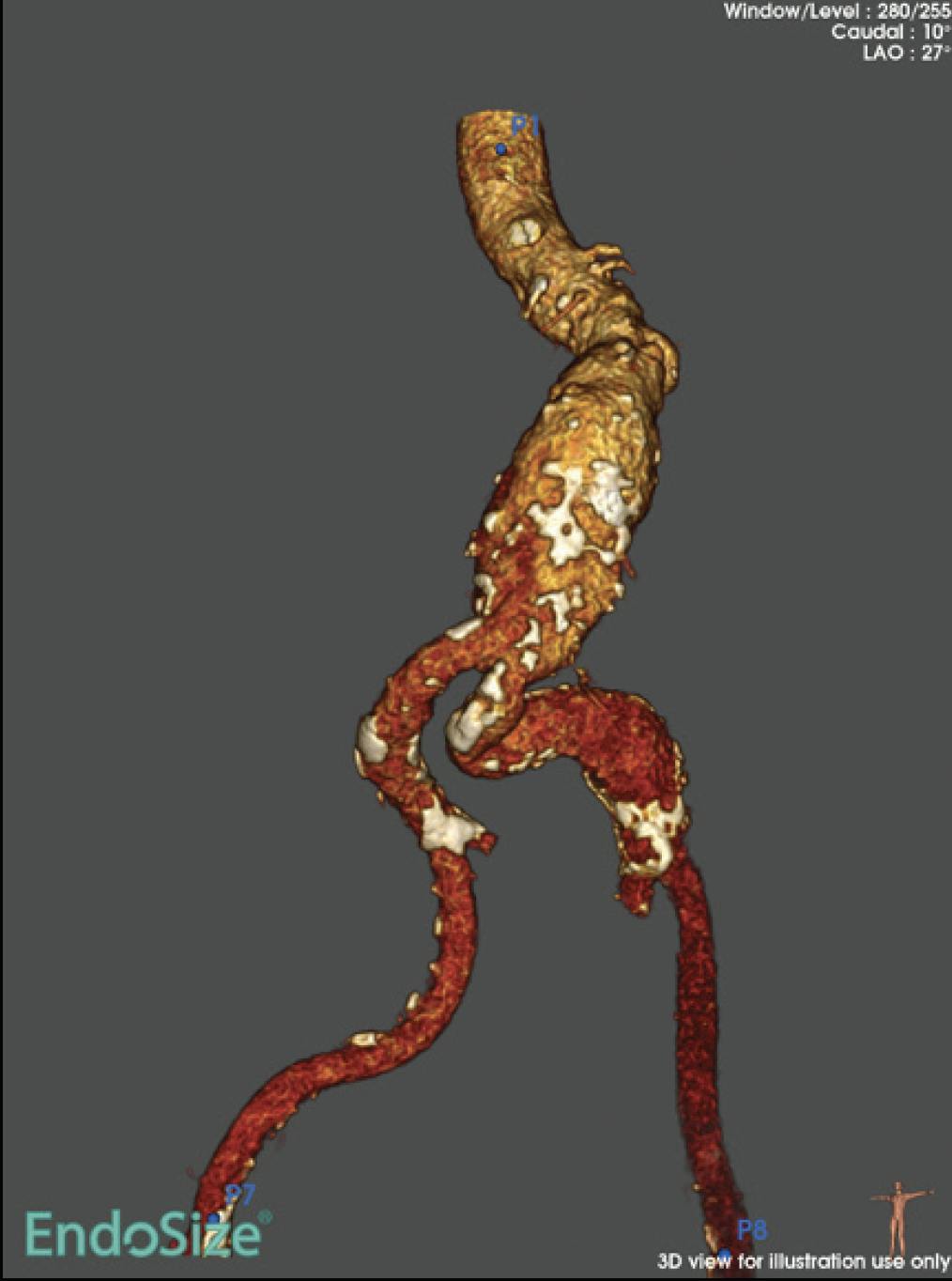
Figure 1. 3D reconstruction demonstrating aortoiliac tortuosity.
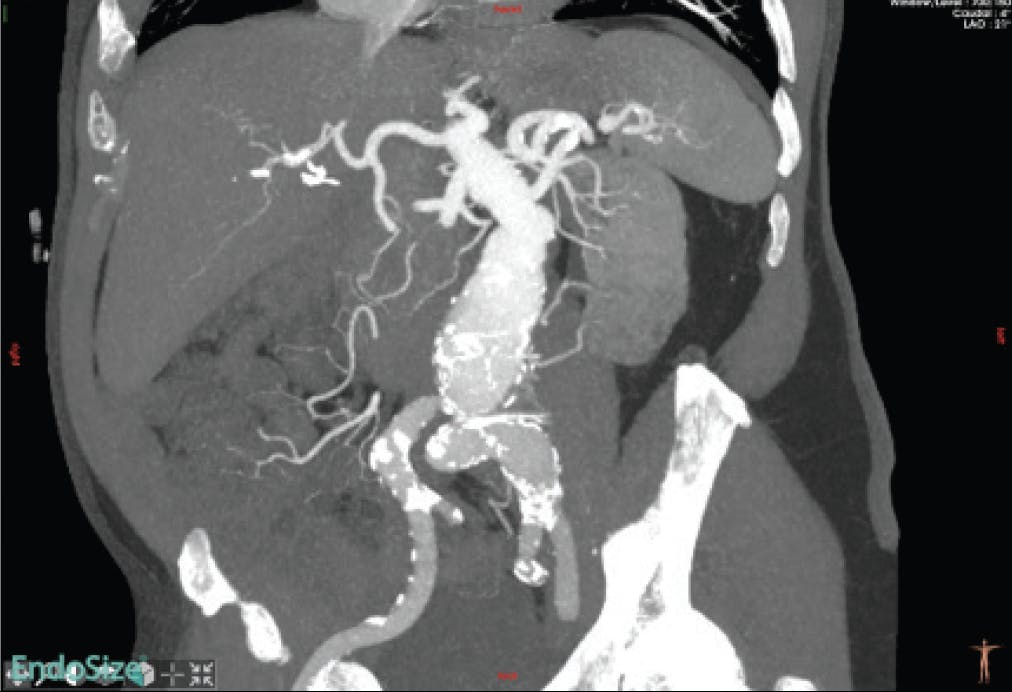
Figure 2. Maximum intensity projection (MIP) imaging of the infrarenal neck angulation.
Endovascular repair was planned with the ALTO Abdominal Stent Graft System, which was appropriate under the device-specific IFU.
COURSE OF TREATMENT
Percutaneous EVAR was performed under general anesthesia. A 29-mm-diameter ALTO device was chosen with the proximal ring positioned 7 mm below the lowest main renal artery. After deployment of the suprarenal fixation, polymer was introduced through the deployment system with the use of an autoinjector device. Cannulation of the contralateral limb was accomplished using the device’s crossover lumen.
A 0.014-inch wire was placed through the delivery system, over the device bifurcation and snared through the contralateral access site. A buddy wire technique was used to then advance a stiff, 0.035-inch wire through the contralateral gate. Once 14 minutes had elapsed, the integrated balloon was used to mold the proximal ring within the aortic neck. Iliac limbs were then placed bilaterally to complete the repair. The left hypogastric artery was intentionally covered due to near occlusion of the left hypogastric artery and common iliac ectasia. The final angiogram showed no evidence of a type I endoleak and good perfusion of the accessory renal arteries within the aortic neck (Figure 3). After successful percutaneous closure of the femoral access, the patient was extubated and brought to the intensive care unit for overnight observation. He was discharged on postoperative day 1 without complication.
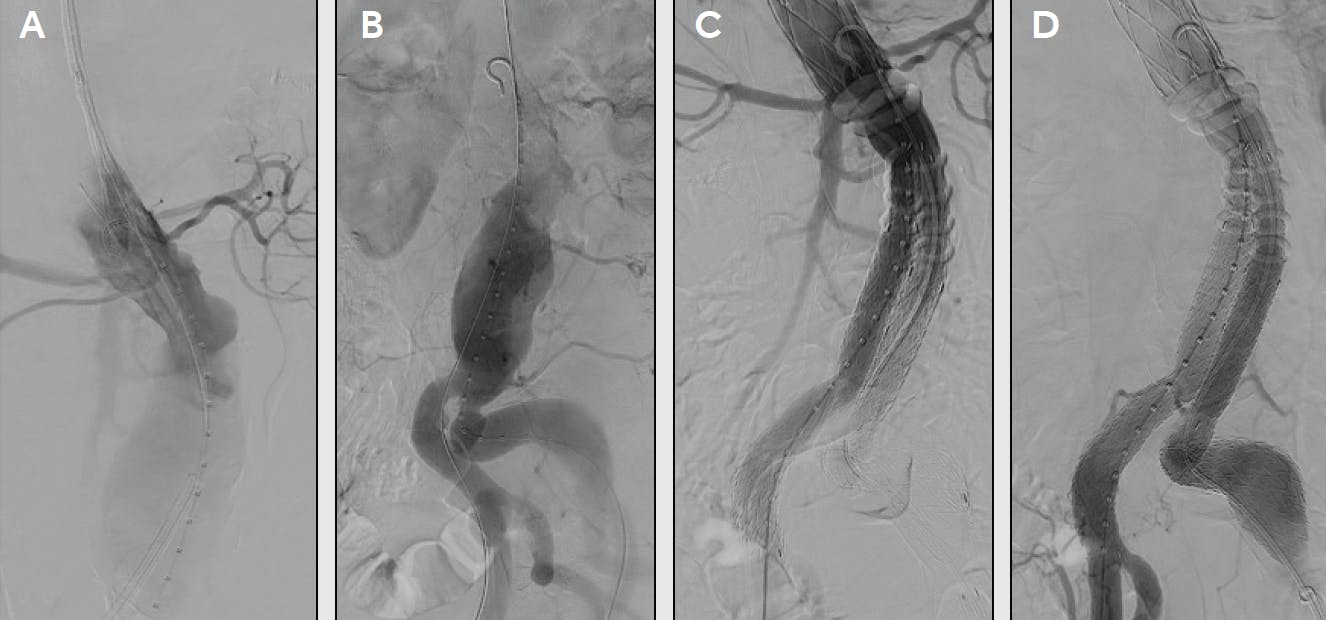
Figure 3. Angiograms of the aortic neck morphology (A), iliac tortuosity (B), successful aortic seal with preservation of the accessory renal arteries (C), and iliac limbs conforming to tortuous anatomy (D).
Postoperative CT scan at 1 month showed exclusion of the aortic sac and absence of type I endoleak (Figure 4).
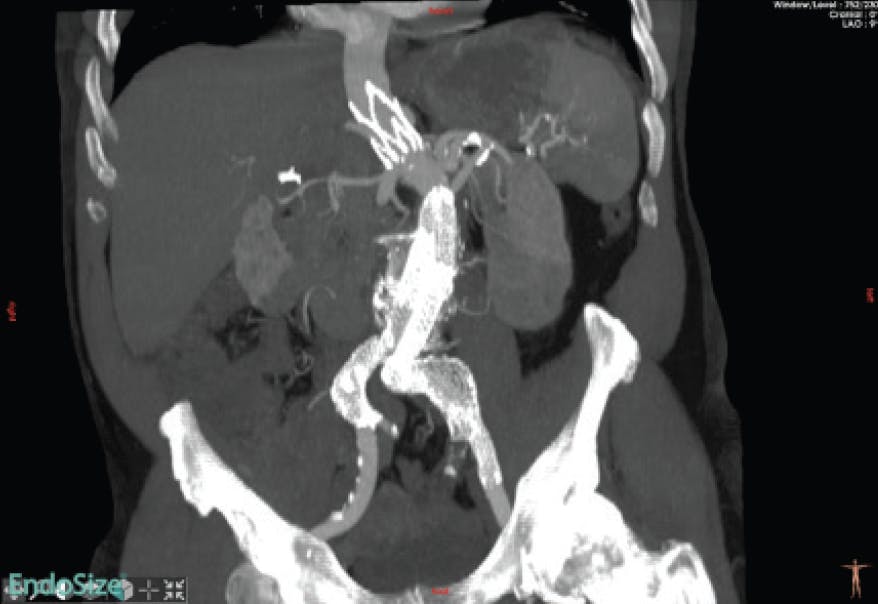
Figure 4. Postoperative CT MIP image showing successful aneurysm exclusion.
DISCUSSION
This case report highlights the use of the ALTO endograft in the setting of a hostile aortic neck, using adaptive sealing technology.
The primary challenge in this case was the highly angulated infrarenal aortic neck. If measured for a traditional stent graft, the angle of aortic neck would have exceeded 60°. This angle is measured between the centerline of the aortic neck and the center axis of the aneurysm. For the ALTO device, the neck is measured between the aortic neck and the centerline measurement of the suprarenal aortic lumen. The design of the ALTO allows for the unsupported PTFE main body to conform around steeper infrarenal angulation. The fixation struts require straight anatomy within the less hostile suprarenal aorta. The degree of neck angulation remained within the device-specific IFU for ALTO for this anatomy.
A second unique feature of adaptive sealing technology is its ability to conform to irregular neck anatomy. In this case, the infrarenal neck had a moderate amount of thrombus and multiple renal arteries. The sealing ring was able to mold and seal in areas of irregular thrombus, allowing a patient-specific seal. Additionally, the conical nature of the neck would have required more aggressive oversizing in a stent graft design to allow adequate sealing length. However, sealing can be accomplished with ALTO with the use of an adaptive sealing ring, without a specific sealing length. This also prevented coverage of the accessory renal arteries in the aortic neck.
This case highlights some of the unique features of the ALTO stent graft with adaptive sealing technology in the hostile aortic neck. The ALTO system is approved for short-neck anatomy, with a 7-mm aortic neck indication. Moreover, the use of adaptive sealing technology allows for the treatment of other hostile neck features such as conical neck, calcification, or thrombus.* This allowed a simplified approach in this case, while remaining within the device IFU.
*See full indications for use.
1. Schanzer A, Greenberg RK, Hevelone N, et al. Predictors of abdominal aortic aneurysm sac enlargement after endovascular repair. Circulation. 2011;123:2848-2855. doi: 10.1161/CIRCULATIONAHA.110.014902
2. AbuRahma AF, Yacoub M, Mousa AY, et al. Aortic neck anatomic features and predictors of outcomes in endovascular repair of abdominal aortic aneurysms following vs not following instructions for use. J Am Coll Surg. 2016;222:579-589. doi: 10.1016/j.jamcollsurg.2015.12.037
3. Barleben A, Mathlouthi A, Mehta M, et al. Long-term outcomes of the Ovation stent graft system investigational device exemption trial for endovascular abdominal aortic aneurysm repair. J Vasc Surg. 2020;72:1667-1673.e1. doi: 10.1016/j.jvs.2020.01.066
4. Ulug P, Sweeting MJ, von Allmen RS, et al. Morphological suitability for endovascular repair, non-intervention rates, and operative mortality in women and men assessed for intact abdominal aortic aneurysm repair: systematic reviews with meta-analysis. Lancet. 2017;389:2482-2491. doi: 10.1016/S0140-6736(17)30639-6
5. Sweet MP, Fillinger MF, Morrison TM, Abel D. The influence of gender and aortic aneurysm size on eligibility for endovascular abdominal aortic aneurysm repair. J Vasc Surg. 2011;54:931-937. doi: 10.1016/j.jvs.2011.02.054
6. DeRubertis BG, Trocciola SM, Ryer EJ, et al. Abdominal aortic aneurysm in women: prevalence, risk factors, and implications for screening. J Vasc Surg. 2007;46:630-635. doi: 10.1016/j.jvs.2007.06.024
7. Keefer A, Hislop S, Singh MJ, et al. The influence of aneurysm size on anatomic suitability for endovascular repair. J Vasc Surg. 2010;52:873-877. doi: 10.1016/j.jvs.2010.04.064
8. Picel, AC, Kansal N. Essentials of endovascular abdominal aortic aneurysm repair imaging: preprocedural assessment. AJR Am J Roentgenol. 2014;203:W347-357. doi: 10.2214/AJR.13.11735
9. M2S analysis of approximately 44,000 patients measuring applicability based on IFU and vessel access parameters. Traditional AAA defined as proximal neck length ≥ 10 mm. Comparison of devices without adjunct or ancillary devices. Data on file, Endologix, Inc.
10. Antoniou GA, Georgiadis GS, Antoniou SA, et al. A meta-analysis of outcomes of endovascular abdominal aortic aneurysm repair in patients with hostile and friendly neck anatomy. J Vasc Surg. 2013;57:527-538. doi: 10.1016/j.jvs.2012.09.050
11. Swerdlow NJ, Lyden SP, Verhagen HJM, Schermerhorn ML. Five-year results of endovascular abdominal aortic aneurysm repair with the Ovation abdominal stent graft. J Vasc Surg. 2020;71:1528-1537.e2. doi: 10.1016/j.jvs.2019.06.196
12. Kouvelos GN, Oikonomou K, Antoniou GA, et al. A systematic review of proximal neck dilatation after endovascular repair for abdominal aortic aneurysm. J Endovasc Ther. 2017;24:59-67. doi: 10.1177/1526602816673325
13. Ash J, Chandra V, Rzucidlo E, et al. LUCY results show females have equivalent outcomes to males following endovascular abdominal aortic aneurysm repair despite more complex aortic morphology. J Vasc Surg. 2020;72:566-575.e4. doi: 10.1016/j.jvs.2019.10.080
14. Murray D, Ghosh J, Khwaja N, et al. Access for endovascular aneurysm repair. J Endovasc Ther. 2006;13:754-761. doi: 10.1583/06-1835.1
15. Patel R, Sweeting MJ, Powell JT, et al. Endovascular versus open repair of abdominal aortic aneurysm in 15-years’ follow-up of the UK endovascular aneurysm repair trial 1 (EVAR trial 1): a randomised controlled trial. Lancet. 2016;388:2366-2374. doi: 10.1016/S0140-6736(16)31135-7
16. Monahan TS, et al.Long-term follow-up of neck expansion after endovascular aortic aneurysm repair. J Vasc Surg. 2010;52:303-307. doi: 10.1016/j.jvs.2010.03.018
INDICATIONS FOR USE: The ALTO® Abdominal Stent Graft System is indicated for treatment of patients with infrarenal abdominal aortic aneurysms having the vascular morphology suitable for endovascular repair with the device, which includes the following:
Adequate iliac/femoral access compatible with vascular access techniques (femoral cutdown or percutaneous), devices, and/or accessories,
A proximal aortic landing zone for the sealing ring 7 mm below the inferior renal artery.
An aortic sealing zone comprised of healthy aorta defined as:
- Lack of significant thrombus > 8 mm in thickness; at any point along the aortic circumference at the level of 7mm below the inferior renal artery,
- Lack of significant calcification at the level of 7 mm below the inferior renal artery,
- Conicity < 10% as measured from the inferior renal artery to the aorta 7 mm below the inferior renal artery,
- An inner wall diameter of no less than 16 mm and no greater than 30 mm at 7 mm below the inferior renal artery, and
- An aortic angle of ≤ 60 degrees
A distal iliac landing zone:
- With a length of at least 10 mm, and
- With an inner wall diameter of no less than 8 mm and no greater than 25 mm.
CONTRAINDICATIONS: The system is contraindicated for use in patients who have a condition that threatens to infect the graft and in patients with known sensitivities or allergies to the device materials including polytetrafluoroethylene [PTFE], polyethylene glycol [PEG]-based polymers, contrast agents, fluorinated ethylene propylene [FEP], titanium, nickel, platinum, or iridium.
Refer to Instructions for Use for more information concerning Indications, Contraindications, Specific Anatomic Considerations, Warnings, Precautions, and Adverse Events.
CAUTION: Federal (USA) law restricts this device to sale by or on the order of a physician.
NOTE: Not all product components are available in every country. Please consult with your Endologix representative to confirm product availability.
Endologix is a registered trademark of Endologix LLC in the United States, Europe and Japan and ALTO is a registered trademark of Endologix LLC and its subsidiaries. All other trademarks are the property of their respective owners.
©2022 Endologix LLC. All rights reserved. MM2558-ALL Rev 01
Advertisement
Advertisement