Advertisement
Advertisement
April 2023
Sponsored by Penumbra, Inc.
The Value of the Penumbra Coils in Trauma Management
Demonstrating the application of Ruby and Packing Coils for trauma embolisation with case examples.
With Florian Wolf, MD, MBA, FCIRSE, EBIR, EBCR; Conrad von Stempel, MBBS; Andrea Discalzi, MD, EBIR; and Denis Rossato, MD

TRAUMA MANAGEMENT: FACTORS FOR DECISION-MAKING
What are the main technical and clinical considerations in trauma embolisation?
Trauma embolisation is different from elective embolisation procedures like vessel sacrifice or aneurysm treatment—you have to be fast and the application of the embolisation agent has to be quick, standardized, and easy. Moreover, the vessel should be occluded instantly because you may have a patient with a dramatic arterial bleed who becomes more and more unstable. You cannot wait until the embolisation tool leads to a slow clotting—the bleeding must be stopped instantly.
Which factors are important when choosing an embolic agent?
The embolisation tool has to be easy to use. Sometimes an interventional radiologist (IR) may be in charge but is not highly experienced in multiple different embolisation procedures and materials. The interventionalist must be able to trust a tool that always behaves the same, and the tool’s proper use should not be dependent on dedicated high experience in this procedure. In my opinion, Ruby Coils (Penumbra, Inc.) can give you this confidence.
What clinical outcomes are important to you when treating trauma patients with a bleeding?
Instant occlusion of the bleeding is the most important part to improve the clinical outcome. The higher the blood loss in these patients, the higher the complication rates in the days after the bleeding event.
“ The Penumbra Coil Platform offers—due to its variety—a coil for every embolisation case. The Packing Coils allow the use of one device in different vessel and aneurysm sizes, which makes them efficient and easy to use. You do not have to think about a vessel diameter and a coil’s sizing—just place your Packing Coil and relax.”
TRAUMA MANAGEMENT: VALUE OF THE PENUMBRA EMBOLISATION PLATFORM
Which factors will lead you to choose the Penumbra Embolisation System?
The Penumbra Coil Platform provides a large range of coils with long lengths and a diameter equal to 0.035-inch coils. This means that you may need fewer coils to occlude even large bleeding vessels—this can save time and cost compared to other microcoils because you need fewer coils. The other advantage of the Penumbra Coils is their softness, which can lead to an efficient mechanical occlusion of the respective vessel.
What are the benefits of mechanical occlusion in trauma patients?
The efficiency of the mechanical occlusion of the vessel allows you to stop the bleeding without delay. You do not have to rely on thrombus formation in a bleeding patient who might have a coagulation problem.
In which indications do you use Penumbra Embolisation Coils and why? Can you explain the impact Penumbra Embolisation Coils have on your practice?
The Penumbra Coils are my workhorse for many different embolization procedures, from pelvic congestion syndrome to acute trauma bleeding (Figure 1, Figure 2, Figure 3, and Figure 4). I stopped using pushable coils many years ago. The argument that the pushable coils are cheaper is, in my opinion, just not true. You typically need more coils and the application of these pushable coils is not as safe as the detachable coils.1,2
Case Example: Pelvic Trauma
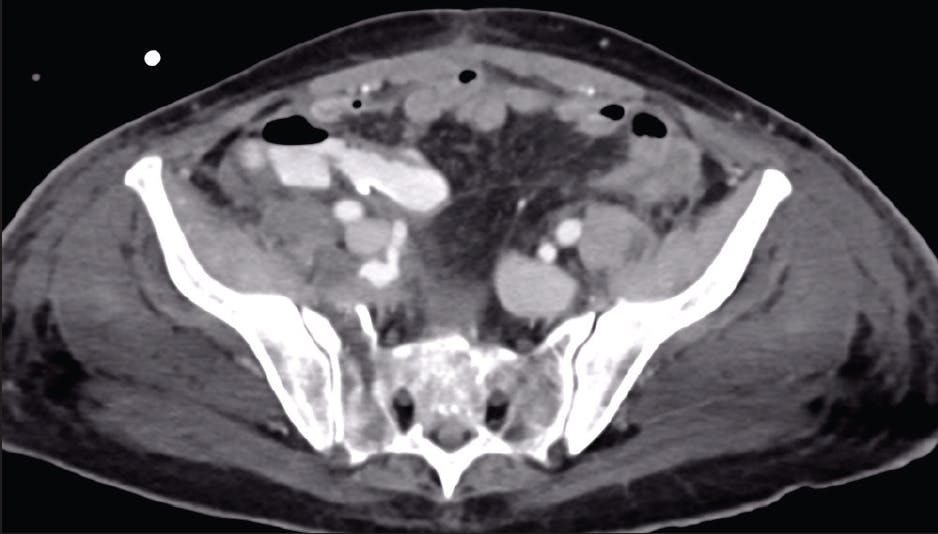
Figure 1. Severe pelvic trauma after a motorcycle accident. There was traumatic rupture of a branch of the right internal iliac artery (IIA) with a pseudoaneurysm and active arterial bleeding.
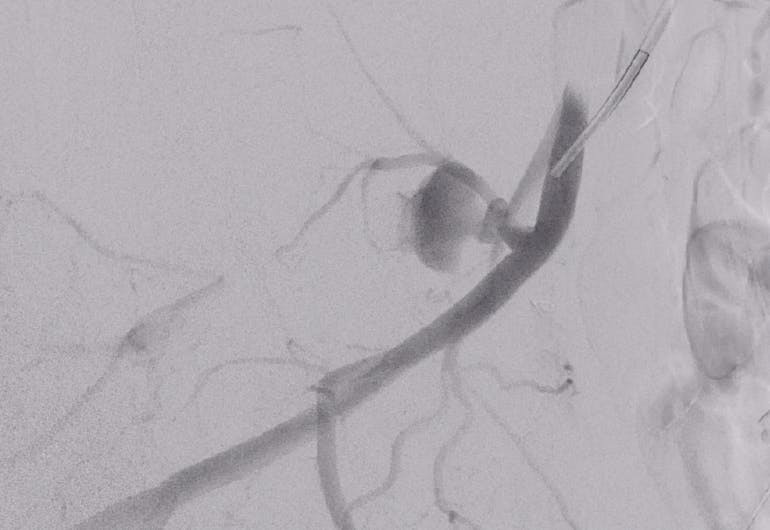
Figure 2. Selective angiogram of the right IIA.
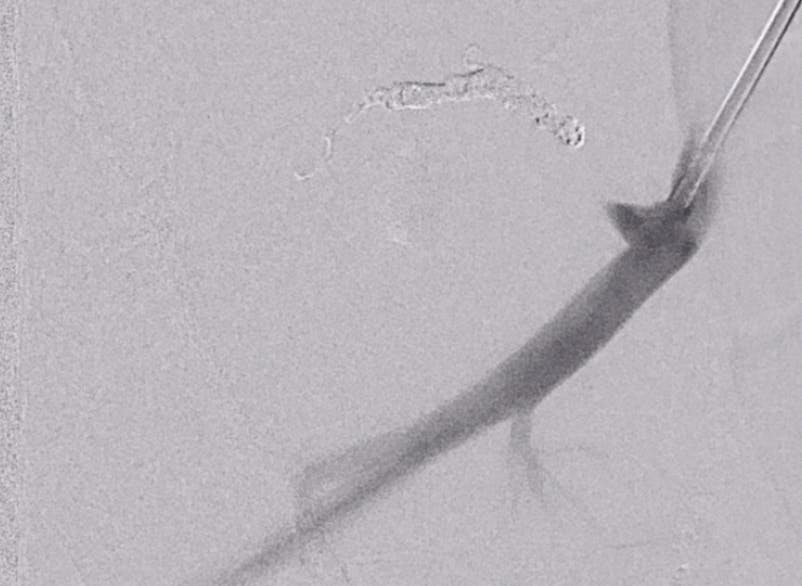
Figure 3. Backdoor/frontdoor embolisation of the IIA side branch with Ruby Soft Coils (one 2 mm X 4 cm, two 4 mm X 6 cm, and one 4 mm X 15 cm), which stopped the bleeding.
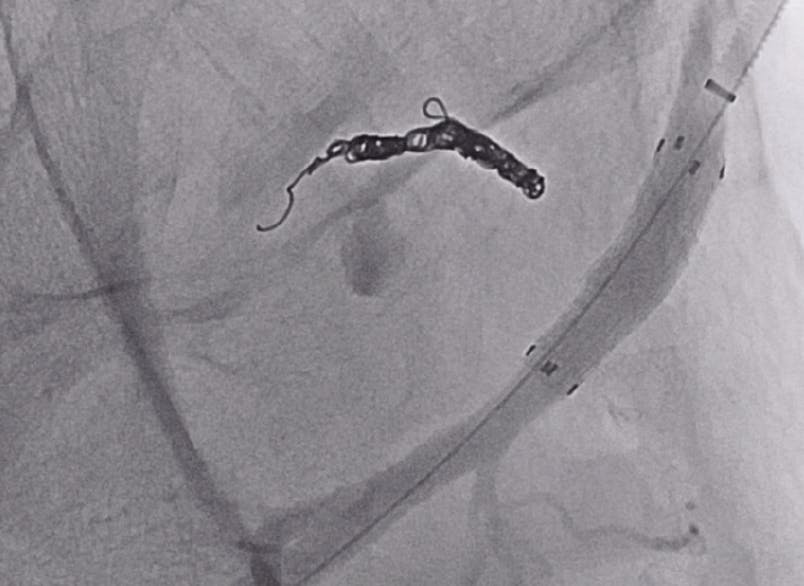
Figure 4. Stent graft placement over the origin of the IIA side branch.
1. Park SI, Lee SJ, Lee M, et al. Prospective randomized trial comparing pushable coil and detachable coil during percutaneous implantation of port-catheter system for hepatic artery infusion chemotherapy. Abdom Imaging. 2015;40:595-600. doi: 10.1007/s00261-014-0239-1
2. Dudeck O, Bulla K, Wieners G, et al. Embolization of the gastroduodenal artery before selective internal radiotherapy: a prospectively randomized trial comparing standard pushable coils with fibered interlock detachable coils. Cardiovasc Intervent Radiol. 2011;34:74-80. doi: 10.1007/s00270-010-9845-7
GRADE 4 RENAL TRAUMA EMBOLISATION

WHY I CHOSE PENUMBRA COILS
- The soft, conformable properties of Ruby Coils allow for accurate positioning and formation of a dense coil pack, and the repositionability of these detachable coils gives the IR increased confidence, particularly in the emergency embolisation setting.
PATIENT PRESENTATION
A woman in her late teens who was fit and well experienced a fall while running and presented to the emergency department after passing multiple blood clots in her urine and feeling increasingly unwell. Her urine dipstick test demonstrated microscopic hematuria and a drop in hemoglobin to 112 g/L. A trauma protocol CT demonstrated a grade 1 liver laceration of the left lateral segment and grade 4 injury to the lower pole of the left kidney with a large perirenal collection of contrast suggestive of a urinoma and no active hemorrhage (Figure 1).
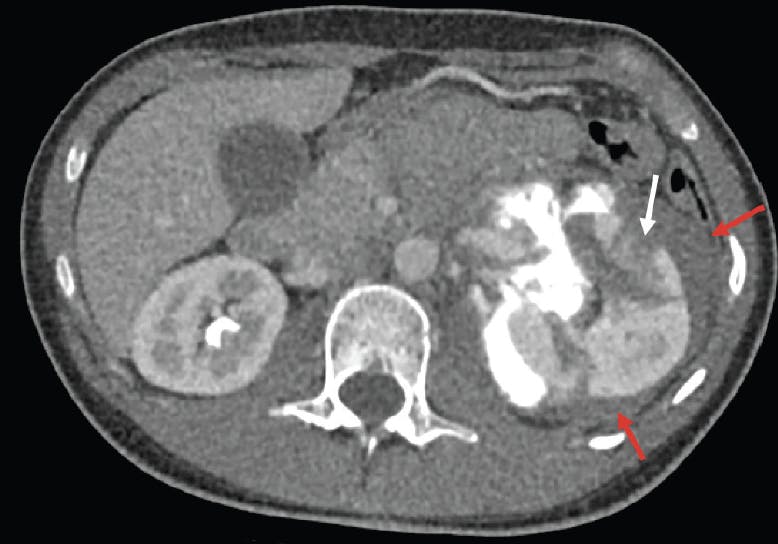
Figure 1. CT scan with 5-minute postcontrast delay showing a large left-sided urinoma (white contrast medially), a curvilinear perinephric hematoma (laterally; red arrow), and laceration of the renal parenchyma (white arrow).
A retrograde ureteric stent was placed. The following day, she developed an acute recurrence of left flank pain and passed large-volume bright red hematuria. A repeat CTA showed a 15-mm pseudoaneurysm in the interpolar region of the left kidney (Figure 2). The renal surgery and interventional radiology departments discussed the options of surgical exploration and embolisation.
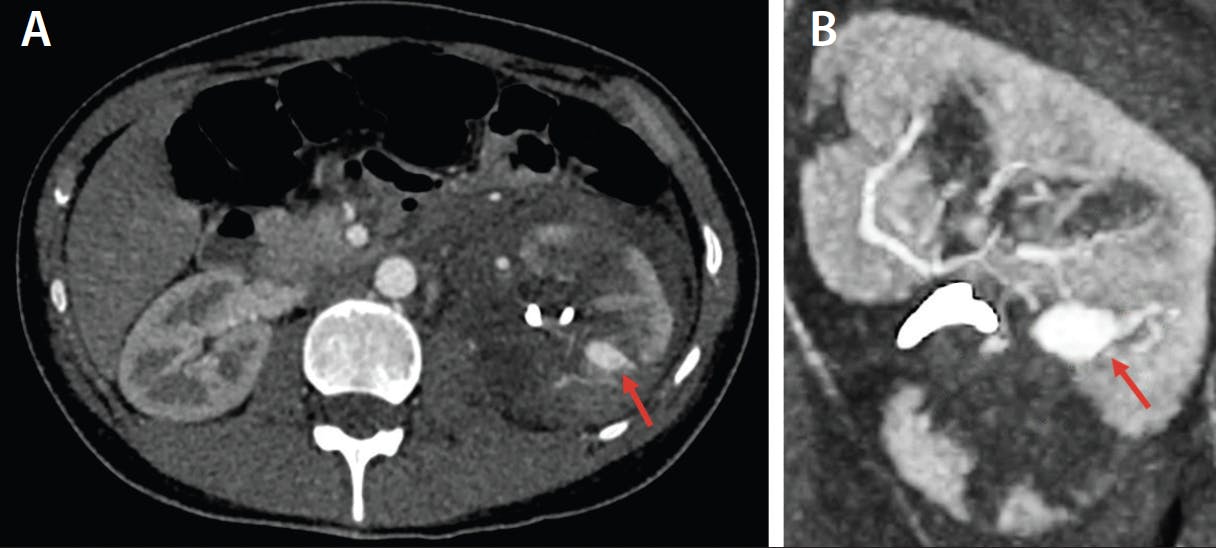
Figure 2. Arterial phase CT scan (left axial section, right coronal section focused on the left kidney) performed the next day showing a large pseudoaneurysm in the left interpolar region (red arrow) (A). The top of the ureteric stent is partially imaged (B).
INTERVENTION
Angiography was performed from a left radial approach under local anesthesia. Initial left renal angiography via a 4-F Ultimate-1 catheter (Merit Medical Systems, Inc.) showed a focal pseudoaneurysm coming from a single feeding branch arising from the anterior inferior renal artery (Figure 3). Selective catheterization with a 2-F Progreat microcatheter (Terumo Europe) was performed. A single 3-mm X 5-cm Standard Ruby Coil was deployed in the distal feeding vessel (Figure 4A). After 5 minutes, a completion angiogram from the main renal artery showed a good technical result with no filling of the pseudoaneurysm (Figure 4B). The patient recovered well from the procedure with no significant postprocedural pain and no further hematuria. She was discharged after an additional 2 days in hospital. A repeat CTA at 6 weeks showed a healing contusion in the left kidney with no refilling of the pseudoaneurysm (Figure 5A). A DMSA (dimercaptosuccinic acid) scan demonstrated equal renal parenchymal uptake, and her renal function tests were normal (Figure 5B).
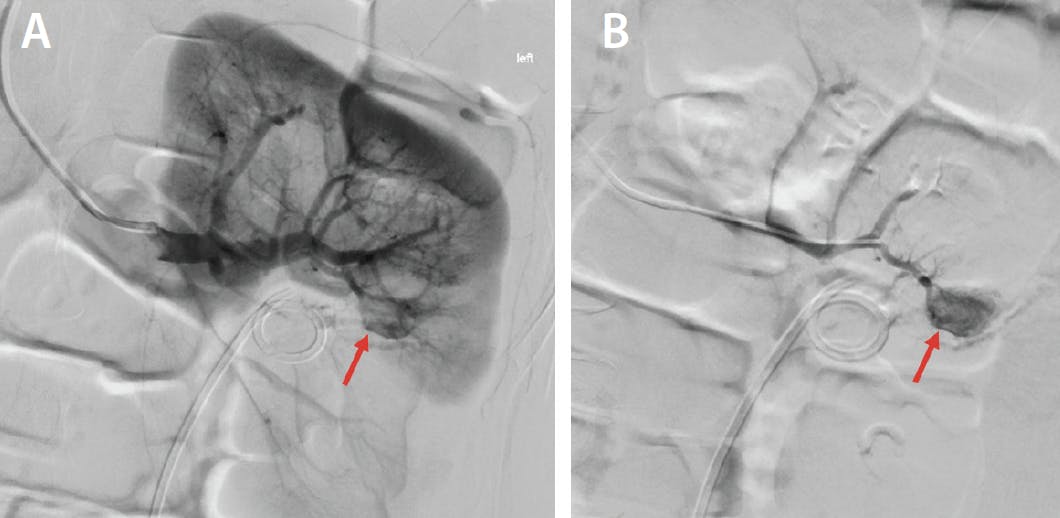
Figure 3. Initial selective DSA from the left renal artery (catheter positioned past the origin of the inferior segment artery). Pseudoaneurysm is seen (red arrow) (A). Using a microcatheter for subselective catheterization, DSA showing the supplying anterior inferior branch artery (B).
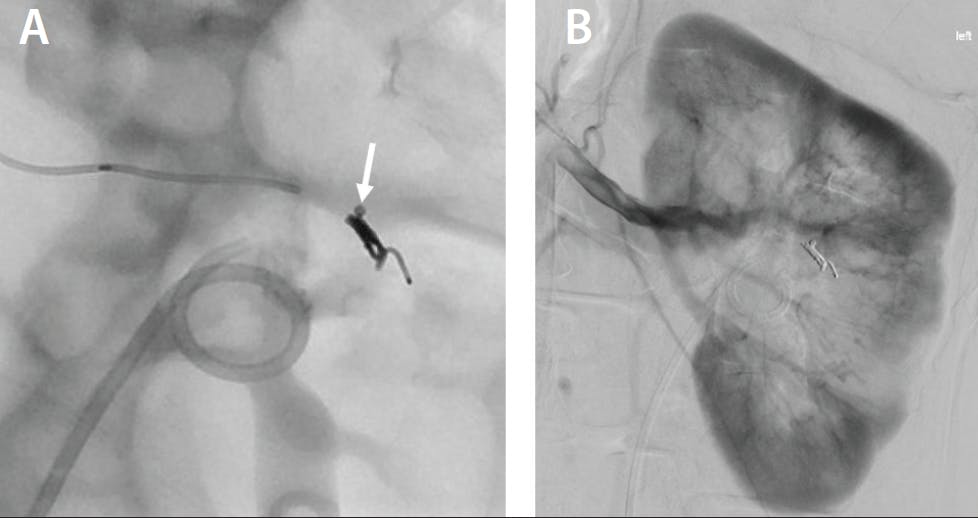
Figure 4. A 3-mm X 5-cm Ruby Standard Coil was deployed in the distal feeding vessel. Loop of coil in a side branch anchoring it in position (white arrow) (A). Completion angiogram from the main renal artery showing no further filling of the pseudoaneurysm and Ruby Coil in situ (B).
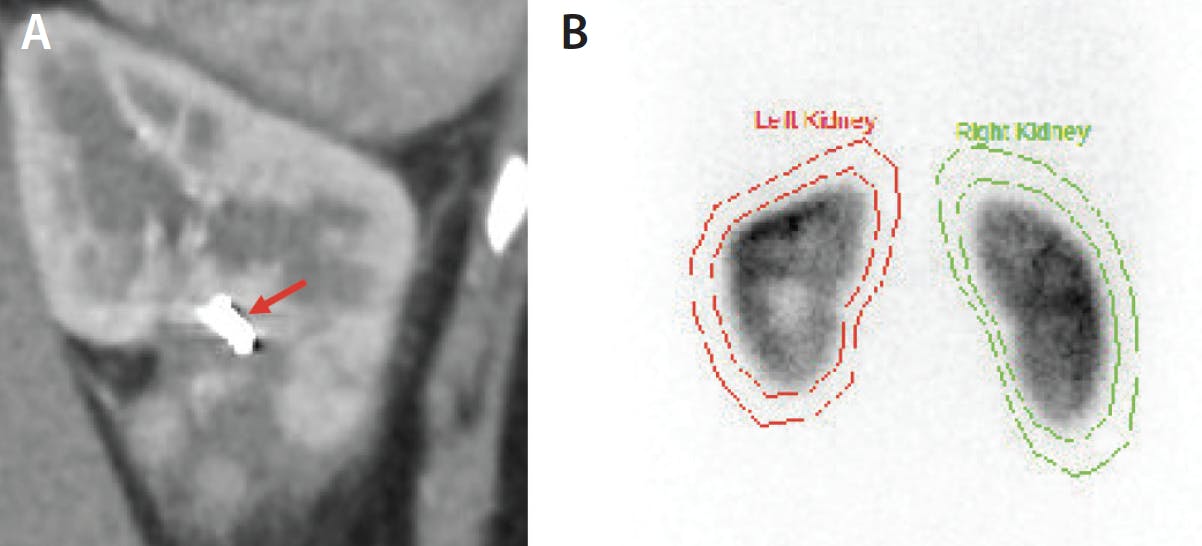
Figure 5. Follow-up CT performed at 6 weeks showing no recurrence of the pseudoaneurysm and stable position of the Ruby Coil (red arrow) (A) and a DSMA scan demonstrating equal preserved renal parenchymal tracer uptake (B).
DISCUSSION
Grade 4 renal trauma is characterized the by presence of a parenchymal laceration involving the collecting system or damage to the renal artery or vein injury with a contained hemorrhage.1 The management of grade 4 renal injuries can be challenging, and open drainage, repair, or nephrectomy is required in > 75% of cases.2 Embolisation can reduce the need for nephrectomy in severe renal injury (grade 4-5) in up to 80% of cases but often requires repeat procedures.3 In all cases, embolisation of renal injuries should be as subselective as possible to maintain perfusion in as much healthy renal parenchyma as possible.4 In this case, a subselective embolisation of the vascular injury allowed for minimally invasive management with a single embolisation treatment. A detachable coil is the ideal embolic choice for this type of embolisation where an accurate and distal deployment of the coil is required. The softness of the Standard Ruby Coil allows for manipulation of the coil to ensure a tight and accurately placed coil pack is formed (eg, a 5-cm coil packed down into a 5.5-mm length of vessel in this case). Furthermore, the conformability of the Ruby Coils allows loops to enter the distal side branches, which anchor the coil securely.
Ruby Coils give the IR increased confidence to treat renal pseudoaneurysms accurately and effectively.
1. Buckley JC, McAninch JW. Revision of current American Association for the Surgery of Trauma Renal Injury grading system. J Trauma. 2011;70:35-37. doi: 10.1097/TA.0b013e318207ad5a
2. Santucci RA, McAninch JW, Safir M, et al. Validation of the American Association for the Surgery of Trauma organ injury severity scale for the kidney. J Trauma. 2001;50:195-200. doi: 10.1097/00005373-200102000-00002
3. Hotaling JM, Sorensen MD, Smith TG 3rd, et al. Analysis of diagnostic angiography and angioembolization in the acute management of renal trauma using a national data set. J Urol. 2011;185:1316-1320. doi: 10.1016/j.juro.2010.12.003
4. Kautza B, Zuckerbraun B, Peitzman AB. “Management of blunt renal injury: what is new?”. Eur J Trauma Emerg Surg. 2015;41:251-258. doi: 10.1007/s00068-015-0516-x
IATROGENIC SUBCLAVIAN ARTERY PSEUDOANEURYSM OCCLUSION


WHY I CHOSE PENUMBRA COILS
- Ruby Coils are engineered for an easy and controlled deployment in tortuous anatomy avoiding nontarget embolisation.
- Ruby, POD, and Packing Coils are large-volume coils deliverable through a high-flow microcatheter, designed for efficient and long-term embolisation.
PATIENT PRESENTATION
A woman in her mid 40s who recently underwent a liver transplant for autoimmune liver cirrhosis presented to our emergency department for the onset of left upper limb pain. On clinical assessment, swelling of the upper limb without sensory motor deficits and ecchymosis of the supraclavicular region were appreciated. The patient had recently removed an internal jugular vein catheter on the same side. A duplex ultrasound (DUS) and CT scan were performed and demonstrated the presence of a large pseudoaneurysm (approximately 3 cm) originating from the bifurcation of the left thyrocervical trunk with no signs of free bleeding in progress (Figure 1). The patient was hemodynamically stable.
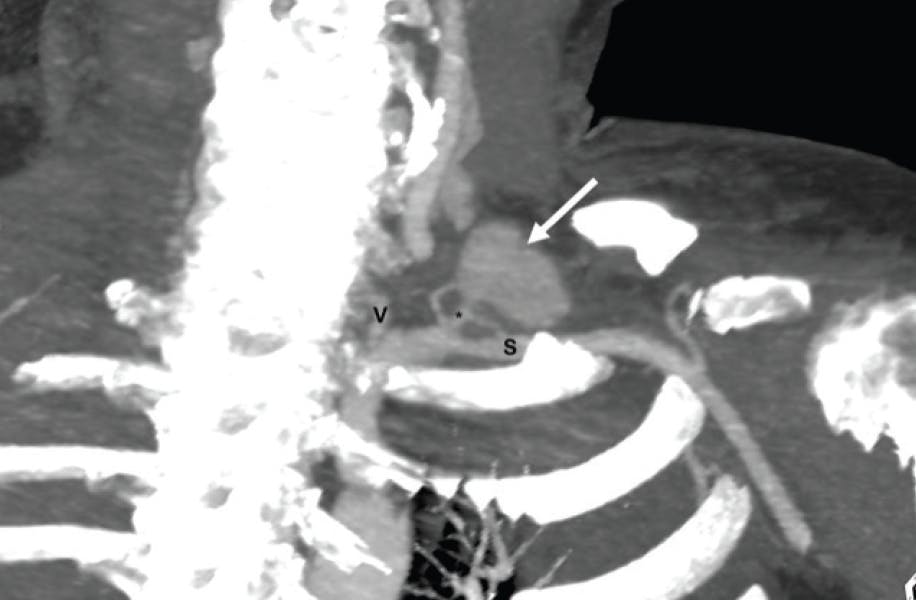
Figure 1. CT image (multiplanar reconstruction) showing the pseudoaneurysm (white arrow) originating from the bifurcation of the left thyrocervical trunk (*). V, vertebral artery; S, subclavian artery.
INTERVENTION
Open surgical repair was omitted due to the patient’s poor clinical condition, and placement of a covered stent was ruled out due to the high risk of occlusion of the contiguous vertebral artery. Therefore, it was planned to proceed with embolisation of the short stretch of the thyrocervical trunk.
A right percutaneous common femoral artery access and a 5-F vertebral diagnostic catheter were used to access the left subclavian artery (Figure 2). A 2.7-F microcatheter was then used to navigate into the thyrocervical trunk, followed by embolisation using a 3-mm X 5-cm Ruby Soft Coil inserted on the suprascapular artery as a backstop followed by two 15-cm Packing Coils (Penumbra, Inc.) up to near the subclavian artery (Figure 3).
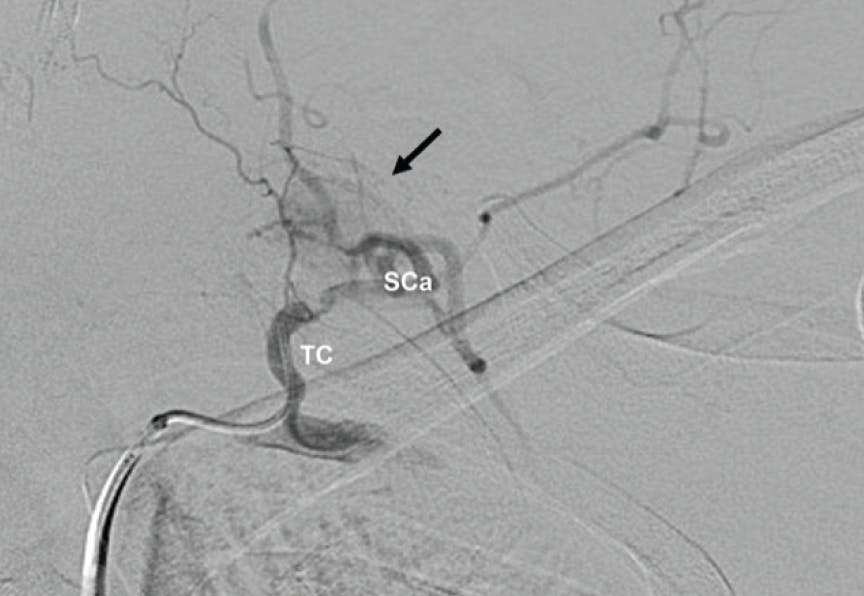
Figure 2. Left subclavian artery angiogram showing a thyrocervical trunk pseudoaneurysm (black arrow). TC, thyrocervical trunk; SCa, suprascapular artery.
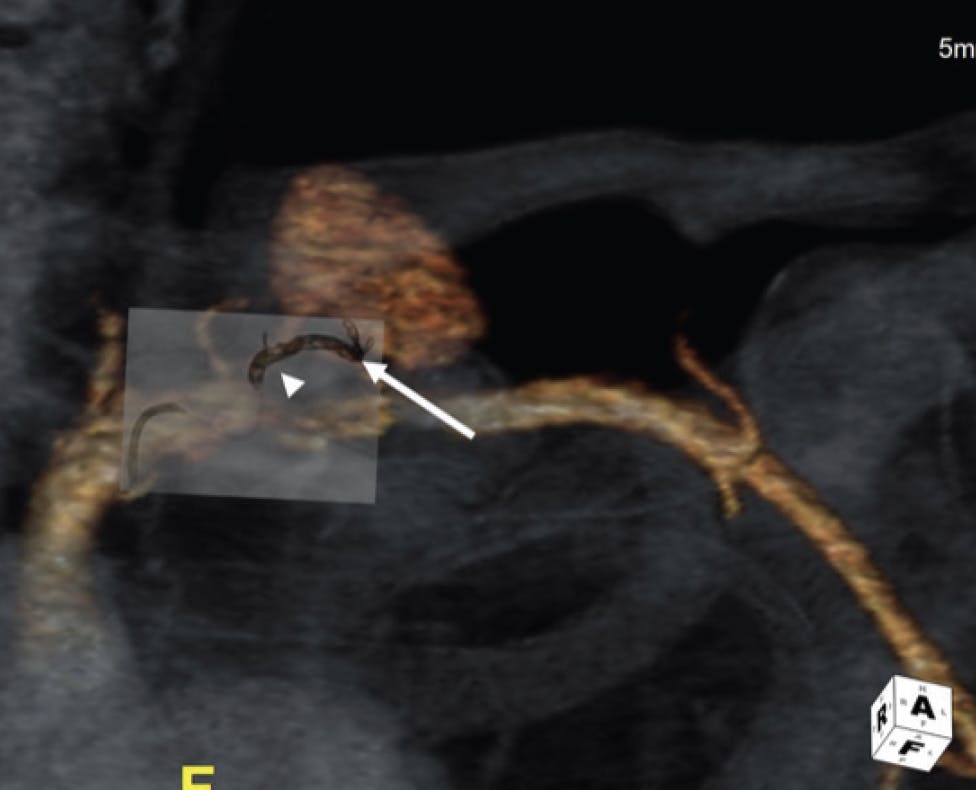
Figure 3. Fusion CTA showing the left thyrocervical embolisation using the “anchor technique.” The Penumbra Ruby “anchor” Coil is on the suprascapular artery (white arrow) and the Packing Coil is on the thyrocervical trunk (white arrowhead).
Angiography was performed and showed the successful pseudoaneurysm exclusion (Figure 4). The postoperative DUS revealed complete exclusion of the pseudoaneurysm (Figure 5) and regular subclavian and vertebral artery patency.
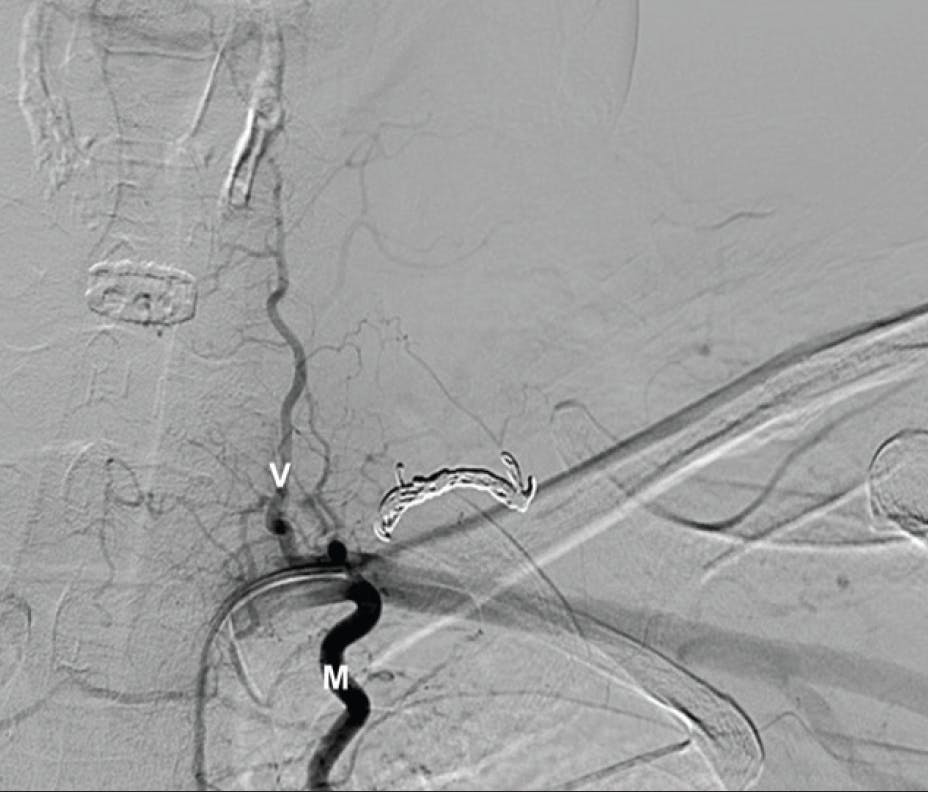
Figure 4. A subclavian angiogram showing pseudoaneurysm occlusion. V, vertebral artery; M, mammary artery.
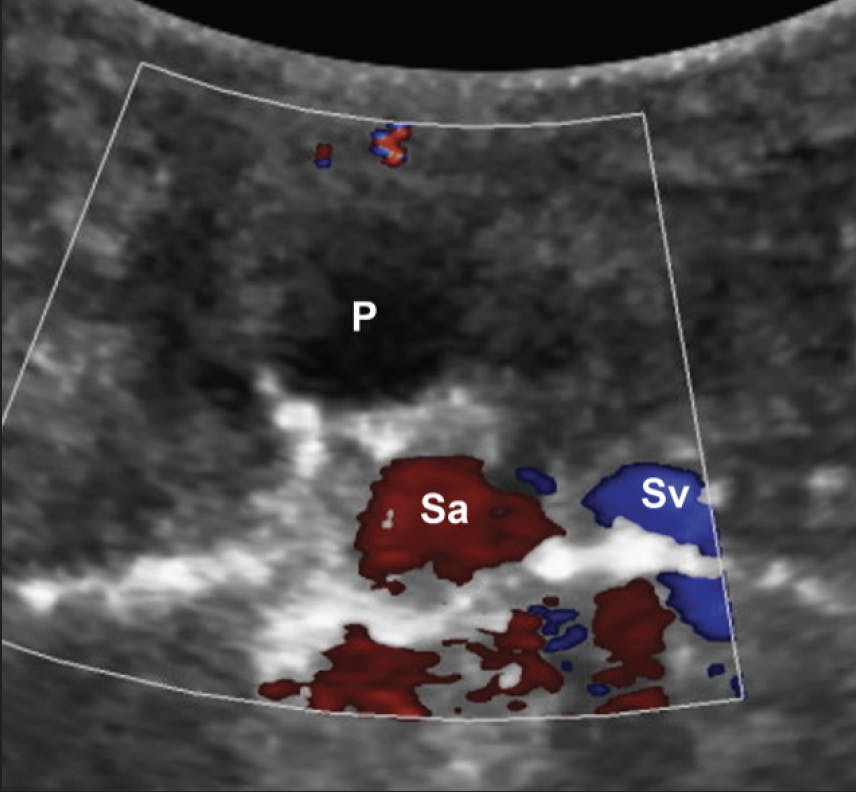
Figure 5. DUS control at 48 hours confirming pseudoaneurysm occlusion. P, pseudoaneurysm; Sa, subclavian artery; Sv, subclavian vein.
DISCUSSION
Accidental arterial puncture is a rare but feared complication of the positioning of a central venous line.1 Although frequently recognized and managed with compression, it can sometimes lead to rare complications such as excessive bleeding, arteriovenous fistula, hemothorax, or pseudoaneurysm. Pseudoaneurysms may be symptomless for days; however, with increasing size, pseudoaneurysms can compress contiguous vascular or nerve structures causing in limb edema and pain.2
Different treatment strategies include open surgical arterial repair or endovascular techniques such as covered stent placement, balloon tamponade, and vessel occlusion with coils or plugs. The choice between the different approaches is typically based on the puncture site and the patient’s risk factors for surgical management. If possible, it is essential to avoid accidental occlusion of the vertebral artery to reduce the risk of cerebral ischemic complications.1
Ruby Coils and soft Packing Coils allowed a controlled deployment and stable packing even in a short stretch of artery, reducing the risk of embolisation of nontarget collateral arterial branches. In this case, the choice of Penumbra large-volume and soft coils allowed us to obtain a durable mechanical occlusion that helped us obtain an optimal exclusion even in a complex situation such as this pseudoaneurysm.
Disclaimer: The opinions and clinical experiences presented herein are for informational purposes only. The results may not be predictive of all patients. Individual results may vary depending on a variety of patient-specific attributes.
Prof. Florian Wolf, Dr. Conrad von Stempel, and Dr. Andrea Discalzi were compensated in association with this article. Dr. Conrad von Stempel, Dr. Denis Rossato, and Dr. Andrea Discalzi are consultants to Penumbra.
1. Dixon OG, Smith GE, Carradice D, Chetter IC. A systematic review of management of inadvertent arterial injury during central venous catheterisation. J Vasc Access. 2017;18:97-102. doi: 10.5301/jva.5000611
2. Brass P, Hellmich M, Kolodziej L, et al. Ultrasound guidance versus anatomical landmarks for subclavian or femoral vein catheterization. Cochrane Database Syst Rev. 2015;1:CD011447. doi: 10.1002/14651858.CD011447
Advertisement
Advertisement