Advertisement
Advertisement
June 2023
Sponsored by Bentley
BeBack: An Approach for Heavily Calcified Lesions
Insights from the first United States clinical case using the BeBack as a crossing, support, and reentry catheter to recanalize a CTO resistant to conventional techniques.

The first United States clinical case using the BeBack crossing catheter (Bentley InnoMed GmbH) was recently carried out to recanalize a chronic total occlusion (CTO) at the proximal aspect of an in-stent re-occlusion in the superficial femoral artery (SFA) that resisted crossing using conventional catheter and wire techniques.
The BeBack crossing catheter is the first Bentley product available in the United States and Bentley’s markets outside the United States, marking an important addition to the Bentley portfolio. Although other reentry devices are available, BeBack is unique in its provision of the support and low profile necessary for both crossing and reentry options.
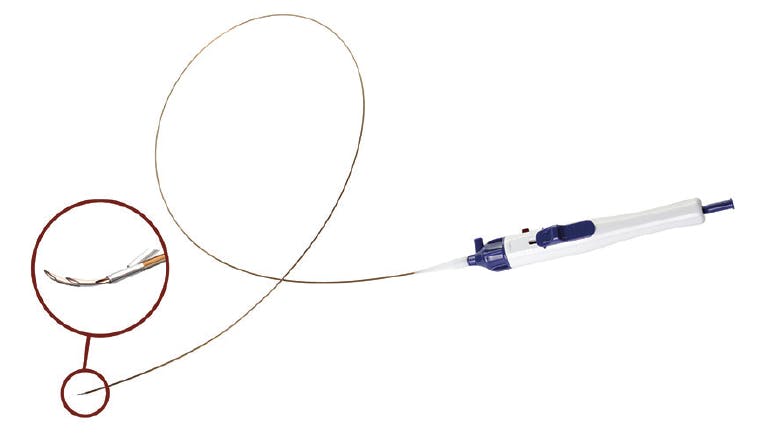
Figure 1. The BeBack crossing catheter.
The catheter is available in 2.9- and 4-F options, with a 0.014- and 0.018-inch guidewire platform, enabling antegrade, retrograde, and up-and-over entries. A needle protruding from the catheter tip is length-adjustable and has 360° rotation possibilities.
We spoke with Dr. Robert E. Beasley, who performed the first United States BeBack clinical case (see Sidebar), about his experience with the BeBack crossing catheter and how it fits into his armamentarium for CTO procedures.
What types of patients do you treat, and how does the BeBack device fit into your practice?
I treat cases ranging from regular claudication to critical limb ischemia, including patients with diabetic foot ulcers. Each one of these difficult-to-treat patients could benefit from BeBack, and I believe this device will allow us to treat more of our patients endovascularly with success.
How do you typically approach the recanalization of CTO lesions in these patients, and how often does treatment fail?
If you can’t traverse the blockage and reconnect flow that way, the only other way to reconnect flow down is via a bypass. This is an open surgical procedure and is associated with greater morbidity, complications, and longer time to recovery. Attempts to revascularize usually fail 5% to 10% of the time because we can’t open the artery and must use other means, such as with a pedal approach or using an intraluminal crossing catheter or subintimal reentry catheter to get through the blockage. The BeBack will improve on this dramatically. There are only two other reentry devices on the market, and neither of them allow both crossing and reentry.
What was your first experience with the BeBack crossing catheter, and in what kind of lesions have you used it mostly?
My first experience with BeBack was using a regular antegrade approach. I could not get through the hard cap of the occluded SFA, and the patient had very poor prospects with an approach from below because the arteries were mostly occluded except for one, which I would have difficulty puncturing. After a chance meeting with the national sales manager for Upstream Medical (now Bentley), we decided to try the GoBack, as it was called at the time. I came in from above and managed to puncture the very hard cap in the SFA. The wire slid right down the artery afterward without any trouble, taking < 1 minute to get through. In the past, that patient would probably have gone to surgery.
CASE STUDY: CTO WITH HARD, FIBROUS CAP RECANALIZED USING BEBACK CROSSING CATHETER
CASE PRESENTATION
A man in his early 80s presented with a history of severe claudication to the right lower extremity. A stenosis of the right common femoral artery and proximal SFA was revascularized; however, the patient had a stent in the mid aspect of his right SFA that was occluded, with a hard, fibrous cap (Figure 1). Catheter and guidewire techniques were unsuccessful, so it was decided to use a reentry and luminal crossing catheter, the BeBack.
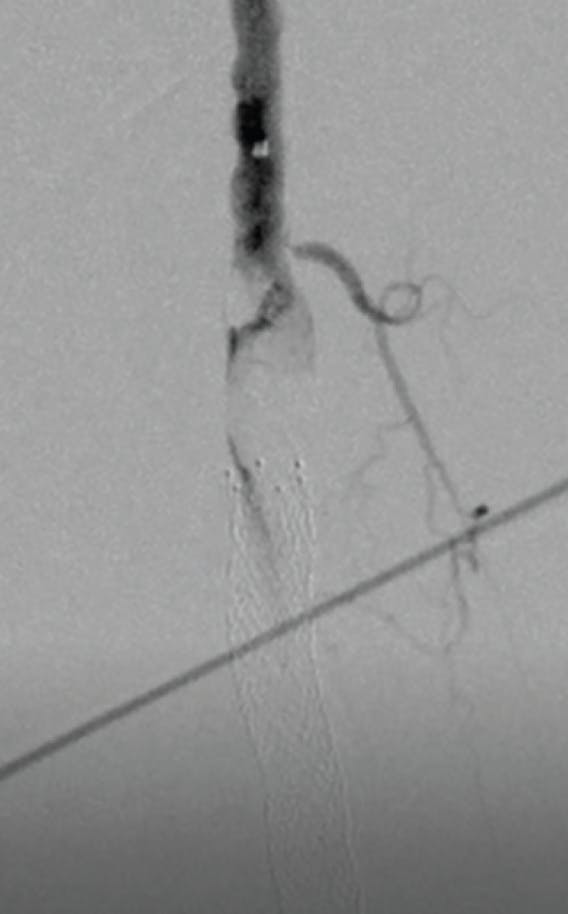
Figure 1. Angiogram of the occlusion in the proximal SFA in-stent restenosis.
PROCEDURAL OVERVIEW
The BeBack intraluminal crossing and reentry catheter was advanced to the level of the hard, fibrous cap (Figure 2). Using the angle of the BeBack needle, which could be ratcheted in several different lengths, the proximal aspect of the cap was reentered in the area of high fibrous density. Through the needle, a 0.018-inch guidewire was placed and extended into the previously occluded stent and into the popliteal artery. Next, intravascular ultrasound was performed, showing good placement of the guidewire. The area was then predilated with a 3-mm balloon. A 1.7-mm laser catheter was then used for laser atherectomy of the fibrous cap area and proximal portion of the stent. Balloon angioplasty of the SFA was performed (Figure 3). A stent was then placed above the area of the fibrous cap, followed by a second stent distally in an area of heavy eccentric calcific stenotic disease.
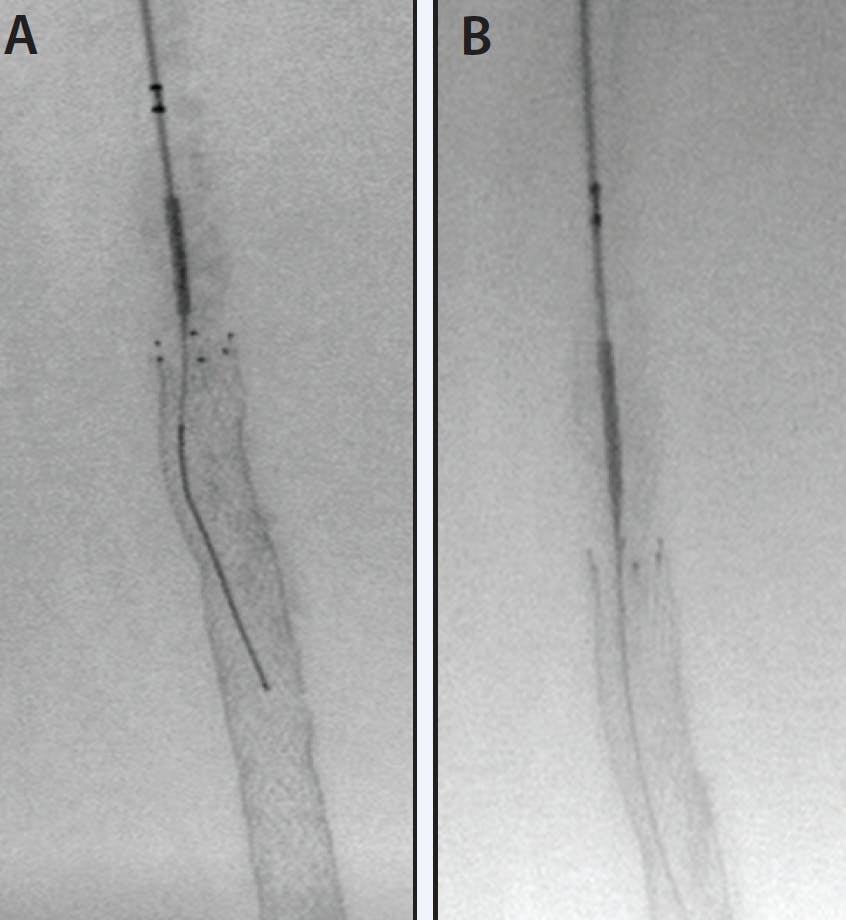
Figure 2. BeBack crossing the occlusion (A, B).
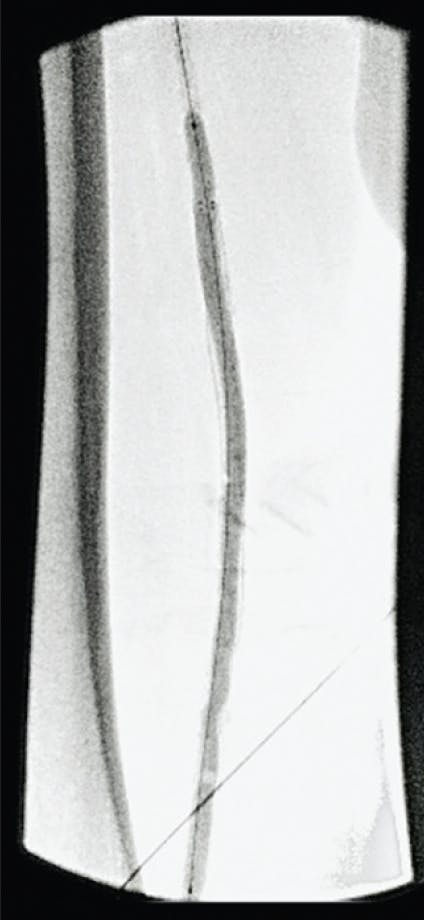
Figure 3. Percutaneous transluminal angioplasty of the in-stent restenosis.
After stent placement, postdilatation was performed with a 5- and then 6-mm–outer diameter balloon catheter. Follow-up angiography showed brisk, excellent flow down into the popliteal artery, with good visualization of the anomalous origin of the anterior tibialis and good visualization of the tibial vessels (Figure 4).
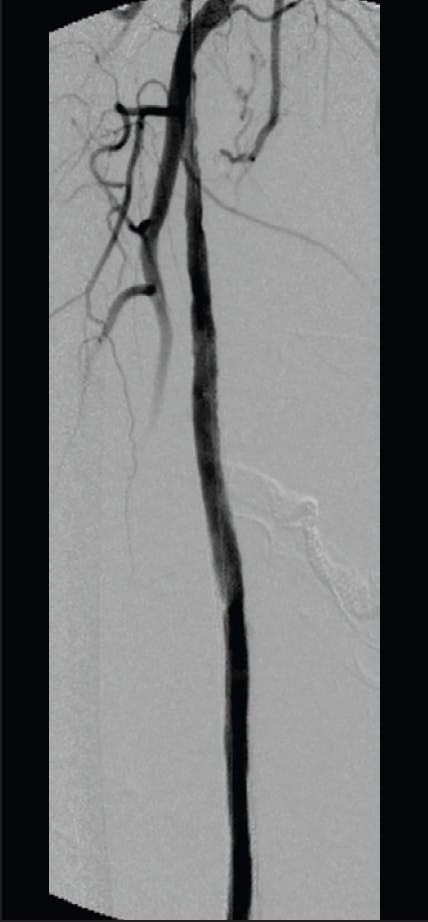
Figure 4. The final angiographic run.
How would you describe the ease of use with the BeBack crossing catheter?
BeBack is very easy to use, with both the 2.9- and 4-F sizes. A rotating directional catheter enables proper placement and direction of the catheter, so the operator always knows which way the wire throws. The needle is at the tip of the catheter and is adjustable for the throw. It has a torque that allows you to determine the direction and distance of the needle (eg, 3, 7, 11 mm).
What is the role of the BeBack as a support catheter?
BeBack has a built-in support catheter. Once the wire has crossed the blockage, either from an intraluminal crossing catheter or subintimal reentry route, you can follow that wire with the BeBack catheter as support and confirm the position with dye to ensure sure you’re inside the artery correctly. It’s a great feature of the BeBack.
How do you use the various sizing options for BeBack?
The BeBack crossing catheter can be used in multiple approaches because it comes in 2.9 and 4 F, with a 0.014- and 0.018-inch (guidewire) platform. The 2.9-F size allows you to cross lesions from a pedal (retrograde) approach with the artery intact and undamaged, which could be very difficult to do previously. The 4-F size aids an antegrade approach. The BeBack can be used for support, intraluminal crossing, or subintimal reentry.
What are the biggest advantages in your procedures now with use of the BeBack?
What I particularly like about the BeBack is the adjustable needle; it comes out of the catheter tip rather than the side. It also does not require use of another modality. Other crossing catheters require ultrasound, which adds to the expense and complexity. With BeBack, you can make an intraluminal crossing through a CTO or you can take a subintimal reentry route. It allows you to cross very difficult structures, such as an occluded stent as per my case where the patient had an almost concrete-type fibrous buildup.
I believe BeBack will allow me to cross almost 100% of previously uncrossable lesions where I would have needed to send the patient to open surgery. I can now treat almost all patients with an endovascular approach. Thanks to the small profile, even a pedal approach is possible. Now that the BeBack is available, I frequently use it because it makes the most complex lesions easy to cross. The device helps reduce the procedure time, which is a benefit for all but especially for the patient. Experienced peripheral interventionalists can get through most occlusions with enough time, but the residual radiation, contrast use, and health costs can hurt more than just the patient. Being able to cross or reenter with a single device that can be used below the knee with its low-profile design will save on these costs by reducing procedure times and decreasing medical waste. Treating more difficult lesions in less time is a win-win for everyone. This is what makes the BeBack such a game changer.
Advertisement
Advertisement