Advertisement
Advertisement
November 2023
False Lumen Management in Chronic Aortic Dissection
A panel of experts weigh in with their preferred strategies when aneurysmal growth is present.
With Jordan R. Stern, MD; Tara M. Mastracci, MD, FRCSC; Dittmar Böckler, MD, PhD; and Jean Panneton, MD, FRCSC, FACS

What to do with the false lumen (FL)? This is one of the key questions when treating late aneurysms in the setting of chronic aortic dissection. For some patients, simply treating through the true lumen and covering all reentry tears can be sufficient to cease flow into the FL and induce thrombosis. However, the majority of patients will require some adjunctive therapy.
For patients undergoing isolated repair of the thoracic aorta, where the goal is to eliminate retrograde flow into the FL in the chest, then I will generally employ a “backdoor” treatment after thoracic endovascular aortic repair (TEVAR). In most cases, I prefer a physician-modified candy-plug device deployed into the FL. However, if the total diameter of the aorta about 5 cm above the celiac axis is < 40 mm, then I would also consider a knickerbocker repair with balloon rupture of the septum in this location. I do not recommend septal rupture any closer to the visceral segment or without 5 cm of stent graft distally.
Finally, if the total aortic diameter is essentially normal in the seal zone but is divided by a rigid, chronic septum, then a good option can be endovascular “cheese-wire” septotomy to create a landing area. We have published on this method and even described a novel “reverse” cheese-wire technique, but there are definitely some potential pitfalls. Newer techniques involving a thermal septotomy with electrification of the wire appear promising to mitigate some of these risks, and this can be a very effective strategy for eliminating the FL in well-selected patients.

There is no debate that once a dissection hits a threshold diameter, it is time for intervention. In our center, this means either open thoracoabdominal repair or endovascular exclusion. Patients with connective tissue disease or who are young and fit undergo open repair, while the remainder undergo staged endovascular repair, using TEVAR and then a custom distal fenestrated device. The goal of endovascular repair is to exclude the FL from flow.
Complete exclusion of the FL can sometimes be a tenacious foe. The design of a custom device that relines the true lumen is often not sufficient to ensure FL exclusion, because dissections extend into branches or there is persistent flow from lumbar or intercostal arteries. It is often necessary to prophylactically coil the inferior mesenteric artery or prominent lumbar vessels from within the FL. I find directed coiling of branches is more effective in stopping flow, rather than leaving coils in the FL alone. Furthermore, I prefer coils over liquid embolic products because of the precision afforded by coiling. If sources of FL flow are identifiable, these adjunct procedures can be done at the time of the first stage (TEVAR). This has the benefit of allowing for imaging follow-up after coiling is performed but before the final stage of the procedure to assess the thoroughness of the effort.
I think FL occluders like candy plugs are very effective, but only if they are used in the immediate postdissection period. Because we don’t routinely operate on acute dissections, the role of these valuable devices is small in a practice of chronic dissection.
When dissections are very extensive, we sometimes opt to leave access to the FL for a third stage. Theoretically, this lends protection to the spinal cord by maintaining some perfusion and decreases the length of the procedure. The follow-up procedure then also allows for a detailed examination of FL sources of flow, and it is possible that occlusion plugs (eg, Cera vascular plug [Lifetech Scientific]) might then be used to promote thrombosis. Using fusion imaging to directly target branches requiring embolization has the benefit of forcing a preoperative plan after examination of small details of the procedure, as well as facilitating guidance to shorten procedure time.

Patients with chronic expanding aortic dissections are certainly one of the most challenging cohorts within a heterogeneous entity of aortic pathologies. If treatment is indicated, the treatment goals are prevention of aortic rupture with aortic remodeling due to false lumen thrombosis. A stiff dissection membrane; a tapered, conical shape of the aortic true lumen; and persisting entries at the level of the renal arteries are some out of several morphologic and anatomic challenges an operator faces when planning an endovascular procedure for chronic expanding aortic dissection.
My favorite and preferred first-choice method for patients with chronic expanding aortic dissection is thoracoabdominal endovascular treatment with a customized fenestrated stent graft, and if necessary in emergencies, using a mostly inner branch stent graft design. Nevertheless, I also see a definitive role for FL embolization with, for example, the candy-plug technique.
Patients with chronic expanding aortic dissections need a treatment strategy involving a multidisciplinary team with complementary operative/endovascular techniques in high-volume centers experienced with aortic dissection in the acute and chronic setting.

The preferred treatment of the FL when dealing with aneurysmal growth of the aorta in chronic dissection depends on whether a previous TEVAR has been performed or not. In the latter instance, the first step would be to perform a TEVAR to exclude the primary entry tear. Often, with chronic dissection, this may require a landing zone proximal to zone 3, most commonly a zone 1 or 2 TEVAR after partial arch debranching.
When a TEVAR endograft is already in place and the patient is experiencing aneurysmal expansion, the key to treating FL enlargement is to understand the cause of that FL perfusion or pressurization. A proximal type Ia endoleak, dSINE (distal stent-induced new entry), or distal thoracic aortic reentries are simply addressed by proximal or distal TEVAR extension.
When the causes of the FL perfusion are reentries involving the visceral branches or reentries in the paravisceral aorta, the preferred treatment is RESET (ReEntry Specific Endovascular Therapy). This technique specifically targets those reentries to eliminate FL perfusion. When the reentry involves a visceral branch vessel, a covered stent is deployed from the branch into the true lumen to exclude this reentry and eliminate FL flow. If the reentry involves the paravisceral aorta, an occluder device, such as an Amplatzer septal occluder or Amplatzer muscular ventricular septal defect occluder (both Abbott), can be deployed to obliterate that aortic reentry (Figure 1). This technique offers the ability to treat post–chronic dissection aneurysm in a minimally invasive way and avoids using more complex aortic procedures such as fenestrated or multibranched aortic endografts. RESET is effective for eliminating reentries and causing FL thrombosis and offers durable aortic remodeling.
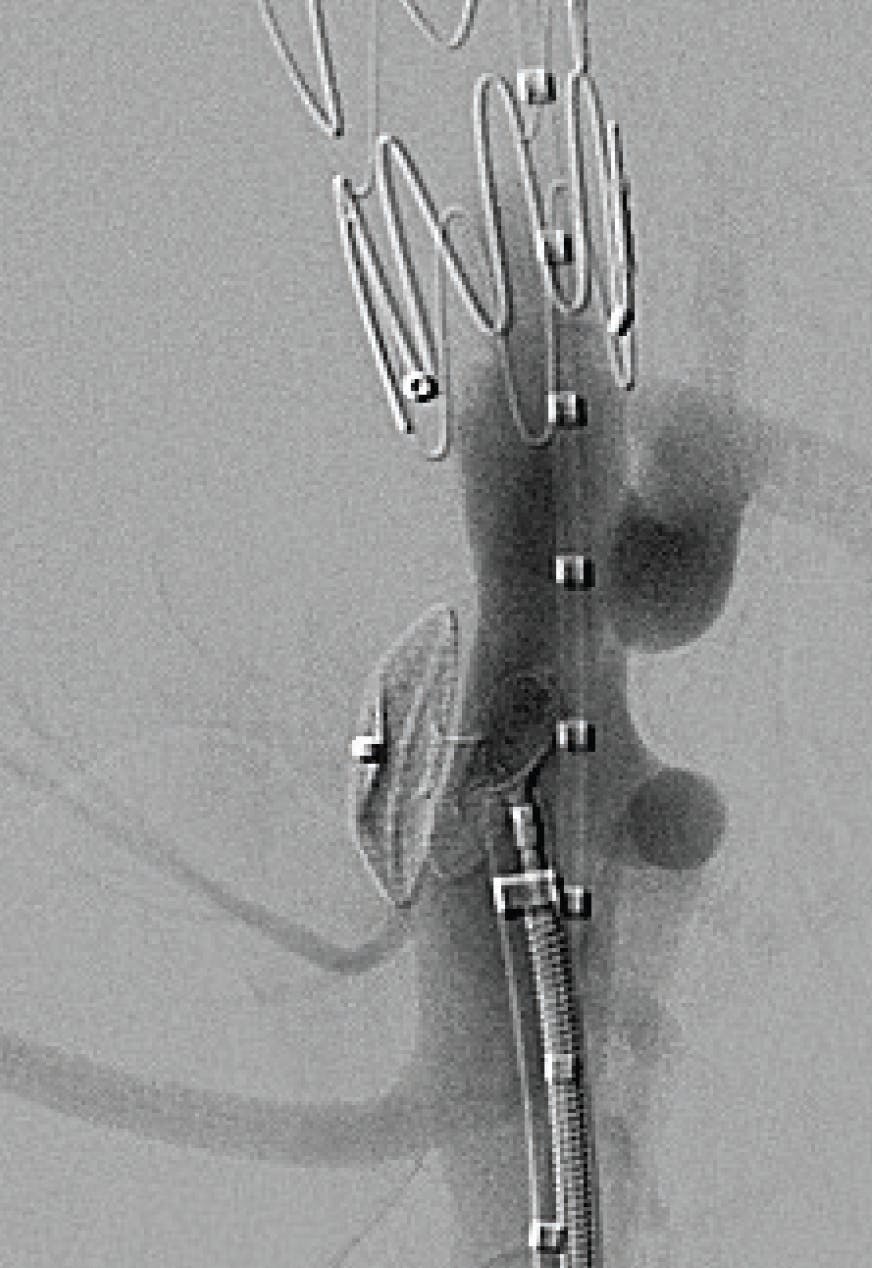
Figure 1. Deployment of an occluder device.
Advertisement
Advertisement