Advertisement
Advertisement
September 2023 Supplement
Sponsored by Cagent Vascular
Use of Serranator as Standalone Treatment in a SFA Occlusion

PATIENT PRESENTATION
A man in his early 70s presented with bilateral lower extremity claudication at approximately 50 yards. The patient is a former smoker, with a 50 pack-year history of tobacco use. Noninvasive arterial testing demonstrated a right resting and post-exercise ankle-brachial index (ABI) of 1.23 and 0.82, respectively, and a left resting and post-exercise ABI of 0.82 and 0.52, respectively. The decision to intervene on this patient was made based on his failure of conservative therapy and his recurrent symptoms, particularly on the left side, which were severe.
PROCEDURAL OVERVIEW
After the patient was prepped in the interventional lab, access was obtained on the contralateral (right) femoral access, and a 6-F Destination sheath (Terumo Interventional Systems) was advanced over the aortic bifurcation. The lesion in the distal left superficial femoral artery (SFA) was unable to be crossed successfully due to numerous collaterals (Figure 1). Pedal access was then obtained into the dorsalis pedis artery, which immediately collateralized through an occluded peroneal artery. The proximal anterior tibial artery was patent; however, the distal anterior tibial artery was chronically occluded. Nevertheless, the wire advanced through the peroneal artery and was able to cross the occlusion in the SFA successfully. The wire was then exteriorized through the 6-F sheath using a microsnare. Serration angioplasty was completed using a 5- X 120-mm Serranator® PTA Serration Balloon Catheter (Cagent Vascular) for the SFA occlusion (Figure 2) and a 2.5- X 80-mm Serranator balloon for the peroneal artery. Subsequent angiography demonstrated excellent luminal gain without dissection in both previously occluded segments (Figure 3). After removal of the microsheath from the pedal artery, there were strong, palpable pulses in both the dorsal pedis and posterior tibial arteries. Postintervention studies at 6 weeks demonstrated normal ABIs in the bilateral lower extremities at rest with normal arterial Doppler results throughout the left leg.
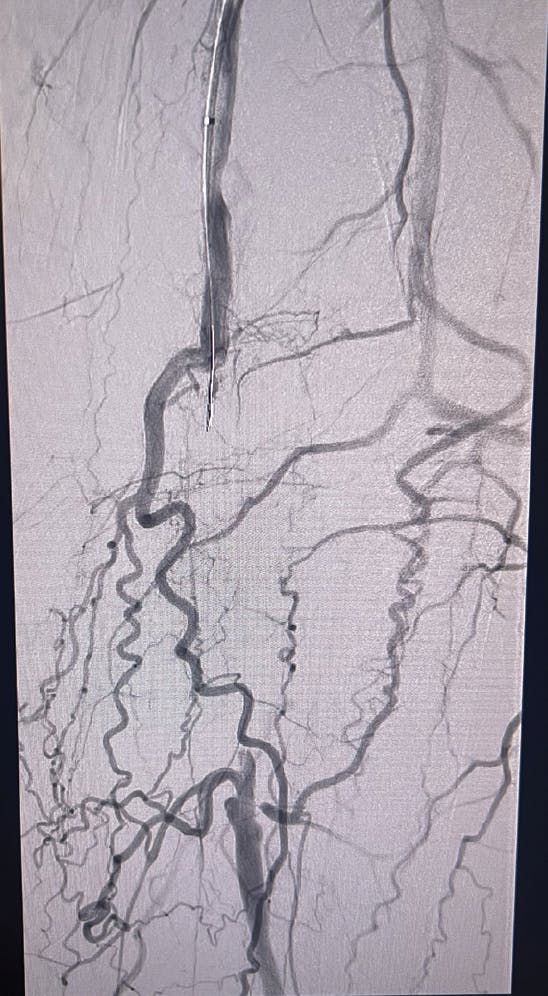
Figure 1. Pre-procedure angiogram.
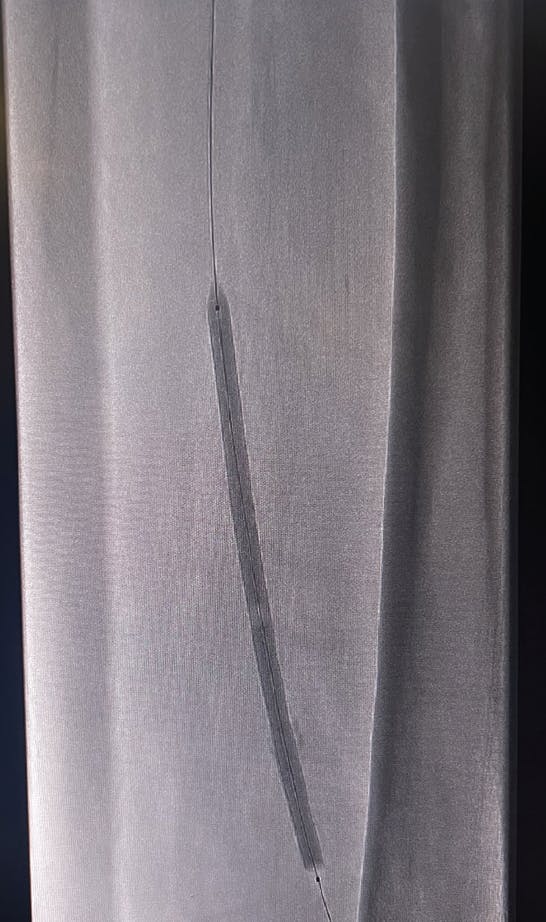
Figure 2. Serration angioplasty of the SFA occlusion with the Serranator balloon.
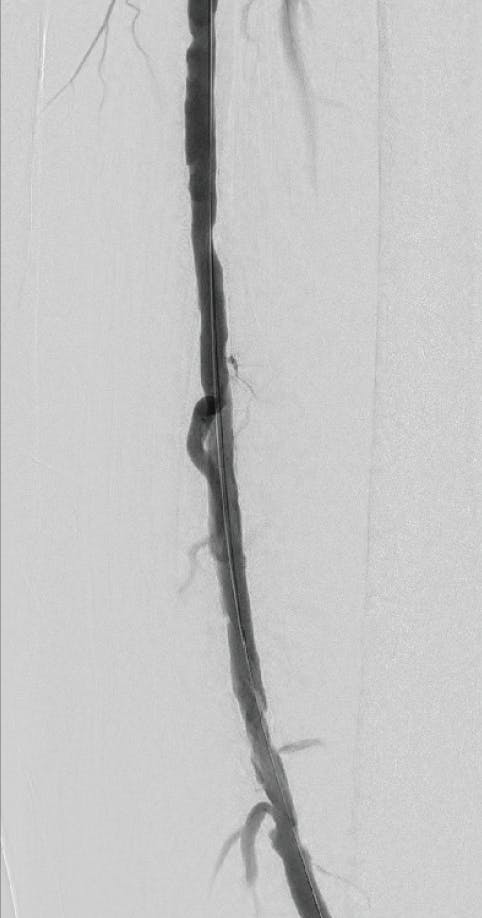
Figure 3. Completion angiogram showing an excellent result with no dissection.
CONCLUSION
In this patient, there was excellent reestablishment of arterial blood flow to the lower left extremity without requiring internal scaffolding, which was a result of mitigating vessel trauma due to the novel balloon design provided by the Serranator device.
What is your typical treatment algorithm and when do you choose Serranator?
Dr. DiGiovanni: Serranator has become a workhorse for us, not just below the knee, but also in the SFA/popliteal segments where balloon-associated vessel trauma typically drives the decision for stent placement. The ability to have a low-pressure balloon capable of providing a durable arterial lumen without significant concerns for dissection has proven invaluable to our high-volume practice.
How important is excellent lumen gain prior to using drug-coated therapy? Do you feel like Serranator consistently provides this in the SFA?
Dr. DiGiovanni: Anecdotally, luminal gain appears to be one of the most important aspects of maintaining patency of intervened segments prior to using drug therapy throughout, but most importantly, in the SFA/popliteal segment of the lower extremity. Serranator has consistently offered our patients excellent luminal gain without significant untoward issues, such as dissections, often seen in high-pressure balloon inflations or in heavily calcified vessels.
Is there something about the Serranator’s mechanism of action that you believe makes it different than other specialty balloons?
Dr. DiGiovanni: It’s ability to establish excellent lumen gain at low pressures, while minimizing vessel trauma, is truly unique in my experience with other specialty balloon technologies. I didn’t quite appreciate the mechanism of serration until I began working with the technology; it’s remarkably controlled and produces very consistent results regardless of morphology.
Advertisement
Advertisement