Advertisement
Advertisement
September 2023
Sponsored by iVascular
Newest Evidence in Complex Lesions: Are All DCBs the Same?
A summary of the TINTIN and MERLION trials evaluating the safety and efficacy of the Luminor drug-coated balloon for treatment of complex femoropopliteal and infrapopliteal lesions.
The Luminor drug-coated balloon is available under CE Mark only and is not approved in the United States.
The first clinical evidence of paclitaxel drug-coated balloons (DCBs) in peripheral arteries was reported 20 years ago.1 Since then, data on paclitaxel DCBs have been obtained from more than 100 trials.2 Even so, studies on long, complex lesions or below-the-knee (BTK) lesions are limited.
For this reason, doubts arise in daily practice as to the best way to treat these long, complex lesions. Are DCBs really sufficient? Are all DCBs the same? Can we use any DCB in these lesions? This article reports on the evidence of Luminor DCB (iVascular) in different types of complex lesions.
Luminor is a DCB that can be used in different lesions because it has the 0.014-, 0.018-, and 0.035-inch guidewire compatibility and a broad portfolio. In addition, it is coated with iVascular’s own nanotechnology, TransferTech, which minimizes drug loss and ensures high drug transfer to the arterial wall (Figure 1), a fact demonstrated by the good results obtained from clinical trials (82.1% freedom from target lesion revascularization [TLR] at 5 years).3

Figure 1. The Luminor DCB is coated with iVascular’s proprietary nanotechnology, TransferTech, which minimizes drug loss and ensures high drug transfer to the arterial wall.
In Complex and Long Femoropopliteal Lesions, 2 Is Better Than 1—The TINTIN Trial4

The reality of daily practice is the increase in treatment of complex lesions, including lesions ≥ 20 cm and those that are totally occluded or heavily calcified.
In the clinical evidence, what we can see is:
- At 2 years, there is definitely an increase in outcome failures with percutaneous transluminal angioplasty and bare-metal stenting.
- With drug-eluting technologies, this same issue isn’t observed, but there is a need for efficient scaffolding; longer mean lesion length correlates with higher provisional stenting rates (Figure 1).3,5-14
- The use of combined therapies‚ such as use of a DCB followed by a stent‚ offers better results in long lesions in the longer term.
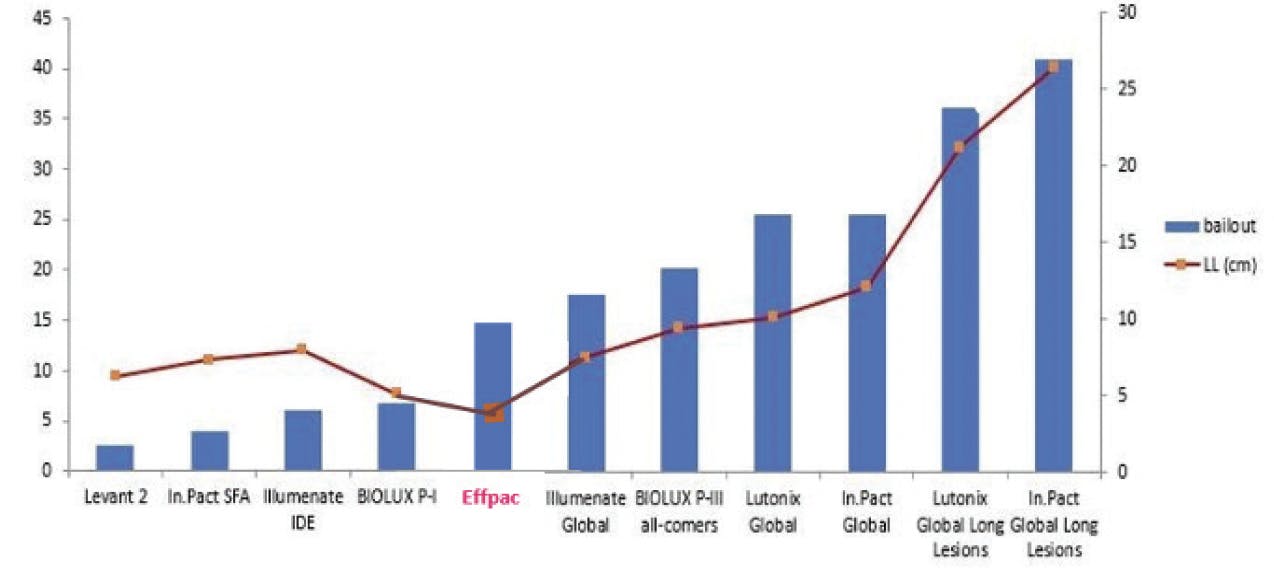
Figure 1. Provisional stenting rates of different DCB trials.
The rationale of the TINTIN trial was to combine the Luminor DCB and iVolution Pro self-expanding stent (iVascular) for the treatment of TransAtlantic Inter-Society Consensus (TASC) C and D femoropopliteal lesions. Both devices had already demonstrated excellent efficacy outcomes in femoropopliteal TASC A and B lesions in the EffPac trial (Luminor) and EVOLUTION trial (iVolution Pro).3,15
One hundred patients were enrolled in the TINTIN trial, including 72% claudicant patients and almost 30% critical limb ischemia patients. The mean lesion length was 24.2 cm, varying from 15 to 45 cm. The percentage of occlusions was very high at 60%.
The objective of TINTIN was to evaluate the safety and efficacy of the combination of Luminor and iVolution Pro at long-term follow-up, up to 4 and 5 years, in order to strengthen the clinical evidence of the few existing trials on treatment of long lesions, expecting good outcomes at long term.
At LINC 2023, 4-year outcomes were presented, showing a freedom from clinically driven TLR (CD-TLR) of 74.8%, meaning that only 25 of these long and complex lesions needed to be revascularized at 4 years.4 The excellent outcomes achieved in the trial demonstrate that the combination therapy with Luminor and iVolution Pro is a perfect option for real lesions, where other devices (DCBs, drug-eluting stents [DES], bare-metal stents alone) haven’t been able or don’t have the evidence to make this conclusion.
DCB in BTK: a Chance Worth Taking—The MERLION Trial16

Diabetic patients with chronic limb-threatening ischemia (CLTI) usually present with multilevel infrainguinal peripheral artery disease and tibial arterial occlusions. Using percutaneous angioplasty is sometimes preferred, with excellent technical success rate (> 90%), but there is a high incidence of restenosis within the first 6 months (> 70%) because of elastic recoil, neointimal hyperplasia, and vessel wall remodeling. The problem the patient is facing is that reocclusion hinders wound healing and the necessity to revascularize the lesion. DCBs are an option to lower restenosis rates, but sometimes their use has been controversial.
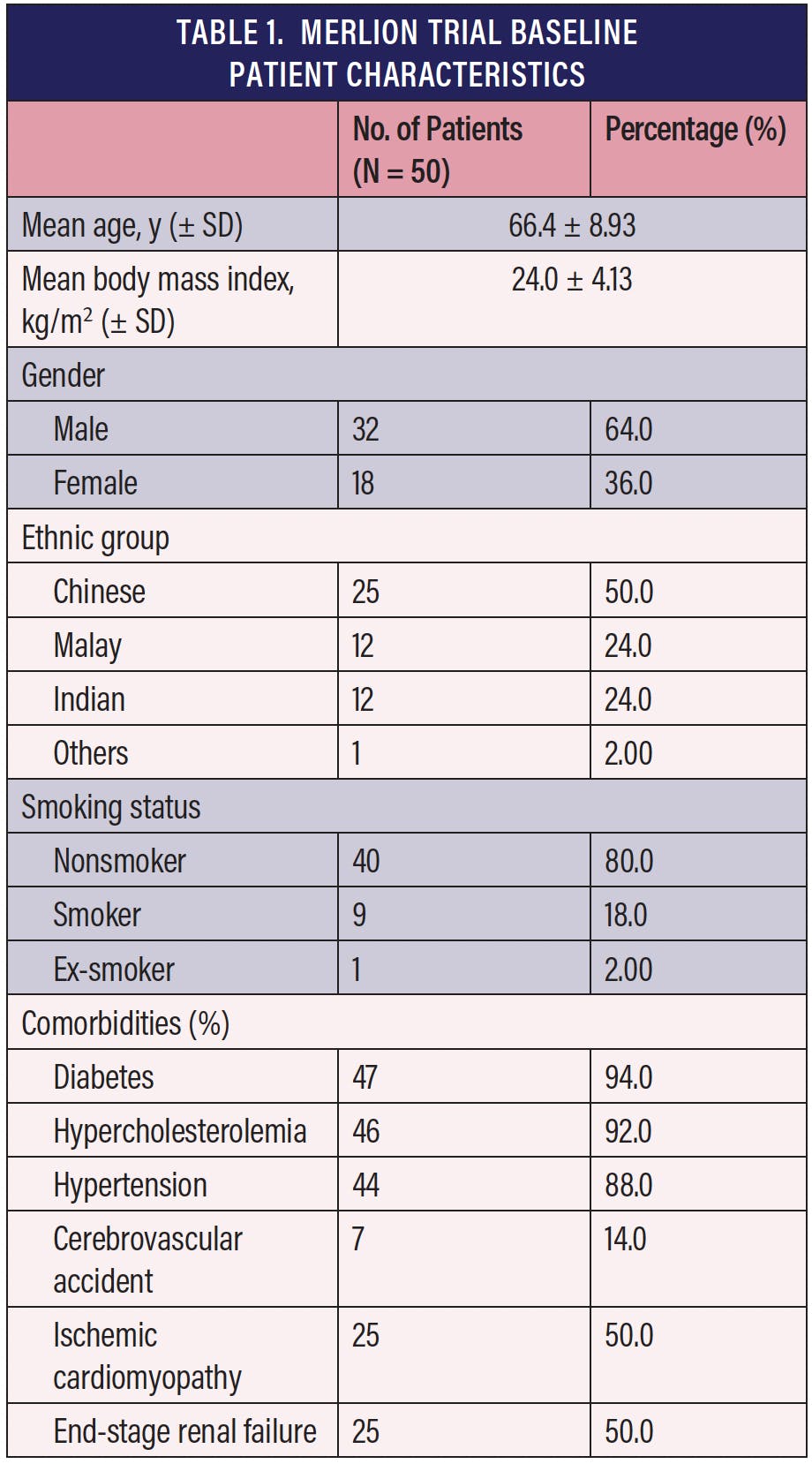
The aim of the MERLION trial was to evaluate the safety and efficacy outcomes of Luminor and Angiolite BTK DES (iVascular) as a bailout stent for treatment of TASC C and D tibial occlusive atherosclerotic lesions in 50 Asian patients presenting with CLTI. The majority of the patients were Rutherford class 5, and a high number had diabetic mellitus (94%) and end-stage renal failure (50%) (Table 1). The mean lesion length was long (14 ± 9.5 cm) with > 50% with moderate to severely calcified lesions.
The safety profile was excellent, with no important events reported at 30 days. The follow-up continued up to 24 months, achieving a CD-TLR of 77.8%, and complete wound healing occurred in 83.3% of the patients.
Luminor remains safe and efficacious in treating highly complex infrapopliteal atherosclerotic lesions in an otherwise challenging frail population of CLTI patients with a high incidence of diabetes and end-stage renal failure and cardiovascular comorbidities.
1. Tepe G, Schnorr B, Albrecht T, et al. Angioplasty of femoral-popliteal arteries with drug-coated balloons: 5-year follow-up of the THUNDER trial. JACC Cardiovasc Interv. 2015;8(1 Pt A):102-108. doi: 10.1016/j.jcin.2014.07.023
2. Ang H, Koppara TR, Cassese S, et al. Drug-coated balloons: technical and clinical progress. Vasc Med. 2020;25:577-587. doi: 10.1177/1358863X20927791
3. Teichgräber U, Lehmann T, Ingwersen M, et al. Long-term effectiveness and safety of femoropopliteal drug-coated balloon angioplasty: 5-year results of the randomized controlled EffPac trial. Cardiovasc Intervent Radiol. 2022;45:1774-1783. doi: 10.1007/s00270-022-03265-1
4. Deloose K. TINTIN trial investigating the combination of DCB and bare metal stents: 4-year result. Presented at: Leipzig Interventional Course (LINC) 2023; June 6, 2023; Leipzig, Germany.
5. Schroë H, Holden AH, Goueffic Y, et al. Stellarex drug-coated balloon for treatment of femoropopliteal arterial disease-The ILLUMENATE Global Study: 12-Month results from a prospective, multicenter, single-arm study. Catheter Cardiovasc Interv. 2018;91:497-504. doi: 10.1002/ccd.27348
6. Tepe G. BIOLUX P-III 12-month results. Presented at CIRSE 2017; September 16-20, 2017; Copenhagen, Denmark.
7. Thieme M, Von Bilderling P, Paetzel C, et al. The 24-month results of the Lutonix Global SFA registry: worldwide experience with Lutonix drug-coated balloon. JACC Cardiovasc Interv. 2017;10:1682-1690. doi: 10.1016/j.jcin.2017.04.041
8. Montero-Baker M. LEA 13. Lutonix drug-coated balloon long lesion study: 24-month outcomes. J Vasc Surg. 2018;68(supp):E118. https://doi.org/10.1016/j.jvs.2018.08.024
9. Jaff MR. IN.PACT Global full clinical cohort. Presented at Vascular Interventional Advances (VIVA) 2016; September 19, 2016; Las Vegas, Nevada.
10. Ansel G. IN.PACT Global registry. Presented at TCT 2015; October 11-15, 2015; San Francisco, California.
11. Rosenfield K, Jaff MR, White CJ, et al. Trial of paclitaxel-coated balloon for femoropopliteal artery disease. N Engl J Med. 2015;373:145-153. doi: 10.1056/NEJMoa1406235
12. Tepe G, Laird J, Schneider P, et al. Drug-coated balloon versus standard percutaneous transluminal angioplasty for the treatment of superficial femoral and popliteal peripheral artery disease: 12-month results from the IN.PACT SFA randomized trial. Circulation. 2015;131:495-502. doi: 10.1161/CIRCULATIONAHA.114.011004
13. Krishnan P, Faries P, Niazi K, et al. Stellarex drug-coated balloon for treatment of femoropopliteal disease: twelve-month outcomes from the randomized ILLUMENATE pivotal and pharmacokinetic studies. Circulation. 2017;136:1102-1113. doi: 10.1161/CIRCULATIONAHA.117.028893
14. Scheinert D, Schulte KL, Zeller T, et al. Paclitaxel-releasing balloon in femoropopliteal lesions using a BTHC excipient: twelve-month results from the BIOLUX P-I randomized trial. J Endovasc Ther. 2015;22:14-21. doi: 10.1177/1526602814564383.
15. Bosiers M, Deloose K, Callaert J, et al. EVOLUTION study: 12-month results. J Cardiovasc Surg (Torino). 2019;60:490-495. doi: 10.23736/S0021-9509.19.10706-9
16. Tang TY. MERLION trial: 24 months outcomes in tibial occlusive disease. Presented at: Leipzig Interventional Course (LINC) 2023; June 6, 2023; Leipzig, Germany.
Advertisement
Advertisement