Advertisement
Advertisement
September 2023
Sponsored by Penumbra, Inc.
The Utility of the Lightning™ Computer Assisted Vacuum Thrombectomy (CAVT) for Thrombus Removal
Case examples highlighting the Lightning Computer Assisted Vacuum Thrombectomy (CAVT) in a segmental thrombotic occlusion of the popliteal artery, an aortic embologenic thrombus, and acute mesenteric ischemia.
With Simone Comelli, MD; Antonio Ferrari, MD; Thomas Le Houerou, MD; and Giovanni Federico Torsello, MD
Thrombosis in the arterial and venous vasculature is a serious condition, impacting patient mortality and quality of life. Historically, thrombosis has been managed medically or with surgical extraction, resulting in high bleed risks and infection rates. As technologies have advanced, clot extraction with endovascular thrombectomy devices has expanded the armamentarium. CAVT offers an innovative endovascular thrombus management tool for the peripheral vascular bed.
Lightning, first introduced in April 2022, includes 7- and 12-F catheter sizes and uses vacuum thrombectomy: an “intelligent” device designed to detect thrombus during the procedure and reduce blood loss. Lightning’s clot detection algorithm differentiates between thrombus and patent flow. When the catheter is in an open blood vessel, it will intermittently aspirate to mitigate blood loss. When the system detects clot, full vacuum is delivered to the thrombus. The visual and audio cues alert the operator to changes in the algorithm’s readings.
The Lightning Aspiration Tubing is paired with Penumbra’s laser-cut hypotube catheters, designed to maximize inner diameter while maintaining a low-profile outer diameter and enhance the deliverability of power aspiration in hard-to-reach vasculature. The Lightning 7 has an XTORQ tip shape designed for engaging wall-adherent thrombus. The Lightning 12 has both an XTORQ and HTORQ tip shape to navigate larger vessels such as the pulmonary arteries. The Lighting’s clot detection algorithm and trackable catheters provide operators with a deliverable and intelligent thrombus removal solution.
DIRECT THROMBOASPIRATION IN PATIENT WITH SEGMENTAL THROMBOTIC OCCLUSION OF THE POPLITEAL ARTERY


PATIENT PRESENTATION
A man in his early 70s with a history of type 2 diabetes, hypertension, and hypercholesterolemia was admitted to the emergency room for right inferior limb pain lasting 3 days. Cardiologic examination revealed an atrial fibrillation. Investigation with duplex ultrasound revealed a thrombotic occlusion of the popliteal artery with partial reperfusion of the posterior tibial artery, confirmed by CTA (Figure 1).
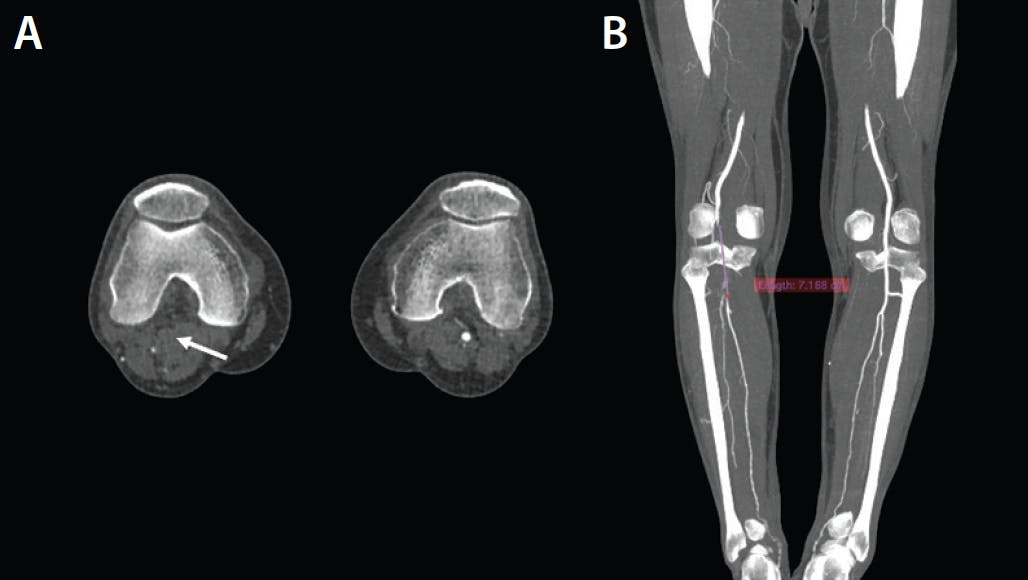
Figure 1. Preoperative CTA: thrombotic occlusion of the popliteal artery (A); maximum intensity projection reconstruction showing no signs of atherosclerosis in the femoropopliteal tract, with 7-cm-length occlusion of the right popliteal artery and quite good opacification of the fibular and posterior tibial artery due to genicular revascularization (B).
TREATMENT OPTIONS
Three treatment options were considered: surgical thrombecomy, intra-arterial fibrinolysis, and endovascular thrombectomy. At our center, we prefer to start with a minimally invasive approach when possible, and given the segmental nature of the occlusion, the Lightning 7 thrombectomy system was selected.
After systemic heparinization, an ultrasound-guided anterograde puncture of right common femoral artery was achieved and a 7-F, 11-cm short sheath placed (Avanti, Cordis). Digital subtraction angiography (DSA) confirmed the thrombotic occlusion of the popliteal artery with partial reperfusion of the tibioperoneal trunk through the genicular collaterals (Figure 2).
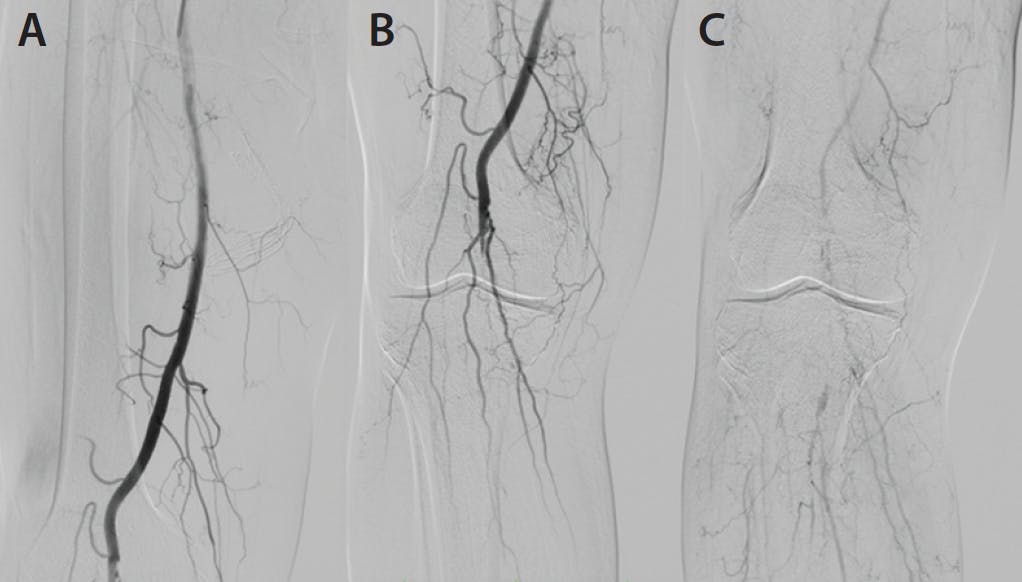
Figure 2. Preoperative DSA confirming occlusion of the popliteal artery (A, B); late acquisition (C) showing mild revascularization of the BTK arteries.
Using a 0.035-inch straight hydrophilic guidewire (Radifocus, Terumo Europe) and a 4-F hydrophilic diagnostic catheter (65-cm Berenstein curve, Terumo Europe), we crossed the occlusion and checked the below-the-knee (BTK) vascularization.
Then, a Lightning™ 7 XTORQ tip (Penumbra, Inc.) was gently advanced over the guidewire through the sheath valve and delivered to the face of the thrombus. The aspiration pump was activated, and two passes of over-the-wire thrombectomy were performed (Figure 3). The guidewire was removed, and the Lightning 7 was carefully advanced through the residual thrombus working from proximal to distal (Figure 4), including in the posterior tibial artery.
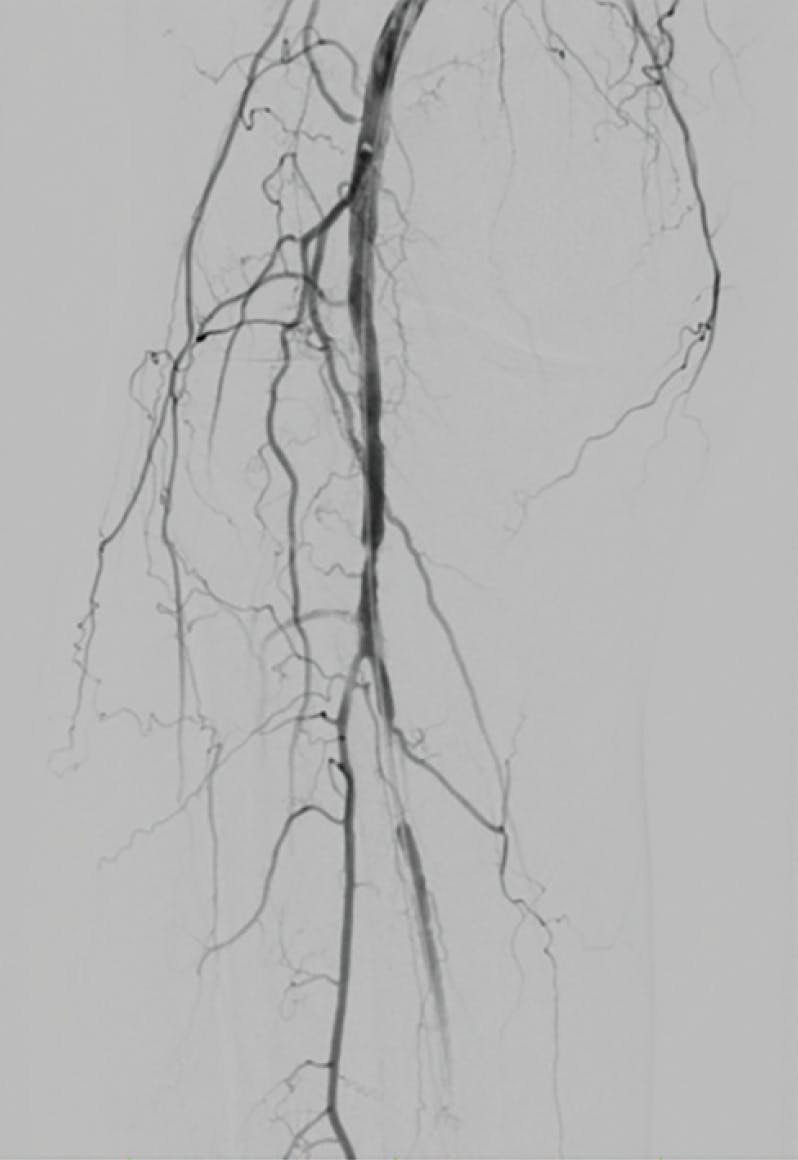
Figure 3. Angiographic check after two “over-the-wire” aspiration passes, with some residual thrombus on the popliteal and posterior tibial artery.
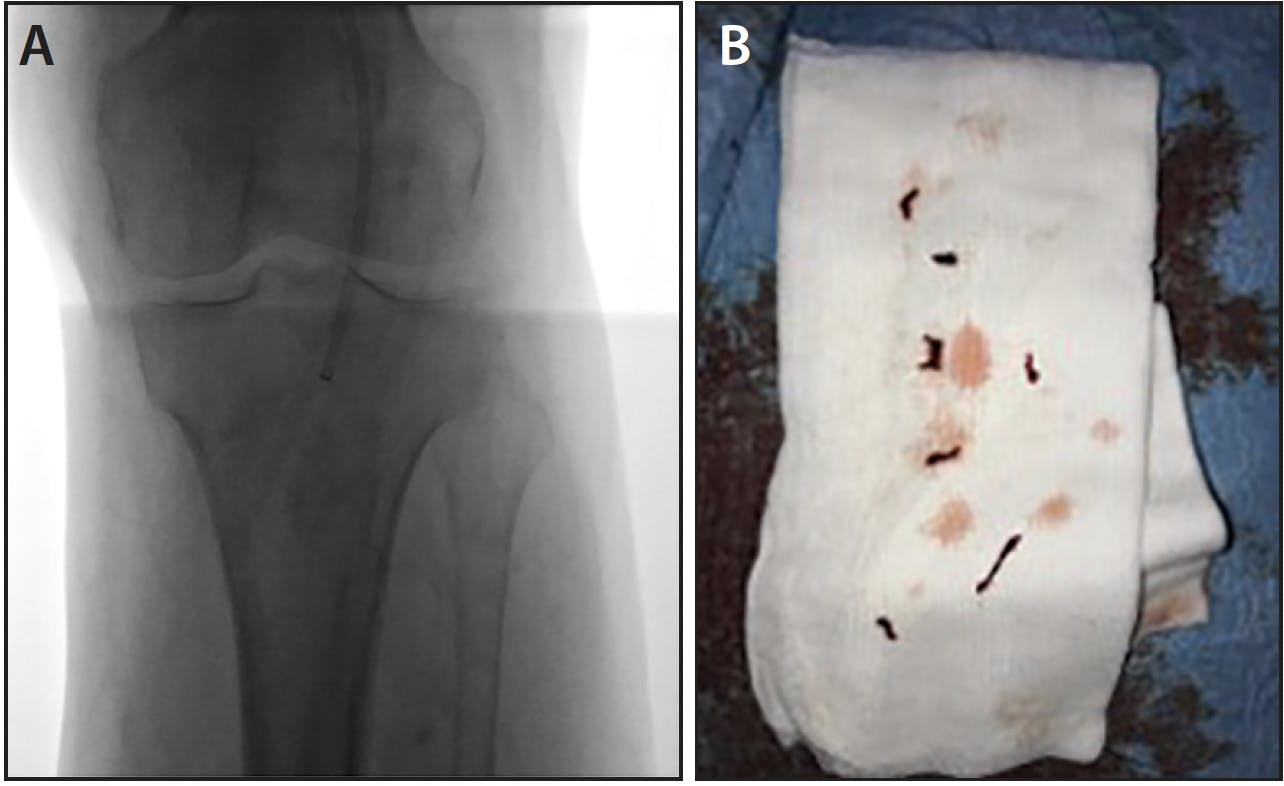
Figure 4. Lightning 7 catheter gently advanced through the clot proximally to distally, with the aspiration pump activated (A); retrieved thrombotic material (B).
Control angiography showed full removal of the thrombus, with restored flow in the tibioperoneal trunk, fibular, and posterior tibial artery. The anterior tibial artery was occluded to the distal portion; we decided not to treat it due to the good angiographic pattern of foot vascularization (Figure 5).
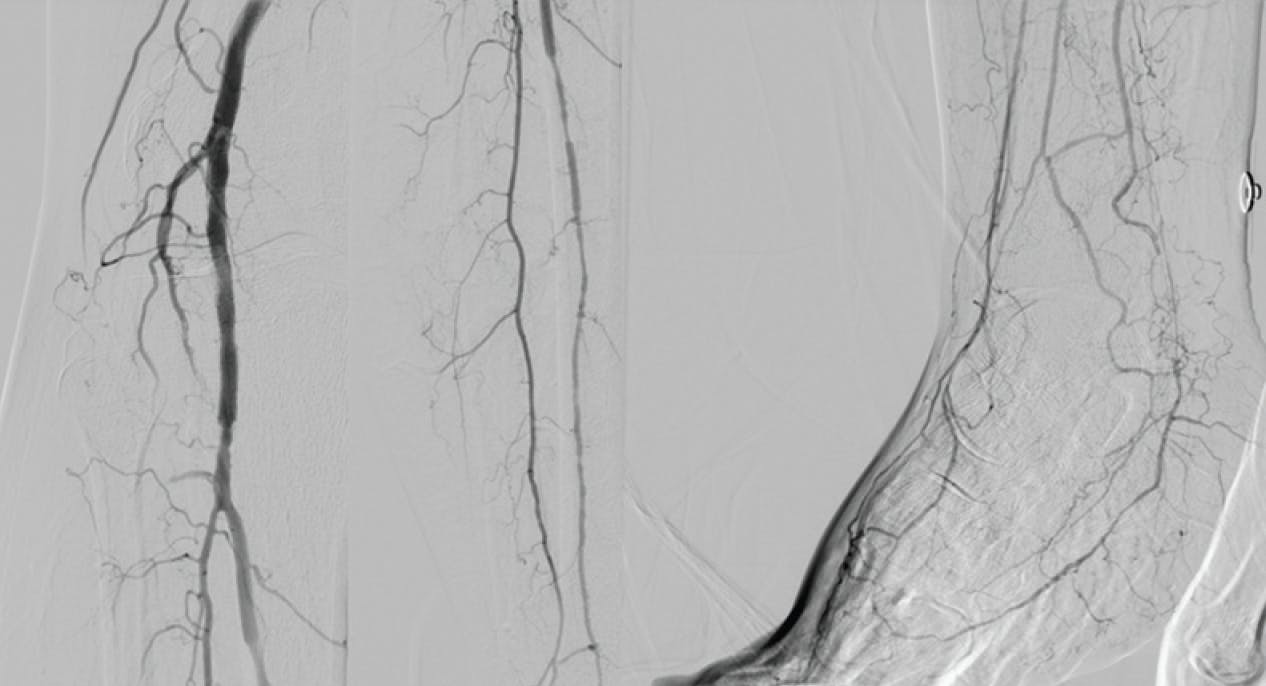
Figure 5. Postoperative angiography showing direct flow in the tibioperoneal trunk and the fibular and posterior tibial artery. Mild signs of vasospasm are present on the distal popliteal and posterior tibial artery, without any flow limitation.
Femoral hemostasis was obtained with manual compression, and the patient was discharged in good condition the next day with anticoagulation therapy (20 mg of rivaroxaban) due to the atrial fibrillation. Less than 100 mL of patient blood was aspirated.
DISCUSSION
When managing a patient with acute limb ischemia due to embolism or acute-subacute thrombosis, we prefer endovascular therapeutic options. The decision between intra-arterial fibrinolysis or mechanical aspiration depends on length of the occlusion, presence of previous bypass, onset timing of symptoms, and BTK vascularization. When the occlusion length is < 10 cm and we are confident about the patency of artery above and that no bypass is involved, “aspiration first” is our routine option.
The advantages of thrombus aspiration with Lightning 7 are fewer days of hospitalization and less risk of hemorrhagic complication than intra-arterial fibrinolysis. For the majority of cases, Lightning 7 is an efficient frontline tool that preserves adjunctive treatment options. This is confirmed by the STRIDE study results, presented during Charing Cross 2023, as patients treated frontline had excellent limb salvage (98.2%) and a low mortality rate (3.4%) at 30 days.
Acknowledgments: The authors thank Federico Fusaro, MD; Federica Schirru, MD; Simona Corraine, MD; Marco Erta, MD; and Valeria Ledda, MD, with Azienda Ospedaliera G. Brotzu for their contributions to this case.
THROMBUS REMOVAL FROM AORTA, RENAL ARTERY, THROUGH TO TIBIOPERONEAL TRUNK

PATIENT PRESENTATION
A woman in her late 60s with no previous history of embolism was referred to us for management of a floating thrombus of the thoracoabdominal aorta (Figure 1A). At the time of discovery, the patient had a right renal ischemia (Figure 1B). She was transferred to our hospital where, on the same day, it was discovered that she had developed an ischemia of the left lower limb.
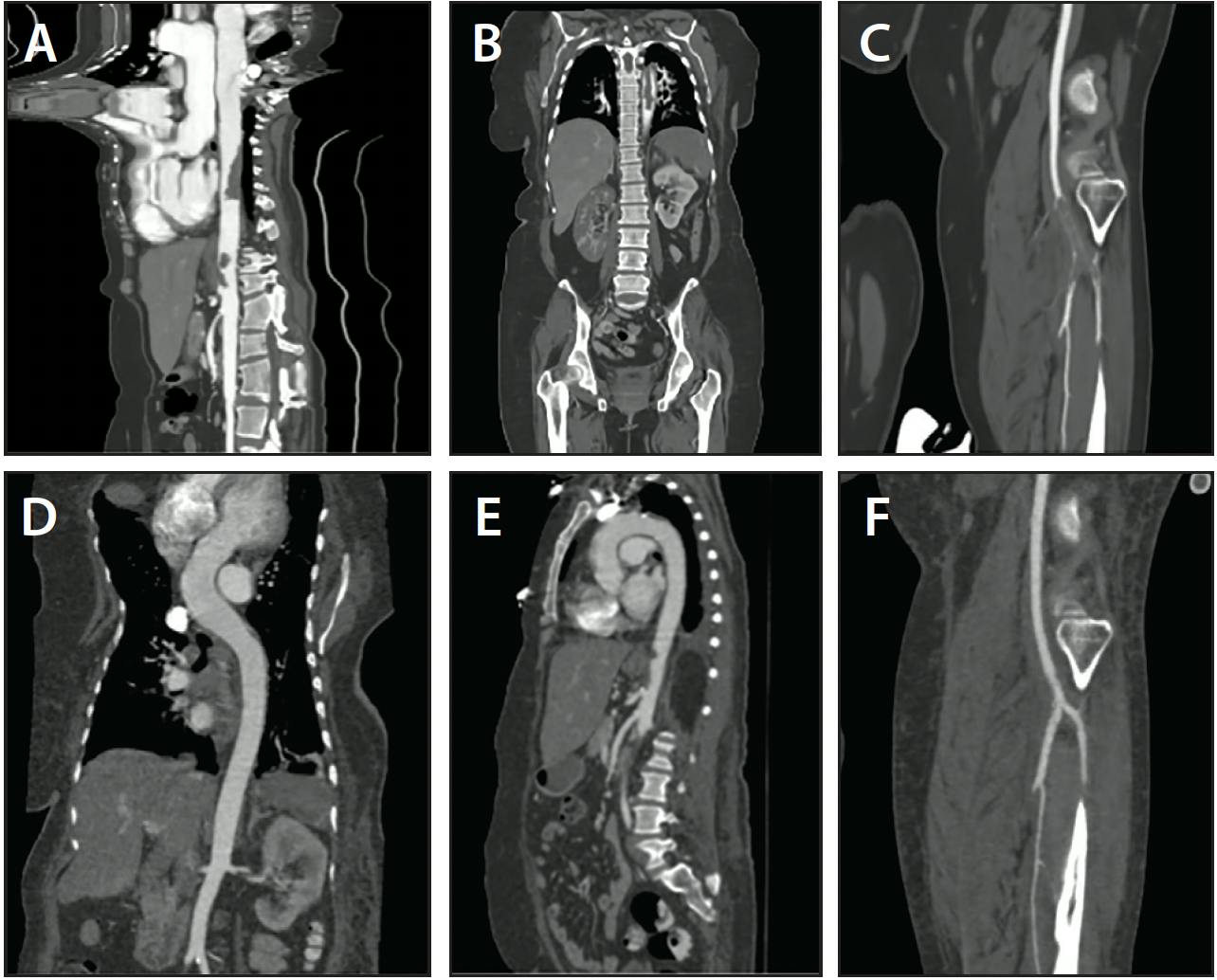
Figure 1. Preoperative angioscan with central line reconstruction showing preocclusive thrombus in the thoracoabdominal region (A). Preoperative angioscan showing thrombus in the thoracic aorta with embolic perfusion defect of the right kidney (B). Embolic thrombosis of the left hamstring on preoperative angioscan (C). Postoperative angioscan confirming good result at the thoracic level and partial thromboaspiration at the celiac aorta but complete at the leg tripod (D-F).
TREATMENT OPTIONS
Given the multifocal involvement and the urgent need to revascularize the limb, it was decided to perform a left femoropopliteal, aortic, and renal thromboaspiration.
A procedure involving aortic thromboendarterectomy with thoracic aorta clamping and thoracotomy-assisted extracorporeal circulation was discussed, but given the unstable and embologenic aspect, any mobilization of the thoracic aorta would have entailed a risk of thrombus fragmentation.
COURSE OF TREATMENT AND RESULTS
A bilateral femoral approach was decided, as it would provide access to the aortic bifurcation while protecting the femoral axes from possible embolism. Left groin access was gained with the 12-F Dryseal sheath (Gore & Associates) to address the thoracoabdominal cavity first. Successful thromboaspiration of the aorta was performed with a 115-cm-long Lightning 12 HTORQ catheter (Penumbra, Inc.). Additional imaging revealed acute thrombotic occlusion in the left renal artery. Given its low profile and selective tip shape, the Lightning 7 XTORQ was introduced for thromboaspiration. The final result on the left renal thromboaspiration was satisfactory, but we were unable to recover renal vascularization on the right side, which was not opacified on the preoperative CT scan.
After closing the preclosing systems (Perclose ProStyle, Abbott) on the left side, crossover was achieved with the 12-F DrySeal sheath introducer.
Cleaning the artery at the femoropopliteal level was continued with first the Lightning 12 and then at the BTK level with the Lightning 7 with great success. The patient remained in the recovery room at our hospital for 48 hours before being transferred back to her original hospital.
DISCUSSION
The versatility and deliverability of the Lightning Aspiration catheters were greatly beneficial to this complex case. The HTORQ tip of the Lighting 12 offers a wide 50-mm sweep, which was beneficial for clearance of the aorta and any wall-adherent thrombus through the iliac and femoral arteries. Lightning 7 provided the low profile size and selective XTORQ tip for clearing of the renals and below-the-knee occlusions. Paired with clot detection capabilities, the Lighting Aspiration systems are a frontline thrombus removal tool for clot removal at my center.
LIGHTNING 7 USED IN ACUTE MESENTERIC ISCHEMIA

PATIENT PRESENTATION
A woman in her early 80s with a history of multiple myocardial infarctions and congestive heart failure was admitted to an outside hospital with extreme abdominal pain and elevated lactate levels. A laparotomy was performed at this institution due to suspected mesenteric ischemia. An inspection did not render any signs of ischemia. Because the symptoms persisted, she was later admitted to the emergency department of our university medical center. In the initial assessment, lactate levels were significantly elevated, and atrial fibrillation was diagnosed. CT revealed a proximal occlusion of the superior mesenteric artery with partial collateralization via the celiac trunk and the inferior mesenteric artery (Figure 1). Interventional radiology was present at the time of patient admission, facilitating a swift decision to perform an endovascular thrombectomy.

Figure 1. CT revealing a proximal occlusion of the superior mesenteric artery with partial collateralization via the celiac trunk and the inferior mesenteric artery.
COURSE OF TREATMENT AND RESULTS
The left brachial artery was punctured under ultrasound guidance, and a 5-F sheath was placed. After administration of 5,000 units of heparin, the distal descending aorta was catheterized. Then, the 5-F sheath was exchanged for a 7-F, 65-cm Destination sheath (Terumo Europe) over a stiff hydrophilic guidewire (Radifocus, Terumo Europe). The superior mesenteric artery was catheterized with a vertebral catheter and a hydrophilic guidewire. Mesenteric angiography verified the findings from the CT scan (Figure 2). The guidewire was then passed easily through the thrombus. A 130-cm Lightning 7 aspiration catheter with an XTORQ configuration was then advanced into the superior mesenteric artery directly at the level of the embolus. The wire was removed, and Lightning 7 was used in conjunction with SEP7 to keep the catheter tip clear through the long segment occlusion. After a fluoroscopy time of 15 minutes, DSA revealed complete removal of the embolus (Figure 3). When visually inspecting the aspirated embolus, it appeared acute in nature (Figure 4).
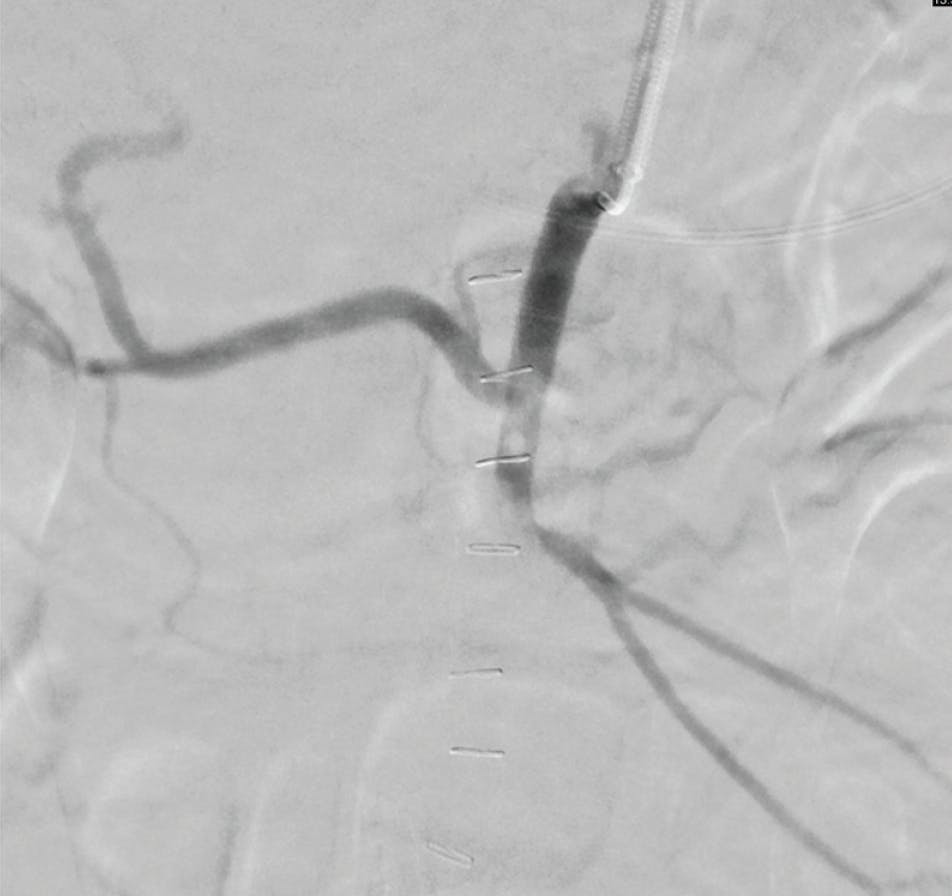
Figure 2. Mesenteric artery occluded.
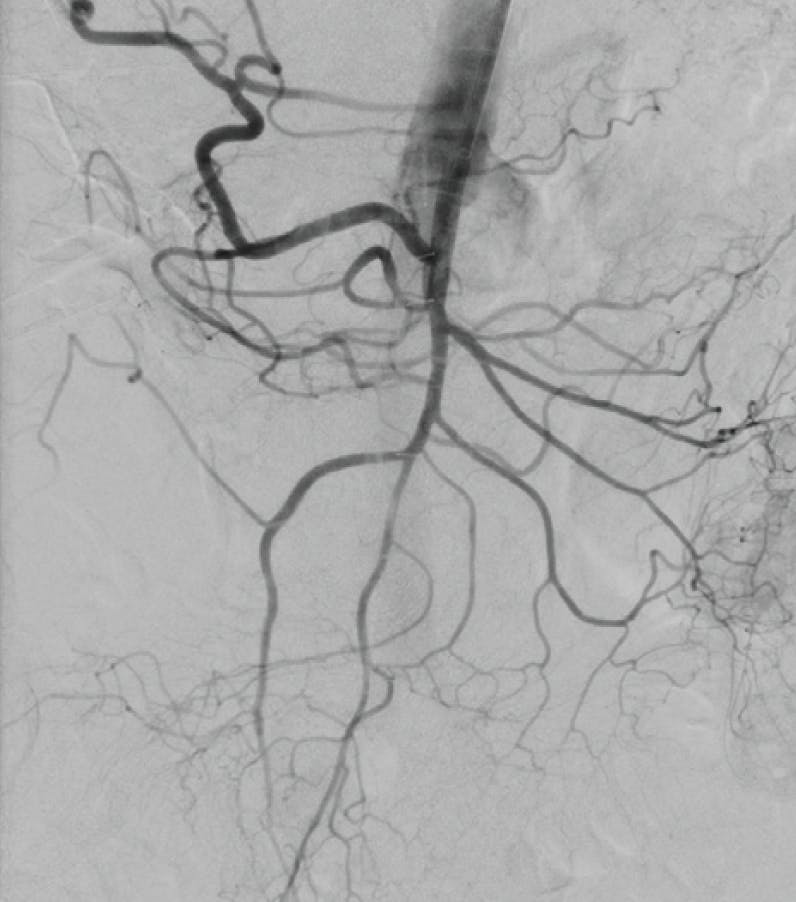
Figure 3. Complete removal of the embolus.
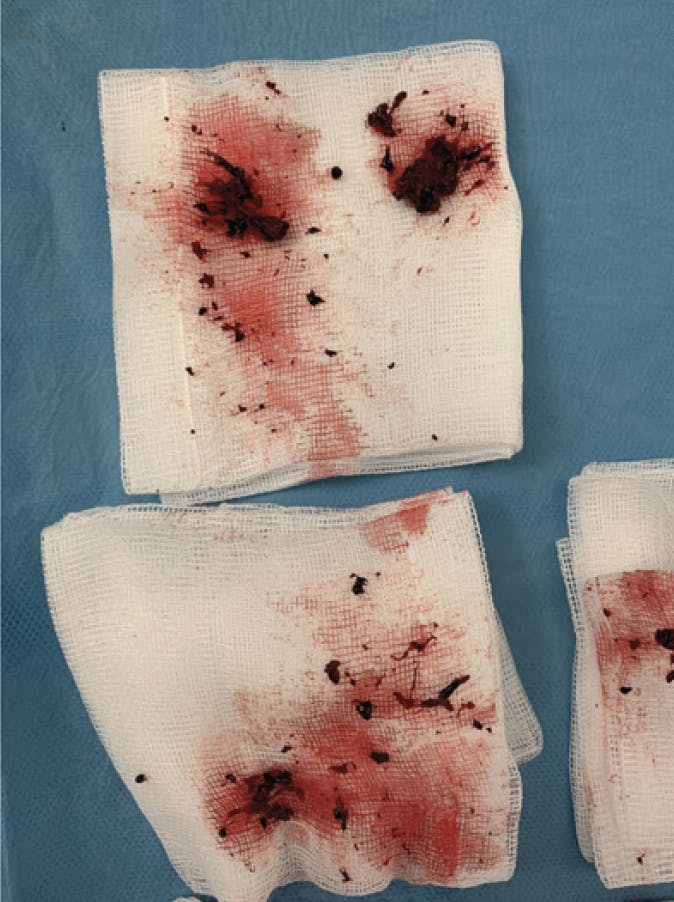
Figure 4. Aspirated embolus appeared acute in nature.
After retraction of all devices and manual compression, the patient was then brought to the intermediate care unit for 1 night. The postinterventional course was uneventful despite the patient’s age and limited capacities. A direct oral anticoagulant was initiated 1 day postprocedure. The patient was discharged after 4 days.
DISCUSSION
It is common knowledge that acute mesenteric ischemia has a high rate of mortality and morbidity. Swift response is of utmost importance to limit ischemic damage to the bowel. While therapeutic systemic anticoagulation is the most effective initial treatment, recanalization options differ. The standard operating procedure at our institution comprises a timely endovascular attempt to remove the culprit lesion. Interventional radiology is regularly present at all complex cases admitted via our emergency department, which might require interventional treatment. Short response times and initiation of endovascular recanalization often offset the need to perform surgical resection. Our institution prefers mesenteric recanalization via the brachial artery, as it usually permits a fast catheterization, often regardless of celiac trunk or superior mesenteric artery morphology. The Lightning 7 XTORQ Tip catheter has an ideal profile for this access because 7-F sheaths can usually be placed safely in almost all brachial arteries. However, care must be taken to evaluate the patency of the subclavian artery on preprocedural CT scans. At the same time, the 7-F catheter bore is large enough to aspirate almost all clots encountered in the mesenteric arteries.
In our experience, using a Separator™ (Penumbra, Inc.) enhances efficacy and accelerates the recanalization process. In fact, it is specifically designed to accelerate the ingestion of the thrombus by the catheter. Its bulb has to be placed 1 cm out of the tip and then locked thanks to the torquer device provided within the packaging. To manage it efficiently, we have to do back-and-forth movements (inside and outside the catheter successively). Working with the Separator might be a two-person exercise, with one navigating the catheter and another torquing the SEP. The Separator can increase the speed and efficiency of the procedure by reducing the number of passes done with a catheter alone.
Disclaimer: The opinions and clinical experiences presented herein are for informational purposes only. The results may not be predictive of all patients. Individual results may vary depending on a variety of patient-specific attributes.
Advertisement
Advertisement