Advertisement
Advertisement
September 2023
Pedal Acceleration Time Technique for Assessing Revascularization Efficacy
Incorporating PAT measurements into periprocedural planning, intervention, and postprocedural assessment for CLTI patients can optimize hemodynamic assessment, predict wound healing potential, and guide further interventions.
By Jill Sommerset, RVT; Miguel Montero-Baker, MD; Mary Costantino, MD; Riyad Karmy-Jones, MD; and Desarom Teso, MD
Noninvasive arterial duplex imaging plays a crucial role in managing patients with chronic limb-threatening ischemia (CLTI). The comprehensive use of arterial duplex ultrasound (DUS) evaluation of patients with CLTI has been well described.1 More recently, we have described the use of noninvasive imaging during the perioperative time frame to assess flow hemodynamics to the foot.2 Pedal acceleration time (PAT), a novel DUS measurement, has a high correlation with toe-brachial index (TBI) in patients with peripheral artery disease (PAD), particularly in cases with noncompressible vessels or inaccessible ankle-brachial index/TBI measurements.3 However, the utility of PAT extends beyond diagnosis to include planning and executing interventions based on pedal hemodynamics. Due to the user-friendly nature and portability of DUS, this technique can be employed in various clinical settings, ranging from outpatient vascular labs to intraoperative theaters.
This technical report outlines our protocol and serves as a guideline for incorporating PAT into periprocedural planning, on-table intervention, and immediate postprocedural assessment. Our approach aims to monitor hemodynamic response to endovascular/surgical therapies and predict wound healing potential.
TECHNIQUE
Preprocedural Mapping
In the context of CLTI requiring arterial intervention, comprehensive preprocedure arterial and venous DUS mapping is essential prior to devising treatment strategies. DUS imaging serves four key purposes: (1) identifying disease distribution and extent, as well as the quality of potential bypass autologous conduits; (2) pinpointing potential access sites; (3) quantifying pedal calcium burden; and (4) formulating an initial care plan (target vessels, suitability for intraoperative extravascular ultrasound [EVUS], access, etc). The CPT code assigned to a comprehensive arterial duplex imaging is 93925, and the CPT code for lower extremity vein mapping is 93971.
For optimal results, we recommend the use of an ultrasound system with the ability to decrease the Doppler scale to < 10 cm/sec with an accompanying calculation software package to measure acceleration time. We begin with pedal duplex imaging, specifically measurement of PAT at the wound bed; arcuate artery; dorsal metatarsal artery; and medial, lateral, and deep plantar arteries. From the wound bed, we work proximally against flow to the feeding pedal arch artery and ultimately to the feeding tibial artery to understand the full arterial pathway being considered for intervention. We also evaluate the entire femoropopliteal axis for hemodynamics and morphology—assessing potential access/closure options—and extend this assessment to the contralateral limb for potential retrograde access.
As part of arterial mapping, we document the entire disease pattern of the affected limb, such as chronic total occlusion (CTO), proximal and distal cap morphology (CTOP [CTO crossing approach based on plaque cap morphology]),4 vessel measurements, and plaque characteristics. As a result of this assessment, we have a complete arterial map of the target artery pathway (Figure 1), and these measures allow for potential device selection. The assessment concludes with mapping the great saphenous vein and pedal venous diameter/condition to facilitate the decision between endovascular and surgical treatments based on patient anatomy.5 Skilled vascular technologists can complete this arterial map in approximately 1 hour, obviating the need for additional imaging modalities such as CTA or diagnostic angiogram.
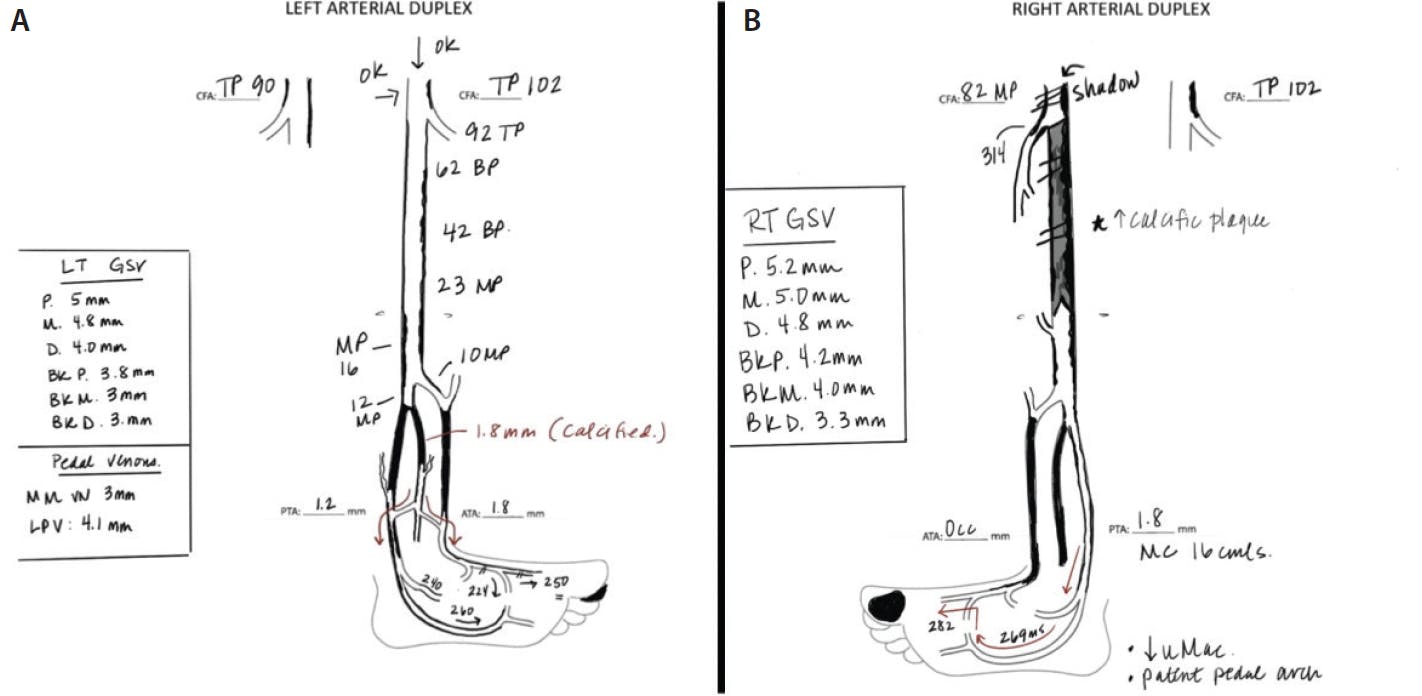
Figure 1. Arterial duplex maps (patient illustration): Comprehensive arterial duplex maps of the target artery pathway to the wound bed along with great saphenous and pedal venous diameters are created preintervention to aid in interventional planning. Nonsmoker with 30-year history of diabetes presenting with second-toe gangrene (A). A nondiabetic patient with a 28-year history of smoking 1 pack per-day presenting with first-toe gangrene and ischemic rest pain (B).
Periprocedural Use of PAT
We begin by obtaining a baseline day-of-procedure PAT at the area of the wound or targeted pedal vessel, with the perioperative setup (Figure 2). The PAT measure location is marked on the foot with a pen to ensure quick access during the case. If no EVUS is performed, the foot does not need to be sterile. The typical interventional procedure proceeds with proximal sheath placement. Once the sheath is in place, a new PAT measurement is taken to mark the change in acceleration time. The start delta (s-delta) between baseline pre- and post-sheath insertion is used to correct subsequent intraoperative measurements. In instances involving open bypass, we measure PAT immediately after distal anastomosis completion. For venous arterialization cases, we assess pedal flow venous hemodynamics, including distal conduit flow volume, lateral plantar vein acceleration time, flow volume, and outflow vein flow volume.
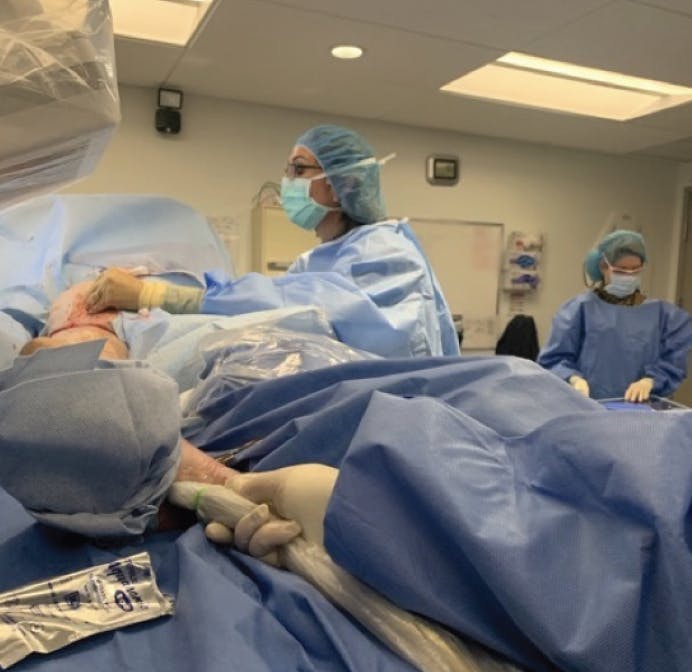
Figure 2. Periprocedural pedal duplex imaging setup. The vascular technologist stands at the foot of the patient to actively monitor the PAT at the wound bed throughout the procedure.
PAT is obtained after each level of treatment, with a goal of < 180 ms as a predictor of limb salvage (Figure 3).5 Our research has indicated that wound healing is achievable with a PAT of < 180 ms, regardless of direct or indirect revascularization methods (Figure 4).6 Treatment starts proximally in the mapped target artery pathway and then proceeds distally if the target PAT is not achieved. In patients with occluded tibial vessels, we would choose the vessel with direct communication via communicating arteries toward the wound bed as visualized on the preoperative DUS. After achieving the desired outcome and completing the intervention, the s-delta is applied to determine the new postintervention PAT. Additionally, each patient undergoes PAT reassessment 1-hour postintervention, facilitating an evaluation unaffected by perioperative vessel spasm.
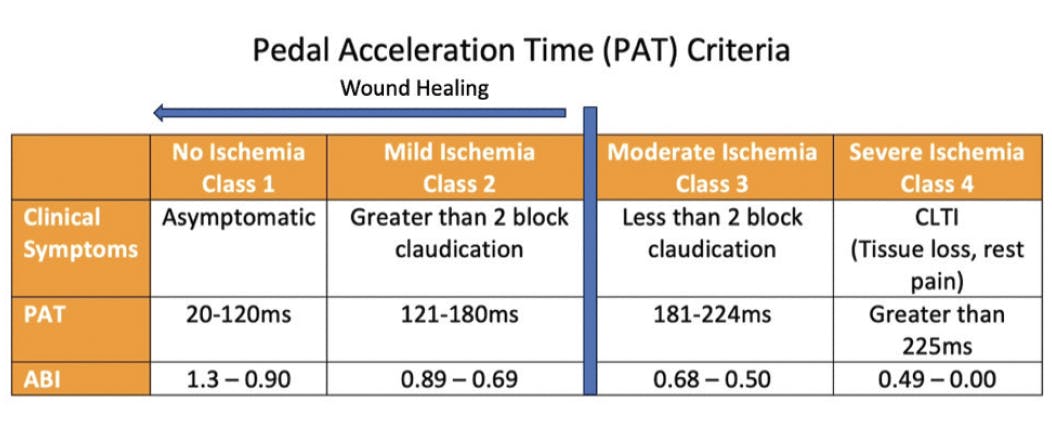
Figure 3. PAT outcomes criteria. ABI, ankle-brachial index. Reprinted from Annals of Vascular Surgery, 60, Sommerset J, Karmy-Jones R, Dally M, et al, Plantar acceleration time: a novel technique to evaluate arterial flow to the foot, 308-314, Copyright (2019), with permission from Elsevier.
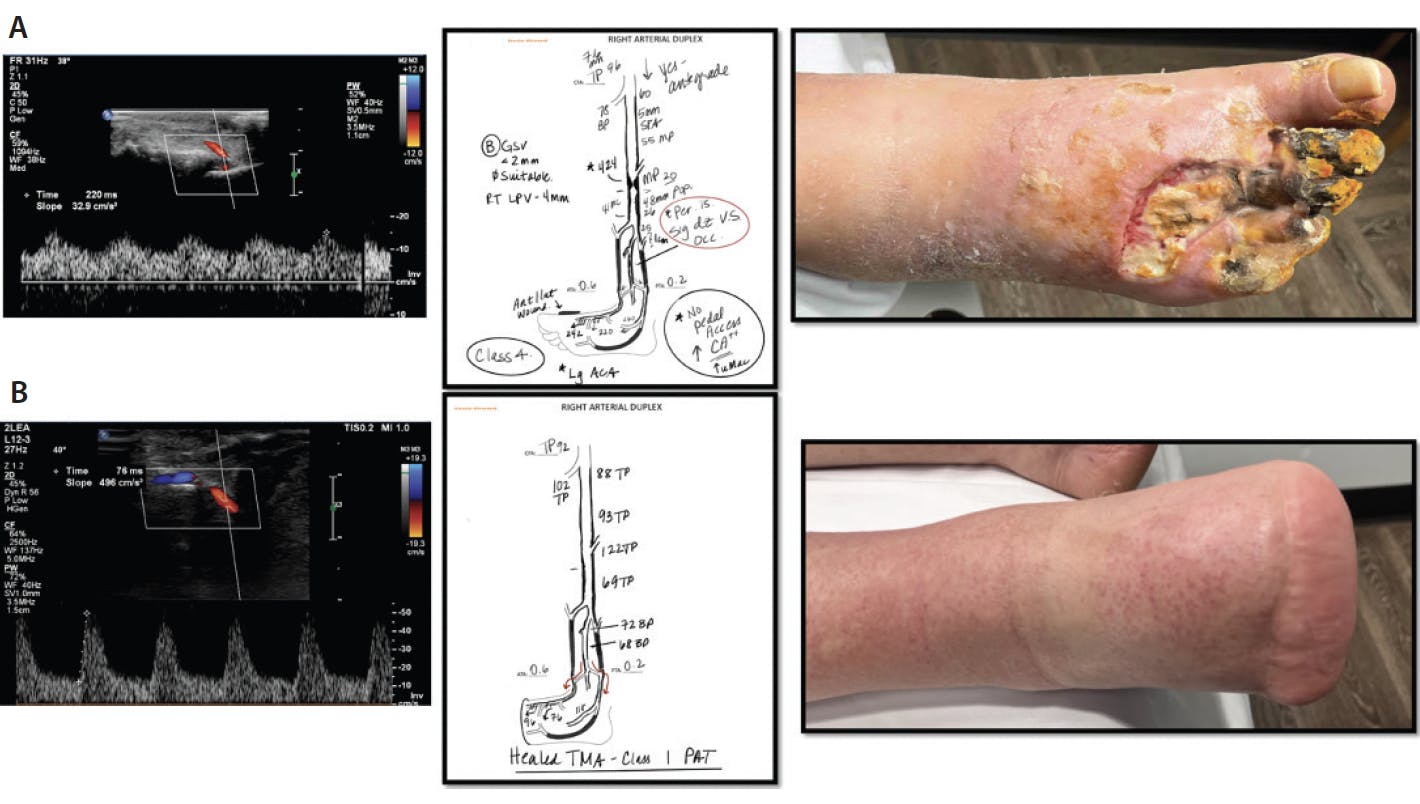
Figure 4. Pre- (A) and postoperative (B) follow-up with PAT measures for a man in his early 70s with diabetes (HbA1c, 9%). Preoperative DUS revealed class 4 PAT to the wound bed. On-table endovascular revascularization demonstrated an interval improvement to class 1 PAT after atherectomy and balloon angioplasty of the distal superficial femoral artery and peroneal artery. The patient went on to be treated with a transmetatarsal amputation, with complete wound healing despite single-vessel runoff via the peroneal artery.
Periprocedural Pearls. Vasospasm is a common occurrence after arterial intervention. Based on our experience, the vasospasm signature on Doppler waveform is “crescendo” appearing, whereas low flow is a symmetrical waveform (Figure 5). Consequently, PAT readings are often inaccurate during vasospasm and typically return to a symmetrical waveform after a vasodilator treatment such as nitroglycerin. Vessel recoil can lead to poor PAT results or no flow at the wound bed. In such cases, evaluating the distal tibial vessels may offer insights into vasospasm or occlusion.
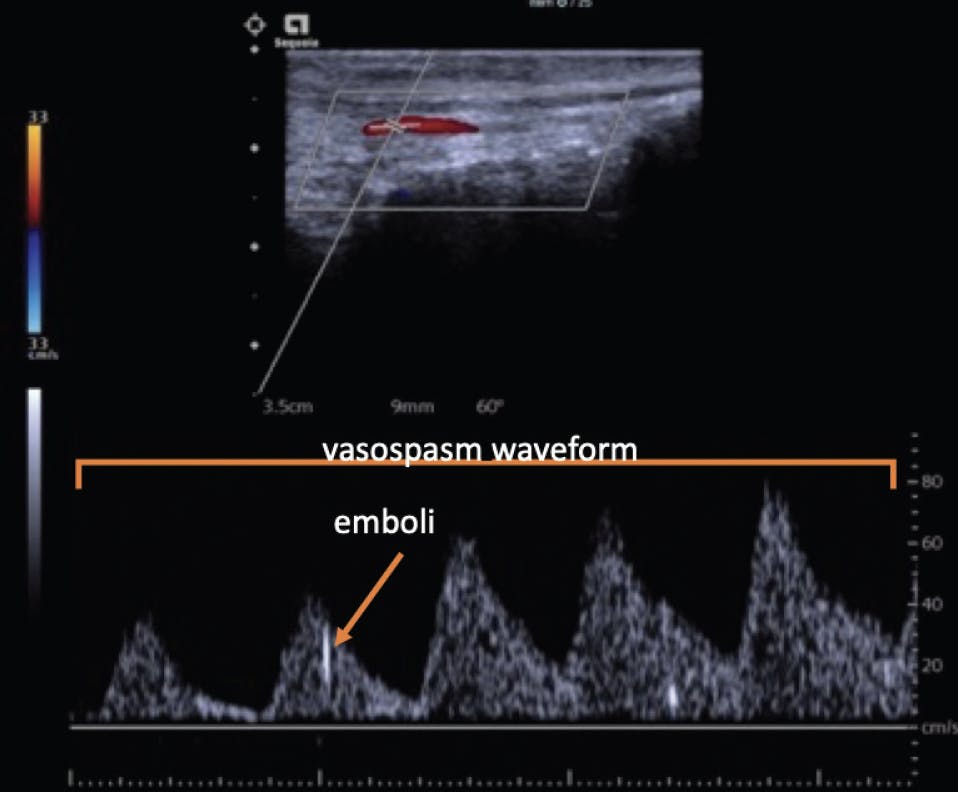
Figure 5. Doppler indication of vasospasm and emboli: an example of a pedal Doppler waveform during intervention with a “crescendo” signature of vasospasm and emboli.
When conducting endovascular interventions with potential distal embolization risk, pedal vessel monitoring enables the detection of clinically significant embolic signatures. If the distal waveform becomes resistive, this suggests possible distal occlusion, necessitating caution with further atherectomy and potential deployment of adjunctive embolic protection devices or percutaneous embolectomy.7
In cases of acute postoperative deterioration of the PAT, a repeat full scan is triggered, focusing on identifying access-related complications or acute target vessel recoil. Of note, for pedal access cases involving single-vessel runoff, intraoperative PAT is not employed due to the occlusive nature of the access sheath. Here, DUS is used to achieve hemostasis and safe closure and to confirm patency. Postclosure, PAT measurements are obtained.
Follow-Up Pedal Duplex Imaging
At 1-week and 3-months postoperation, a limited pedal duplex scan (CPT 93926) is performed. This includes assessing the distal anterior tibial artery, posterior tibial artery, and peroneal artery, as well as measuring PAT at the wound bed; arcuate artery; dorsal metatarsal artery; and medial, lateral, and deep plantar arteries. An interval increase in PAT to class 3 (181-224 ms) or 4 (> 225 ms) warrants a comprehensive arterial DUS to consider further interventional treatment.6 A complete arterial DUS is conducted at the 6-month follow-up.
DISCUSSION
The introduction of PAT as a novel perioperative endpoint represents a pioneering approach to assessing optimal blood flow at the wound bed. In contrast to traditional angiography, which relies on subjective visual interpretation and could potentially lead to unnecessary interventions, this technique offers an immediate and quantifiable measure of pedal hemodynamics targeting the wound bed. This dynamic assessment holds the advantage of providing a more accurate evaluation of perfusion efficacy, regardless of the direct or indirect success of revascularization.
PAT emerges as a pivotal and objective assessment that seamlessly integrates into clinical practice. However, achieving proficiency in pedal duplex imaging and PAT requires comprehensive education and training, which are essential for accurately interpreting pedal flow hemodynamics and understanding the complexities of the target artery pathway. The assimilation and meticulous execution of our protocol demand unwavering commitment and dedication from both vascular technologists and the interventional team. This concerted effort holds the potential to enhance the rate of operative success, ultimately leading to improved patient outcomes over the long term.
CONCLUSION
Duplex measurements of PAT obtained preprocedure, periprocedure, and during follow-up after endovascular or open revascularization can provide valuable diagnostic insights. These measurements serve to ascertain whether outcomes can predict wound healing and, consequently, whether they are adequate or if additional treatment is advisable. Incorporating PAT into the diagnostic tool kit of clinicians holds the potential to refine the assessment of wound healing potential, guiding the decision-making process and optimizing patient care strategies.
The use of PAT measured by DUS provides an objective measurement of pedal hemodynamics in patients with PAD and CLTI. This noninvasive hemodynamic measure allows for a more tailored clinical plan prior to any surgical or endovascular intervention. Additionally, PAT measured during intervention provides objective and real-time pedal data that directly correlate with outcomes, leading to shorter procedures, less contrast and radiation exposure, and prevention of unnecessary intervention.
1. Sommerset J, Teso D, Karmy-Jones R, et al. Pedal flow hemodynamics in patients with chronic limb-threatening ischemia. J Vasc Ultrasound. 2020;44:14-20. doi: 10.1177/1544316719894412
2. Sommerset J, Teso D, Feliciano B, et al. Innovative arterial duplex examination: a guide to evaluate flow in the foot using pedal acceleration time. J Vasc Ultrasound. 2019;43:11-17. doi: 10.1177/1544316719827328
3. Trihan JE, Mahé G, Croquette M, et al. Accuracy of acceleration time of distal arteries to diagnose severe peripheral arterial disease. Front Cardiovasc Med. 2022;8:744354. doi: 10.3389/fcvm.2021.744354
4. Saab F, Jaff MR, Diaz-Sandoval LJ, et al. Chronic total occlusion crossing approach based on plaque cap morphology: the CTOP classification. J Endovasc Ther. 2018;25:284-291. doi: 10.1177/1526602818759333
5. Menard MT, Farber A, Assmann SF, et al. Design and rationale of the best endovascular versus best surgical therapy for patients with critical limb ischemia (BEST-CLI) trial. J Am Heart Assoc. 2016;5:e003219. doi: 10.1161/JAHA.116.003219
6. Teso D, Sommerset J, Dally M, et al. Pedal acceleration time (PAT): a novel predictor of limb salvage. Ann Vasc Surg. 2021;75:189-193. doi: 10.1016/j.avsg.2021.02.038
7. Tsivgoulis G, Alexandrov AV, Sloan MA. Advances in transcranial Doppler ultrasonography. Curr Neurol Neurosci Rep. 2009;9:46-54. doi: 10.1007/s11910-009-0008-7
Advertisement
Advertisement