Advertisement
Advertisement
February 2024 Supplement
Sponsored by Inari LimFlow
An Overview of the Inari LimFlow Procedure
A case example and step-by-step guide to TADV with Inari LimFlow.

Within the last decade, significant progress has been made in refining transcatheter arterialization of deep veins (TADV), progressing what was proposed as an open surgical procedure more than a century ago into a consistent and reproducible fully percutaneous treatment option for patients with no-option chronic limb-threatening ischemia (CLTI). The purpose-built products of the Inari LimFlow System (Inari Medical, Irvine, CA) obviate some of the largest hurdles that are otherwise present when attempting to reroute nutritive blood flow to a limb we are unable to revascularize using traditional open or endovascular techniques.
Inari LIMFLOW PROCEDURE
The Inari LimFlow procedure can be summarized into the following steps: pedal venous access in the lateral plantar vein, arterial access in the common femoral, arteriovenous crossing from the donor artery (the artery chosen to be the conduit of oxygenated blood to the vein to the foot by way of the TADV circuit) into the donor vein that will be arterialized, valvulotomy, extension stent graft deployment, and crossing stent graft deployment.
Case Example
This is a case report involving use of the Inari LimFlow System in one of my TADV patients. A woman in her early 70s with type 2 diabetes and a history of stroke, myocardial infarction, hypertension, and dyslipidemia presented for the treatment of nonhealing dry gangrene of the hallux, present for > 6 months. She saw multiple providers for the wound with no resolution and was referred to me for a second opinion after being told she needed a major amputation. She had a history of vascular interventions, including plain old balloon angioplasty and stenting of the anterior tibial artery, all with no resolution of symptoms. This patient had no named surgical or endovascular targets for traditional revascularization (Figure 1).
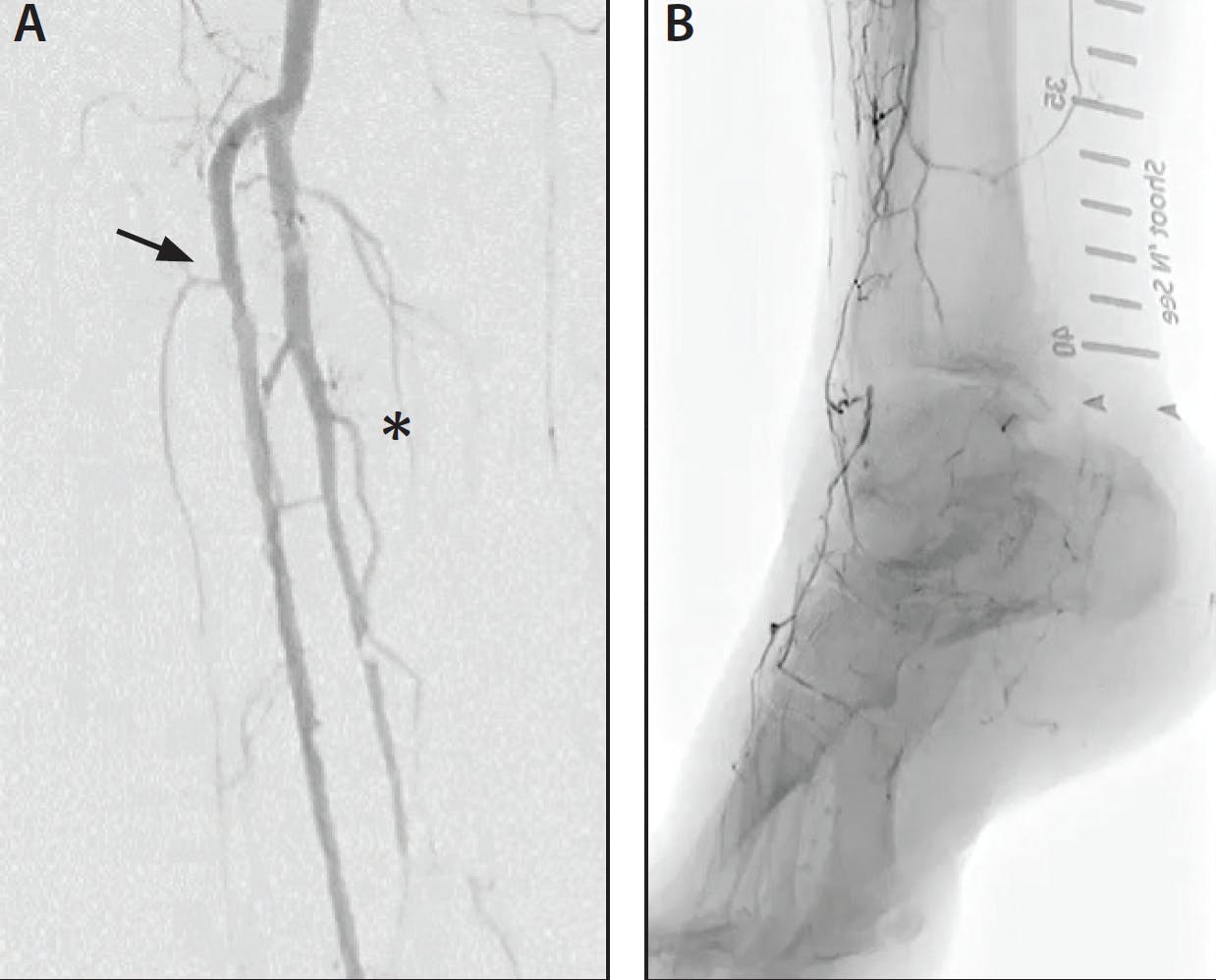
Figure 1. Anterior tibial artery occluded before the foot (black arrow), peroneal—donor artery for TADV (asterisk) (A); collaterals to small irregular perfusion of the foot (B).
Over the past several years, my colleagues across the country and I have refined the Inari LimFlow procedure during the PROMISE family of clinical trials. This experience and the learnings garnered in our research have led us to transition venous access from the medial ankle to the middistal plantar surface of the foot.1,2 Diagnostic imaging learnings have contributed to distal venous access, and we have refined our protocol for ultrasound-based case planning to allow for standardized and reproducible venous access.
Following pedal venous access (Figure 2) and antegrade arterial access, the donor artery is selected and prepped. The V-Ceiver (venous catheter; Inari Medical, Irvine, CA) is advanced into the donor venous target, where the balloon-shaped radiopaque mesh is expanded to fill and distend the vein, allowing for a distinct visualization and alignment of the crossing target. The ARC (arterial catheter; Inari Medical, Irvine, CA) is advanced into the donor artery to the desired crossover point, and the embedded crossing needle (purpose-made to pierce the often-present medial arterial calcification) is advanced into the V-Ceiver mesh (Figure 3). A wire is advanced, the crossing needle retracted, and the wire captured within the V-Ceiver and externalized from the venous access.
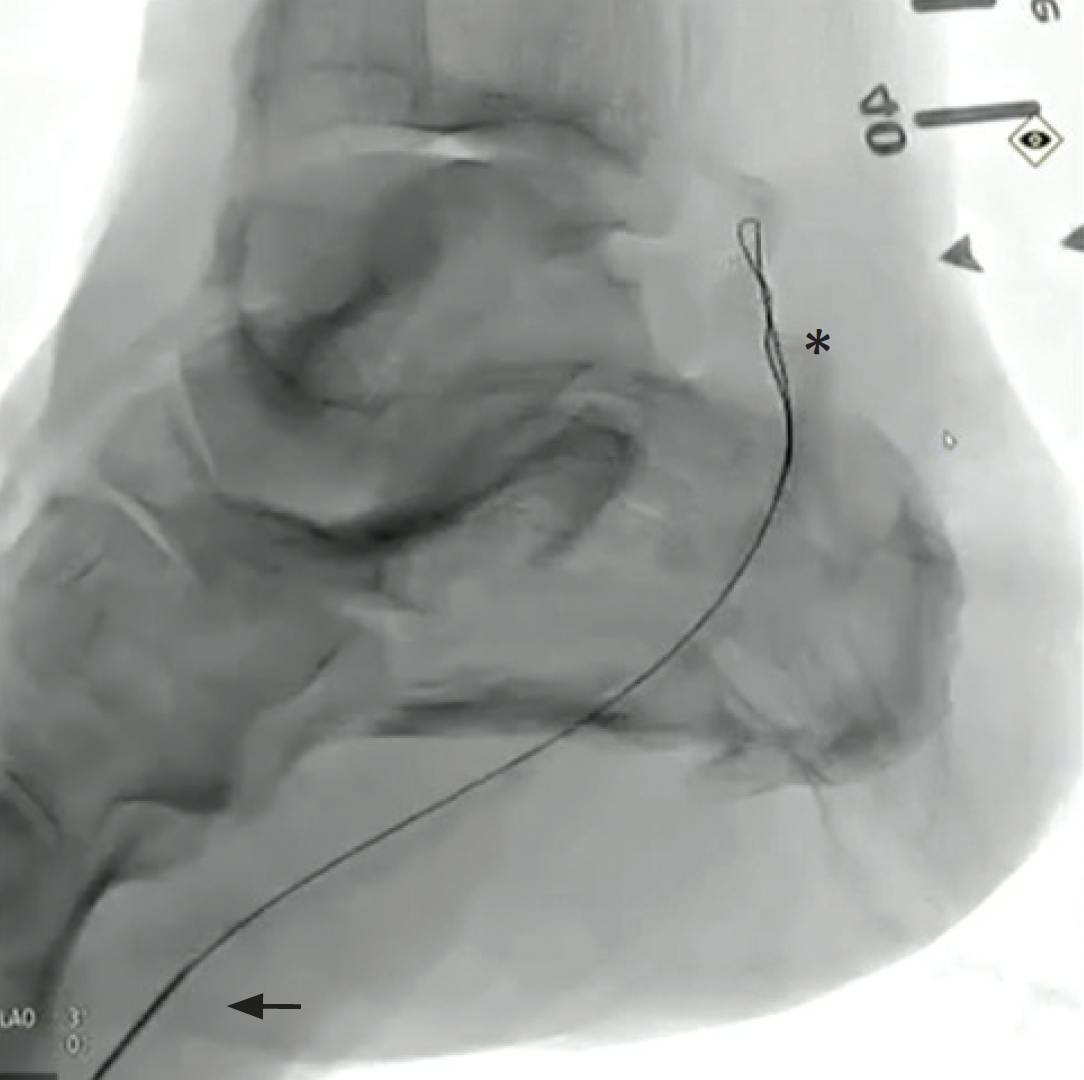
Figure 2. Plantar access needle (black arrow) and 0.018-inch wire through the lateral plantar vein and into the posterior tibial vein (asterisk).
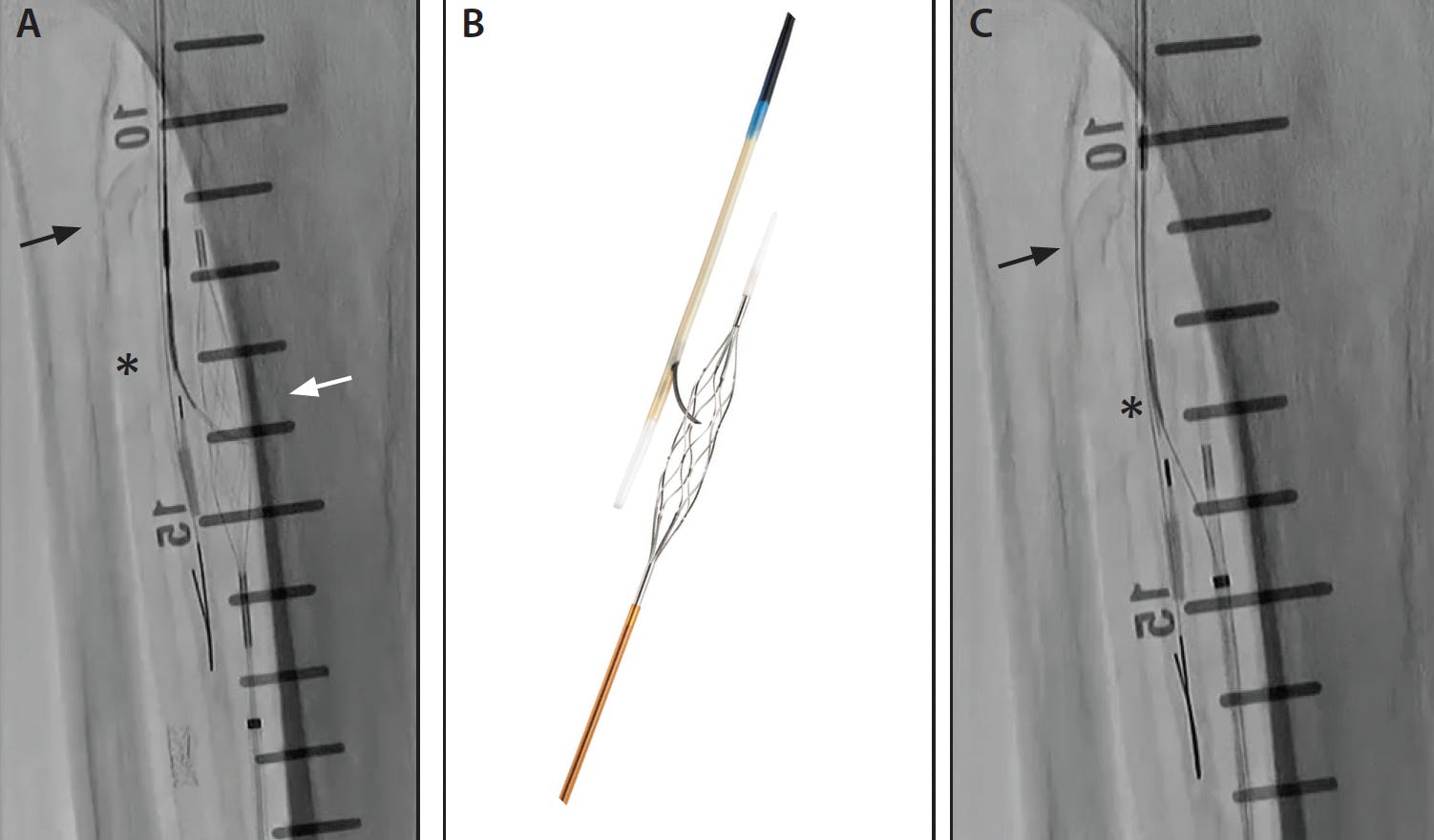
Figure 3. Arteriovenous crossing with the ARC and V-Ceiver; calcium outline of the proximal anterior tibial artery (black arrow), ARC arterial catheter (asterisk), and V-Ceiver (white arrow) (A, C). Image of ARC and V-Ceiver (B).
After establishing the arteriovenous conduit, the Inari LimFlow Vector (Inari Medical, Irvine, CA), an over-the-wire push valvulotome, is advanced into the vein, and the forward-facing hooks on the valvulotome lyse the venous valves from the tibial crossover point to the distal foot (Figure 4), enabling the forward flow of blood into the foot.
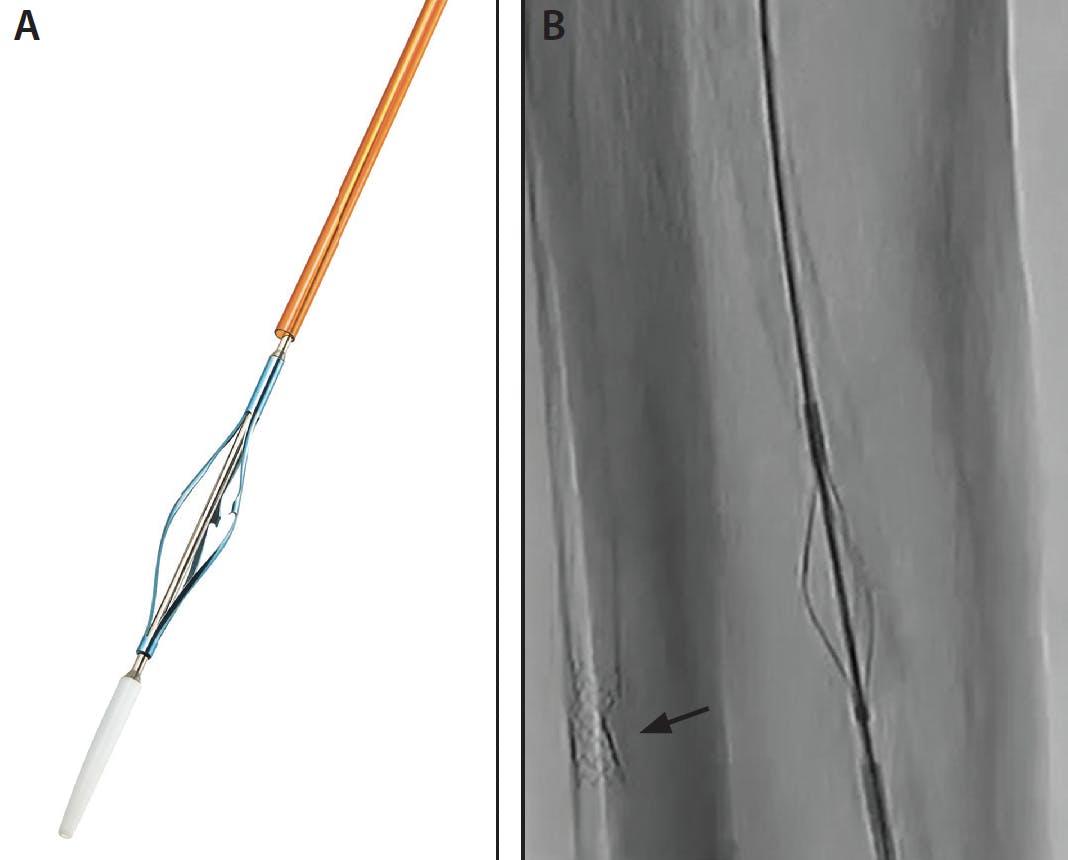
Figure 4. The Inari LimFlow Vector (Valvulotome) (A). Valve lysing with the Vector Valvulotome; deformed balloon-expandable stent in anterior tibial artery (black arrow) (B).
After rendering the valves incompetent, the focalization of arterial flow is accomplished by lining the length of the tibial donor vein with Inari LimFlow nitinol-covered self-expanding stents. To accommodate the size differences between the smaller donor artery and the larger donor vein, the Inari LimFlow tapered crossing stent is then placed in the most proximal segment of the TADV circuit, creating the permanent arterialized venous conduit for blood flow into the foot (Figure 5). This tapered crossing is key to optimizing the flow within the circuit.
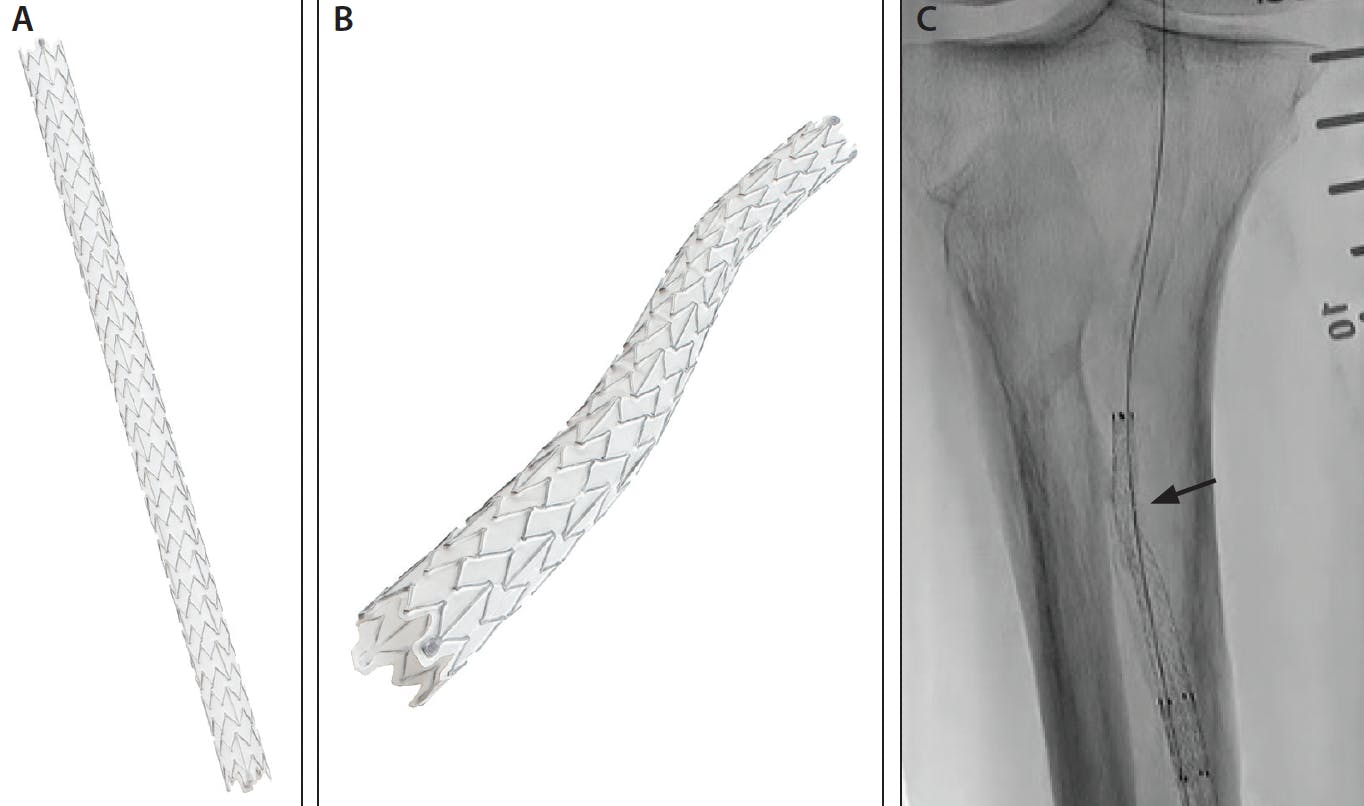
Figure 5. Inari LimFlow stents (A, B); highly calcified anterior tibial artery, tapered Inari LimFlow stent bridging donor artery to donor vein (black arrow) (C).
Upon completion of stenting, evaluation of the venous loop is performed under angiography to confirm the flow to the metatarsal segment, adequate outflow, and that there is no stagnation (Figure 6). Although immediate angiographic results show flow into the foot, over the coming weeks, this circuit will continue to mature and additional vessels will be recruited as flow dynamics continue to evolve.
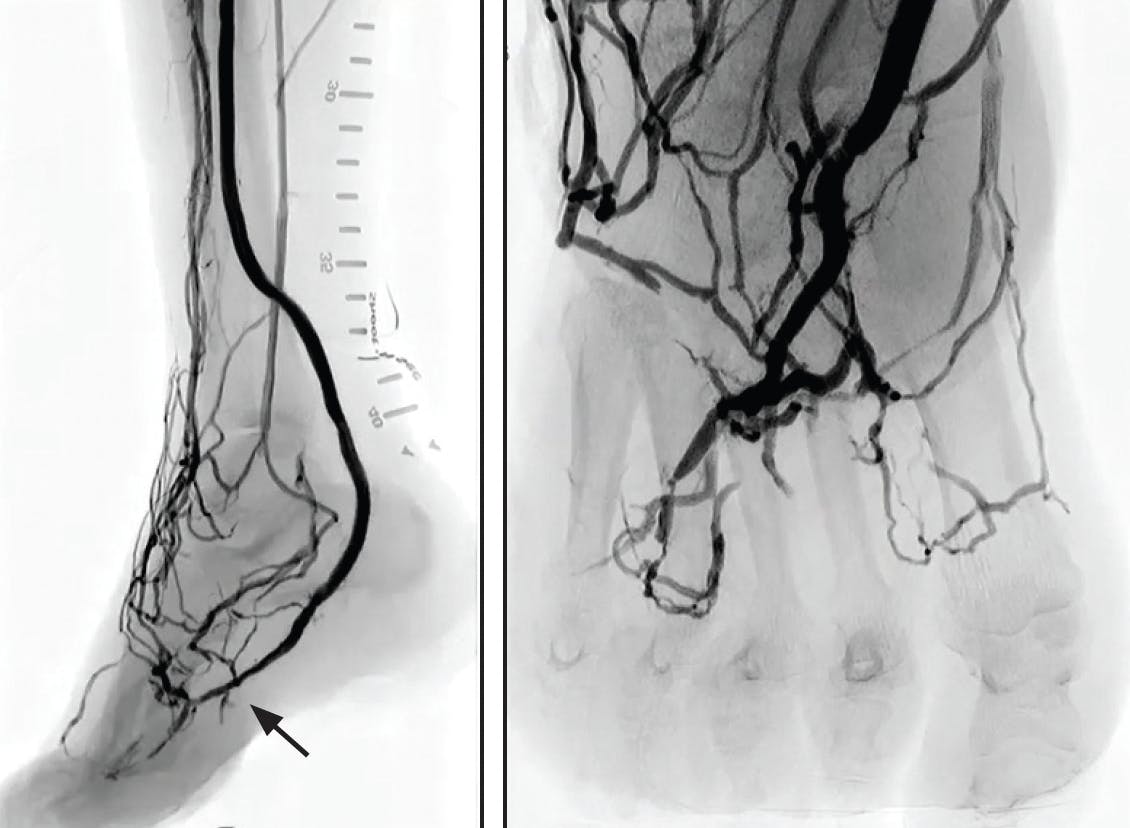
Figure 6. Angiographic results showing the fully opacified TADV circuit flowing into the deep system of the plantar foot to the dorsal superficial venous system. Lateral plantar vein: TADV outflow (black arrow).
Conclusion
The TADV procedure, as developed by Inari LimFlow, continues to show a consistent and reproducible endovascular method to treat no-option CLTI patients. And thus, it sets the stage for future studies on the life cycle and mechanisms of the venous arterialization.
1. Clair DG, Mustapha JA, Shishehbor MH, et al. PROMISE I: Early feasibility study of the LimFlow System for percutaneous deep vein arterialization in no-option chronic limb-threatening ischemia: 12-month results. J Vasc Surg. 2021;74:1626-1635. doi: 10.1016/j.jvs.2021.04.057
2. Shishehbor MH, Powell RJ, Montero-Baker MF, et al. Transcatheter arterialization of deep veins in chronic limb-threatening ischemia. N Engl J Med. 2023;388:1171-1180. doi: 10.1056/NEJMoa2212754
Advertisement
Advertisement