Advertisement
Advertisement
October 2024
Renal Ablation: Can We Push the Treatment Boundaries?
Strategies for treatment based on size criteria, ablation modality, tumor location, periprocedural considerations, and combination therapy options.
By Ronak Patel, BS, and Merve Ozen, MD
In 2024, approximately 81,610 new cases of kidney cancer will be diagnosed and 14,390 will die in the United States.1 Of these new cases, 85% will be some form of renal cell carcinoma (RCC).2 Common risk factors for RCC include smoking, chronic kidney disease (CKD), hypertension, obesity, and certain analgesics and environmental exposures.3 Treatment of RCC is multifactorial and depends on many criteria, including size, lymph node involvement, and metastasis outside the kidney. There are many different guidelines as well as unique surgical approaches on how to treat RCC.
SIZE CRITERIA
The National Comprehensive Cancer Network stages RCC into four distinct stages (T1-4).2 Stage T1a describes a tumor that is < 4 cm and only found in the kidney. Stage T2 is when the tumor grows beyond 7 cm but, most importantly, is still limited to the kidney. Percutaneous ablation is an important treatment option for early stage (1b) RCC, with a 90% to 95% efficacy rate and a 6% to 7% complication rate.4 Ablation works best for stage 1a tumors; however, a multifactorial approach is considered, including patient age, comorbidities, and renal function.4 Specifically, the primary success of percutaneous ablation largely correlates with the size of the tumor.5 Gervais et al reported nine tumors in seven patients with local recurrence with sizes ranging from 4.0 to 8.9 cm.6 Another study looked at long-term ablation outcomes and determined a 14.3% recurrence rate for T1b lesions compared to a 4.2% recurrence rate for T1a lesions.7 Recent studies show promise for treating T1b lesions with glomerular filtration rate preservation and disease-free survival compared to partial nephrectomy (PN).8,9
ABLATION MODALITIES
Recent studies comparing percutaneous ablation techniques highlight encouraging results in oncologic outcomes but emphasize the need for careful patient selection to balance treatment benefits and risks. Although cryoablation and microwave ablation (MWA) are currently the most common modalities, there is a substantial amount of literature comparing radiofrequency ablation (RFA) with these techniques. Studies showed similar recurrence-free survival for PN and percutaneous ablation patients, and metastasis-free survival was superior for PN and cryoablation when compared to RFA.10 However, improved oncologic outcomes for tumors > 3 to 4 cm were shown with cryoablation compared to RFA.11 A study determined that percutaneous cryoablation was successful and relatively safe for an average tumor size of 4.2 ± 1.1 cm.12 Compared with MWA, cryoablation had similar technical success, minimal impact on renal function, local disease control, and cancer-specific survival.13 The study showed higher adverse event rates after cryoablation, but the study also stated that cryoablation was used to treat larger and more complex lesions.13 In one meta-analysis, MWA demonstrated similar safety and clinical effectiveness with lower ablation time when compared to cryoablation.14 When comparing MWA to RFA and cryoablation, MWA had fewer overall complications than RFA and cryoablation; moreover, MWA also had fewer recurrences than cryoablation.15 These new studies show great leaps in ablation; however, caution is highly encouraged to determine which patients are most likely to benefit while minimizing risks.16 Figure 1 shows effective treatment with cryoablation in a patient with a stage T2a renal mass.
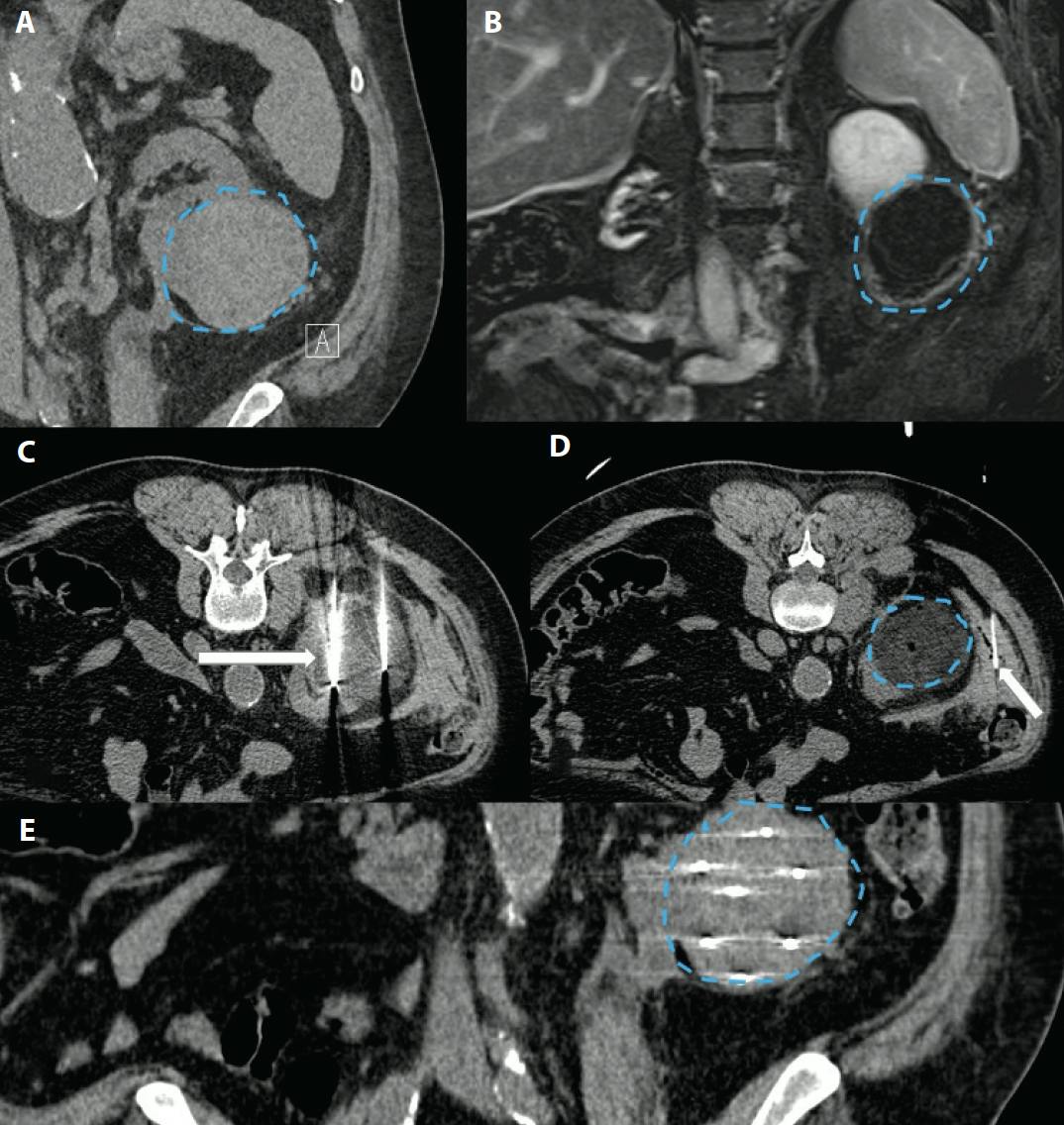
Figure 1. A man in his early 60s with a complex past medical history including CKD, peripheral artery disease, renal artery stenosis, and an atrophic right kidney was found to have 7.5-cm T2aN0M0 left renal mass. Contrast-enhanced coronal CT image showing a large renal mass (dashed lines) in the left kidney, before ablation treatment (A). MRI at 7-month follow-up demonstrating successful ablation of the tumor, with no residual enhancement, indicating effective treatment (dashed lines) (B). Needle placement image from intraprocedural CT guidance showing positioning of cryoablation probes (arrow) within the renal tumor (C). Hydrodissection (arrow) and ice ball formation (dashed lines) visible during the cryoablation procedure, demonstrating the ice ball’s margins surrounding the tumor to ensure complete ablation without affecting the adjacent large bowel (D). Coronal needle placement showing the seven-probe entry for optimal coverage of the tumor during the cryoablation process (E). In this case, a combined approach of embolization and ablation was initially considered. However, due to the presence of a solitary kidney with CKD and renal artery stenosis, the decision was made to proceed with cryoablation after a multidisciplinary discussion.
An emerging technology, histotripsy, is a noninvasive technique in kidney cancer treatment that uses focused ultrasound waves to mechanically destroy cancer cells without heat, offering a precise and minimally invasive alternative to traditional therapies. This technology shows promise in improving treatment outcomes by targeting tumors with precision while sparing surrounding healthy tissue, making it a potential future option for managing RCC.17
TUMOR LOCATION
Apart from size, location is also a very important factor in successful ablation. Tumors that are located centrally or in hilar regions are more difficult to treat due to their proximity to a major collecting system.18 Traditionally, MWA and RFA are used to treat peripheral lesions, as major renal vessels dissipate heat away from the tumor leading to incomplete local treatment.19 Additionally, ablation of exophytic lesions is more successful than for parenchymal or central lesions because perirenal fat can produce a thermally insulating effect.19 Conversely, cryoablation is used to treat central lesions due to the ice ball overlap, which minimizes the risk of collecting system injury complications.20 Going against the norm, one study showed that MWA can successfully treat central renal masses just as effectively as peripheral masses.21 Another study used cryoablation to treat endophytic lesions and demonstrated durable oncologic efficacy.22 Although literature is limited on using different techniques for central and peripheral lesions, there is great promise on the horizon with careful utilization.
PERIPROCEDURAL CONSIDERATIONS
Cryoablation can be utilized in many different demographics, especially patients who cannot receive general anesthesia due to specific comorbidities. Although cryoablation has minimal complications, injury to adjacent structures such as the ureter and bowel are known risks that proceduralists avoid. Ancillary techniques are shown to minimize these risks. The literature shows that by isolating the thermal energy by dissection, we can further reduce damage to nearby organs during ablation, thus improving patient safety.23 Another enhancement to current technology includes using liquid nitrogen with a single probe as a substitute for argon gas and multiple needles.24 The study showed that cryotherapy using liquid nitrogen was feasible in multiple organ systems and produced appropriate ablation zones with minimal complications.24 Another material used in ablation procedures is thermoprotective gels. For instance, poloxamer 407 hydrogel has been shown to effectively protect nontarget tissues from thermal damage during MWA in a porcine model, demonstrating its potential for clinical application in reducing collateral damage during such procedures.25
Although cryoablation is usually performed under CT guidance, MRI has slowly started to be used as an adjunct to cryoablation.26 MRI has many advantages such as enabling precise localization, especially for intraparenchymal and endophytic lesions; finer resolution, allowing visualization of surrounding structures like blood vessels; and enabling precise needle guidance for lesions in difficult locations such as upper polar renal lesions.27
Robotics has also slowly integrated into the field of cryoablation. With the help of an overlay, cryoablation can be more efficient and direct, allowing for a more precise ablation zone (Figure 2). Additionally, robotic-assisted ablation allows for a more personalized treatment option for patients with multiple comorbidities.
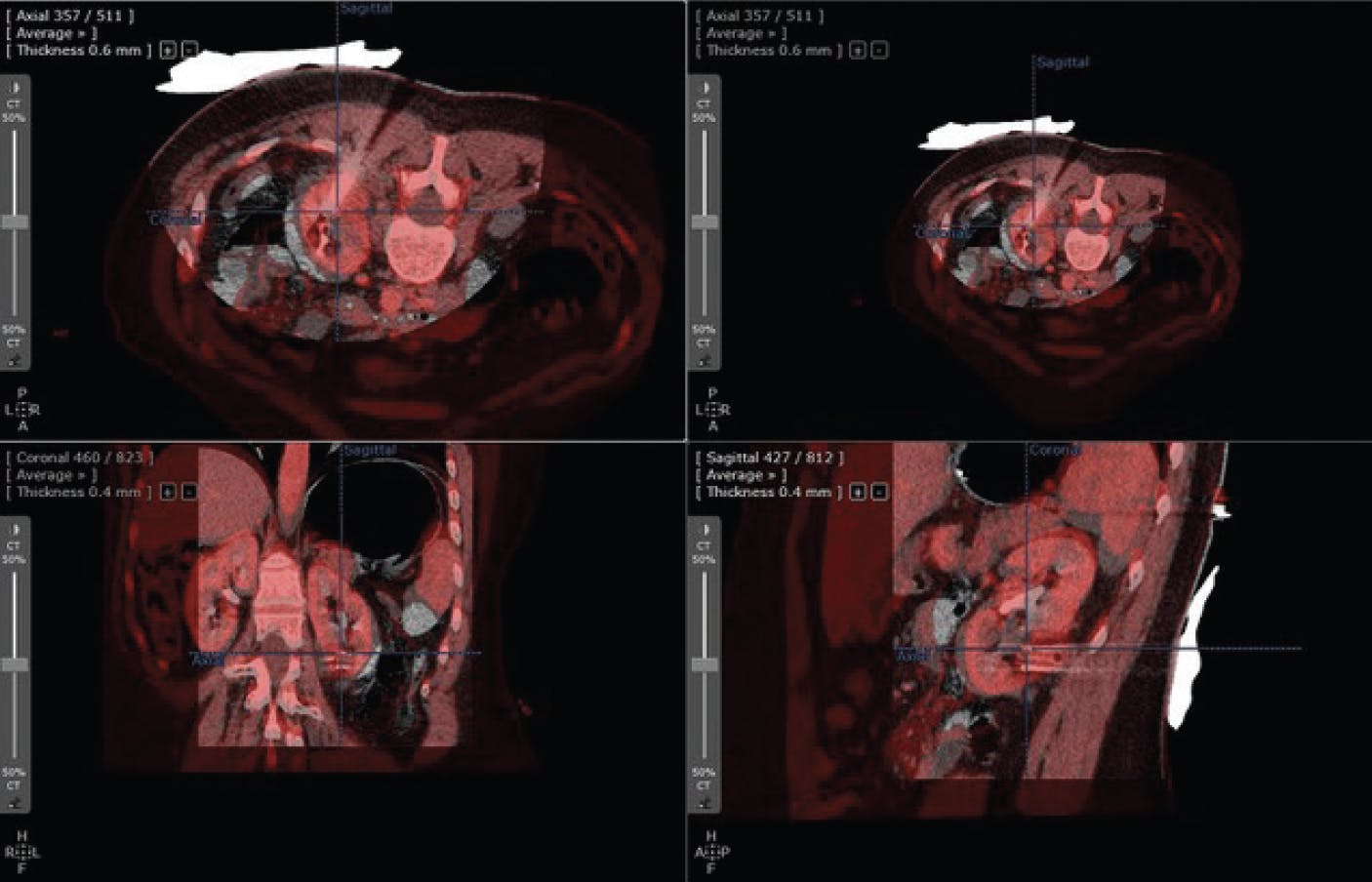
Figure 2. Robot-assisted renal ablation. The multiplanar views demonstrate the planning and final image overlay for confirmation.
Outside of imaging and techniques, cryoablation, RFA, and MWA have been shown to play a pivotal role in management of patients with advanced CKD where other treatment options may be limited.28 It remains unclear which ablative modality is superior due to lack of randomized controlled trials; however, the use of ablative measures is encouraging in this patient population and needs further study.28
Other than the direct effect of cryoablation, another possible benefit is an elicited immune reaction called the abscopal effect. Some studies suggest that cryoablation elicits an immune reaction by stimulating immune cells, which causes regression of distant tumors that aren’t directly targeted.29-31 There is evidence of this phenomenon after MWA in liver lesions as well.32
In summary, cryoablation and other ablative techniques show great promise, particularly in preserving renal function, treating metastatic bone lesions from RCC, and stimulating the immune system without immunomodulators.
COMBINATION WITH SYSTEMIC THERAPIES
In recent years, combination therapies have been used more frequently to help treat renal tumors. As mentioned previously, certain ablative methods can stimulate the immune system to target distant lesions; however, this is quite rare. Immunotherapy that targets immune checkpoints such as programmed cell death protein (PD-1), programmed cell death ligand 1 (PD-L1), and cytotoxic T lymphocyte-associated antigen 4 (CTLA-4) are commonly used.33 Immunotherapy is often not effective at treating all types of cancer; specifically, only 20% to 30% of cancer types are responsive to immune checkpoint blockade (ICB).33 Additionally, cancer may develop resistance to ICB, making a combination of ablation and immunotherapy necessary for effective treatment.34 One pilot study showed that treatment with tremelimumab (a CTLA-4 inhibitor) and cryoablation combination therapy led to favorable changes in posttreatment tissue samples of patients who had clear cell histology.35 Additionally, another study showed that mice that received anti-PD-1/CTLA-4 therapy with MWA demonstrated suppressed tumor growth and rejection.36 Although studies like these are in the preliminary stages, combination therapy shows potential in treating metastatic RCC.
CONCLUSION
RCC treatment is evolving, allowing precise strategies based on tumor stage. Multiple advancements in ablative methods, combination therapies, and immunotherapy hold great promise in the treatment of large, complex lesions as well as metastatic lesions of RCC. Continuous expansion and refinement of these techniques will help maximize efficiency and patient outcomes.
1. Siegel RL, Giaquinto AN, Jemal A. Cancer statistics, 2024. CA Cancer J Clin. 2024;74:12-49. doi:10.3322/caac.21820
2. Motzer RJ, Jonasch E, Agarwal N, et al. NCCN guidelines® insights: kidney cancer, version 2.2024. J Natl Compr Canc Netw. 2024;22:4-16. doi: 10.6004/jnccn.2024.0008
3. Zhan X, Chen T, Liu Y, et al. Trends in cause of death among patients with renal cell carcinoma in the United States: a SEER-based study. BMC Public Health. 2023;23:770. doi: 10.1186/s12889-023-15647-2
4. Georgiades C, Rodriguez R. Renal tumor ablation. Tech Vasc Interv Radiol. 2013;16:230-238. doi:10.1053/j.tvir.2013.08.006
5. Jasinski M, Bielinska M, Siekiera J, et al. Ultrasound-guided percutaneous thermal ablation of renal cancers-in search for the ideal tumour. Cancers (Basel). 2023;15:518. doi: 10.3390/cancers15020518
6. Gervais DA, McGovern FJ, Arellano RS, et al. Radiofrequency ablation of renal cell carcinoma: part 1, indications, results, and role in patient management over a 6-year period and ablation of 100 tumors. AJR Am J Roentgenol. 2005;185:64-71. doi: 10.2214/ajr.185.1.01850064
7. Psutka SP, Feldman AS, McDougal WS, et al. Long-term oncologic outcomes after radiofrequency ablation for T1 renal cell carcinoma. Eur Urol. 2013;63:486-492. doi: 10.1016/j.eururo.2012.08.062
8. Chang X, Zhang F, Liu T, et al. Radio frequency ablation versus partial nephrectomy for clinical T1b renal cell carcinoma: long-term clinical and oncologic outcomes. J Urol. 2015;193:430-435. doi: 10.1016/j.juro.2014.07.112
9. Ushinsky A, Giardina J, Kim S. Abstract no. 512 Percutaneous thermal ablation of T1b renal cell carcinoma. J Vasc Interv Radiol. 2020;31:S224-S225. doi: 10.1016/j.jvir.2019.12.573
10. Thompson RH, Atwell T, Schmit G, et al. Comparison of partial nephrectomy and percutaneous ablation for cT1 renal masses. Eur Urol. 2015;67:252-259. doi: 10.1016/j.eururo.2014.07.021
11. Bertolotti L, Bazzocchi MV, Iemma E, et al. Radiofrequency ablation, cryoablation, and microwave ablation for the treatment of small renal masses: efficacy and complications. Diagnostics (Basel). 2023;13:388. doi: 10.3390/diagnostics13030388
12. Atwell TD, Farrell MA, Callstrom MR, et al. Percutaneous cryoablation of large renal masses: technical feasibility and short-term outcome. AJR Am J Roentgenol. 2007;188:1195-1200. doi: 10.2214/ajr.06.1152
13. Sun G, Eisenbrey JR, Smolock AR, et al. Percutaneous microwave ablation versus cryoablation for small renal masses (≤4 cm): 12-year experience at a single center. J Vasc Interv Radiol. 2024;35:865-873. doi: 10.1016/j.jvir.2024.02.005
14. Talenfeld C, Lansing A, Clarke K, et al. Abstract no. 542 Microwave ablation versus cryoablation for T1a renal cell carcinoma: a systematic literature review and meta-analysis. J Vasc Interv Radiol. 2023;34:S149. doi: 10.1016/j.jvir.2022.12.400
15. Castellana R, Natrella M, Fanelli G, et al. Efficacy and safety of MWA versus RFA and CA for renal tumors: a systematic review and meta-analysis of comparison studies. Eur J Radiol. 2023;165:110943. doi: 10.1016/j.ejrad.2023.110943
16. Schulman AA, Tay KJ, Polascik TJ. Expanding thermal ablation to the ‘intermediate-sized’ renal mass: clinical utility in T1b tumors. Transl Androl Urol. 2017;6:127-130. doi:v10.21037/tau.2017.01.08
17. vXu Z, Hall TL, Vlaisavljevich E, Lee FT Jr. Histotripsy: the first noninvasive, non-ionizing, non-thermal ablation technique based on ultrasound. Int J Hyperthermia. 2021;38:561-575. doi: 10.1080/02656736.2021.1905189
18. Hines-Peralta A, Goldberg SN. Review of radiofrequency ablation for renal cell carcinoma. Clin Cancer Res. 2004;10:6328S-6334S. doi: 10.1158/1078-0432.Ccr-050004
19. Kawamoto S, Solomon SB, Bluemke DA, Fishman EK. Computed tomography and magnetic resonance imaging appearance of renal neoplasms after radiofrequency ablation and cryoablation. Semin Ultrasound CT MR. 2009;30:67-77. doi: 10.1053/j.sult.2008.12.005
20. Rosenberg MD, Kim CY, Tsivian M, et al. Percutaneous cryoablation of renal lesions with radiographic ice ball involvement of the renal sinus: analysis of hemorrhagic and collecting system complications. AJR Am J Roentgenol. 2011;196:935-939. doi: 10.2214/ajr.10.5182
21. An TJ, Arellano RS. Comparison of safety and efficacy of percutaneous microwave ablation of central versus peripheral renal cell carcinoma. Cardiovasc Intervent Radiol. 2021;44:281-288. doi: 10.1007/s00270-020-02674-4
22. Murray CA, Welch BT, Schmit GD, et al. Safety and efficacy of percutaneous image-guided cryoablation of completely endophytic renal masses. Urology. 2019;133:151-156. doi: 10.1016/j.urology.2019.08.005
23. Spieker N, Ludwig JM, Theysohn J, Schaarschmidt B. Pneumodissection prior to percutaneous cryoablation of a small renal tumor. Rofo. 2019;191:1027-1029. doi: 10.1055/a-0929-7476
24. Kammoun T, Prévot E, Serrand C, et al. Feasibility and safety of single-probe cryoablation with liquid nitrogen: an initial experience in 24 various tumor lesions. Cancers (Basel). 2022;14:5432. doi: 10.3390/cancers14215432
25. Moreland AJ, Lubner MG, Ziemlewicz TJ, et al. Evaluation of a thermoprotective gel for hydrodissection during percutaneous microwave ablation: in vivo results. Cardiovasc Intervent Radiol. 2015;38:722-730. doi: 10.1007/s00270-014-1008-9
26. Ahrar K, Ahrar JU, Javadi S, et al. Real-time magnetic resonance imaging-guided cryoablation of small renal tumors at 1.5 T. Invest Radiol. 2013;48:437-444. doi: 10.1097/RLI.0b013e31828027c2
27. Abdelsalam ME, Mecci N, Awad A, et al. Magnetic-resonance-imaging-guided cryoablation for solitary-biopsy-proven renal cell carcinoma: a tertiary cancer center experience. Cancers (Basel). 2024;16:1815. doi: 10.3390/cancers16101815
28. Iguchi T, Matsui Y, Tomita K, et al. Ablation of kidney tumors in patients with substantial kidney impairment: current status. Curr Oncol Rep. 2024;26:573-582. doi: 10.1007/s11912-024-01533-6
29. Yang X, Guo Y, Guo Z, et al. Cryoablation inhibition of distant untreated tumors (abscopal effect) is immune mediated. Oncotarget. 2019;10:4180-4191. doi: 10.18632/oncotarget.24105
30. Chen J, Qian W, Mu F, et al. The future of cryoablation: an abscopal effect. Cryobiology. 2020;97:1-4. https://doi.org/10.1016/j.cryobiol.2020.02.010
31. Kumar AV, Patterson SG, Plaza MJ. Abscopal effect following cryoablation of breast cancer. J Vasc Interv Radiol. 2019;30:466-469. doi: 10.1016/j.jvir.2018.12.004
32. Liao C, Zhang G, Huang R, et al. Inducing the abscopal effect in liver cancer treatment: the impact of microwave ablation power levels and PD-1 antibody therapy. Pharmaceuticals (Basel). 2023;16:1672. doi: 10.3390/ph16121672
33. Liu Q, Zhang C, Chen X, Han Z. Modern cancer therapy: cryoablation meets immune checkpoint blockade. Front Oncol. 2024;14:1323070. doi: 10.3389/fonc.2024.1323070
34. Aarts BM, Klompenhouwer EG, Rice SL, et al. Cryoablation and immunotherapy: an overview of evidence on its synergy. Insights Imaging. 2019;10:53. doi: 10.1186/s13244-019-0727-5
35. Campbell MT, Matin SF, Tam AL, et al. Pilot study of tremelimumab with and without cryoablation in patients with metastatic renal cell carcinoma. Nat Commun. 2021;12:6375. doi: 10.1038/s41467-021-26415-4
36. Guo RQ, Peng JZ, Li YM, Li XG. Microwave ablation combined with anti-PD-1/CTLA-4 therapy induces an antitumor immune response to renal cell carcinoma in a murine model. Cell Cycle. 2023;22:242-254. doi: 10.1080/15384101.2022.211200
Advertisement
Advertisement