Advertisement
Advertisement
September 2024
Sponsored by AngioDynamics, Inc.
A New Age of Laser Atherectomy: Safe and Effective for Arterial Lesion and Calcium Modification
Two radial access cases highlight the role of the Auryon Atherectomy Laser System in the treatment of superficial femoral artery disease.
By Sameh Sayfo, MD, MBA, FSCAI, FACC, and Stephen M. Ratchford, PhD
Atherectomy as a minimally invasive treatment strategy for atherosclerotic plaque has been available for over 40 years.1,2 This atheroma modification and removal modality often precedes terminal treatment with balloon angioplasty, offering several benefits of surgical revascularization in a minimally invasive endovascular approach. As a vessel preparation procedure, atherectomy may decrease the risk of bailout stenting and incidence of flow-limiting dissections compared to plain old balloon3 or drug-coated balloon (DCB)4 angioplasty alone. Despite a growing array of various atherectomy devices on the market,5 there is a continued need for high-quality, prospective data to provide evidence for atherectomy as an adjunctive treatment for peripheral artery disease (PAD).
The relatively new Auryon Atherectomy Laser System (AngioDynamics, Inc.) has been studied in several high-quality, prospective investigations over the past 5 years, providing evidence for the safe and effective use of laser atherectomy in modifying plaque and calcified lesions in PAD. The three initial prospective studies of the Auryon System (CE, investigational device exemption,6,7 and PATHFINDER8) involved approximately 280 treated lesions, resulting in > 30% stenosis reduction after use of laser atherectomy, with only one (0.36%) patient experiencing distal embolization and four (1.4%) patients requiring bailout stenting.6-8 Additionally, 12-month target lesion revascularization (TLR) averaged 2.8% across all three trials.6-8 Most recently, the PATHFINDER registry observed a Rutherford class improvement among 94% of enrolled patients (n = 102) with low rates of TLR (6.7%) and amputation (2.2%) at 12 months, which included 44.4% of patients with critical limb ischemia, 47.3% of lesions below the knee (BTK), and 39.7% of patients with restenosis or in-stent restenosis.8 Together, these results provide evidence for one of the safest and most efficacious profiles of any available atherectomy device on the market for complex, calcified arterial lesions.
THE AURYON ATHERECTOMY LASER SYSTEM
This unique laser technology utilizes short pulse durations at 355-nm wavelength to generate shock waves with laser power amplitudes well above the ablative threshold.9 These strong pulses can selectively ablate plaque10 and break severe calcification, including medial calcium embedded in the walls of arteries, as confirmed using an ex vivo, cadaveric model.11 The advantages of the 355-nm laser over historic 308-nm laser technology are unparalleled, with a smaller and lighter console, quieter activation, propensity to target plaque and collagen over endothelial tissue, and a safe ability to lase in contrast. Additionally, with aspiration capabilities in the larger (2.0 and 2.35 mm) catheter sizes, the Auryon System minimizes risk of distal embolization, further increasing its safety profile.
With 0.9-, 1.5-, 1.7-, 2.0-, and 2.35-mm catheter diameters along with working lengths of 150, 150, 150, 135, and 110 cm, respectively, this versatile lineup of catheters can treat calcified arterial lesions the entire length of the leg, even into the pedal arch. The 2.0- and 2.35-mm catheters come with aspiration capability as well. In 2024, AngioDynamics lengthened their Auryon System lineup with the addition of the Auryon XL Catheters, 225-cm-long and 0.9- or 1.5-mm-diameter radial access catheters for the treatment of PAD. As the first nonmechanical radial access atherectomy system, these extra-long catheters have the potential to extend safe and effective endovascular procedures with even less patient discomfort and recovery time seen with radial access endovascular procedures.
RADIAL ACCESS CASE 1
Patient Presentation
A woman in her mid-60s with a previous left superficial femoral artery (SFA) stent presented with worsening left leg pain and claudication stage 3/4. Her ankle-brachial index (ABI) was 0.35, and her left leg ultrasound revealed a SFA stent occlusion with reconstitution at the level of the popliteal artery.
Procedural Overview
Right radial access was obtained, and a Judkins right (JR) 4, 5-F Infiniti diagnostic catheter (Cordis) was used to cross the aortic arch along with a Bentson guidewire (Cook Medical). Selective angiography was performed for the left leg, showing the occluded SFA with a single-vessel runoff of the diseased left anterior tibial (AT) artery (Figure 1). Over a Supra Core stiff wire (Abbott), a 6-F, 119-cm Destination guiding sheath with Slender technology (Terumo Interventional Systems) was exchanged, and the lesion was crossed with wire escalation and support of 0.035- and 0.018-inch, 200-cm Sublime RX catheters (Surmodics, Inc.). A 0.018-inch Command ST wire (Abbott) along with 0.035-inch Astato 30 (Asahi Intecc Medical) and 0.014-inch Glidewire Advantage guidewires (Terumo Interventional Systems) were used, and finally swapped with a 0.014-inch, 478-cm Viper wire (Abbott).
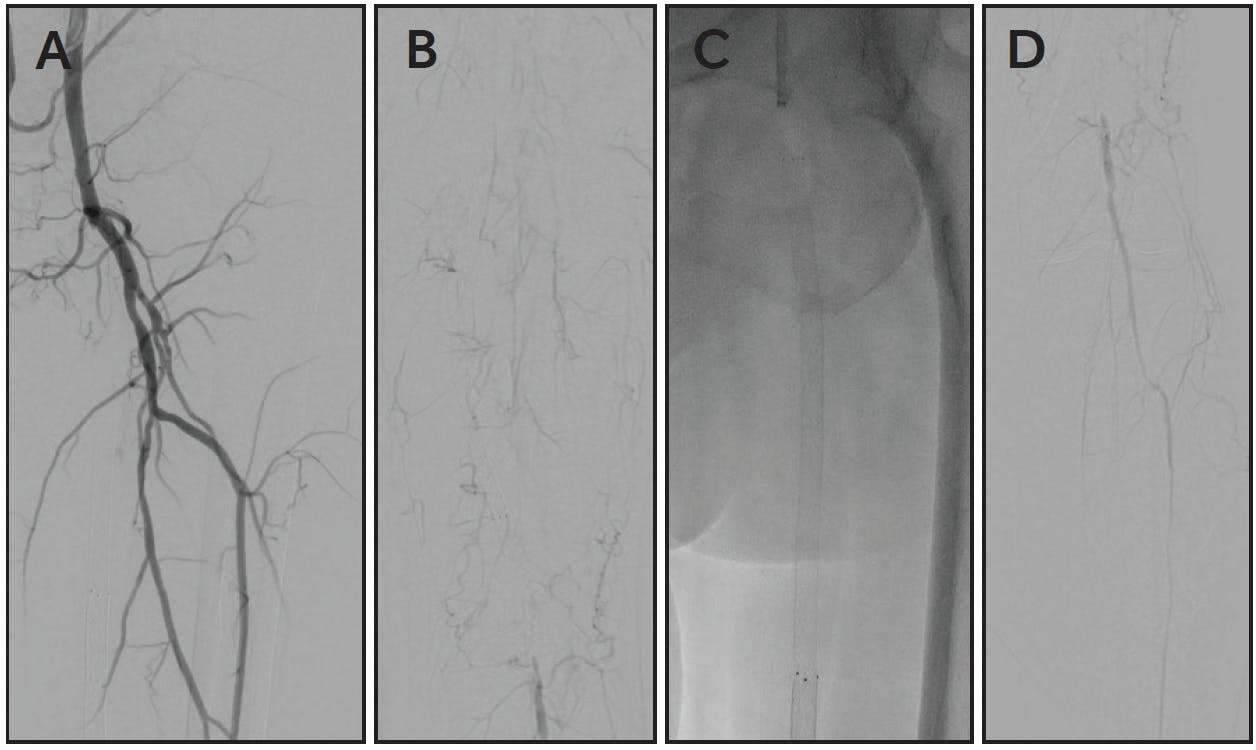
Figure 1. Pretreatment angiograms showing a total occlusion of the proximal SFA (A), with only the profunda visible and reconstitution of the SFA (B), a fluoroscopic image of calcium in the stent (C), and BTK runoff (D).
The lesion was then treated with two passes of the Auryon 1.5-mm XL catheter at 60 MJ for 3 minutes 19 seconds, followed by percutaneous transluminal angioplasty (PTA) with a regular balloon and long 4- X 150-mm DCB running from the popliteal artery to the distal part of the stent. Finally, a 6- X 150-mm DCB was used in the proximal part of the stent (Figure 2). A final angiogram revealed 0% residual stenosis in the SFA, and a 20% residual stenosis in the popliteal artery, while the AT artery was not treated (Figure 3).
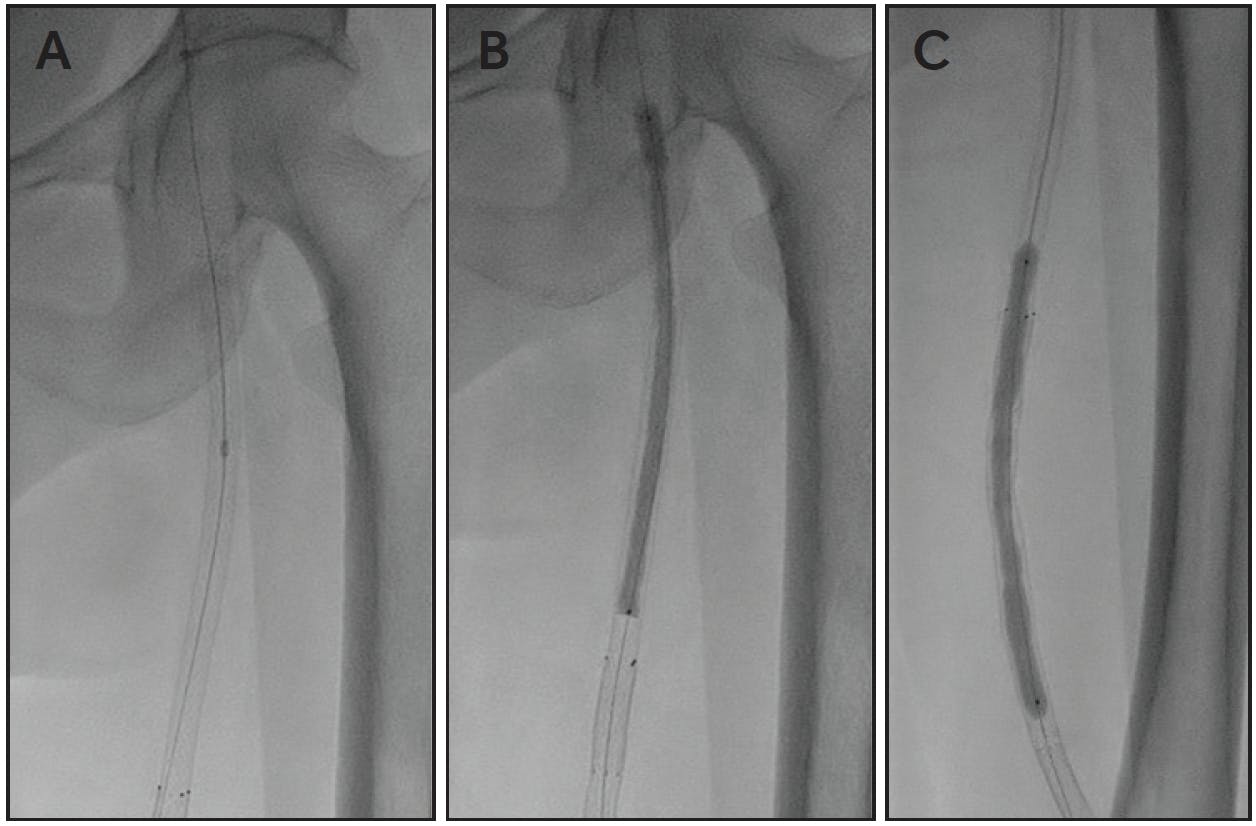
Figure 2. Treatment with Auryon 1.5-mm XL catheter and DCB. The Auryon 1.5-mm XL catheter treatment in the stent (A), PTA of the stent with a 4- X 150-mm balloon (B), and PTA of the stent with a 6- X 150-mm balloon (C).
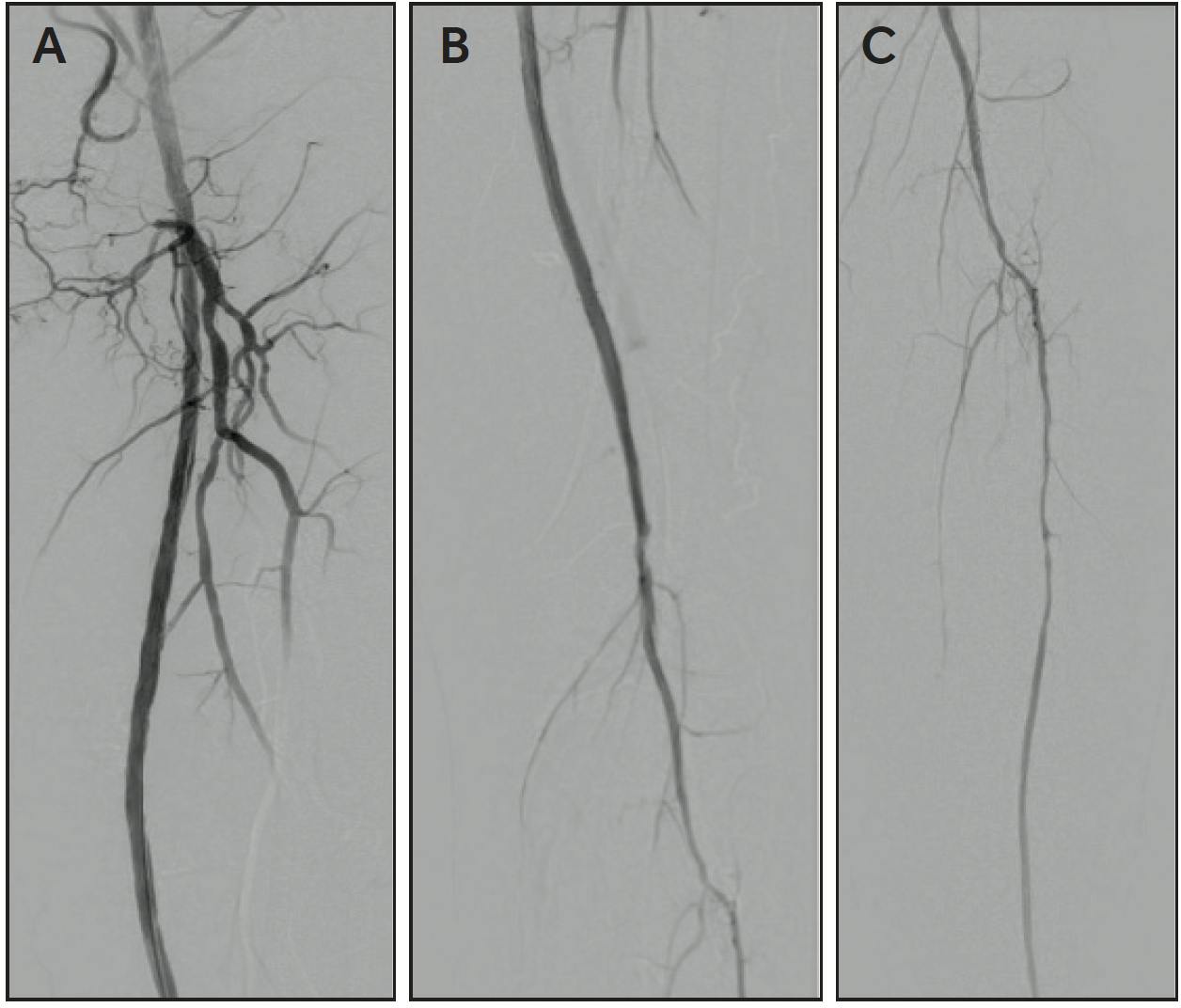
Figure 3. Posttreatment angiograms show the proximal SFA (A), mid-SFA and popliteal artery (B), and BTK runoff (C).
RADIAL ACCESS CASE 2
Patient Presentation
A woman in her early 60s with history of coronary artery bypass grafting, a left subclavian artery (LSA) stent (Figure 4), and left femoral/PTA bypass presented with worsening right leg claudication. Her ABI was 0.48.
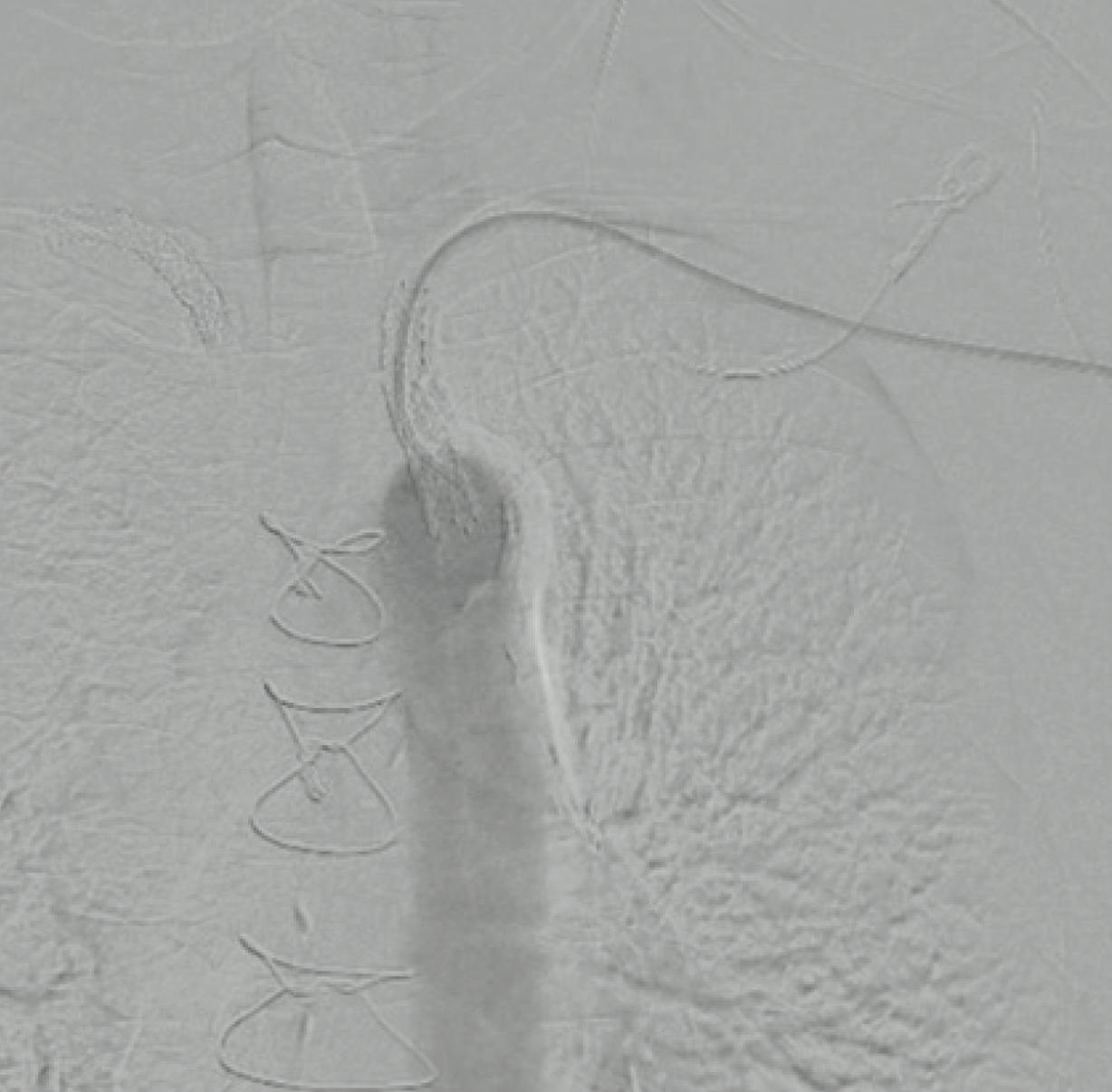
Figure 4. LSA stent.
Procedural Overview
Left radial access was obtained under ultrasound guidance, crossing the LSA stent with a JR 4, 5-F Infiniti diagnostic catheter with J-wire and advanced to the common iliac artery (CIA). The angiogram of the left leg revealed the bypass graft, but the left distal CIA was 90% occluded. A right leg angiogram revealed occlusions in the popliteal artery and BTK vessels with collateral runoff to the AT artery (Figure 5). We proceeded with wire escalation and use of a 0.018-inch Sublime microcatheter and Command wire, which we then swapped with a 475-cm Viper wire to sufficiently cross the lesion. The lesion was then treated with five passes of the Auryon 1.5-mm XL catheter at 60 MJ for 3 minutes 29 seconds by PTA and DCB, with a residual type A dissection and good flow to the AT artery. The left CIA stenosis was treated with a balloon-expandable stent with < 10% residual stenosis and no gradient poststenting (Figure 6).
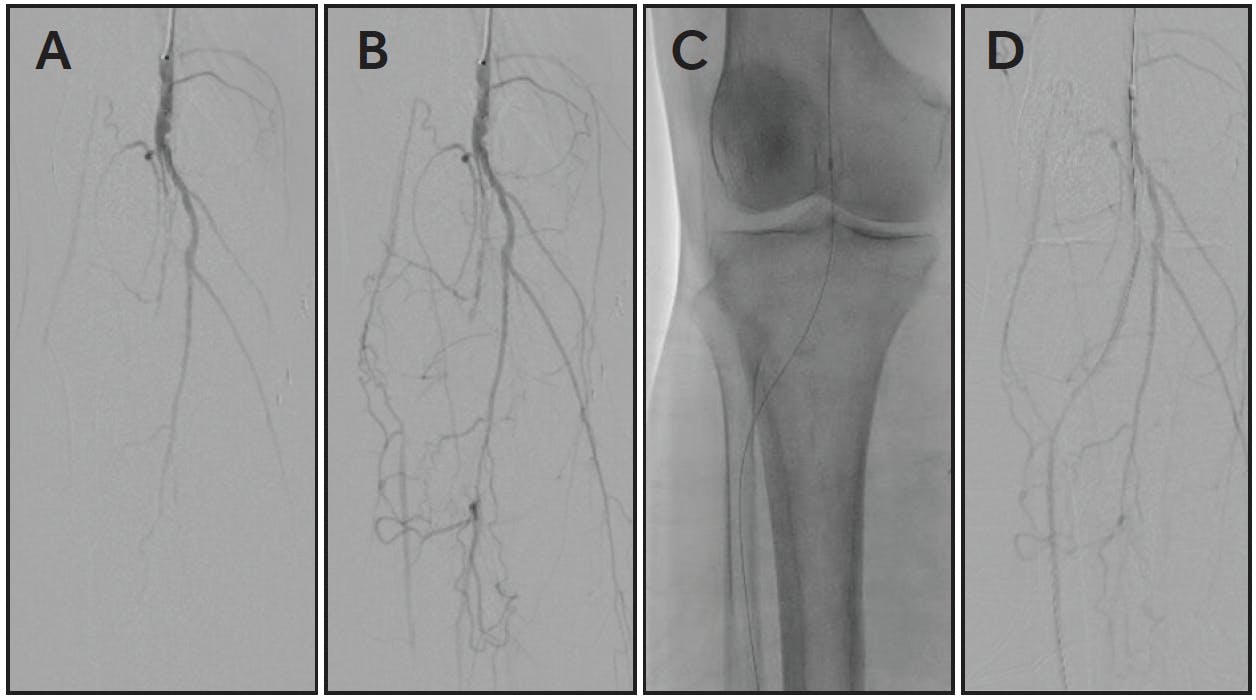
Figure 5. Popliteal and AT artery occlusions. The popliteal chronic total occlusion (A), collateral runoff (B), a fluoroscopic image with Auryon 1.5-mm XL catheter (C), and post-Auryon 1.5 mm XL catheter treatment (D).
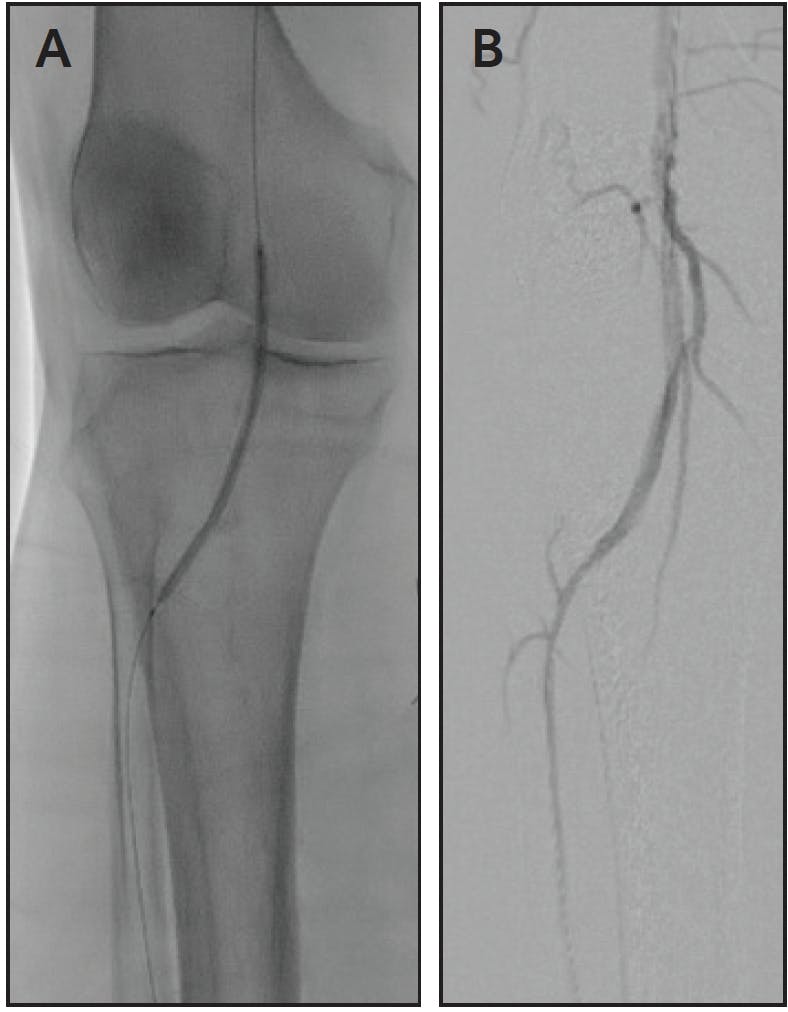
Figure 6. Angiograms showing PTA of the popliteal artery (A) and the proximal posterior tibial artery posttreatment (B).
CONCLUSION
With the use of Auryon 1.5-mm XL catheter to navigate tortuous anatomy, these lesions were able to be optimally prepared for PTA, minimizing the risk of major adverse events such as flow-limiting dissections or the need for bailout stenting during treatment.
1. Ritchie JL, Hansen DD, Intlekofer MJ, et al. Rotational approaches to atherectomy and thrombectomy. Z Kardiol. 1987:76 Suppl 6:59-65.
2. Simpson JB, Selmon MR, Robertson GC, et al. Transluminal atherectomy for occlusive peripheral vascular disease. Am J Cardiol. 1988;61:96G-101G. doi: 10.1016/s0002-9149(88)80040-7
3. Wu Z, Huang Qun, Pu H, et al. Atherectomy combined with balloon angioplasty versus balloon angioplasty alone for de novo femoropopliteal arterial diseases: a systematic review and meta-analysis of randomised controlled trials. Eur J Vasc Endovasc Surg. 2021;62:65-73. doi: 10.1016/j.ejvs.2021.02.012
4. Lin F, Wang H, Ding W, et al. Atherectomy plus drug-coated balloon versus drug-coated balloon only for treatment of femoropopliteal artery lesions: a systematic review and meta-analysis. 2021;29:883-896. doi: 10.1177/1708538120985732
5. Chowdhury M, Secemsky EA. Atherectomy vs other modalities for treatment during peripheral vascular intervention. Curr Cardiol Rep. 2022;24:869-877. doi: 10.1007/s11886-022-01709-1
6. Rundback J, Chandra P, Brodmann M, et al. Novel laser-based catheter for peripheral atherectomy: 6-month results from the Eximo Medical B-LaserTM IDE study. Catheter Cardiovasc Interv. 2019;94:1010-1017. doi: 10.1002/ccd.28435
7. Shammas NW, Chandra P, Brodmann M, et al. Acute and 30-day safety and effectiveness evaluation of Eximo Medical’s B-LaserTM, a novel atherectomy device, in subjects affected with infrainguinal peripheral arterial disease: results of the EX-PAD-03 trial. Cardiovasc Revasc Med. 2020;21:86-92. doi: 10.1016/j.carrev.2018.11.022
8. Das TS, Shammas NW, Yoho JA, et al. Solid state, pulsed-wave 355 nm UV laser atherectomy debulking in the treatment of infrainguinal peripheral arterial disease: the Pathfinder registry. Catheter Cardiovasc Interv. 2024;103:949-962. doi: 10.1002/ccd.31023
9. Photonics Spectra. Haupt O, Müller D, Gäbler. Shorter pulse widths improve micromachining. June 2013. Accessed August 26, 2024. https://www.photonics.com/Articles/Shorter_Pulse_Widths_Improve_Micromachining/a54123
10. Herzog A, Bogdan S, Glikson M, et al. Selective tissue ablation using laser radiation at 355 nm in lead extraction by a hybrid catheter; a preliminary report. Lasers Surg Med. 2016;48:281-287. doi: 10.1002/lsm.22451
11. Rundback J, Kawai K, Sato Y, et al. Treatment effect of medial arterial calcification in below-knee after Auryon laser atherectomy using micro-CT and histologic evaluation. Cardiovasc Revasc Med. 2023;57:18-24. doi: 10.1016/j.carrev.2023.06.027


Advertisement
Advertisement
