Advertisement
Advertisement
September 2024
Sponsored by Veryan Medical
My Femoropopliteal Complex Lesion Treatment Algorithm
Where does BioMimics 3D fit in?
Patients with chronic limb-threatening ischemia (CLTI) and complex lesions have impaired outcomes after endovascular therapy, and the optimal strategy is unknown as data are scarce. Along with my fellow MIMICS-3D study investigators, I recently published the article entitled, “The BioMimics 3D Helical Centreline Nitinol Stent in Chronic Limb Threatening Ischaemia and Complex Lesions: Three Year Outcomes of the MIMICS-3D Registry,”1 which reported on the performance of the helical centerline stent in this challenging patient population. BioMimics 3D (Veryan Medical) achieved excellent results in patients with CLTI and complex lesions such as severe calcification or chronic total occlusions (CTOs), and interestingly, after propensity score matching, there was no difference in clinical outcomes for patients with severe calcification or CTO lesions. This outcome was not surprising, as BioMimics 3D has been featured consistently in my institution’s treatment algorithm for CLTI and complex lesions (Figure 1).
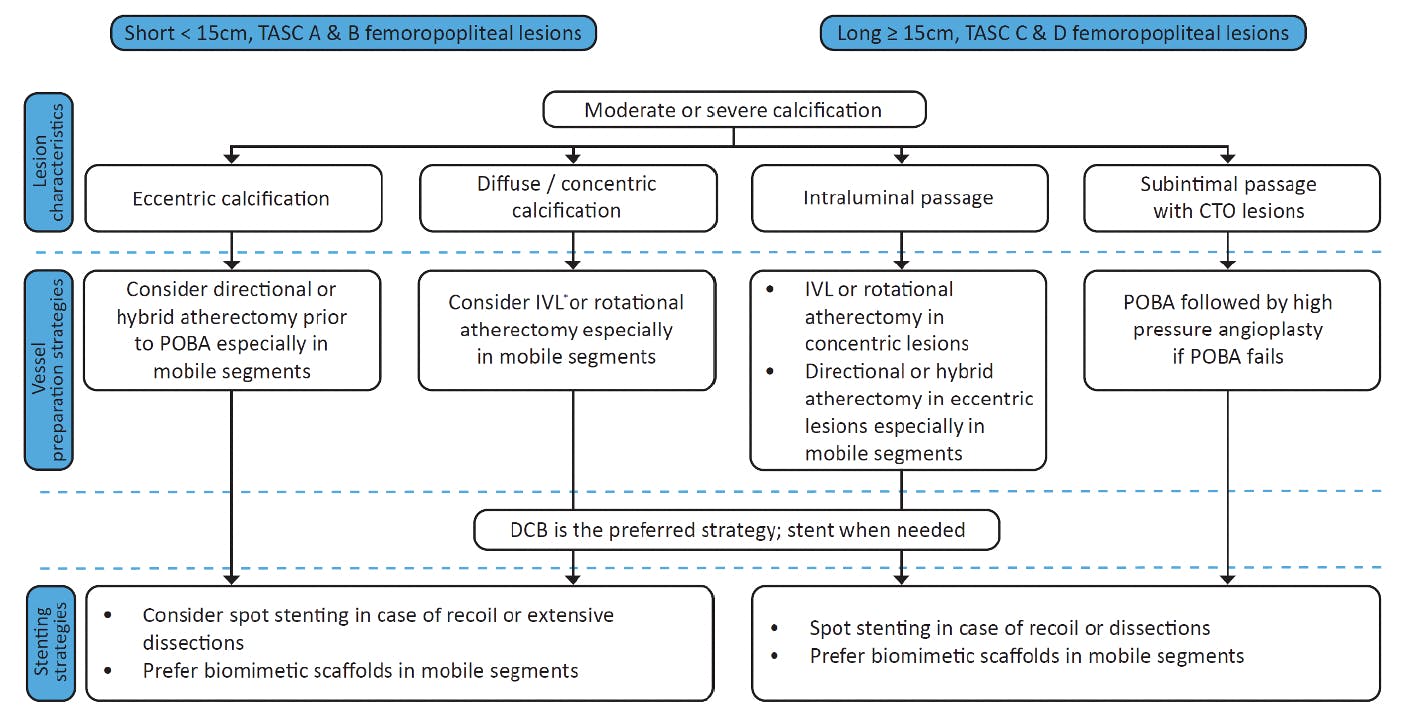
Figure 1. Treatment algorithm for CLTI and complex lesions.
*IVL, intravascular lithotripsy.
ALGORITHM FOR FEMOROPOPLITEAL COMPLEX LESION TREATMENT
Lesions are characterized by length and calcification: short < 15 cm, TransAtlantic Inter-Society Consensus (TASC) A and B or long ≥ 15 cm, TASC C and D. The vessel preparation approach depends on the nature and severity of calcification and whether wire passage is intraluminal or subintimal. However, irrespective of the vessel preparation used, drug-coated balloons (DCBs) are the preferred strategy. The stenting strategy after plain old balloon angioplasty (POBA) or DCB is to use spot stenting in the event of recoil or dissection. Biomimetic stents are the preferred option here as well as when there is insufficient lumen gain after vessel preparation, particularly in mobile segments. My preferred biomimetic stent is BioMimics 3D (Figure 2) for the following reasons: (1) use of other biomimetic stents such as Supera (Abbott) is not ideal after DCB application, as the late vessel remodeling that occurs results in suboptimal vessel wall apposition of the interwoven stent over time, and the self-expanding design of BioMimics 3D avoids this potential sizing mismatch; (2) the helical centerline of BioMimics 3D is designed specifically to be biomechanically compatible with the challenging femoropopliteal anatomy (Figure 3); and (3) the helical centerline is designed to induce swirling flow to increase wall shear stress, which has been shown to reduce restenosis.3,4
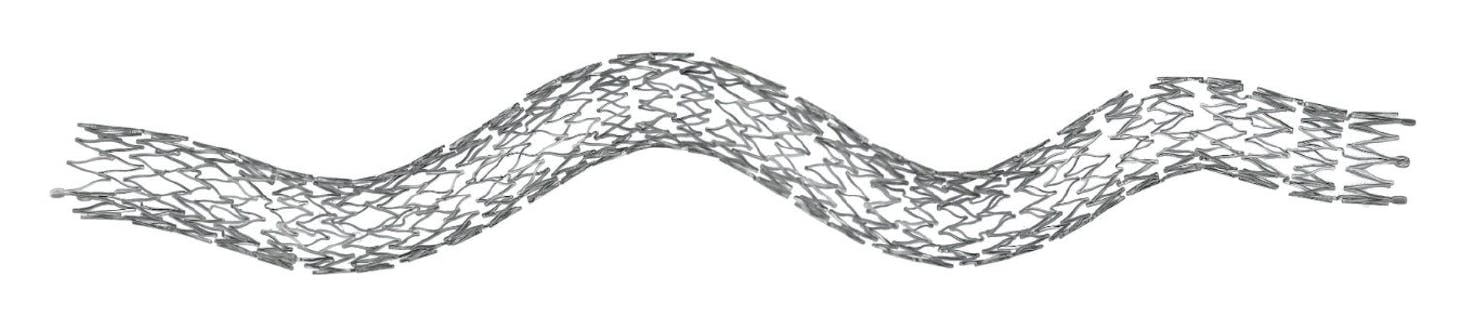
Figure 2. BioMimics 3D helical centerline stent.
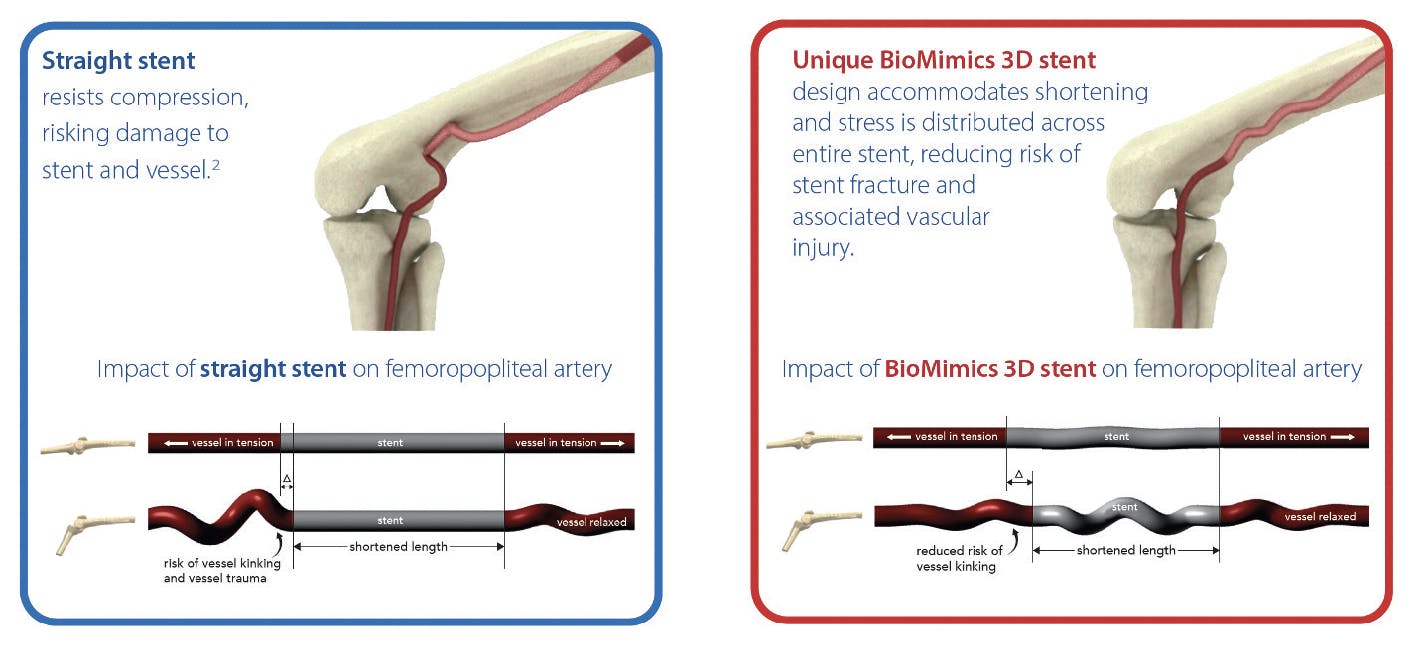
Figure 3. Biomechanical compatibility of BioMimics 3D versus straight stents in femoropopliteal arteries.
CASE STUDY
Patient Presentation
A man in his early 80s presented with CLTI due to peripheral arterial occlusive disease of his left leg. His history was significant for grade 3 renal insufficiency and cardiovascular risk factors, including type 2 diabetes mellitus, hypertension, and hypercholesterolemia. He was classified as Rutherford class 4 due to acute-on-chronic rest pain and an ankle-brachial index (ABI) of 0.4. Prior vascular surgery was performed in the left groin with a patch plasty.
Procedural Overview
Baseline imaging revealed a complete CTO of the left superficial femoral artery (SFA). Reperfusion was observed through collaterals of the profunda (Figure 4). Due to his age and comorbidities, the decision was made to proceed with an endovascular treatment using a crossover approach. Successful crossing was performed with a support catheter and a hydrophilic-coated guidewire. Following recanalization and rotational thrombectomy, percutaneous transluminal angioplasty (PTA) was performed with a 4- X 200-mm balloon for an inflation time of 180 seconds followed by a 5-mm DCB. However, the proximal and distal SFA showed signs of early recoil and potential dissections (Figure 5). Due to the long CTO lesions and the proximity to mobile segments, 6- X 80-mm and 5- X 100-mm BioMimics 3D stents were implanted in the proximal and distal part of the SFA. Brisk flow to the lower leg was observed, and the patient was discharged the following day. ABI improved to 0.8 and symptoms disappeared.
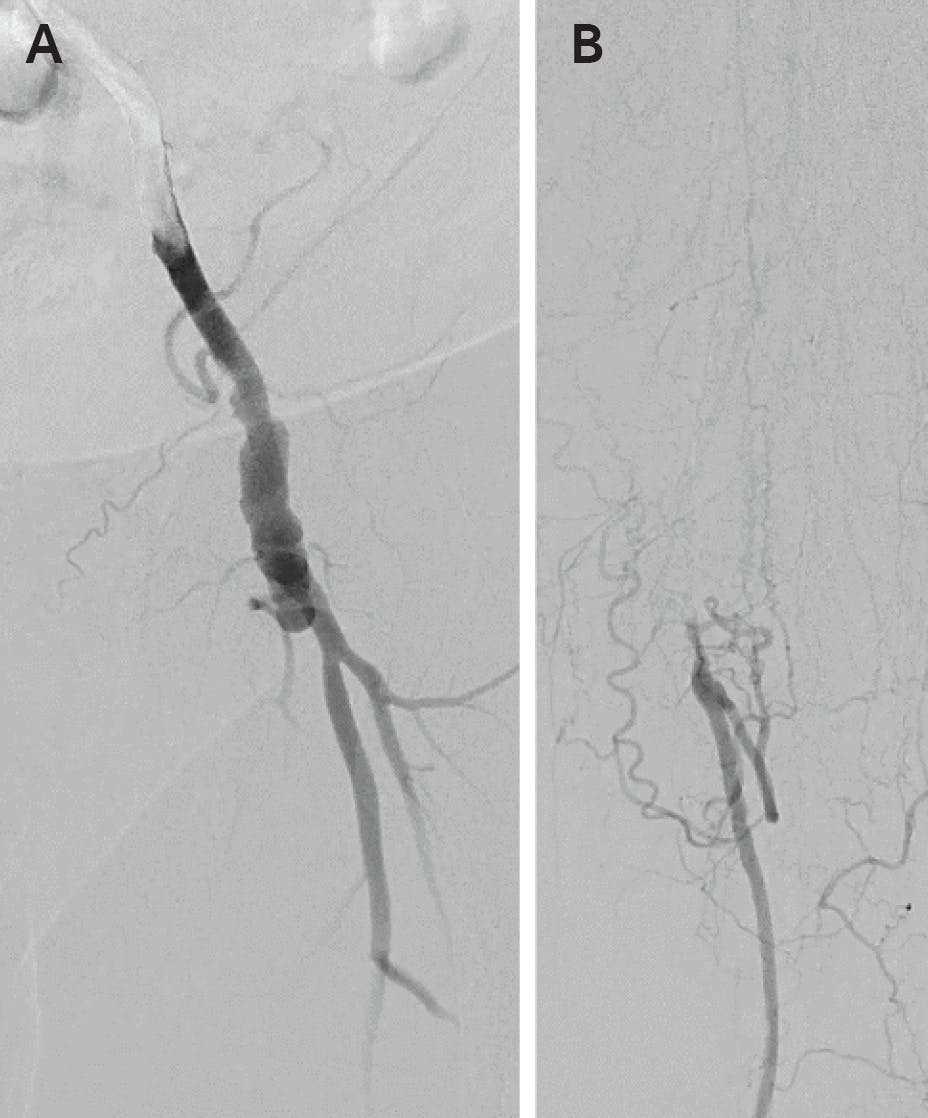
Figure 4. Preinterventional diagnostic angiography showing an open common femoral artery after a previous patch treatment and a CTO of the SFA with a patent profunda (A). The distal SFA and proximal popliteal artery were reperfused via profunda collaterals (B).
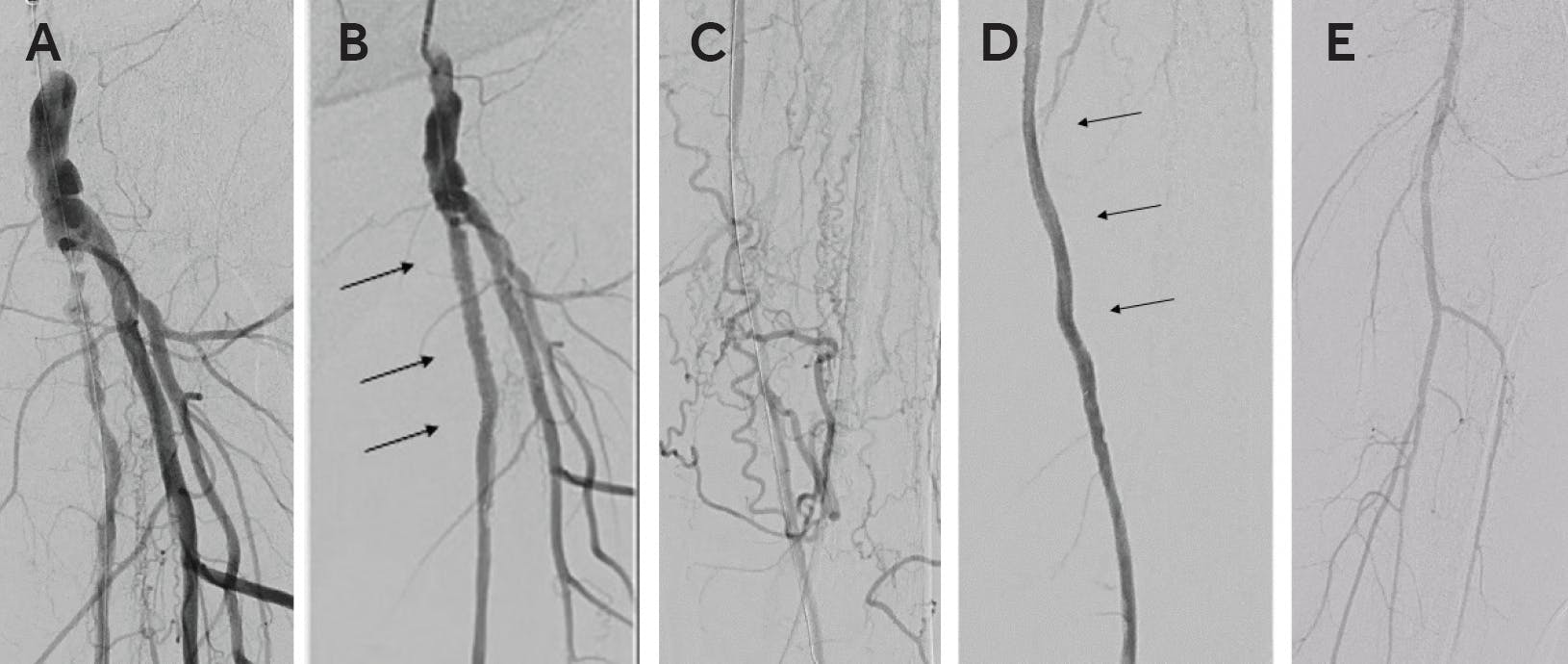
Figure 5. Post-PTA angiography revealed a dramatic recoil at the proximal entry of the SFA with residual subtotal stenosis and a patent mid SFA segment (A). Thus, a 6- X 80-mm BioMimics 3D stent was chosen for the proximal SFA (B). The distal SFA and proximal popliteal artery showed early recoil (C); therefore, a 5- X 100-mm BioMimics 3D stent was implanted at the distal SFA (D). The arrows in B and D indicate the BioMimics 3D helical centerline. A three-vessel runoff was seen (E).
MIMICS FLOW STUDY
Of particular interest is the effect of BioMimics 3D and swirling flow on endothelial function, a prognostic, relevant biomarker. The MIMICS FLOW study (NCT05447052) is ongoing at my institution and is evaluating the vascular effects and benefits of BioMimics 3D stent implantation versus conventional stenting. The 1-year results of this randomized controlled trial presented at LINC 2024 showed improvement in prognostic relevant markers after endovascular peripheral artery disease treatment. Specifically, there was enhanced local endothelial function after BioMimics 3D implantation compared to straight stents due to swirling flow.5
The MIMICS FLOW study will add to the large and growing body of clinical evidence that demonstrates compelling outcomes for BioMimics 3D regardless of lesion location, morphology, length, or complexity through 3 years of follow-up.
1. Rammos C, Zeller T, Piorkowski M, et al. The BioMimics 3D helical centreline nitinol stent in chronic limb threatening ischaemia and complex lesions: three year outcomes of the MIMICS-3D registry. Eur J Vasc Endovasc Surg. 2024;67:923-932. doi: 10.1016/j.ejvs.2024.02.043
2. Smouse HB, Nikanorov A, LaFlash D. Biomechanical forces in the femoropopliteal arterial segment. Endovasc Today. 2005;4:60-66. https://evtoday.com/articles/2005-june/EVT0605_F3_Smouse.html
3. Caro CG, Seneviratne A, Heraty KB, et al. Intimal hyperplasia following implantation of helical-centreline and straight-centreline stents in common carotid arteries in healthy pigs: influence of intraluminal flow. J R Soc Interface. 2013;10:20130578. doi: 10.1098/rsif.2013.0578
4. Murphy EA, Boyle FJ. Reducing in-stent restenosis through novel stent flow field augmentation. Cardiovasc Eng Tech. 2012;3:353-373. https://doi.org/10.1007/s13239-012-0109-3
5. Rammos C. Impact of the BioMimics 3D stent on vascular function: 12-month results from the randomized MIMICS FLOW trial. Presented at: the Leipzig Interventional Course (LINC) 2024; May 29, 2024; Leipzig, Germany.
PAM 352 Version 1.0
BioMimics 3D is manufactured by Veryan Medical Ltd. and has FDA, PMDA, and CE Mark approval.
CAUTION: Federal law restricts this device to sale by or use on the order of a physician.

Advertisement
Advertisement
