Advertisement
Advertisement
September 2025
Sponsored by Veryan Medical
BioMimics 3D: The Swirling Flow Stent
It is generally accepted that CLTI and complex lesions require stenting more frequently due to residual stenosis and flow-limiting dissections; this is why I choose to use BioMimics 3D in my practice.
Of the 236 million patients worldwide with peripheral artery disease (PAD), 11% to 13% have chronic limb-threatening ischemia (CLTI),1-3 and this statistic is replicated in my practice. Unfortunately, these patients—and those with complex lesions—are often excluded from device trials, which means that there is limited and inconsistent clinical evidence available for real-world patients with PAD and CLTI. In my practice, I have been in the fortunate position of taking part in many device trials, particularly for new endovascular technologies. As a result, I’ve been able to determine if the positive clinical results often seen in clinical studies are replicated in real-world patients. One such device is BioMimics 3D (Veryan Medical), which has been my stent of choice for complex lesions and CLTI patients for several years.
THE BIOMIMICS 3D STENT
The BioMimics 3D stent has a unique helical centerline design. In contrast to conventional straight stents that reduce arterial curvature, this design imparts a three-dimensional helical shape onto the artery, promoting laminar swirling flow to increase wall shear stress that has been shown to be protective against atherosclerosis and restenosis (Figure 1).4
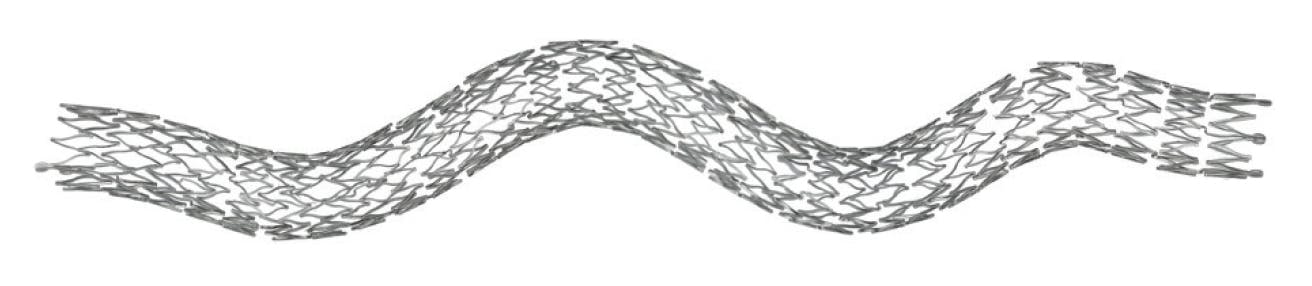
Figure 1. BioMimics 3D stent.
It is generally accepted that CLTI and complex femoropopliteal lesions require stenting more frequently due to residual stenosis and flow-limiting dissections,5,6 but why choose BioMimics 3D? A recent publication provides the clinical evidence that is missing for most other devices and validates my personal clinical experience.7
This patient-level pooled analysis evaluated the safety and performance of the BioMimics 3D helical centerline stent in the treatment of CLTI and complex femoropopliteal lesions by pooling data from three prospective studies—MIMICS RCT, MIMICS-2, and MIMICS-3D—comprising a total of 828 patients. The study specifically investigated outcomes in high-risk subgroups, including patients with CLTI, chronic total occlusion (CTO), severe arterial calcification (Peripheral Arterial Calcium Scoring System [PACSS] grades 3 and 4), and TransAtlantic Inter-Society Consensus (TASC) C and D lesions. The subgroups and their associated patient numbers are summarized in Figure 2.

Figure 2. The MIMICS studies pooled analysis subgroups.
The primary endpoints assessed were freedom from clinically driven target lesion revascularization (TLR), survival, freedom from major target limb amputation, and clinical improvement defined as a reduction of at least one Rutherford class.
As reported, the pooled analysis demonstrated good and durable results through 2 years across all subgroups, despite those subgroups typically being associated with poorer clinical outcomes. Patients with CLTI in this study had higher rates of TLR and target limb amputation, which is to be expected considering that these patients had more instances of diabetes, nonhealing wounds, and complex lesions with a higher rate of CTO and degree of calcification compared with patients with intermittent claudication (IC), a phenomenon well-known in the literature.1,8 Similarly, patients with CTO and TASC C and D lesions had more TLRs but no difference in major amputations. There was no statistically significant difference observed between PACSS 3-4 and PACSS 0-2 groups.
Freedom from major amputation at 24 months was high across all subgroups, ranging from 93.7% in CLTI patients to 98.5% in CTO patients. Clinical improvement was observed in 85.0% to 97.3% of patients, with the highest rate in the CLTI subgroup. The stent fracture rate was impressively low (0.5%), with only three confirmed cases across the entire cohort, including high-risk lesion types. These findings suggest that the BioMimics 3D stent is highly fracture resistant and delivers favorable clinical outcomes even in patients with challenging lesion locations and morphology, and this is why I choose to use it. The following case study shows a typical complex lesion treated with BioMimics 3D in my practice.
CASE REPORT
Patient History and Clinical Presentation
The case patient was a man in his mid 70s with significant cardiovascular risk factors, including hypertension, a history of smoking, obesity, and dyslipoproteinemia. He had no history of prior vascular interventions.
The patient presented with Rutherford class 3, affecting the right lower limb. Ankle-brachial index was measured at 0.66. Diagnostic imaging revealed a high-grade stenosis in the distal superficial femoral artery (SFA) and the popliteal segment (P1), characterized by fibrotic and lipid-rich plaque.
Procedural Details
Access was achieved using an antegrade approach via a 6-F sheath. Angiographic assessment confirmed high-grade stenosis in the distal SFA/P1 segment with heterogeneous plaque morphology (Figure 3). Intravascular ultrasound (IVUS) further characterized the lesion as containing fibrotic and necrotic components.
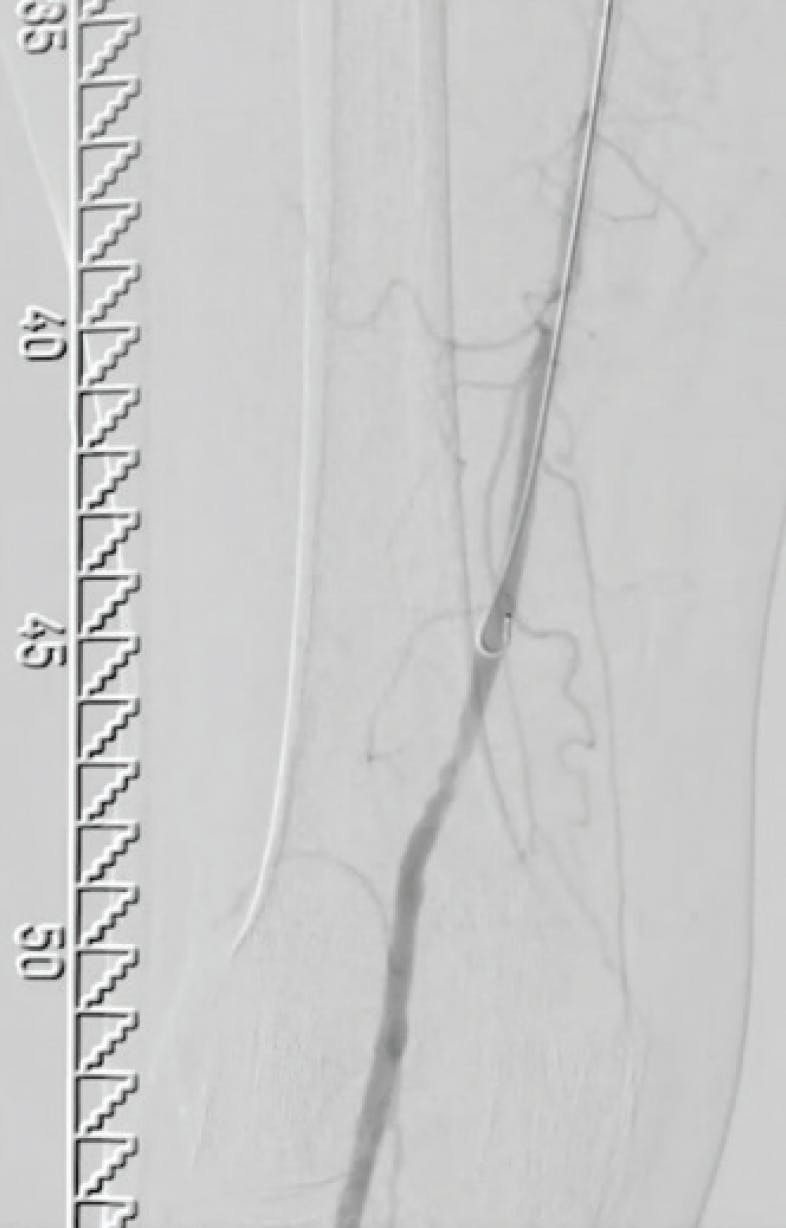
Figure 3. High-grade stenosis distal SFA/P1 segment.
Initial treatment and preparation of the lesion involved scoring balloon angioplasty using an Ultrascore 6- X 120-mm balloon (BD Interventional). Despite this, a persistent high-grade stenosis with partial dissection was observed.
Sirolimus drug-coated balloon angioplasty was then performed using a 6- X 150-mm balloon. Due to inadequate response and dissection, bailout stenting was required. A BioMimics 3D stent was deployed across the distal SFA and P1 segment (Figure 4).
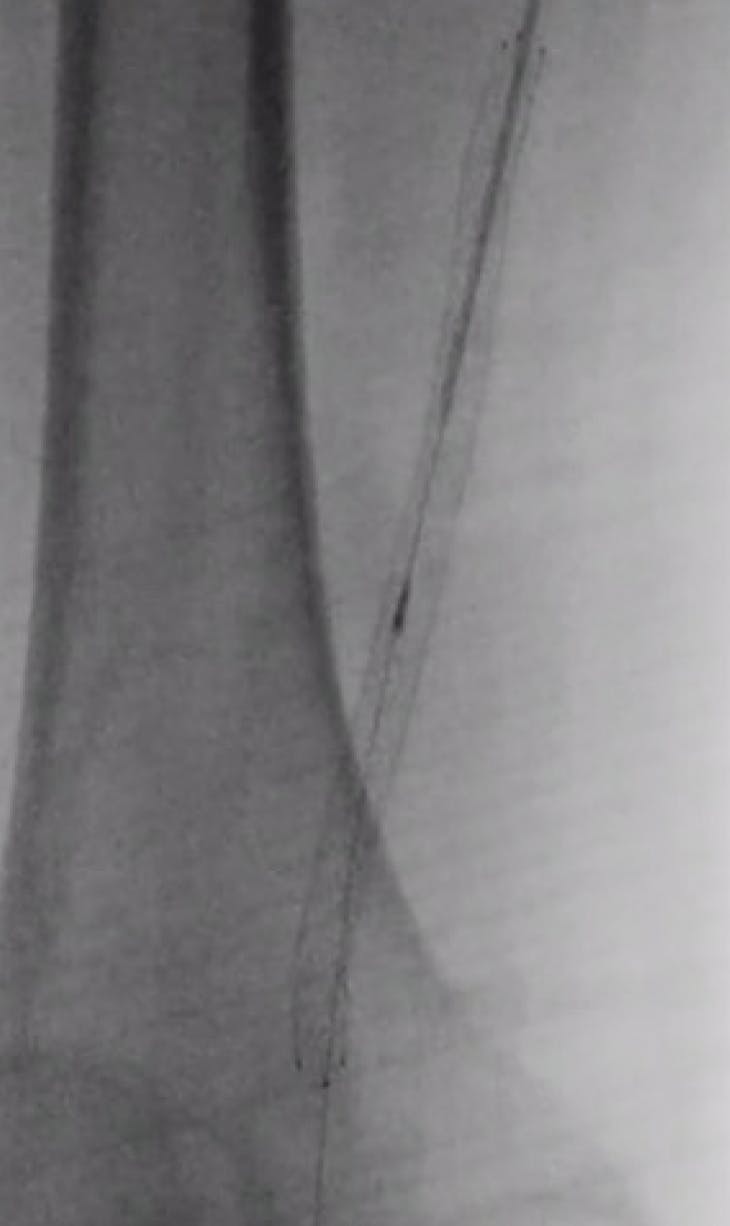
Figure 4. BioMimics 3D 6 X 150 mm after angioplasty.
Postdilatation was carried out with a 6- X 150-mm balloon. Final IVUS and angiographic evaluation demonstrated excellent stent apposition and vessel conformity (Figure 5).
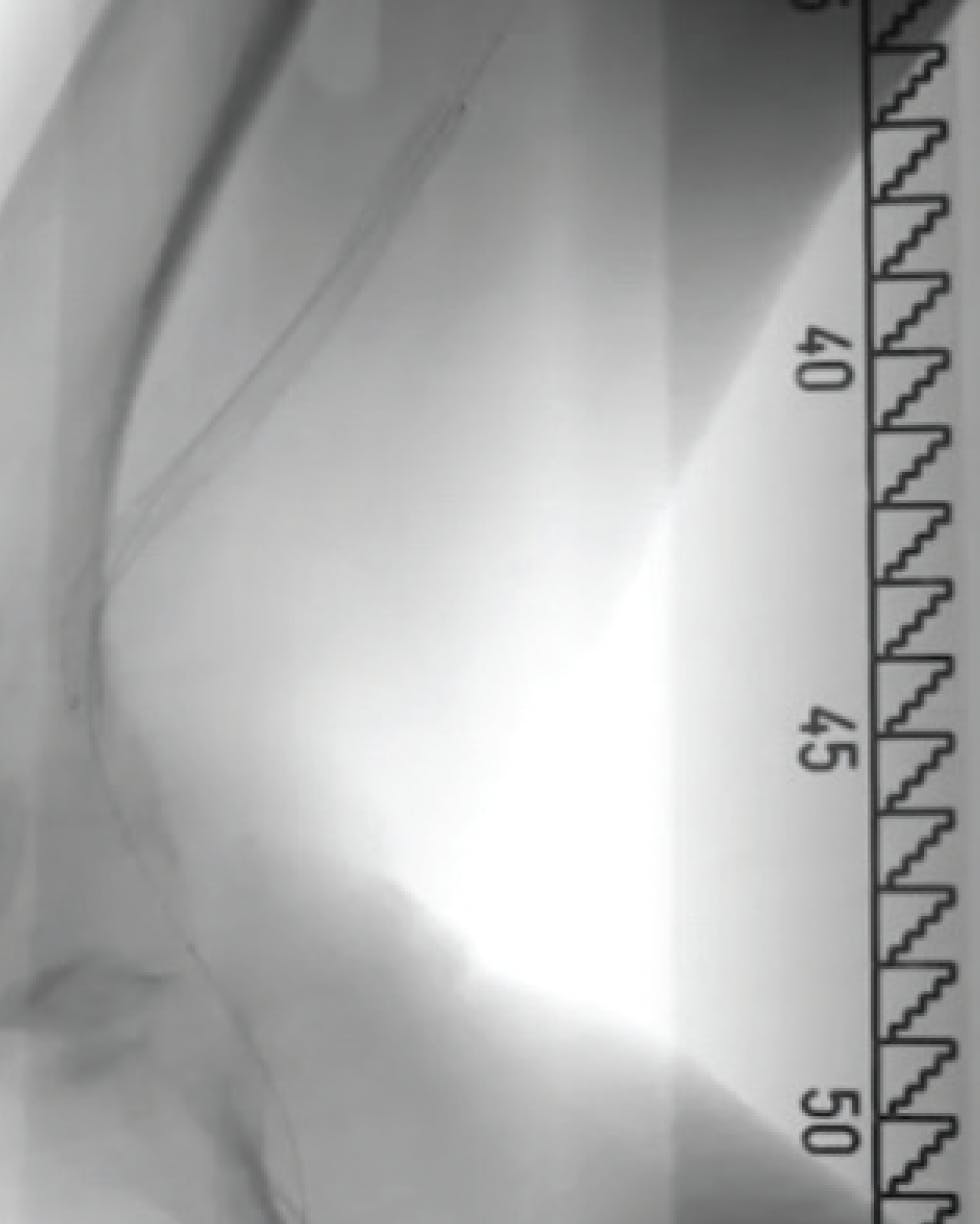
Figure 5. Final angiogram showing the BioMimics 3D stent.
1. Conte MS, Bradbury AW, Kolh P, et al. Global vascular guidelines on the management of chronic limb-threatening ischemia. Eur J Vasc Endovasc Surg. 2019;58:S1-S109.e33. doi: 10.1016/j.ejvs.2019.05.006
2. Nehler MR, Duval S, Diao L, et al. Epidemiology of peripheral arterial disease and critical limb ischemia in an insured national population. J Vasc Surg. 2014;60:686-695.e2. doi: 10.1016/j.jvs.2014.03.290
3. Aday AW, Matsushita K. Epidemiology of peripheral artery disease and polyvascular disease. Circ Res. 2021;128:1818-1832. doi: 10.1161/CIRCRESAHA.121.318535
4. Sullivan TM, Zeller T, Nakamura M, et al. Swirling flow and wall shear: evaluating the BioMimics 3D helical centerline stent for the femoropopliteal segment. Int J Vasc Med. 2018;2018:9795174. doi: 10.1155/2018/9795174
5. Giannopoulos S, Lyden SP, Bisdas T, et al. Endovascular intervention for the treatment of Trans-Atlantic Inter-Society Consensus (TASC) D femoropopliteal lesions: a systematic review and meta-analysis. Cardiovasc Revasc Med. 2021;22:52-65. doi: 10.1016/j.carrev.2020.06.014
6. Bausback Y, Wittig T, Schmidt A, et al. Drug-eluting stent versus drug-coated balloon revascularization in patients with femoropopliteal arterial disease. J Am Coll Cardiol. 2019;73:667-679. doi: 10.1016/j.jacc.2018.11.039
7. Zeller T, Nakamura M, Lichtenberg M. Limb-threatening ischemia and complex femoropopliteal lesions treated with the BioMimics 3D stent. J Crit Limb Ischem. 2024;4:E63-E77. doi: 10.25270/jcli/CLIG24-00004
8. Reijnen MPJ, van Wijck I, Zeller T, et al. Outcomes after drug-coated balloon treatment of femoropopliteal lesions in patients with critical limb ischemia: a post hoc analysis from the IN.PACT global study. J Endovasc Ther. 2019;26:305-315. doi: 10.1177/1526602819839044

Advertisement
Advertisement