Advertisement
Advertisement
September 2025
Creating a Patient-Centric Interdisciplinary Vascular Center
One center’s experience developing and expanding a multispecialty model of care.
By Mehdi H. Shishehbor, DO, MPH, PhD; Ashkan Yahyavi, MD; Nour Tashtish, MD; Jun Li, MD; Marco Costa, MD, PhD, MBA; Ravi Ramani, MD; Rachel Zbiegien, MHA; Diane Gorbey, MSN, MBA; Rebecca Kahl, MBA; Eric Hess, CPA, MBA; Vikram Kashyap, MD; Jae Cho, MD; and Heather L. Gornik, MD
Vascular disease encompasses arterial, venous, and lymphatic conditions and affects millions of Americans. Approximately 8 to 10 million people have peripheral artery disease, and nearly 1 million are diagnosed with venous thromboembolic disease in the United States every year.1,2 Additionally, vascular diseases are associated with significant morbidity and mortality, with a growing incidence and burden on the health care system worldwide.3
In its current state, vascular care is highly fragmented, delivered across various settings such as inpatient and outpatient facilities, office-based ambulatory centers, and ambulatory surgical centers. Multiple specialties, including vascular medicine, vascular surgery, interventional cardiology, and interventional radiology, provide care and perform procedures for these patients. Additionally, other health care providers such as pulmonary/critical care specialists, primary care physicians, podiatrists, wound care specialists, and cardiothoracic surgeons are involved in patient management. This complexity results in suboptimal care that is often siloed and contentious, focusing more on physician and specialty needs rather than being centered around the patient.
University Hospitals (UH) is a major health care system in northeast Ohio, comprising 23 hospitals and over 50 outpatient care centers. The UH Harrington Heart & Vascular Institute (HHVI) delivers comprehensive vascular care through 10 acute care facilities and more than 40 outpatient sites. HHVI is a multispecialty unit that includes representation and alignment with two UH academic departments—medicine and surgery—and three divisions: vascular surgery, cardiovascular medicine, and cardiothoracic surgery. Procedures are conducted in operating rooms and cardiac catheterization labs, with vascular labs performing noninvasive tests at 22 locations.
Before 2017, vascular care across the UH Health System was fragmented, relying heavily on individual physician discretion, which was often limited by geography and access. Covering emergency calls was challenging, primarily handled by the vascular surgery team, while interventional cardiologists managed their own patients. Noninvasive vascular medicine was limited to only one provider for the entire system. There was also duplication of services and waste of resources without an integrated supply chain and system-level consignment across hospitals and services. Additionally, peer review, quality improvement (QI), and educational activities were often departmentalized or inconsistent.
In late 2017, during a series of collaborative meetings, we proceeded with creating an interdisciplinary vascular center within the broader HHVI in order to harmonize the care provided to the large volume of patients with vascular disease served by the health system.
LEADERSHIP AND FINANCIAL INTEGRATION
The comprehensive vascular center we designed was led by three physician leaders (vascular surgery, vascular medicine, and interventional/endovascular cardiology) with a dedicated administrator. We then embarked on creating a profit and loss financial dashboard consistent with the vascular center and agnostic to specialty, division, or department.
Ultimately, our goal was to develop a system-wide integrated interdisciplinary vascular program that was not affected by any geographic location, department, or division. We needed to achieve this by creating interdisciplinary councils and teams to reduce the heterogeneity of care and offer team advice for complex vascular conditions.
An important aspect of our intervention was a diligent effort to create multiple interdisciplinary programs and care teams. These included the Limb Salvage Advisory Council (LSAC) for management of patients with chronic limb-threatening ischemia, pulmonary embolism response team (PERT), aortic care team (ACT), mechanical circulatory support vascular care team, and comprehensive venous care program. Each program involved multiple specialties beyond the vascular center core, including diagnostic and interventional radiology, pulmonary and critical care, cardiothoracic surgery, and others. Each program was also supported by a clinical coordinator and an administrative assistant. All programs are implemented across all 10 acute care facilities. Each program is led by a group of physicians from different disciplines. For example, PERT is led by vascular medicine, pulmonary/critical care, and interventional cardiology, while ACT leadership consists of vascular and cardiothoracic surgery.
Every individual program was designed with a protocol aimed at enhancing interdisciplinary communication and improving patient care, regardless of geographic or institutional factors. The focus was solely on centering the care around the needs of the patient and addressing those needs in the most efficient manner (Figure 1).
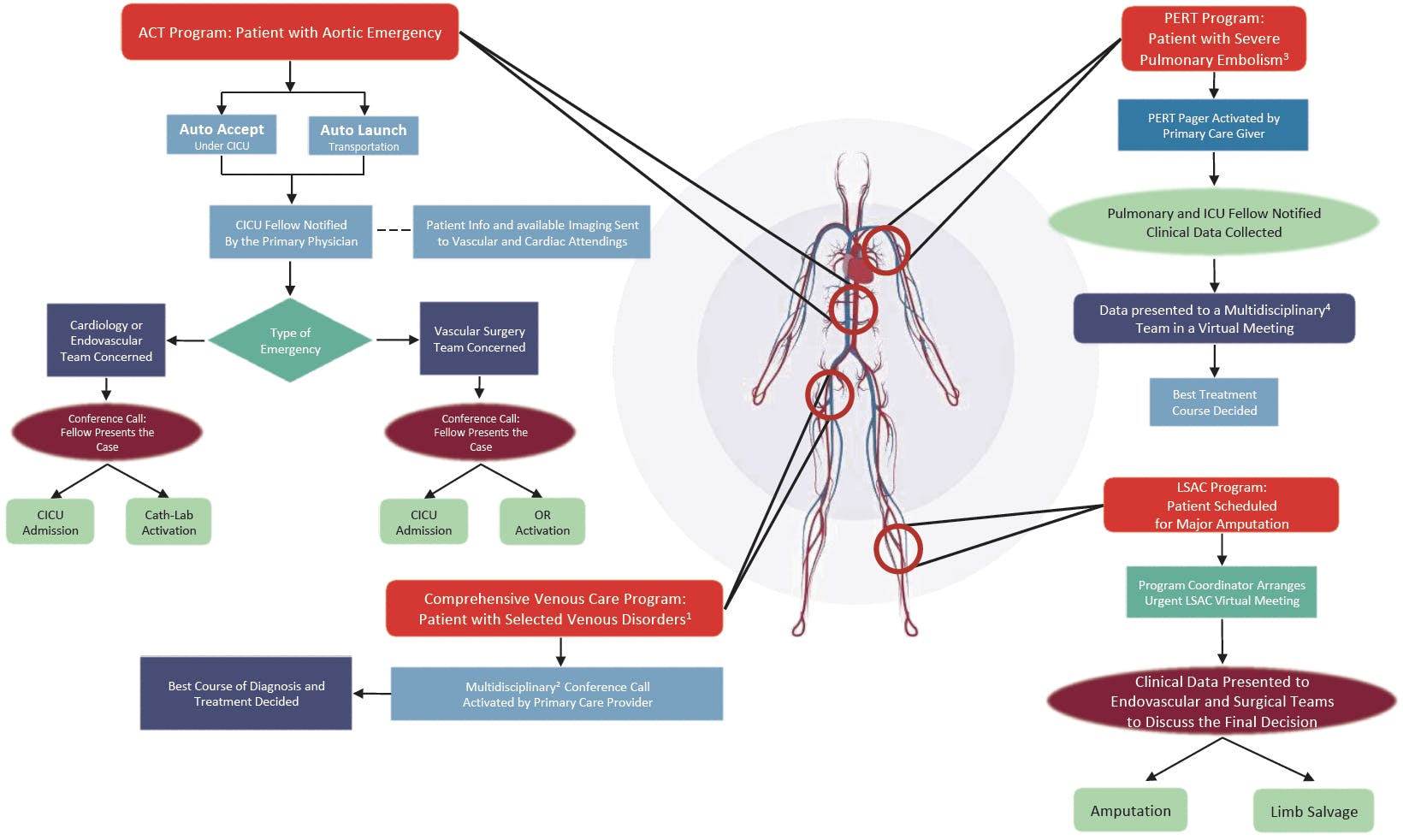
Figure 1. Programs within the vascular center. CICU, cardiac intensive care unit; ICU, intensive care unit; OR, operating room. 1Varicose veins, acute and chronic deep vein thrombosis, complex inferior vena cava (IVC) filter retrieval, IVC reconstruction, and pelvic congestion syndrome; 2Vascular surgery, cardiology, vascular medicine, and radiology; 3Hemodynamically unstable, saddle or central emboli, right ventricular strain, contraindication to anticoagulation; 4Pulmonary critical care, cardiology, vascular surgery, vascular medicine, and internal medicine.
IMPLEMENTATION OF THE ROBUST DESIGN
The design and protocols were established through transparent discussion with all stakeholders. The final decision was made by the vascular center leadership, and we set out to implement these programs across the system, aiming for a seamless integration into our health care programs. Our first strategy was to create interdisciplinary peer review and QI programs, which were supported by fractal learning principles and commitment to zero harm. In a patient-centric culture of learning from each other, all peer review, case reviews, and morbidity and mortality conferences became interdisciplinary, leaving departmental and divisional biases behind. This was achieved through QI morbidity and mortality meetings that are disease-centric and agnostic to departmental and divisional appointments. Each council and program had a separate QI and management model. For instance, the ACT mandated the auto launch transfer program as part of QI, becoming the only program in our institute where patients are automatically accepted for transfer even prior to any discussion with providers and regardless of access challenges.
We additionally recognized the importance of cross-training and expertise sharing. Implementing cross-specialty rotations for fellows in vascular surgery, interventional cardiology, and vascular medicine was a well-formulated intervention, and it was positively acknowledged by our trainees and faculty. Furthermore, the center hosts twice-weekly interdisciplinary educational conferences, fostering collaboration among all medical disciplines involved. The center has also produced numerous interdisciplinary publications. From a research standpoint, the integrated approach has facilitated coordinated recruitment for clinical trials and registries, providing community-based patient participation in research.
Our vascular center employs a unique recruitment process where all physician candidates, regardless of specialty, are interviewed by an interdisciplinary panel of vascular surgeons, interventional cardiologists, and vascular medicine specialists. This approach emphasizes transparency about the center’s culture and the value of interdisciplinary collaboration, contributing to the recruitment of a high-functioning team.
All reporting and center-related activities are managed by the interdisciplinary leadership team and supported by administrative staff. This structure has led to enhanced alignment, resulting in a fourfold increase in surgical and endovascular procedures since 2017. Financial reporting, including profit and loss statements, is centered on the overall operations and remains independent of specific departments or divisions. Additionally, discussions regarding academic promotions and operations are conducted collaboratively between the center and institute leadership, in close partnership with the chairs of the surgery and medicine departments.
OPERATIONAL CHALLENGES
Several challenges had to be overcome during this journey. Our institute had many vertical operations, including academic, community, and independent physicians and a complex network of facilities. Prompting our extensive network and facilities to revise their workflows and adopt a new system of care was challenging. We overcame this through dialogue, data sharing, and high-level engagement. Additionally, financial data were not integrated across divisions or locations; therefore, we had to create dashboards and analytics that were consistent with our new model to ensure that all stakeholders had access to the necessary data for resource allocation and strategic planning. In response to our providers’ concerns about productivity and compensation, we changed the compensation structure and aligned incentives to promote our desired goal of interdisciplinary teamwork.
ACHIEVING SUCCESS
This interdisciplinary, patient-centric vascular center has led to significant operational efficiencies. Upon the request for an outpatient visit, the patient is scheduled with the nearest qualified vascular provider, enhancing access and reducing costs.
Nearly 90% of endovascular procedures are now performed in cardiac catheterization suites by both interventional cardiologists and vascular surgeons, reducing costs, improving operating room access, and fostering interdisciplinary collaboration.
A joint call schedule has been developed across 10 acute care facilities, which has reduced the call burden for vascular surgeons and boosted team morale, especially for the interventional cardiology team. The call schedule has been regionalized into five teams; only at our quaternary academic medical center, a dedicated level 1 trauma center, do vascular surgeons alone take call every night. We have not observed any quality issues or negative outcomes related to this strategy. Occasionally, more severe vascular emergencies, such as aortic dissection or contained rupture or massive PE, will be transferred to our academic medical center.
The collaborative environment has improved clinical efficiency, with team members covering each other’s cases during emergencies, vacations, and other unanticipated events. The combined call schedule also supports system coverage for the PERT and ACT. Operationally, service integration has optimized resource and space utilization, leveraging system-wide contracts for supplies and equipment. Consolidation of noninvasive vascular labs under one accreditation application has enhanced testing quality, standardized protocols, and improved credentialing for technologists and physicians.
The LSAC program features a unique approach that requires all caregivers across the system to do a mandatory limb salvage consult through LSAC before they can plan for any major amputation. We have previously shown that this exceptional framework has resulted in significant improvement of limb outcomes with a 75% reduction in major amputations across the health system.4
Similar to numerous other clinical systems that have adopted the PERT program, our center has seen significant reductions in mortality, bleeding, and readmission rates.5 This demonstrates the program’s effectiveness in improving patient outcomes and enhancing the overall quality of care. Since its inception, the PERT program at our center is approaching 2,000 total activations, and it has generated a vast and robust data set that is currently fueling extensive research efforts to further refine and optimize PE care.
Finally, an analysis of the data on the volume of procedures performed since the inception of the comprehensive vascular center reveals a consistent and significant increase. This trend underscores the critical role of a collaborative environment in enhancing productivity and efficiency. Additionally, there has been a notable rise in the number of patients treated for various vascular diseases, reflecting the center’s expanding reach and impact. The detailed statistics on the volume of procedures and the number of patients with different vascular diagnoses from 2017 to 2023 are illustrated in Figure 2 and Figure 3 and highlight the center’s success in addressing the growing demand for vascular care and its ability to deliver high-quality, patient-centered services across the health system.
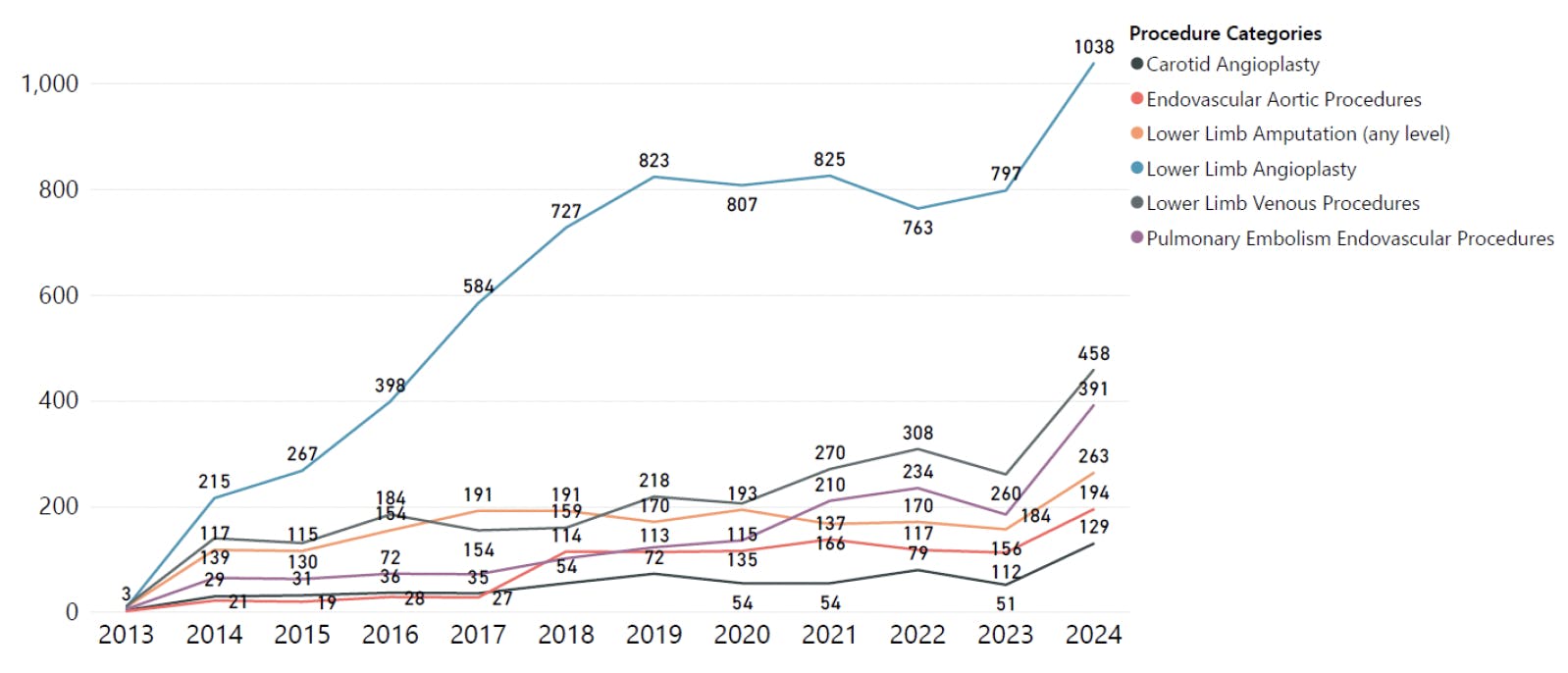
Figure 2. Annual volume of various vascular procedures at UH Health System.
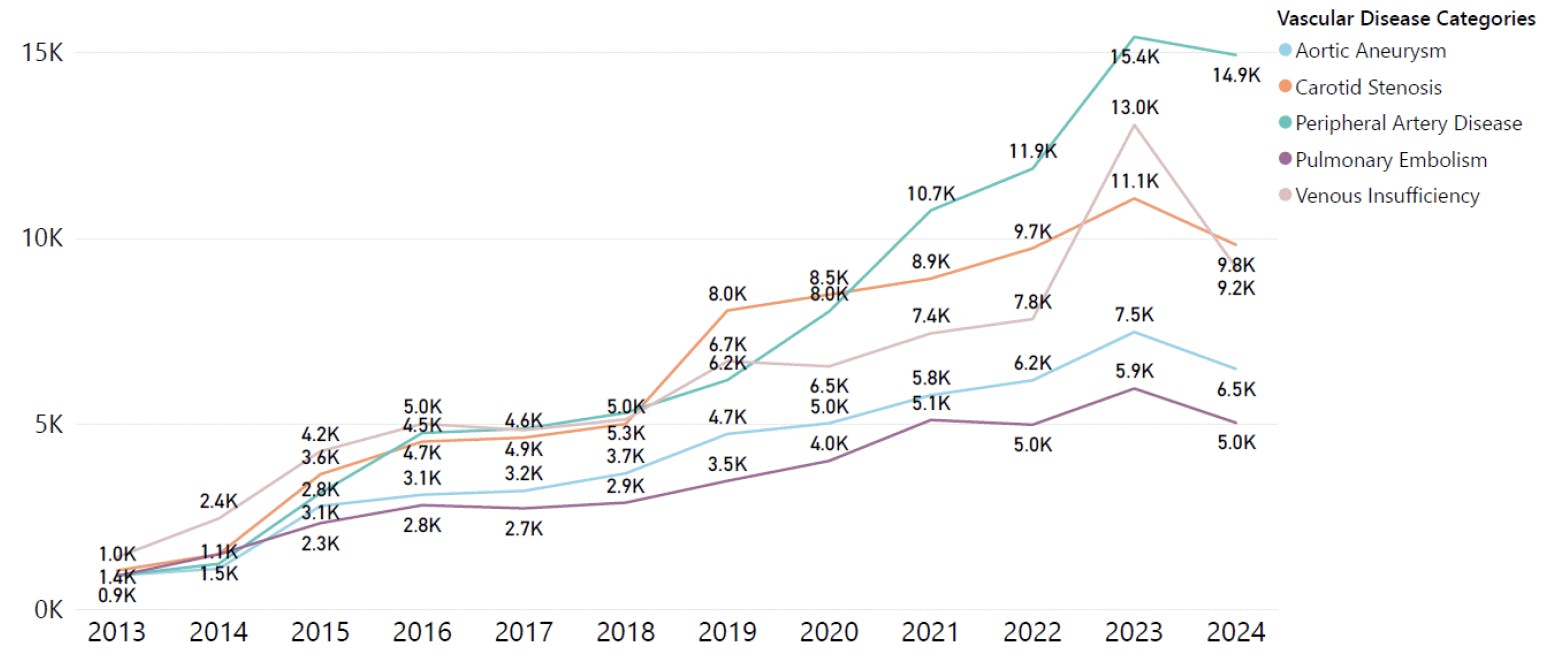
Figure 3. Annual number of patients treated for various vascular diseases at UH Health System.
TRANSLATION OF THE FRAMEWORK TO OTHER CLINICAL SETTINGS
Beyond the common vascular disorders, the vascular center model has allowed interdisciplinary partnerships in the care of patients with rare vascular disease as well, including a national referral center for fibromuscular dysplasia and arterial dissection and a newly developed program for the care of patients with median arcuate ligament compression syndrome.
The successful experience of our vascular center shows that interdisciplinary collaboration can serve as a model for other medical disciplines that manage complex diseases. By implementing a patient-centric approach and integrating various specialties, we have achieved significant operational efficiencies, improved clinical outcomes, and enhanced team confidence. This model can be adapted to other fields, encouraging a holistic and coordinated approach to patient care capable of transforming the way complex diseases are managed.
SUMMARY OF THE ACHIEVEMENTS, FUTURE GOALS, AND CHALLENGES
A patient-centric approach may be the most ideal care model for value-based vascular care. We have shown that this model enhanced patient care, increased patient and physician satisfaction, boosted our recruitment, and ultimately resulted in best quality outcomes within our integrated vascular center.
There are still numerous gender, racial, and geographic disparities in vascular care, and we believe our model reduces the heterogeneity of care, allowing a second opinion prior to major treatment decisions that have lasting morbidity and mortality implications.
Despite our significant progress in QI and value-driven care, many opportunities for growth remain. We are committed to continuing our focus on programmatic expansion and ensuring timely access for patients with vascular disease in our community. Additionally, we will continue to educate leaders and providers within our health care system and the broader community about our multispecialty model of care.
1. Aday AW, Matsushita K. Epidemiology of peripheral artery disease and polyvascular disease. Circ Res. 2021;128:1818-1832. doi: 10.1161/CIRCRESAHA.121.318535
2. Centers for Disease Control and Prevention. Data and statistics on venous thromboembolism. Accessed July 31, 2025. https://www.cdc.gov/blood-clots/data-research/facts-stats/index.html
3. GBD 2021 Diseases and Injuries Collaborators; Ferrari AJ, Santomauro DF, Aali A, et al. Global incidence, prevalence, years lived with disability (YLDs), disability-adjusted life-years (DALYs), and healthy life expectancy (HALE) for 371 diseases and injuries in 204 countries and territories and 811 subnational locations, 1990–2021: a systematic analysis for the Global Burden of Disease Study 2021. Lancet. 2024;403:2133-2161. doi: 10.1016/S0140-6736(24)00757-8
4. Shishehbor MH, Hammad TA, Rhone TJ, et al. Impact of interdisciplinary system-wide limb salvage advisory council on lower extremity major amputation. Circ Cardiovasc Interv. 2022;15:e011306. doi: 10.1161/CIRCINTERVENTIONS.121.011306
5. Parikh M, Chahine NM, Hammad TA, et al. Predictors and potential advantages of PERT and advanced therapy use in acute pulmonary embolism. Catheter Cardiovasc Interv. 2021;97:1430-1437. doi: 10.1002/ccd.29697
Advertisement
Advertisement