Advertisement
Advertisement
September 2025
Sponsored by Penumbra, Inc.
The Versatility of Lightning Bolt™ 7 Across Arterial Indications
Expert experience with the Lightning Bolt™ 7 in real-world practice.
With Rafael Trunfio, MD; Aurore Roesti, MD; Maciej Mazgaj, MD; Krystian Szczachor, MD; Piotr Jaworski, MD; Marek Chrapko, MD; Luca Bertoglio, MD; Martina Cambiaghi, MD; Francesco Colamaria, MD; Stefano Bonardelli, MD; Santi Trimarchi, MD; and Chiara Lomazzi, MD
From Penumbra’s first aspiration systems to today’s computer-assisted technologies, the evolution of thrombectomy continues to accelerate. With the introduction of Lightning Bolt™ 7 (Penumbra, Inc.), Penumbra has redefined arterial thrombus management—combining intelligent clot detection, modulated aspiration with Bolt Mode, and a flexible catheter system designed to navigate into complex anatomies, treating multilevel occlusions. Lightning Bolt uses modulation to fatigue the fibers of the clot, enabling faster clot removal with less blood loss and often reducing the need for lytics. This next-generation platform doesn’t just enhance outcomes in acute limb ischemia—it offers a versatile solution for a wide range of arterial indications, from renal and mesenteric emboli to challenging tibial occlusions, shaping the future of arterial thrombus removal.
Case Study 1: Acute Limb Ischemia Managed with Lightning Bolt 7


PATIENT PRESENTATION
A man in his late 60s presented to the hospital with acute Rutherford class I ischemia of the right lower limb due to thrombosis of the popliteal artery and the proximal segment of the right popliteal-tibial-peroneal stent (Figure 1). A few months prior, the patient underwent thromboaspiration of the popliteal artery and below with the AngioJet thrombectomy system (Boston Scientific Corporation). Additionally, percutaneous transluminal angioplasty and stenting of the tibiofibular trunk and distal popliteal artery was performed with two Pulsar stents (Biotronik) due to distal popliteal embolization. The patient had a history of moderate chronic kidney disease (G2A2); ischemic heart disease, including an inferior ST-segment elevation myocardial infarction and several angioplasties; and hypertension.

Figure 1. Initial angiogram showing occlusion of the popliteal artery.
To treat the current thrombus burden in the right lower limb, the decision was made to pursue computer-assisted vacuum thrombectomy (CAVT™) with Lightning Bolt 7.
INTERVENTION
Lightning Bolt 7 was used to aspirate thrombus in the right popliteal artery and right popliteal stent via a left femoral artery percutaneous approach. When engaged in thrombus, modulated aspiration with Bolt Mode was initiated. The catheter was manipulated in and out of the occlusion, ingesting the clot burden in segments—a very effective and quick technique (Figure 2). Subsequently, balloon angioplasty was performed (Figure 3). Upon completion of thrombectomy, there was a resolution of thrombus burden and improvement in patient symptoms and distal perfusion (Figure 4). Vascular checks were markedly improved, with peripheral blood flow detected by Doppler ultrasound.
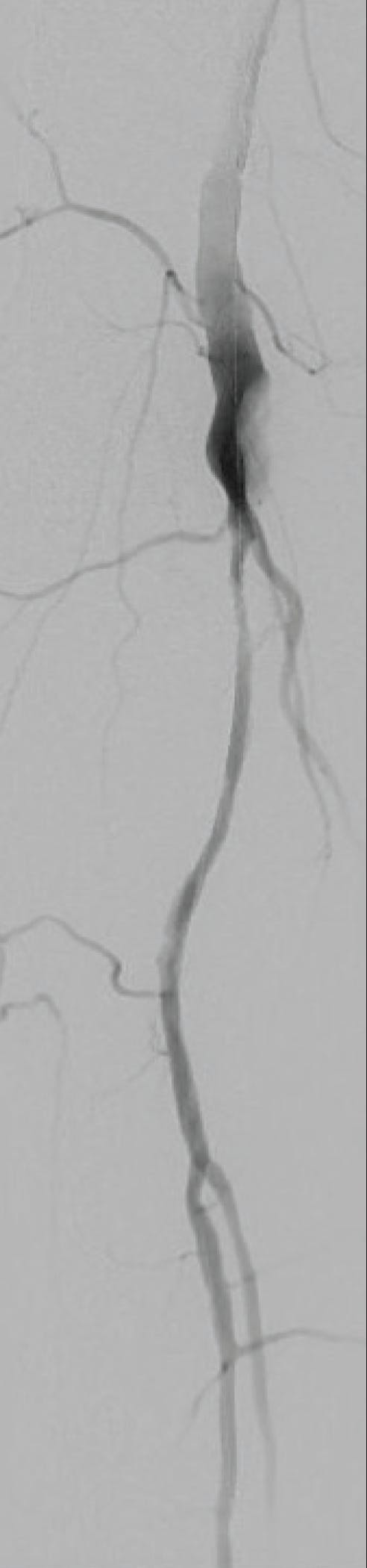
Figure 2. Post-thrombectomy angiogram.

Figure 3. Angiogram post balloon angioplasty.

Figure 4. Final angiogram showing distal perfusion.
RESULTS
At 2 days postprocedure, the patient underwent an angiographic assessment that showed good results, with plethysmography improved from an initial reading of 40 mm Hg on the right side at presentation to 100 mm Hg postprocedure, and a toe-brachial index of 0.78 with femoropopliteal leg axes traversed by triphasic flow on both sides. The patient no longer reported rest pain. Lightning Bolt 7 was an effective treatment option for this patient and shows promise for acute limb ischemia patients.
Case Study 2: SMA Occlusion Treated with Lightning Bolt 7 System

PATIENT PRESENTATION
A woman in her mid 40s who underwent surgery in our center due to a long-segment chronic occlusion of the superior mesenteric artery (SMA) and the celiac trunk presented with typical symptoms of abdominal angina. An endovascular revascularization of the SMA was performed with the implantation of two stents. The procedure was successful, and the clinical symptoms of visceral ischemia resolved.
Four months later, the patient came to the emergency department due to recurrence of abdominal pain. According to her history, the pain had started suddenly a few days prior. After discharge from the previous hospitalization, the patient had not been taking antiplatelet medication. An abdominal CT scan revealed occlusion of the SMA stents and signs of small bowel ischemia with partial intestinal obstruction (Figure 1).

Figure 1. CT scan showing occluded stents in the initial segment of the SMA.
TREATMENT OPTIONS
Available therapeutic options included surgical revascularization of the mesenteric vessels via bypass grafting to the occluded SMA segment or another endovascular intervention. Due to the complexity of the case and the risk of the surgical options, we decided on a minimally invasive endovascular approach consisting of thromboaspiration from the SMA stents.
The short history of symptoms suggested that the SMA was occluded by a fresh thrombus. On the one hand, this increased the likelihood of successful thromboaspiration; on the other, it posed a risk of distal embolization into the peripheral SMA branches, which could worsen the patient’s condition. Additionally, the use of large-lumen aspiration catheters carries a risk of significant blood loss.
PROCEDURAL DETAILS
To mitigate risks of embolization from thrombus fragmentation and blood loss during aspiration, we opted to use the Lightning Bolt 7 system—a computer-assisted vacuum thrombectomy system (Figure 2). CAVT clot detection reduces the risk of high blood loss, and its advanced design allows the device to adjust both fresh and organized thrombus through either continuous aspiration or modulation.
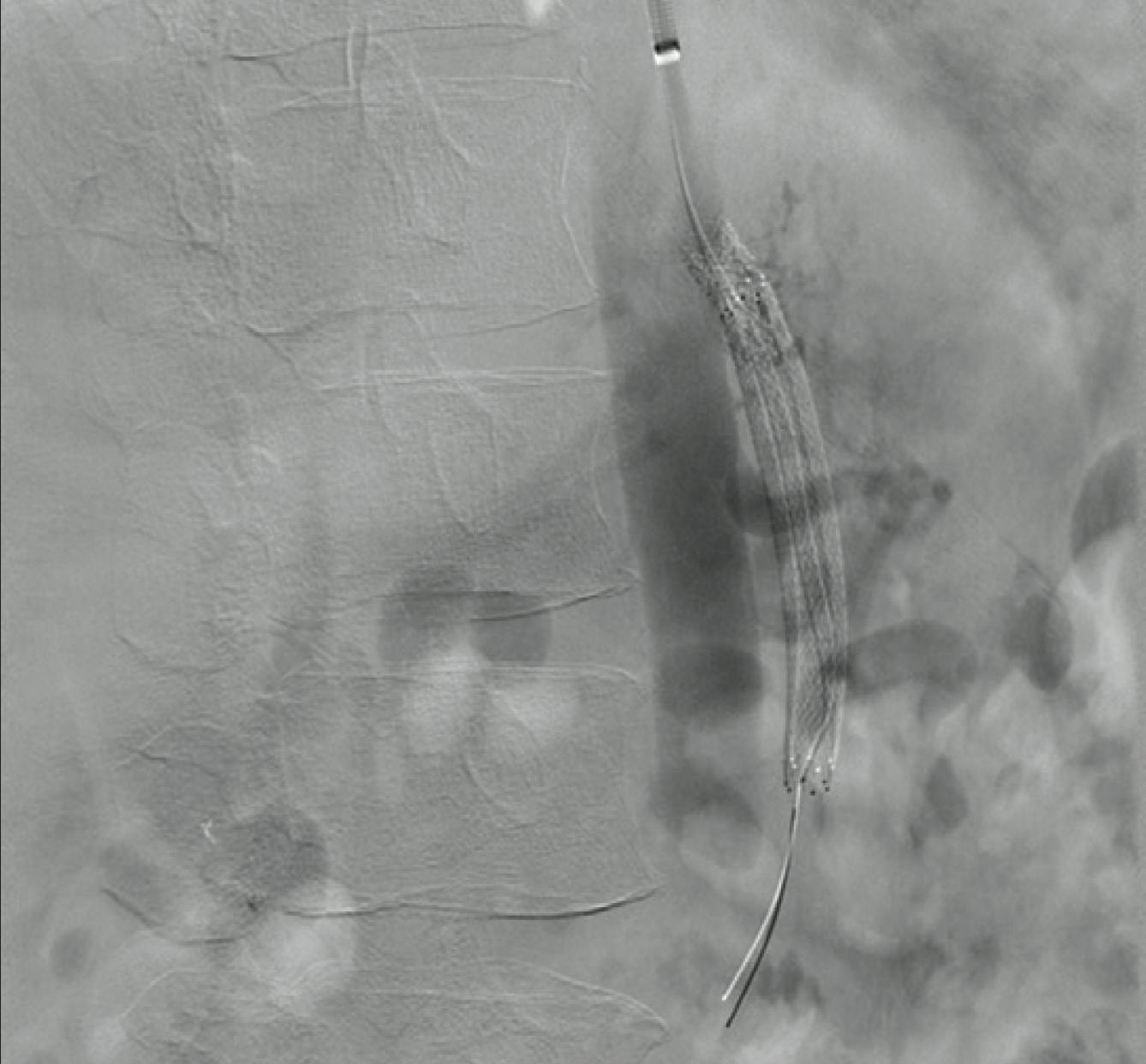
Figure 2. Digital subtraction angiography (DSA) confirming occlusion of stents in the SMA before use of the Lightning Bolt 7 system.
The chosen procedure—thromboaspiration—was successful in restoring SMA patency, and the patient’s abdominal symptoms resolved completely (Figure 3).

Figure 3. Follow-up CT scan after surgery with patent stents in the SMA.
RESULTS
Thromboaspiration and balloon angioplasty successfully restored blood flow through the SMA. Complete thrombus removal was achieved within 3 minutes of aspiration, with total blood loss estimated below 50 mL (Figure 4 and Figure 5). The postoperative course was uneventful, and the patient was discharged home symptom-free 2 days after the procedure.

Figure 4. Intraoperative DSA showing that stents in the SMA were patent.

Figure 5. Thrombus removed from the SMA with the Lightning Bolt 7 catheter.
DISCUSSION
The Penumbra Lightning Bolt 7 aspiration catheter is compatible with a 7-F vascular sheath, allowing flexibility in choosing the vascular access site (the brachial artery was used in this case). The catheter employs variable vacuum pressures to effectively ingest thrombus material without the need for additional mechanical devices. The pressure and flow sensors minimize aspiration of blood from patent vessel segments. Its angled tip enables efficient thrombus aspiration even from vessels with a diameter larger than that of the catheter itself.
The chosen treatment proved effective in managing acute thrombotic occlusion involving a several-centimeter segment of the SMA. The device allowed the procedure to be performed urgently, without requiring special patient preparation. Due to its built-in blood flow control mechanism, the catheter can be safely used in anemic patients, as it significantly reduces blood loss during thromboaspiration.
Case Study 3: Renal Salvage After Late Endovascular Revascularization


With contributions from Francesco Colamaria, MD, and Stefano Bonardelli, MD.
Endovascular revascularization of the renal artery aims to prevent irreversible ischemic damage and is ideally performed within 6 hours of vessel thrombosis.1-3 However, the precise duration of renal parenchymal tolerance to ischemia remains uncertain. Although delayed revascularization is often perceived to offer limited benefit, emerging evidence suggests that renal function may, in selected cases, be salvaged even after prolonged ischemia.4-5
PATIENT PRESENTATION
A man in his mid 70s with multiple atherosclerotic risk factors and a history of pararenal aortic aneurysm repair 6 years earlier presented with a 1-day history of left flank pain. The prior repair consisted of an aortobisiliac bypass and surgical debranching of the left renal artery using a Gore® hybrid vascular graft (Gore & Associates) (Figure 1).

Figure 1. Preoperative multiplanar reconstruction of the pararenal aortic aneurysm (A). Postoperative 3D reconstruction showing the aortobisiliac bypass and surgical debranching of the left renal artery using a Gore® hybrid vascular graft (B).
Laboratory tests revealed acute kidney injury (KDIGO [Kidney Disease Improving Global Outcomes] stage 1) with a serum creatinine of 1.9 mg/dL and an estimated glomerular filtration rate of 38 mL/min/1.73 m2 (Cockcroft–Gault formula). CTA demonstrated complete thrombosis of the left aortorenal bypass, with no arterial phase enhancement but preserved collateral-supported perfusion on the venous phase (Figure 2).
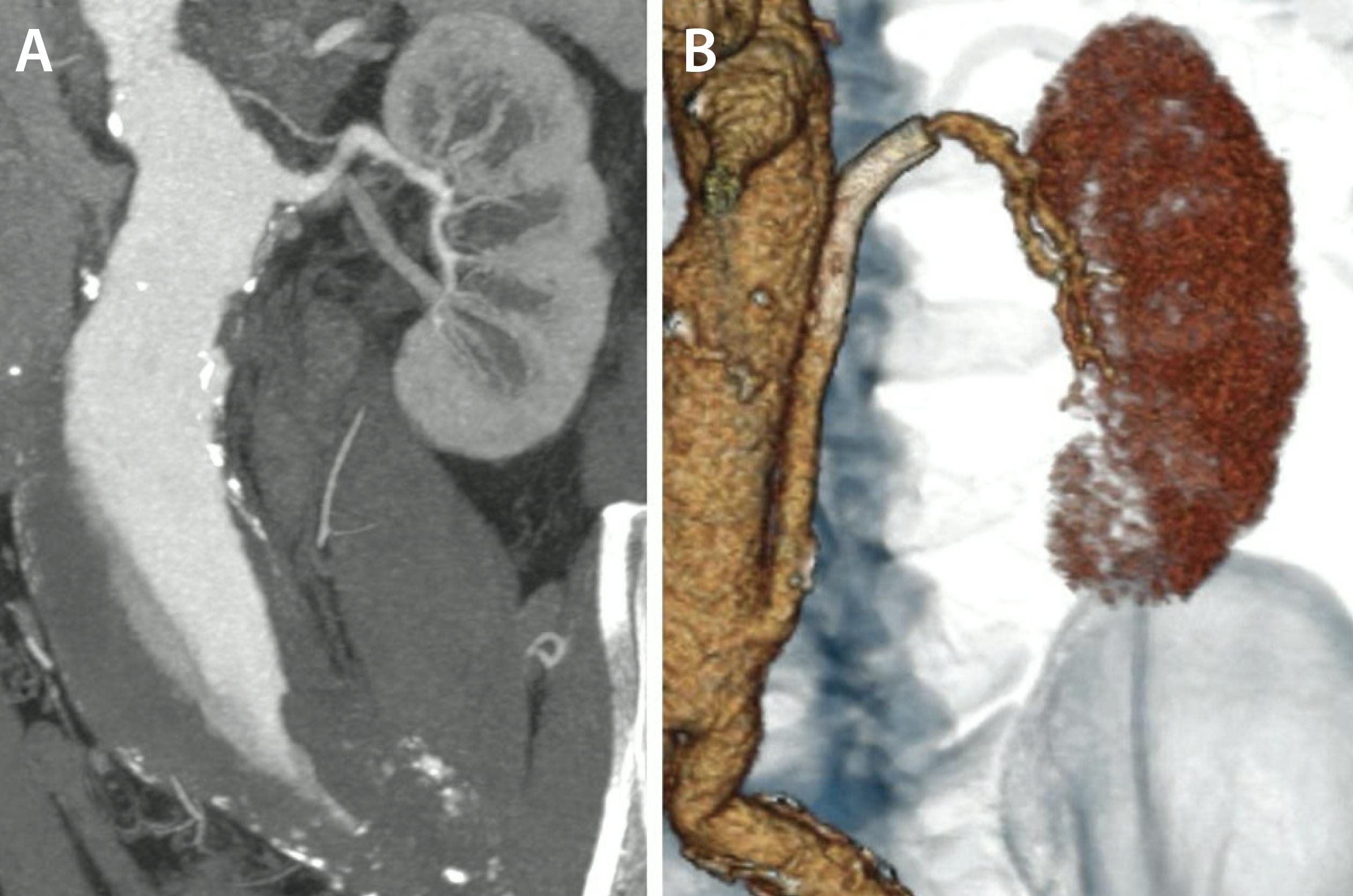
Figure 2. Arterial (A) and venous (B) phases of contrast-enhanced CTA demonstrating thrombosis of the left aortorenal bypass with preserved enhancement during the venous phase.
TREATMENT OPTIONS
Given the kidney’s vulnerability to ischemia and an estimated 24-hour delay since symptom onset, revascularization options were carefully evaluated. Despite the prolonged ischemia, the presence of residual perfusion supported an attempt at endovascular salvage.
PROCEDURAL DETAILS
The procedure was performed under local anesthesia in a fully equipped hybrid operating room using fusion imaging guidance. Transfemoral selective catheterization and navigation of the upward-coursing, thrombosed aortorenal bypass was performed using a 7-F Penumbra Lightning Bolt catheter. CAVT with modulated aspiration restored flow through the bypass into the distal renal artery. Two stenotic lesions were identified on intraoperative angiography: one at the proximal aortograft anastomosis and another at the distal graft-to-native renal artery junction, which were treated concomitantly with a covered balloon-expandable stent and a covered self-expanding stent, respectively. Adjunctive local thrombolysis was performed with an intravascular bolus of 100,000 IU of urokinase, accompanied by temporary endoclamping of the bypass. Completion angiography confirmed successful revascularization of both the bypass and the target renal artery, with no residual stenosis and preserved renal parenchymal perfusion (Figure 3).

Figure 3. Completion angiography demonstrating patency of the left aortorenal bypass and distal renal artery, with preserved perfusion of the renal parenchyma.
RESULTS
The postoperative course was uneventful, with no need for temporary dialysis. Renal function improved promptly, and serum creatinine normalized. The patient was discharged on postoperative day 3 on dual antiplatelet therapy.
DISCUSSION
Although acute renal artery occlusion typically demands immediate intervention, this case challenges the conventional revascularization time window. It demonstrates that even after approximately 24 hours of presumed ischemia, renal function can be successfully salvaged through a carefully executed endovascular approach.
1. Anderson JL, Halperin JL, Albert NM, et al. Management of patients with peripheral artery disease (compilation of 2005 and 2011 ACCF/AHA guideline recommendations). Circulation. 2013;127:1425-1443. doi: 10.1161/CIR.0b013e31828b82aa
2. Bhalla V, Textor SC, Beckman JA, et al. Revascularization for renovascular disease: a scientific statement from the American Heart Association. Hypertension. 2022;79.e128-e143. doi: 10.1161/HYP.0000000000000217
3. Khwaja A. KDIGO clinical practice guidelines for acute kidney injury. Nephron Clin Pract. 2012;120:c179-184. doi: 10.1159/000339789
4. Heidemann F, Kölbel T, Debus ES, et al. Renal function salvage after delayed endovascular revascularization of acute renal artery occlusion in patients with fenestrated-branched endovascular aneurysm repair or visceral debranching. J Endovasc Ther. 2018;25:466-473. doi: 10.1177/1526602818783506
5. Konstantinou N, Kölbel T, Dias N V, et al. Revascularization of occluded renal artery stent grafts after complex endovascular aortic repair and its impact on renal function. J Vasc Surg. 2021;73:1566-1572. doi: 10.1016/j.jvs.2020.09.036
Case Study 4: In-Stent Graft Thrombosis of the Popliteal Artery With Lightning Bolt 7


PATIENT PRESENTATION
A man in his early 70s was admitted to the emergency department with right leg pain, pallor, and cold foot at the physical examination. The patient stated he had been kneeling for a long time during the days prior to presentation. The patient had a history of hypertension, hyperlipidemia, and tobacco use, and he had a history of right popliteal aneurysms that were treated with Viabahn 8- X 100-mm and 7- X 150-mm stent grafts (Gore & Associates) in 2018. A duplex ultrasound and CT scan showed occlusion of the popliteal right stent graft and anterior tibial artery, as well as a poor runoff on the distal posterior tibial artery.
TREATMENT OPTIONS
Due to the ischemic symptoms, anticoagulation was not considered an option. Therefore, it was decided that a Fogarty catheter thrombectomy under fluoroscopic guidance would be used for the procedure to allow selective access to the distal tibial vessels. After multiple failed clot extraction attempts with the Fogarty, CAVT was performed with Lightning Bolt 7 as a bailout procedure, which resulted in a successful and effective outcome.
PROCEDURAL DETAILS
A right surgical, proximal, superficial femoral artery access was performed. A subsequent angiography through a 8-F sheath showed in-stent occlusion above the knee (Figure 1A). Initially, an over-the-wire Fogarty Thru-Lumen Embolectomy catheter (4- and 5-F) (Edward Lifesciences) was used. After that, a 0.018-inch guidewire was advanced through the occlusion (Figure 1B). After multiple attempts without thrombus extraction (Figure 1C), and angiography that showed no progress on thrombus burden, Lightning Bolt 7 was advanced into the stent graft (Figure 2A), starting aspiration proximal to the clot with restoration of lumen patency. After three passes through the stent, there was the reappearance of tibioperoneal trunk and anterior tibial artery, without signs of peripheral embolization (Figure 2B). The procedure was completed using proximal stent deployment on superficial femoral artery stenosis (8 X 79 mm Omnilink [Abbott]) and a kissing balloon angioplasty of the posterior tibial artery and peroneal artery (2.5 and 3 X 40 mm).

Figure 1. Angiograms showing occlusion of the right popliteal stent graft (A) and thrombectomy with an over-the-wire Fogarty catheter (B) without thrombus extraction (C).

Figure 2. The Lightning Bolt 7-F catheter was advanced proximal to the thrombus (A) and lumen restoration was successful (B).
RESULTS
The patient was discharged on the postoperative day 2. Duplex ultrasound showed triphasic tibial artery waves in the right lower leg.
DISCUSSION
Lightning Bolt 7 catheter was shown to be successful on thrombus burden compared to traditional embolectomy. It was associated with a low risk of peripheral embolization due to the powerful, rapid modulated aspiration system. The device demonstrated safety and effectiveness of clot removal, with limited blood loss and fast recovery for the patient.
Prof. Bertoglio and Drs. Trunfio, Mazgaj, and Lomazzi were compensated in association with this article.
Disclaimer: The opinions and clinical experiences presented herein are for informational purposes only. The results may not be predictive of all patients. Individual results may vary depending on a variety of patient-specific attributes and other factors.
Advertisement
Advertisement