Advertisement
Advertisement
January 2026 Supplement
Sponsored by Inquis Medical, Inc.
Proven Performance and Clinical Data That Move the Field Forward: Key Insights From the AVENTUS Trial
A Q&A with the National Principal Investigators regarding the design of the AVENTUS Trial, key outcomes and results, and unique features of the AVENTUS® Thrombectomy System.

Tell us more about the design of the AVENTUS Trial.
Dr. Li: The AVENTUS Trial was a pivotal Investigational Device Exemption (IDE) trial of 130 patients with acute intermediate-risk pulmonary embolism (PE) treated with the AVENTUS® Thrombectomy System. The intent-to-treat cohort included 120 patients, and 10 were treated as roll-in patients. Those procedures were performed by 49 unique operators at 22 United States sites. The trial’s primary endpoints included a safety endpoint of device-related major adverse events (MAEs) within 48 hours and an efficacy endpoint of change in right ventricular/left ventricular (RV/LV) ratio at 48 hours.
What stood out to you regarding the enrollment of the AVENTUS Trial?
Dr. Li: To me, it is that we had a low number of roll-in patients and high number of unique operators, which demonstrated a low learning curve for the AVENTUS System. For these physicians, it was the first time they used the device, and the procedures went smoothly across the board. My experience is that this is due to the unique features of the AVENTUS Thrombectomy System that simplify PE treatment.
Dr. Sabri: The baseline features of the patients stood out to me, as they indicated more of a high-intermediate–risk PE population. Most patients had increases in cardiac biomarkers and a high Bova score, which together indicated high-intermediate–risk PE. The trial also had strong diversity of operator specialty, geographic location, and hospital size. Taken together, these points demonstrate that the AVENTUS System has broad real-world applicability and can be adopted across diverse users and hospital settings.
What do the 10 roll-in patients say about the device?
Dr. Sabri: It speaks to the ease of use of the device. Trial protocol allowed for up to 50 roll-in patients so the operator could gain experience with the device, but only 10 were utilized. I started with a roll-in patient, and in retrospect that patient could have been part of the IDE trial. We really didn’t need extra hands-on experience to be successful. This was experienced across the board, by interventional cardiologists, interventional radiologists, and vascular surgeons. So, regardless of the realm of practice you’re in, all of us found it to be very intuitive.
What were the primary efficacy and safety results of the trial?
Dr. Li: Excitingly, the primary efficacy endpoint was met, with a mean reduction in RV/LV ratio of 0.47 from baseline to 48 hours postprocedure (Figure 1). The primary safety endpoint was met with zero device-related MAEs reported within 48 hours, far better than the performance goal of 25%. We were also able to achieve rapid clot removal, simple blood reinfusion, minimal blood loss, and short recovery times.
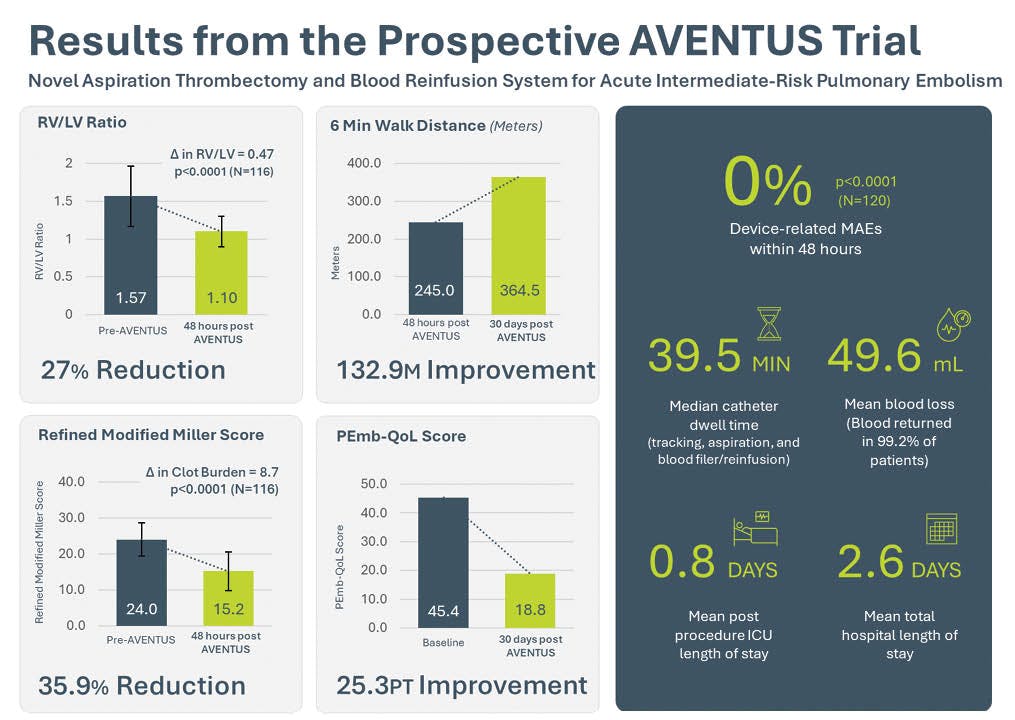
Figure 1. Results from the prospective AVENTUS Trial published in the Journal of the Society for Cardiovascular Angiography & Interventions (JSCAI) (April 2025).
What stood out to you in the secondary endpoints that were studied?
Dr. Sabri: The first data point is the clot burden reduction with a modified Miller Score decrease of 35.9%, which is one of the highest recorded in IDE trials (Figure 1). That is exciting, as it demonstrates the efficiency of clot removal with this device. The other interesting data point was the low reported intensive care unit (ICU) length of stay of 0.8 days and short total hospital length of stay of 2.7 days (Figure 2). Finally, and possibly the most compelling was the improvement in patients’ functional outcomes at 30 days postprocedure compared to 48 hours postprocedure. This is the first IDE trial to show improvements in patient quality of life and a 6-minute walk test (Figure 3). These are significant findings, and it’s refreshing to see an IDE trial go beyond typical efficacy and safety measures.
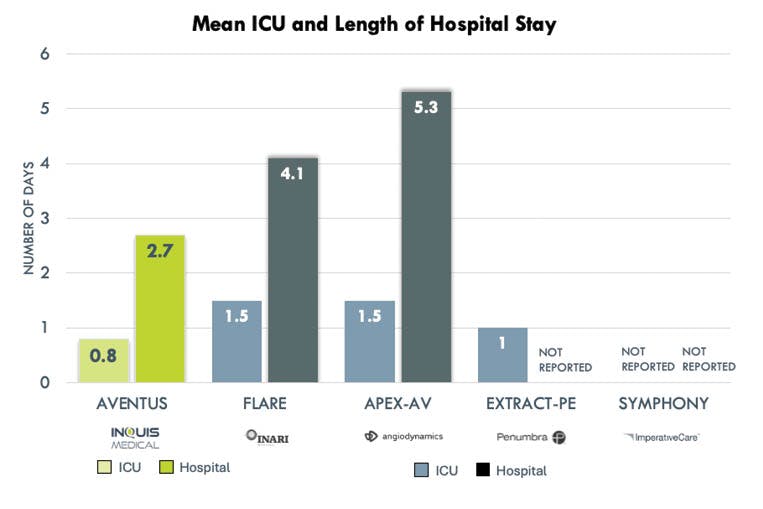
Figure 2. All IDE Trial reported ICU and total length of hospital stay.
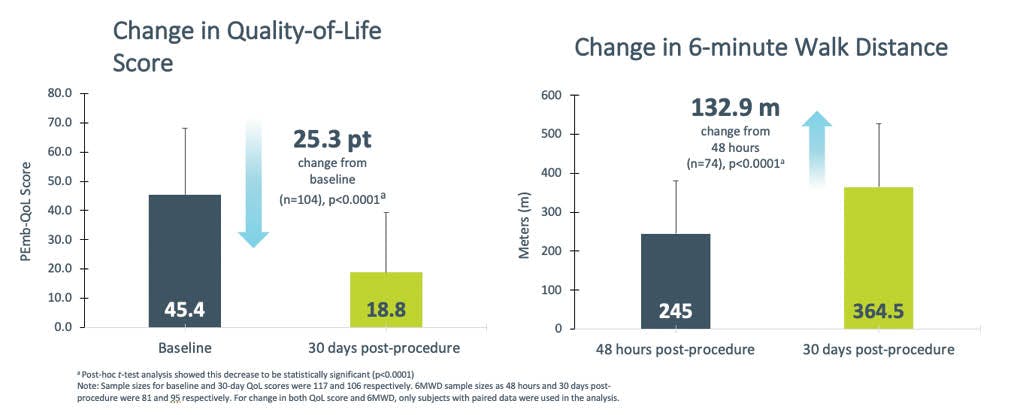
Figure 3. Quality of life and functional status at 30 days.
What is the relevance of the data reporting short length of hospital stay after using AVENTUS?
Dr. Li: We are all struggling with access and bed availability in our health care systems. If there are technologies that can shorten the length of hospital stay, that will allow us to treat more patients and prioritize those waiting in the emergency departments. Most emergency departments in the United States are backed up, which has been documented recently in the press and attributed to a lack of available beds. So, it’s great that the AVENTUS Trial demonstrated a short ICU stay for patients treated with the AVENTUS System.
What was your experience like with the AVENTUS Thrombectomy System, and what makes it unique?
Dr. Li: The AVENTUS Thrombectomy System improves upon current mechanical thrombectomy systems, which have deficiencies in navigation between the right and left pulmonary arteries (PAs), prolonged procedure times, and blood loss. The AVENTUS System has an integrated navigation catheter that allows you to access the right and left PAs very quickly. The aspiration catheter is designed with an integrated dilator and atraumatic tip, which allows you to navigate without separate dilator exchanges, saving time and making catheter placement efficient and safe. Furthermore, because of the directional aspiration design, you can orient the catheter in different directions to aspirate clot with precision. Lastly, because the in-line blood filtration and return system is localized at the patient bed, it eliminates a lot of the back-and-forth handling of blood that you see with other systems, which often involves multiple techs and slows the procedure down. With the AVENTUS System, you can quickly aspirate, filter the blood, and return it to the patient all on the bed right in front of you. This essentially allows us to perform a bloodless thrombectomy where almost no blood is lost during the procedure.
Dr. Sabri: I found the directional aspiration to be very useful, as you don’t need to wire every branch to extract clot. For example, for clot in the truncus, you can park the AVENTUS Aspiration Catheter at the mouth of the branch and aspirate from the main right PA branch, improving procedural efficiency. From my experience, this may explain why we were able to achieve such great clot burden reduction in the trial. Finally, my team members were very happy with the blood return system. The patient table and back table were very clean, and the system made it easier to return the patients’ blood. In the trial, blood loss was minimal, and there were no complications due to blood return. Furthermore, no blood transfusions were needed. All these features made the procedure as efficient as possible. Less exchanges, less blood loss, and a cleaner procedure. It was not a hard sell for the trial sites to use it.
How many procedures did it take for you to feel comfortable with this new device?
Dr. Li: I think it only took about two or three procedures to feel comfortable with it and see the unique differences of the device. A lot of us have already had large-bore experience in the treatment of PE, so having a few cases is sufficient to build upon that. Additionally, because there's minimal back and forth with this device, you could arguably do it with just one additional person at your table, such as a cath lab tech. That is so important to allow us to provide care for PE patients throughout the United States, even in underserved areas that don't have several fellows, nurses, and techs to support procedures.
Can you recall a patient that you enrolled in the study and what you saw from the clinical impact on the patient?
Dr. Sabri: I want to share a story of a patient who is middle-aged man and a former athlete. His activity had been impacted by his health, and he said he wanted to go back to playing basketball routinely on weekends. He was somewhat hesitant about the procedure and being in a clinical trial. However, I told him I felt confident in making him feel better, faster with this device. He decided to consent and enroll in the trial. The procedure went great, and he was emotional afterwards hearing how well it went. When he performed the 6-minute walk test at 30 days postprocedure, the difference was significant. It was amazing to see how much farther he walked than 48 hours postprocedure. He gave me a hug and told me how much better he felt after the procedure and after discharge, and that he was glad he had enrolled in the trial. Today, he is back to playing basketball, and it's great to see the direct impact on his life.
Disclosures
Dr. Li: Consultant to Abbott Vascular, Boston Scientific, Medtronic, and Inari Medical.
Dr. Sabri: Consultant to Medtronic and Boston Scientific; research support, Inquis Medical.
INDICATIONS FOR USE
The Aventus Thrombectomy System is indicated for:
- The non-surgical removal of emboli and thrombi from blood vessels.
- Injection, infusion, and/or aspiration of contrast media and other fluids into or from a blood vessel.
The Aventus Thrombectomy System is intended for use in the peripheral vasculature and for the treatment of pulmonary embolism.
The Aventus Clot Management System is indicated for use with the Aventus Thrombectomy System for autologous blood transfusion.
AVENTUS® is a registered trademark of Inquis Medical, Inc.
©2025 Inquis Medical, Inc. All Rights Reserved.
Advertisement
Advertisement