Advertisement
Advertisement
January 2026 Supplement
Sponsored by Inquis Medical, Inc.
Rapid Treatment of High-Clot-Burden Pulmonary Embolism With the AVENTUS® Thrombectomy System
A case highlighting procedural efficiency enabled by intelligent device design.
Pulmonary embolism (PE) remains a major cause of cardiovascular morbidity and mortality, and its management continues to evolve as clinicians confront increasingly complex presentations. Among the most challenging scenarios is the treatment of patients with significant clot burden with extensive central obstruction, impaired right ventricular (RV) function, and hemodynamic instability. Determining the optimal revascularization strategy for these patients is not always straightforward. Systemic anticoagulation alone is typically insufficient, as this approach takes time and is associated with bleeding risk that is prohibitive for many patients. Mechanical thrombectomy (MT) is often our preferred option in these patients, and advancements in catheter-based options have been welcomed to more efficiently extract clot while minimizing the risk of device-related complications.
A key priority in this patient profile is the rapid reduction of clot burden. Large central clots tend to increase pulmonary vascular resistance, driving acute RV pressure overload. This can lead to a downward spiral of RV dysfunction, systemic hypotension, and possibly cardiogenic shock. Even in intermediate-risk patients, prolonged RV strain has been associated with worse short- and long-term outcomes. Fast restoration of pulmonary perfusion not only stabilizes hemodynamics but may shorten intensive care unit stays, reduce the need for rescue therapies, and improve recovery pathway.
The following case report details a patient with high-risk PE and extensive clot burden, highlighting the clinical decision-making, endovascular strategy, and real-world challenges encountered in managing significant clot burden. Through the utilization of the new AVENTUS® Thrombectomy System, strategies can be applied to improve outcomes in a clinical landscape that is still actively defining best practices.
CASE PRESENTATION
A woman in her early 80s presented with acute dizziness, pallor, and incontinence during physical therapy. She subsequently experienced chest pain and shortness of breath, prompting emergency evaluation. Her medical history included hypertension, hyperlipidemia, and bilateral popliteal deep vein thrombosis, which led to ischemic stroke a month prior. She was prescribed dual antiplatelet therapy consisting of aspirin and clopidogrel; however, she was nonadherent, which we suspect led to additional clot formation that embolized to her pulmonary vasculature.
Upon arrival to the emergency department, she was hypotensive, tachypneic, and hypoxic with oxygen saturation of 88% despite an 8 L/min simple mask. Vital signs included a heart rate of 84 bpm and blood pressure was 128/69 mm Hg (Table 1). Baseline CT imaging and transthoracic echocardiography demonstrated significant PE burden and evidence suggestive of right heart strain. A large saddle clot was present, with additional clot burden extending into the branches of both the left and right pulmonary arteries (PAs) (Figure 1).
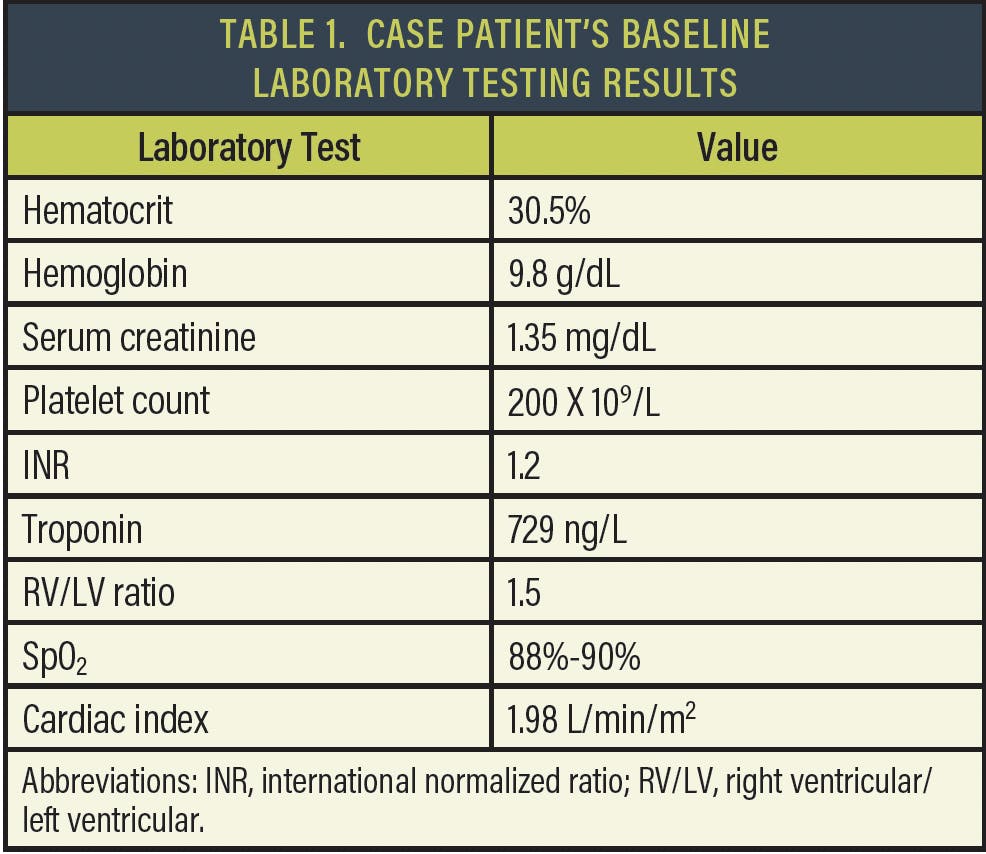
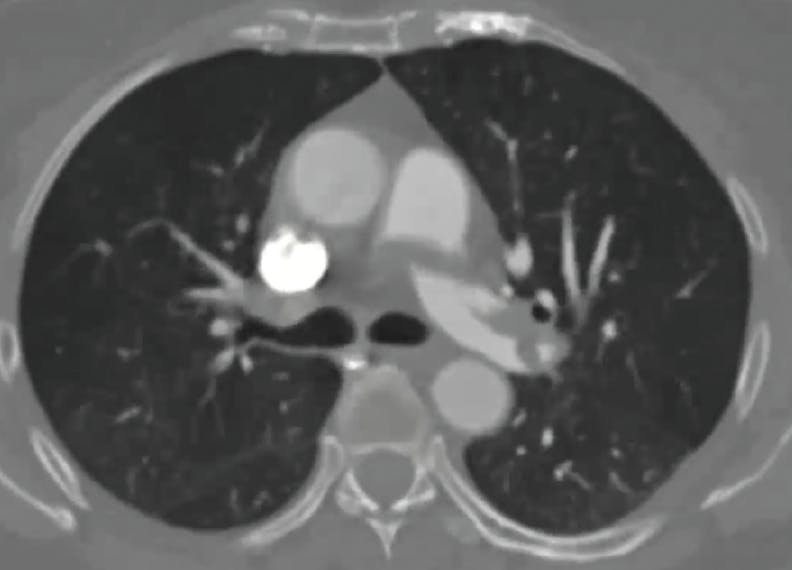
Figure 1. CT image showing saddle clot and significant clot burden extending into the right and left PAs.
TREATMENT STRATEGY
This patient presented with acute decompensation, high thrombus burden, and preexisting cardiac and cerebrovascular risk factors. Her hypoxia, hemodynamic instability, and history of recent stroke complicated systemic thrombolytic considerations.
MT with the AVENTUS Thrombectomy System was selected due to:
- Need for rapid, large-volume clot extraction with directional aspiration to stabilize cardiopulmonary function
- Ability to perform autologous blood reinfusion after aspiration
- Simplified device navigation with no dilator exchanges or accessory/curved catheters needed
- TrueClot™ Sensing, which provides real-time feedback on what's happening at the catheter tip, eliminating guesswork, improving efficiency, and saving time
- Favorable safety profile in patients with elevated bleeding risk
This strategy enabled targeted clot removal across multiple lobar and segmental branches while avoiding systemic thrombolysis.
PROCEDURAL OVERVIEW
Access was obtained using a 24-F sheath in the common femoral vein. PA access was achieved with a JR4 catheter and Hi-Torque Versacore guidewire (Abbott), which were used to traverse the right heart and enter the main PA. The Versacore guidewire was then exchanged for an Amplatz super stiff guidewire (Boston Scientific Corporation) and advanced distally into the right lower lobe PA to provide stable support.
The 24-F AVENTUS Thrombectomy Catheter was delivered over a 5-F navigation catheter into the main PA. The AVENTUS Catheter and navigation catheter are advanced coaxially over the guidewire, providing enhanced control and support when steering into targeted PA branches. This technique, combined with the catheter’s integrated dilator tip, improves deliverability and reduces device exchanges compared with other MT systems. These efficiencies are particularly valuable in high-risk PE cases in which minimizing procedural time can be lifesaving.
A major advantage of the AVENTUS Thrombectomy System is its built-in dilator, which eliminates the need to plan around separate dilator exchanges and allows for a streamlined treatment strategy. Additionally, the system enables the full procedure to be performed with a single aspiration catheter, avoiding reliance on curved catheters, disks, or multiple aspiration catheter sizes (eg, 24 F, 20 F, 16 F) within the same case.
After crossing the heart with the AVENTUS Catheter, the TrueClot™ Sensing light indicated we were in contact with the saddle clot in the main PA. We performed two aspirations, which immediately cleared the saddle clot. The patient’s blood was filtered via the AVENTUS Clot Filtration and Blood Reinfusion System at the patient bed by my supporting tech while I advanced the AVENTUS Catheter to the right lower lobe (RLL). After all aspirations, blood was reinfused with only one supporting tech. Using fluoroscopic guidance, the directional aspiration catheter was oriented toward the RLL (Figure 2) and was successfully cleared with two additional aspirations. At this point, we took an angiographic image by injecting 10 mL of contrast into the injection port of the AVENTUS Catheter handle. Fluoroscopy showed a clear main PA and RLL, with some clot remaining in the truncus anterior of the right upper lobe (RUL). Without changing wire position, we advanced the AVENTUS Directional Catheter to the RUL and rotated the directional aspiration opening to face the bifurcation of the truncus anterior. We successfully aspirated the remaining clot without needing to wire or advance the catheter into the branch (Figure 3). This strategy is not only effective but is a unique advantage of the AVENTUS System that saves significant time. In fact, all clot in the main PA and right PA was removed while keeping the Amplatz super stiff wire in the original position of the RLL.
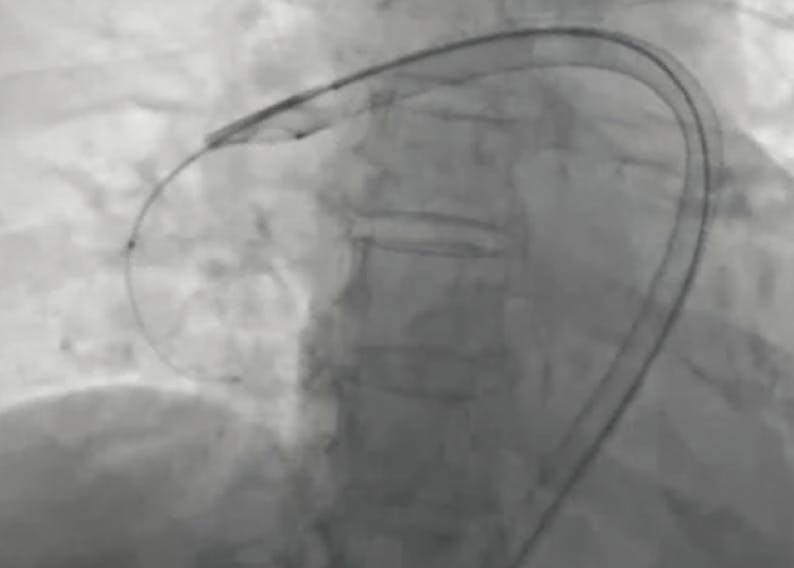
Figure 2. Directional aspiration catheter rotated to face the RLL.
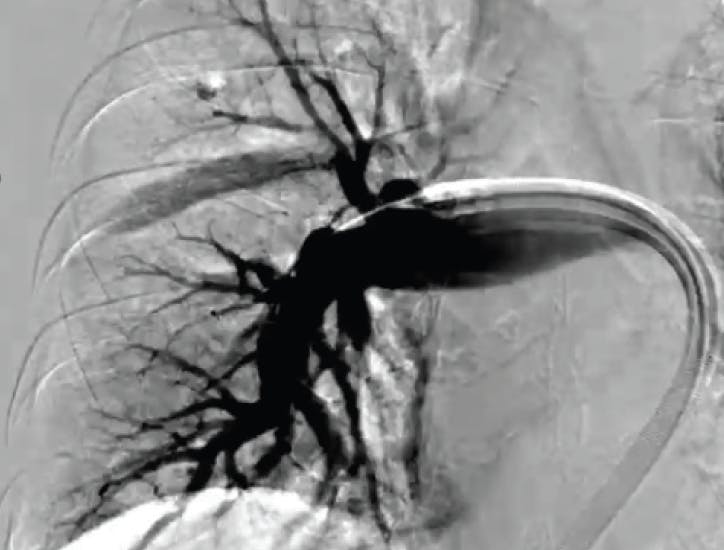
Figure 3. Angiogram showing reperfusion of the main PA and right PA.
To treat the left PA, we began by exchanging the Amplatz super stiff for the Versacore guidewire. Leaving roughly 3 cm of the Versacore extended from the end of the navigation catheter, we pulled the AVENTUS Catheter back until the guidewire flipped into the left PA. The guidewire was then placed distally into the left lower lobe (LLL). The AVENTUS Catheter was then advanced into the LLL over the Versacore guidewire (Figure 4). During the initial aspiration, TrueClot™ Sensing indicated that we were latched onto vessel wall. We then rotated the catheter to change orientation and successfully aspirated the remaining clot in the LLL. TrueClot™ Sensing proved to be particularly useful in the left PA, where vessel wall latches are common with end-hole catheters. Unlike other MT systems, TrueClot™ Sensing provided us with real-time feedback to understand what was at the catheter tip and resolve the issue without wasting additional time troubleshooting or exchanging for a an accessory or curved catheter. After each aspiration, filtered blood was returned immediately to the patient by utilizing the AVENTUS Clot Filtration and Blood Reinfusion System with only one supporting technician.
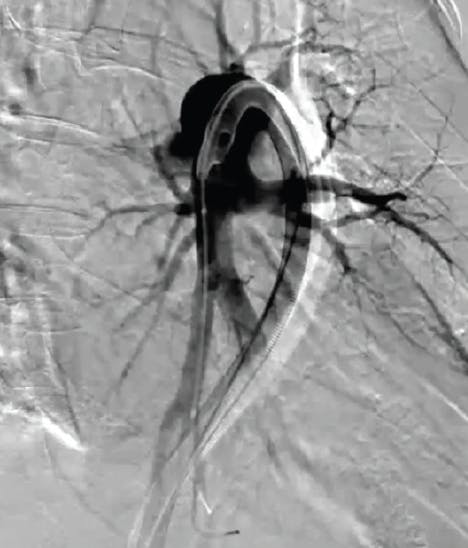
Figure 4. Catheter placement in the LLL.
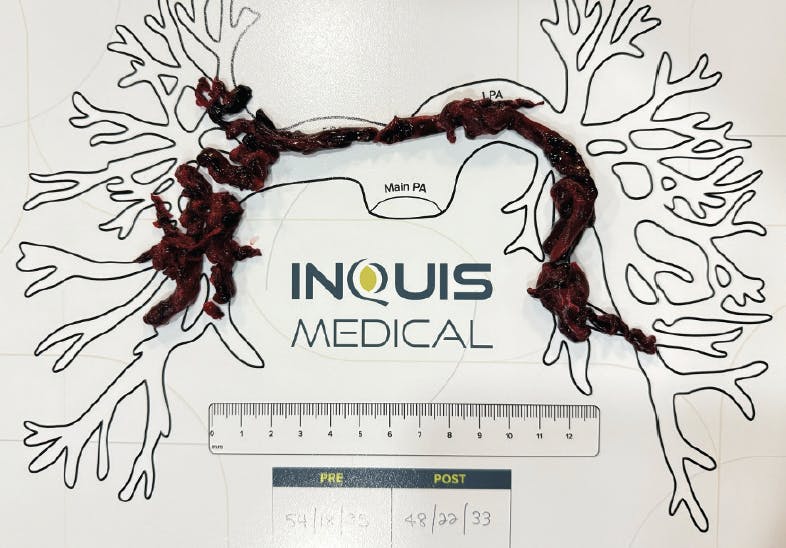
Figure 5. Clot haul diagram showing significant removal of clot burden.
PROCEDURAL RESULTS
Angiography after aspiration demonstrated restored blood flow in previously obstructed segmental branches and substantial reduction of thrombus burden. In total, an estimated 30 mL of clot was removed (Figure 4), with nearly all extracted blood filtered and returned to the patient. We saw immediate hemodynamic improvements, with final PA pressures dropping from 54/18 mm Hg (mean, 35 mm Hg) to 48/23 mm Hg (mean, 33 mm Hg) and heart rate decreasing from 84 to 80 bpm. Oxygen saturation improved to 99%, and the patient left the procedure on room air. Treatment of this high-risk case was completed without any complications.
INDICATIONS FOR USE
The Aventus Thrombectomy System is indicated for:
- The non-surgical removal of emboli and thrombi from blood vessels.
- Injection, infusion, and/or aspiration of contrast media and other fluids into or from a blood vessel.
The Aventus Thrombectomy System is intended for use in the peripheral vasculature and for the treatment of pulmonary embolism.
The Aventus Clot Management System is indicated for use with the Aventus Thrombectomy System for autologous blood transfusion.
AVENTUS® is a registered trademark of Inquis Medical, Inc.
©2025 Inquis Medical, Inc. All Rights Reserved.

Advertisement
Advertisement