Advertisement
Advertisement
April 2021
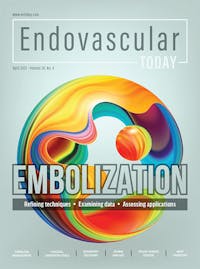
Embolization: Advances in Techniques and Clinical Data
By Maureen P. Kohi, MD, FSIR, FCIRSE, FAHA, and Fabrizio Fanelli, MD, EBIR


Stepping outside of the clinical setting and considering the topics that might comprise a dedicated embolization edition such as this one, it becomes apparent just how many applications fall under this mantle. New and robust data continue to emerge across a wide spectrum of utility, for long-standing procedures as well as those emerging in recent years, as we saw throughout the recent 2021 Society of Interventional Radiology scientific sessions. This is a vital and critical time for the field, with a dual focus on continued refinement of our techniques but especially on efforts to demonstrate their outcomes. As applications expand into entirely new settings, we must also gain insight from the obstacles encountered previously, some of which still hinder dissemination and acceptance outside of interventional circles. The good news is we have learned from past challenges, building bridges both globally and locally. There is still progress to be made, but great strides are evident in our practices and publications.
In this edition, we explore techniques for ensuring optimal outcomes in everyday procedures and the opportunities for newer applications, including the barriers they must surmount to achieve acceptance within and outside the community.
To open, Beau Bosko Toskich, MD; Nora E. Tabori, MD; and Robert J. Lewandowski, MD, consider the current yttrium-90 (Y-90) dosimetry concepts that are driving the practice of radioembolization for the treatment of hepatocellular carcinoma.
The conversation then moves to strategies for endovascular treatment of visceral artery aneurysms, with renal aneurysms by Maria Antonella Ruffino, MD, splenic by J. Urbano, MD, and pancreaticoduodenal by Marc Sapoval, MD.
Next, Ronald S. Winokur, MD, helps us understand pelvic venous disorder terminology and the implications on diagnosis and treatment.
In a panel format, Robert Morgan, MBChB; Ian M. Loftus, MD; and Gianmarco Falcone, MD, discuss type II endoleak embolization, reviewing the different approaches to access and preferred tools and techniques.
Thomas Kröncke, MD, then reflects on the big picture of the FEMME trial and, beyond the headlines and conclusions, discusses its findings as they impact the treatment of women with uterine fibroids.
In our Vanguard and Next Frontiers section, we dive into the ins and outs of three innovative embolization concepts and their potential future widespread use. Ari J. Isaacson, MD, starts us off and considers what we know and what still must be done regarding genicular artery embolization for osteoarthritic knee pain. Then, Farouk Tradi, MD; Julien Panneau, MD; and Vincent Vidal, MD, review the emborrhoid technique, a novel treatment option for chronic hemorrhoidal disease, while Samdeep Mouli, MD, explores the promising role of Y-90 radioembolization for prostate radiotherapy.
We conclude with a conversation with Michael Lichtenberg, MD, on his vision for the German Society for Angiology, his role as Head of the Center for Pelvic Vein Obstruction, and goals of the Arnsberg venous and RECCORD registries.
We are beyond grateful for the efforts of these esteemed experts in sharing their insights, research, and passion for the scientific advancement of embolization therapies, which hold great potential for so many unique patient needs.
Maureen P. Kohi, MD, FSIR, FCIRSE, FAHA
Fabrizio Fanelli, MD, EBIR
Guest Chief Medical Editors
Advertisement
Advertisement