Advertisement
Advertisement
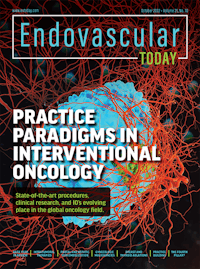
October 2022
Practice Paradigms in Interventional Oncology
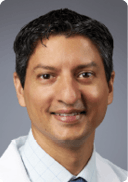
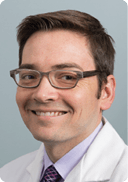
We are thrilled to serve as guest editors of the interventional oncology (IO) issue of Endovascular Today. IO continues to grow in scope and importance in our field, and we are excited by the continued innovations that are improving patient care. We hope that this issue can provide you with valuable tips on current IO practice, help prepare your practice for upcoming changes in the field, and also shed some light on the path before us.
We kick off our IO issue by presenting an overview of the top recently published papers in the literature, in which we discuss the potential impact each paper may have on the field.
We next present a series of case-based discussions highlighting the use of state-of-the-art IO therapies. First, Mohammad Bader, MD, and Dr. Ganguli discuss radiation segmentectomy for hepatocellular carcinoma in the setting of celiac artery occlusion. Paraag R. Gupta, BS, and Amy R. Deipolyi, MD, present a case showing combined hepatic embolization and ablation for oligometastatic renal cell carcinoma. Then, palliative biliary stenting for recurrent ampullary carcinoma is presented by Christopher R. Bailey, MD, and Kelvin Hong, MD. Last in this series of case discussions, Raul N. Uppot, MD, and Reiner Henson B. See, MD, discuss intraprocedural nerve monitoring during cryoablation for pain.
Continuing our exploration of topics within IO, Kory Dees, MS; Andrew J. Gunn, MD; J. Michael Straughn Jr, MD; and Theresa M. Caridi, MD, review IO treatment for gynecologic malignancies and discuss a role for minimally invasive procedures in metastatic disease of gynecologic origin. Then, Akash Nijhawan, BS; Oleksandra Kutsenko, MD; and Ripal Gandhi, MD, provide a look at portal vein embolization and hepatic vein embolization for hepatic hypertrophy. They describe the use of hepatic venous deprivation to encourage further growth of the future liver remnant.
Yolanda Bryce, MD, and Tim Huber, MD, explore new horizons in ablation with a review of breast cryoablation and thyroid nodule radiofrequency ablation as promising and innovative minimally invasive alternatives to surgery. Next, we dive into intratumoral therapies with Dr. Wehrenberg-Klee and Rahul A. Sheth, MD. They discuss the importance of knowing the mechanisms of action of these therapies, the logistical challenges, injection safety and techniques, and associated adverse events.
We wrap up our feature with two engaging panel discussions. First, Bela Kis, MD, asks Michael Devane, MD; Alexandra Fairchild, MD; and Marcelo Guimaraes, MD, about the essential components to starting a clinical practice, recommendations for success, potential pitfalls, developing relationships and patient referrals, participating in research, and next frontiers. Then, Dr. Ganguli moderates a discussion with Karen Brown, MD; Riad Salem, MD; and Michael C. Soulen, MD, on additional needs for IO as a specialty, the most important developments to date, how IO interacts with interventional radiology and diagnostic radiology, and their hopes for IO in the future.
Outside of our feature on IO, this issue of Endovascular Today includes a chat with James Milburn, MD, who discusses stroke therapy’s revolution, other breakthroughs to watch for in neurointervention, keys to successful mentorship, and his music choices in the lab.
We would like to thank all of the excellent contributors to this issue who have shared their knowledge with us. We hope that this issue of Endovascular Today inspires you as much as it has us!
Suvranu Ganguli, MD, FSIR
Eric Wehrenberg-Klee, MD
Guest Chief Medical Editors
Advertisement
Advertisement